Getting Around Italy
Italy trips usually mix transport types. High-speed trains connect the big cities. Intercity coaches cover routes where trains are slow or require changes. Planes and ferries reach Sicily and Sardinia. A rental car is the only practical option for hill towns and rural areas that rail does not serve. Each choice affects cost, luggage limits, and how much planning a day requires.
The options below are sorted by trip type, with journey times, typical costs, and booking steps for each. Rental drivers should also know the ZTL, the Italian term for restricted traffic zones, where cameras issue fines to cars that enter without permission.
Matching Transport to Trip
The table below gives the usual best fit for common trip types, with sections that follow giving the figures behind each row.
| Trip | Best fit | Reason |
|---|---|---|
| Rome to Florence or Naples, Milan to Venice or Florence | High-speed train | Fastest and most frequent |
| Routes with two or more train changes, or five hours or more | Intercity coach | Often cheaper, and direct where rail is not |
| Overnight long-distance | Overnight train or coach | Train has sleeping compartments and couchettes; coach is cheaper |
| Sicily or Sardinia from the mainland | Domestic flight, or ferry on short crossings | Flying is the simplest; ferries also serve the islands |
| Capri, Ischia, Aeolian and Egadi Islands | Ferry or hydrofoil | Frequent services from mainland ports |
| Hill towns, rural Tuscany, Val d’Orcia, Dolomite passes | Car, or regional bus where available | Rail does not reach many of these places |
Florence to Siena shows how the choice plays out. A car takes about 90 minutes on the Chiantigiana road and is the only direct option, while public transport needs a train and bus combination.
High-Speed Trains Between Cities
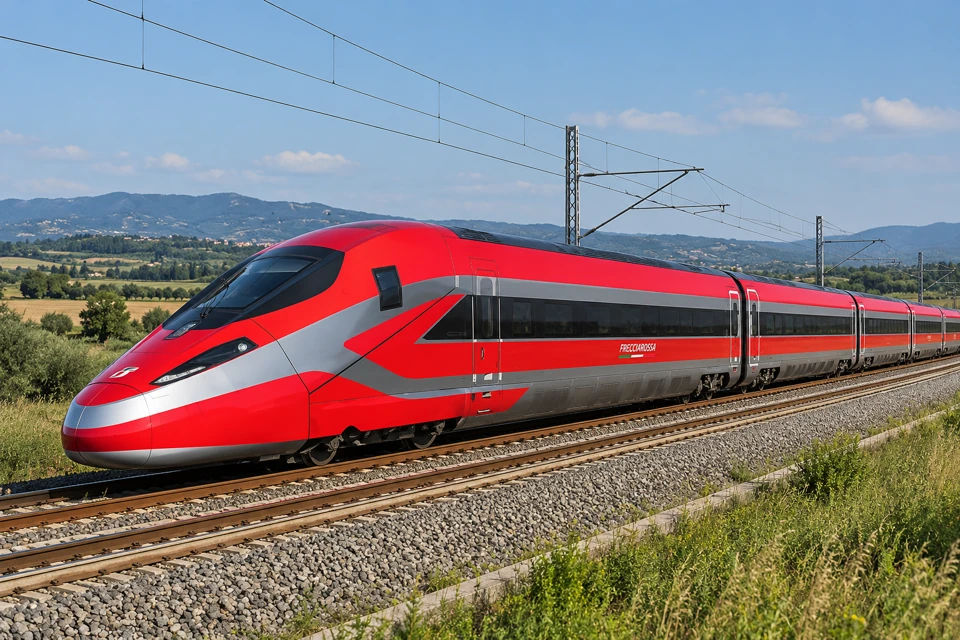
Two operators run Italy’s fast trains. Trenitalia operates the Frecciarossa, Frecciargento and Frecciabianca services, and Frecciarossa reaches 300 km/h on main trunk routes. Italo is a private operator that runs only on the high-speed network, so it does not serve regional lines or smaller stations. Italo says its trains connect 51 major cities and 58 stations, and its links with regional trains, Itabus coaches and SNAV ferries extend trips to Sorrento, Lake Como, Capri and Ischia.


Italo’s published journey times are:
| Route | Time |
|---|---|
| Naples to Rome | 1h |
| Florence to Rome | 1h 30min |
| Milan to Rome | 3h |
| Milan to Florence | 1h 55min |
| Naples to Florence | 2h 40min |
| Milan to Naples | 4h 15min |
| Florence to Venice | 2h 15min |
| Milan to Venice | 2h 30min |
| Rome to Venice | 4h |
| Naples to Salerno | 35min |
| Rome to Salerno | 1h 40min |
| Milan to Turin | 1h |
| Rome to Turin | 4h 25min |
These times make the train the natural choice for any pair of major cities. Rome to Naples in an hour and Rome to Florence in an hour and a half beat any other option door to door, and a rail station sits in the center of each city, with no restricted traffic zone to worry about. Regional trains cover shorter hops and smaller towns, and tickets for them can usually be bought on the day, including at the station on the travel date.

Train Fares, Booking and Refunds
Italo’s lowest listed fares are from €14.90 on Rome to Naples and Florence to Rome, €19.90 from Bologna to Rome, and €29.90 from Bolzano to Rome. On longer routes, Milan to Naples starts at €34.90 and Turin to Naples at €38.90. These are starting fares for the cheapest seats, and they sell out first. At peak times, standard-class fares run about €19 in advance against €70 to €90 on the day, and on Rome to Naples, advance fares start at about €9.90 against same-day fares of €35 or more. Fixing your dates early is the single biggest saving on rail.
Trenitalia generally opens bookings about three to four months ahead, and Italo sometimes opens sales up to six months ahead. For July and August, book as early as you can. Outside summer, there is more room to wait on most routes.
Read the change and refund terms before paying. The cheapest Trenitalia "Base" and "Economy" fares are non-refundable, and "Super Economy" fares are non-refundable, non-changeable and valid only on high-speed services. A flexible fare costs more but protects a plan that might shift, such as a day in Florence that runs long.
Tickets are e-tickets on your phone, with no station collection needed. Italo’s booking shows no service fee, and its app stores tickets on the phone. Italo’s pre-sales phone line is 892020 (charged) and its free line is 060708. Concessions exist for older travelers. Trenitalia’s CartaFRECCIA senior fares start around €29 in standard class, and Italo offers an "Italo Senior" rate for travelers over 60 that you select at booking. Italo also sells a Travel Pack (a carnet of trips), group and family offers, and a loyalty program called Italo Più.
Intercity Coaches and Regional Buses
Coaches win where trains are slow, indirect or expensive. FlixBus is the main national operator. Its Milan page shows 387 directly reachable cities and 14 stops in the city, Florence has direct routes from 227 cities, and Palermo has direct routes to 35 cities from a single stop on Via Fazello. Rome has six stops, including Tiburtina, Termini and Vaticano.
The stop address matters, because a coach stop is not always at the main train station. In Rome, the main FlixBus stop is Tiburtina bus station rather than Termini, so confirm the address on the booking page.
The trade is time for money. On Rome to Florence, the train takes 1h 30min, while FlixBus takes about 3h 30min and is usually cheaper. Booked in advance, a Rome to Florence coach can cost about half a comparable train fare. On Rome to Perugia, the train takes about 2h 30min with a change at Foligno, and the coach takes a similar time and is often cheaper. FlixBus also runs direct on the Adriatic coast, for example Rimini to Pescara, where trains need changes. FlixBus fares in Italy run from €4.99 (promotional) to about €25 on most routes.
Overnight trips show the same gap. An overnight train offers sleeping compartments and couchettes, while an overnight FlixBus is usually cheaper.
Booking a FlixBus
You can buy tickets online, in the FlixBus app, or at a Flixshop sales point, and payment options include credit cards, PayPal, Google Pay and Apple Pay. The app holds digital tickets and shows live trip tracking. The e-ticket is also emailed after online booking, and you can show it from a phone at the stop. Tickets are not tied to seats on most routes, so boarding early gets you a seat choice. A specific seat reservation costs a fee on most networks. If seats are free, you can pay the driver the full fare on board without the online discount. Plan to arrive 15 to 20 minutes early, because boarding queues can be long at larger stations.
On luggage, FlixBus’s Milan page lists one check-in bag and one carry-on. The base fare carries a 20 kg limit, and extra bags cost €3 to €8, so confirm the allowance on your booking page. Tickets are non-refundable, but you can exchange them for a fee of €4 to €6 up to 15 minutes before departure.
Regional buses
Regional buses reach the places trains do not, including hill towns in Umbria, the Puglia coast and Dolomite villages. They run frequently in populated areas, linking suburbs and neighboring towns. Rural stops sometimes post handwritten or hard-to-read schedules, so photograph the timetable and confirm your return time before heading out.
Domestic Flights
Flying earns its place on long distances and on island trips. Flights are the better choice for journeys over about 500 km (310 miles). From Milan-Malpensa, ITA runs 15 or more daily flights to Rome Fiumicino, 10 daily to Naples, 12 daily to Catania and 8 daily to Palermo.
Ryanair is the largest domestic carrier. It carries more than half of all seats on flights within Italy, with the widest choice of routes to Sicily, Sardinia and the south. ITA Airways builds its network around Rome Fiumicino and Milan Linate, with domestic routes such as Rome to Milan, Rome to Venice and Rome to Naples. Aeroitalia is the third-largest domestic airline. Ryanair, ITA, Aeroitalia, easyJet, Wizz Air and Volotea all fly to Palermo, Catania, Cagliari, Olbia and Alghero, and many of those routes are seasonal. ITA also operates government-subsidized flights to Sardinia and some Sicilian islands. Trapani is mainly a domestic airport, served mainly by Ryanair.
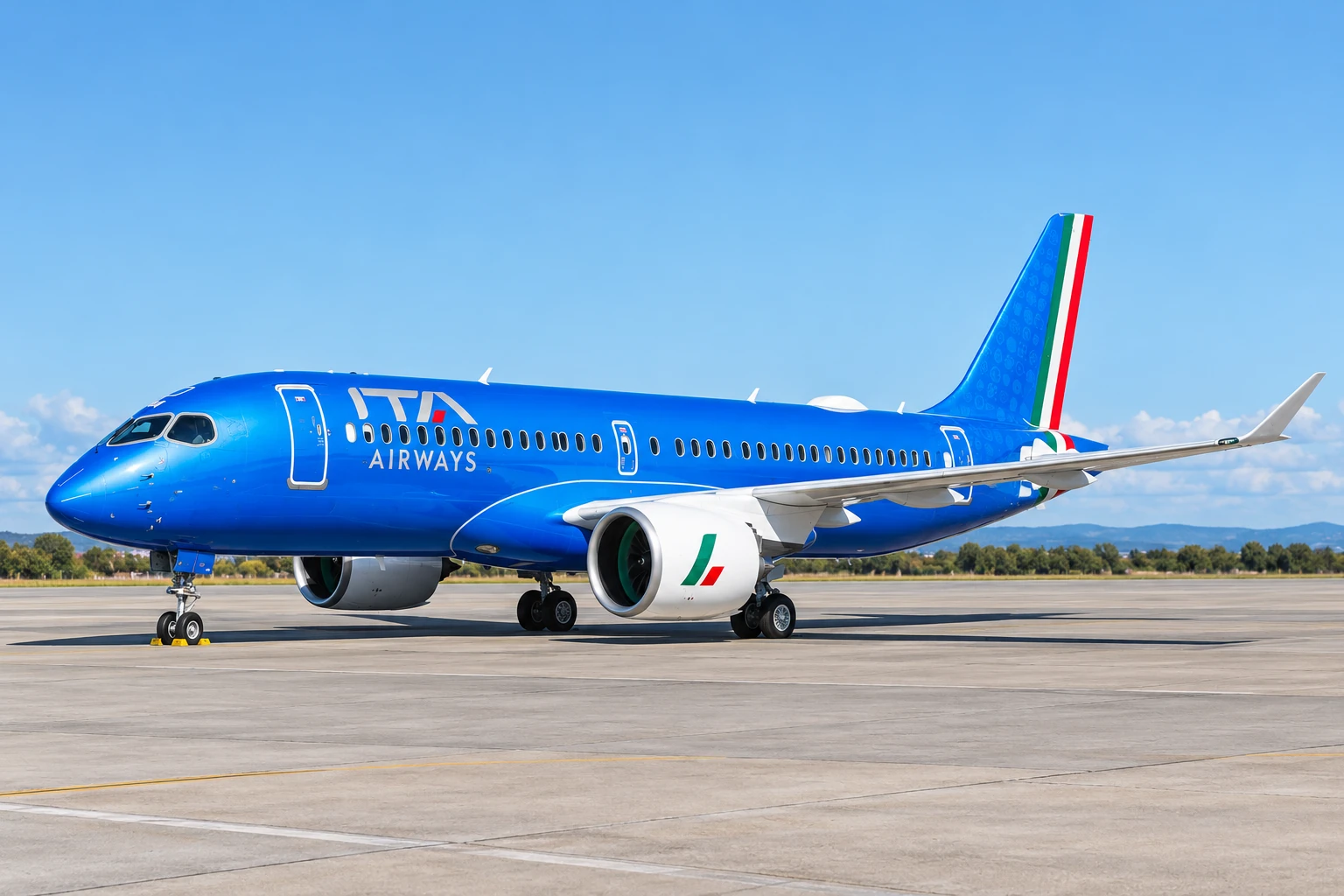
Fares vary widely by date, so compare the final price at booking rather than relying on a typical figure. The base fare is only part of the cost. Ryanair’s cheapest fare includes only an under-seat bag, and other bags are paid extras. ITA’s cabin bag limit is listed at 21 x 13 x 9 inches. Check the airline’s baggage policy before booking to avoid excess-baggage charges at the airport.
Airport transfers also add to the cost. From Milan-Bergamo, a bus to Milan Centrale takes about 60 minutes and costs €10, and a bus to Bergamo Bassa costs €3. Milan-Malpensa has a shuttle between Terminal 1 and Terminal 2.
Ferries and Hydrofoils
Ferries are slower, larger boats that often carry cars. Hydrofoils are faster passenger-only boats. Many timetables are seasonal, so check the operator’s page for your travel month.
Bay of Naples
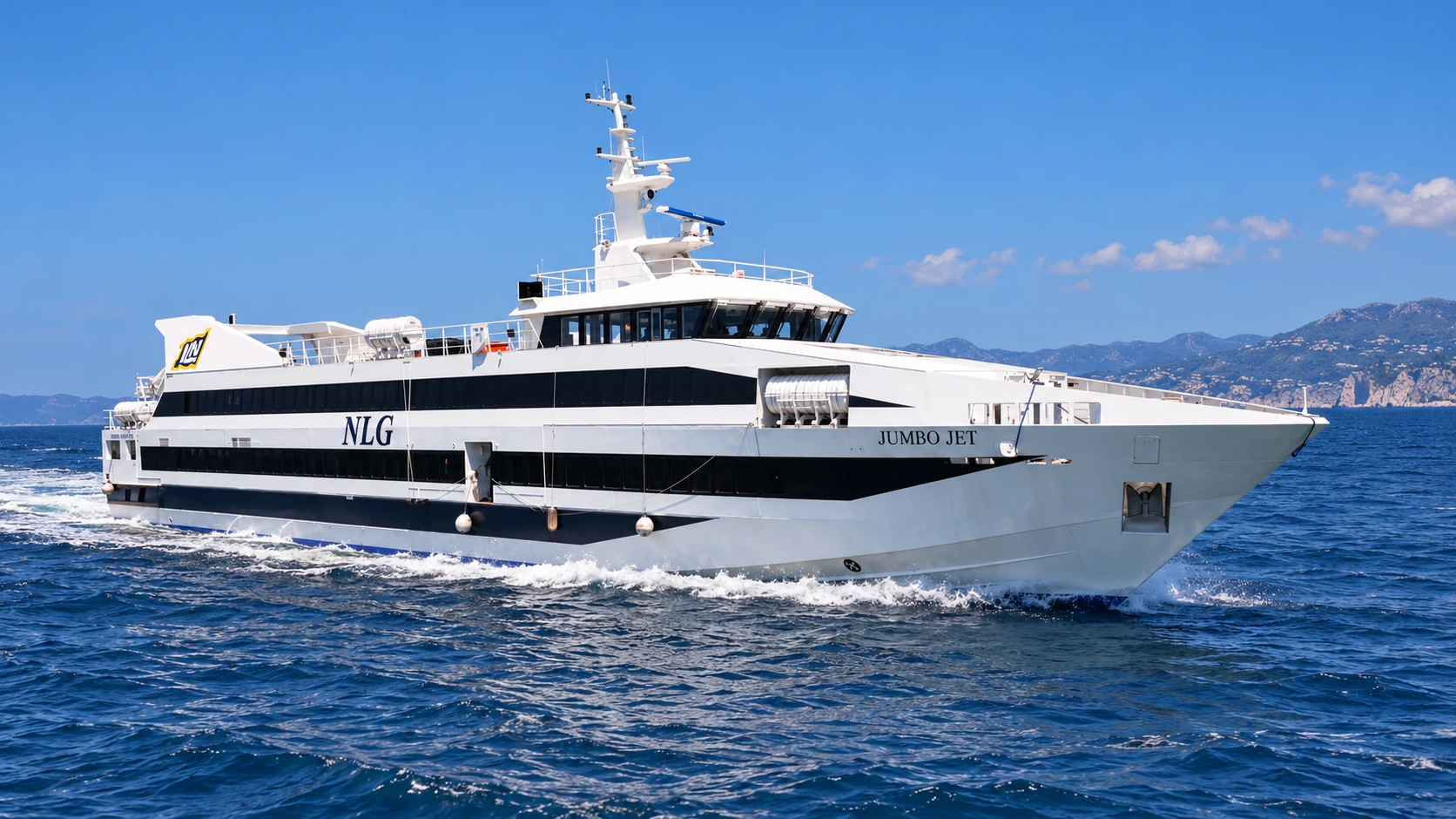
Capri is served from three mainland ports. Naples to Capri has more than 20 daily crossings, with the fastest taking 50 minutes and tickets from around €22. Sorrento to Capri usually has more than 20 crossings a day, with the fastest taking 20 minutes and tickets from about €21. Positano to Capri has up to 10 daily crossings of 30 minutes to 1 hour, with tickets from around €27. Route figures for 2026 are in a ferry route overview. One-way hydrofoil fares run about €20 to €22 from Naples and €20 to €25 from Sorrento, depending on operator and season. Operators on these routes include NLG, Caremar, SNAV and Alilauro.
Aeolian, Egadi and other islands
Liberty Lines is the main Aeolian operator. It runs fast hydrofoils from Milazzo to all seven islands, and in peak season also from Palermo, Vibo Valentia and Reggio Calabria. Milazzo to Lipari takes about 65 minutes direct, with fares around €18 to €24 one way and up to 13 daily connections in summer. Across all Aeolian routes, Liberty Lines and Siremar run up to 35 crossings a day from Milazzo in high season, with journeys of 50 minutes to 2.5 hours depending on the service. Panarea, which is car-free, takes 1.5 to 4.5 hours from Milazzo. Caronte & Tourist’s timetable for Milazzo, the Aeolian Islands and Naples is published for 1 June to 30 September and 1 to 31 October. Its guide to reaching the islands from Naples says travelers can go on foot or by car.

Off western and southern Sicily, Trapani to Favignana has up to 27 crossings a day taking 30 to 45 minutes by hydrofoil, and Trapani to Levanzo has 10 to 20 crossings a day taking 25 to 50 minutes. Milazzo to Salina runs all year and takes 1.5 to 3 hours. Porto Empedocle to Lampedusa has up to 10 crossings a week and takes 4 to 10 hours depending on the vessel, so leave slack around any flight home.
Mainland to Sicily and Sardinia
Overnight crossings suit travelers with a car or a tight budget. Naples to Palermo has around 2 to 4 daily crossings from €28 and takes 8.5 to 12 hours. For Sardinia, Naples to Cagliari has up to 3 crossings a week, takes about 15 hours and starts around €35. Piombino to Olbia is a seasonal route, usually active in August, with one daily ferry from around €37. From Civitavecchia, Tirrenia and Moby Lines run to Olbia in about 8 hours, and sailings also go to Cagliari (about 15 hours) and Arbatax. Operators serving Sicily from the mainland include GNV, Grimaldi Lines, Caronte & Tourist, Liberty Lines and Siremar.

Booking ferries
For major routes, book directly with the operator. Caronte & Tourist sells crossing tickets online and makes its QR code available on the day of departure. Its Maddalena Lines page advertises a "Flexibility Option" that allows a full refund if you change your mind, so read those terms on the operator’s page before buying. If you are taking a car, confirm the vehicle-carriage rules for that route.
Renting a Car
A car makes sense for hill towns, rural Tuscany, the Val d’Orcia and the Dolomite passes. A common pattern is to pick up a car only for the rural leg and return it before entering a big city. Open-jaw rentals, picked up in one place and dropped off in another, are widely available.

International Driving Permit
Italy has signed the 1949 Geneva and 1968 Vienna UN driving conventions. Under them, drivers with a license issued outside the EU or EEA need an International Driving Permit, including visitors from the US, Canada, Australia and New Zealand. The permit cannot be obtained in Italy. Your national automobile association issues it before departure. Rental counters sometimes skip the request, while police at roadside checks routinely do ask for it, and travelers arriving in Rome without one have been refused a rental. EU and EEA licenses are generally sufficient without translation.
Age, insurance and deposits
The minimum rental age is typically 21. Young-driver surcharges apply under 25, and some suppliers require 25 for certain vehicle categories. Collision damage waiver, theft protection and third-party liability are included in every Italian rental under Italian law. The excess, the amount you pay toward damage, ranges from €950 to €1,500 by vehicle class, according to terms dated November 2025. Excess-reduction cover costs €25 to €45 a day and reduces the excess to zero. Personal accident cover costs about €10 a day and is often covered by existing travel insurance.
Deposit holds vary by supplier, and debit cards are often not accepted for the deposit, so carry a credit card. About 80% of the rental fleet is manual, and automatics must be booked months ahead in summer.
Speed limits and tolls
The motorway speed limit is 130 km/h, reduced to 110 km/h in rain or snow. Motorways are tolled. You take a ticket at entry and pay by distance at exit, and lanes marked with an orange T are for Telepass transponder holders only. The Amalfi Coast’s SS163 has a seasonal plate restriction, so check the current rule before planning that drive.
Restricted Traffic Zones (ZTL) in Cities
A ZTL is a zone in a historic center where only authorized vehicles may drive. Around 350 Italian cities have restricted traffic zones, usually enforced by cameras that log each plate. Entering without permission is the most frequent fine for rental cars, ahead of speeding or parking. Rome, Florence, Milan, Naples, Bologna, Siena, Pisa and Lucca all have ZTLs.
The legal fine runs €83 to €332 under Article 7(14) of the Traffic Code, read with the city’s ordinance. The rental company then adds an administration fee of €30 to €50 for forwarding it. The notice often arrives by post several months after the trip, and sometimes more than a year later.
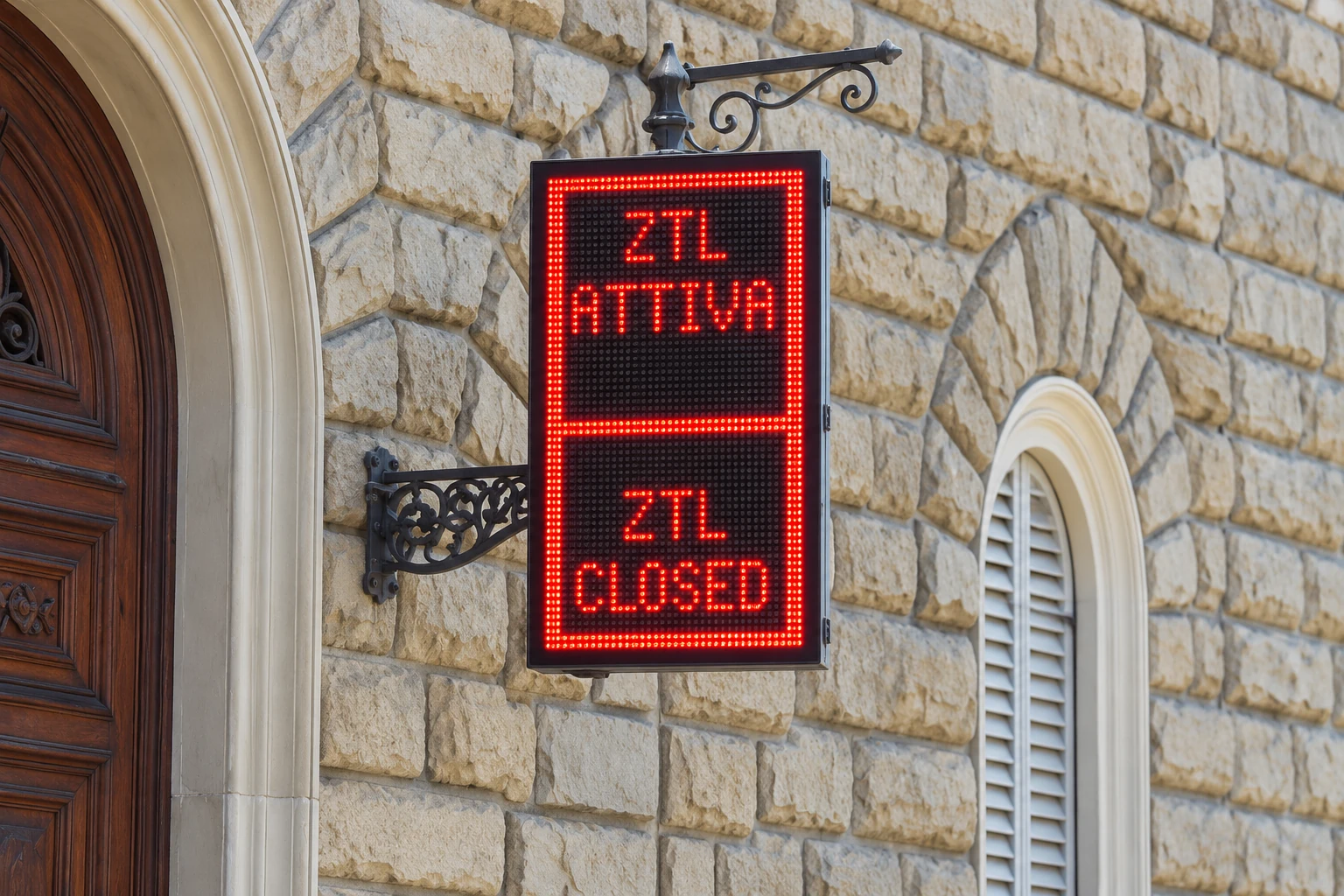
Signs are small and in Italian. Some read "varco attivo," which can be misread as permission to enter, and electronic displays in many cities show "ZTL attiva" (active) or "ZTL non attiva" (inactive). Most satellite navigation does not avoid ZTLs, although Waze added ZTL support in select cities in 2018. The safest approach is to park outside the center and walk or ride in. City-center parking typically costs €25 to €40 a day, which makes a car an expense to avoid on the city portions of a trip, and another reason to travel between big cities by train.
Quick Rules by Trip Type
- Take the train between major cities: Italo lists Rome to Naples in 1h, Florence to Rome in 1h 30min and Milan to Rome in 3h. Book early, because advance fares can be about €19 while same-day fares can reach €70 to €90 at peak times.
- Use coaches where rail is slow: FlixBus takes about 3h 30min from Rome to Florence against 1h 30min by train, but is usually cheaper and runs direct on routes like Rimini to Pescara. Check the stop address, because Rome’s main stop is Tiburtina rather than Termini.
- Fly or sail to the islands: Ryanair and ITA cover Sicily and Sardinia, while ferries and hydrofoils reach Capri, the Aeolian Islands and the Egadi Islands. Many ferry timetables are seasonal, so check dates before you plan.
- Rent a car only for rural legs: Hill towns, rural Tuscany and the Dolomite passes need one, and US drivers need an International Driving Permit obtained before departure. Return the car before entering a city.
- Avoid ZTL fines: Cameras fine entry into restricted zones at €83 to €332 plus a €30 to €50 rental company fee, and the notice can arrive months later. Park outside historic centers.
- Read refund terms before paying: The cheapest train fares are non-refundable, FlixBus tickets are non-refundable with a small exchange fee, and ferry refund terms vary by operator.