Turkey
Etiquette and Customs in Turkey: What First-Time Visitors Need to Know
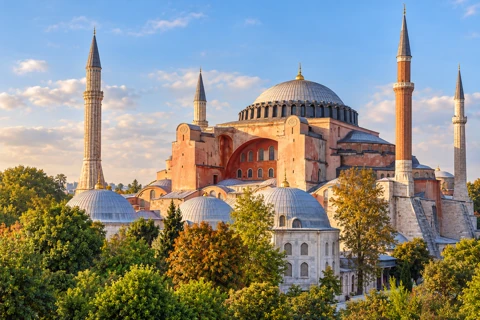
Most first-time visitors to Turkey worry about mosque etiquette first, and that is a sensible place to start. Istanbul’s Blue Mosque, Süleymaniye Mosque and Hagia Sophia are still places of worship, and each has its own rules on clothing, shoes, timing and cameras. Outside the mosques, everyday manners follow a few clear patterns: formal greetings with strangers, tea offered almost everywhere, a host who pays the bill, and restaurant tipping that is voluntary.
Beach resorts and tourist districts such as Cappadocia are relaxed, while villages and conservative neighborhoods expect more modest dress and discretion. If you follow the other person’s lead, carry a light scarf, and know the mosque routine, you will handle nearly every situation. Turks also tend to forgive honest mistakes, and making an effort counts for more than perfect execution.
Greetings, Tea and Being a Guest
A firm handshake with the right hand is the standard greeting. With conservative people, especially elders and women, a nod or a spoken greeting may replace physical contact, so wait for the other person to offer a hand rather than reaching first. Strangers are often formal. Among close friends and family, cheek kisses are common, and you may be pulled into one after you have been introduced. Titles show respect, especially toward older people: Bey for men and Han?m for women attach to a first name, as in "Ahmet Bey."
A few words of Turkish go a long way. Starting with "Merhaba" (hello) is a polite opening, and "Nas?ls?n?z?" (how are you?) is the usual follow-up.
Tea (çay) is the center of Turkish hospitality. It is offered constantly in shops and offices and works as a near-universal greeting. A carpet seller who hands you a glass does not expect you to buy. Accepting is the friendly default, and declining can seem impolite. If you really do not want one, put a hand over your heart and give a slight nod, which is a gracious refusal.
The same pattern applies to invitations. A genuine invitation is often repeated two or three times, and polite refusal once or twice before accepting is normal. A single "maybe another time" from you will likely be heard as modesty, not a no. If a shopkeeper or a new acquaintance asks you to visit a home, expect the offer to be sincere.
When you do go to a home, bring a small gift such as sweets or pastries, and remove your shoes at the door. Hosts usually have house slippers ready. Clean socks make that moment easier, and they also help at mosques.
What to Wear
Modest clothing is expected almost everywhere outside beach resorts, and revealing dress appears among the common visitor mistakes. In practice, cities and towns call for covered shoulders and knees for both men and women. You do not need to dress formally. Lightweight long trousers, loose knee-length or longer skirts and T-shirts with sleeves are comfortable in summer heat and acceptable nearly everywhere.
Local context matters. In tourist-oriented areas such as Cappadocia, women are not expected to cover their heads while walking around, dining or hiking. Mosques are stricter than that everywhere in the country. In smaller towns and villages, conservative dress is the safer choice even if no one comments on what you wear.
Dress rules for mosques
Mosque rules are firmer. Men and women both need to cover shoulders and knees, and men should not wear short shorts above the knee, a rule that a booklet from the Diyanet also states. The Diyanet is Turkey’s Presidency of Religious Affairs, the state body that oversees most mosques. Tank tops and sleeveless tops are out. One mosque guide spells out the standard as tops that cover the chest, shoulders and upper arms, with skirts or trousers reaching below the knee. Tattoos and piercings are generally not a problem if the rest of the outfit follows the code.
Women also cover their hair. Trousers are acceptable, and loose trousers, long skirts and below-knee dresses are practical choices. All hair should be covered, so a scarf draped loosely with hair showing does not meet the standard. Carry a lightweight scarf in your day bag, because some major mosques lend coverings near the entrance, but this varies. The Diyanet’s implementation circular on religious services tells mosques that visitors must enter in clothing suited to mosque etiquette and that headscarves and wraps should be kept available at the entrance. The Blue Mosque follows this and provides wraps and scarves at the entrance for visitors whose clothing falls short.
Hagia Sophia works the same way for women, who should bring a scarf as a sign of respect. Men generally do not need to cover their heads there.
Visiting Mosques: Timing, Shoes and Conduct
Timing matters most when you plan a mosque visit. Muslims pray five times a day, and the Friday midday prayer is the most heavily attended. Visit between prayers when possible. Tourist access can be restricted for longer around Friday midday prayer, and a mosque may stay open for worship while limiting the tourist section. The Blue Mosque closes to non-worshippers during the five daily prayers, though visitors can still view the exterior from the outer courtyards. Follow the instructions of mosque staff, even when they differ from what you read in advance.
Prayer times shift through the year with the sun, so check the schedule for your date in a prayer-times app or at the mosque entrance. A Diyanet-Sen branch chairman, a union official in the religious-affairs sector, has urged tourists to avoid obligatory prayer times and visit outside them. That is his advice, not a published rule, but it matches what mosque staff do. Visitors who want to watch a prayer are only allowed to do so in areas the local mosque administration designates, and reserved areas are marked with a barrier.
Shoes
Take your shoes off before stepping onto the carpet. Easy-to-remove shoes and clean socks help. You can leave them on racks or shelves just inside the entrance, or carry them in plastic bags provided by the mosque. The Blue Mosque and the Süleymaniye Mosque give out free shoe bags on the usual tourist routes, but not every mosque does, so a small tote bag of your own is a useful backup in smaller towns.
Behavior inside
Keep your voice low and silence your phone. At the Blue Mosque, do not lean on or touch walls and monuments, and do not run in the courtyard. Smoking is prohibited inside the mosque and its courtyard, and outside food and drink are not allowed inside. Stay in the visitor area and do not cross in front of people praying. If you are tired, you may sit and rest, as long as you do not disturb those praying.
Large bags are discouraged. The Blue Mosque has footwear storage but no lockers or cloakrooms, though a locker is available at Sirkeci station, so travel light on mosque days.
Fees at mosques and palaces
Most active mosques are free to enter, including the Blue Mosque and the Süleymaniye Mosque. Hagia Sophia is the notable exception. It has a separate tourist entrance with a ticketed visitor area, and foreign tourists pay about €25 under an arrangement that took effect on 15 January 2024. The lower floor is a prayer area that Turkish citizens and foreign Muslim visitors may use free of charge at any hour. Fees change, so confirm the current price on the official site before you go.
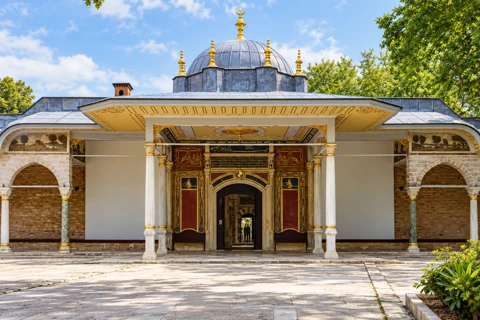
Topkap? Palace is a museum rather than a mosque, but it is on most first itineraries. The most recent figures list 2,750 TL for the combined ticket covering the palace, Harem and Aya ?rini, and 1,050 TL for the Harem alone, both for foreign visitors. Children under 6 enter free, and the palace is closed on Tuesdays.
Dining, Bills and Tipping
Turkish meals are social and often communal. Sharing dishes with locals is typical. Use your right hand for eating, since the left is considered unclean. Hosts take it as a compliment when you finish your plate, and some may be offended if food is left. When you are done, place your knife and fork side by side. Smoking at the table is common in many settings, so expect it in some cafés and restaurants.
Who pays also follows a custom. The host customarily pays when dining out, and splitting the bill is uncommon. If you issued the invitation, the bill is yours, and reciprocating before you leave is appreciated. When a Turkish friend or host insists on paying, a good way to respond is to offer to host the next meal. At the table, wrestling the bill away from someone who has invited you will not go over well.
Bargaining belongs in bazaars and with sellers who set prices by negotiation. Do not bargain in restaurants or in shops with fixed prices.
Tipping and service charges
Tipping is a courtesy and not required. A 2026 rule change confirms this for restaurants. The Ministry of Trade has said that restaurants and cafés may not add fees under any name that are not on the price list, and that tipping depends entirely on the customer’s own will. The change amends the ministry’s Price Label Regulation and took effect on 30 January 2026. Restaurants, cafés and lokantas (traditional casual restaurants) may no longer charge service, table or cover fees under those names. Having a fee printed on the menu does not make it mandatory, and a QR-code menu showing a mandatory service fee is no exception. If a bill includes a service or cover charge, ask the staff to remove it.
Tips themselves remain welcome. Published ranges run from about 5 to 10% for good restaurant service to 10 to 15% in upscale restaurants, and these vary from guide to guide, so treat them as ranges, not rules. Rounding up taxi fares is a common gesture, and tipping hotel porters and cleaners is appreciated. Tipping guides and drivers on tours is very common.
Photography and Drones
Photography rules depend on where you are standing. At the Blue Mosque, photography is allowed in the courtyard and outer halls but restricted inside the prayer hall, especially during prayer. Video is allowed in some areas, while flash, tripods and professional equipment are prohibited. Another mosque visitor page also says flash should not be used in mosques. Do not photograph people who are praying, and do not walk into their line of sight while taking pictures. Dressing properly applies here too, since breaking the dress code to get a photo is considered disrespectful.
Museums set their own limits. At Topkap? Palace, photography is not allowed in the Holy Relics section. Watch for signs at each gallery and follow guards’ instructions.
For people in general, ask before you photograph anyone, especially women and religious figures. This is ordinary courtesy and applies everywhere, while mosques add stricter rules. A smile and a gesture toward your camera usually gets the answer.
Flying a drone
Drone rules are the strictest part of photography in Turkey. Drones of 500 g or more must be registered with the civil aviation authority (SHGM) through its IHA registration system. Pilots must keep the aircraft in visual line of sight, with a maximum altitude of 120 m above ground. Flights over crowds are banned, except for emergency services.
Restricted zones include airport surroundings, military facilities, prisons, nuclear facilities, and areas around the Presidential and Parliament buildings, and pilots should check current restrictions before each flight. A tour operator also says that Hagia Sophia, Topkap? Palace and Sultanahmet Square fall within protected drone zones. Unauthorized flying carries an administrative fine of 60,000 TL under Law No. 2920 Article 144, as amended in 2024. Filming private homes or gardens may breach the criminal code provision on privacy of private life, and recording images of people without written consent is not allowed. If you are not sure you can fly legally, leave the drone at home.
Ramadan
Ramadan is the Islamic month of fasting, when Muslims abstain from food and drink from dawn to sunset. Turkish tradition calls it the "Sultan of the Months". Visitors are not expected to fast. Tourist-area restaurants and cafés stay open, often with curtained sections, and in Istanbul or the coastal resorts daily life changes little.
In conservative areas, be discreet. Avoid eating, drinking or smoking openly in public during daylight. A bottle of water in a bag at the bus station is fine, while a street-corner picnic in a small town draws attention. Eating in a café or restaurant that is open for business is normal.
Evenings are the best part of Ramadan to join. Mosques and charitable groups hold communal iftar dinners, the meals that break the fast at sunset, and joining an iftar when invited is a special honor. Mosques are busier after sunset, with extended evening prayers called Taraweeh, so plan sightseeing in mosques for the daytime. If you travel on business, avoid scheduling appointments during Ramadan, or in July and August.
Mistakes Visitors Make Most Often
Many of the common errors repeat points made above, and most come from a few habits. At mosques, visitors dress for the beach in shorts, tank tops or short skirts, keep their shoes on, photograph people praying or use flash in the prayer hall, or turn up during one of the five daily prayers or Friday midday prayer, when non-worshippers may be restricted. At the table, they eat with the left hand, leave food on the plate, split a bill they were invited to pay, or assume a service charge is mandatory. Bargaining in fixed-price restaurants and shops is a frequent misstep as well, and so is eating or drinking openly in daylight during Ramadan in conservative areas.
Several other points apply to the general public, not to one place. Alcohol is widely available in tourist areas, but public drunkenness is frowned upon. Insulting Atatürk, the founder of the Turkish Republic, is deeply offensive. Public displays of affection may draw attention in villages, though they are generally fine in cities. Drug laws are strict.
LGBTQ+ travelers are legally protected in Turkey, but they may encounter conservative attitudes outside urban areas, where cities are generally more relaxed.
Most of these mistakes can be avoided with three small habits. Pack a light scarf and a layer that covers shoulders and knees. Check mosque hours around prayer times before you leave your hotel. Read restaurant bills line by line. A visitor who does these things, accepts the tea, and watches how people around them behave will rarely go wrong.
Key Takeaways
- Dress for mosques before you leave the hotel. Cover shoulders and knees, and women should carry a scarf that covers all their hair, since mosques do not always lend them.
- Plan mosque visits between prayers and take your shoes off. Non-worshippers are restricted during the five daily prayers and Friday midday prayer, and staff instructions take priority.
- Skip flash and photos of people praying. Photography is generally allowed in courtyards and outer areas, with tighter limits in prayer halls.
- Question any service or cover charge on a restaurant bill. Since 30 January 2026, restaurants and cafés may not add fees that are not on the price list, and tipping is voluntary.
- Accept tea and gifts of hospitality, and bring sweets to a home. A hand over the heart politely declines, and the host who invited you pays.
- Leave the drone at home unless you can register it and confirm the zone. Drones of 500 g or more need SHGM registration, and unauthorized flying carries a 60,000 TL fine.