Best Time to Visit Australia

Australia is in the Southern Hemisphere, so summer runs December to February and winter runs June to August. The country spans tropical coast, desert interior, and temperate cities, so the best month depends on where you are going. The north, including Darwin and Cairns, is driest from about April to October. Perth gets most of its rain in winter, while Sydney and Melbourne get rain every month. Alice Springs, the gateway to the Red Centre, is coolest in June and July and hottest in December and January.
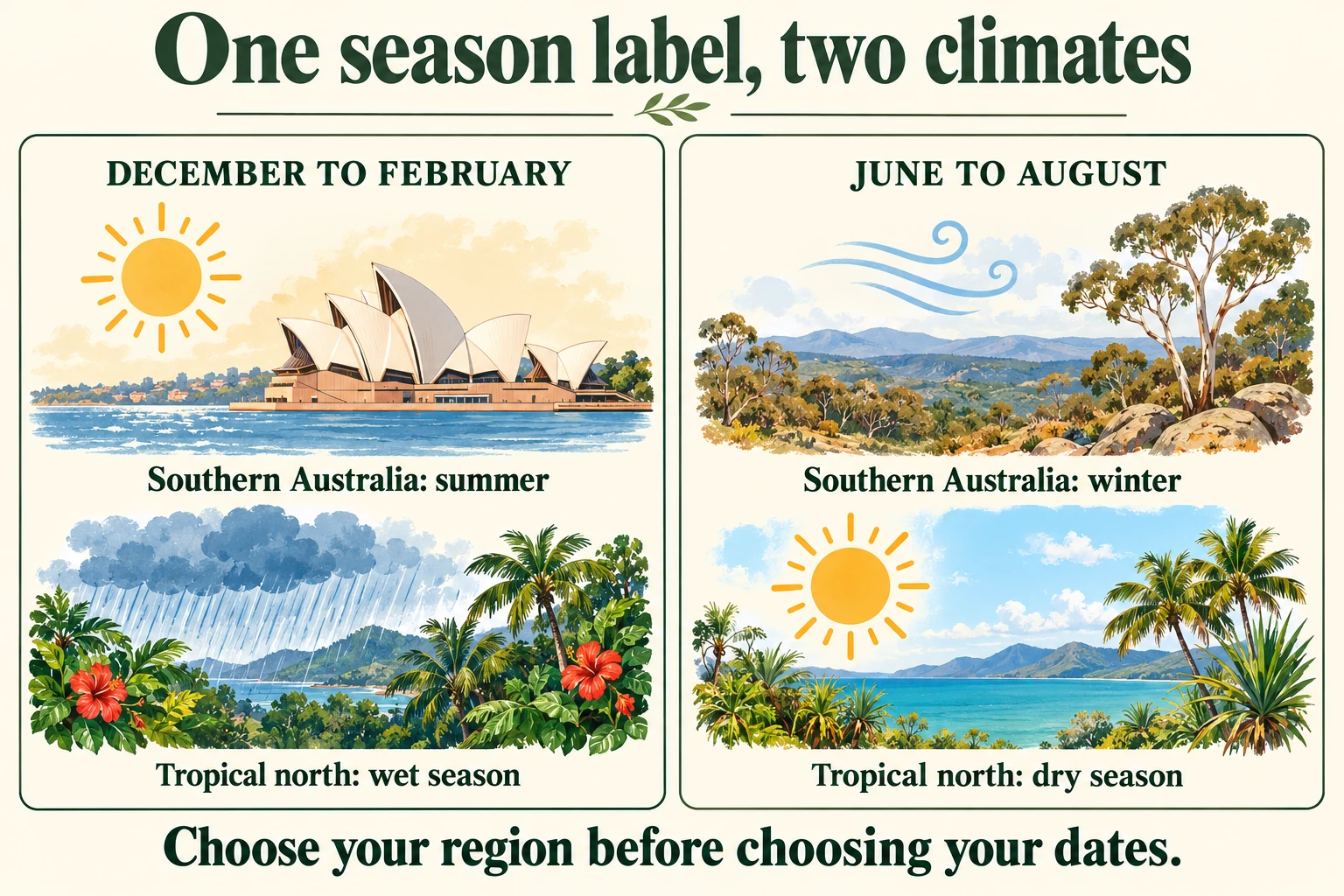
For most first trips, the shoulder periods, the weeks between peak and off-peak, offer the best overall weather and lower hotel rates. In the south and east, these fall in late February to mid-March, late September to mid-October, and late October to mid-November. For the north and the desert, plan around the dry months, roughly April or May through September or October, and match your dates to your priorities by region and month.
How Seasons and Price Tiers Work
Hotels and airlines divide the year into peak, shoulder and off-peak periods. Peak combines school holidays with big events and brings the highest rates and the fullest hotels. Off-peak is the cheapest. Shoulder sits between the two. Airlines split fares into Basic, Shoulder and Peak seasons, where Basic is the cheapest and usually coincides with cooler weather and the lowest demand, and Peak typically falls over the Christmas holidays.
Australian school holidays drive much of the domestic demand, because families fill beaches, resorts and hotels. They are staggered by state, so the exact dates differ, and they are covered in detail in the school holiday section below. Single events also move prices sharply in one city. A Formula 1 weekend in Melbourne or New Year’s Eve in Sydney can make a normally quiet week expensive.
Rainfall and Temperature by City
The table gives annual rainfall and the wettest and driest months for eight cities, using Bureau of Meteorology figures. The Sydney, Cairns and Perth rows come from airport or observatory station averages (Sydney, Cairns, Perth). The Alice Springs row comes from its airport station. The Melbourne, Brisbane, Darwin and Hobart rows come from the 1981–2010 city climate page.
| City | Annual rainfall | Wettest month | Driest month |
|---|---|---|---|
| Sydney | 1,213.4 mm | June 133.1 mm (March 131.6 mm close behind) | September 68.1 mm |
| Melbourne | 518 mm | November 61 mm | May 36 mm |
| Brisbane | 1,080 mm | February 145 mm | September 33 mm |
| Cairns | 2,019.1 mm | February 436.1 mm | August 26.9 mm |
| Darwin | 1,812 mm | January 466 mm | July 1 mm |
| Perth | 753.4 mm | June 153.5 mm | January 10.2 mm |
| Alice Springs | 283.4 mm | February 42.4 mm | August 8.4 mm |
| Hobart | 569 mm | August 61 mm | February and May 36 mm |
Temperatures follow the same split. Mean daily maximums run from 26.0 °C in January to 16.4 °C in July in Sydney, and from 36.6 °C in January to 19.9 °C in July in Alice Springs. Perth runs from 32.1 °C in February to 18.0 °C in July, and Cairns from 31.5 °C in January to 25.9 °C in July. Brisbane’s maximum ranges from 29.2 °C in January to 20.7 °C in July.
Best Months for Each Region
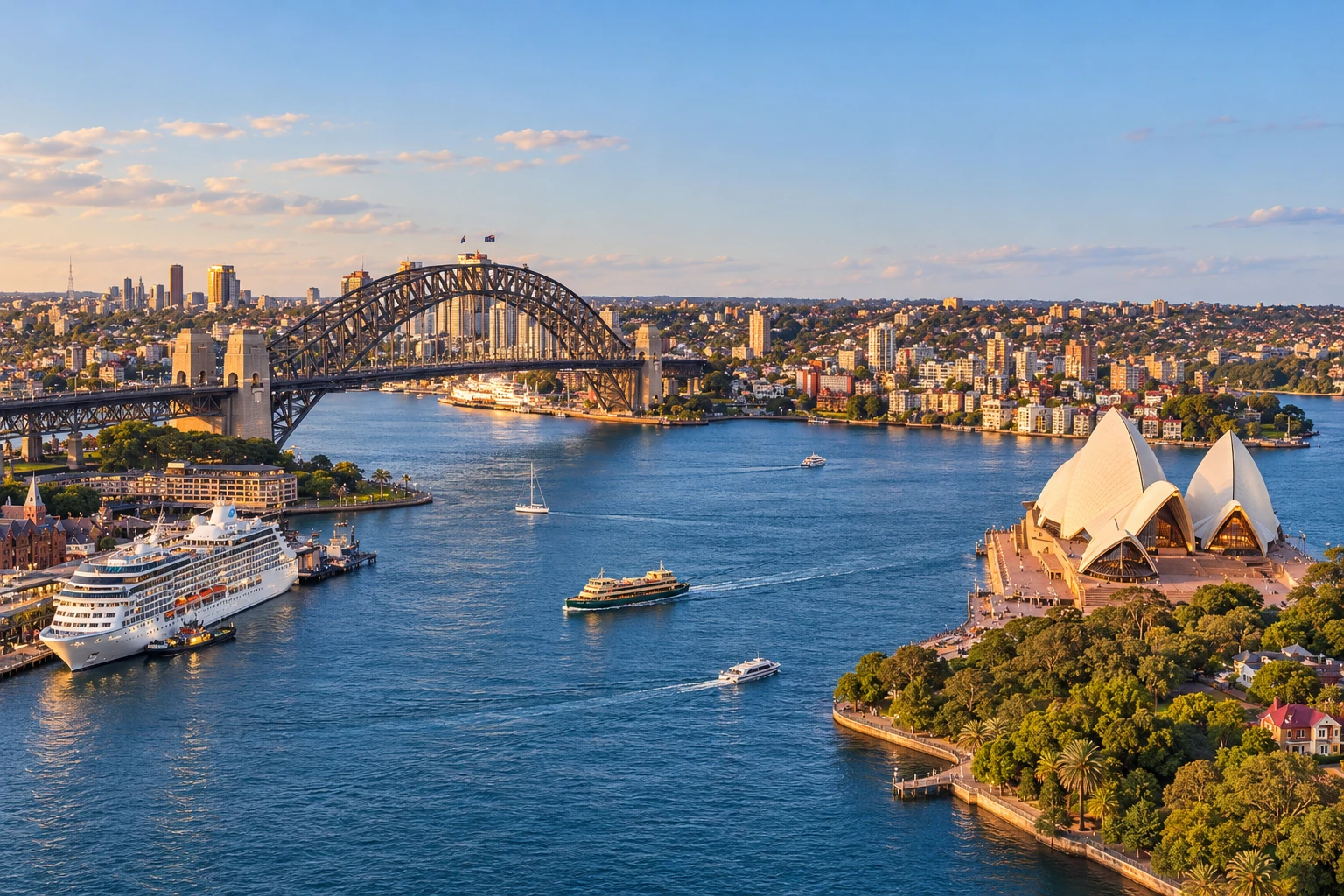
Sydney and New South Wales
Sydney is warmest from January to March, with mean maximums around 26 °C, and coolest from June to August, when maximums sit between 16 and 18 °C. Rain falls through the year. September is the driest month by volume at 68.1 mm.
The primary peak runs 22 December to 26 January, covering school summer holidays, New Year’s Eve, the Boxing Day Test cricket match, Sydney Festival and Australia Day. Hotel rates in that stretch are 80–150% above off-peak, and New Year’s Eve is the most expensive night of the year. Overall, peak-period hotel rates run 30–150% above off-peak.
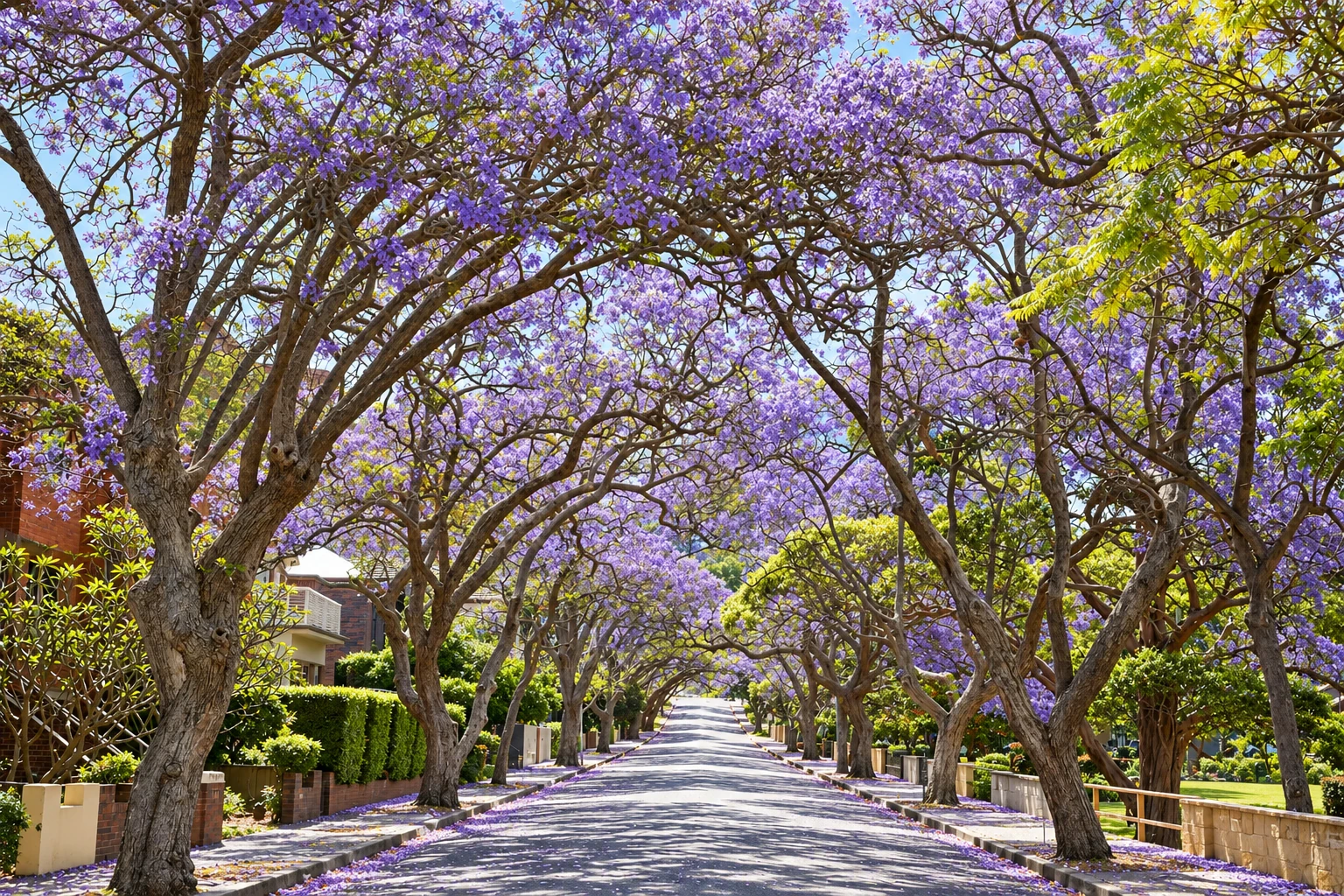
Secondary peaks come around Easter and the April school holidays (about 14 days, with rates near summer levels, boosted by the Royal Easter Show), during Vivid Sydney from roughly 22 May to 14 June (rates within 10% of January), and in early to mid-October, driven by The Everest horse race, the Sculpture by the Sea launch and jacaranda season.
The value windows are late February to mid-March (hotel rates 25–35% below January), late September, and late October to mid-November (15–20% below peak). Mid-April and mid-October weeks are also shoulder periods with near-peak weather at roughly 25–40% less cost. Mid-to-late June and July outside NSW school holidays are off-peak, and August is the lowest-cost month overall. August also brings whale watching and the City2Surf fun run.
Beyond Sydney, New South Wales has Tamworth Country Music Festival in January, Bluesfest at Byron Bay in April, and the Bathurst 1000 motor race in October.
Melbourne and Victoria
Melbourne’s rainfall is the most even of any big city here, at 36 to 61 mm a month, with November the wettest. Melbourne is the cloudiest capital city in Australia, with 48.6 clear days a year, and isolated heavy showers pass quickly. Pack layers in any month.

The busy stretch runs from January to March. Melbourne Tourism says major events such as the Australian Open, the Formula 1 Grand Prix, the Melbourne Cup and the AFL Grand Final double hotel rates and sell out neighborhoods, and it calls March "the triple-whammy month" because hotel rates peak. It also reports more than 100 major events a year in Victoria, drawing over 25 million attendances combined. May is a quieter month for visiting, because the cultural calendar slows. If you want Melbourne without premium prices, choose May. If you want the events, book early: finals week at the Australian Open calls for hotel reservations 4–6 months ahead.
Cairns and Far North Queensland
Cairns divides cleanly into wet and dry halves. January to March each bring over 400 mm of rain, with February the wettest at 436.1 mm. From June to October rainfall stays under 50 mm a month, with about five rain days in September and October, 4.9 in August and 5.7 in July. The coolest month is July, with a mean maximum of 25.9 °C, against 31.5 °C in January. The dry months of June to October are the comfortable window for most visitors.
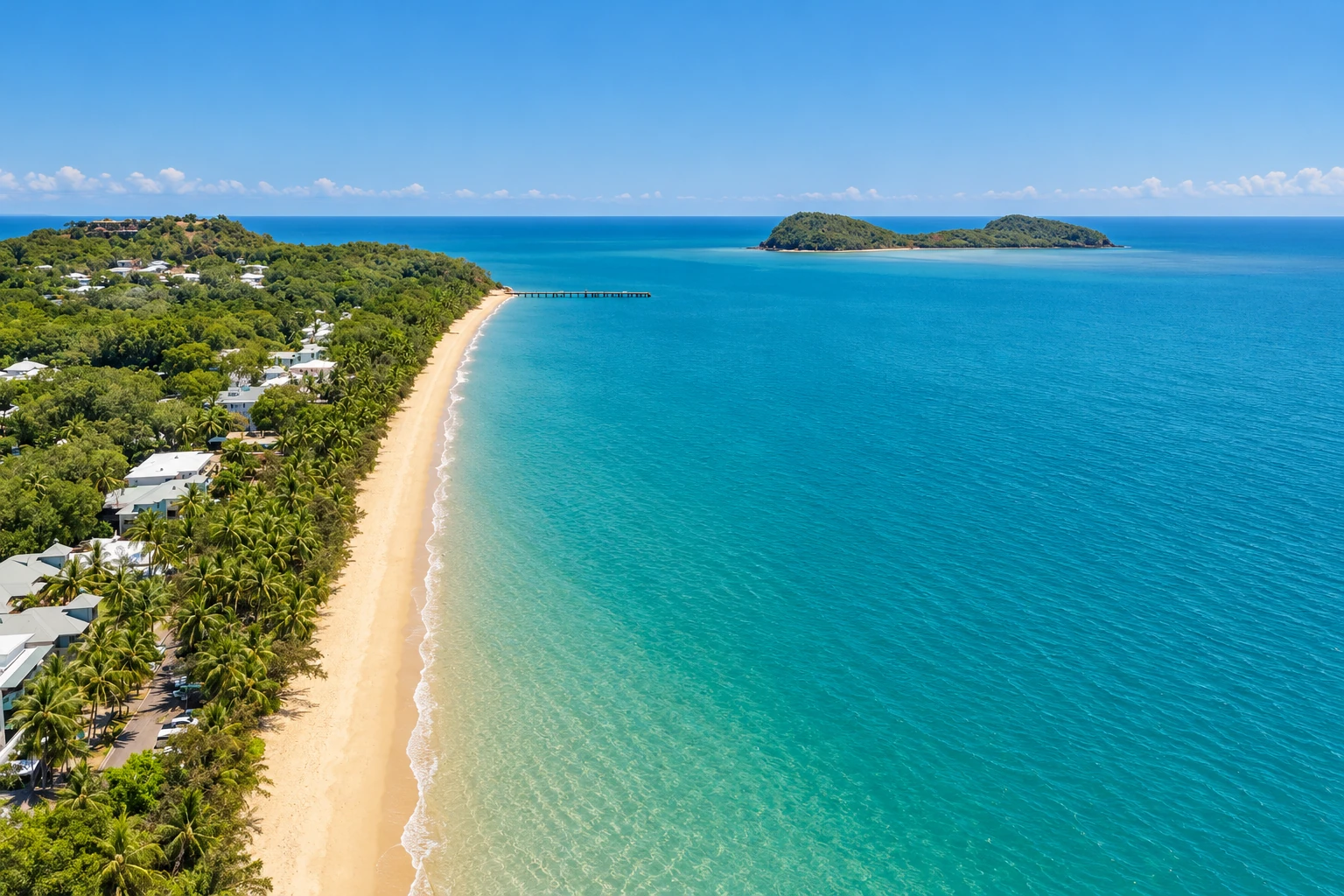
Marine stingers shape swimming. The Cairns visitor guide gives the stinger season as November to May, and in that period the northern beaches from Machans Beach to Ellis Beach have stinger-net enclosures and lifeguard patrols. Palm Cove and Trinity Beach are the named swimming beaches, while the Cairns city foreshore is a tidal mudflat unsuited to swimming. The Tropical North Queensland tourism body gives a wider range, saying box jellyfish and Irukandji occur from Cape York south to Gladstone from around October to June. Treat October and June as edge months, wear a stinger suit (hire is available at most beaches with facilities), and remember that nets reduce risk but cannot guarantee safety, because Irukandji can still get past them. Netting and patrol hours are set season by season, so check current status before you swim.

Brisbane and South-East Queensland
Brisbane is wettest from January to March, with 115, 145 and 108 mm, and driest from August to October, at 41, 33 and 81 mm in August, September and October respectively. Maximums fall from 29.2 °C in January to 20.7 °C in July. Winter and early spring give the driest weather. The Brisbane Street Art Festival ran 2–17 May in 2026, Horizon Festival in Caloundra ran 1–10 May, and the Brisbane Festival takes place in September.
Darwin and the Top End
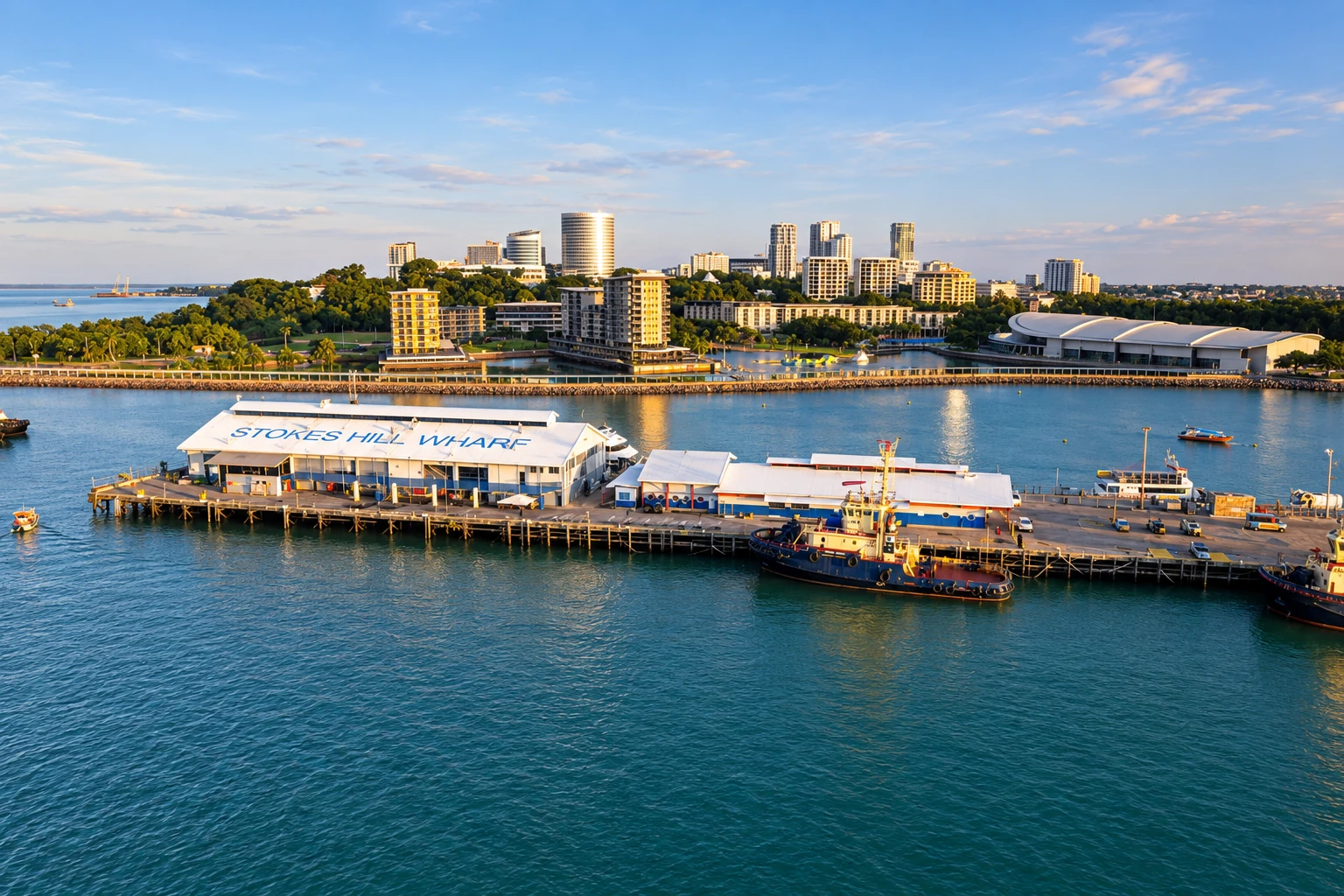
Darwin has a wet season from roughly December to March, with 276 mm in December and 466 mm in January, followed by a dry season from April to October. Rainfall drops to 108 mm in April and 25 mm in May, then to just a few millimeters a month from June to August. Darwin’s January mean maximum is 31.8 °C, and humidity during the wettest months averages over 70% in the afternoon, with thunderstorms common. Travel from May to September for the driest conditions. The Darwin Festival, an 18-day event, is listed for August, and the Barunga Festival in the Top End ran 5–8 June in 2026. Rainfall data come from the Bureau of Meteorology city page.
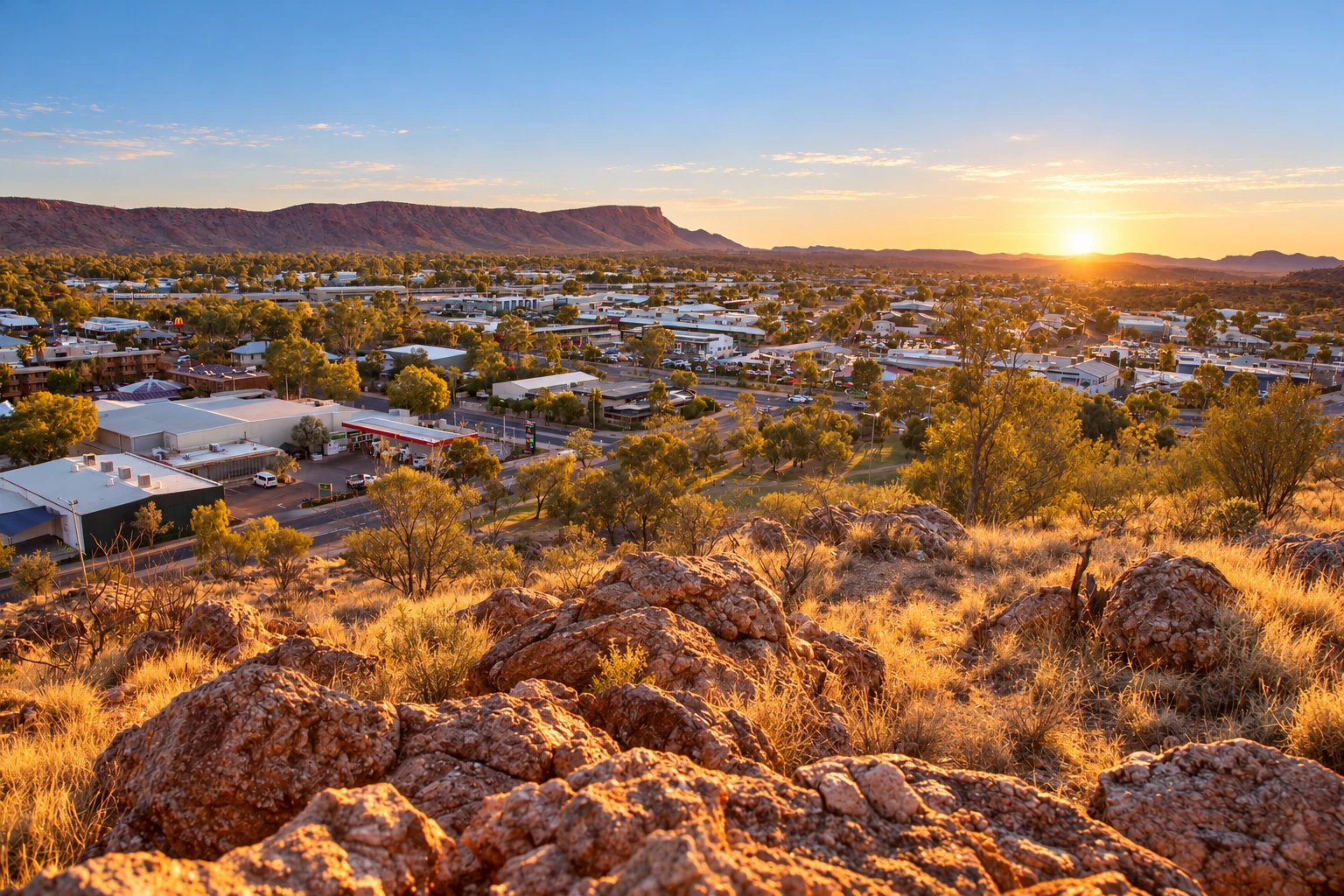
Alice Springs and the Red Centre
The desert is hot in summer. Mean maximums in Alice Springs are 36.6 °C in January, 35.3 °C in February and 35.6 °C in December. June and July are coolest, with maximums near 20 °C (20.0 and 19.9 °C), and days stay mild. Rain is lightest from June to September, and July, August and September average 1.6, 1.2 and 1.5 rain days. September warms to 27.5 °C, October reaches 31.3 °C and November 33.8 °C. For comfortable days outdoors, aim for roughly May to September, with June and July the coolest. Desert Mob, an Aboriginal arts festival in Alice Springs described as the Northern Territory’s longest-running, takes place in September.
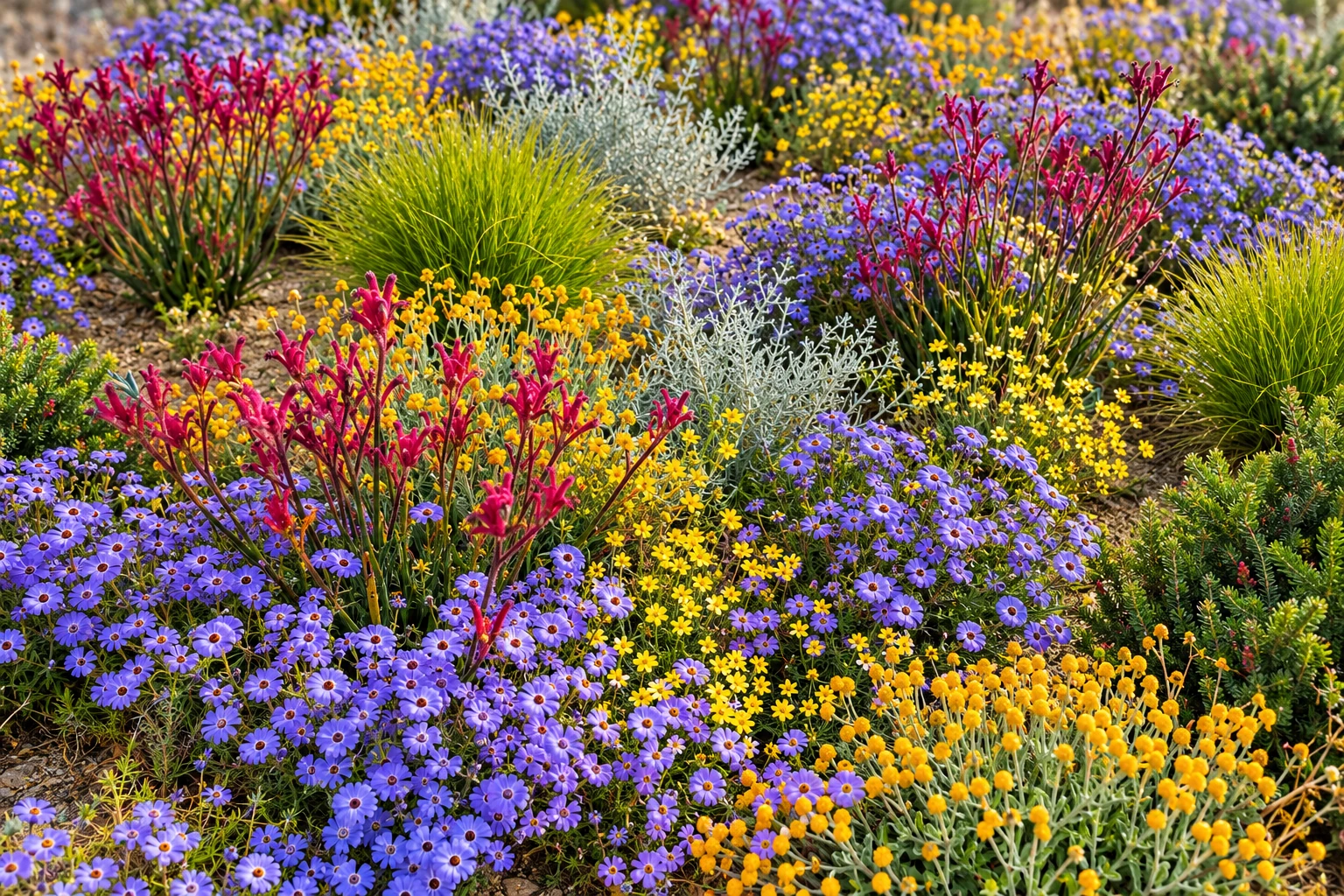
Perth and Western Australia
Perth has dry summers and wet winters. December to February bring only 10 to 14 mm of rain a month, and highs average 31.9 °C in January and 32.1 °C in February, the hottest month. Summer nights in Perth are colder than those in Sydney, Brisbane and Darwin. June and July are the wettest, at about 153 mm each, with 13.6 and 14.8 rain days. The shoulder months in spring, September to November, coincide with wildflower season in Western Australia. Perth’s November mean maximum is 26.2 °C, and rainfall in that month is 25.5 mm.
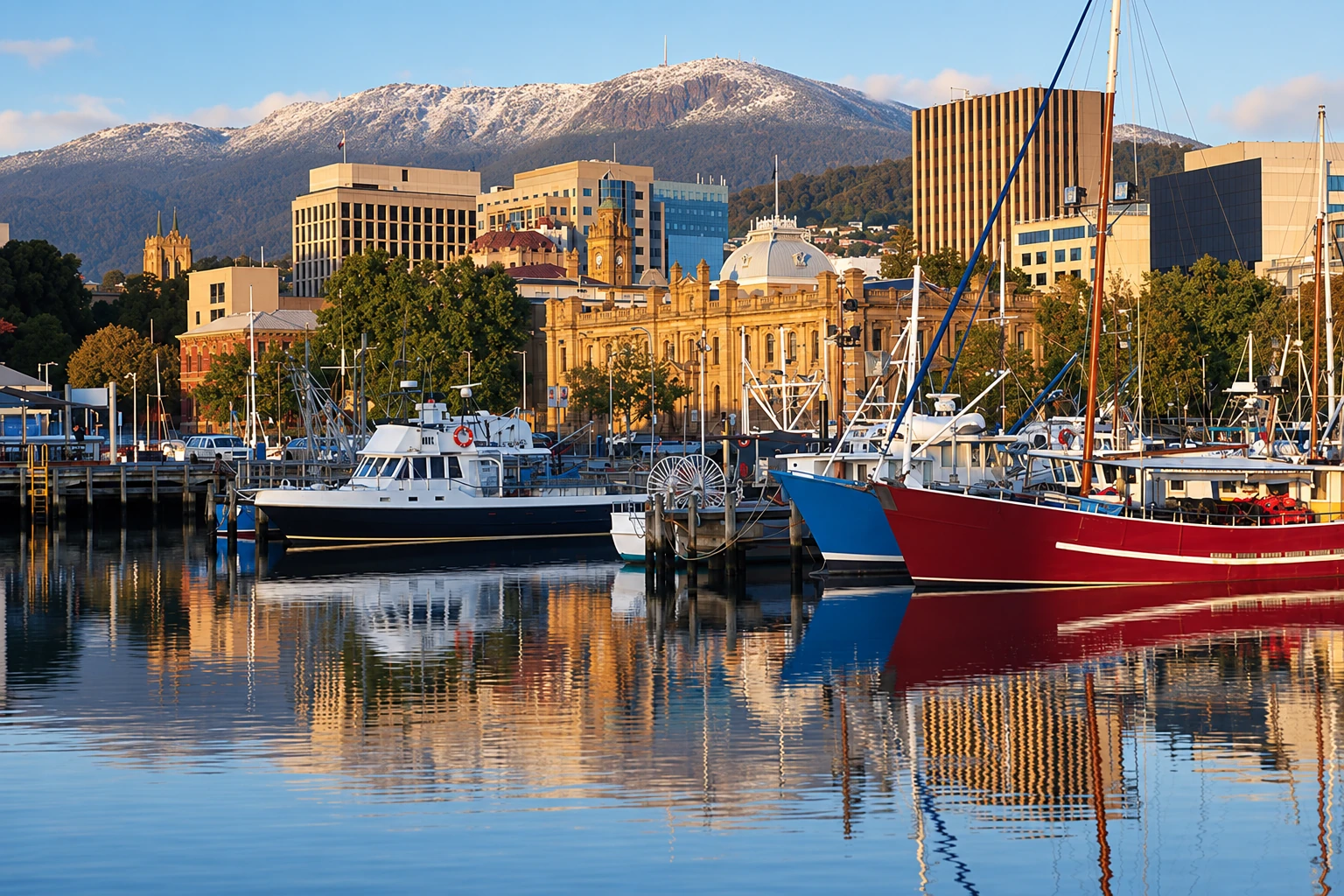
Hobart and Tasmania
Hobart’s rain is spread across the year, with 36 mm in February and May and 61 mm in August, the wettest month. The distinctive event is Dark Mofo, which ran 13–23 June in 2026, and which gives winter its own reason to visit. Tasmania also hosts the Festivale food and drink festival in Launceston (30 January to 1 February in 2026) and the Cygnet Folk Festival (9–11 January).
Adelaide and South Australia
In 2026, the Adelaide Fringe ran 20 February to 22 March and WOMADelaide ran 6–9 March at Botanic Park, the Adelaide Wine Festival Winter Show was held 25 May, the Adelaide Cabaret Festival started 4 June, and Illuminate ran 1–19 July. Fringe and WOMADelaide fall in February and March. Adelaide hotels fill during these events, so pick your dates around the ones you want to attend.
Canberra and the ACT
Canberra’s headline event is Floriade, held September to October, with over one million blooms in Commonwealth Park, and entry is described as free. ACT school holidays in 2026 ran 3–19 April, 4–19 July, and 26 September to 11 October, with summer holidays from 19 December 2026 to 31 January 2027.
Month by Month
January
January is peak summer in the south and east, and the hottest month in Alice Springs (36.6 °C) and one of the hottest in Perth (31.9 °C). Sydney averages 26.0 °C. Cairns averages 31.5 °C with 404.8 mm of rain, and Darwin is deep in its wet season at 466 mm. Sydney is in its primary peak until 26 January, with rates 80–150% above off-peak.
The big event is the Australian Open in Melbourne. In 2026 the main draw ran 18 January to 1 February, with qualifying from 12 January and more than 800,000 attendances across three weeks. Ground passes cost $19–$89 and Rod Laver Arena tickets ran from $85 for upper seats to $475+ for finals. Other January events include the Tamworth Country Music Festival (16–25 January in 2026), the Cygnet Folk Festival in Tasmania, Festivale in Launceston and Sydney Festival, which marked its 50th anniversary in 2026. January suits beach and city trips in the south and east for travelers who accept peak prices. It is a poor month for the Red Centre and for budget travel.
February
Perth peaks at 32.1 °C, Alice Springs averages 35.3 °C, and Cairns still gets 436.1 mm of rain. In Sydney, late February is a shoulder period with hotel rates 25–35% below January and weather close to peak, which makes it a good time for harbor and beach days at a discount.
Melbourne hosts the Midsumma Festival, a three-week LGBTIQ+ arts festival across more than 100 venues, with the Pride March down Fitzroy Street in St Kilda on a Sunday in early February. The Adelaide Fringe began on 20 February in 2026 and ran to 22 March.
March
March is busy in Melbourne, where hotel rates peak. The Australian Grand Prix takes place on a mid-to-late March weekend (confirm dates at formula1.com.au), with four-day General Admission from $299 and grandstands from $419. The Melbourne Food and Wine Festival runs roughly ten days with more than 250,000 visitors a year, including the World’s Longest Lunch. Moomba Festival is free. WOMADelaide ran 6–9 March in 2026, and the Golden Gumboot Festival takes place in Tully, Queensland.
Sydney is cheaper, with late February to mid-March 25–35% below January hotel rates. March is also among Sydney’s wettest months, at 131.6 mm. Cairns averages 424.3 mm and Darwin 335 mm. Alice Springs begins to cool, at 32.8 °C.
April
April marks the start of the dry season in Darwin, where rainfall drops to 108 mm. Alice Springs falls to 28.4 °C and Sydney’s maximum to 22.5 °C. Cairns is still wet at 201.7 mm but far drier than in March.
Domestic demand is high at Easter. In 2026 the Easter and autumn school holidays ran 3–19 April in the ACT, 3–21 April in NSW, and 3–12 April in the NT. Sydney’s roughly 14-day Easter peak carries rates near summer levels, though mid-April is a shoulder week at 25–40% less than peak. Events include the Melbourne International Comedy Festival, described as the third-largest comedy festival in the world, and Bluesfest in Byron Bay.
May
May is a dependable month. Sydney’s maximum is 19.5 °C with 117.4 mm of rain, Alice Springs is a comfortable 23.1 °C, Darwin gets just 25 mm, and Cairns eases to 91.6 mm. Melbourne’s cultural calendar slows, which makes it a good month to visit at lower prices.
Vivid Sydney begins in late May and runs to mid-June (22 May to 13 June in 2026), pushing Sydney hotel rates to within 10% of January. Other events included Horizon Festival in Caloundra (1–10 May), the Brisbane Street Art Festival (2–17 May), the Hughenden Festival of Outback Skies on 1 May and the Adelaide Wine Festival Winter Show on 25 May.
June
Winter begins in the south. Sydney’s maximum is 17.0 °C, Perth’s is 19.1 °C with 153.5 mm of rain, and Alice Springs is a mild 20.0 °C. Cairns is 26.2 °C with only 45.7 mm, and Darwin gets just 2 mm. This is the season for the north and the desert, and a poor one for Perth.
Mid-to-late June is off-peak in Sydney, once Vivid ends. NT winter school holidays ran 20 June to 12 July in 2026. Dark Mofo ran 13–23 June in Hobart, the Barunga Festival ran 5–8 June in the Top End, the Adelaide Cabaret Festival began on 4 June, and Melbourne holds its International Jazz Festival.
July
July is the coolest month in Sydney (16.4 °C), Alice Springs (19.9 °C) and Perth (18.0 °C), and one of the driest in Darwin (1 mm) and Cairns (33.2 mm, 25.9 °C). Perth’s wettest months are June and July. Sydney treats July as off-peak except during NSW school holidays, which ran 6–17 July in 2026 (4–19 July in the ACT, and the NT break ended 12 July).
Cultural events include Illuminate in Adelaide (1–19 July in 2026), RISING Festival and Open House in Melbourne, and NAIDOC Week, which celebrates Aboriginal and Torres Strait Islander culture.
August
August is arguably the lowest-cost month in Sydney, with 17.9 °C and 80.2 mm of rain, and it offers whale watching and the City2Surf. Cairns is 26.7 °C and drier at 26.9 mm, Darwin gets 6 mm, and Alice Springs is 22.9 °C with 8.4 mm. Hobart sees its wettest month, at 61 mm. The Darwin Festival is listed for August, and the Melbourne International Film Festival also runs this month.
September
September is warm and dry in many places. Alice Springs reaches 27.5 °C with 8.8 mm of rain, Sydney is 20.1 °C and at its driest (68.1 mm), and Perth is 20.4 °C as wildflower season starts. Late September in Sydney is a shoulder period with roughly 25–40% less cost than peak.
Spring school holidays begin in the second half of the month. In 2026 they ran 19 September to 4 October in the NT and 26 September to 11 October (ACT) or 12 October (NSW). Events include Floriade in Canberra, Desert Mob in Alice Springs, the Brisbane Festival, Melbourne Fringe and the AFL Grand Final.
October
October brings heat to the interior, with Alice Springs at 31.3 °C. Cairns is 29.7 °C with 47.2 mm, and Sydney is 22.2 °C. Early to mid-October is Sydney’s tertiary peak, linked to The Everest, Sculpture by the Sea and jacaranda season, and it overlaps with spring school holidays. The Royal Melbourne Show and the start of the spring racing season take place in Melbourne, and the Bathurst 1000 is a big draw in New South Wales. From late October, Sydney’s rates drop to 15–20% below peak, while the stinger season in far north Queensland is already underway on the wider coast.
November
Darwin’s wet season begins (137 mm), Cairns is 30.8 °C with 87.9 mm, Alice Springs is 33.8 °C, and Perth is 26.2 °C. Sydney’s shoulder period from late October to mid-November sits 15–20% below peak. The main event is the Melbourne Cup Carnival, and the Cairns stinger season starts this month.
December
December starts the wet season in the north, with Darwin at 276 mm. Alice Springs reaches 35.6 °C and Perth is 29.3 °C with 10.6 mm of rain, which makes it a good beach month on the west coast. Sydney’s primary peak begins 22 December, and NSW school holidays start on 18 December in 2026. Events include Carols by Candlelight in Melbourne on 24 December, the Boxing Day Test, Sydney’s New Year’s Eve fireworks on 31 December and the Woodford Folk Festival.
School Holidays and Booking
State school holidays raise prices and fill accommodation, and the dates differ by state. For 2026 the published dates are:
| State or territory | Easter/autumn | Winter | Spring | Summer |
|---|---|---|---|---|
| ACT | 3–19 April | 4–19 July | 26 Sep–11 Oct | 19 Dec 2026–31 Jan 2027 |
| NSW | 3–21 April | 6–17 July | 26 Sep–12 Oct | Eastern Division: 18 Dec 2026–27 Jan 2027 |
| NT | 3–12 April | 20 June–12 July | 19 Sep–4 Oct | Not listed |
Term 4 ends in 2026 on 17 December in Victoria, 16 December in Western Australia, 10 December in Queensland, 17 December in New South Wales, 10 December in South Australia, 16 December in Tasmania, 17 December in the ACT and 9 December in the Northern Territory. School returns in 2027 on 27 January in Victoria, Queensland, South Australia and the NT, 1 February in Western Australia and the ACT, 3 February in NSW and 4 February in Tasmania. Boxing Day falls on a Saturday in 2026, so Monday 28 December is a public holiday in all states and territories. School holiday dates are set each year, so check the NSW Department of Education calendar or your destination state’s education department before booking.
Choosing Dates by Season
Summer (December to February) suits the south-east if you accept peak prices and crowds. It works for Darwin and Cairns only if you can handle the wet season, and it is a poor fit for the Red Centre.
Autumn (March to May) offers value in Sydney in late February to mid-March and in May. Melbourne is busy in March and quieter in May, and the Top End and Far North enter their drier season from April. It suits festival lovers in Melbourne, Adelaide and Brisbane, along with dry-season travel to the north.
Winter (June to August) is the best season for Darwin, Cairns and the Red Centre and for low-cost trips to the southern cities. August is the cheapest month in Sydney, and Hobart’s Dark Mofo runs in June. Perth is wetter in these months.
Spring (September to November) brings good value in Sydney in late September and October, warming days in Alice Springs, wildflowers in Western Australia and spring racing in Melbourne in October and November.
Booking Recommendations
- Pick the region first: The north and the Red Centre are best from roughly May to September, Perth is best in its dry summer and spring, and the south-east is best in the shoulder periods.
- Avoid peak stacking in Sydney and Melbourne: Sydney’s 22 December to 26 January peak adds 80–150% to hotel rates, and Melbourne’s January to March events can double them.
- Book shoulder weeks for value: Late February to mid-March, late September and late October to mid-November are cheaper in Sydney, with hotel rates well below peak or January levels, and good weather.
- Plan Cairns swimming around stingers: Use November to May as the main stinger window, treat October and June as edge months, and check netting and patrols.
- Check school holiday dates: State dates differ, and the ACT, NSW and NT blocks in 2026 show how much domestic demand shifts by week.