Getting Around the Netherlands

Intercity trains carry most visitors between Dutch cities. A contactless bank card pays for the buses, trams, and metros within them. Amsterdam, Rotterdam, Utrecht, and The Hague share one fast rail corridor run by NS, the national railway, so a car or flight rarely saves time between them. Ferries are the only way to reach the Wadden Islands in the north. A rental car makes the most sense for rural touring.
Each option suits different trips, so compare typical costs, journey times, and booking steps before you choose. Prices and timetables change, so check the linked operator page before you buy.
Intercity Trains Between Cities
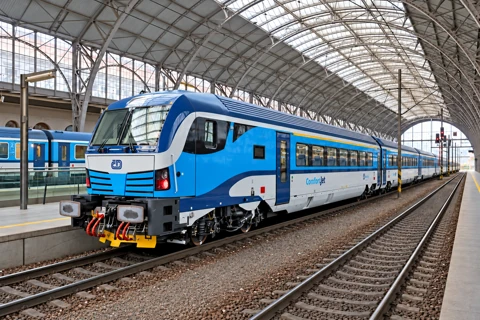
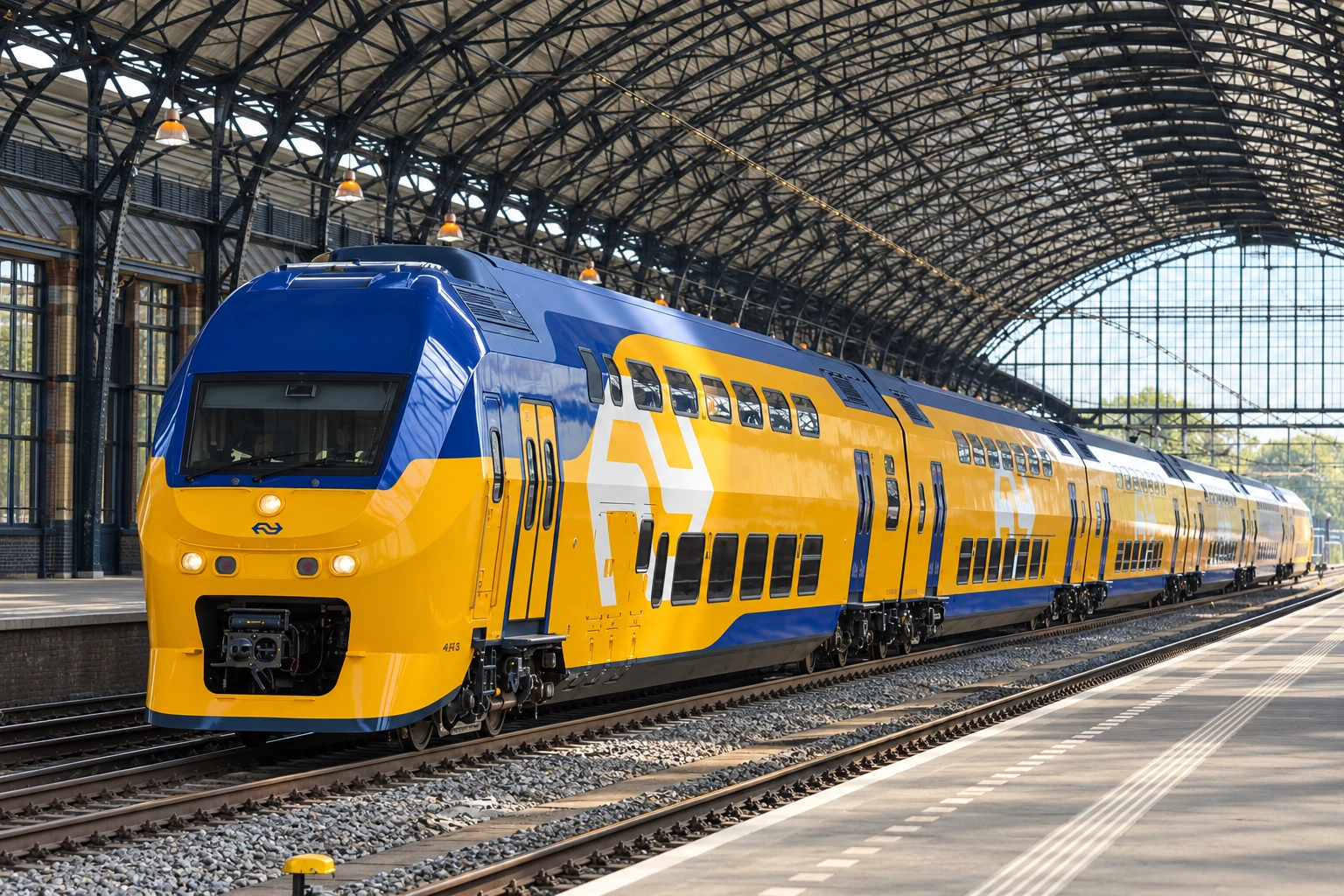
NS Intercity services link Amsterdam, Utrecht, Rotterdam and The Hague, and they beat domestic flights on the main city pairs. NS International says it also serves Schiphol Airport from all over the country with regular services, so most arrivals need no connecting flight or car.
Typical journey times on the busiest routes:
- Amsterdam to Utrecht: direct Intercity trains take about 26 to 27 minutes, and cheapest fares around €10 and an average near €11 apply.
- Amsterdam to Rotterdam: the fastest train takes about 31 minutes, and the average listed trip takes about 1 hour 1 minute. Between Amsterdam Zuid and Rotterdam Centraal, one or two trains run per hour. Check the NS timetable for the exact departure.
- Schiphol to Amsterdam Centraal: 15 to 20 minutes on Intercity trains that leave about every ten minutes during the day. The same trip takes 26 minutes, so use the longer figure if your connection is tight.
Fares on the Amsterdam to Rotterdam Line
The Amsterdam Centraal to Rotterdam Centraal fare page gives a useful benchmark for what a standard intercity trip costs:
| Ticket | Price |
|---|---|
| Single, 2nd class, e-ticket | €20.20 |
| Single, 1st class | €28.28 |
| Return, 2nd class | €40.40 |
| Return, 1st class | €56.56 |
| Child aged 4 to 11 (RailRunner) | €2.50 |
Two NS discount subscriptions exist, and both are built for commuters. Altijd Voordeel costs €29.95 per month and takes 20% off peak fares and 40% off outside peak. It pays for itself after four return trips a month on this route. Dal Voordeel costs €6.35 per month and takes 40% off outside peak only. Peak hours run Monday to Friday from 06:30 to 09:00 and from 16:00 to 18:30, excluding public holidays. A visitor making a handful of trips gains little from either, but anyone staying a month and traveling daily should run the numbers. Traveling outside those peak windows lowers the price on its own for subscribers.
Buying NS Tickets
Buy e-tickets online. E-tickets are always cheaper than tickets from a station machine, and payment works with iDEAL, Mastercard, Visa and American Express. For longer trips, NS International says early booking gives the lowest prices. Its site has separate pages for finding train tickets, reserving a seat, and fares and discounts.
Trains to Belgium and Germany
Utrecht is the easiest gateway for international rail. Antwerp to Utrecht takes about 1 hour 38 minutes on Eurocity Direct, with fares from €26. Cologne to Utrecht takes about 2 hours 12 minutes, because Utrecht sits on the Amsterdam to Cologne main line where ICE trains run between the two cities. Both journeys run in the same ticketing channel as domestic NS trains, with early booking giving the lowest fares.
Buses, Trams and Metro
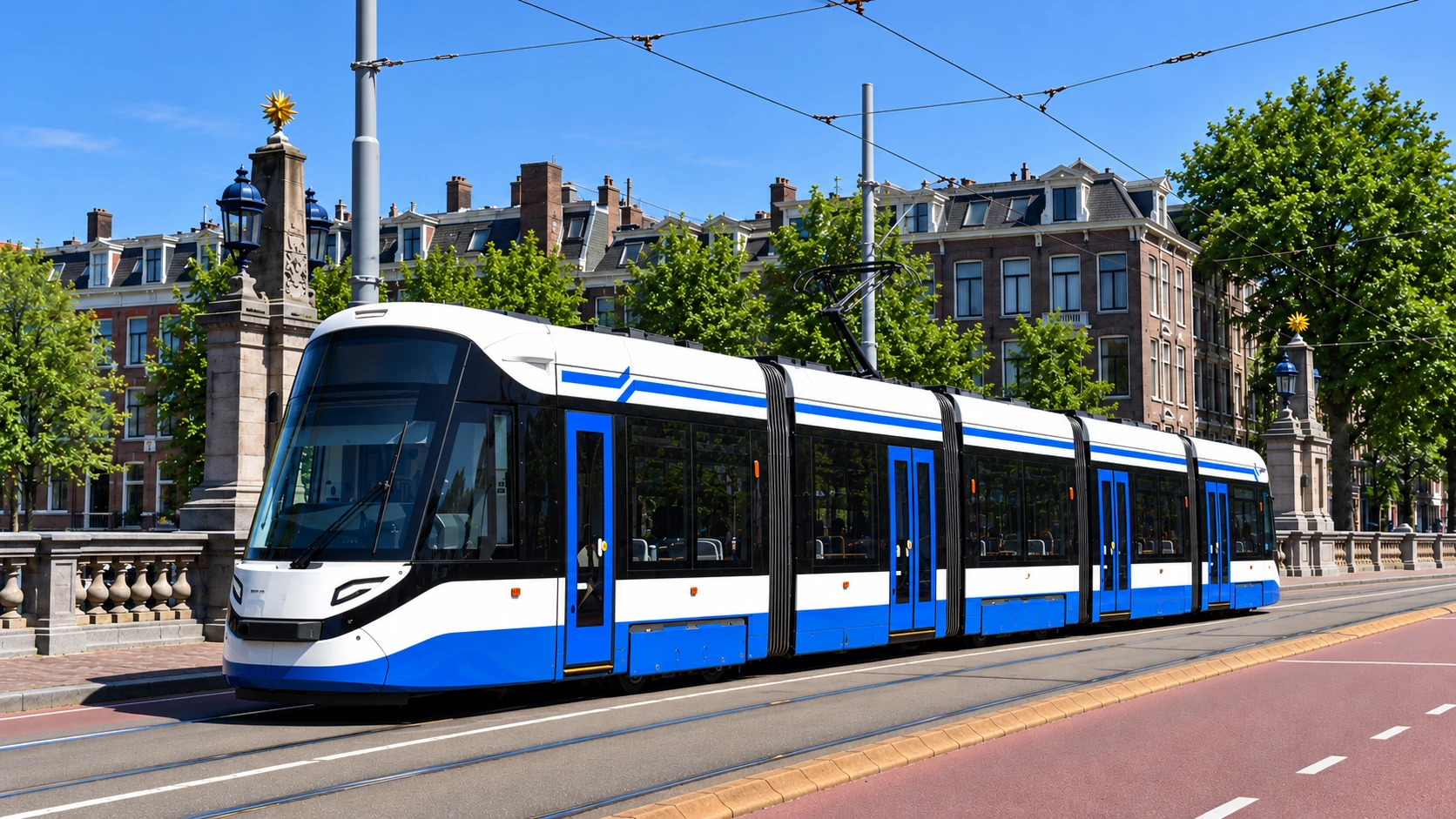
Public transport in the Netherlands is called OV (openbaar vervoer). Contactless bank cards and phones now work as tickets. You tap in at the start of a bus, tram, metro or train ride and tap out at the end. OVpay, as described by Utrecht’s transport operator, works on bus, tram, metro and train throughout the country. The first card-payment option launched in 2023.
A bank card needs no top-up and no separate transit card. The card or phone must be contactless. Discounts apply on bus, tram and metro only, and while tapping in works on trains, train rides get no such discount. Charges post afterward, usually the next working day, at the regular per-kilometer rate. Always tap out. A missed check-out leaves the journey incomplete.

The OV-chipkaart is on its way out
The older OV-chipkaart (a rechargeable plastic transit card) is being retired. The new OV-pas became available in late November 2025 and costs €6, available through Ovpay.nl or the OVpay app. It is valid for 5 years. Existing OV-chipkaarts keep working until the end of 2027, when the OV-chipkaart is fully discontinued. Sales of anonymous OV-chipkaarts stop from July 1, so a visitor who wants a card choices the OV-pas, and one who wants no card at all taps a bank card.
Subscriptions cannot attach to a bank card; they need a personal OV-chipkaart, and a subscription pays off only if you ride the same route more than four times a week. Short-stay visitors can ignore subscriptions.
Fares in Utrecht and Amsterdam
Fares differ by city. In Utrecht, bus and tram fares paid with a bank card or OV-pas are capped at €10.00 per day for all rides. After that, rides cost at most €6.50 per day, and the night bus is a flat €5.00. In Amsterdam, GVB’s Bus Tram Metro 1.5-hour ticket cost €6.50 in 2025, but it has not been sold since January 1, 2026. Check the GVB page for the ticket that replaced it. Coverage is nearly nationwide: the card system is described as valid for train, tram, bus and metro in almost all of the Netherlands.
Ferries to the Wadden Islands
The Wadden Islands off the northern coast are reachable only by boat. Fares, durations and booking rules differ by island and operator.
Harlingen to Vlieland and Terschelling
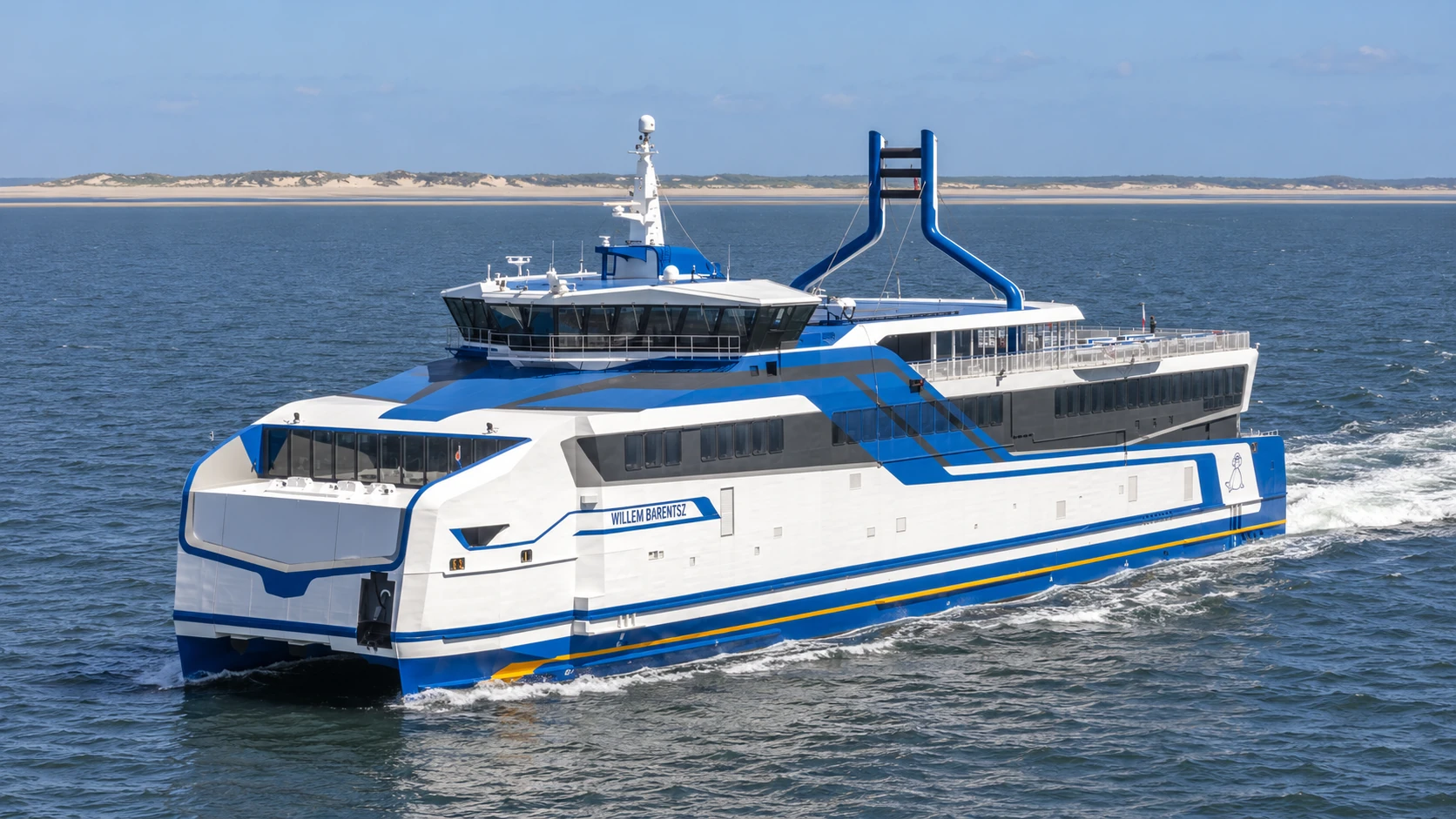
Rederij Doeksen runs the Harlingen routes. Its 2026 tariffs, valid from January 1, 2026 to January 4, 2027, per person including 9% VAT:
| Route or ticket | Price |
|---|---|
| Harlingen to Vlieland or Terschelling, single | €40.10 |
| Harlingen to Vlieland or Terschelling, return | €60.68 |
| Bicycle | €9.81 single / €19.62 return |
| Terschelling to Vlieland, single | €22.76 |
| Terschelling to Vlieland, return | €44.52 |
| Terschelling to Vlieland return, one fast-service and one Waddentaxi crossing | €34.07 |
No age or other discounts apply to the Harlingen fares, and they exclude tourist tax. The Waddentaxi is a smaller boat that can also be chartered. A whole boat costs €660 per single trip between Harlingen and either island and €360 between Vlieland and Terschelling. These prices exclude 9% VAT but include tourist tax. Sailings between 21:00 and 07:00 carry a 25% surcharge. Loose seats on the Waddentaxi are booked by phone at 06-109 411 86, Monday to Friday from 09:00 to 17:00. That line does not sell regular ferry tickets, which are on the Doeksen timetable page.
Journey details differ by island (FerryGoGo’s island overview):
- Vlieland: the regular ferry from Harlingen to Oost-Vlieland takes 1 hour 35 minutes and runs three times daily. In season, a fast service makes the trip in 45 minutes. Cars stay on the mainland at Harlingen.
- Terschelling: the ferry takes about 2 hours from Harlingen and carries cars. Reserve ahead, because car decks fill quickly.
- Ameland: the ferry takes about 50 minutes from Holwert and carries cars.
- Schiermonnikoog: about 45 minutes from Lauwersoog, with no cars.
Den Helder to Texel
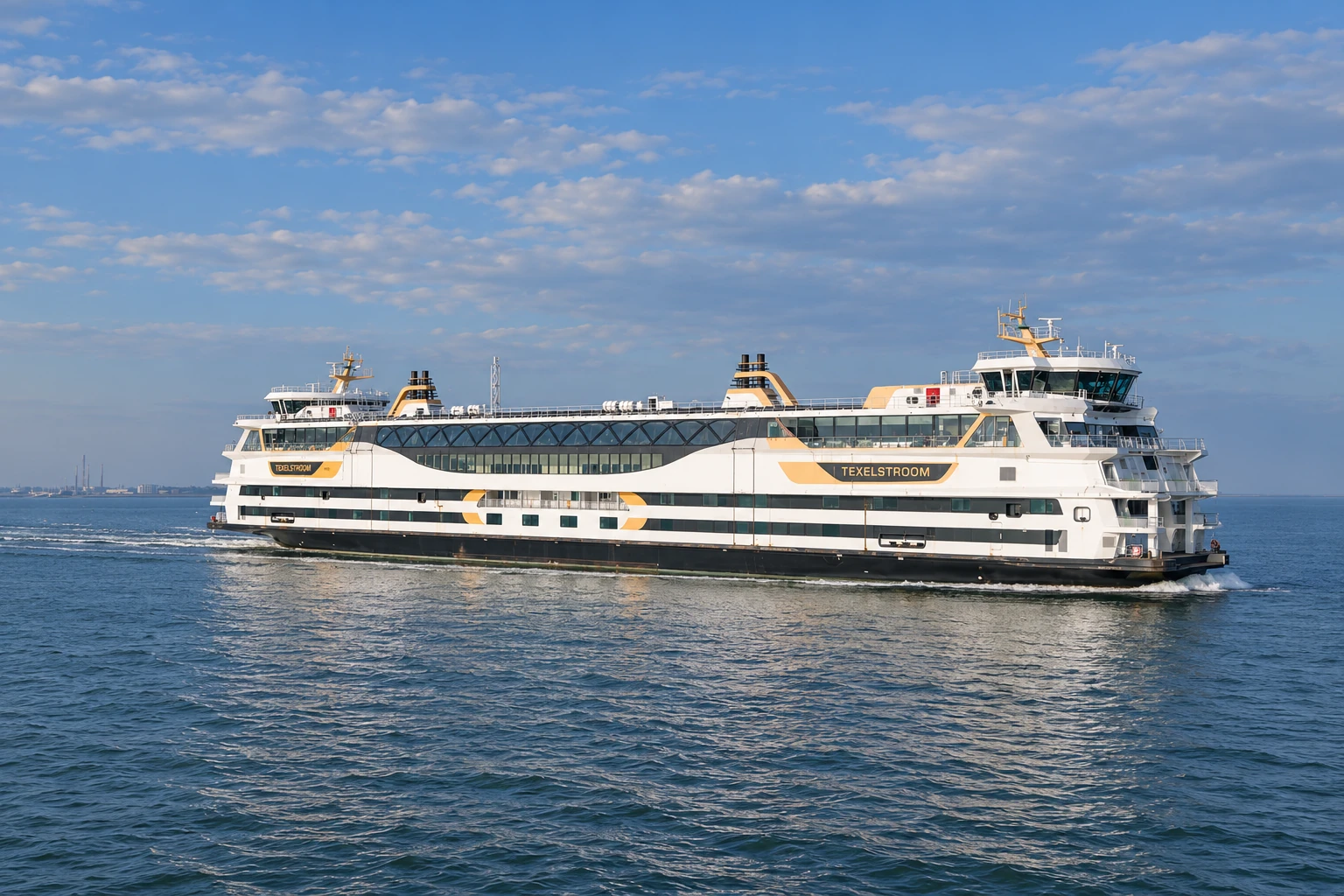
Texel is the simplest island to reach. According to FerryGoGo’s Texel guide, the TESO ferry crosses from Den Helder to ‘t Horntje in about 20 minutes, roughly hourly from 06:30 to 21:30, with later sailings on Sundays. No reservation is needed: buy a return ticket online or at the counter and board the next boat. Foot passengers pay about €3 return and bicycles about €6, and cars can travel to Texel. TESO raised all fares by 10% from April 1, 2025, so confirm the current tariff on TESO’s site before you go.
Vlieland to Texel
Waddenveer’s Vlieland to Texel route combines a beach section with a boat section. The Vliehors Expres truck carries passengers across the beach, then they change to the De Vriendschap boat for the Wadden Sea crossing, which takes about an hour. The service runs from the May holidays to the end of September. It is suspended in winds of Beaufort force 8 or 9 or higher, and the operator refunds the ticket if rescheduling fails. Boarding is by wooden piers, and strollers, wheelchairs and bikes can struggle on the sand. Check the operator’s calendar before building an island-hopping plan around this crossing.

Renting a Car
A rental car suits rural touring and trips that link places the railway does not reach. Between big cities it adds parking cost and traffic for no time saved.
Driver age and license rules
Minimum ages vary by company. Sixt gives 21 for the Netherlands, with a license held for 2 years, and 19 at its Amsterdam locations. Some car categories carry higher minimums, and an underage driver fee may apply. You need a valid license plus an ID card or passport. A license in a non-Roman alphabet, Chinese for example, also requires an international driving permit. Uber Rent lists 18 as the minimum, varying by vehicle and supplier, with extra fees possible under 25. Some providers raise the minimum to 23 or 25 for certain car categories.
Under-25 fees add up, so ask the rental company for its daily fee and any cap. Bring a credit card in the main driver’s name with enough funds to cover a possible security deposit.
Where to pick up and how to book
Sixt has locations at Amsterdam Airport, Schiphol Plaza and Amsterdam Centraal station, plus several city branches. One-way rentals between stations within Amsterdam are possible, and changes and cancellations are free at most locations. Book on the Sixt app or website. Through Uber Rent, rentals come from suppliers at Schiphol including Avis, Sixt and Budget. Some are at the airport and others have nearby lots, with shuttle service varying by location. Reserve in the Uber app or online, and same-day rental is offered.
Rules and costs on the road
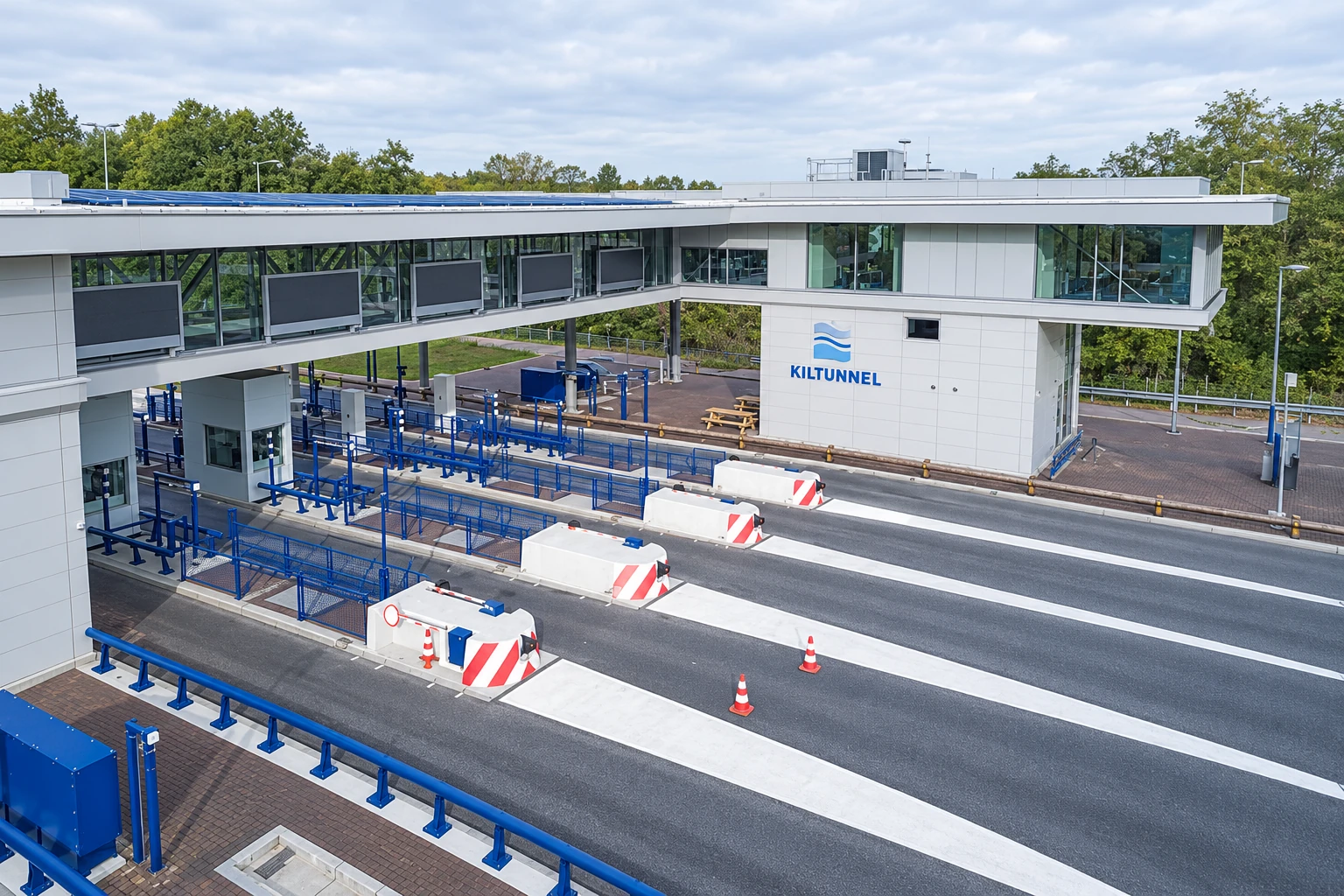
The limits are 50 km/h in urban areas, 80 km/h outside urban areas and 100 km/h on motorways. Rush hour runs 07:00 to 09:00 and 16:00 to 18:00. At intersections and roundabouts, drivers yield to traffic from the right. Two tunnels charge tolls: the Kiltunnel near Dordrecht and the Westerscheldetunnel in Zeeland. Parking in Amsterdam runs from about €1.40 per hour on the outskirts to as much as €7.50 per hour in the center. That cost is a good reason to leave the car outside the city and use trams.
Taxis From Schiphol
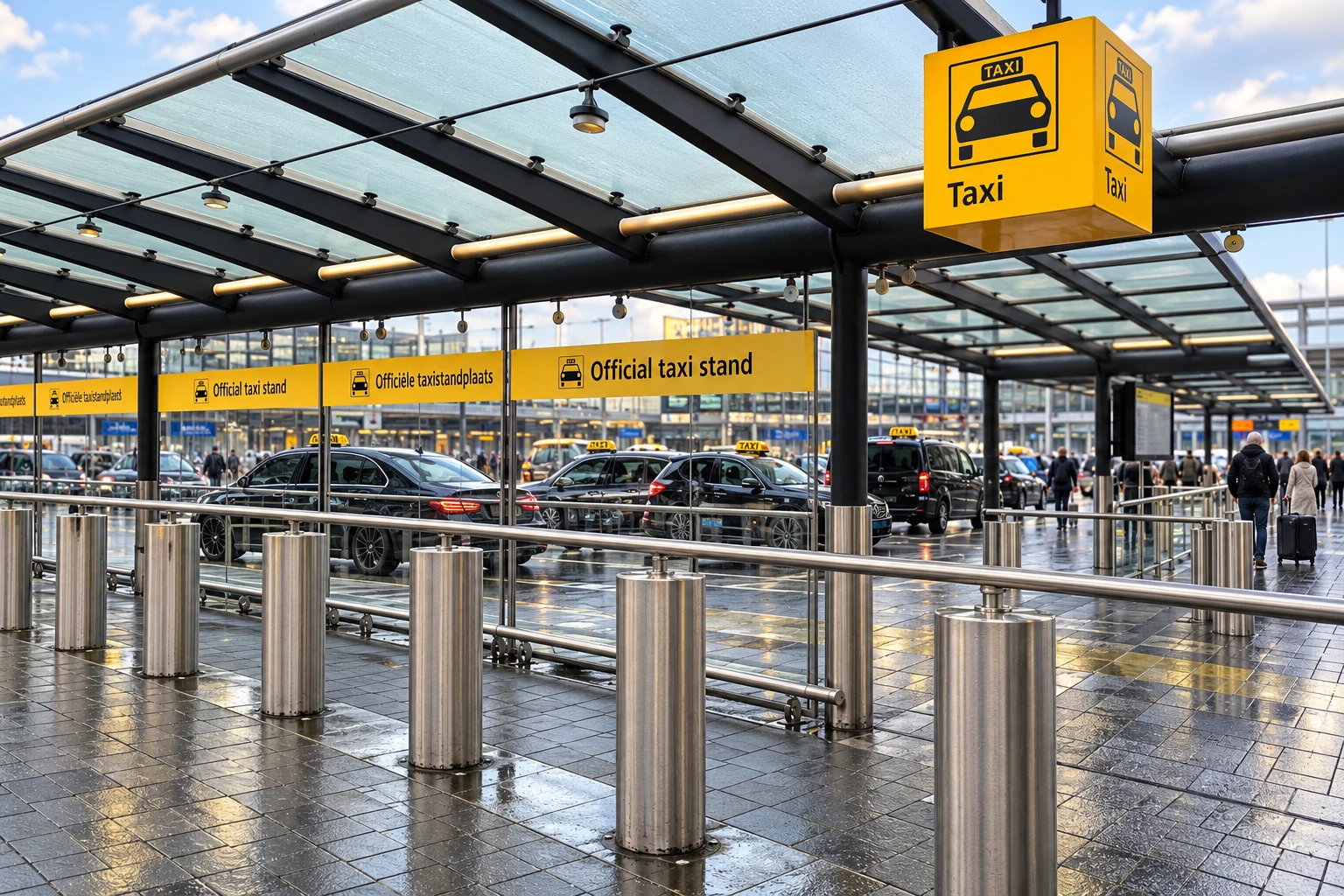
At Schiphol, taxis wait at a rank in front of Schiphol Plaza (an airport guide). No reservation is needed, the fare shows on the meter, credit cards are accepted and the driver prints a receipt. Taxis fit late arrivals, heavy luggage or a group splitting the fare. For a solo traveler going to central Amsterdam, the train at 15 to 20 minutes is the faster, cheaper choice. The Uber app’s Schiphol listing covers car rental rather than rides, so use it for same-day rentals, and use the taxi rank for a ride.
Domestic Flights
Scheduled flights inside the Netherlands are rare. Scheduled domestic flights are very limited, with commercial airports at Eindhoven (EIN), Rotterdam The Hague (RTM), Groningen Eelde (GRQ) and Maastricht Aachen (MST). Schiphol has been capped at 478,000 movements from 2025, down from 500,000. The same guide says travelers from Groningen, Nijmegen and Maastricht reach Schiphol by train within two to three hours.
Rail covers the likely domestic routes. Schiphol to Groningen takes 2 hours 9 minutes, and Eindhoven is also reachable by train. Trains run from early morning to late night: first and last departures are 04:05 to 23:58 for Eindhoven and 00:25 to 23:38 for Groningen. Trains are almost always the better choice for these routes. If you fly into Eindhoven, a bus reaches Eindhoven Central Station in about 20 minutes, and trains then take 75 minutes to Amsterdam, 45 minutes to Utrecht and 60 minutes to Maastricht.
Matching Mode to Trip
| Trip | Best fit | Reason |
|---|---|---|
| Amsterdam, Utrecht, Rotterdam, The Hague | Intercity train | Amsterdam to Utrecht about 26 to 27 minutes; Amsterdam to Rotterdam as fast as about 31 minutes |
| Schiphol to city center | Intercity train | 15 to 20 minutes, a train about every ten minutes |
| Amsterdam to Eindhoven or Groningen | Train | Schiphol to Groningen takes 2 hours 9 minutes; Eindhoven is also reachable by train |
| Belgium or Germany via Utrecht | International train | Antwerp 1 hour 38 minutes; Cologne 2 hours 12 minutes |
| Within a city | Bank card or OV-pas | Tap in and out; daily fare caps in Utrecht |
| Texel from Den Helder | TESO ferry | About 20 minutes, roughly hourly, no reservation |
| Vlieland or Terschelling | Doeksen ferry from Harlingen | 2026 fares published; reserve ahead for cars to Terschelling |
| Vlieland to Texel | Waddenveer crossing | May holidays to end of September |
| Rural touring | Rental car | Age rules and young-driver fees; tolls at two tunnels |
| Airport transfer with luggage | Taxi | Rank at Schiphol Plaza, metered fare |
Key Takeaways
- Use trains between cities. NS Intercity links Amsterdam, Utrecht, Rotterdam and The Hague, and there are too few flights to compete.
- Buy online and early. E-tickets cost less than machine tickets, and NS International says early booking gives the lowest prices.
- Tap a contactless bank card in cities. Charges settle the next working day, and the €6 OV-pas replaces the OV-chipkaart, which ends in 2027.
- Check ferry rules by island. TESO to Texel needs no reservation. Doeksen publishes 2026 fares for Vlieland and Terschelling, and the Vlieland to Texel crossing runs only from the May holidays to the end of September.
- Confirm rental age and fees before booking a car. Minimums vary by company, with under-25 fees and a credit card in the driver’s name.