Getting Around Costa Rica
Costa Rica has no long-distance passenger trains, so most trips combine public buses, small domestic planes, a car ferry, and rental cars. Commuter trains run only around San José, so they help mainly with trips inside the city area. Intercity buses are the cheapest way to cover the country. Small planes save hours on remote routes, ferries connect Puntarenas with the Nicoya Peninsula, and a rental car gives you the most freedom if you are comfortable driving.
Your best option depends on where you are going and how much time you have. A trip to Drake Bay or Tortuguero raises different choices than a route linking San José, Liberia, and the Nicoya beaches. Each mode below comes with typical costs, travel times, and booking steps, and taxis are covered for short hops in towns.
Which mode fits which trip
| Mode | Best for | Typical cost | Journey time | How to book |
|---|---|---|---|---|
| Commuter train | Trips within the Central Valley (San José, Cartago, Heredia, Alajuela, Pavas) | About $1 to $2 per journey (2025) | The longest line is about 23 km with 10 stops | Check incofer.go.cr |
| Intercity bus | Budget travel between regions | Fares set by route by the regulator ARESEP; up 5.43% from 26 May 2026 | Depends on route | Check fares on the ARESEP tariff portal |
| Domestic flight (Sansa) | Remote beach and lodge destinations | About $90 to $180 per leg, one way | About 20 to 50 minutes | flysansa.com, phone, or email |
| Ferry (Puntarenas to Paquera) | Nicoya Peninsula, with or without a vehicle | ?810 adult, ?485 child; vehicles extra | About 70 to 80 minutes | QuickPayCR online or the counter |
| Rental car | Flexible itineraries and rural areas | About $30 per day average (2025), plus liability insurance of about $10 to $20 per day | Self-driven | Rental companies, with a credit card in the main driver’s name |
Buses win on price, planes win on time, and a rental car wins on flexibility. The ferry is the one mode tied to a single geographic purpose, since it crosses the Gulf of Nicoya.
Trains around the Central Valley
Passenger service is limited to three commuter lines: San José to Cartago, Curridabat to Pavas to Belén, and San José to Heredia to Alajuela. The operator is INCOFER, the state railway. Freight trains run from San José to Caldera and from Limón to Monteverde but carry no passengers. Tourist trains use diesel locomotives and heritage carriages.
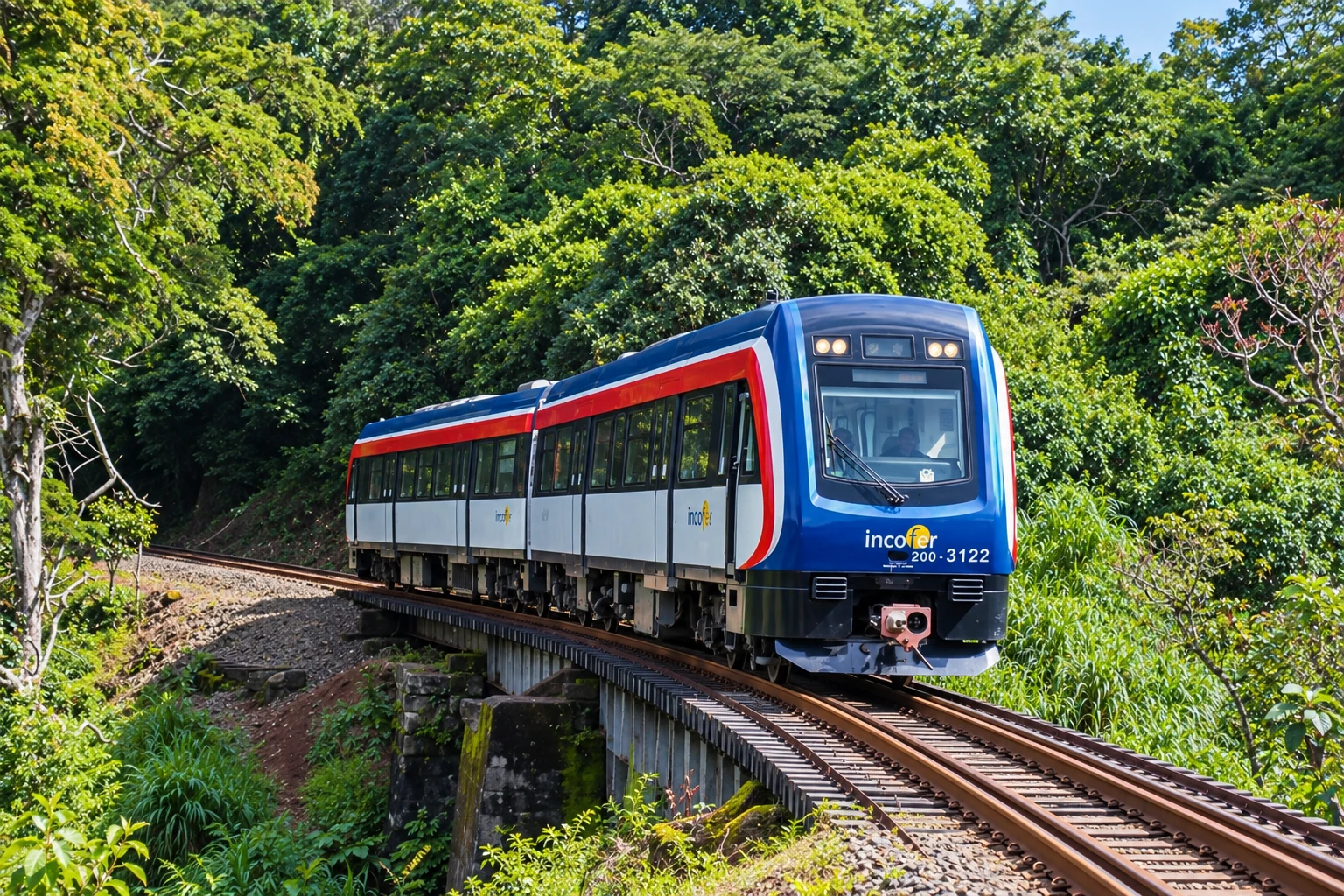
A typical fare is about $1 to $2 per journey as of 2025. The longest line covers about 23 km with 10 stops, so trains suit short trips inside the Greater Metropolitan Area rather than getting to the coasts. INCOFER reported 3,689,747 passengers for 2024, a record, even though part of the Cartago line was closed for the last two months of the year.
The Cartago line has had interruptions. Heavy rain in early November 2024 caused a landslide at Ochomogo, and trains initially ran only as far as Tres Ríos. Service to Cartago resumed on 16 January 2025. A separate landslide at Fierro, between Tres Ríos and Cartago, also suspended traffic on that stretch. Check the status of the Tres Ríos to Cartago section, along with current timetables and fares, at incofer.go.cr before building a day trip around it.
Long-distance passenger trains ran from 1940 to the 1990s. A 1991 earthquake damaged the network and operations were suspended in 1995. The commuter service was recreated in 2005, starting between Pavas and Montes de Oca. A future electric system is planned: the EIB approved a $250 million loan in 2025 for more than 51 km of double-track line, 28 electric units, and 30 stations linking Paraíso to San José and San José to central Alajuela. It does not affect current trip planning.
Intercity buses and ARESEP fares
Buses reach nearly every town and cost the least of any national option. ARESEP, the public services regulator, sets bus fares by route and by company size, and it publishes current fares on its official tariff portal. Its free Aresep Contigo app also lists them. Because fares are regulated, a given route costs the same by day or time.
The latest change took effect on 26 May 2026, when ARESEP approved a 5.43% increase applied over current fares on all routes with a designated operator. ARESEP cited higher international fuel prices, and fuel makes up about 28% of bus service costs. Earlier in the cycle, fares fell: a September 2025 decision cut fares by ?5 to ?50 on 46% of the national schedule.
A March 2025 ARESEP notice set these fares, which have since moved with the later changes:
- San José to Alajuela, ?725
- San José to Paraíso, ?1,100
- San José to Puntarenas, ?3,100
- San José to Limón, ?3,820
- San José to San Isidro de El General, ?3,925
- San José to Liberia, ?4,715
Use the tariff portal for the figure you will actually pay.
City buses work differently from intercity routes. Autobuses Guadalupe, which serves the Chepe and Goicoechea area, charges ?315 to ?365 depending on the branch. It sells no advance or online tickets. Riders pay on board by cash, contactless card, or SINPE Móvil, and adults 65 and over with a Ciudadano de Oro card ride free. Carry small bills and coins for city buses.
Taxis for short hops
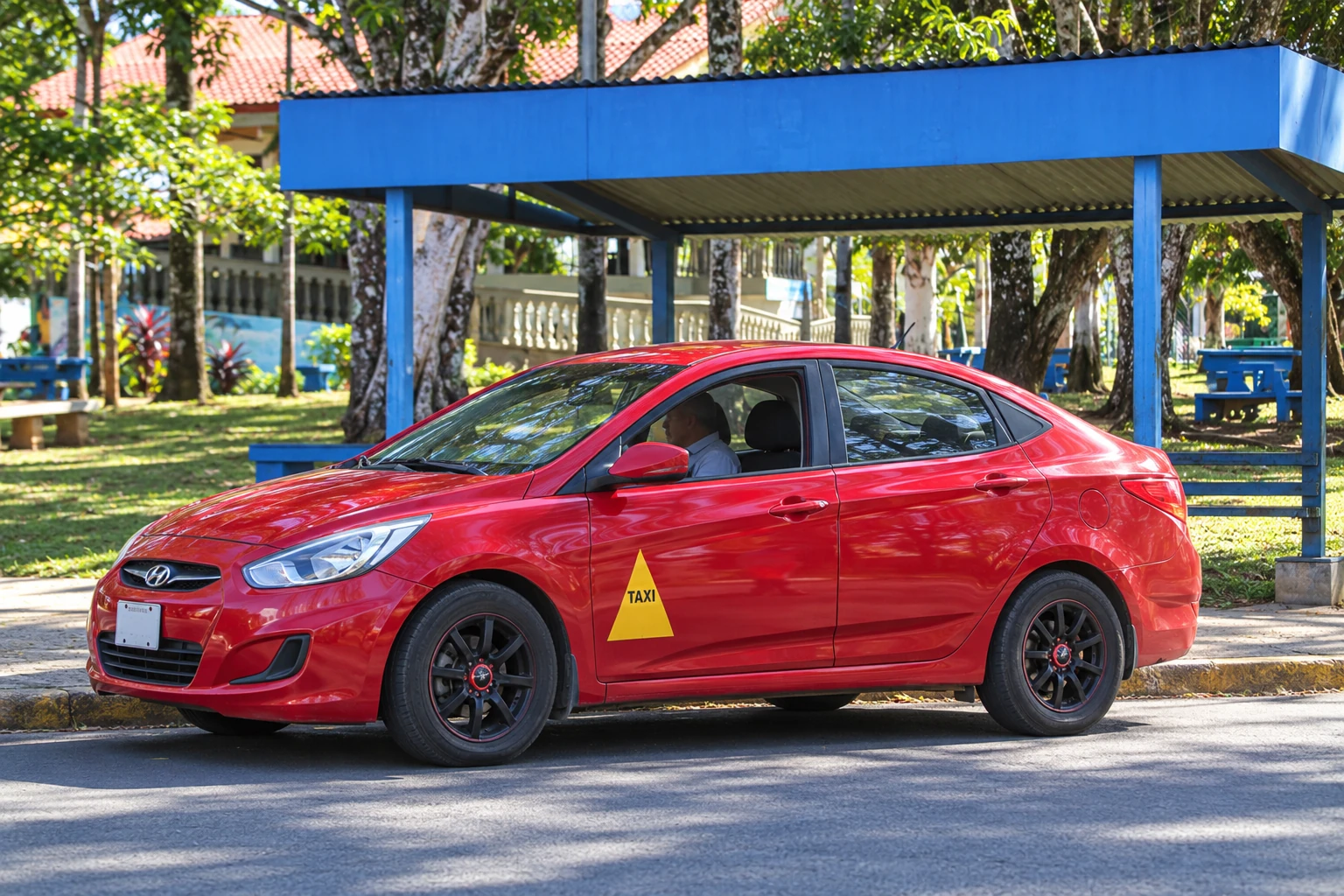
Taxis fit short rides within San José and other towns, such as getting from a hotel to a bus terminal with luggage. ARESEP regulates taxi fares as well. Its May 2026 decision raised them by 1.39% to 2.82%, after March 2025 cuts for red and airport taxis. Regulated fares make taxis a predictable choice for short distances, while buses or flights handle the long ones.
Domestic flights with Sansa
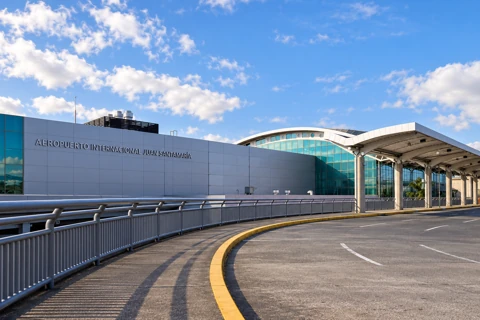
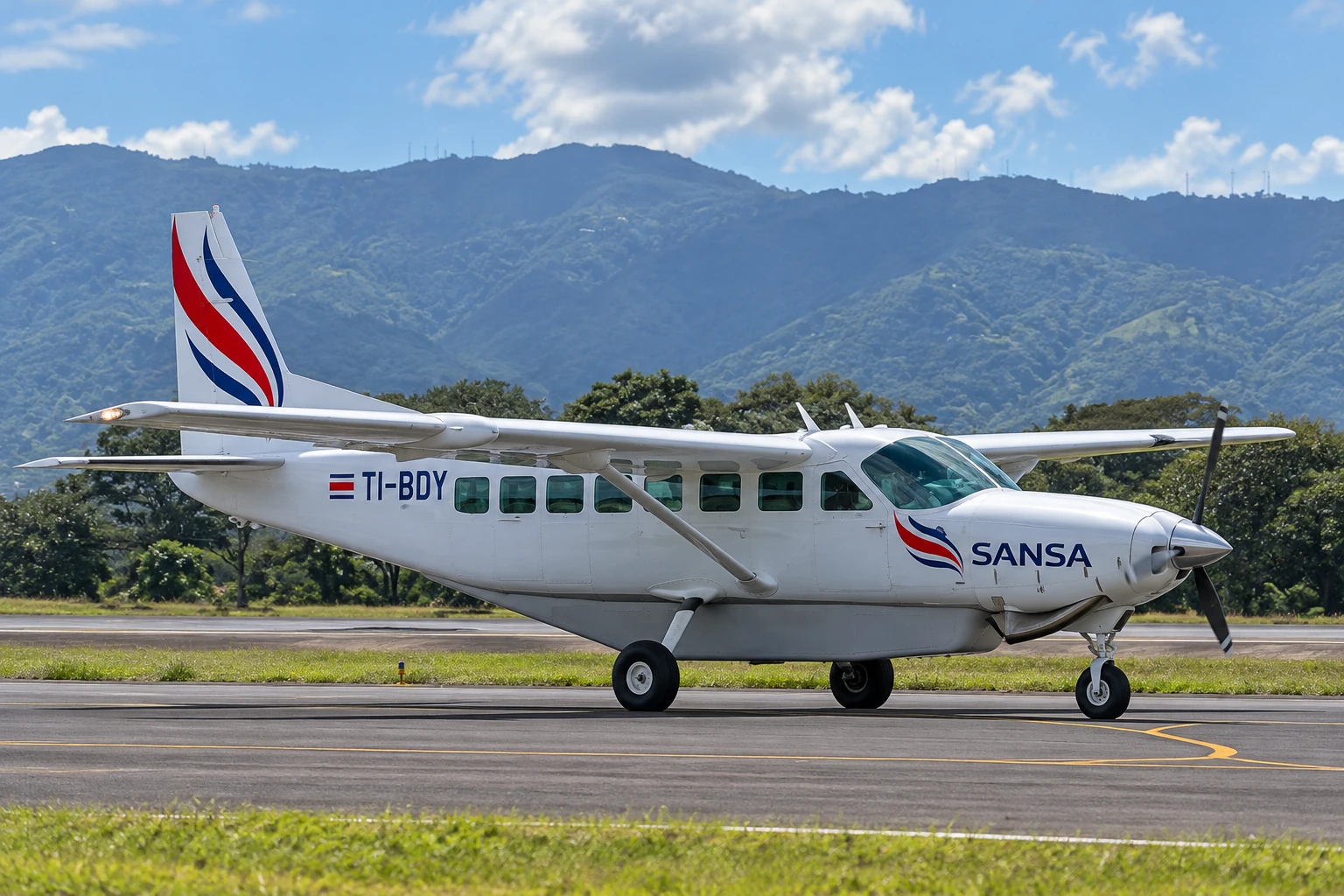
Sansa is the main domestic carrier, offering scheduled and charter flights to main tourism destinations. Its homepage says it has served Costa Rica for over 40 years and operates daily flights to Tambor, Puerto Jiménez, and Quepos/Manuel Antonio. Flights depart from Juan Santamaría airport (SJO) near San José, which allows connections from international arrivals without changing airports.
Destinations listed for Sansa include:
- Quepos/Manuel Antonio (XQP)
- Drake Bay (DRK)
- Golfito (GLF)
- La Fortuna (FON)
- Liberia (LIR)
- Nosara (NOB)
- Puerto Jiménez (PJM)
- Puerto Limón (LIO)
- Tamarindo (TNO)
- Tortuguero (TTQ)
- Tambor (TMU)
- Palmar Sur (PMZ)
- Cóbano (ACO), for Montezuma, Santa Teresa, and Samara
Flights last about 20 to 50 minutes. Quepos takes about 25 minutes, and Drake Bay or Tortuguero about 50. On remote routes they save 3 to 8 hours of road travel. That saving is the case for flying to the Osa Peninsula or Tortuguero, where the alternative is a long drive or journey. Aircraft are mostly Cessna Caravans carrying 9 to 14 passengers, and weather can delay or cancel flights, so leave slack before an international departure.
Fares run about $90 to $180 per leg one way, lower to Quepos and Tambor and higher to Drake Bay and Tortuguero. One operator listed SJO to La Fortuna from $115 before tax. Prices depend on route and how early you buy. In high season, booking six to eight weeks ahead gets the best fares.
Baggage limits are tight because the aircraft are small. Carry-on is one personal item at no extra charge, up to 10 lb (4.5 kg), with maximum dimensions of 30 cm width, 50 cm height and 20 cm depth. Checked-bag allowances depend on fare type and the figures reported range from 30 lb (14 kg) to 40 lb, so read the limit on your ticket and pack soft-sided bags. Excess baggage is subject to availability and may incur fees.
To book, use flysansa.com or phone +506 2290-4100 in Costa Rica or +1 877-767-2672 toll-free. A 2024 agency guide advises emailing reservations@flysansa.com with the reservation number and passenger names. Tour operators sell Sansa seats in packages. Sansa Rewards points can be redeemed for free flights, upgrades, or extra luggage. When connecting from an international flight to a domestic one at SJO or Liberia, allow at least two hours for customs, immigration, and moving between terminals.
Ferries to the Nicoya Peninsula
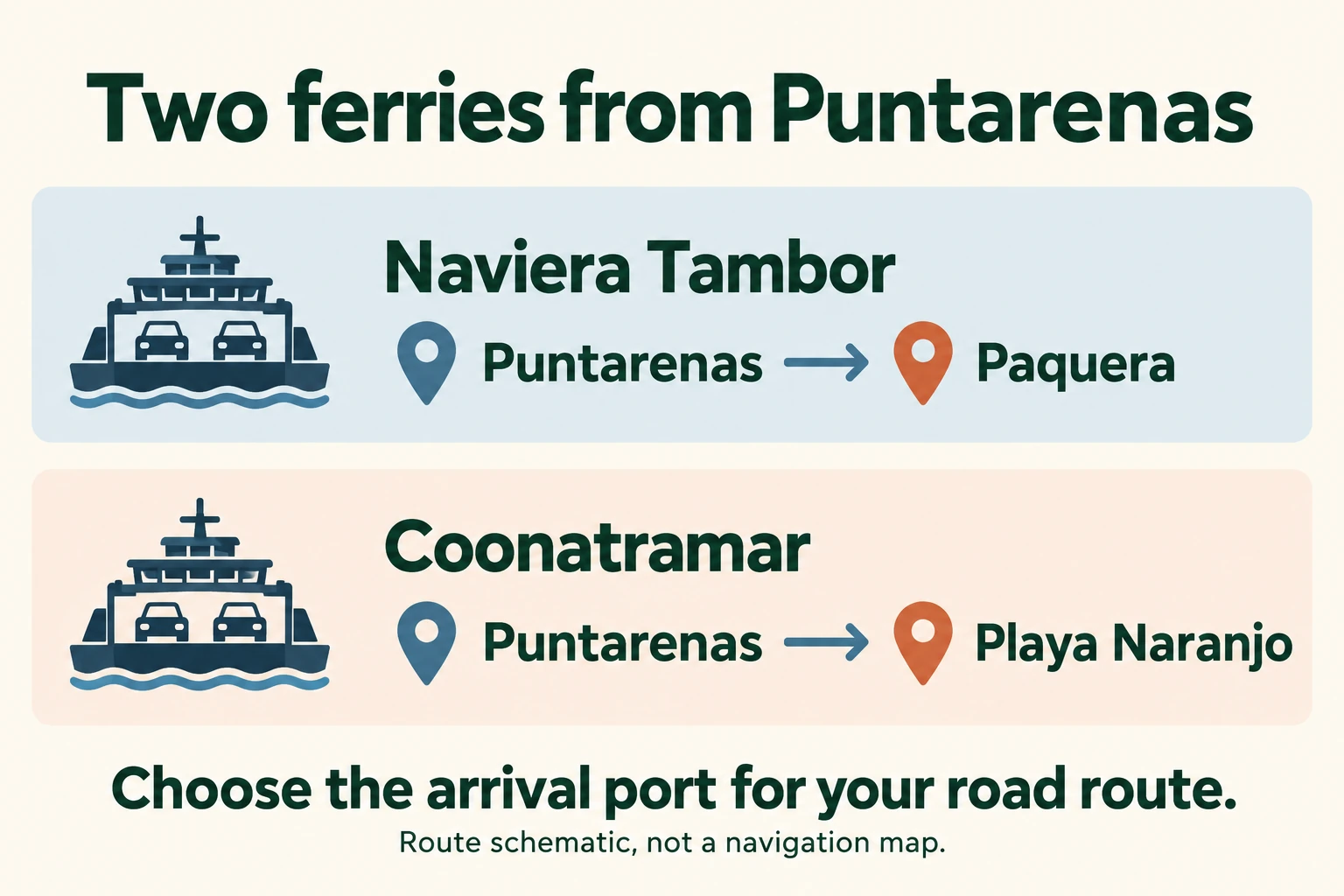
The Gulf of Nicoya separates Puntarenas from the peninsula’s beaches, and two car ferries cross it.
Puntarenas to Paquera
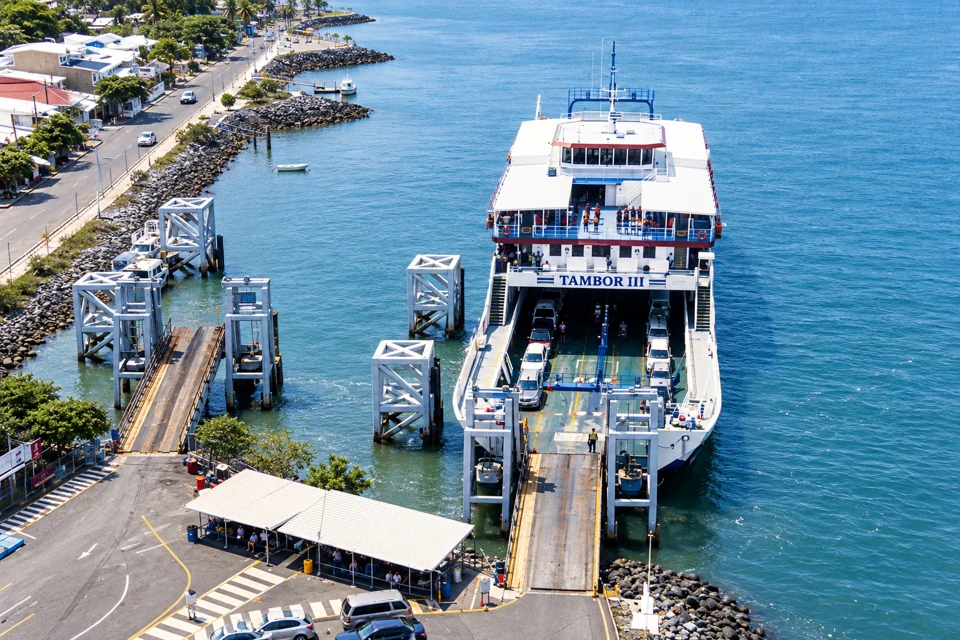
Naviera Tambor runs the Puntarenas to Paquera crossing, which covers 11 nautical miles in about 70 to 80 minutes. The ferry holds 170 cars and up to 700 passengers, and has restrooms, snack bars, and indoor and outdoor seating. Visit Costa Rica lists passenger fares of ?810 for adults and ?485 for children, with senior citizens free on showing ID at the ticket counter.
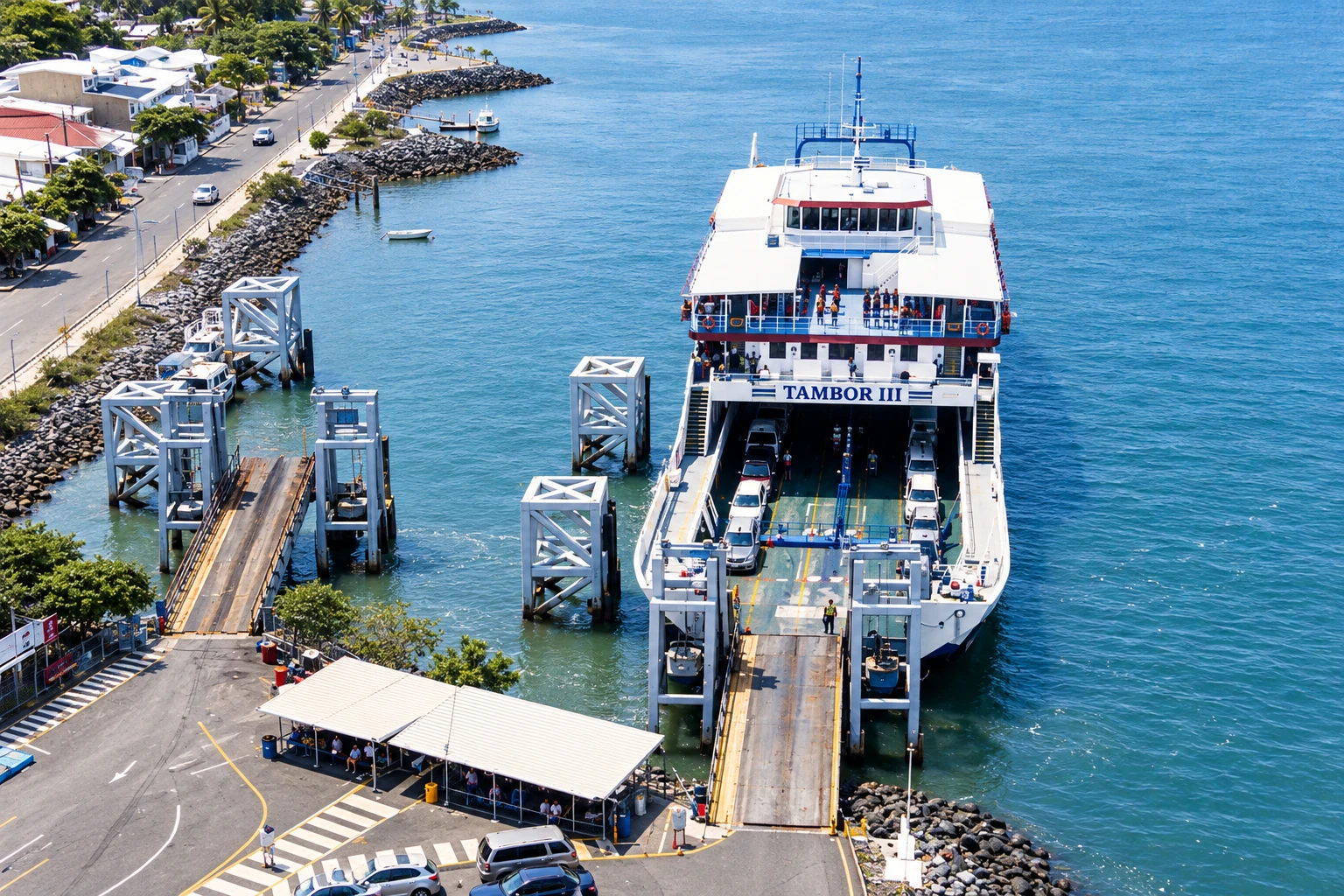
Vehicles are priced separately and listed before tax, with I.V.A. (value-added tax) added. The Visit Costa Rica list gives ?2,200 for a bicycle, ?3,400 for a motorcycle, ?6,800 for an ATV or three-wheeler, and ?11,400 for a light vehicle. Larger vehicles run from ?17,200 for light cargo to ?22,900 for a bus or 2-axle vehicle, and up to ?45,900 for 4- and 5-axle vehicles. Tax-inclusive figures are ?12,882 for a regular car (about $24) and ?3,842 for a motorcycle (about $7). Compare pre-tax and tax-inclusive prices carefully. Trailers pay the same rate as the vehicle towing them.
A recent timetable shows eight departures each way at 4:00, 6:30, 9:00, 12:00, 3:00, 6:00, 8:00, and 10:00, as of June 12, 2025. Schedules change, so confirm current times with Naviera Tambor or QuickPayCR.
QuickPayCR (www.quickpaycr.com) is the online sales site, but it sells only part of the capacity, and the rest goes through the Naviera Tambor counter. Book online early. Counter lines grow long in high season and on holidays, and arriving one to two hours early gives you time to buy there. With a pre-bought ticket, arriving about an hour early is the advice.
Puntarenas to Playa Naranjo
Coonatramar runs the second crossing, which serves Playa Naranjo, Sámara, and Nicoya. Visit Costa Rica lists the adult fare at ?1,005 and the child fare at ?600, with seniors free on showing ID. Pre-tax vehicle fares include ?2,000 for a bicycle, ?3,000 for a motorcycle, and ?9,000 for a light vehicle. A published timetable shows Puntarenas departures to Naranjo at 6:00 AM, 10:00 AM, 2:30 PM, and 6:45 PM. Boats leave Naranjo for the return at 8:00 AM, 12:30 PM, 4:30 PM, and 8:30 PM. Confirm with Coonatramar before you travel.
For peninsula roads in the green season (May to November), a 4WD vehicle is the safer choice.
Renting a car
A rental car makes sense for itineraries that link several regions, reach rural lodges, or run on your own schedule. Major companies including Alamo, National, and Enterprise operate in the country.
Licenses and eligibility
Visitors may drive on a home-country license for up to 180 days, matching the 180-day tourist visa. The legal basis is article 91 of the Traffic Law, which lets qualifying foreign license holders drive the vehicle type on their license during their authorized stay.
An International Driving Permit (IDP) is not universally required. Alamo, National, and Enterprise ask for an IDP, or a notarized English translation accepted by the specific location, when the license is in a non-Latin script such as Chinese, Arabic, or Cyrillic. US, Canadian, UK, Australian, and Spanish-language licenses normally do not trigger that requirement. An IDP never replaces the home license, and it is not accepted alone at pickup.
Most companies require drivers to be 25 or older. Some accept drivers from 21 for an extra fee, and Enterprise sets its minimum at 21 with an additional daily fee for ages 21 to 24. Many companies set no maximum age, while some cap it at 70 to 75. The license must stay valid for the whole rental, temporary paper or photocopied licenses are refused, and you need the originals of your license and passport. Tourists must carry their passport at all times.
Payment requires a credit card in the main driver’s name for the rental and the deposit. Some companies accept debit cards, so ask first. Holds typically run from $500 to $5,000 depending on the company, which matters for your available credit.

Insurance and costs
Costa Rican law requires third-party liability insurance on rental vehicles. It covers damage to other people and their property, not the rental car, and you must buy it in Costa Rica, usually from the rental company. Home policies and credit-card coverage do not replace it. It costs about $10 to $20 per day depending on the vehicle, as of 2025, and the average rental price was around $30 per day, varying by vehicle, season, and company. Budget for both. Some companies rent only for up to 60 days even though driving is legal for the full permitted stay. River crossings count as off-roading and rental insurance does not cover them.
Rules on the road
Headlights must be on between 6 p.m. and 6 a.m. Children under 12 must ride in a car or booster seat. Fines range from about $50 to $700, with the Category B fine at about $480. The least severe Category E fines, including driving without vehicle documents or a valid license, are about ?26,070.69 (about $50). Keep the rental papers and your license in the car.
Choosing a mode for each trip
For the Central Valley, such as San José to Heredia, Alajuela, or Cartago, the commuter train and city buses cost little. Taxis handle the awkward last stretch with luggage. For a single long journey, such as San José to Liberia or Limón, an intercity bus is the cheapest option.
To reach the Nicoya Peninsula, you can take the Puntarenas ferry on foot or with a rental car. You can also fly to Tambor, Nosara, Tamarindo, Samara, and other towns. The ferry saves the most money, while the flight saves the most time. For Drake Bay, Puerto Jiménez, and Tortuguero, flying from SJO saves a long day of travel. Book early in high season and pack light.
A rental car works best for an itinerary that links several regions and leaves room for detours. The cost adds up, with the daily rate, mandatory liability insurance, and a hold on your card, so compare the total against buses and a couple of flights.
Key Takeaways
- Use buses for the cheapest long hauls: ARESEP sets fares by route, and the latest change was a 5.43% increase on 26 May 2026. Check current prices on its tariff portal or the Aresep Contigo app.
- Fly to remote destinations: Sansa flights take about 20 to 50 minutes and cost about $90 to $180 per leg, saving 3 to 8 hours on remote routes. Book six to eight weeks ahead in high season and pack within the carry-on and checked limits on your ticket.
- Plan ferry crossings early: The Puntarenas to Paquera ferry takes about 70 to 80 minutes, and the adult fare is ?810. Only part of the capacity sells online through QuickPayCR, so buy ahead or arrive one to two hours early for the counter.
- Budget for insurance when renting: Mandatory third-party liability insurance must be bought in Costa Rica at about $10 to $20 per day, on top of an average rental price of around $30 per day. Bring a credit card in the main driver’s name for a hold of $500 to $5,000.
- Treat trains as a commuter option only: Three lines serve the Central Valley at about $1 to $2 per journey. Confirm the Tres Ríos to Cartago section is running at incofer.go.cr.