Spain Itinerary for 10 Days

A ten-day trip to Spain works best with three bases linked by high-speed trains: Barcelona, Madrid, and Seville. Each leg is a train ride of about two and a half hours, so travel takes half a day rather than a full one. After the main route, you will find alternatives for travelers who want fewer stops, the Andalusian coast, or the Alhambra in Granada.
Planning a first trip mostly means making a few bookings. AVE high-speed trains, run mainly by the national operator Renfe, require a reserved seat. The Alhambra sells out, and Barcelona’s Sagrada Família uses timed entry. Non-EU visitors also face new border registration. Each item below includes current figures and where to confirm them.
The Recommended Route
The route uses nine nights and leaves on day 10. It can run in the opposite direction (Seville first, Barcelona last) if your flights favor it.
| Nights | Base | Next leg |
|---|---|---|
| 1 to 3 | Barcelona | Train to Madrid on the morning of day 4, about 2h30 to 2h45 |
| 4 to 6 | Madrid | Train to Seville on the morning of day 7, about 2h15 to 2h30 nonstop |
| Final nights | Seville | Depart on day 10 |
The travel times below are planning ranges, and the exact duration depends on the service. Direct Madrid to Barcelona trains skip intermediate stations, but some services stop at Zaragoza or Lleida. Some Madrid to Seville trains that call at Córdoba take 2h45 to 3h instead of the 2h15 to 2h30 of the nonstop service. Pick the nonstop departure when you reserve.
This order avoids Spain’s weakest connection. Barcelona to Seville takes about 5h24 to 5h30 or more and usually involves a change, so traveling through Madrid costs about the same time and adds a city. Madrid to Seville is also the busiest corridor on Friday afternoons and Sunday evenings, so schedule that leg on a weekday morning if the calendar allows. Seats on the busy days cost more and sell out sooner.
Three nights in each city is enough for the headline sights of a first visit and leaves no day lost to packing. Day trips from Madrid or Seville fit the middle day of each stay, but the train times above are the only inter-city figures worth planning around.
Other routes for different trips
Madrid and Barcelona only
Travelers who prefer unhurried days can drop Seville and split nine nights between two cities: four in Madrid, then one train day, then five in Barcelona. There is only one train transfer, about 2h30 to 2h45, and the longer stay in Barcelona leaves room for Sagrada Família and the day trips from the city. This is the lowest-risk option for travelers who dislike packing up.
Andalusia and the south
Travelers drawn to the south can build a loop that starts and ends in Madrid:
- Three nights in Madrid.
- A train to Seville (about 2h15 to 2h30), then three nights there.
- A train to Málaga (about 2h), then two nights on the coast.
- A train back to Madrid (about 2h38 to 3h05) for the last night, with departure on day 10.
Confirm both times on Renfe’s timetable before you fix flights. Ending in Madrid gives the loop a simple departure point. Staying on the coast the whole last night saves a day only if your flight leaves from Málaga, in which case drop the final Madrid night.
Adding Granada and the Alhambra
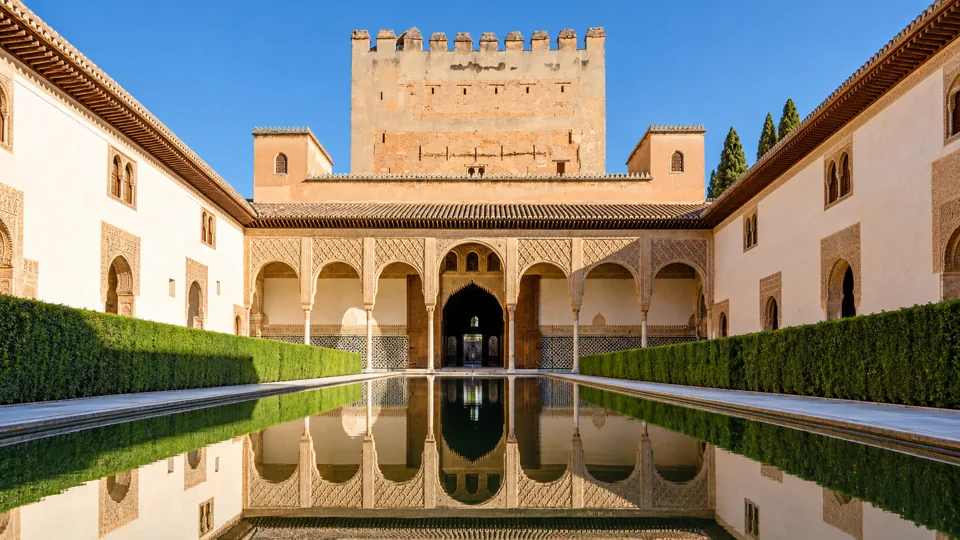
The Alhambra is the reason most visitors add Granada, and it has the strictest booking rules in this guide. The Madrid to Granada trip runs about 3h40, and you should confirm that a direct service exists. Check the Granada connections to Seville and Málaga on the same timetable. Treat Granada as a conditional addition: look up the Renfe timetable for the exact days you would travel, and buy the Alhambra ticket only once the rail legs work. Do not build the route around Granada without that check, because a missed connection is hard to repair when the Alhambra ticket is at a fixed time.


Booking High-Speed Trains
Renfe tickets generally go on sale about 60 days ahead. Renfe releases seats in blocks, and sales can open late around timetable changes, so check back if your date is not yet bookable.
AVE reservations are required and should be made early. Fares from Madrid to Seville start at €25 on Renfe (updated November 28, 2025), and the competing operator iryo has been cited at €9 to €15 on the same route. These are starting prices for the cheapest seats, and fares rise as trains fill. Fare tiers carry different change and refund rules, with the lowest tier the most restrictive, so read the conditions before you pay. If your plans can still move, a flexible tier costs more but protects the Alhambra and Sagrada Família timings that depend on your arrival day.
Booking the Alhambra
The Alhambra is the booking to make first. The Patronato de la Alhambra y Generalife, which runs the monument, sells individual tickets online until 23:59 the day before the visit, and also at ATMs and by phone with a bank card. Individual buyers can purchase a maximum of 10 advance tickets per card per month. The Patronato recommends booking early because of high demand but does not publish when dates sell out, and walk-up tickets are frequently gone. Buy directly through tickets.alhambra-patronato.es rather than a reseller, because resellers publish a wide spread of prices for the same product.
Online tickets are not refunded or exchanged, so confirm your dates before you pay. If your ticket includes the Nasrid Palaces (Palacios Nazaríes), entry is at a fixed time. Collect or buy the ticket at the monument’s box office at least one hour before your assigned time. Box-office tickets must be collected by the person who made the reservation, with national ID.
Current prices follow the regional order of July 17, 2025:
| Ticket | Price |
|---|---|
| Alhambra General | €22.27 |
| Gardens, Generalife and Alcazaba | €12.73 |
| Night visit to Palacios Nazaríes | €12.73 |
| Night visit to gardens and Generalife | €8.48 |
Opening hours for the gardens, Generalife and Alcazaba change with the season. They run 08:30 to 20:00 from April 1 to October 14, then 08:30 to 18:00 from October 15 to March 31. Winter visits therefore end two hours earlier. Check the Patronato site for the current schedule before you book.
Booking Sagrada Família
The official basic entry price for the basilica is €26, with a guided tour add-on of €4 and a tower add-on of €10, according to sagradafamilia.org. The price page is labeled 2024, so confirm the current figure and the time-slot rules on the official site before you pay. Resellers charge much more for the same entry, with basic tickets ranging from €33.80 to €116.10 and tower access from €33 to €82.
Choose a time slot and book ahead. A booking lead time of two to four weeks is a sensible minimum, and more for June through September and for weekends, when early-morning and late-afternoon slots go first. Tower access depends on availability and weather, so do not plan the day around it. Since you arrive in Barcelona first, buy the Sagrada Família ticket as soon as your flights are fixed.
Barcelona’s Tourist Tax
Barcelona adds a nightly tax for each guest, collected with the accommodation bill. The city’s municipal surcharge rose from €4 to €5 per person per night on April 1, 2026, according to the city council, and increases by €1 a year to a maximum of €8 by 2029. Holiday rentals pay €9.50 per person per night, made up of the €4.50 regional tax plus the €5 municipal surcharge. Five-star hotels pay €12. For four-star hotels and other categories, ask your accommodation for the exact nightly amount before you book.
Stays by people aged 16 or under are exempt under the official Catalan tax text. Confirm with your lodging whether a cap on consecutive nights applies, and whether changing hotels resets the count. A cap would not affect a three-night Barcelona stay but would matter on the longer two-city option.
Entry Rules for Non-EU Visitors
Visitors from outside the EU, the European Economic Area and Switzerland can stay for a short tourism visit, provided they meet the Schengen Border Code conditions, according to the Spanish Foreign Ministry. A ten-day trip sits well inside the short-stay limit.
Border registration has changed. The U.S. Embassy in Madrid notified American citizens on September 30, 2025 that from October 12, 2025 the EU’s Entry/Exit System (EES) would collect fingerprints and facial images from most short-stay visitors at entry and exit points. The rollout ran gradually over six months. Holders of EU or Schengen citizenship, valid residence permits and long-stay visas, along with diplomatic passport holders, are exempt. Expect registration on your first entry, and allow extra time at the airport on arrival day. Wait times at Spanish airports are not published, so do not schedule a tight connection or an immediate train after landing.
ETIAS is a separate pre-travel authorization for visa-exempt non-EU nationals, similar to the U.S. ESTA. The Foreign Ministry expects it to become operational in the last quarter of 2026 and says travelers need take no action now. The launch date has moved, so check the start date before you travel. Do not pay a third-party site for an ETIAS application. Apply through the official channel.
Bookings and checks before you go
- Limit the route to three bases. Barcelona, Madrid and Seville fit nine nights without a wasted day. The train legs take about 2h30 to 2h45 and 2h15 to 2h30.
- Book the Alhambra first and buy direct. The Alhambra does not refund or exchange tickets, caps individual buyers at 10 advance tickets per card per month, and sets Palacios Nazaríes entry at a fixed time.
- Reserve AVE seats as soon as sales open. Renfe opens sales about 60 days ahead, and Madrid to Seville is busiest on Friday afternoons and Sunday evenings.
- Avoid going from Barcelona to Seville directly. With a change, the trip takes about 5h24 to 5h30 or more, so go through Madrid instead.
- Add Granada only after checking its trains. The Madrid to Granada figure (about 3h40) is a single dated example, and connections to Seville and Málaga need confirming.
- Confirm Sagrada Família and tax figures before you pay. The Sagrada Família basic price of €26 is labeled 2024, and Barcelona’s municipal tourist tax is €5 per person per night since April 1, 2026.