Is Sweden Safe for Travelers? Current Advice, Scams, Health Risks and Emergency Numbers

Sweden is a safe country for most visitors. The most likely problems on a first trip are stolen wallets and phones in central Stockholm, a tick bite in summer, or bad weather on the road. The U.S. State Department rates Sweden Level 2, "Exercise increased caution" because of terrorism. Level 2 is the second of four levels and applies to many popular European destinations. Gang violence exists in Sweden, but it is concentrated in specific criminal circles and neighborhoods. Tourism sources describe violent crime against visitors as rare.
The U.S. advisory was issued May 18, 2026. The UK Foreign, Commonwealth and Development Office (FCDO) page was last updated 11 August 2026, and the Singapore foreign ministry page on 5 November 2026. Advisories, weather warnings and fire risk notices change, so check the current versions in the week before you fly.
Official advisories and demonstrations
The U.S. Level 2 rating cites terrorism. Its advisory lists possible targets including tourist locations, airports, markets and shopping malls, government facilities, hotels, clubs and restaurants, and places of worship. The list is broad because attackers in Europe have struck many kinds of soft targets. It names no specific place in Sweden.
The UK FCDO’s safety and security page uses a narrative instead of a numbered level. It says terrorists are likely to try to carry out attacks in Sweden, possibly indiscriminately and including in places frequented by foreign nationals. It also reports that Swedish authorities have disrupted a number of planned attacks and made several arrests. It advises you to stay aware of your surroundings and to read the UK Counter Terrorism Policing "Run Hide Tell" guidance before you travel.
Singapore’s foreign ministry reports that the Swedish Security Service (SAPO) sets the national threat level at 3 on a 5-point scale, described as "elevated." A level of 3 means you should follow local news and official instructions, but it does not by itself justify cancelling a trip.
The three advisories use different scales. Compare them by what each asks you to do. All three give the same steps: stay aware in crowds, follow official instructions, and keep your plans flexible.
Demonstrations are another political risk. The UK FCDO says they are usually peaceful but advises avoiding them where possible and following the advice of local authorities. If a march passes your hotel or planned route, change the route for that day.
Two steps help in an emergency. Singapore’s ministry offers an eRegistration service so its government can contact registered citizens during emergencies such as natural disasters or civil unrest. Your own country’s foreign ministry may offer an equivalent. Sweden also runs Krisinformation.se, an English-language site operated by the Swedish Civil Defence and Resilience Agency. Its crisis announcements go out by radio, television, text message and outdoor warning signals. Bookmark it before you arrive.
Theft, scams and taxis
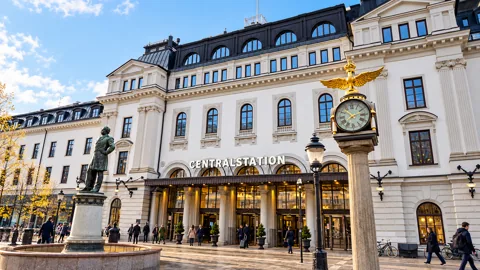
Petty theft is the crime visitors meet most often. Pickpockets in major cities often target tourists for passports and cash. Stockholm Tourism’s safety guide names the places to take care: T-Centralen (the central station and metro hub), Sergels torg, Drottninggatan, Gamla Stan (the Old Town), metro platforms, ferry terminals, nightlife districts and crowded summer attractions. Police warned about pickpockets in Gamla Stan as early as summer 2015. The problem is long-standing.
The usual method is distraction. A friendly stranger asks for directions or pays you a compliment while an accomplice moves in behind you. Other versions use a clipboard "charity" petition, or a spill or bump. The Hello travel guide also reports phone snatches by someone riding an e-scooter. Keep your bag zipped and in front of you on crowded platforms. Keep your phone in an inner pocket rather than in your hand near the curb. Walk past petitions without stopping.
Taxis are the best-known way to lose money. Overpriced, unmetered cabs operate from Arlanda, Stockholm’s main airport. A travel-insurance guide describes drivers who claim the meter is broken or the route is closed after a long ride. Choose a metered taxi with a visible price, or use a rideshare app or public transport, and agree on the fare before you get in.
Dynamic currency conversion is an offer from a card terminal or ATM to charge you in your home currency instead of Swedish kronor, usually at a poor exchange rate. Decline it and choose kronor.
Impersonation and online fraud come last. Stockholm Tourism says real police officers do not ask for your PIN or cash. If someone claiming to be police persists, tell them you will go to the nearest police station, and call 112 if you feel threatened. Hello describes fraudulent phone calls, fake charity collections, and online romance or investment scams. Hello advises never to transfer money or share banking codes after an unsolicited request. Fake online rental listings are also common. Do not pay a deposit by bank transfer for an apartment you have not verified through a platform that holds the payment.
Crime, areas to avoid and legal traps
Violent crime does happen in Sweden. The UK FCDO reports that gang-related crime, including knife crime, shootings and explosions, has occurred in Malmö, Stockholm and Gothenburg. These incidents involve criminal networks settling disputes. Stockholm Tourism describes petty pickpocketing as the main issue for visitors and violent tourist crime as rare. Visitors on ordinary routes to museums, restaurants and train stations are not the usual targets, but leave the area at once if you hear a loud bang or see police tape.
For "areas to avoid," Sweden has an official reference. Swedish police maintain a list of "vulnerable areas" (utsatta områden), classified by criminal influence and social conditions. The December 2025 list, reported by SVT on 2 December 2025, counts 65 areas. Of these, 19 are classed as "especially vulnerable" (särskilt utsatta):
- Stockholm region: Alby, Fittja, Hallunda/Norsborg, Husby, Rinkeby, Tensta, Ronna, Geneta and Hovsjö
- Gothenburg: Bergsjön, Hjällbo, Lövgärdet and Hammarkullen
- Malmö: Rosengård and Nydala/Hermodsdal/Lindängen
- Other cities: Vivalla (Örebro), Skäggetorp (Linköping), and Hässleholmen and Norrby (Borås)
These are residential suburbs with housing, schools and shops. The police’s own boundary-map document classifies criminal influence and is not a travel warning. Still, none of these suburbs has major sights, so a first-time visitor has little reason to go. Skip them as destinations, avoid walking through them at night, and stay in central districts where hotels, transit and sights are concentrated. If your accommodation is in one of these areas, check the address against the list before you pay.
Drug law is where tourists get into serious trouble. The UK FCDO says illegal drugs, including cannabis, are strictly prohibited even in small quantities. Penalties apply even to transit through airports, with jail sentences of up to 10 years and heavy fines. The FCDO notes that airports have excellent detection technology, including for transit baggage. The U.S. advisory adds that possession or import of any drugs is illegal, including medical marijuana, cannabis and CBD products. If you take a prescription medicine, carry it in its original packaging. Check with Swedish authorities beforehand if it is a controlled substance. Pack your own luggage and refuse "gifts" or parcels from strangers, advice the Singapore ministry repeats.
Driving rules are strict as well. The U.S. State Department says Sweden has zero tolerance for driving while intoxicated, so one drink before driving is a risk. The UK FCDO says UK licence holders need a UK driving licence to drive in Sweden. It also notes that car hire firms often add stricter requirements, such as a minimum age and a year of driving experience. Confirm your rental company’s conditions before you book.
Paying for sex is illegal, and from 1 July 2025 this includes buying sexual acts online. Physical punishment of children is also illegal, which matters for parents used to different norms at home. Same-sex sexual activity is legal.
Ticks and medical costs
Ticks are the health risk visitors most often overlook. Tick-borne encephalitis (TBE) is a viral infection of the brain and its lining, spread by tick bites. It occurs mainly in Götaland and Svealand, the southern and central parts of Sweden. Cases are reported from Skåne in the south up to southern Dalarna, and further north along the Baltic coast. The Public Health Agency (Folkhälsomyndigheten) says ticks have become more numerous and the tick season longer because of climate change. In its 5 May 2026 recommendation, the agency advises vaccination for adults and children from age 3 who risk tick bites in "risk area 1." It also advises vaccination for people with reduced immune defense who live in or regularly stay in risk area 1 or 2. Cases have risen by about 6% a year over the last ten years. Each year, 250 to 350 people are hospitalized. Most cases are in the 50 to 59 age group. TBE usually causes mild symptoms but can be serious or fatal.
For a first trip, a short winter city break in Stockholm carries little exposure. A summer of hiking, camping or archipelago walks in southern and central Sweden carries much more. The agency’s risk-area page lists municipalities by area. In Stockholm County, Lidingö, Vaxholm, Norrtälje, Sigtuna and Nynäshamn are in risk area 1. The recommendation is aimed at regional decision-makers, so it does not make the vaccine free for the person vaccinated. A dose series takes time, so ask a travel clinic well before departure. Vaccination does not stop tick bites and does not protect against other tick-borne illness. Singapore’s ministry says Lyme disease risk exists throughout Sweden, so wear long trousers in grass and woods and check your skin afterward.
Medical bills depend on where you come from. The 1177 healthcare page for Stockholm County says visitors from Finland, Denmark, Norway and Iceland pay resident rates with ID and a home address. For adults aged 18 to 84, that means SEK 275 at a primary care clinic (vårdcentral), SEK 375 at urgent care (närakuten) and SEK 400 at a hospital emergency department. EU/EEA and Swiss visitors with a valid EU card or certificate pay the same patient fee as county residents. Visitors without one pay the full cost, and a hospital emergency visit costs SEK 5,200 to 7,400. Visitors from outside the EU and non-convention countries also pay the full cost in an emergency. These figures are for Stockholm County, and fees elsewhere may differ. A UK GHIC covers necessary care during short stays. Singapore’s ministry advises comprehensive travel insurance for everyone. That advice applies to U.S. travelers too, because national health coverage from the United States does not apply in Sweden.
Weather, fire risk and remote areas
Sweden’s national weather service, SMHI, issues warnings on three levels: yellow (consequences for society and some risk to the public), orange (serious consequences and danger) and red (very serious consequences and great danger). Fire-risk notices are issued separately from these warning levels. Check SMHI before long drives or hikes.
Winter driving is the most predictable hazard. The UK FCDO says all vehicles must have winter tyres from 1 December to 31 March, and at other times designated by police. It adds that snow and ice cause accidents daily in winter. Rental cars from Swedish firms carry winter tyres, but confirm this when you book. Singapore’s ministry notes that extreme winter weather can disrupt infrastructure and access to some regions.
Summer brings wildfire risk. On 10 August 2026, SMHI reported high to extremely high forest and grass fire risk across large parts of Sweden, including Götaland and the eastern half of Svealand. The notice stayed in effect until further notice and urged caution with fires and sparks from machinery. An earlier notice on 28 June 2026 listed arson, machinery sparks and lightning as causes, and advised checking for local fire bans. Before lighting a campfire or grill outdoors, check the local rules.
Heavy rain and wind also come in other seasons. On 29 June 2026, SMHI expanded a yellow warning for 35 to 70 mm of rain in a day across central Norrland and Norrbotten, with flood risk. The warning told drivers to avoid flooded roads and underpasses. On 8 and 9 October 2026, heavy rain moved from Bohuslän east toward Gävleborg, Gästrikland and Uppland. SMHI issued a yellow wind warning for parts of eastern Svealand and Gävleborg County because falling trees could block roads. Storm Gudrun in January 2005 was far more severe, causing seven deaths and blowing down more than 75 million cubic meters of trees in southern Sweden. Storms that severe are rare, and warnings arrive ahead of them.
Northern Sweden needs separate planning. The UK FCDO notes that parts of Sweden lie inside the Arctic Circle, including very remote areas where emergency medical help and search and rescue are limited. Read its Arctic travel safety guidance before a trek in Lapland. Tell someone your route, and carry a charged phone and a paper map.
Emergency numbers and reporting a theft
Save three numbers before you land.
| Service | Number | Details |
|---|---|---|
| Emergency (police, fire, ambulance, rescue) | 112 | For danger to life, property or environment. Operators speak Swedish and English. |
| Non-urgent police | 114 14 | Police reports and tip-offs, open 24/7 in Swedish and English. From abroad: +46 77 114 14 00. |
| Medical advice (nurse line) | 1177 | Free to call, standard call rate applies. From a foreign number: +46 771-11 77 00. |
The Swedish Police Authority states that 112 is the emergency number used across Europe and that it cannot be dialed into Sweden from abroad. Use 112 for any true emergency, including an ambulance request, and use 1177 only for advice. Dialing 1177 during a life-threatening emergency wastes time. The 1177 service itself tells callers to phone 112 for immediate or life-threatening care. For information about major accidents and crises, Expat Focus also lists 113 13.

After a theft, report it on 114 14 or through the Swedish Police website, and keep the reference number for your insurer. If your passport is stolen, report it to the police first and then contact your embassy for an emergency travel document. U.S. citizens contact the U.S. Embassy in Stockholm. Keep a photo of your passport page in your email, separate from the original.
Key Takeaways
- Expect Level 2 caution, not a no-go country: The U.S. rates Sweden Level 2 for terrorism, and SAPO’s threat level is 3 of 5. Stay aware in crowded places and check your government’s advisory shortly before departure.
- Guard against pickpockets and distraction theft: Take extra care at T-Centralen, Gamla Stan, metro platforms and nightlife areas. Keep bags zipped and in front of you, and ignore clipboard petitions.
- Avoid unmetered taxis and dynamic currency conversion: Use metered cabs or ride apps from Arlanda, and always pay in kronor at card terminals and ATMs.
- Carry no drugs of any kind: Cannabis and CBD products are illegal, and penalties apply even in airport transit. Do not carry parcels for strangers.
- Plan for ticks if you will be outdoors in summer: TBE vaccination is recommended in risk areas. See a doctor early and buy travel insurance, since visitors from outside the EU/EEA pay full emergency costs.
- Save 112, 114 14 and 1177: Call 112 for any emergency, 114 14 for non-urgent police matters and 1177 for medical advice.