Best Time to Visit Thailand
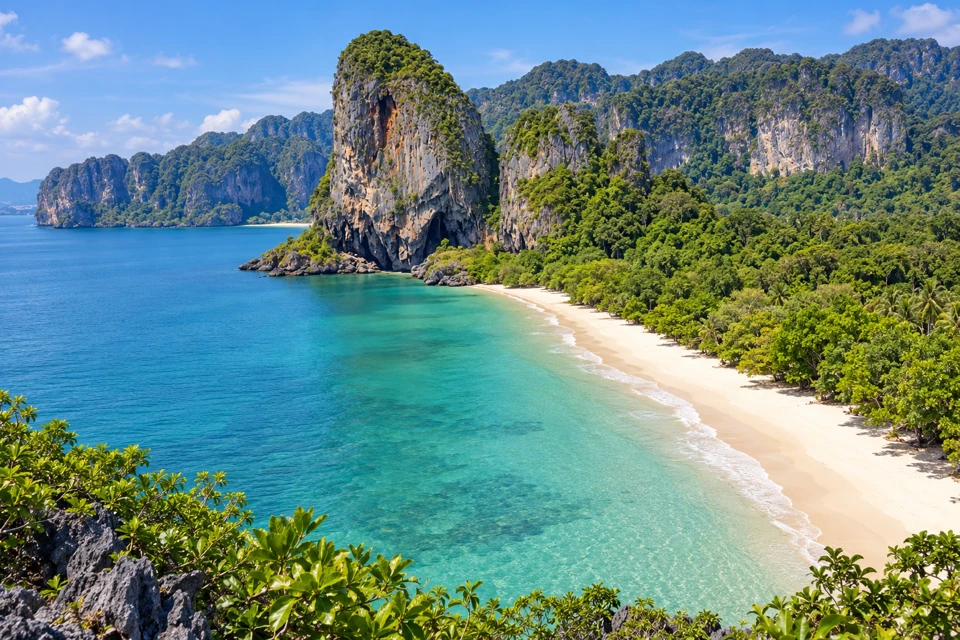
For most of Thailand, the cool, dry season from November to February is the best time to visit. Temperatures are pleasant, rain is lightest, and nights in the north are cool. That window also has the highest prices and the most visitors. Two regions follow their own weather: the Andaman coast (Phuket, Krabi, Ranong) and the Gulf islands (Koh Samui, Koh Phangan, Koh Tao). The Gulf is wettest from October to December, when the rest of the country is drying out.
The right dates depend on where you are going and what you want to avoid, whether that is heat, rain, northern smoke, crowds, or high hotel rates. The sections below cover each region’s weather, the conditions in every month, crowd and price patterns, festival dates, and the entry rules and park fees that affect planning.
Thailand’s Three Seasons
Thailand has three broad seasons. The weather figures in this article are 30-year averages from the Thai Meteorological Department for 1991 to 2020. Averages describe typical conditions and do not forecast any single week.
- Cool, dry season, November to February. Temperatures are pleasant and rain is least frequent across most of the country. Nights are cool in the north and at high altitude.
- Hot season, mid-February to mid-May. Temperatures climb through March and peak in April.
- Rainy season, mid-May to mid-October. This is the southwest monsoon. Rain covers most of the country, and the Andaman coast receives its heaviest rain in this period.
The second half of October is a transition. The northeast monsoon begins, bringing dry, cool air to the north and center but rain to the Gulf coast and the east side of the southern peninsula. The Gulf rainy period falls late in the year for this reason (seasonal timing).
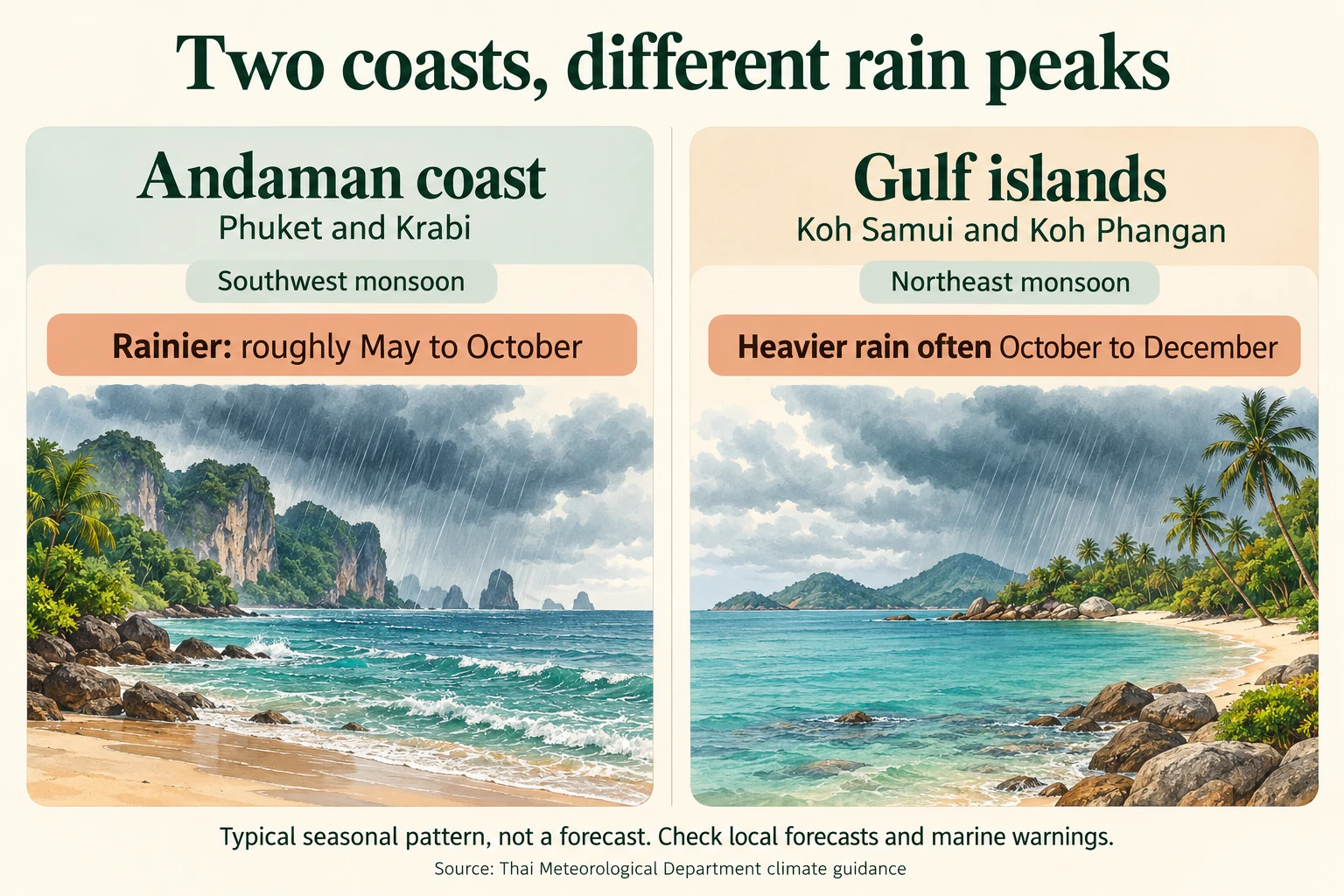
A useful rule of thumb: when Phuket is wet, Koh Samui is often fairly dry, and the reverse. Travelers who want beaches in almost any month can pick the coast that matches the season.
Weather by Region
| Region | Best months | Weigh carefully |
|---|---|---|
| North (Chiang Mai) | November to early February | March and April (haze, heat); June to September (rain) |
| Bangkok and central | November to February | April (heat); September (wettest) |
| Andaman coast | November to April | May to October (rainy season) |
| Gulf islands | February to April, and months outside October to December | October to December (November is wettest) |
| Northeast (Isaan) | November to February | June to October (heaviest in August and September) |
North: Chiang Mai
Chiang Mai has the widest swing of any major destination. April is the hottest month, with an average high of 36.7 °C. January has the coolest nights, with an average low of 15.7 °C, and mountain summits can fall below 10 °C in the cool season. The higher peaks, such as Doi Inthanon, are cold enough at night in these months that a warm layer is worth packing.

The north also has a smoke season. Haze runs from January to April and is worst in March, which makes that month a poor choice for trekking and viewpoints. Rain falls frequently in the rainy season. Chiang Mai’s peak visitor season runs from November to early February, when the air is clearest and the nights are coolest.
Bangkok and central Thailand
Bangkok follows the national pattern. The cool season from November to February is the comfortable window for walking temples, markets and riverfront areas. March and April are hot, and Bangkok’s average high in April is 35.7 °C. September is the wettest month, with an average of 335.9 mm of rain. Rain in the capital is a manageable inconvenience for a city trip, since museums, malls, food halls and cooking classes keep working, but outdoor sightseeing needs flexibility.
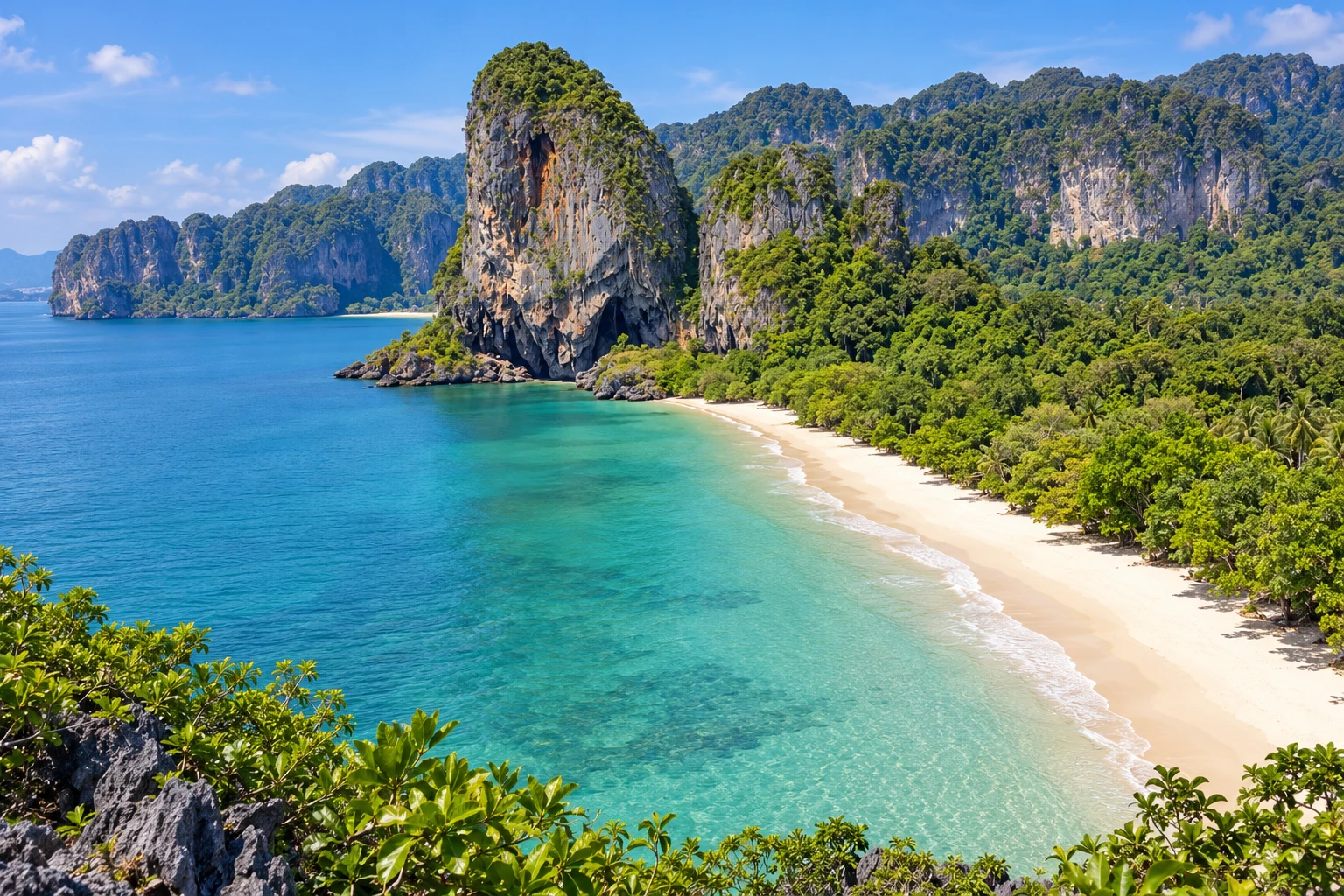
Andaman coast: Phuket, Krabi, Ranong
The Andaman rainy season runs from mid-May to October, with the heaviest rain around Phuket, Krabi and Ranong. The dry season is roughly November to April, and Phuket’s maximum temperatures typically stay below 34 °C. Rain is rare in January, mid-dry season. The dry season overlaps with the peak travel months, so the best beach weather on this coast comes with the highest demand.
Gulf islands: Koh Samui, Koh Phangan, Koh Tao
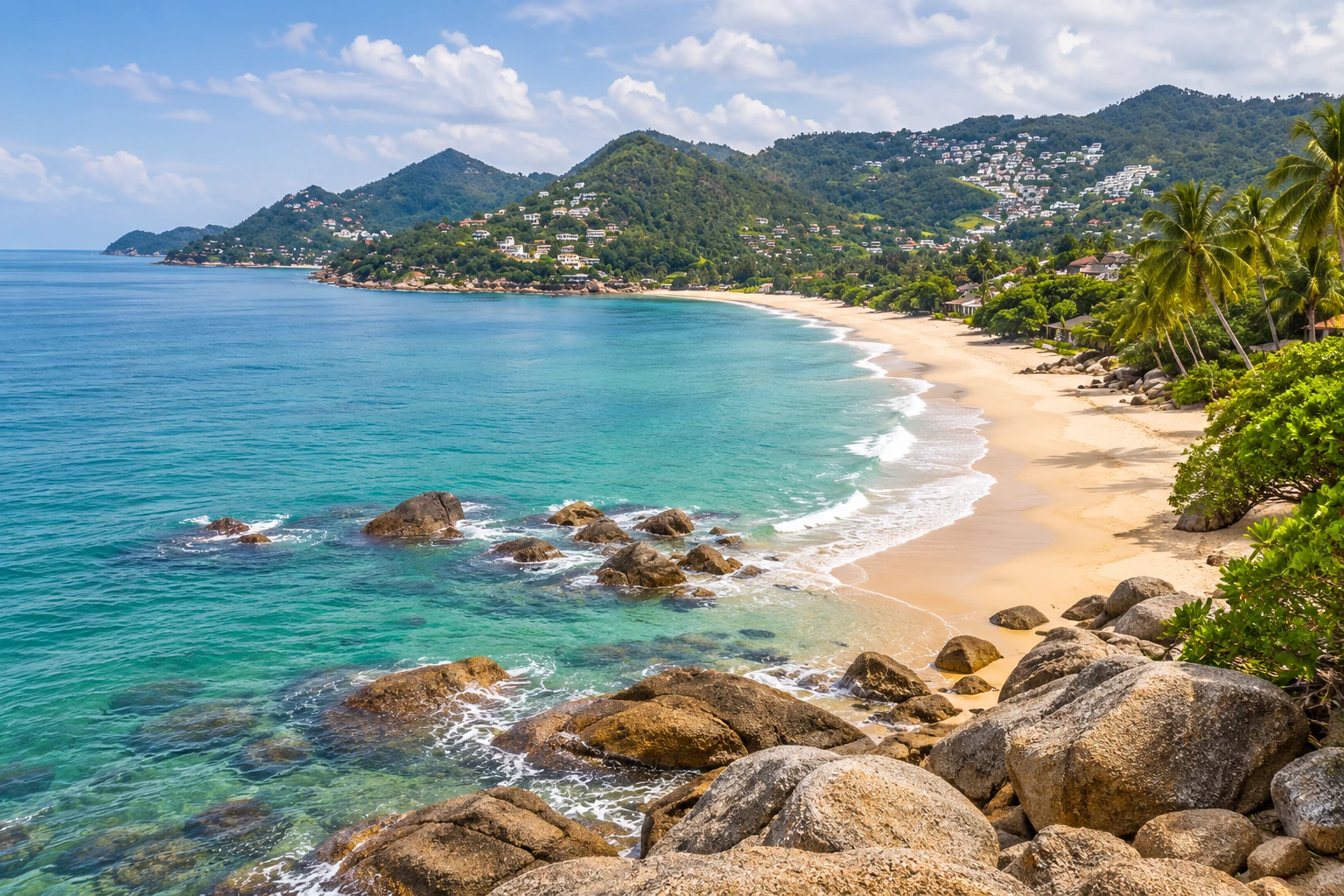
The Gulf calendar runs against the rest of the country. The heaviest rain falls from October to December, and November is the wettest month, with 444.6 mm at Koh Samui. February is the driest month, and February through April is the drier stretch. A traveler who plans a Thailand trip around the November to February cool season should look at the Andaman coast for beaches in November and December, then move to the Gulf from February.
Northeast: Isaan
The northeast, including Udon Thani and Khon Kaen, has a rainy season from June to October. The heaviest rain falls in August and September, when South China Sea cyclones most often reach the northeast and north. The cool, dry months from November to February are the main window.
Month by Month Guide
Crowd figures below are 2025 international arrivals from monthly arrival statistics. 2025 was a lower year than 2024 overall, so the figures are best read as a ranking of busy and quiet months.
November to February: cool season
November brings the cool, dry season to most regions and the start of Chiang Mai’s peak season. Arrivals were 2.91M in 2025. The Gulf coast is at its wettest, so Koh Samui, Koh Phangan and Koh Tao carry a high risk of rain. November suits Chiang Mai and northern routes, Bangkok, and the Andaman coast. Loy Krathong falls on 24 November in 2026 and on 14 November in 2027 (provisional), and Yi Peng in Chiang Mai takes place around the same time.
December is the second busiest month, with 3.37M arrivals. The north, center and Andaman coast are cool and dry, while the Gulf coast is still rainy. Expect high demand and high prices, particularly around the festive period, and book accommodation early for the north and the Andaman coast.
January is the busiest month of the year, with 3.71M arrivals. The weather is cool and dry. Chiang Mai has its coolest nights, but haze begins to build in the north. The Andaman coast is in mid-dry season. January is the strongest month for Bangkok sightseeing, Chiang Mai early in the month, and Andaman beaches, as long as you book ahead and accept peak prices.
February records 3.12M arrivals. The cool season ends around mid-February and the hot season begins. The Gulf coast is at its driest, which makes Koh Samui and its neighbors a good choice. Northern haze continues. Chinese New Year falls on 6 February in 2027 (it fell on 17 February in 2026) and draws crowds to Bangkok’s Yaowarat district. February suits Gulf islands and Bangkok shopping and food.
March to May: heat and first rain
March has 2.72M arrivals. It is hot, haze is at its worst in the north, and Bangkok is hot. The Gulf stays in its drier period, so both Andaman and Gulf beaches work well. Bangkok sightseeing is possible for travelers who tolerate heat, but March is the least suitable month for northern trekking.
April is the hottest month in most of the country, with 2.55M arrivals. Haze continues in the north, and the Andaman dry season ends. Songkran, the Thai New Year water festival, runs from 13 to 15 April. Chakri Memorial Day falls on 6 April. The Gulf islands are a good fit if you want a beach during Songkran week, but expect heat and heavy domestic travel.
May starts the rainy season in the middle of the month, and rain increases on the Andaman coast. Arrivals were 2.27M, among the lowest of the year. National Labour Day falls on 1 May and Coronation Day on 4 May. May offers lower crowds and prices in exchange for the risk of afternoon storms. The Gulf and east coast may still be workable.
June to October: rainy season
June has 2.32M arrivals. Rain is frequent in the north, and the northeast rainy season begins. Visakha Bucha, a Buddhist holy day, falls on 31 May in 2026, and Monday 1 June 2026 is its substitute holiday, and Queen Suthida’s Birthday on 3 June. June suits low-traffic travel centered on museums, cities and cooking classes.
July is a smaller secondary peak, with 2.61M arrivals. The rainy season covers most regions. Asanha Bucha, another Buddhist holy day, falls in July on the full moon of the eighth lunar month. July works for budget travelers willing to accept rain.
August records 2.58M arrivals. The northeast gets its heaviest rain, including cyclone-related rain, and the rainy season continues in the south. August suits indoor activities in Bangkok and Chiang Mai.
September is the quietest month, with 2.24M arrivals, and the wettest month in central Thailand and Bangkok at 335.9 mm. Heavy rain also hits the northeast. September suits flexible travelers who can shift plans around the weather.
October has 2.57M arrivals. The rainy season ends around mid-month, and the northeast monsoon begins in the second half of October. Gulf rain begins to increase. After mid-October, Bangkok and the north improve, and the Andaman coast becomes drier. The Phuket Vegetarian Festival is a nine-day event that runs from 9 to 18 October in 2026, and Ok Phansa, the end of Buddhist Lent, falls in late October.
Crowds and Prices
The pattern in the 2025 arrival data is consistent. January and December are the busiest months, followed by November and July. September, June and May are the quietest. Tourism Authority of Thailand (TAT) figures put the declines for July, June and May at about 16%, 15% and 14%, and attributed them to flooding in southern provinces and Thailand-Cambodia border tensions. For all of 2025, Thailand received 32.97M international arrivals, down 7.23% from 35.55M in 2024. Through 3 October 2026, arrivals stood at 23.45M, down 3.88% year on year, and TAT expects 32.6M to 32.7M for the full year.
Bangkok hotel occupancy averaged 79% in 2024, peaking at 84% in February and December. Bangkok’s average daily hotel rate in 2024 was 4,241 baht, which gives a sense of the baseline before seasonal markups.
Prices follow demand. June to August are the quietest months, with fewer festivals and lower prices. In the other direction, hotel prices can rise sharply during Songkran. Riverside hotels in Bangkok see only moderate increases during Loy Krathong. The same guide advises booking accommodation for Songkran and Loy Krathong two to four weeks ahead, and booking earlier than that is the safer choice for popular areas.
Festival Dates and Planning
Songkran is the only major festival with a fixed date. The rest follow the lunar calendar or other calendars and move each year, so confirm dates in the festival and holiday calendar before booking.
| Event | 2026 | 2027 |
|---|---|---|
| Chinese New Year | 17 February | 6 February |
| Makha Bucha | 3 March | Check before booking |
| Songkran | 13 to 15 April | 13 to 15 April |
| Visakha Bucha | 1 June | Check before booking |
| Phuket Vegetarian Festival | 9 to 18 October | Check before booking |
| Loy Krathong and Yi Peng | 24 November (Chiang Mai Yi Peng around the same time) | 14 November (provisional) |
Songkran is a nationwide public holiday. Bangkok water fights often start a day early. It suits travelers who want to join the festival, and it is a poor choice for anyone who wants quiet streets and normal hotel rates.
Chinese New Year is centered on Bangkok’s Yaowarat, where illuminations in 2026 ran from 7 February to 1 March, nightly from 18:00 to 23:00. Hat Yai and Nakhon Sawan also held events. TAT’s press release of 5 February 2026 projected about 1.25 million international visitors, about 2.3 million domestic trips and combined revenue of about 42.23 billion baht. Those were projections, but they show how much travel the holiday generates. Hotels in these cities fill quickly.
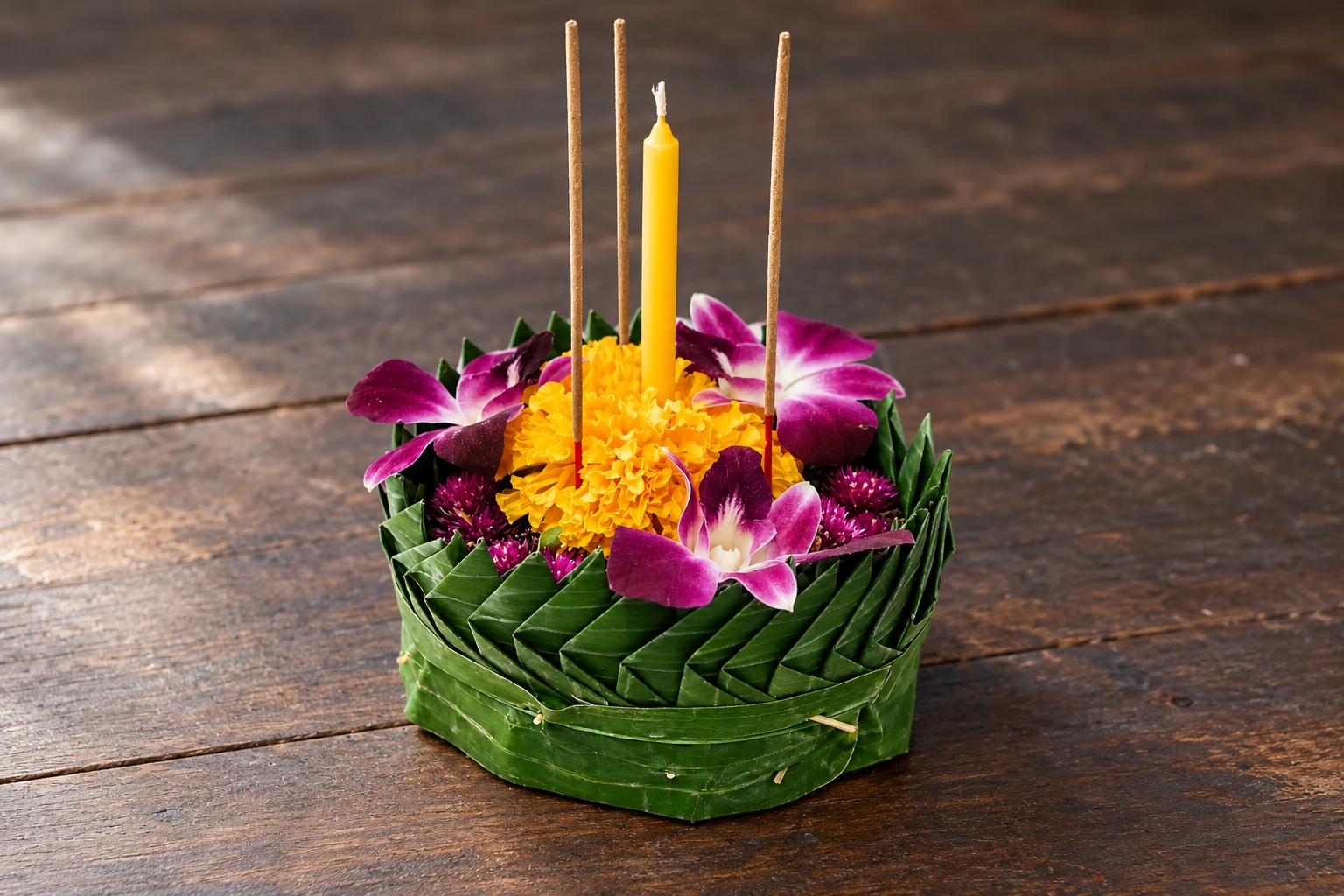
Loy Krathong falls on the full moon of the twelfth Thai lunar month. In Chiang Mai the Yi Peng festival lasts about three days, so the city is crowded with visitors during the November peak season.
Buddhist holy days such as Makha Bucha, Visakha Bucha and Asanha Bucha are nationwide public holidays. Banks and government offices close, and alcohol sales are banned, with exemptions for hotels, airports and licensed venues (in effect since 2025). If you are traveling on one of these dates, plan around the sales ban. Asanha Bucha falls on the full moon of the eighth lunar month.
Matching Dates to Your Trip
Travelers who want one trip covering Bangkok, Chiang Mai and a beach should aim for late November to January, using the Andaman coast for the beach stop. This is the most reliable weather for all three, and it is also the most expensive and crowded period. Travelers who prefer to avoid peak rates could shift to the shoulder edges, such as early November or the second half of October, but the Gulf is at its wettest then.
A February to April trip works best with Bangkok and the Gulf islands. February is the driest month on the Gulf coast, and March and April are still drier than the rest of the year. Skip northern trekking in this period because haze peaks in March, and expect heat in Bangkok.
Budget travelers and flexible travelers who do not mind rain can look at June to September, when arrivals and prices are lowest. September is the quietest month overall, and August and September bring the heaviest rain to the northeast. Itineraries based in the cities of Bangkok and Chiang Mai handle the rain best.
Festival-driven trips need the earliest booking. Songkran in mid-April and Loy Krathong and Yi Peng in November are the two most popular, and both carry price increases and the two-to-four-week minimum booking advice above.
Entry Rules and Park Fees
Thailand revised its visa rules in 2026. According to the Government Public Relations Department (15 July 2026), the earlier, longer visa exemption for 93 countries and territories is being withdrawn. Citizens of 59 countries and territories receive visa-free tourist entry for up to 30 days, and Mauritius and Seychelles receive up to 15 days. Visa on Arrival at designated checkpoints is available for nationals of Azerbaijan, Belarus and Serbia. The 30-day and 15-day exemptions cover tourism only. The new measures began on 15 September 2026, and travelers who entered earlier may stay for the remainder of the period granted under the earlier rules. A 30-day limit shortens the long cool-season stays that many travelers plan, so check the rules for your passport before booking flights. The Thailand Digital Arrival Card (TDAC), the online arrival form, will receive improved background screening and entry and exit monitoring.
National park fees matter for cool-season trekking and island days. The Department of National Parks (DNP) set the current rates in a regulation published in the Royal Gazette on 9 December 2021, with DNP announcing the new rates on 2 June 2022, effective 7 June 2022, for DNP-managed parks. Foreign adult and child rates fall into four tiers:
- Group 1 (67 parks): 100 baht for adults, 50 baht for children.
- Group 2 (55 parks): 200 baht for adults, 100 baht for children.
- Group 3 (9 parks, including Kaeng Krachan, Doi Inthanon and Sai Yok): 300 baht for adults, 150 baht for children.
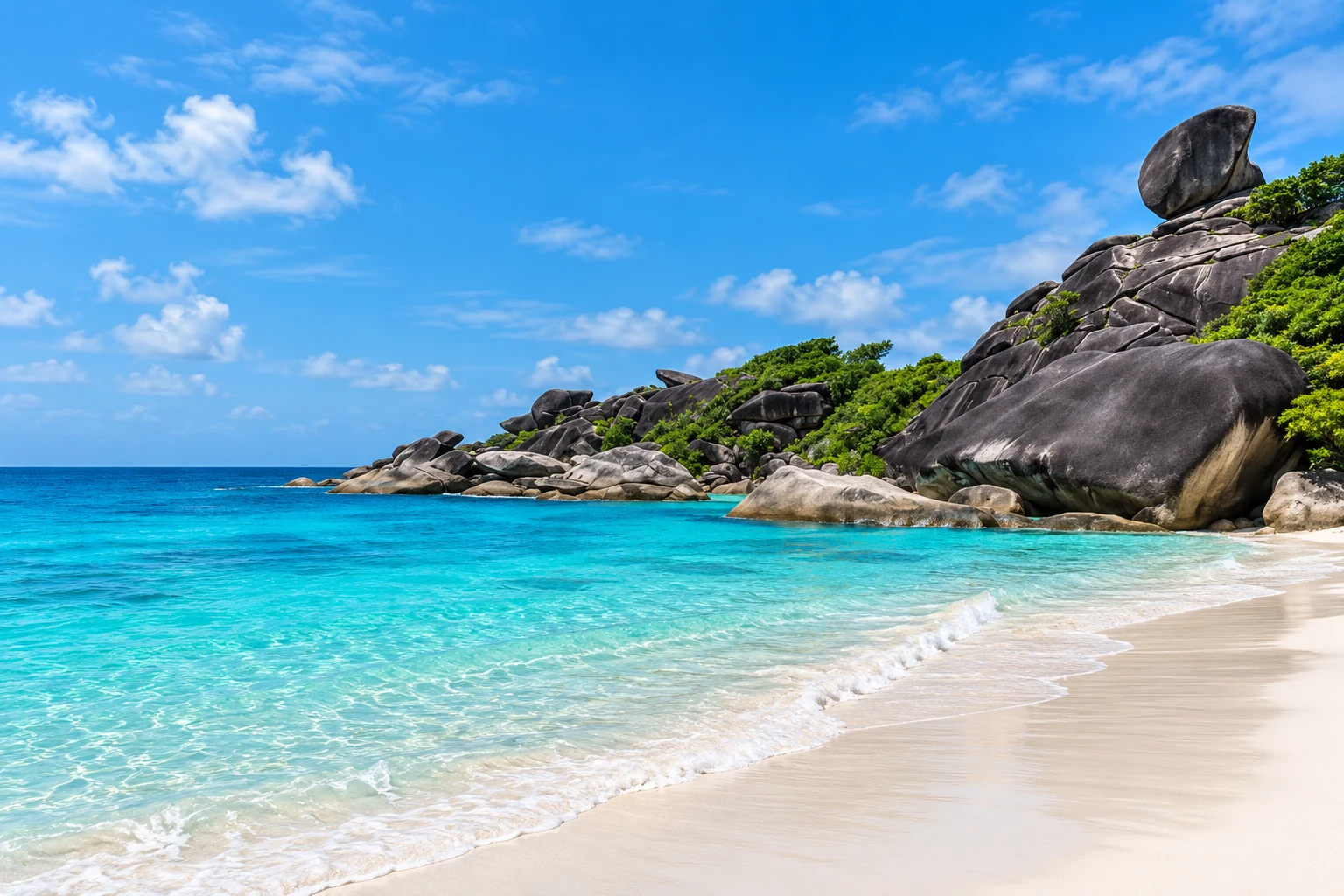
- Group 4 (Similan Islands and Surin Islands): 500 baht for adults, 250 baht for children.
Vehicle charges are separate. Reported figures include 30 baht for a four-wheel car and 20 baht for a motorcycle. Individual parks may set their own rates, so check the specific park before visiting.
Key Takeaways
- Choose November to February for most of Thailand. The cool, dry season suits Bangkok, Chiang Mai, the Andaman coast and the northeast, and it has the highest prices. January and December are the busiest months.
- Match the coast to the month. The Andaman coast is driest from November to April, while the Gulf islands are driest from February to April and wettest in October to December, with 444.6 mm at Koh Samui in November.
- Avoid Chiang Mai in March. Haze runs January to April and is worst in March. April is the hottest month, with an average high of 36.7 °C.
- Book festival stays early. Hotel prices can rise sharply during Songkran (13 to 15 April), and Loy Krathong and Chinese New Year dates shift each year, so confirm them first.
- Check your visa limit before booking. Under the revised scheme, 59 countries and territories get 30 days of visa-free tourist entry, which shortens stays for travelers who relied on the earlier, longer exemption.