Getting Around Croatia
Croatia’s mainland and islands are served by different kinds of transport. Buses carry most intercity travel along the coast and inland. Trains run on only a few corridors. Ferries and catamarans (fast passenger-only boats) connect the islands. Domestic flights cut hours from the longest trips, and a rental car reaches places the public network serves slowly. Taxis and ride-hailing apps cover the city legs.
The best option depends on the route and the season. A traveler going from Zagreb to Split and on to Hvar takes a bus and then a catamaran. Someone linking Zagreb and Dubrovnik on a tight schedule should check flights. The sections below cover journey times, typical prices, and where to book each mode.
Choosing a Mode for Each Trip
| Trip | Best fit | Reason |
|---|---|---|
| Zagreb to Split, Rijeka or Ljubljana | Bus, or train on the main corridors | The bus is faster and more frequent on Zagreb to Split; the train suits travelers who want scenery and accept the extra time |
| Zagreb or Split to Dubrovnik | Bus (overnight is popular) or flight | The bus takes 8 to 10 hours from Zagreb; the flight takes about 55 minutes in the air but costs more |
| Islands such as Hvar, Bra?, Kor?ula and Vis | Catamaran from Split or Dubrovnik | Catamarans are the fastest boats; car ferries carry vehicles |
| Taking a car to an island | Car ferry, for example Split to Stari Grad | Car plus driver costs roughly €35 to €50 |
| Long distance on a short schedule | Domestic flight | Zagreb to Split is about 45 to 50 minutes in the air |
| Coast and interior at your own pace | Rental car | Most flexible; plan for tolls and age rules |
| City hops and airport transfers | Taxi or ride-hailing | App prices are often lower than the rank but move with demand |
Buses on the Mainland
Buses are the main intercity mode, with frequent departures between Zagreb, Split, Rijeka and Dubrovnik. The main operators are Arriva (Autotrans), FlixBus, Croatia Bus and Cazmatrans as of 2025. Typical intercity journeys run from 1 to 8 hours, and short routes cost €5 to €10.

| Route | Journey time | Typical cost |
|---|---|---|
| Zagreb to Split | 5 to 6 hours; 5 h 15 min average | €15 to €30; about $27 average |
| Zagreb to Dubrovnik | 8 to 10 hours | €25 to €40 |
| Split to Dubrovnik | 4 h 5 min average | About $24 average |
| Zagreb to Ljubljana | 2 h 25 min average | About $18 average |
Journey times and typical costs for Zagreb to Split and Dubrovnik are listed for 2026. The dollar averages in the table come from route data for Croatian buses, which shows 25 daily departures on Zagreb to Split and 12 on Split to Dubrovnik, so a missed bus on either route costs a wait of hours at most. The average domestic bus ticket is $19 over the previous 12 months. Overnight buses are popular on the longest runs, which saves a hotel night but gives up the view.
Bus operators publish "starting at" fares that show the low end of the range. Nomago’s sample fares include Zagreb to Rijeka at €9.99, Split to Dubrovnik at €14, Split to Rijeka at €31, Zagreb to Venice at €11.97 and Zagreb to Sarajevo at €49. Nomago also gives a 15% discount on return tickets, which helps if you plan a round trip on one route. A child under 12 may not travel unaccompanied on its services.
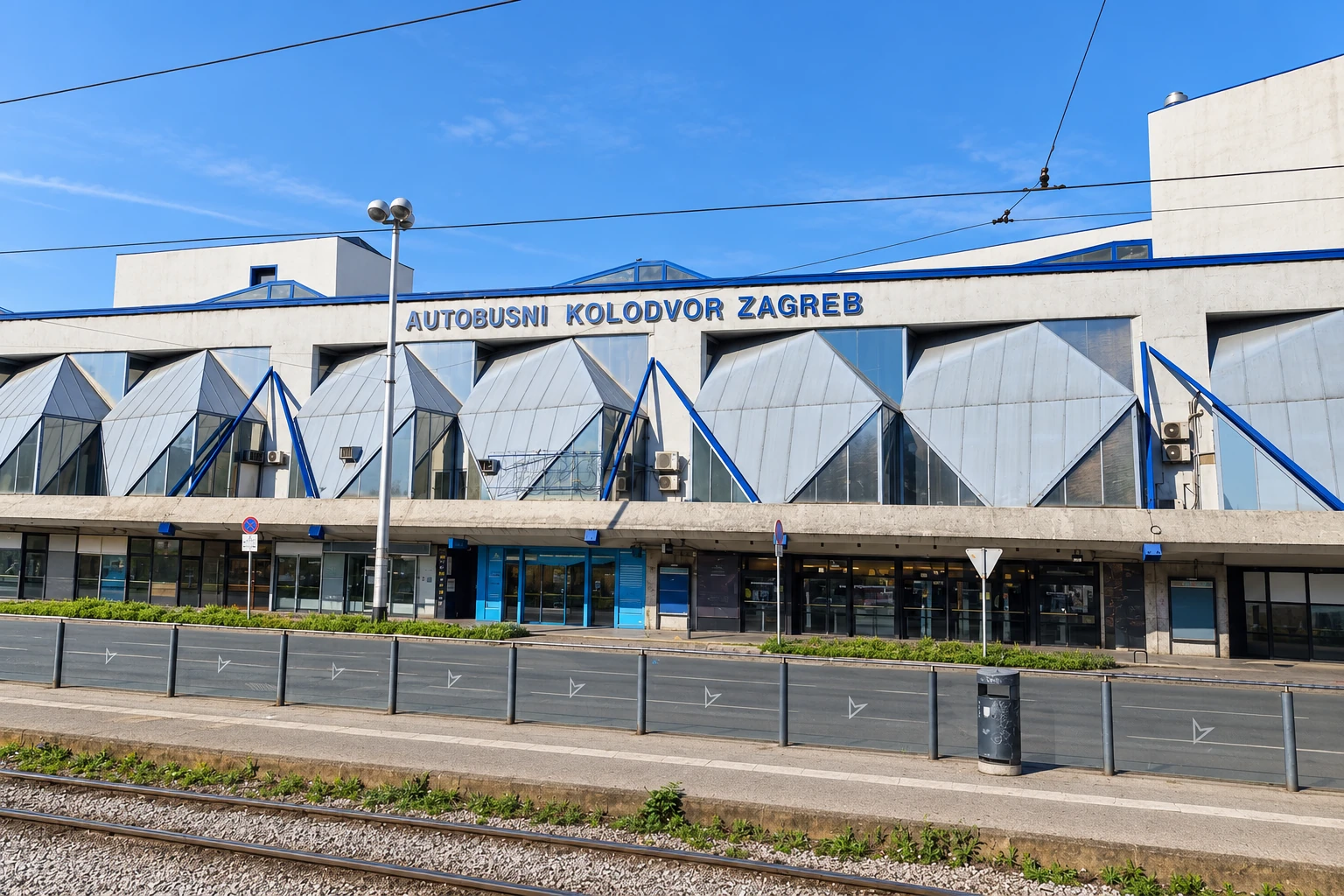
To book, buy from the operator’s own site, from the Zagreb Bus Station site, or from one of the online marketplaces that list several carriers side by side. The marketplaces make it easy to compare departure times on busy corridors like Zagreb to Split.
Trains Cover Fewer Corridors
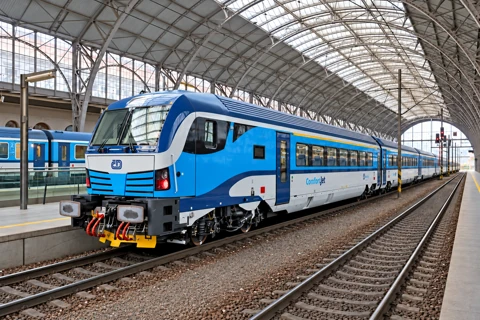
The national operator, HŽ Putni?ki prijevoz (HŽPP), runs services on the main corridors linking Zagreb, Split, Rijeka and Osijek. The network spans 2,617 km of line with 550 stations and stops, as of 2025. There is no coastal rail line south of Split and no train service to Dubrovnik, so travelers heading there use a bus, a ferry or a flight.

Trains take longer than buses and cars on intercity trips, which is why they suit shorter journeys. Zagreb to Split takes 5 to 6 hours, slower and less frequent than the bus, though scenic. Fares between larger cities such as Zagreb, Rijeka, Split and Osijek average €7 to €15.
Domestic tickets are sold at stations and online through HŽ, while international train tickets are sold at ticket offices, ticket vending machines, on the online platform Traveling.com, and on the train. The HŽ mobile app for Android and iOS and Tisak kiosks also sell tickets. As of 2025, online tickets cost 10% less than ticket-office prices, and buying on board costs 10% more, so buying ahead on the HŽ site saves money. Timetables change on the first Monday in December each year, usually by a few minutes per line. HŽ publishes domestic and international timetables in Croatian and English at hzpp.hr.
Ferries to the Islands
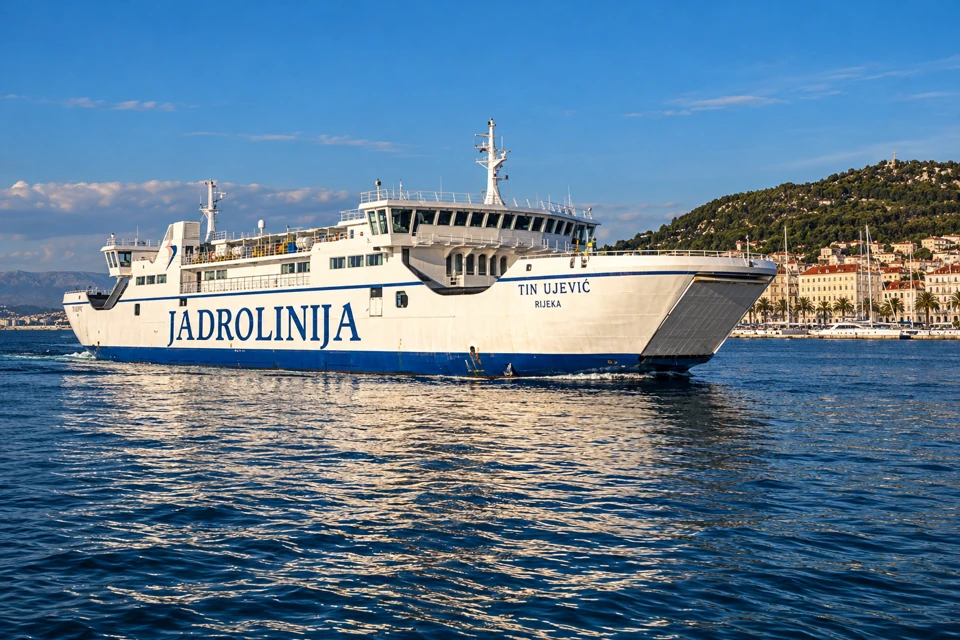
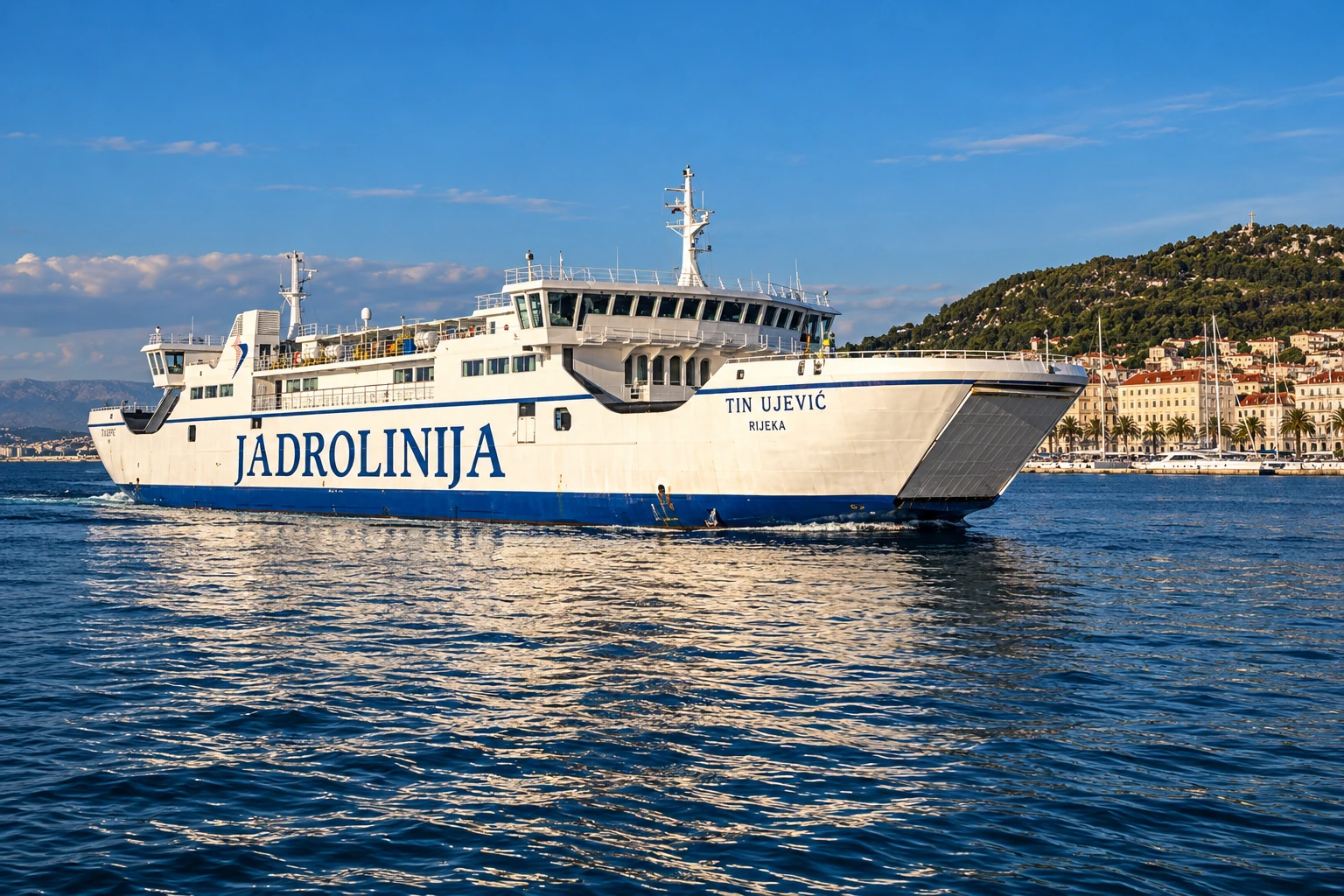
Ferries and catamarans link Split and Dubrovnik to the islands. Jadrolinija, Kapetan Luka (Krilo) and TP Line sell tickets online on their own websites. Jadrolinija also has sales points in every port, and most of its ferries can be booked online.
Split and Hvar
Split to Hvar has year-round service, with up to 19 daily crossings in summer and 2 to 3 in low season. The catamaran takes about 50 minutes to an hour, and the direct crossing costs about €25 one way in 2026. Jadrolinija’s regular passenger fare is €25.00, with children aged 3 to 12 paying the same. The route via Milna on Bra? starts from €15.
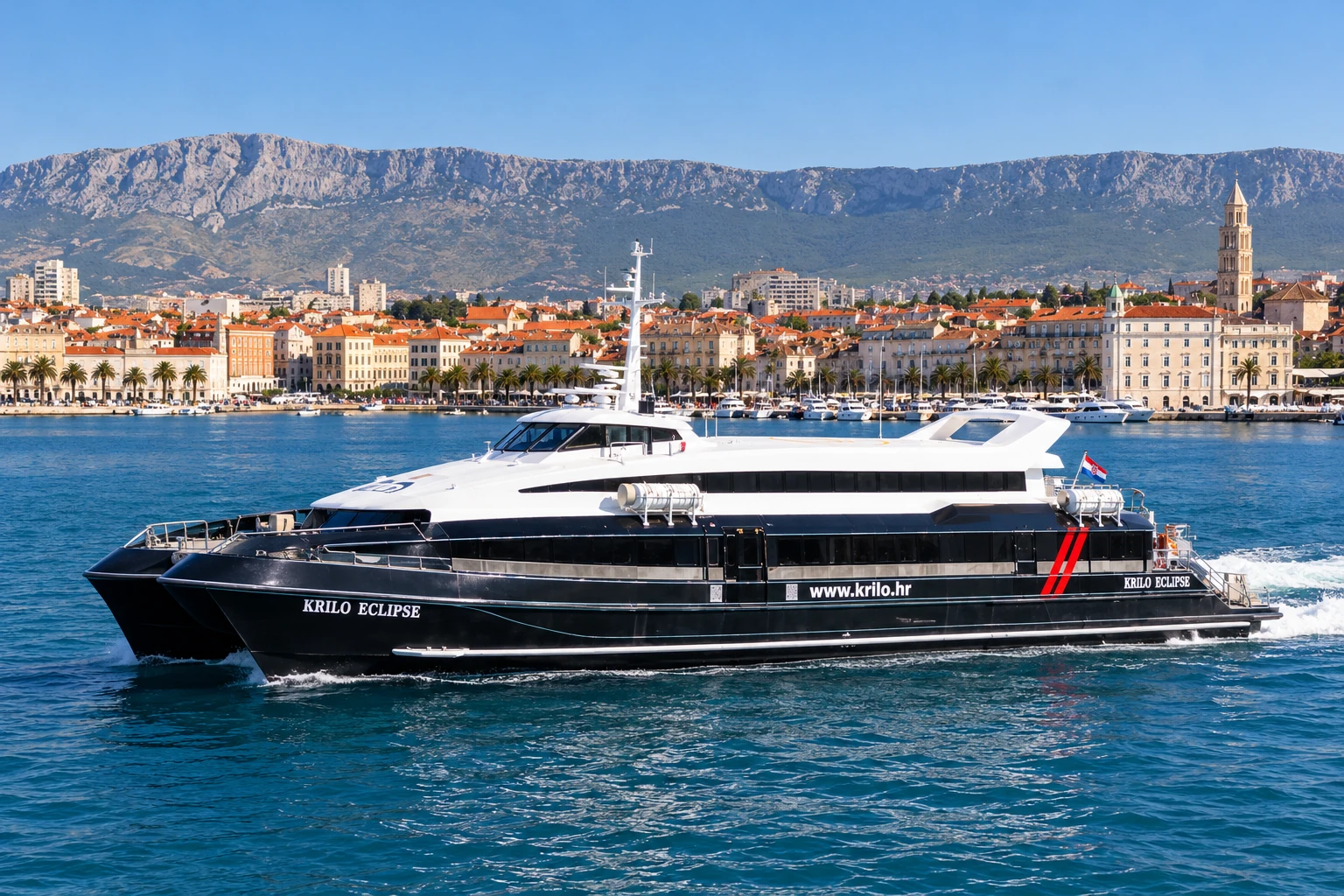
The Jadrolinija catamaran schedule changes with the season. From 19 June to 13 September it departs at 10:10 and 16:00. From 13 May to 18 June and from 14 September to 11 October it departs at 10:10 and 14:30. Large luggage on Jadrolinija costs roughly €5 per piece.
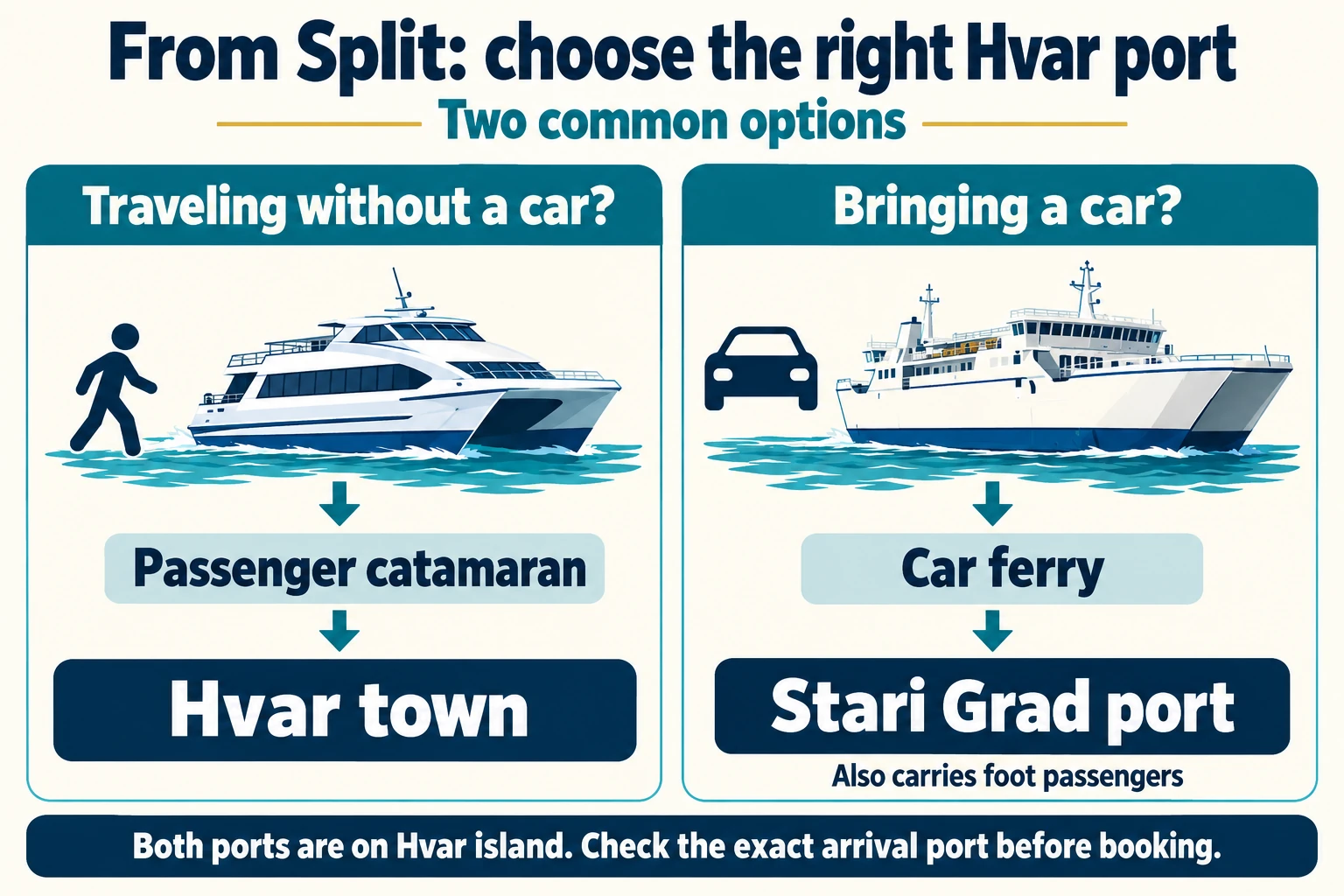
Travelers with a car use the Split to Stari Grad car ferry (Jadrolinija line 635), which runs all year with up to seven sailings a day in summer and takes about 1 hour 40 minutes to 1 hour 50 minutes. A foot passenger pays around €6 to €9, and a car plus driver pays around €35 to €50 depending on vehicle length. In 2026 Visit Croatia lists the Stari Grad car ferry at €8.40 in high season and €5.90 in low season, and the Jadrolinija catamaran to Stari Grad at €10 and €6.40.
Other Island Routes
Hvar town is the hub for hops between islands. Other Hvar routes and their 2026 fares:
- Vis to Hvar takes 35 to 40 minutes.
- Kor?ula to Hvar town takes 1 h 10 min to 1 h 30 min and costs €25.
- Milna (Bra?) to Hvar town takes 30 to 45 minutes.
- Mljet (Pomena) to Hvar costs €25.
- Lastovo (Ubli) to Hvar costs €11, a subsidized one-way fare.
- Dubrovnik to Hvar town takes 3 h 20 min to 3 h 40 min and costs €50.
- Drvenik to Su?uraj is a 35-minute car ferry.
Visit Croatia lists Split to Kor?ula on Kapetan Luka at €30 in both seasons and the Split to Vela Luka car ferry at €10.80 in high season and €7.90 in low season.
Split and Dubrovnik by Sea
Split to Dubrovnik by ferry takes 4 hours 30 minutes to 6 hours and runs seasonally, usually from April to October, with Kapetan Luka, TP Line and Jadrolinija. Jadrolinija’s own Dubrovnik to Split service runs only from mid-June to mid-September, and Kapetan Luka’s fare is €50 (April to October only). The bus is cheaper and often faster, so the boat suits travelers who want to stop at islands along the way.
Booking Ferries in Summer
July and August mid-morning and early-evening catamaran departures from Split are usually sold out three to five days ahead, and online prices match counter prices. Foot passengers can usually stay flexible, but car spaces are best reserved in advance for July and August. Passenger catamarans on Hvar routes are booked through the ticketing partner linked on the Hvar catamaran page.
Domestic Flights
Croatia Airlines is the national carrier, based in Zagreb, with regular services from Zagreb to Dubrovnik, Split, Pula and Zadar, plus some flights between these airports. Trade Air flies selected domestic routes. Zagreb to Split and Zagreb to Dubrovnik run daily year-round, while Zagreb to Bol on Bra? flies only on Wednesdays and Saturdays from April 1 to October 24, 2026. Routes without a direct flight, such as Dubrovnik to Osijek, usually connect through Zagreb. Check the Croatia Airlines timetable for current frequencies.

Flight times are short:
- Zagreb to Split takes about 45 to 50 minutes.
- Zagreb to Dubrovnik takes about 55 minutes.
- Zagreb to Zadar takes about 40 to 45 minutes.
- Split to Dubrovnik takes about 35 to 40 minutes.
A flight saves most on Zagreb to Dubrovnik, where the bus takes 8 to 10 hours.
Croatia Airlines’ "Flights from Zagreb to Europe" page lists return "from" fares that include airport taxes and the Ticket Service Charge: Zagreb to Zadar €100, Pula €103, Split €109, Bra? €110 and Dubrovnik €112. A separate guide gives one-way fares starting from €50, with Zagreb to Split at €80 and Zagreb to Dubrovnik at €100. Compare fares on the same basis, return against return, and note that a flight costs several times a bus ticket for the same route.
Baggage rules deserve a check before you pay. Economy fares are typically listed with a checked-bag allowance that varies by flight, so read the allowance on the Croatia Airlines baggage page. Tickets are sold on the Croatia Airlines website and mobile app, and Trade Air sells on its own site and through the Croatia Airlines website.
Renting a Car
A rental car gives the most freedom for the coast and interior, but suppliers set conditions on drivers, and Croatia’s tolls and ferries add to the bill.
Age, Licence and Deposit
Most suppliers set the minimum age at 21, and Sixt opens some smaller categories at 18. A local operator, Autowill, lists a minimum of 18 and a maximum of 80. Most suppliers want a licence held for at least one year, and some ask for two years. Premium and 4×4 categories often require drivers aged 25 or older, and the Driving International Association says some categories are restricted to older drivers.
Young-driver surcharges for drivers under 25 range from €15 to €30 per day. Sixt charges about €12 per day for drivers under 22, and Hertz applies its surcharge up to age 24 with a daily cap. Hertz also applies a senior surcharge from age 71.
An EU or EEA licence is accepted without extra paperwork. Licences in non-Latin scripts need an International Driving Permit (IDP), a translation of your licence, alongside the domestic licence. For Latin-script licences such as US, UK, Canadian and Australian, the Driving International Association says the licence is accepted alone but advises carrying an IDP anyway.
A credit card in the main driver’s name is nearly always required for the security deposit. Bring the driving licence, a credit or debit card, a passport or ID card, and the reservation voucher.
Tolls and Road Rules
Croatia has no vignette (a prepaid windshield sticker) for passenger cars. Motorway drivers take a ticket on entry and pay a distance-based fee on exit, in euros or by card. The A1 motorway from Zagreb to Split takes 3.5 to 4 hours and costs around €26 in tolls. The car suits travelers who need a vehicle at the destination. Electronic toll devices are not always fitted in rental cars, so ask the agency.

Per 2025 figures, traffic keeps to the right, and speed limits are 50 km/h in towns, 90 km/h on open roads and 130 km/h on motorways. The blood alcohol limit is 0.05%, and 0.00% for drivers under 25 and professional drivers. Drivers under 24 or with under two years of licence face lower limits of 120 km/h on motorways, 100 km/h on expressways and 80 km/h on rural roads. Winter tyres are required from 15 November to 15 April.
Driving to Slovenia, Italy, Austria or Hungary is treated like any other Schengen border crossing. On the islands, car hire is usually offered for hours or a day rather than a full week, which suits a day trip on an island without bringing a car across by ferry.
Uber, Bolt and Taxis
Uber and Bolt operate in the larger cities. Uber’s vehicle requirements set a minimum length of 4,000 mm and a Euro 6 engine. UberX is available in all Uber cities. UberXL and Uber Comfort run in Zagreb, Split, Dubrovnik, Rijeka and Zadar, and Uber Black covers Zagreb, Split and Dubrovnik.
Licensed taxi start fares in a city price comparison range from €2 in Zagreb and Osijek to €3 in Pula and Zadar, €3.32 in Split, €4 in Dubrovnik and Opatija, and €5 in Rijeka and Šibenik. Zagreb’s average per-kilometer fare is €1.25, and its waiting fee is €9.45 per hour.
App prices move with demand, driver numbers and traffic, so treat them as snapshots. A newspaper check of Zagreb fares found these quotes from the main station:
- To the city centre, UberX quoted €23.93 and Bolt €11.90.
- To Pre?ko, UberX quoted €31.94 and Bolt €25.90.
- To Dubrava, UberX quoted €34.95 and Bolt €17.90.
A ZET (Zagreb public transit) strike pushed some rides to about €55. Compare both apps before booking.
At Zagreb airport, the taxi rank is on the ground floor of Arrivals in the Meet & Greet area, run under contract by Taxi Gorica. Bolt and Uber rides are listed at €25 to €35 with surge pricing, against €30 to €45 for metered rank taxis. Bolt and Uber wait times are 5 to 15 minutes. Apps are paid by card through the app, while rank taxis accept euro cash and cards.
Summary by Mode
- Use buses for most mainland routes: Zagreb to Split takes 5 to 6 hours at €15 to €30, and Zagreb to Dubrovnik takes 8 to 10 hours at €25 to €40. Return tickets on Nomago save 15%.
- Take a catamaran to the islands and a car ferry with a vehicle: Split to Hvar takes about 50 minutes to an hour and costs about €25 one way in 2026. A car plus driver on the Stari Grad ferry costs around €35 to €50.
- Book summer ferries days ahead: Mid-morning and early-evening Split to Hvar catamarans in July and August usually sell out three to five days in advance, and car spaces are best reserved early.
- Fly Zagreb to Dubrovnik if time matters most: The flight takes about 55 minutes, against 8 to 10 hours by bus. Croatia Airlines lists return fares well above bus fares on its main domestic routes.
- Check driver rules before renting: Most suppliers require age 21 and a credit card in the main driver’s name for the deposit. Tolls are paid on exit, and the A1 from Zagreb to Split costs around €26.