Best Time to Visit Croatia
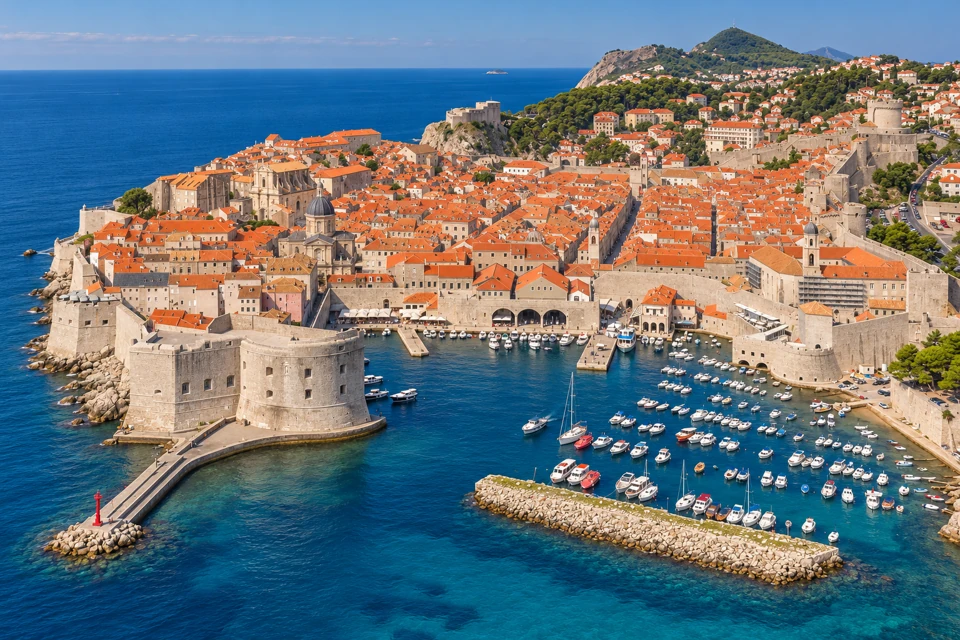
Croatia has two climates. The Adriatic coast and islands, including Dubrovnik, Split, Hvar, and Zadar, have hot, dry summers and mild, wet winters. The interior, including Zagreb and Slavonia, has hot summers and cold winters with occasional snow. The best month depends on what you want to do, whether swimming, hiking, eating, or sightseeing, and on which region you visit.
Most travelers do best in late May through June or in September. The sea is warm enough to swim, beaches are busy but not packed, and prices are moderate. July and August bring the hottest weather, the biggest crowds, and the highest prices. Autumn suits a trip focused on Istria’s food and wine, and winter suits Zagreb’s Advent markets and Rijeka’s carnival.
How the regions differ
The Dalmatian coast gets more than 2,600 hours of sunshine a year, which makes May to September reliable for beach weather around Dubrovnik, Split, Hvar, and Zadar. Winters there are mild but rainy, and many tourist services shrink to a skeleton from November to March. Plan on May, June, or September for the coast.
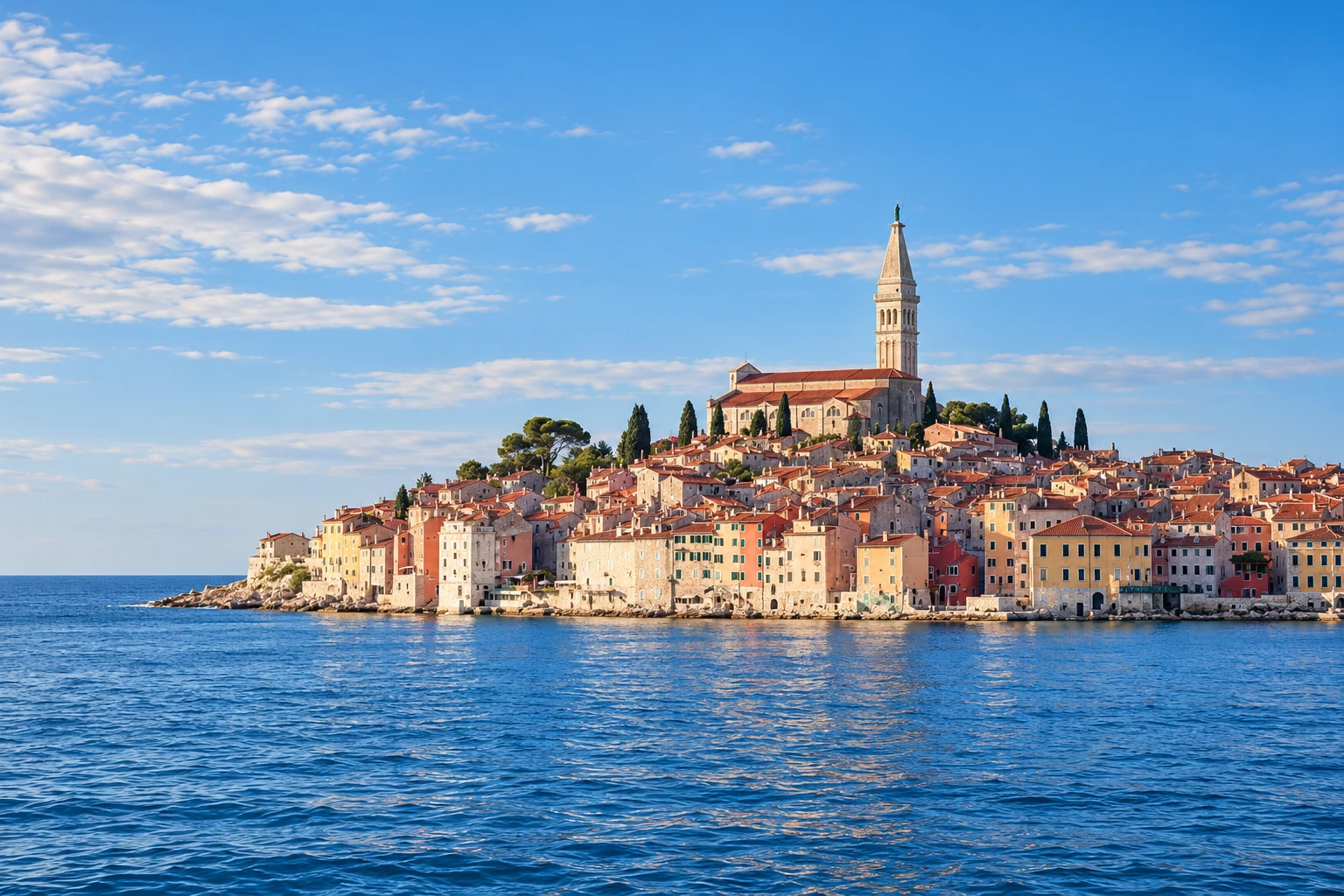
Istria and Kvarner, the northern peninsula and gulf around Rovinj, Rijeka, and Opatija, have slightly cooler summers than Dalmatia. Their best stretch runs from September through November, when the wine harvest and truffle season fill the calendar and Rijeka’s carnival follows in winter. Of all the regions, Istria rewards an autumn trip the most.
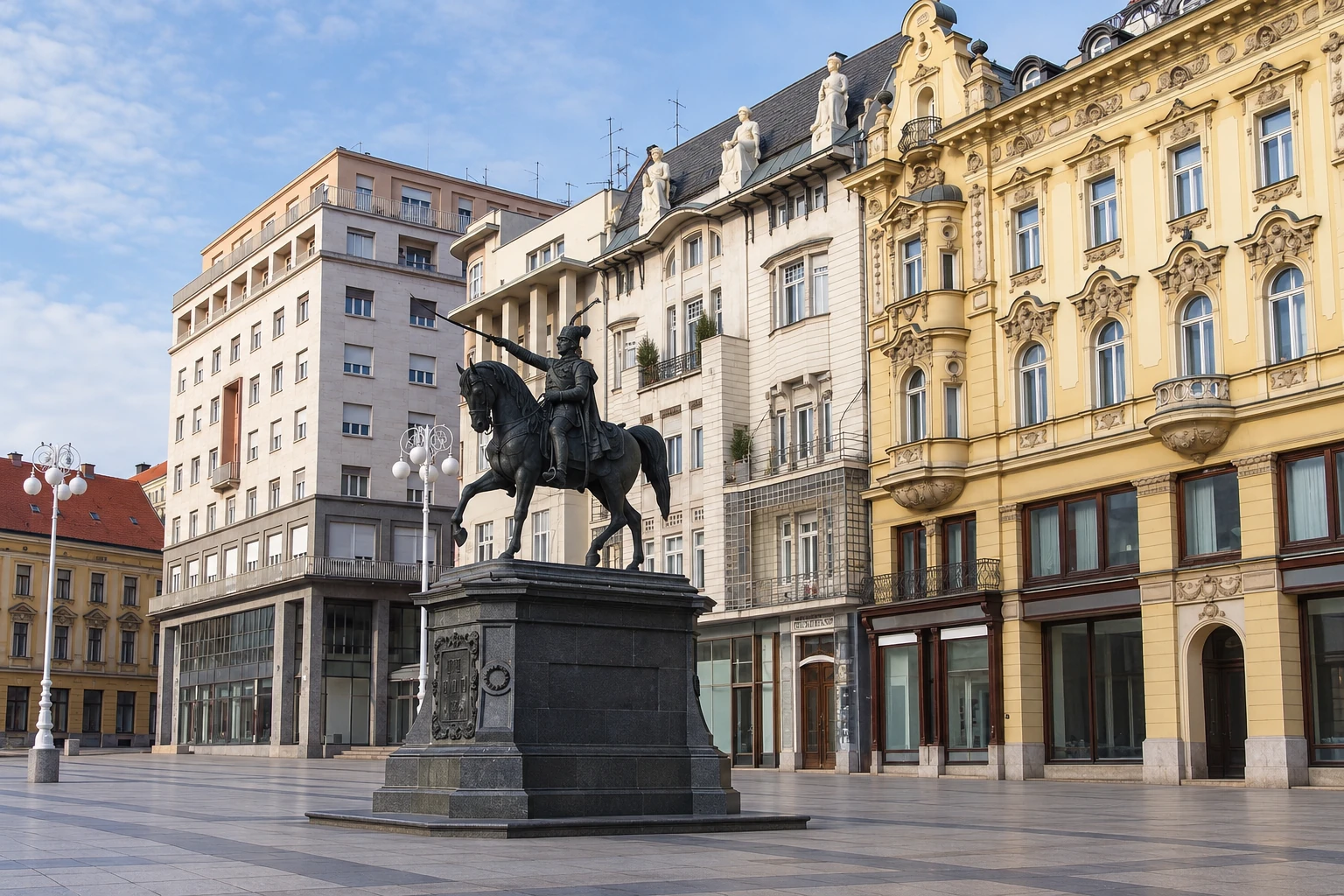
Continental Croatia, meaning Zagreb and Slavonia, has hot summers and cold winters. Winter temperatures run 0–8°C with occasional snow in Zagreb and the interior. Spring, autumn, and the Advent season are the comfortable times for city walking and for Zagreb’s markets.
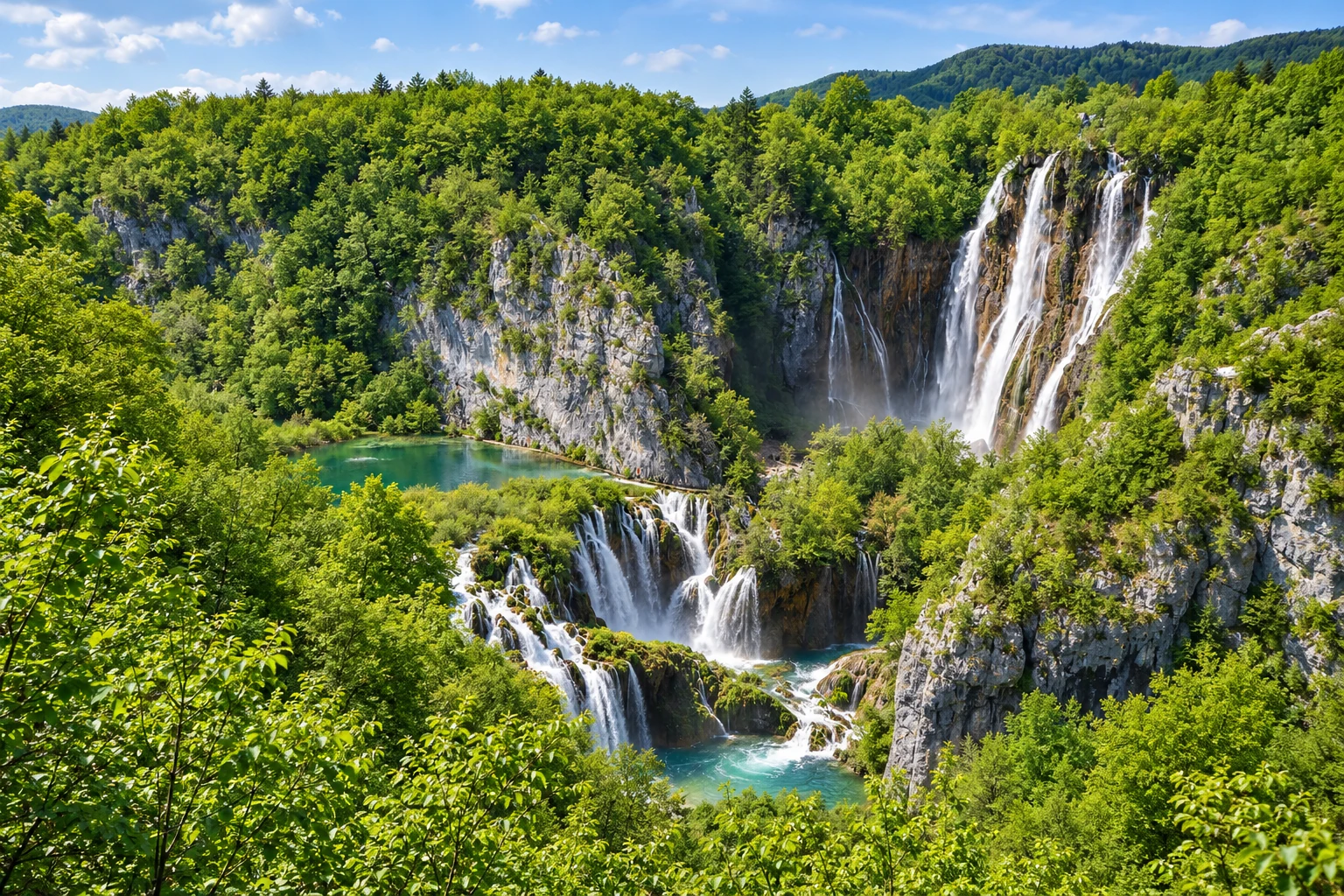
The inland national parks, Plitvice Lakes and Krka, sit beyond the Dinaric Alps, where a continental climate brings cold, snowy winters and warm, humid summers. May suits Plitvice and Krka best, and the parks reopen fully in April. June and September are also good choices for them.
Month by month
The monthly averages for air and sea temperature on the Dalmatian coast are:
| Month | Average high / low | Sea |
|---|---|---|
| January | 10°C / 4°C | about 14°C |
| February | 11°C / 5°C | about 13°C |
| March | 14°C / 7°C | about 14°C |
| April | 18°C / 10°C | 16°C |
| May | 23°C / 14°C | 19°C |
| June | 27°C / 18°C | 23°C |
| September | about 27°C | 24°C |
For July and August, coastal air temperatures run 28–35°C and sea temperatures of 26–28°C. Dates below are the current ones listed in the festival calendar, which was updated in September 2026. Confirm festival dates with the organizer before you book, because some 2027 dates are provisional.
January and February
The coast is cool and rainy, and the towns are quiet with few tourists. Highs are 10°C in January and 11°C in February, and the sea is about 14°C in January and 13°C in February. Zagreb and the interior sit at 0–8°C with occasional snow. Accommodation is at off-season prices, and the sea is too cold for most swimmers.
Both months suit city breaks and carnival. Rijeka Carnival, which is Croatia’s largest festival, runs through January and February. In 2027 the children’s parade is on 30 January and the International Carnival Parade is on 7 February. Dubrovnik marks the Feast of St Blaise on 2–3 February 2027, with the festival opening on the evening of 2 February.
March and April
March brings highs of 14°C and lows of 7°C, with moderate rainfall and almond blossoms on the islands. The coast still has few tourists, but cruise calls at Dubrovnik begin in early March, so Old Town streets start to fill on ship days. Zagreb’s Festival of Lights also takes place in March and is free.
April warms to a high of 18°C and a low of 10°C, and the sea reaches 16°C, still cool for swimming. Rainfall drops to low-to-moderate. National parks reopen fully, and accommodation runs 30–40% below peak prices. Easter celebrations fall in this window. On Hvar, the Za križen procession, a UNESCO-listed event, takes place on Maundy Thursday night. April suits budget travelers who want mild weather, open parks, and sightseeing without swimming.
May
May is warm and sunny with few crowds. Highs reach 23°C, lows 14°C, rainfall is low, and the sea is 19°C, which is swimmable for people who tolerate cool water. This is the best month for Plitvice Lakes, Krka, and city sightseeing. It is also a good time for hiking, because the heat of July and August has not arrived.

June
June is hot and dry, with a high of 27°C, a low of 18°C, very low rainfall, and a sea of 22–24°C. Beach season begins and crowds remain manageable. June is the best-value month on the coast, so it suits swimmers and families who want warm water without peak prices.
Zagreb’s INmusic festival at Lake Jarun takes place in late June. The beach-club season at Zr?e on Pag also starts in late June and runs through August. Sonus, another Zr?e beach festival, cancelled its 2026 edition after losing its two main venues, so check the current lineup before basing a trip on Pag’s club scene.
July
In peak July, coastal air temperatures are 28–35°C and the sea is 26–28°C. Beaches are packed and accommodation prices are the highest of the year. Book three to six months ahead. The month suits festival-goers and nightlife travelers more than anyone seeking quiet.
Several major events fall here. Ultra Europe in Split ran 10–12 July in 2026 and is set for 9–11 July 2027, and the whole city fills on Ultra weekend. A budget traveler who wants Split cheap and calm should pick a different week. The Pula Film Festival, whose 73rd edition ran 9–16 July 2026, screens its main program in the Pula Arena, and a single Arena evening cost 6 € in 2026. The Dubrovnik Summer Festival runs 10 July to 25 August 2027. Split Summer is scheduled for 14 July to 14 August 2027.

August
August has the same heat and sea temperatures as July, and the crowds are at their peak. Dubrovnik’s high-congestion cruise days fall in July and August, which makes the Old Town especially crowded then.
August is also the month for traditional festivals away from the beach. The Sinjska Alka in Sinj, a UNESCO-listed knights’ tournament, ran on Sunday 9 August 2026 for its 311th edition. Confirm the date with the Sinj tourist board before you plan around it. Zadar holds the Night of the Full Moon in early to mid-August, and Varaždin hosts Špancirfest in late August. Sinj and Varaždin are inland, so they draw local rather than beach crowds.
September
September is among the best overall months. The sea is 24–25°C, air temperatures average about 27°C, crowds thin from August levels, and prices fall. Harvest festivals take place in Istria and Dalmatia, and Varaždin Baroque Evenings ran 18–29 September in 2026. Swimmers, couples, and anyone who dislikes August crowds will find the best balance here.
October
October marks the Istrian wine harvest and truffle season, and off-season prices return. Zigante Truffle Days in Livade, Istria, were held every Saturday and Sunday from 3 October to 1 November in 2026. The month suits food and wine travelers and anyone who wants a quiet autumn on the coast. Expect fewer open seasonal businesses on the islands and the coast as the month goes on.
November and December
Very few tourists visit in these months, and prices are the lowest of the year. Zagreb is the practical base. The Zagreb Film Festival ran 9–15 November 2026, Martinje (St Martin’s Day) is on 11 November with celebrations in wine country, and Advent in Zagreb runs from 28 November 2026 to 7 January 2027. Much of the coast is quiet, so check opening hours there before you arrive. December suits Christmas markets and winter city travel.
Dubrovnik and cruise crowds
Dubrovnik’s crowding depends on cruise ships as well as the calendar. The Dubrovnik Port Authority says its measures in most cases limit cruise passengers to about 8,000 per day. Of 243 cruise days a year, 18 exceed that estimate, and six of those 18 fall in July and August. Four days a year exceed roughly 10,000 passengers. Cruise ships arrive from early March through the end of the year, and sometimes year-round.
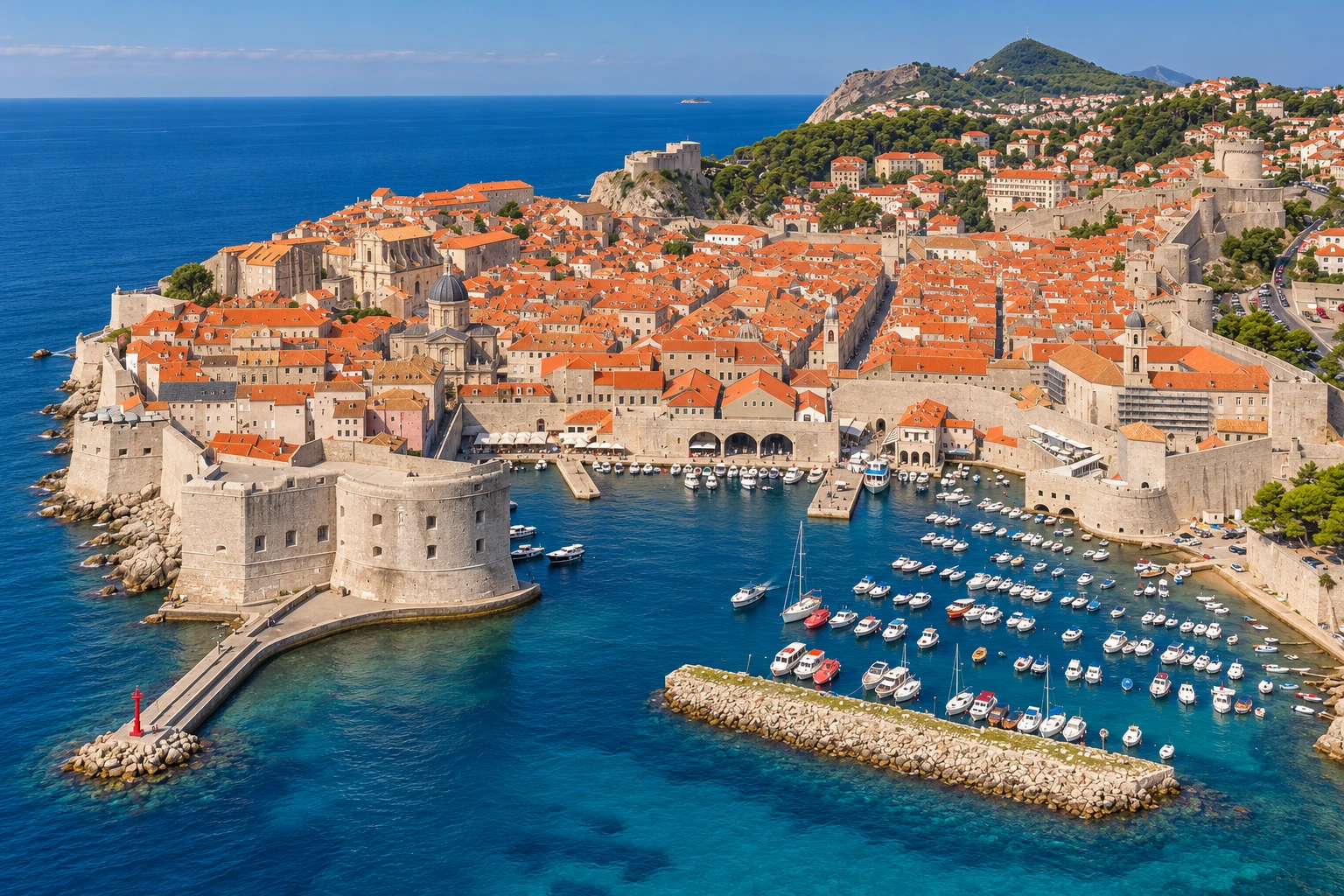
The Port Authority’s 2026 Cruise Berthing Policy adds a second limit, capping simultaneous cruise visitors at 4,000. The daily total and the on-site cap measure different things, so both can apply on the same day. The Old Town is busiest on the high-congestion days that cluster in July and August, so to avoid cruise crowds, visit outside those two months or walk the walls and streets early in the morning or late in the day.
Prices and tourist tax
Accommodation follows the seasons. Prices peak in July and August. April runs roughly 30–40% below peak, and June is the best-value month on the coast. November and December are the lowest. For July and August, book three to six months ahead.
Croatia also charges a tourist tax per person per night, and the rate varies by county, municipality, and season. These are 2025 rates, so check the local tourist board for the current figure:
- In Dubrovnik-Neretva County, accommodation with catering is charged at 1.90 € from 1 April to 30 September and 1.40 € for the rest of the year. Campsites pay 1.70 € in the main season and 1.10 € otherwise.
- In Omišalj and Njivice, the rate is 2.10 € from 1 April to 30 September and 1.70 € from 1 October to 31 March.
- At Vrsi in Zadar County, campsites are charged 1.50 € in the main season and 1.33 € outside it.
- On the Makarska Riviera, the daily tax is 1.50 € in all municipalities and 1.33 € in Makarska.
The tax is small beside the swings in nightly accommodation rates, but it adds up over a long stay for a family. Children under 12 do not pay, and children aged 12–18 pay 50%. People with a disability of 70% or greater, plus one escort, do not pay.
Choosing dates by trip type
Swimmers and families should aim for June or September. June has a 22–24°C sea and the best coastal value, and September has a 24–25°C sea with thinning crowds. Early June suits those who want the lowest prices, and September suits those who want the warmest water.
Hikers and national park visitors do best in May, when Plitvice Lakes and Krka are recommended and the heat has not arrived. June and September also work. Food and wine travelers should go to Istria between late September and early November, with Zigante Truffle Days on autumn weekends and Martinje on 11 November.
Festival-goers can choose among mid-July for Ultra Europe, the Pula Film Festival, and the Dubrovnik and Split summer programs, early August for Sinj, and late August for Varaždin. Budget travelers should look at April, October, and November, with coastal opening hours checked first. City-break and winter travelers should go to Zagreb from late November to early January for Advent, or to Rijeka in January and February for carnival.
Key Takeaways
- Choose late May, June, or September for the coast: The sea is 22–24°C in June and 24–25°C in September, warm enough to swim, with manageable crowds and moderate prices. June is the best-value month.
- Avoid July and August unless you want festivals or nightlife: Coastal air runs 28–35°C and beaches are packed. Prices peak, so book three to six months ahead. Ultra Europe in Split falls on 9–11 July 2027.
- Visit Dubrovnik outside July and August, or go early or late: Six of the 18 days above 8,000 cruise passengers fall in those two months.
- Go to Istria in October for truffles and wine: Zigante Truffle Days run on weekends into early November, and Martinje is on 11 November.
- Use Zagreb from late November to January: Advent runs 28 November 2026 to 7 January 2027. Winter temperatures are 0–8°C. The coast is quiet then, and prices there are at their lowest.