Best Time to Visit Czechia

Czechia, the short English name for the Czech Republic, has a continental climate with four distinct seasons, so the best month depends on your plans. For general sightseeing in Prague and the castle towns, late May, June, and September bring mild weather and fewer crowds, and attractions are open. July and August are the warmest months and the busiest. December suits Christmas markets, and January and February suit snow in the mountains. March, April, and November suit travelers who want quiet streets more than warm weather.
Below, the climate is laid out month by month, along with how conditions vary across regions, when crowds and prices peak, and which festivals fall in each season. Weather figures come from the Czech Hydrometeorological Institute (?HMÚ), visitor numbers from the Czech Statistical Office (CZSO), and castle admission from the National Heritage Institute (NPÚ), which runs about 100 castles, chateaux, monasteries, and other monuments.
Climate Across the Year
The ?HMÚ’s climate yearbook for 2022 uses the 1991 to 2020 normal, the current 30-year reference period. The national annual mean temperature in that period is 8.3 °C and annual precipitation is 684 mm. The table gives the normals for each month, with a one-line summary of what the month suits.
| Month | Mean temp (°C) | Precipitation (mm) | Suits |
|---|---|---|---|
| January | ?1.4 | 44 | Winter sports at altitude, quiet cities |
| February | ?0.4 | 37 | Late-winter snow in the mountains, driest month |
| March | 3.2 | 46 | Early sightseeing, few crowds |
| April | 8.5 | 39 | Blossom, start of castle season |
| May | 13.1 | 70 | Green landscapes, festival season begins |
| June | 16.5 | 82 | Long days, summer festivals |
| July | 18.3 | 89 | Warmest and wettest month |
| August | 17.9 | 78 | Warm weather, late festivals |
| September | 13.0 | 60 | Wine harvest, comfortable temperatures |
| October | 8.2 | 49 | Autumn color, harvest events |
| November | 3.5 | 45 | Low season, Martin’s Day |
| December | ?0.4 | 46 | Christmas markets, short days |
Czechia has 110.8 frost days a year (minimum below 0 °C) and 32.4 ice days (maximum below 0 °C), and a normal year brings 46.5 summer days (maximum at least 25 °C) and 10.6 tropical days (maximum at least 30 °C). July is the wettest month, which sounds backward for a summer trip, but most of the rain arrives as short heavy showers and storms. Cloud cover peaks in January and December, and March and June are the least cloudy months.
Individual years can differ from the normals. In 2022, April averaged 6.4 °C and was classed as very cold, while June averaged 18.7 °C and October 10.7 °C, both strongly above normal. A warm October is not guaranteed in any given year, but it shows that autumn can extend the comfortable season.
Month by Month
January and February
These are the coldest months, with national means of ?1.4 °C and ?0.4 °C. January and February are also the windiest months, at mean wind speeds of 3.1 m/s and 3.7 m/s in the 2022 series, which makes the cold feel sharper on exposed squares and bridges. City visits work well if you plan around indoor stops: museums, concert halls, cafes and historic interiors. Prague is quiet after the holiday markets close on 6 January.
For snow, head to the Šumava and Krkonoše mountains, where the normal snow season lasts 53 days above 800 m. Lowlands below 400 m get only 19 snow days. February is the driest month nationally, at 37 mm, so mountain days are often clear and cold. Spa towns such as Karlovy Vary run on their own calendars, so check spa-house hours before booking a winter stay.
March and April
March is a good month for travelers who want empty sights and can accept a coat. The national mean is 3.2 °C, and cold snaps arrive without much warning. March 2022 was the third-driest March since 1961 and ran far sunnier than normal, but that was a single year.
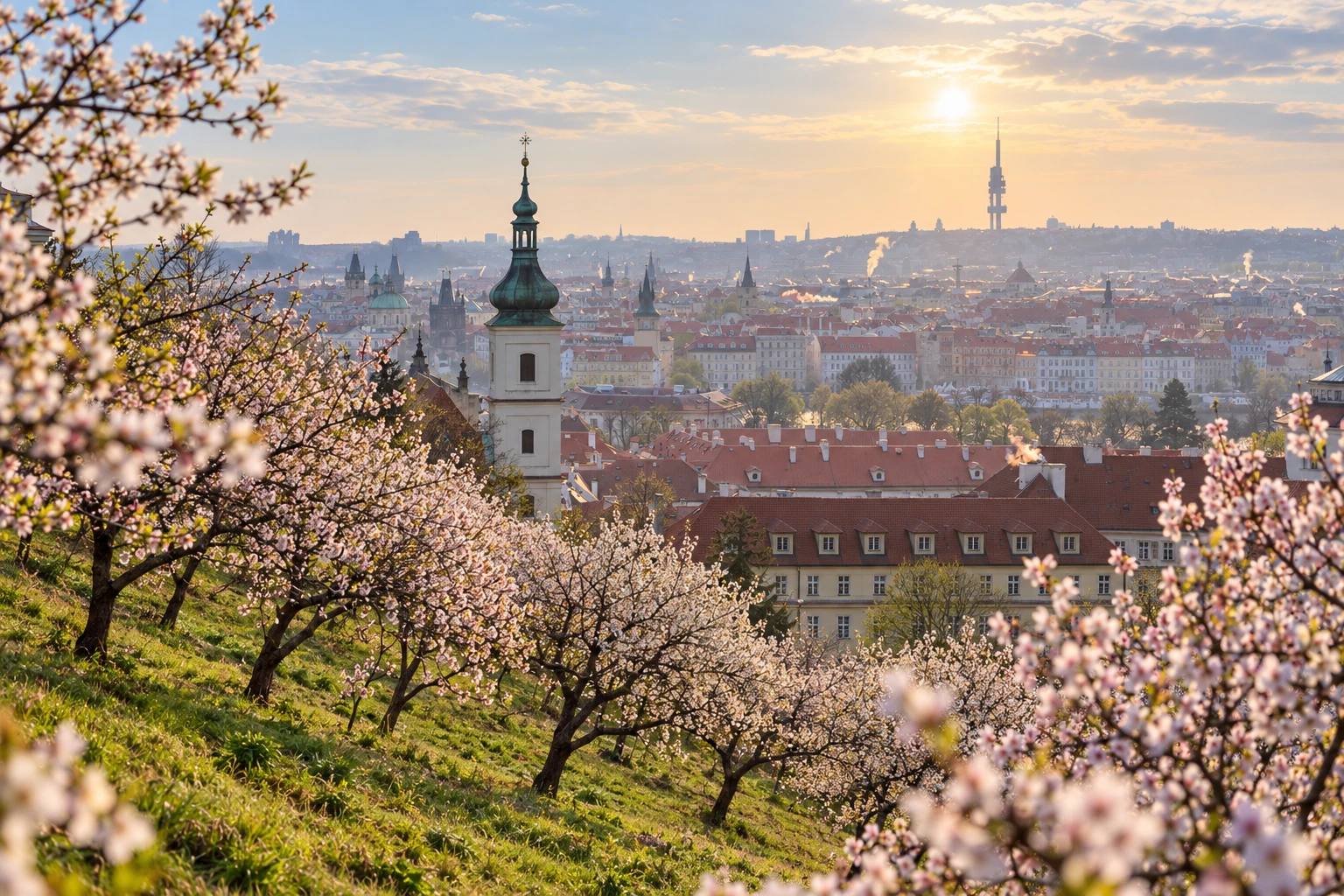
April warms to 8.5 °C and brings the first blossom. The cherry trees on Pet?ín Hill in Prague bloom in April and early May. The main castle season usually opens around this time: NPÚ started the 2026 main season on Thursday 2 April with an Easter program and new exhibitions. Before the main season, many NPÚ sites offer fewer or no tours, so check the NPÚ season notice for the year you travel. Hotel rates in April run about 20 to 30% below the summer peak.
May and June
May is the first month that feels reliably warm, with a national mean of 13.1 °C, and the landscape turns green. Festival season starts. The Prague Spring International Music Festival, which opens on 12 May with Smetana’s Má vlast, a date it has kept since 1952. The UNESCO-listed Ride of the Kings in Vl?nov took place on 24 and 25 May in 2025. Brno’s Ignis Brunensis fireworks competition falls in late May or early June, and Olomouc hosts a five-day choral Festival of Songs in May or June.
June averages 16.5 °C with long days, and it is one of the sunniest months. Early summer is also when thunderstorms begin, so keep a flexible plan for outdoor days. Festivals in June and July include the Smetana Litomyšl Music Festival, the Hradec Králové Battle Festival, and, in late June, the Five-Petaled Rose Celebration in ?eský Krumlov.
July and August
July is the warmest month at 18.3 °C, and August follows at 17.9 °C. Both months suit hiking in the mountains and swimming. Open-air cinemas run in Prague, Brno (at Špilberk Castle) and Plze?, and big music events take place. The Karlovy Vary International Film Festival runs in early July, and Colours of Ostrava takes place in mid-July.
The price is crowds and weather risk. The third quarter is the busiest for accommodation (details below), and Prague fills with visitors. Heat arrives in waves: in 2022 the highest standard-station reading was 38.9 °C at Doksany on 19 June. Visitors without air conditioning in older guesthouses should ask about it before booking a July or August stay.
September and October
September holds the national mean at 13.0 °C and brings the vineyard harvest. The Vinobraní wine-harvest festivals concentrate in South Moravia in mid-September. Crowds ease after August, though September still falls in the third quarter. Pack a rain jacket: September 2022 was wetter than normal, with 135% of its normal rainfall.
October averages 8.2 °C and has among the lower rainfall totals of the year at 49 mm. It offers autumn foliage and a run of harvest events: the Rožmberk fish harvest was held on 17 to 19 October in 2025, and the Stairs2Hell carp fishing championship at Nové Mlýny on 4 to 11 October. Pilsner Fest in Plze? took place on 4 October 2025, and Prague’s Signal Festival fills the city with light installations in October. Castles stay open through the autumn holidays: the 2025 main season ran until Sunday 2 November.
November and December
November is the quiet month, with a mean of 3.5 °C, often gray skies, and cities at their least crowded. November is a lull in ?eský Krumlov, and it is the best time to visit that town. Martin’s Day on 11 November brings young wine and roast goose to restaurants in Prague and the Moravian wine regions.

December is Christmas market season, and the Prague Christmas Market on Old Town Square ran from 29 November 2025 to 6 January 2026; markets open in late November across several Prague squares. Smaller markets in Brno, Olomouc and ?eský Krumlov have fewer weekend crowds than Prague’s. Daylight is short, the mean is ?0.4 °C, and snow falls in the mountains. Because December combines holiday demand with a short calendar, book Prague lodging earlier than for other off-peak months.
Summer Storms and Heat in 2022
A derecho, a long-lived windstorm, crossed much of the country on 20 May 2022, with gusts of nearly 35 m/s at Plze?-Mikulka. Hail reached 40 cm deep at Olešnice on 16 June. Thirty stations recorded more than 50 mm of rain in a single day on 24 June, and Katovice logged 187.5 mm on 27 June. Five tornadoes were confirmed that year, including ones on 17 May in the Pardubice region and 13 June near B?eclav.
Dry spells occur as well. Moderate or stronger drought lasted from May to August 2022, most severely in western and north-western Bohemia in June and July. For a summer trip, schedule outdoor highlights for mornings, keep afternoons for museums, castle interiors or cafes, and check the forecast the evening before a long hike.
Regional Climate Differences
National averages hide regional gaps. According to the same ?HMÚ yearbook, Jihomoravský kraj (South Moravia) was the warmest region in 2022 at 10.2 °C, and Karlovarský kraj (the Karlovy Vary region) the coldest at 8.3 °C. The same two regions are also the warmest and coldest in the long-term average. Moravia and Silesia received 591 mm of precipitation in 2022, against 656 mm in Bohemia.
Sunshine follows the same pattern. Brno-Tu?any was among the sunniest stations in the country in 2022, and southern Moravia had over 80 clear days at some stations while the western half of the country had about 60 to 70. Mountain stations had the most overcast days, such as 184 at Slam?nka, against 115 at Brno-Tu?any.
Region by Region
Prague and Central Bohemia
Prague has the most tourists of any region in every quarter, with 2.1 million guests in the second quarter of 2024 and 2.2 million in the third, counting only collective accommodation establishments. It is the busiest place in Czechia in summer and the one place where visitor numbers did not fall in the third quarter of 2024. For fewer people, choose March to early April, early November, or weekdays in January and February. For the city at its most festive, choose the Christmas market period or the Prague Spring weeks in May. Pet?ín Hill’s cherry trees give April a visual draw.
South Bohemia
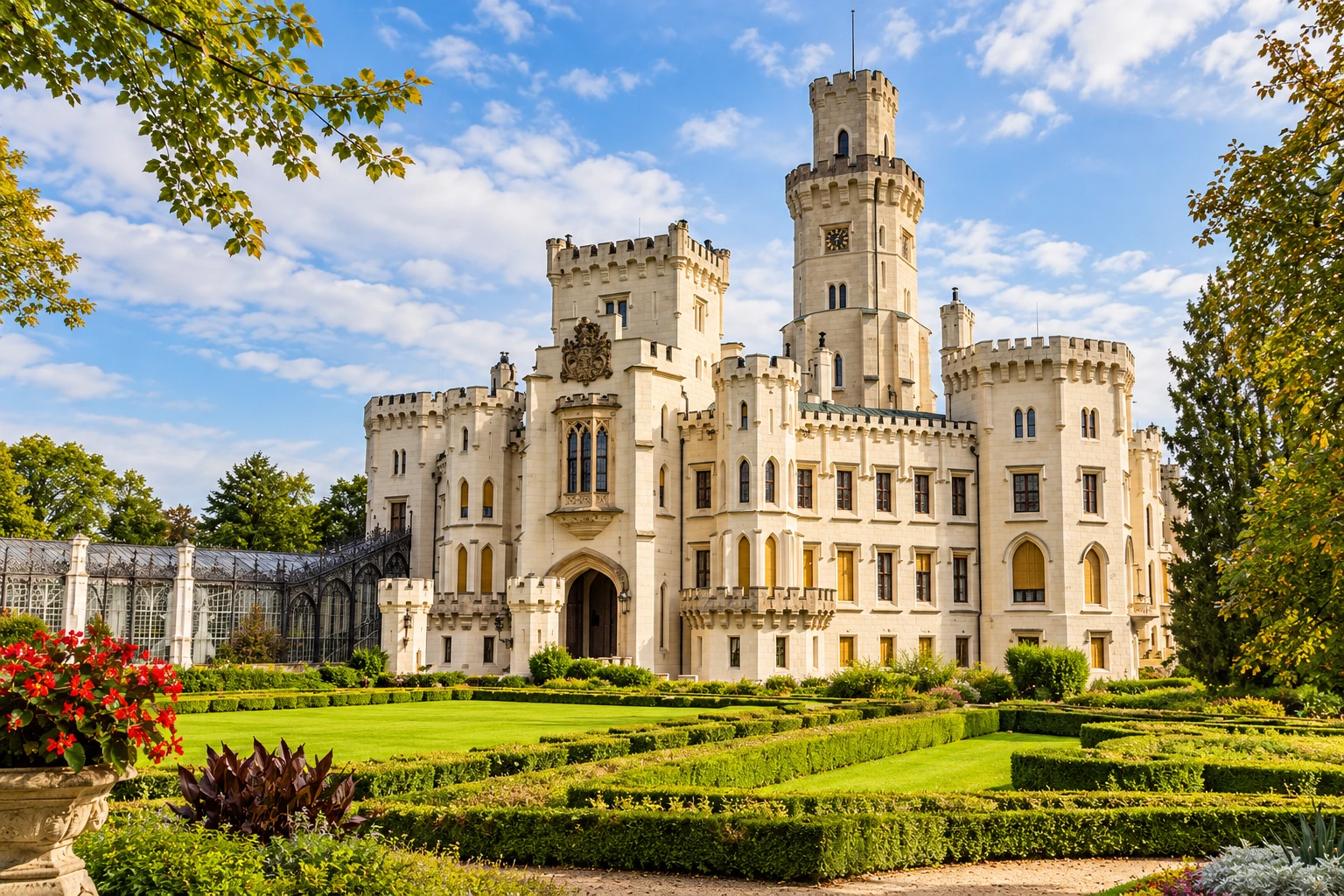
South Bohemia (Jiho?eský kraj) had about 790,000 guests in the third quarter of 2024, and the count held flat while most regions fell. ?eský Krumlov crowds in summer and quiets in November. October brings the Rožmberk fish harvest, and late June brings the Five-Petaled Rose Celebration. Hluboká chateau is part of the NPÚ network, so its main-season dates and ticket price follow NPÚ’s schedule.
South Moravia and Brno
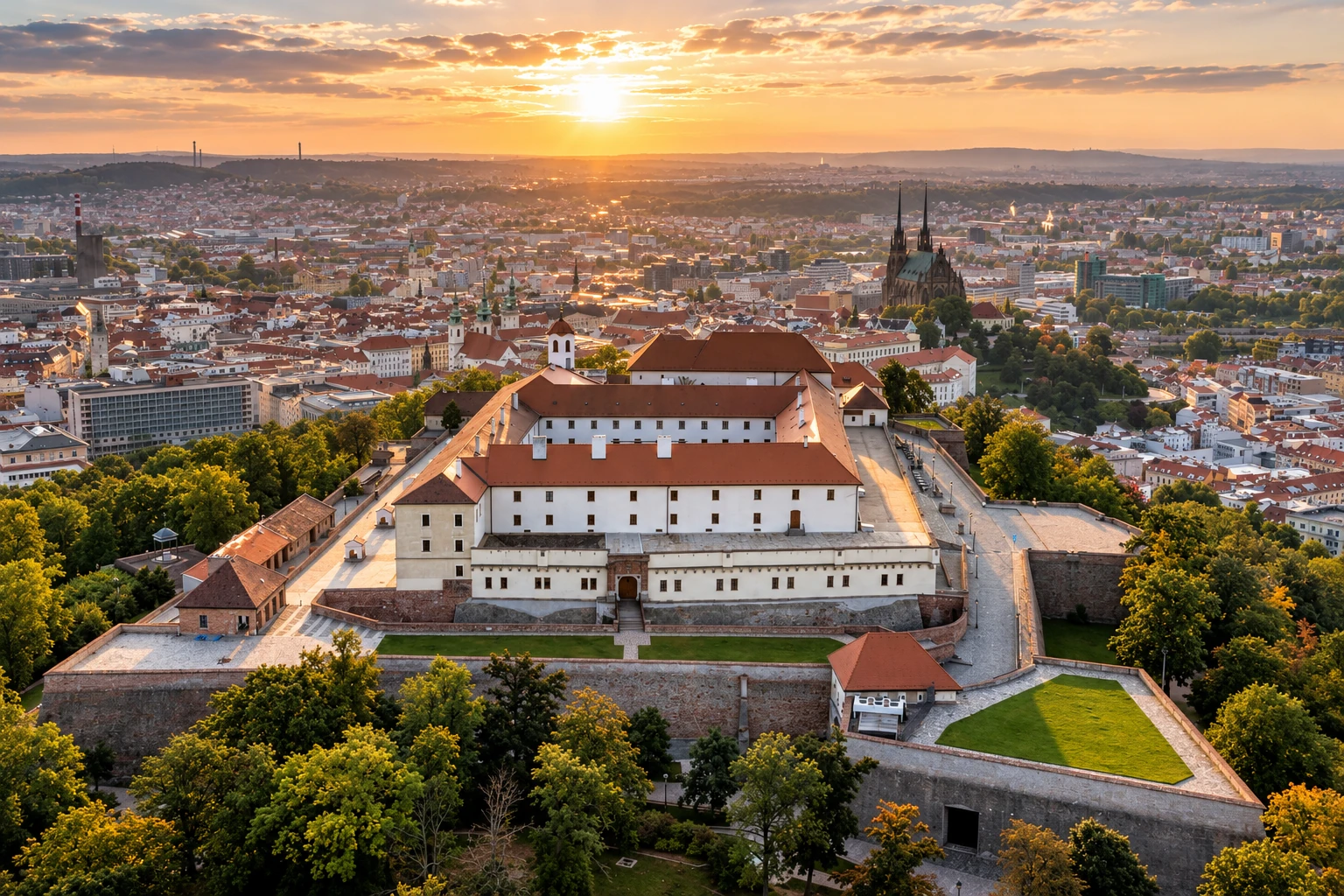
South Moravia is the warmest and sunniest region, which makes it the best choice for shoulder months. Brno is the main base, with open-air cinema at Špilberk Castle in summer and the Ignis Brunensis fireworks around late May or early June. Mid-September is the prime time for the Vinobraní wine-harvest festivals, when the region had about 826,000 guests in the third quarter of 2024. Hustope?e’s almond orchards are open all year, with picking and picnics in autumn. Martin’s Day on 11 November brings young wine to Moravian wine regions, and the Vl?nov Ride of the Kings in late May is one of the region’s most distinctive events.
West Bohemia and the Spa Towns
Karlovy Vary has the coldest annual mean in Czechia, but it draws long stays: the Karlovarský kraj average was 4.9 days in the third quarter of 2024, against 3.7 days nationally. The film festival in early July is the main event and the busiest week for accommodation. Spa houses keep their own hours, so confirm them before a winter or shoulder-season trip. Plze? suits late summer and early autumn, with open-air cinema in summer and Pilsner Fest in early October.

Moravia-Silesia and Olomouc
Ostrava’s Colours of Ostrava festival lands in mid-July. Olomouc hosts its Festival of Songs in May or June and runs a smaller Christmas market that avoids the Prague crush. In 2024 the Ice Hockey World Championship lifted May guest numbers in Moravskoslezský kraj and Prague, a reminder that major sporting events can raise demand in a normally quieter month. The October 2024 floods reduced fourth-quarter guest numbers in the Olomouc and Moravskoslezský regions.
Šumava and Krkonoše
These two mountain ranges get the most precipitation in the country. In 2022, Prášily in Šumava recorded 1,548.2 mm and Labská bouda in Krkonoše 1,530.8 mm, while lowland stations such as H?ivice recorded 356.0 mm. Normal seasonal maximum snow depth is 31 cm above 800 m and 20 cm below 400 m, though maxima often exceed one meter. Snow lingers: Labská bouda held cover from 22 November 2021 to 16 May 2022, a stretch of 176 days. Winter sports run from the first snow through February, and spring hiking at altitude may meet snow into May. Summer is the clear-trail season but also the wettest, so the mountains pair rain gear with long daylight.

Crowds by Season
CZSO counts guests in collective accommodation: hotels, boarding houses, campsites, holiday dwellings and hostels. Day-trippers and private rentals fall outside the count, so actual street crowds are somewhat larger than these totals suggest. In 2024 the whole country recorded 22.8 million guests, who spent 57.3 million nights, and domestic guests made up 54% of the total, per full-year 2024 figures.
| Quarter | Guests | Change from prior year | Notes |
|---|---|---|---|
| Q1 (January to March) | About 4.1 million | Up 9.9% | About half a million guests from Germany, then Slovakia and Poland |
| Q2 (April to June) | About 6 million | Up 3.3% | May lifted by the Ice Hockey World Championship |
| Q3 (July to September) | 7.7 million | Down 1.0% | Foreign guests up 4.4%, residents down 4.5% |
| Q4 (October to December) | Almost 5 million | Up 7.1% | Declines only in flood-affected regions |
The first-quarter figure is from the first-quarter 2024 accommodation report, and the second and third quarters are from the CZSO releases for the second quarter and third quarter. Summer is the peak, and the third quarter’s 7.7 million guests make it the heaviest quarter. The second quarter’s foreign hotel guests drive spring numbers, while campsite guests in the main season are mainly domestic, plus visitors from Germany, Poland and the Netherlands.
Within a quarter, the shoulder months sit at the quiet end. April and early autumn feel lighter than July, and November is the lowest point of the fourth quarter. NPÚ reported that visitor numbers at its monuments were 7% higher than in 2024, so popular castles are not empty even outside summer. Book timed tours ahead for the most visited sites.
Prices and Fees
Hotel rates follow the season, with April about 20 to 30% below the summer peak and late June to August as the high season. Some costs stay the same in every month, which makes them easy to budget.
Prague accommodation fee. Prague’s local fee decree charges 50 CZK per person for each started day of the stay, and the arrival day is not charged. It applies to non-residents for paid stays of up to 60 consecutive days with one provider. The accommodation provider collects it, usually as a separate line on the bill. The 50 CZK rate has applied since 1 January 2022, when it replaced 21 CZK. The fee is the same in every month, and other towns set their own rates.
Castle and chateau admission. NPÚ raised adult prices on some basic tours from February 2026, by 20 CZK at most sites and by 40 CZK at a few, in its 2026 season notice. The change affects 80 of the 128 basic tours. Adult basic tickets run from about 180 to 300 CZK, and children aged 6 to 17 pay about 50 to 130 CZK. Under NPÚ’s 2025 discount rules, children aged 6 to 17 pay 30% of the basic price, and youths aged 18 to 24 and seniors aged 65 and over get 20% off. Children under 6 enter free. For 2026, two extraordinary free-entry days were planned, with free tickets booked online in advance. Confirm dates and current prices at npu.cz before you travel.
Castle prices do not change between April and October. The cost advantage of the shoulder season is in hotels.
Choosing Dates by Interest
For a first trip focused on Prague plus one or two towns, aim for the second half of May, early June or September. The weather is mild and castles are open, with fewer crowds than in July and August. For the Prague Spring festival, plan on the weeks after 12 May.
Visitors who want warmth and swimming should pick July or August and accept the hotel prices, the storm risk and Prague’s crowds. Wine travelers should go to South Moravia in mid-September for Vinobraní, or to the wine regions around 11 November for Martin’s Day.
Budget-minded travelers can use late March, April or November, when hotels cost less and the streets are quiet. They give up the full castle season in March and November, and November daylight is short. Christmas market visitors should go between late November and 6 January and consider Brno, Olomouc or ?eský Krumlov for smaller crowds. Skiers and snowshoers should target January and February in Šumava or Krkonoše, where snow can last into May at altitude.
Festival dates shift from year to year, so check each organizer’s calendar for the year you travel.
Key Takeaways
- Aim for late May, June or September: These months have mild weather and open castles, with fewer guests than the July to August peak.
- Expect rain in summer: July is the wettest month at 89 mm on average. Storms, hail and heat waves occurred in 2022, so build flexibility into outdoor days.
- Choose region by season: South Moravia is the warmest and sunniest region, Karlovy Vary the coldest, and the Šumava and Krkonoše mountains hold snow into May.
- Time hotel savings, not castle savings: April hotel rates run about 20 to 30% below summer, while castle admission is the same all season, and Prague’s fee stays at 50 CZK per person per started day.
- Anchor trips to festivals: Prague Spring opens 12 May, Vinobraní peaks in mid-September in South Moravia, and Prague’s Christmas market ran from 29 November 2025 to 6 January 2026.