Best Time to Visit Norway
Norway runs from Oslo at about 60°N to the North Cape at 71°N, so the best month depends on your activities and how far north you travel. Norway Tourism calls late May through September the "safest all-round window": fjord cruises run full schedules, roads and mountain passes are open, and daylight hours are long. June and September offer the best balance of fewer crowds and reasonable prices. July and August are peak season, with the highest prices.
Winter suits a different trip. The Northern Lights (aurora) are most visible from November to February, with a wider window from late September to late March. Skiing and dog sledding also run in these months. Airfares and hotel rates drop in January and February, except around the holidays. The sections below break down each month, city weather, regions, prices, and holidays and festivals so you can match dates to your trip.
Seasons at a Glance
Norway Tourism sorts the year into four seasons with distinct crowd and cost patterns.
| Season | Crowds | Cost | Weather | Best suited to |
|---|---|---|---|---|
| Winter, Nov to Mar | Low, with holiday spikes | Low, with holiday spikes | Cold and snowy in the north, wet on the west coast | Northern Lights, skiing, dog sledding, winter city breaks |
| Spring, Apr to May | Low | Shoulder | Unpredictable, days lengthening | Waterfalls, blossom, value travel, Lofoten midnight sun from late May |
| Summer, Jun to Aug | Highest | Highest | Mild, very long days | Hiking, cruises, midnight sun, festivals |
| Autumn, Sep to Oct | Low | Low | Cooler, wetter in the west | Fall colors, value, early aurora |
Broad national temperature ranges, per Pickyourtrail, run from 2°C to 15°C in March to May, 12°C to 25°C in June to August, 0°C to 12°C in September to November, and ?15°C to 5°C in December to February. City-level figures follow in the weather tables below.
Month by Month
January
January and February are the coldest months. Mean highs in January are 0.1°C in Oslo, 4.7°C in Bergen, ?1.0°C in Tromsø and ?7.7°C in Longyearbyen on Svalbard. Bergen is the wettest of the major cities at 256 mm for the month. According to Fjordsandbeaches, daylight in Oslo lasts about 6 to 8 hours, and Tromsø has no sunrise at all. Crowds are low apart from a spike around New Year’s, and airfares and hotels are at their cheapest. New Year’s Day falls on Thursday 1 January 2026, and Friday 2 January is a bridge day (a workday between a holiday and a weekend that many Norwegians take off). January suits aurora hunting in the north, budget city trips and winter activities.
February
February highs are 1.1°C in Oslo, 4.9°C in Bergen, ?1.2°C in Tromsø and ?8.3°C in Longyearbyen. Norway Tourism notes that February is colder than January on the coast and in the Arctic. Crowds are low and prices stay among the year’s lowest. Norway Tourism picks February and March as the best months in the north for aurora viewing, skiing and dog sledding. In Lofoten, skrei (Atlantic cod) spawns between February and March. Bergen hosts its International Literary Festival from 4 to 8 February 2026, listed by Life in Norway.
March
March highs rise to 5.3°C in Oslo and 6.9°C in Bergen, while Tromsø reaches only 0.6°C and Longyearbyen stays at ?8.8°C. Daylight is lengthening, and summer time begins on Sunday 29 March 2026. Crowds remain low. Skies around the equinox in late March are clearer and less stormy for aurora, and Celebrity Cruises describes early March as a good winter option with dog sledding and aurora chances still available. March is the last strong window for northern winter activities, and Trondheim holds the Norway Seafood Festival this month.
April
April brings a jump in warmth in the south: highs of 11.0°C in Oslo and 11.1°C in Bergen, against 4.1°C in Tromsø and ?5.7°C in Longyearbyen. Crowds are low and prices sit in the shoulder range. Waterfalls and wildflowers are strong, but Bookmundi warns that high-altitude snow has just thawed in some places and leaves sludgy trails. The aurora window closes in mid-April, when the sky stops getting dark enough. Easter falls on 2 to 6 April in 2026, from Maundy Thursday through Easter Monday. Voss hosts Vossajazz in April, and Oslo’s Inferno black metal festival takes place every Easter. April suits waterfalls, spring value travel and quieter low-elevation trails.
May
May is the driest month in two big cities: Bergen receives 110 mm and Tromsø 57 mm, while Oslo gets 60 mm. Highs are 16.7°C in Oslo, 15.0°C in Bergen and 8.8°C in Tromsø, and Longyearbyen is just under freezing at ?0.6°C. Crowds are low but rise toward the end of the month, and shoulder pricing applies. Norgeguide reports Lofoten prices about 15% lower in May and September, with few tourists around.
The midnight sun begins around 20 May in Tromsø and around 25 May in Lofoten. Fjords, cruises and roads are open from May to September. May is also crowded with holidays in 2026: Labour Day on Friday 1 May, Ascension on Thursday 14 May with Friday 15 May as a bridge day (a four-day weekend), Constitution Day on 17 May, and Pentecost on 24 and 25 May. The Bergen International Festival opens on 27 May 2026, and Natt Jazz runs in Bergen from 29 May to 6 June. Oslo holds its Vegetarian Festival in May.
June
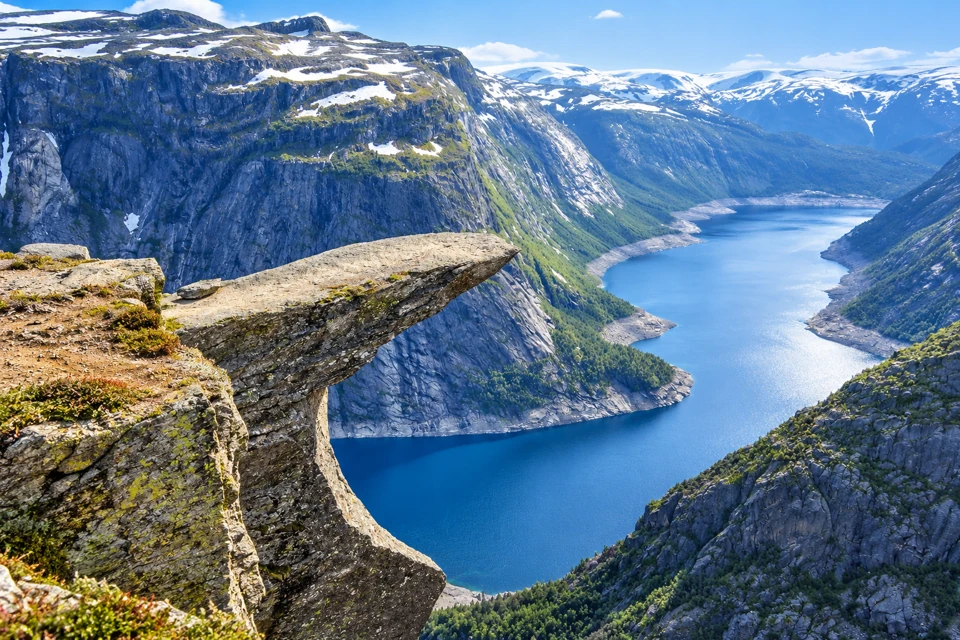
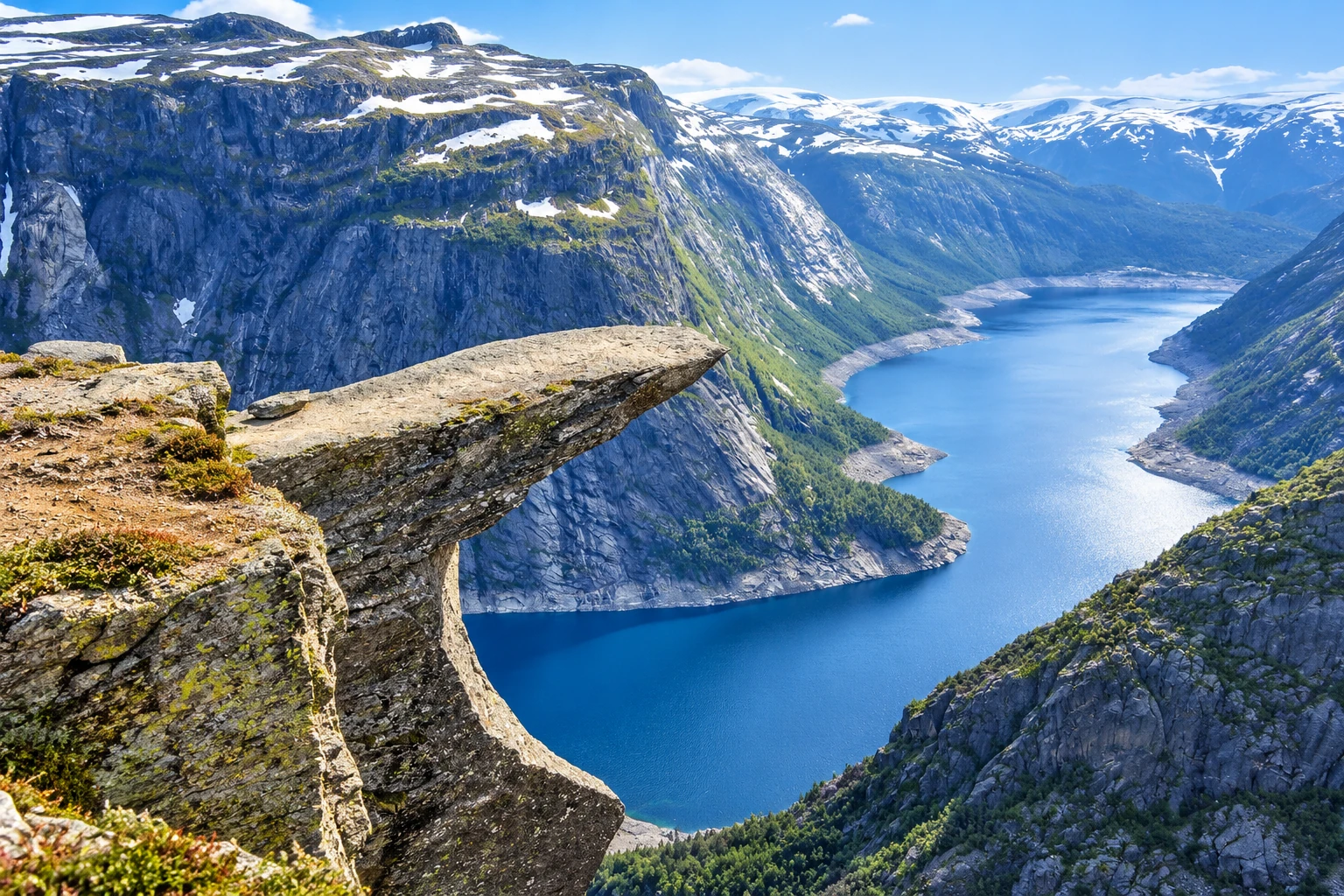
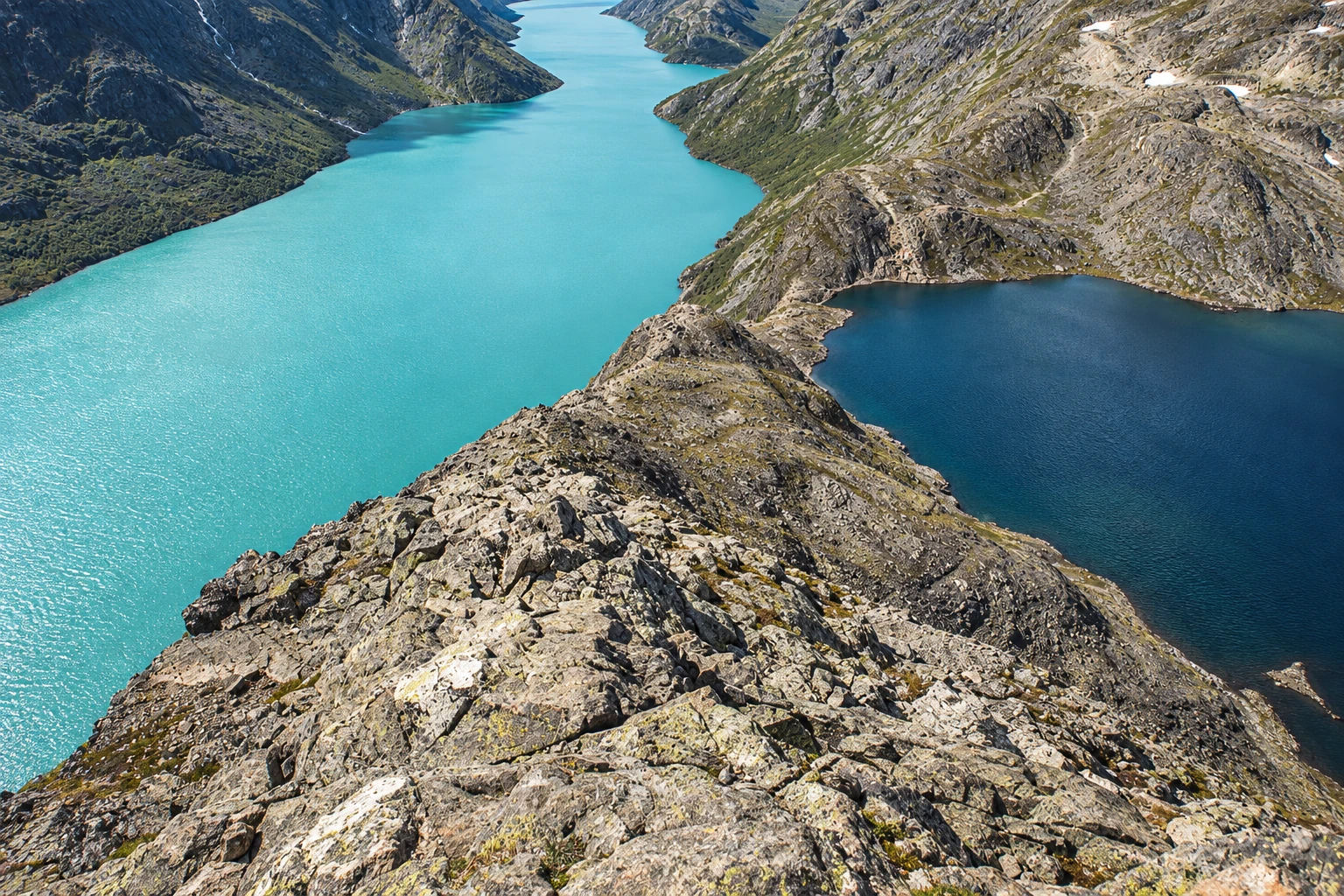
June brings highs of 20.4°C in Oslo, 17.7°C in Bergen, 13.0°C in Tromsø and 5.6°C in Longyearbyen. Precipitation is 80 mm in Oslo, 132 mm in Bergen and 58 mm in Tromsø. High season begins, but a package-price listing from Go Norway still counts June among the cheapest months for flight-plus-hotel packages. Big hikes such as Trolltunga and Besseggen are best from late June through September, once trails are snow-free. High mountain passes are open and safe in the same period. Sperm whale sightings run from June to August. Responsible Vacation warns that midges are a nuisance around marshlands.
June has one of the densest festival calendars of the year. The Bergen International Festival runs to 10 June 2026, and Bergenfest takes place 10 to 13 June. In Oslo, OverOslo is 17 to 20 June and Tons of Rock runs 24 to 27 June. Gladmat in Stavanger, Neon in Trondheim and Palmesus in Kristiansand also fall in June.
July
July is the warmest month in Oslo (22.7°C) and the north: Bergen reaches 19.6°C, Tromsø 16.3°C and Longyearbyen 9.4°C. Precipitation is 87 mm in Oslo, 158 mm in Bergen and 73 mm in Tromsø. Crowds and prices peak. Norgeguide puts summer car rental in Lofoten at €85 to €120 per day, and Finn advises booking summer packages 4 to 6 months ahead.
The midnight sun lasts through about 17 July in Lofoten and about 22 July in Tromsø, while at the North Cape it runs from mid-May to the end of July. Hiking, cycling, kayaking and berry picking all peak. Festivals include Slottsfjellfestivalen in Tønsberg, Stavernfestivalen in Larvik, Buktafestivalen in Tromsø and Beyond The Gates in Bergen from 29 July to 1 August 2026.
August
August is a warm, long-day month with highs of 21.3°C in Oslo, 19.4°C in Bergen and 15.0°C in Tromsø, and 8.2°C in Longyearbyen. Stavanger’s warmest month is August at 20°C. Rain increases: Oslo’s wettest month is August at 103 mm, Bergen gets 208 mm and Tromsø 88 mm. Crowds stay high and summer pricing applies. Aurora is not visible in mid-August because the sky is still too bright. Sperm whale sightings continue, and mountain passes remain open.
August is a festival month. Oslo Jazz Festival runs 9 to 15 August 2026 with about 80 events across 16 venues, per Life in Norway, and Øya follows in Oslo from 12 to 15 August. Trondheim has Pstereo and the Trøndelag Food Festival, Bodø has Parken, Mandal has its Shellfish Festival, and Bergen’s Feelings festival is also in August.
September
September is the month many travelers should consider first. Highs are 16.4°C in Oslo, 16.1°C in Bergen, 10.9°C in Tromsø and 4.0°C in Longyearbyen. Fjord Tours gives 10°C to 15°C for the south and coast. Rain climbs in the west and north: Bergen gets 248 mm, Bodø 129 mm, Tromsø 111 mm and Oslo 82 mm.
Crowds drop after the summer peak, and prices fall to low-season levels. Finn cites shoulder-season package discounts in Lofoten, and Norgeguide puts them at about 15%. Go Norway also lists September among the lowest-priced months for packages. Fall colors peak in September and early October. Fjord cruises still run on their May to September schedules, and aurora returns from late September. Fjordsandbeaches recommends September and October for avoiding crowds and saving money, while Wildernesstravel calls September colors stunning but says weather grows more changeable as autumn continues.
Events include by:Larm in Oslo from 10 to 12 September 2026, Matstreif in Oslo, and the Bergen Food Festival. The Oslo Marathon is on 12 September 2026 with around 20,000 participants and distances from 10 km to a 73 km "Oslo Triple".
October
October highs are 9.6°C in Oslo, 11.7°C in Bergen, 5.2°C in Tromsø and ?1.5°C in Longyearbyen. Fjord Tours gives 5°C to 10°C for the south and coast. October is wet in the west and north, with Bergen at 268 mm, Bodø 138 mm, Tromsø 127 mm and Oslo 93 mm. Norway Tourism describes autumn as "cooler, wetter in the west." Crowds are low and prices are low. Equinox-period skies often bring clearer aurora conditions, and Northern Lights are visible from late September. October suits fall color, aurora in the north and cheap city breaks with rain gear. The Bergen International Film Festival takes place in mid-October 2026; Life in Norway lists 14 to 22 October with more than 120 films. Check the festival’s own page for the 2026 dates before booking.
November
Winter sets in across most of the country in November. Highs are 4.4°C in Oslo, 7.6°C in Bergen, 2.1°C in Tromsø and ?3.8°C in Longyearbyen. Bergen is soaked at 275 mm, while Oslo gets 85 mm and Tromsø 94 mm. Fjord Tours notes that first snow has usually fallen in most places by November, and some ski resorts may open lifts to the public. Crowds and prices are low. Aurora odds are best from November to February, and orcas are best seen from November to January. Valdres holds the Rakfisk Festival, and Henningsvær in Lofoten starts its Førjulseventyret pre-Christmas celebrations in November and continues into December.
December
December is Bergen’s wettest month at 290 mm, with a high of 5.3°C. Oslo reaches 0.9°C with 54 mm of precipitation. Tromsø reaches 0.3°C with 110 mm, and Longyearbyen ?6.1°C. Holiday travel brings sharply higher crowds, and prices spike. Christmas markets make December a good month for city breaks in Oslo and Bergen, and aurora viewing continues in the north. Days are short, and Bergen needs rain gear. Christmas Day (Friday 25 December) and Boxing Day (Saturday 26 December) are full closures, so plan meals and transport around them.
Weather by City
Norway Tourism publishes monthly tables built on 1991 to 2020 normals from the Norwegian Meteorological Institute (MET Norway). According to its weather by month page, 1961 to 1990 and 1991 to 2020 figures differ by roughly a degree across Norway. The first table gives mean daily highs in °C.
| Month | Oslo | Bergen | Stavanger | Trondheim | Bodø | Tromsø | Longyearbyen |
|---|---|---|---|---|---|---|---|
| Jan | 0.1 | 4.7 | 4 | 1.2 | 1.7 | ?1.0 | ?7.7 |
| Feb | 1.1 | 4.9 | 4 | 1.9 | 1.3 | ?1.2 | ?8.3 |
| Mar | 5.3 | 6.9 | 7 | 4.6 | 2.5 | 0.6 | ?8.8 |
| Apr | 11.0 | 11.1 | 11 | 8.9 | 6.0 | 4.1 | ?5.7 |
| May | 16.7 | 15.0 | 15 | 13.7 | 10.2 | 8.8 | ?0.6 |
| Jun | 20.4 | 17.7 | 18 | 17.1 | 13.8 | 13.0 | 5.6 |
| Jul | 22.7 | 19.6 | 20 | 19.9 | 16.9 | 16.3 | 9.4 |
| Aug | 21.3 | 19.4 | 20 | 18.7 | 16.3 | 15.0 | 8.2 |
| Sep | 16.4 | 16.1 | 16 | 14.5 | 12.8 | 10.9 | 4.0 |
| Oct | 9.6 | 11.7 | 12 | 8.9 | 7.7 | 5.2 | ?1.5 |
| Nov | 4.4 | 7.6 | 8 | 4.5 | 4.6 | 2.1 | ?3.8 |
| Dec | 0.9 | 5.3 | 5 | 2.1 | 2.9 | 0.3 | ?6.1 |
Monthly precipitation in mm shows how different the west coast is from the east.
| Month | Oslo | Bergen | Stavanger | Trondheim | Bodø | Tromsø |
|---|---|---|---|---|---|---|
| Jan | 58 | 256 | 119 | 81 | 104 | 108 |
| Feb | 45 | 210 | 100 | 73 | 79 | 97 |
| Mar | 41 | 202 | 81 | 69 | 81 | 97 |
| Apr | 48 | 141 | 63 | 49 | 71 | 71 |
| May | 60 | 110 | 62 | 50 | 65 | 57 |
| Jun | 80 | 132 | 67 | 72 | 65 | 58 |
| Jul | 87 | 158 | 91 | 70 | 66 | 73 |
| Aug | 103 | 208 | 127 | 84 | 85 | 88 |
| Sep | 82 | 248 | 132 | 90 | 129 | 111 |
| Oct | 93 | 268 | 148 | 80 | 138 | 127 |
| Nov | 85 | 275 | 135 | 72 | 116 | 94 |
| Dec | 54 | 290 | 132 | 81 | 119 | 110 |
Bergen averages about 2,490 mm of precipitation a year across roughly 200 wet days. According to the climate overview that cites MET Norway, precipitation along the coast is heaviest in late autumn and winter, and April to June is the driest period. East of the mountains, including Oslo, the climate is more continental, so rain peaks in summer and early autumn while winter and spring are driest.
Per Norway Tourism’s winter weather page, Bergen averages +2.6°C in January with a record low of ?16.3°C, Oslo averages ?2.3°C with a record low of ?26.0°C, and Tromsø averages ?3.0°C with a record low of ?18.4°C. January wet days number 19 in Bergen, 15 in Tromsø and 10 in Oslo.
Choosing a Region
Oslo and the southeast
Oslo has the warmest summers in the country and colder, drier winters. Highs peak in July at 22.7°C, and rain peaks in August at 103 mm. The city’s festival calendar is strong from June through September, with OverOslo, Tons of Rock, Oslo Jazz Festival, Øya, by:Larm and the Oslo Marathon. In December it offers Christmas markets.
Bergen and the west coast
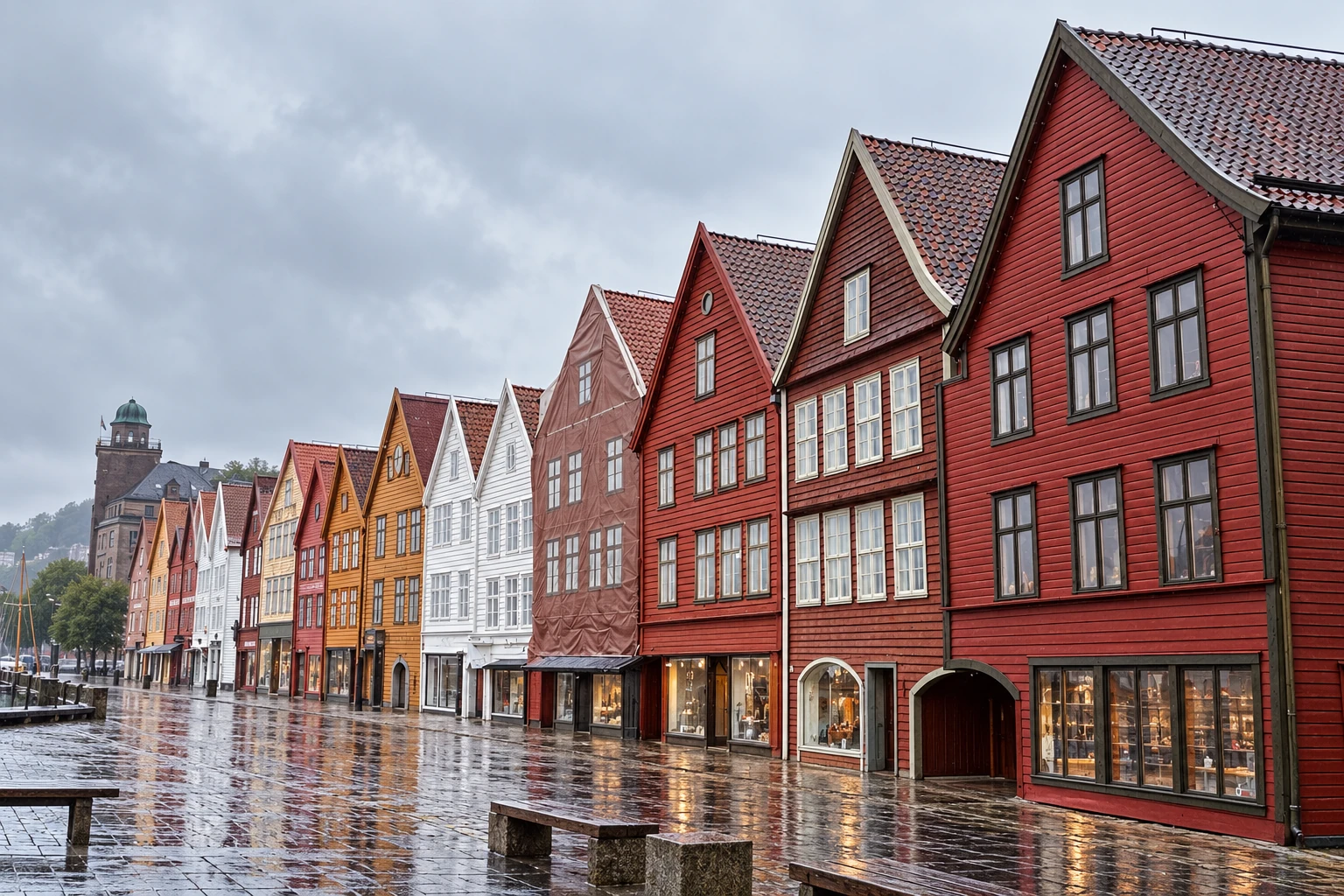
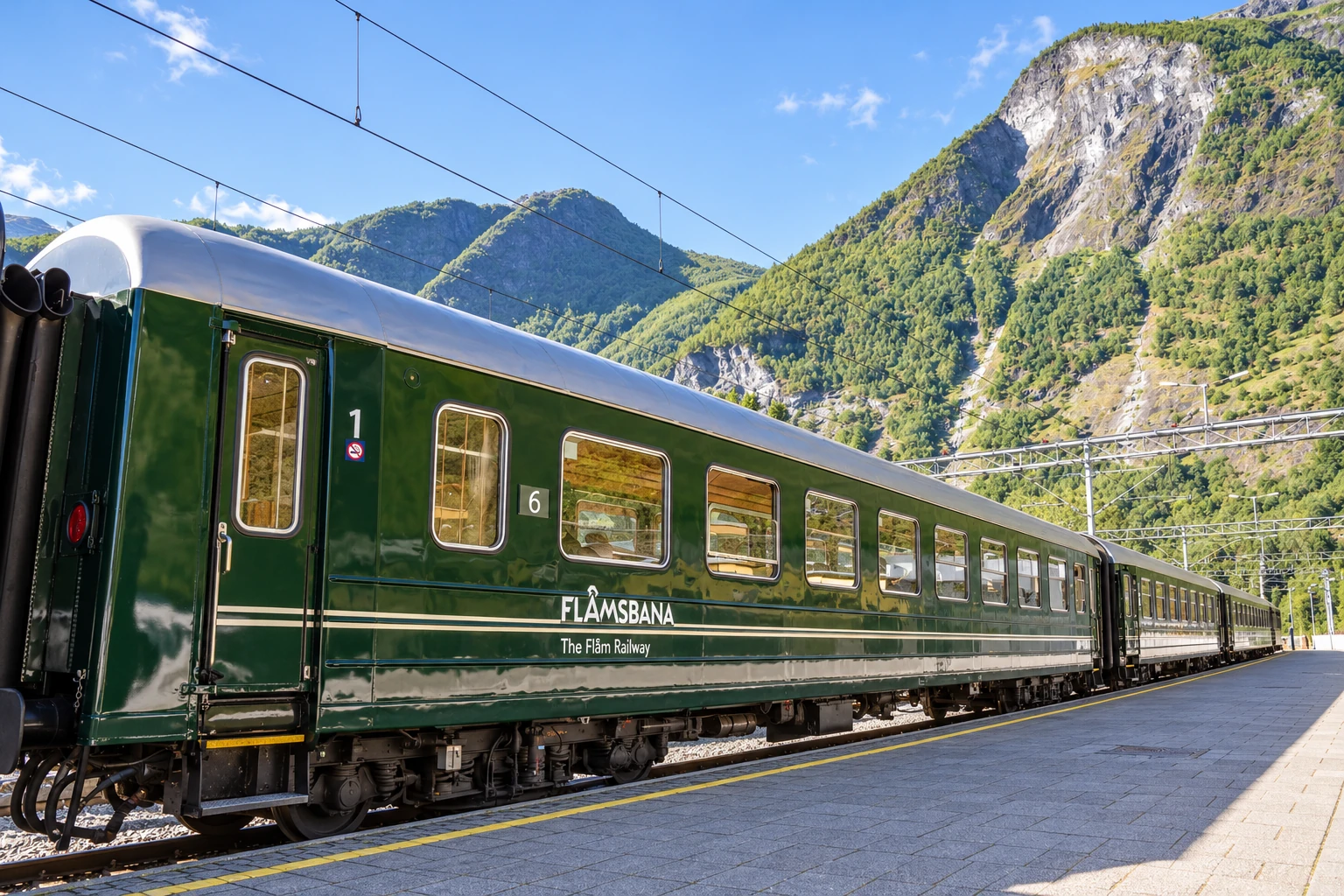
Bergen is mild but wet. Its highs are above Oslo’s from October to April and below Oslo’s from May to September. December is the wettest month at 290 mm and May the driest at 110 mm, which makes late May and early June the best bet for fewer rainy days. Fall colors and fjord scenery are strong from September. Bergen is the main base for fjord cruises, the Flåm railway and hikes in the Trolltunga area, so its best months follow the May to September cruise season.
Stavanger and Trondheim
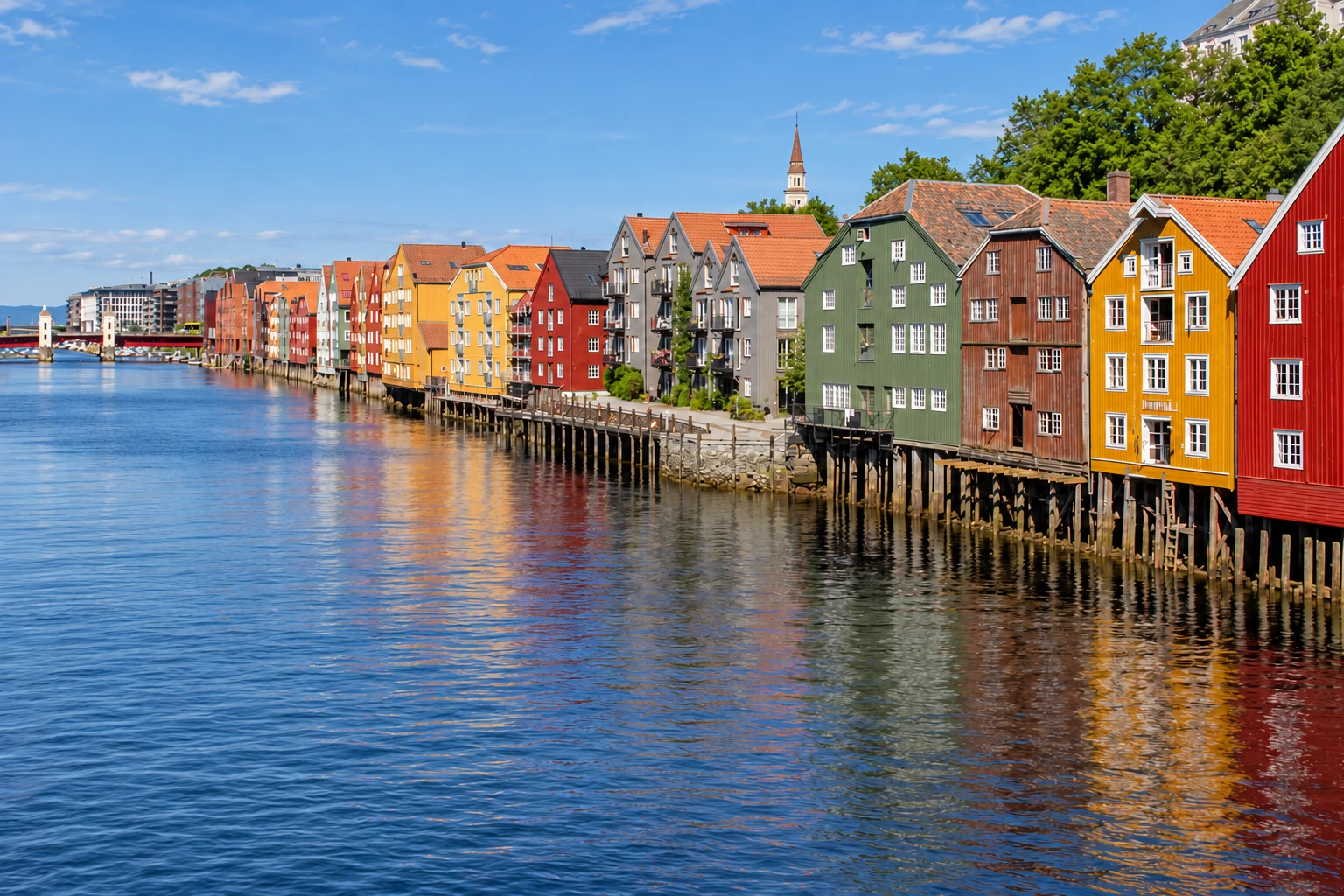
Stavanger has gentle winters, and August is its warmest month. Its Gladmat food festival is in June. Trondheim has warm summers and mid-range rainfall. Its events include the Norway Seafood Festival in March, Neon in June, and Pstereo and the Trøndelag Food Festival in August.
Northern Norway
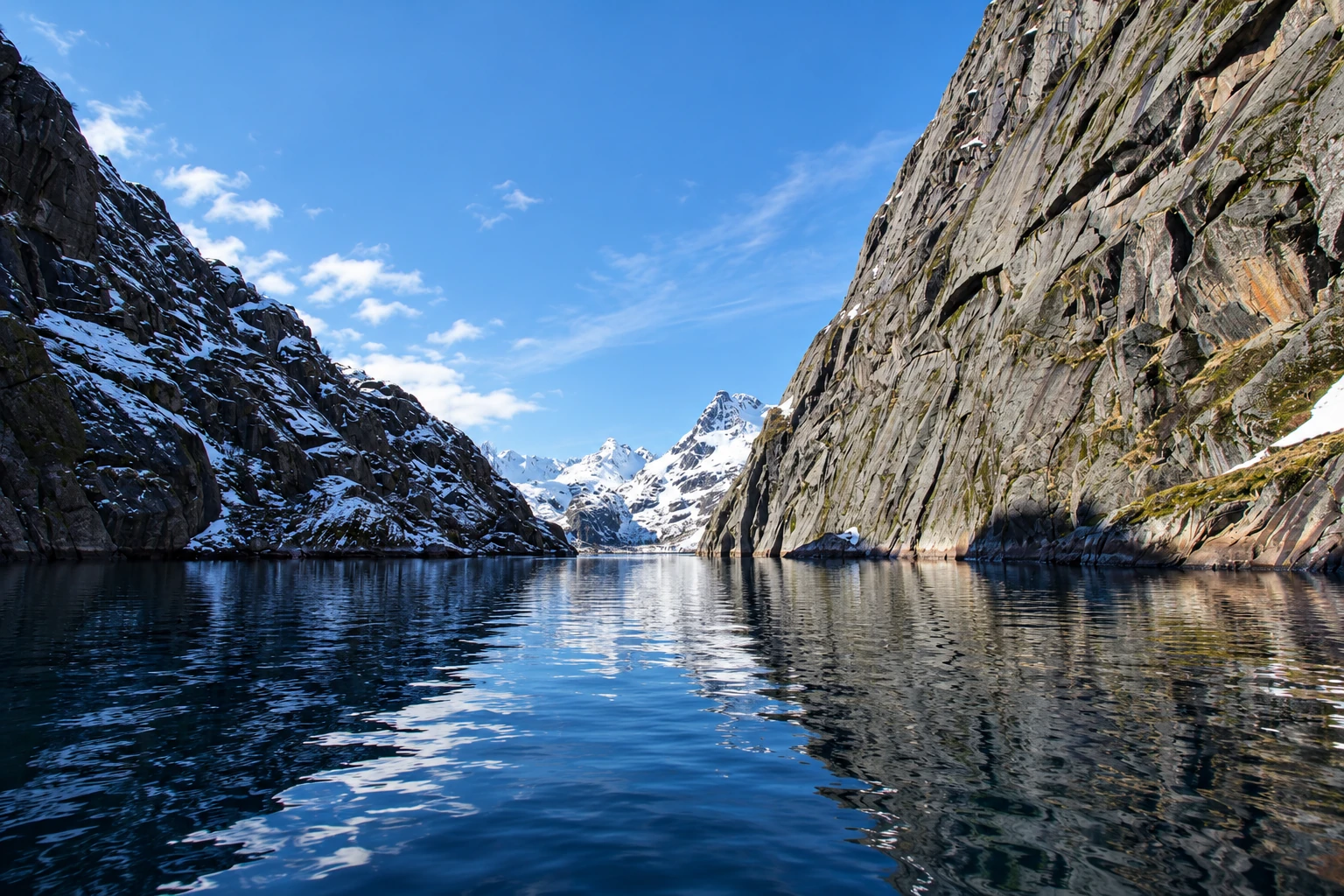
Bodø, Tromsø and Lofoten have the midnight sun from late May to late July and aurora from late September to late March. Lofoten is much milder than other places at the same latitude because of Gulf Stream waters, per Visit Norway. Norway Tourism calls Tromsø the "easy choice" for aurora and recommends at least three or four nights, which gives several chances at clear skies. Lofoten adds skrei season in February and March, and summer visitors can take boat trips to Trollfjorden from Svolvær.
Svalbard
Longyearbyen is the coldest place covered here, with winter highs around ?8°C and a July high of 9.4°C. Summer is short, but Responsible Vacation notes that Spitsbergen is strong at midsummer.
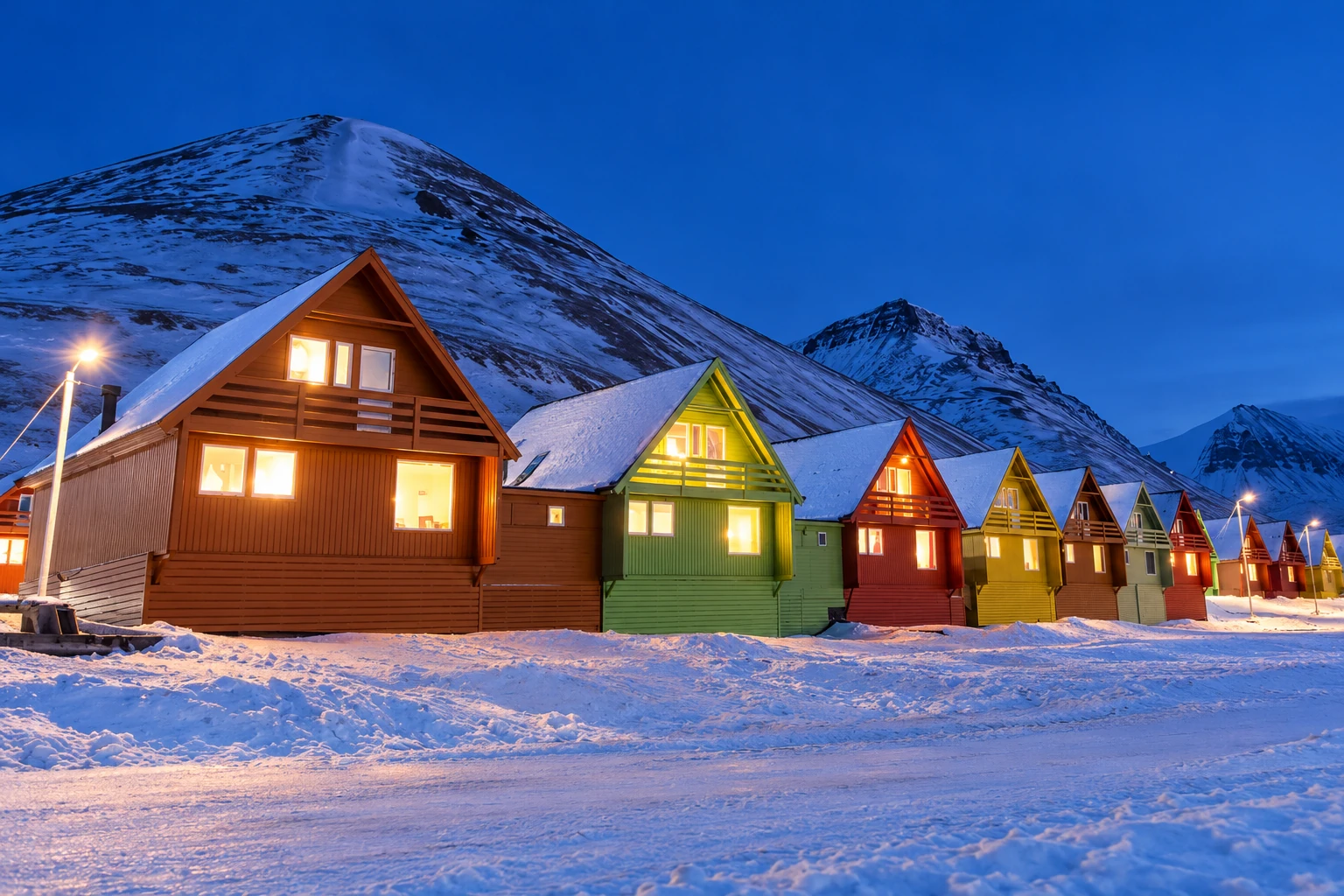
Northern Lights, Midnight Sun and Whales
Aurora season needs darkness, so it follows the calendar rather than the temperature. The best odds run from November to February, and the wider window runs from late September to late March. No aurora is visible from mid-April to mid-August. The equinox months of late September, October and March have clearer skies and milder weather than midwinter, which suits travelers who want the lights without the deepest cold.
In Lofoten it lasts through about 17 July, and in Tromsø through about 22 July. At the North Cape it runs from mid-May to the end of July. Norway Tourism’s seasonal guide gives these dates. Orcas are best seen from November to January, and sperm whales from June to August.
Prices and Booking
Summer, from June to August, costs the most. In Lofoten, car rental runs about €85 to €120 per day in summer and €60 to €80 in winter, according to Norgeguide, which also finds midweek stays (Tuesday to Thursday) cheaper. Lofoten accommodation averages, in NOK per night as of May 2026 (Traveltipnow), run 300 to 500 for a budget dorm, 600 to 1,200 for a rorbu (a traditional fishermen’s cabin), 1,200 to 2,000 for a premium rorbu, 900 to 1,600 for a standard hotel and 150 to 250 at a municipal campsite.
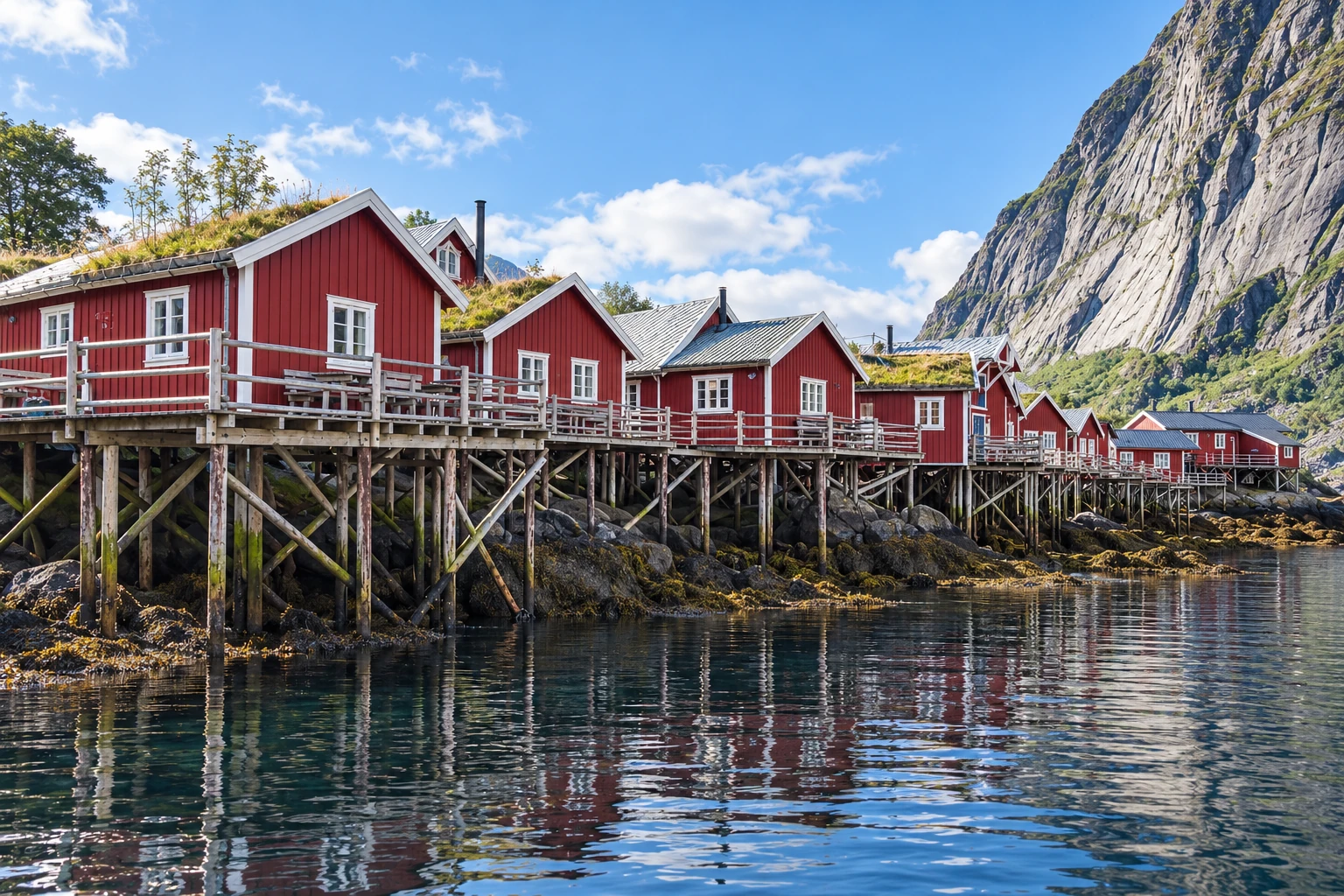
Go Norway’s low-price calendar lists May, June and September as the cheapest months for flight-plus-hotel packages, at about NOK 2,999 to 7,990 per person per week. It lists July, the autumn holiday in week 40 and New Year’s as high season. Airfares and hotels are cheapest in January and February, though prices spike at Christmas and New Year. Norgeguide puts shoulder-season discounts in Lofoten at about 15% for May and September, and Finn also cites shoulder-season discounts for April to May and September to October.
Finn advises reserving summer packages 4 to 6 months ahead and shoulder-season packages 1 to 2 months ahead. Go Norway recommends booking flights 2 to 5 months ahead.
Holidays and Festivals
Norway has more than 900 festivals, and summer is the biggest festival season, according to VisitNorway. It tells visitors to expect "four seasons in one day" and to pack light wool layers even in summer. It also suggests rain gear, rain boots, sunscreen and earplugs. The densest calendars fall in June and August, and late May and mid-October also have plenty of events. The month sections above list the main events. Festival dates change from year to year, so confirm them with the organizer before booking.
Public holidays bring short closures and heavy domestic travel. Eight of the twelve 2026 holidays fall on weekdays, according to Kalendernorge and Ukenr. The dates are:
- 1 January (Thursday): New Year’s Day
- 2 to 6 April (Thursday to Monday): Maundy Thursday through Easter Monday
- 1 May (Friday): Labour Day
- 14 May (Thursday): Ascension Day
- 17 May (Sunday): Constitution Day, which adds no extra day off in 2026
- 24 to 25 May (Sunday and Monday): Pentecost
- 25 to 26 December (Friday and Saturday): Christmas Day and Boxing Day
Friday 2 January and Friday 15 May 2026 each create a four-day weekend. The May one falls at the start of the travel season. In 2027, Easter falls on 25 to 29 March, Ascension on 6 May and Pentecost on 16 to 17 May, and the bridge day is Friday 7 May. For these weekends, book trains, ferries and rural lodging early. Alternatively, plan a city stay for the holiday itself.
Matching Dates to Your Trip
A short list is the quickest way to pick dates by priority:
- Northern Lights: November to February for the best odds, or late September to October and March for clearer skies with milder weather. Base in Tromsø or Lofoten for at least three or four nights.
- Midnight sun and hiking: Late June to August, with Trolltunga and Besseggen best from late June to September.
- Fjord cruises: May to September, when schedules are full.
- Fewer crowds with fair weather: Late May, June and September.
- Lowest cost: January and February are cheapest for airfares and hotels (avoiding the holidays), while May and September are cheapest for packages.
- Festivals: June and August are the main months, and late May and mid-October are also strong.
- Whale watching: Orcas from November to January and sperm whales from June to August.
- City breaks: December for Christmas markets in Oslo and Bergen, with rain gear for Bergen.
Key Takeaways
- Pick June or September for the best balance. Both months have fjord cruises and open roads, with long or colorful days. They also bring fewer crowds than July and lower package prices, and late May works almost as well.
- Match the month to the latitude. Aurora needs darkness (late September to late March, best November to February), while hiking and cruising need summer, so one trip rarely covers both.
- Save money in January, February, May and September. Airfares and hotels are cheapest in January and February outside holidays. Shoulder-season packages in Lofoten run about 15% cheaper.
- Plan Bergen around rain. Bergen gets 110 mm in May but 290 mm in December, so late spring gives the best odds of dry fjord days.
- Check the holiday calendar before booking. Eight 2026 holidays fall on weekdays, and the 15 May bridge day makes a four-day weekend with heavy domestic travel.