Best Time to Visit Belgium
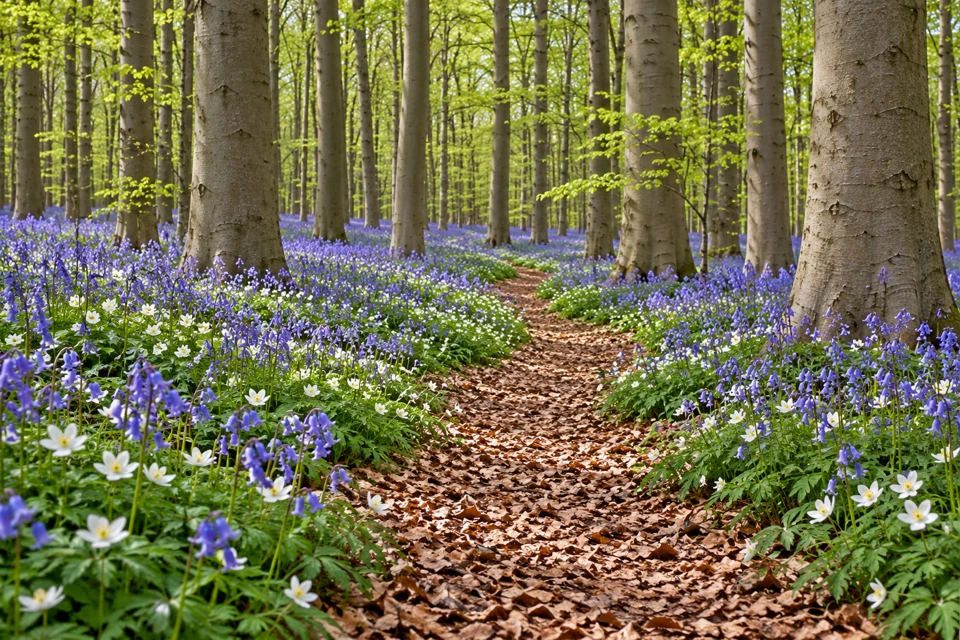
Belgium has no dry season. Rain falls in every season, summers are mild, and winters are cool and dark, so the best month depends on what the traveler wants. Late April through June brings flowers, long evenings and outdoor events. Early September brings mild weather and heritage weekends. January, February and August have the lowest hotel prices in Brussels, while December has the highest prices and the winter markets.
Most of the figures below describe Brussels, because the national weather service and the city tourism office publish month-by-month numbers for it. The sections after the month-by-month tour compare Flanders, Wallonia and the coast, and show how holidays, construction leave and prices change the calendar.
How Belgium’s Weather Works
The national weather service, the Royal Meteorological Institute (KMI in Dutch, IRM in French), measures climate at Uccle, a Brussels municipality. A climate normal is the average over 30 years. Since 2021 KMI has used the 1991–2020 reference period, and the same page covers how Uccle’s climate has changed since the earlier 1961–1990 period. According to Brussels Environment, the mean annual temperature there is 11°C and annual rainfall is up to 837 mm. In summer, the number of rainy days stays about the same, but thunderstorms push the totals higher. A July afternoon is as likely to end in a downpour as a May one.
The table gives typical Brussels daytime highs, along with the crowd level and relative price band for each month from Brussels Tourism’s month-by-month guide. The tourism office describes its temperatures as approximate, and its price bands are relative rather than euro figures.
| Month | Typical high | Crowds | Price band |
|---|---|---|---|
| January | 6°C | Very low | Lowest |
| February | 7°C | Very low | Low |
| March | 10°C | Low | Low to mid |
| April | 14°C | Rising (Easter) | Mid |
| May | 18°C | High | High |
| June | 21°C | High | High |
| July | 23°C | High | Mid to high |
| August | 23°C | Moderate | Low |
| September | 19°C | Moderate | High on weekdays |
| October | 15°C | Moderate | Mid |
| November | 10°C | Low | Low, then high at month’s end |
| December | 7°C | Very high | Highest |
Weather swings within a single month. KMI’s overview for April 2026 shows the range: Uccle logged 3.1°C on 3 April and 24.4°C on 9 April. April 2026 was also much drier than normal, with 9.1 mm of rain against a normal of 46.7 mm. A traveler planning around the normals (mean 10.4°C, 13.2 rain days) should pack for both outcomes. Layers and a light rain jacket work in every month from March to October.
Winter Months
January
January is the cheapest and quietest month in Brussels, with highs around 6°C. Brussels Tourism rates crowds as very low and prices as the lowest of the year, and KAYAK’s hotel pages name January as the low-season month for Belgium. The winter market, Winter Wonders, runs until 3 January, and the first weekend of the month still carries post-Christmas rates. The regulated sales (soldes) run through January, which helps travelers who want to shop.
The month suits indoor travel. According to the Brussels Times 2026 calendar, the Brussels Jazz Festival runs 15–24 January at Flagey, Ceramic Brussels 21–25 January, and BRAFA Art Fair from 25 January to 1 February. The PhotoBrussels Festival opens on 22 January and runs to 22 February. Museums and cafés carry the days, since daylight is short.

February
February keeps January’s low crowds and low prices, with highs near 7°C. It also has the best-known winter festival in the country. The Carnival of Aalst in East Flanders runs 15–17 February and is known for satirical floats. The carnival at Binche, on the UNESCO list, takes place on Shrove Tuesday and is about an hour by train from Brussels. School carnival holidays run 16–22 February according to a school-calendar site, so Belgian families add some demand that week.
In the capital, the Affordable Art Fair runs 4–8 February, the free Bright Brussels light festival 12–15 February, and Anima, the animated-film festival, from 20 February to 1 March.
March
Crowds stay low and prices move to a low-to-mid band, with highs around 10°C. March is the strongest month for specialist events at a quiet time. The calendar includes the Offscreen Film Festival (11–29 March), the River Jazz Festival (13–28 March), BANAD, the Art Nouveau and Art Deco biennial (14–29 March), and the Klarafestival classical series (20–29 March). The Millenium Documentary Film Festival starts on 26 March and runs to 3 April. The spring film and music listings are collected in a Belgian winter and spring festival guide.
Spring Months
April
April has the best flower displays and mid-band prices, but crowds are rising because of Easter. In 2026 Easter Sunday fell on 5 April and Easter Monday, a legal holiday, on 6 April. Belgian school Easter holidays ran 6–19 April.
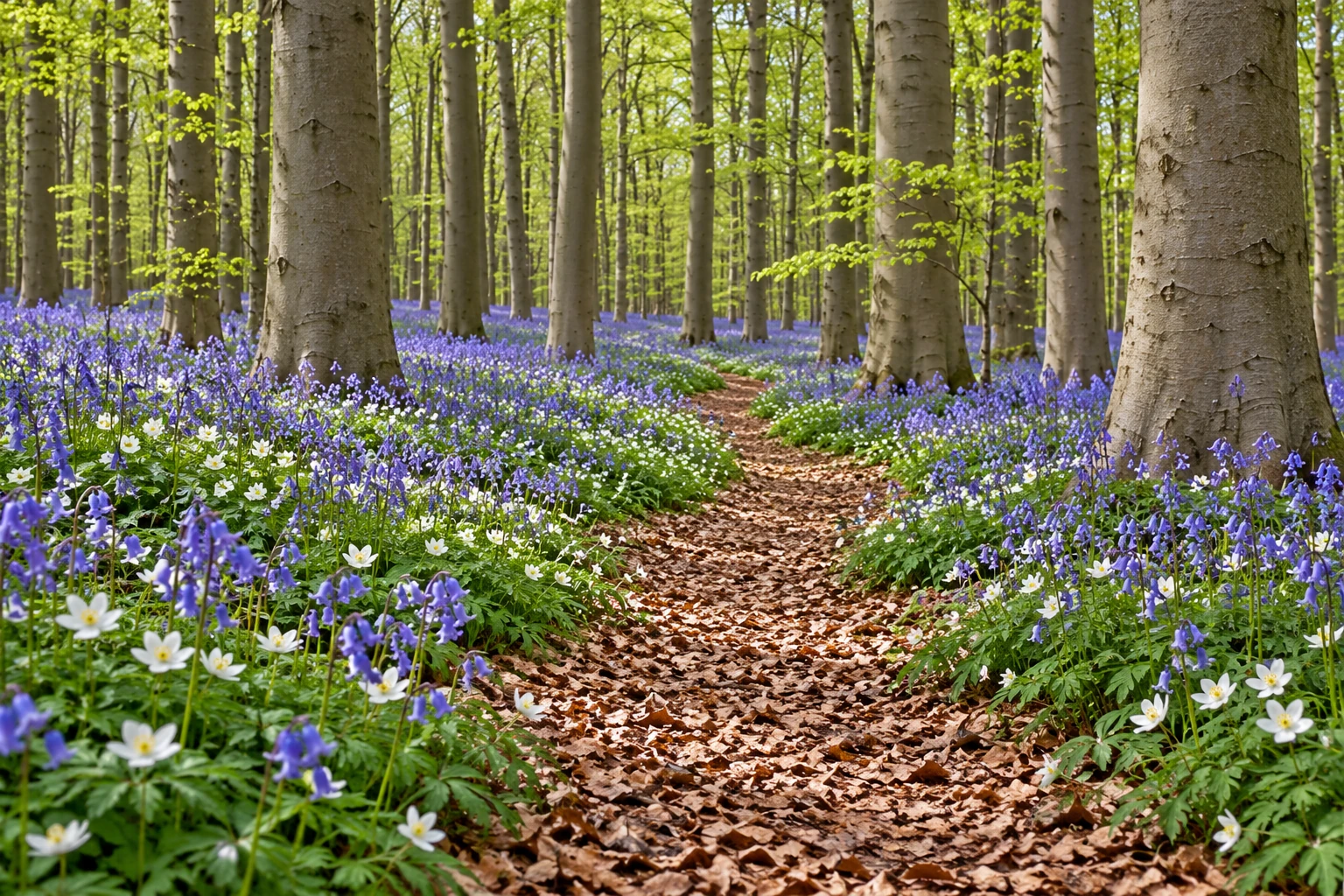
Floralia Brussels, with more than one million tulips, runs 3 April to 3 May. Bluebells bloom in April at Hallerbos, a forest in Halle just outside Brussels, and this is the main reason travelers pick the month for a day trip. The Brussels International Fantastic Film Festival runs 3–18 April and the Brussels Short Film Festival 22 April to 2 May. Highs sit near 14°C, so the weather suits walking if you bring a layer.
May
May is a high-crowd, high-price month in Brussels, with highs near 18°C. Brussels Tourism rates crowds as high and prices in the high band. The 2002 overnight-stay data from Statbel, the Belgian statistics office, show the same pattern: May was the busiest of the three spring months nationwide, with 2,767,606 overnight stays against 2,281,116 in April and 2,390,804 in June.
Holidays create long weekends. Labour Day is Friday 1 May, Ascension is Thursday 14 May (many Belgians also take Friday 15 May off), and Whit Monday is 25 May. Hotels and trains fill on those weekends.
Les Nuits Botanique runs 14–31 May, and the Lotto Brussels Jazz Weekend, with free shows in public spaces, runs 22–24 May. Brussels Pride takes place in mid-May. The Brussels Renaissance Festival opens on 17 May and runs to 4 July. Medieval events include the Medieval Market of Etterbeek in Cinquantenaire Park (22–24 May) and La Médiévale de Corroy-le-Château (30–31 May). The Zinneke Parade, held every two years, is on 30 May, and the Hangar electronic festival runs 1–2 May along the Brussels canal.
June
June has highs near 21°C and daylight until nearly 22:00, which makes it the best month for long outdoor days. Crowds and prices are high. The Fête de la Musique, with free concerts across Brussels and Wallonia, runs 18–21 June. Couleur Café at Osseghem Park in Brussels runs 26–28 June, while Graspop Metal in Dessel, Antwerp Province, runs 18–21 June and Live is Live in Antwerp runs 26–29 June.
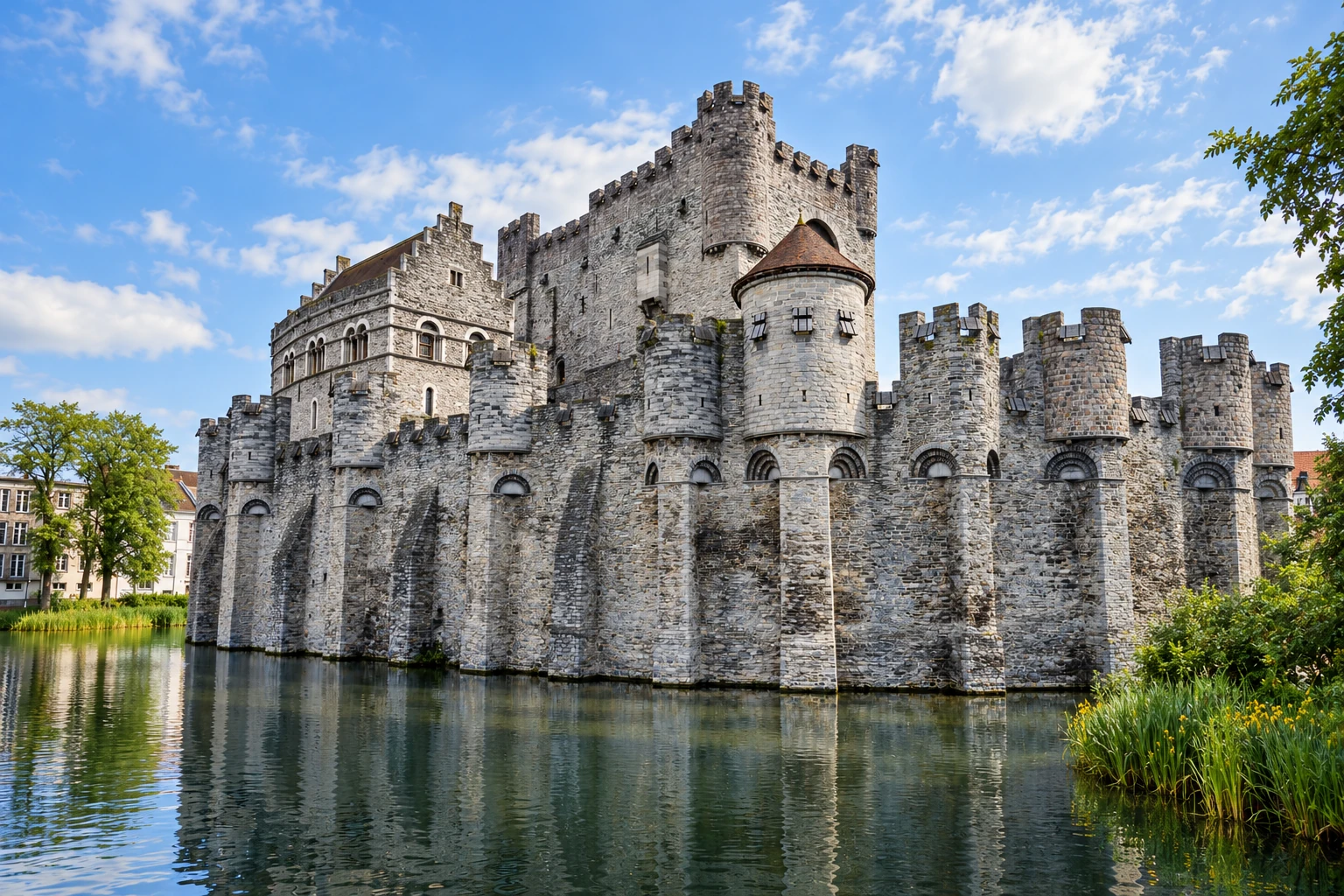
Medieval fans have several weekends to choose from: De Quaeye Werelt in Deurne (6–7 June), Le Charivari de Bouffioulx in Hainaut (13–14 June), the Middeleeuws Weekend at the Gravensteen castle in Ghent (21 June) and Dragonia at Spontin Castle (27–28 June). The medieval festival guide lists these events.
Summer Months
July
July is the peak festival month and one of the busiest travel months, with highs near 23°C. Brussels Tourism puts prices in the mid-to-high band, and KAYAK’s global and Singapore pages name July as the high-season month. The Statbel monthly figures from 2001 show the same shape: July was the national peak at about 4.6 million overnight stays, against about 1.2 million in January.
Rain does not stop in summer. KMI’s overview of July 2017 at Uccle recorded 58.3 mm of rain on 18 days, with a mean maximum of 23.1°C. That is a single year, but it shows that a warm July can still be wet.
Two calendar factors raise demand. National Day falls on Tuesday 21 July, and the Flemish Community holiday on Saturday 11 July applies to Flemish public services. Construction holidays (bouwverlof), when building trades shut down and many families travel, also begin in July. They run 13–31 July in Antwerp, Flemish Brabant and Limburg, and 13 July to 2 August in Walloon Brabant, Namur, Liège and Hainaut. In West and East Flanders and in Luxembourg Province they run 20 July to 7 August.
The festival lineup runs across the country. The Ommegang, the historical procession on Brussels’ Grand-Place, takes place on 1 and 3 July. Les Ardentes at Parc de la Boverie in Liège runs 2–5 July, Cactus Festival at Minnewaterpark in Bruges 10–12 July, and Lokerse Feesten in Lokeren 31 July to 9 August. The festival summer guide covers more.

August
August is warm (highs near 23°C), moderately busy and the lowest-priced summer month in Brussels. Brussels Tourism calls it warm and cheap, and KAYAK’s UK page lists August among the cheaper periods. The tradeoff is closures: many independent restaurants in Brussels shut for two or three weeks. Check opening dates before choosing a dinner spot, and expect to eat at larger or chain restaurants if the neighborhood spots are closed.
Assumption is Saturday 15 August, a legal holiday. Events include Lokerse Feesten through 9 August, the Medieval Festival of Bouillon on 8–9 August, the Meyboom tree-planting ritual in Brussels on 9 August every year, and Condacum Vivit in Kontich (14–16 August). Classissimo, a classical festival, runs during the month at the Théâtre Royal du Parc.
Autumn Months
September
September has mild weather (highs near 19°C), moderate crowds and, in Brussels, high midweek prices. The weekday premium is a feature of the city’s business and institutional demand, and weekends cost less. Business visitors matter in Brussels: in April 2002, 73,393 of 215,377 arrivals were for congresses and conferences, nearly as many as the 75,716 leisure arrivals.
The month is the best for heritage. Open Monumentendag in Flanders and the Journées du Patrimoine in Wallonia fall on the second weekend, and hundreds of heritage buildings open free. The Grande Procession in Tournai takes place on the second or third Sunday. The Day of Wallonia is on the third Sunday (20 September 2026) and the Wallonia-Brussels Federation holiday falls on 27 September. Brussels hosts RendezVous September, Design September and the Brussels International Film Festival in mid-month. The Festival of Flanders and the Festival of Wallonia open their seasons, which run through June.
Medieval events continue: Braine-le-Château (11–13 September), Villers Abbey (19–20 September) and Rouge-Cloître in Auderghem (26–27 September).

October
October is a mid-price, moderate-crowd month with highs near 15°C. The programme is lighter than September’s. In Brussels the Abrupt Festival runs 8–12 October. Travelers who want museums, restaurants and cafés without queues find October easier than September, but should expect cool and damp afternoons.
November
November is low in crowds and gray in weather, with highs near 10°C. Brussels Tourism describes the month as grim until the 27th and then transformed, as Christmas markets open and prices jump to the high band. The first half of the month is the cheapest time to visit before December.
Holidays cluster at the start and middle of the month. All Saints’ Day is Sunday 1 November and Armistice Day is Wednesday 11 November, both legal holidays. Federal public services also close on 2 November, and King’s Day on 15 November closes federal services and marks the German-speaking Community holiday. The Listen! Festival is on 21 November in Brussels.
December
December has the highest prices and very high crowds in Brussels, with highs near 7°C. Daylight is brief, with dark by about 16:45 and light only after about 08:30 in late December. Brussels hotel rates in December come mainly from European institution business as well as tourism, which keeps prices high.
Winter Wonders runs until 3 January. FCKNYE, an indoor New Year’s Eve event in Brussels, runs 30 December 2026 to 1 January 2027. Christmas Day (Friday 25 December) is a legal holiday and shops close. Second Christmas Day on 26 December is a holiday for federal public services only, so shops are generally open according to a Belgian holiday guide.
Differences Between Regions
Belgium’s three regions draw very different visitor numbers. In 2024, Belgium recorded 44,843,098 overnight stays, a record since statistics began in 2007, with Flanders holding 63%, Wallonia 21% and Brussels 16%. The first estimate for 2025 was more than 46.1 million, up about 3%. Wallonia’s share grew 6% and Brussels’ stayed stable. Foreign overnight stays rose 4%, led by the Netherlands, Germany and France.
Brussels has the flattest year. The 2001 and 2002 Statbel figures show monthly overnight stays within a narrow range, with May and September as the highest months. Its calendar is strongest from January to April, when film, art and music festivals fill the quiet months, and again in December.
Flanders (Bruges, Ghent, Antwerp and the coast) carries most of the country’s stays and has a strong summer festival season. The 2001 figures show about 2.9 million overnight stays in July and about 2.7 million in August. Bruges hosts Cactus in July, Ghent has the Gravensteen weekend in June, and Antwerp has Live is Live. Aalst’s carnival draws crowds in February. According to a Belgian hotel guide, typical nightly rates are €120–180 in Bruges, €80–110 in Ghent and Antwerp, and €90–140 in Brussels. On the coast, April 2026 rainfall reached only about 10% of normal, while the Land van Herve in Wallonia received about 40% of normal. Rain differs by region even within the same month, so check a regional forecast close to departure.
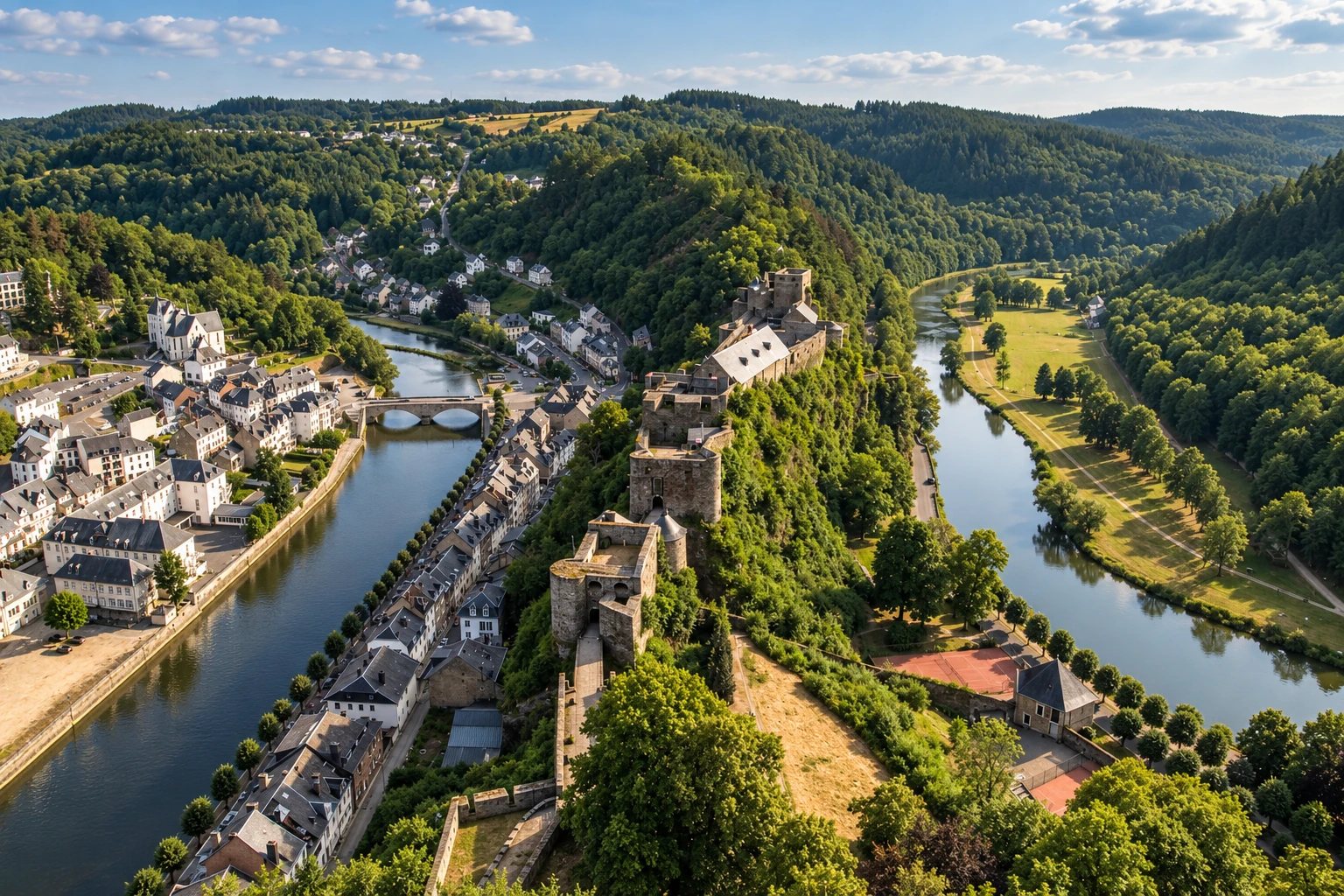
Wallonia peaks in summer and has a spring bump in May. In the 2001 data, July reached about 1.38 million overnight stays and August about 1.2 million, with May at about 0.62 million as the spring high. Its events include Les Ardentes in Liège in early July, medieval festivals at Bouillon, Villers Abbey and Spontin, the Grande Procession in Tournai, and Binche’s carnival in February. Wallonia’s fall holidays, the Day of Wallonia on 20 September and the Federation holiday on 27 September, bring local crowds.
Prices and Booking
Hotel prices follow a different line than crowds. Brussels Tourism says the price line does not follow the crowd line, and the clearest examples are August (moderate crowds, low prices) and September (moderate crowds, high weekday prices). KAYAK’s four country sites name January as the low-season month, though they disagree on the peak: July on the global and Singapore pages, September on the Australia page and June on the UK page.
On KAYAK’s global page, booking at least 58 days ahead gets the best price, and the average is $172 for a weeknight and $162 for a weekend night, based on the last two weeks of searches. The Australian site says Saturday usually offers the best deals and Wednesday is usually the most expensive day. Budget Your Trip puts the national average at about $126 a night, rising to about $234 in high season.
A practical rule follows from this. For the cheapest Brussels stay, travel in January, February or August, and book weekend nights. For good weather at mid-range prices, choose April or October. A Belgian hotel guide suggests April, May, September and October offer a good balance of weather and prices, with discounts of 20–30% against peak.
Public Holidays and Closures
Belgium has ten legal holidays in 2026: 1 January, Easter Monday (6 April), 1 May, Ascension (14 May), Whit Monday (25 May), National Day (21 July), Assumption (15 August), All Saints’ Day (1 November), Armistice Day (11 November) and Christmas Day (25 December). Easter Sunday and Pentecost Sunday are not legal holidays; only the Monday after each is, as the official calendar shows. Shops and many services close on legal holidays, and attractions may run shorter hours, so confirm opening times on the venue’s own website.
Public-sector holidays are more limited: 11 July (Flemish Community), 27 September (Wallonia-Brussels Federation), 2 November, 15 November and 26 December. These close government offices but not most tourist sites.
Choosing a Month by Priority
Cheapest trip: January or February, when crowds are very low and Brussels prices are in the lowest bands. August is the low-price summer option, with the caveat of restaurant closures.
Mild weather with flowers: April, with Floralia and the Hallerbos bluebells. Book around Easter dates, since the Easter weekend and school holidays raise demand.
Long days and outdoor events: June, with light until nearly 22:00 and the Fête de la Musique, Graspop and Couleur Café.
Major summer festivals: July, if you accept high crowds and the overlap with National Day and construction holidays.
Quiet cultural travel: late September to October for heritage weekends and milder crowds, or early November before the markets open.
Christmas markets and New Year: December, with the highest prices, the earliest darkness and holiday closures on 25 December.
Key Takeaways
- Pick the month by priority: January and February give the lowest prices and crowds in Brussels, April and early September give mild weather with flowers or heritage weekends, and June gives the longest days.
- Plan for rain in every month: Summer thunderstorms keep rainy-day counts steady while raising totals, so a light rain jacket and layers belong in every suitcase from March to October.
- Do not assume low crowds mean low prices: September is moderate in crowds but high on weekdays, while August is cheap but many independent Brussels restaurants close for two or three weeks.
- Check holiday and construction-leave dates: Ten national legal holidays and construction holidays from 13 July to 7 August overlap with National Day and peak summer travel.
- Book weekend nights and early: KAYAK’s global page puts the best price at least 58 days ahead, and weekend nights average $162 against $172 for weeknights.