Getting Around Denmark

For independent travelers planning a trip in Denmark, public transport comes from a few operators. DSB, the national railway, runs intercity trains between the major cities. A shared zone system covers buses, S-tog (Copenhagen’s suburban rail), the Metro and light rail on Sjælland, the island that holds Copenhagen. Ferries and short domestic flights connect the islands and the Jutland peninsula. Rental cars reach the countryside that rail and bus lines miss.
For most itineraries, the choice is simple. Take the train between Copenhagen, Odense, Aarhus and Aalborg. Use local transport with a Copenhagen Card or Rejsekort travel card inside the capital region. Fly or sail to Bornholm. Rent a car only when the route runs through places with infrequent service. Costs, booking rules and timing for each mode follow.
Which Mode Fits Each Trip
| Trip | Best option | Reason |
|---|---|---|
| Copenhagen to Odense, Aarhus, Aalborg | InterCity train | Hourly InterCity services link these cities |
| Copenhagen to Malmö, Sweden | Øresund train | Trains run about every 20 minutes |
| Within Copenhagen and Sjælland | Metro, S-tog, bus, light rail | One zone-based ticket or card works on all of them |
| Copenhagen to Bornholm | Flight, or ferry from Køge or Ystad | Flights take about an hour; Rønne–Køge by ferry takes about 5 hours 30 minutes |
| Copenhagen to Aarhus, Aalborg, Billund | Train or domestic flight | Several daily flights leave Copenhagen |
| Esbjerg to Fanø | Ferry | 12-minute crossing |
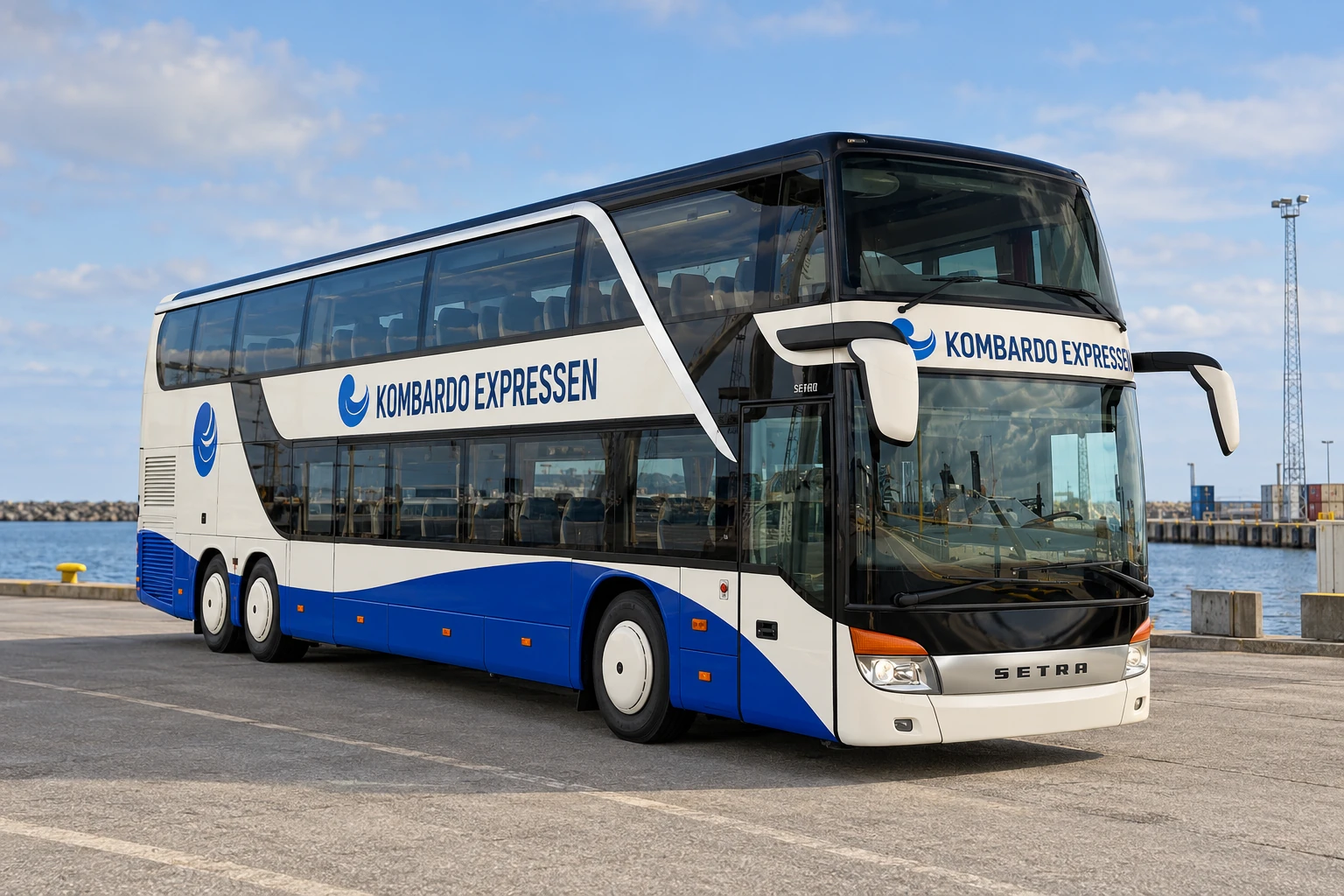
| Sjælland to Jylland | Ferry, or Kombardo Expressen bus | The bus uses Molslinjen fast ferries across the Kattegat |
| Rural areas, multi-stop routes | Rental car | Reaches places beyond rail and bus lines |
| Airport transfers, late nights | Taxi | Door to door |
Trains Between Major Cities
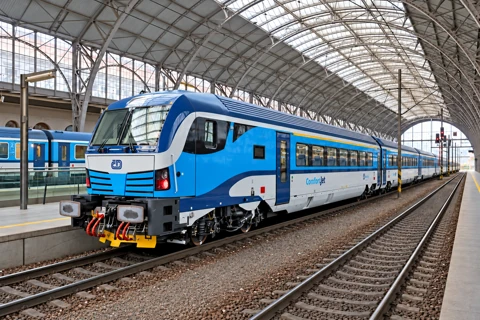
DSB’s InterCity services run hourly between Copenhagen, Odense, Aarhus and Aalborg. A traveler heading to Aarhus or Aalborg needs no connection planning on a normal day, and a train leaves every hour. DSB warns that track works in Denmark and Germany sometimes change itineraries, so look up the exact travel time in the DSB timetable or the DSB app before you leave.

Orange and standard train fares
DSB’s cheapest tickets are Orange fares, which are discounted and tied to a specific departure. The Orange Fri ticket goes on sale two months before departure. The earlier you book, the lower the price, and the price rises as the departure fills. DSB says early bookers save up to 78% against a standard adult ticket. Orange Fri is refundable until 30 minutes before departure, so it is the safer discount fare if your plans might shift. Children under 12 travel free, two per adult ticket, and children aged 12 to 15 get 50% off. Students and young people aged 16 to 25, people aged 65 and over, and holders of the Danish State Educational Grant get further discounts.
The plain Orange fare is a separate product. Copenhagen–Aarhus Orange tickets start around 99 DKK when bought well ahead, and the price climbs toward departure. Plain Orange tickets are non-refundable and non-changeable, and popular departures sell out, so read the terms before paying.
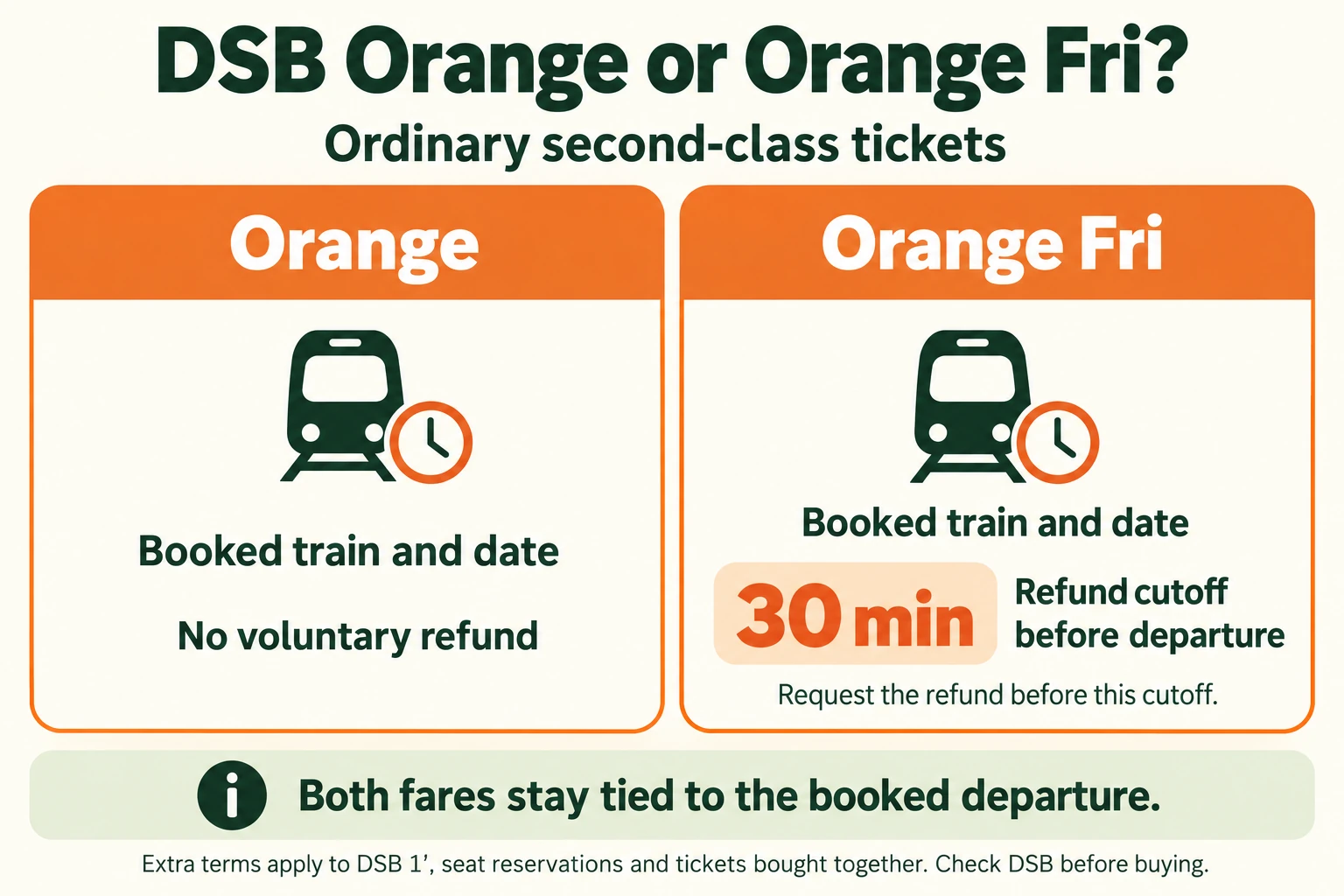
A standard ticket carries no advance-purchase discount and stays flexible. A Copenhagen–Odense standard ticket has run about 319 to 329 DKK, against a single Orange ticket as low as 89 DKK on the same route. Standard tickets are refundable before travel and valid on any suitable service that day. If your schedule is fixed, Orange saves a lot. If you might miss a train or change cities, the standard ticket or Orange Fri is the better choice.
Seat reservations are always included on InterCity and InterCityLyn trains, while on regional trains only certain departures offer them. Orange Fri cannot be combined with a seat reservation on DSB 1′ (first class). First class is listed at 40 DKK per single journey on regional trains and 180 DKK per single journey on all trains. A bike on DSB regional, InterCity, InterCityLyn and Lyn+ trains needs a bike seat ticket (cykelpladsbillet).
Where to buy train tickets
You can buy Orange and standard tickets at dsb.dk and in the DSB app. Orange and Orange Fri tickets are paperless and stay in the app. Ticket machines at most stations accept cards and Apple Pay, and staffed DSB Salg & Service offices operate in Aarhus, Copenhagen and Odense. DSB lists +45 70 13 14 18 for international bookings. Most domestic routes do not require pre-booking, because tickets can be bought at the station or in the app up to departure. Booking early only matters when you want the Orange discount.
Crossing to Malmö
Øresund trains to Malmö in Sweden run about every 20 minutes. An Øresund ticket covers DSB and Öresundstog between the transfer areas printed on the ticket, and Movia buses, local trains, light rail and Metro are included inside the transfer area. A family ticket covers up to five people with a maximum of two adults, and two children under seven travel free with a paying adult. Bikes cost about half the adult fare. Buy Øresund tickets in the DSB app, at staffed stations, at machines or at Metro stations. The official public transport guide describes these tickets.
Buses, Metro and S-tog on Sjælland
Bus, train, light rail and Metro on Sjælland share one fare and zone system, with the area divided into 211 zones. One ticket or card lets you change freely between buses, trains, light rail and Metro within the zones covered and the ticket’s validity time.

Zones and ticket validity
The public transport guide valid from 18 August 2026 divides single tickets into short trips and long trips. A short trip covers 2 to 8 zones, and the price depends on the number of zone rings you cross. The more zones you cross, the longer the ticket stays valid. Unused short-trip tickets can be refunded, but no later than midnight the day before travel.
A long trip covers 9 zones or more and is issued between two named stations or places. Long-trip tickets are generally not sold on buses. Each is valid for the traffic day, which runs from 04:00 to 03:59. A return needs two single tickets.
For the cost of a specific trip, check rejseplanen.dk, which shows the fare for each ticket type through its Rejsekort price tool. On a bus, tell the driver your destination and route if you need help choosing a fare. Short-trip tickets are sold on buses (some lines excluded), at DSB and Metro stations, at some Lokaltog stations, in the Rejsebillet and DSB apps, and at dsb.dk. Long-trip tickets come from DSB and Metro stations, some local-train stations, the apps and dsb.dk. Movia sales points do not sell DSB tickets, which come from dsb.dk, the DSB app, the Rejsebillet app, DSB staffed sales and 7-Eleven at stations.
Rejsekort, Basiskort and the Copenhagen Card
Rejsekort (an app or a physical card) and Basiskort are tickets for buses, trains, light rail and the Metro. You check in and out, and you pay for the direct zone distance, measured as the crow flies, between the two points. If a trip is disproportionately long, a time-based price applies. Set the right customer type (child, adult, pensioner or disability) before you travel. On DSB regional trains, S-tog, Metro and most local buses, Rejsekort is accepted, and it is sold at most DSB stations and at dsb.dk.
The Copenhagen Card suits visitors who plan many museum stops. It gives free travel in zones 1 to 99 on bus, train, light rail and Metro, plus entry or discounts at museums and attractions. It comes in versions for 24, 48, 72, 96 or 120 hours. Digital cards must be activated in the app, and the card is sold through the Copenhagen Card app or the website. The City Pass is a transport-only alternative. City Pass Small covers zones 1 to 4 and Large covers zones 1 to 99, both for 24 to 120 hours. Smaller passes cover the Vest and Syd areas for 24 hours, and X-Large covers zones 1 to 299 for 24 hours. Children under 16 pay about half price.
Season passes are meant for commuters. One pays off if you travel the same route more than about 26 times a month, which is 13 round trips, and the Pendler20 product is cheaper at about 10 round-trip days a month. A short visit rarely reaches either threshold.
Bikes, dogs, discounts and fines
Bikes travel free on S-tog and Øresund trains between Østerport and Copenhagen Airport, on light rail, and on all Movia buses, local trains and harbor buses. Metro bans bikes on weekdays from 07:00 to 09:00 and 15:30 to 17:30. Outside those hours you need a bike ticket, or you check the bike in with Rejsekort or Basiskort. Some bus lines restrict bikes at peak times; the list is at dinoffentligetransport.dk/cykel. Small dogs in a bag, cage or carrier travel free, and larger dogs pay the child fare.
Children under 12 pay the child fare when traveling alone. One child under 12 can ride free on another’s ticket, and two children under 12 ride free with an adult holding a valid ticket or card. Riders under 16 pay about half price. Pensioners, or riders holding a DSB early-pensioner card, get 30% off ordinary single tickets not bought on buses.
Inspectors fine riders without a valid ticket 1,000 DKK on Movia and 750 DKK on DSB and Metro or light rail for adults. Check in on Rejsekort before boarding, and keep the ticket active until you arrive.
Long-Distance Buses to Jutland
Kombardo Expressen buses run between Sjælland and Jylland and use Molslinjen fast ferries across the Kattegat. Tickets start at 109 kroner and are sold through kombardoexpressen.dk rather than Molslinjen. The buses have free WiFi, and you can add bicycle space for a fee. Timetables are at kombardoexpressen.dk/alle-busruter.
Domestic Flights
SAS flies direct from Copenhagen to Aarhus, Aalborg, Billund, Karup, Rønne on Bornholm, and Sønderborg. Norwegian flies Copenhagen to Aalborg, and Alsie Express flies Copenhagen to Sønderborg and Sønderborg to Rønne. Book on the airline’s website. VisitDenmark links to SAS, Norwegian and Alsie Express.

Flight times run from 35 minutes to 1 hour 10 minutes on routes to Bornholm, Aalborg and Billund. Aalborg flights take 45 minutes to 1 hour 10 minutes, and Billund flights take 50 minutes to 1 hour 10 minutes. Flights save the most time for Bornholm and for Aalborg when you want to avoid a long rail day. Between Copenhagen and Aarhus or Odense, the frequent trains and the time spent reaching airports favor rail.
Example fares from Google Flights show the range. A nonstop Copenhagen–Aalborg round trip started from DKK 664 for 5 to 11 November dates, and Aalborg–Copenhagen one way started from DKK 796 for the same week. A Billund–Copenhagen round trip started from DKK 1,374 for 7 to 14 January. Treat these as examples for those dates, since fares vary with the travel date.
Bornholm Airport has seasonal service from several operators. Alsie Express serves Sønderborg seasonally. Norwegian and SAS fly to Copenhagen on a seasonal basis. DAT flies to Copenhagen, Aalborg, Aarhus and Billund, with some of those routes seasonal. The direct Bornholm–Aalborg service runs July to September. Confirm the schedule for your month on the airline site before building a trip around a specific route.
Ferries
Molslinjen
Molslinjen sells three main ticket types. Each ticket covers up to 9 persons:
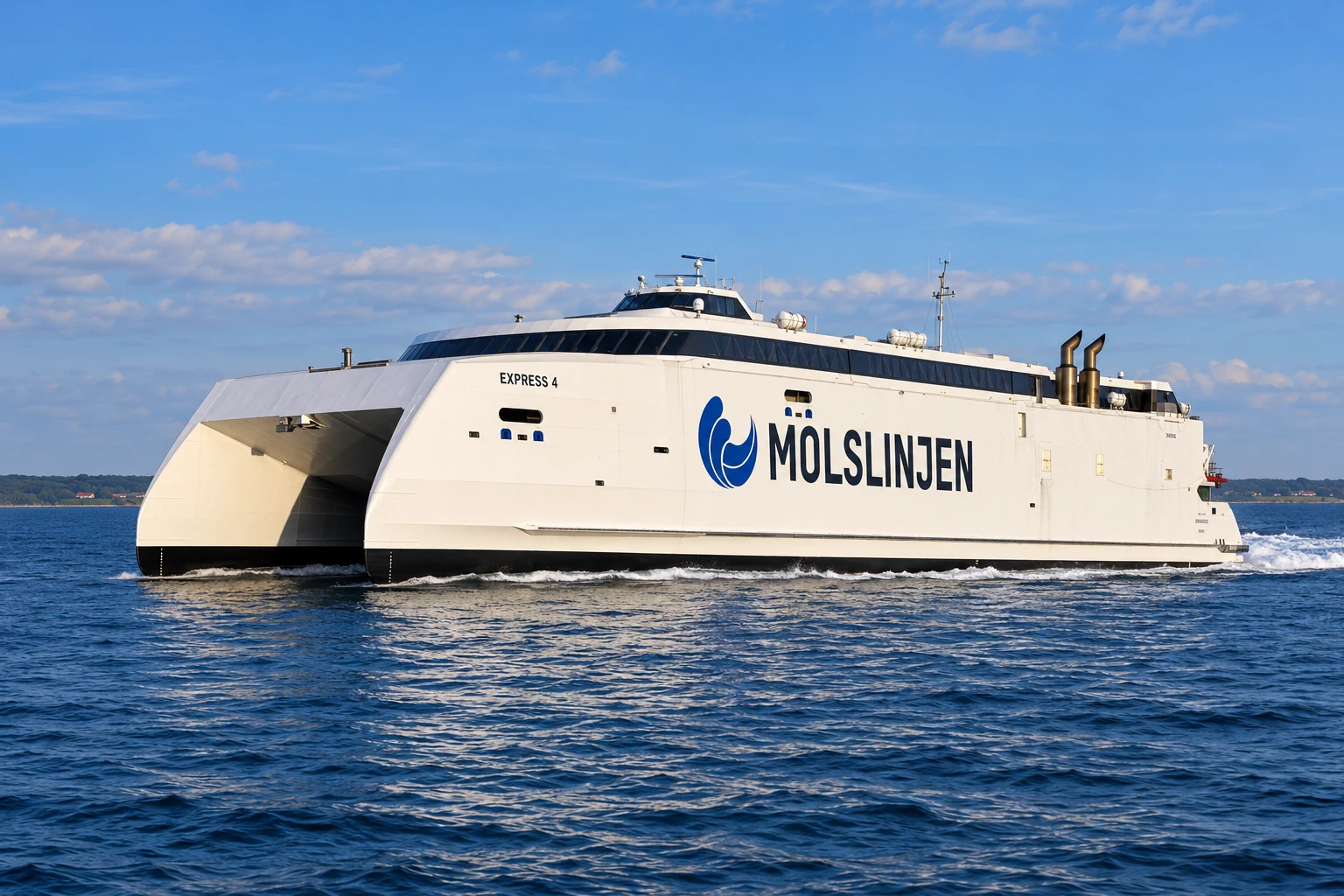
- Lavpris starts at 249 DKK. It is non-refundable, including when you switch to another ticket type. Rebooking costs a fee plus any price difference up to departure. Check in at least 10 minutes before departure.
- Standard starts at 524 DKK. It is refundable up to departure for a fee. Changes are free up to departure, and only the price difference applies. Check in at least 10 minutes before departure.
- BlueClass costs 950 DKK and stays valid for 12 months on any departure. It includes lounge access, priority boarding and disembarkation, and a refund without fee. Check in at least 5 minutes before departure.
Trailers are priced by size: 449 DKK for a 3.0 m × 1.85 m trailer, 549 DKK for 5.0 m, 649 DKK for 8.0 m × 2.95 m, and 749 DKK for 10.0 m × 4.00 m. The Aarhus–Odden catamaran crosses in 90 minutes. Choose Lavpris when your date is certain and Standard when it is not. Book at molslinjen.dk or in the app.
Fanø
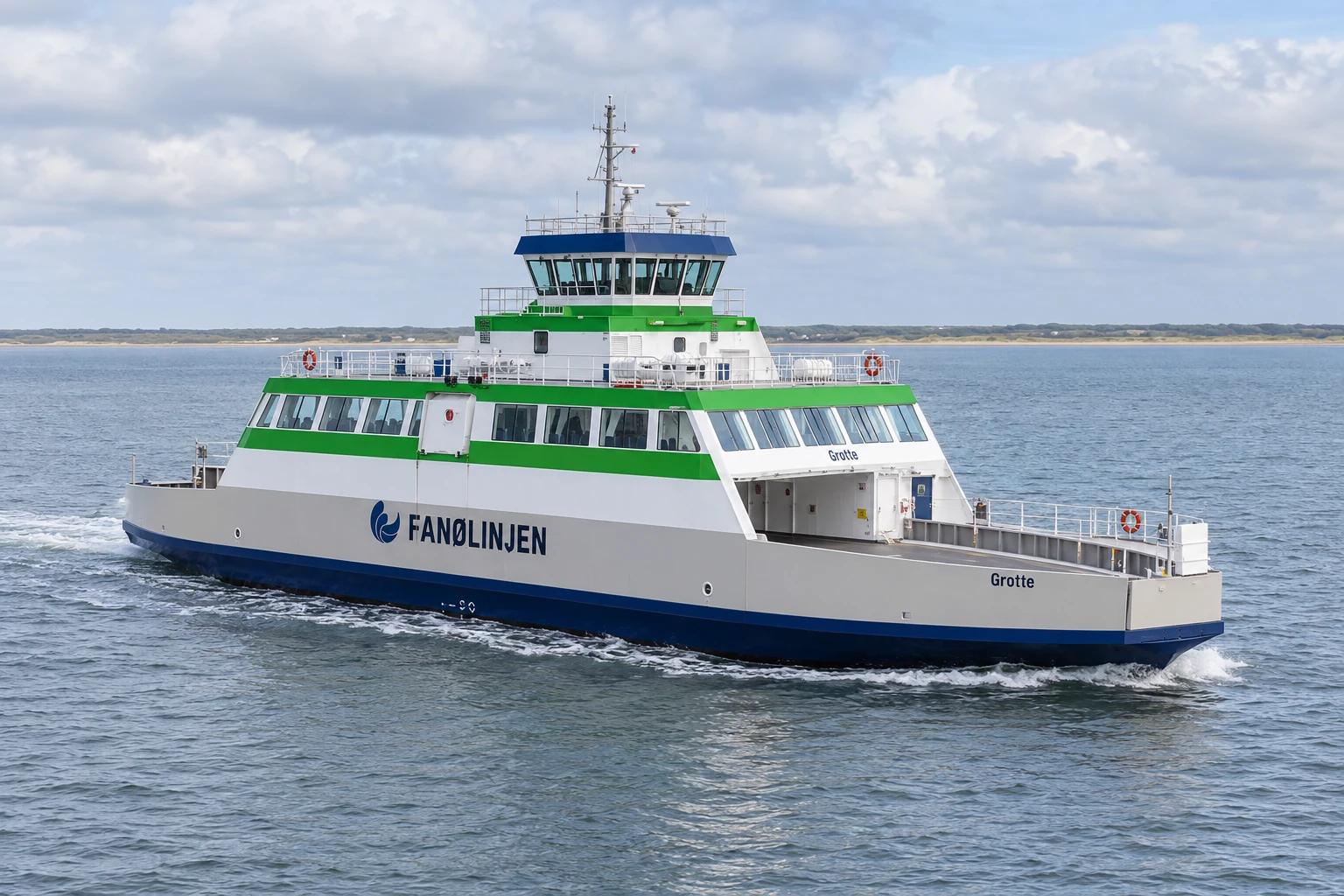
The Esbjerg–Fanø (Nordby) crossing takes 12 minutes, and ferries run in pendulum service most of the day. Fanølinjen’s 2026 prices are 269 DKK return for Flex and 325 DKK return for Standard, each covering up to 9 persons and cars under 1.95 m high and 6 m long. Flex is sold online only, is non-refundable and can be changed for a fee. Standard can be changed free up to 90 days ahead and refunded for a fee. Children aged 0 to 17 travel free, pensioners pay 25 DKK, and bicycles are free. Foot passengers and cyclists therefore pay little. The 2026 seasons are low (1 January to 31 March and 19 October to 31 December), mid (1 April to 14 June and 17 August to 18 October), and high (15 June to 16 August). Reserve online, or buy at the ticket machines at the berth. With PayZapp you register your number plate, drive to the port and check in, and payment is taken automatically.
Getting to Bornholm
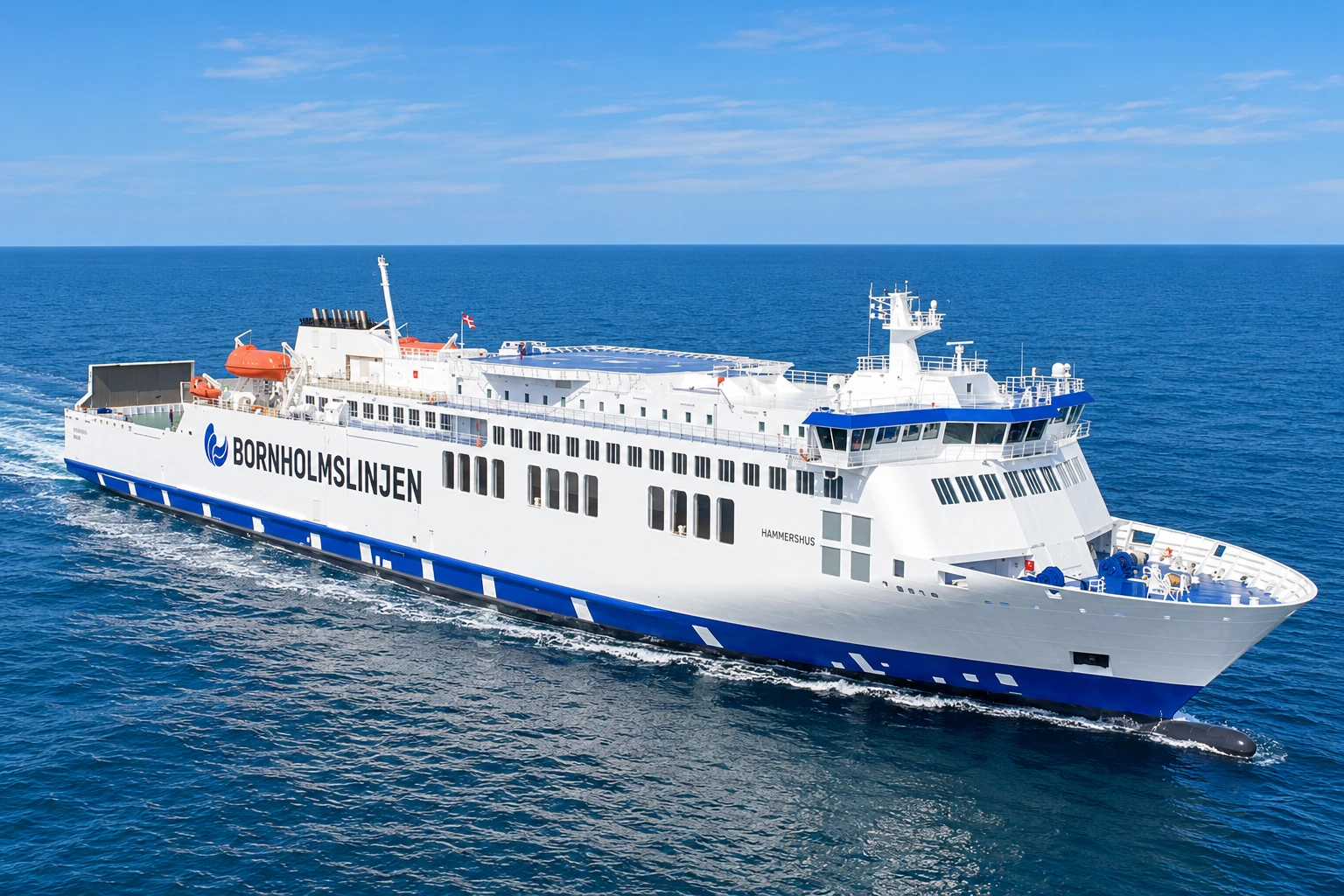
Bornholm, the Danish island in the Baltic Sea, is reached by air in about an hour or by ferry. Bornholmslinjen, a Molslinjen brand, sails Rønne–Køge in about 5 hours 30 minutes and links Bornholm with Denmark, Sweden and Germany. The rail-and-ferry option goes through Sweden. A Bornholm ticket bundles DSB, Öresundstog and Pågatog trains to Ystad with the ferry from Ystad to Rønne. It is sold at dsb.dk or in the DSB app. Choose the flight for a short stay and the ferry for a trip with a car or bike. The Køge sailing suits drivers starting from Sjælland.
Renting a Car
A rental car makes sense for rural areas and for itineraries with several stops that rail and bus lines do not connect well. At Copenhagen Airport the rental companies share a Car Rental Center on the west side, beside car park P1, which is open 7:00 to 23:00. Courtesy buses run to the terminals every 10 to 20 minutes. Avis, Budget, Enterprise, Europcar, Hertz and Sixt have desks there. The airport is 8 km from Copenhagen. Compare rates and book in advance on company websites.

The minimum rental age is 21, and drivers aged 18 to 24 can hire a car but pay a young-driver surcharge of about 125 to 150 DKK per day. Premium categories require ages 25 or 28, and some suppliers apply a maximum age of 70 to 80. Renters need to have held a licence for one year. A national licence is accepted. If yours is not in English, Danish or the Latin alphabet, carry an international driving permit alongside it. The main driver needs a credit card in their own name for the deposit and payments, plus a passport or valid ID. Most companies include basic insurance, so compare the collision damage waiver, third-party liability and the deductible before you sign.
The speed limits are 50 km/h in urban areas, 80 km/h in rural areas and 130 km/h on motorways. The blood alcohol limit is 0.05%. The emergency number is 112. Copenhagen, Aarhus, Odense and Aalborg have emission-zone restrictions for older vehicles, which rarely affect recent rental cars, though it is worth asking at the rental desk. Children under 135 cm need an approved child restraint system, and the rental car has no exemption, with a fine of up to DKK 2,000 for a missing child seat. Add a child seat to the rental booking in advance.
Taxis and Ride Hailing
Taxis suit airport transfers, late arrivals and short city hops. A taxi from Copenhagen Airport to the city center typically costs 250 to 350 DKK and takes 15 to 25 minutes. For a single traveler on a normal day the Metro or train is cheaper, so a taxi is worth the cost when you have luggage or children, or arrive very early or late.
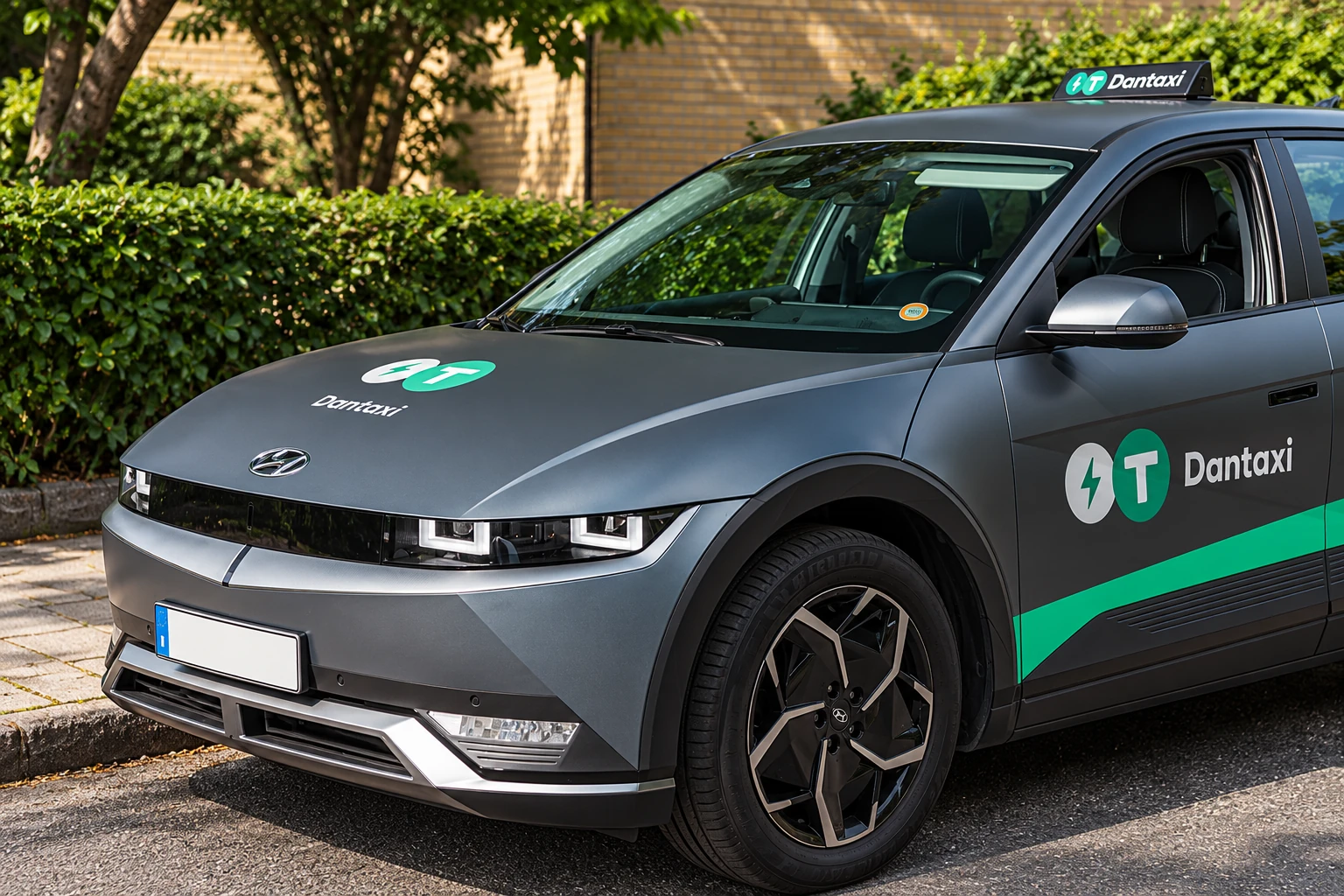
Danish taxi apps such as Dantaxi and Viggo cover Copenhagen, and Bolt operates through licensed drivers. Before you ride, check the app for availability in your city and confirm the fare with the app or driver. Taxis in Denmark are exempt from the child-seat rule under the Færdselsloven, the Danish traffic law. Families who want a seat should request one when booking a transfer.
Key Takeaways
- Match the mode to the distance: Use InterCity trains between Copenhagen, Odense, Aarhus and Aalborg, and local zone tickets inside the Copenhagen region. Fly or take a ferry to Bornholm, and rent a car for rural routes.
- Book Orange Fri early: DSB opens sales two months ahead and prices rise as departures fill. The ticket stays refundable until 30 minutes before departure.
- Decide between Rejsekort and the Copenhagen Card: Rejsekort or Basiskort charge by zone distance and require check-in and check-out, while the Copenhagen Card covers travel in zones 1 to 99 and includes museum entry.
- Pick ferry fares by flexibility: Molslinjen’s Lavpris from 249 DKK is non-refundable, and Standard from 524 DKK is refundable for a fee. Fanø’s 12-minute crossing is free for children and bicycles.
- Check rental terms before arrival: The minimum age is generally 21, and drivers under 25 face a surcharge of about 125 to 150 DKK per day. A credit card in the driver’s name is required.