Is Greece Safe for Travelers? Official Advice, Scams, Health Risks and Emergency Numbers

Greece is safe for most visitors. The US State Department rates the whole country Level 1, "Exercise normal precautions", the lowest of its four advisory levels. The page was issued on October 23, 2025, and describes Greece as generally safe, with common petty crime in popular tourist areas. The UK Foreign, Commonwealth and Development Office (FCDO) publishes detailed Greece safety advice that was last updated on November 3, 2026.
Most problems visitors run into are small and predictable: pickpockets on the Athens metro, a strike that cancels a ferry, a heat wave during sightseeing, or a swimmer caught off guard by rocks or currents. Some risks are larger, including terrorism, wildfires and earthquakes. Greek authorities publish guidance on each of them.
What Governments Currently Advise
The US advisory applies to Greece as a whole and sets no regional restrictions. The country-wide rating means the islands, including Crete, fall under the same advice as the mainland. Warmonit reports that the US, UK and Canada set no stricter regional advice for any particular area. Its summary adds that France advises normal vigilance, Germany issues general safety advice with no travel warning, and Canada asks for normal security precautions.
The US page names two concerns: petty crime, and big demonstrations that can start with little notice and disrupt transport and essential services. The FCDO’s page goes further, covering terrorism, protests, strikes, crime, water safety and local laws. Read both before booking, since the advice changes as events happen. The FCDO page was revised only days before this article’s research date.
A few entry rules also affect planning. According to the US advisory, Americans do not need a visa for stays of 90 days or less. The passport must be valid for at least three months beyond the departure date, and travelers entering or leaving with cash or equivalent above the legal limit must declare it. For UK driving licenses, the FCDO says a UK photocard license is valid in Greece. The UK’s Category P license (mopeds up to 50cc) is not valid there.
Men born to a Greek national may have military obligations. The FCDO says men aged 19 and over in that situation can be prevented from leaving the country until they complete service. Dual nationals should check their status before they travel.
LGBT+ visitors face few legal barriers. The FCDO notes that same-sex sexual activity is legal, same-sex civil unions have been recognized since 2015, and attitudes are generally more welcoming in Athens and many islands. The FCDO also states that most visitors have no difficulty related to race, though some racially motivated attacks have occurred, particularly in inner-city areas.
Travelers from outside the US and UK should check their own government’s page too, since each country updates its advice on its own schedule. Registering with your embassy’s traveler program, where one exists, is a quick step that makes it easier to receive alerts if a strike, fire or earthquake affects your route.
Pickpockets, Scams and Local Laws
Petty theft is the most common crime visitors report. The US advisory and the FCDO both say thieves take passports, wallets and handbags on the Athens metro and at crowded tourist sites, particularly in central Athens. A typical method has one person create a commotion or bump into a traveler while a second person takes belongings. The FCDO also warns that thieves strike as train and bus doors open, so standing near the doors puts you in the likeliest spot to lose a phone or wallet.
The FCDO recommends splitting valuables across several pockets and bags, so one theft does not take everything. Keep a copy of your passport photo page separate from the passport. Use well-lit ATMs, keep belongings out of sight in a parked car, and park in lit or secure car parks, since thieves also break into vehicles and lodgings.
Scams that begin online are a separate category. The US advisory says they often start with posts, emails or letters. Examples include someone claiming to be US military personnel, someone claiming to be detained or hospitalized abroad, romance and dating scams, and work permit or job offers. The advisory recommends caution on dating apps and avoiding public Wi-Fi.
The Hellenic Police also publish fraud warnings, although they mostly address residents. A February 23, 2026 notice from Western Greece police describes callers who claim a dangerous electrical fault and ask victims to hand over money or valuables. The electricity operator never does this. The police advise ignoring instructions from unknown callers, phoning the operator on its official number, and reporting the call on 100. Visitors renting a villa or apartment should apply the same rule to anyone claiming to represent a utility or a bank.
For nights out, the FCDO suggests saving your accommodation’s location on your phone map and staying in contact with someone through a group chat. It also advises watching your drink and never letting a friend walk back alone. It recommends pre-arranged transport or licensed taxi-hailing apps such as Uber or Free Now.
Local laws are strict in several areas, and the FCDO and US advisories agree on most of them:
- Drugs: Penalties include long jail sentences and heavy fines, and they apply to transit through airports.
- Weapons: Pepper spray, mace, knuckledusters and guns are restricted. Some knives count as weapons, and most knives require a license.
- Photography: Photographing military installations, vehicles or buildings is illegal and has led to prosecution. Photographing police is prohibited, and border areas are militarily sensitive.
- Antiquities: Archaeological items, including rocks taken from sites, may not be removed.
- Behavior: Police arrest people for rowdy or indecent behavior. Selling alcohol to anyone under 18 is illegal.
- Identification: Carry your passport, because police may not accept a copy.
Protests, Strikes and Terrorism
Demonstrations and strikes are the most likely cause of disruption on a trip. The FCDO reports a heightened risk of political protests, particularly in central Athens, and advises staying away from them and following instructions from local authorities. Some past demonstrations have turned violent, and security forces often use tear gas, which affects breathing and vision.
Both governments list gathering points. According to the FCDO and the US advisory, demonstrators often meet at Syntagma Square, Omonia Square, Exarchia and the Polytechnic University in Athens, and at Aristotle Square and Aristotle University in Thessaloniki. Syntagma sits directly in front of the Parliament and is a standard stop on a first visit, so check the news before going.
The advisories also name dates when demonstrations are more likely: May 1 (Labour Day), November 17 (the Polytechnic anniversary) and December 6 (the anniversary of the shooting of a 15-year-old student). The US advisory adds February 28, the anniversary of the 2023 Tempi train derailment. A trip that overlaps one of these dates does not need to change, but plan routes around central Athens with more slack.
Strikes are regular and sometimes called at short notice. The FCDO and the US advisory say they can disrupt buses, trains, taxis, ferries, flights, road networks and border crossings. Island hopping carries the most exposure, since a cancelled ferry can break a chain of hotel bookings. Confirm your flight before leaving for the airport, keep a day of buffer before any international departure, and look for flexible cancellation terms on island accommodation.
The UK advice names terrorism as a threat. The FCDO says terrorists are likely to try attacks in Greece and that attacks could be indiscriminate, including in places foreign nationals visit. On July 1, 2026, three incendiary device attacks on the residences of Greek political figures killed one person and injured four, according to the FCDO. Greek authorities increased security at some prominent locations, including tourist sites. The US advisory notes that earlier attacks by domestic groups used explosives and automatic weapons against institutions, banks, media offices, diplomatic premises and police.
The recorded targets in these attacks have mostly been political and institutional. Visitors should follow police instructions at any cordon, leave an area that officers are clearing, and avoid lingering near government buildings during tense periods.
Health, Heat and Water Safety
Start health preparations four to six weeks before you leave. TravelHealthPro, the UK’s National Travel Health Network and Centre, advises seeing a health professional at least that far ahead, and earlier for anyone with a pre-existing condition. It recommends travel health insurance with adequate cover and routine vaccinations such as MMR and diphtheria-tetanus-polio. A tetanus booster is recommended if your last dose is not up to date. Greece has no vaccination certificate requirements under the International Health Regulations, and Expat Focus likewise lists no vaccinations required for entry.
UK travelers should carry an EHIC or GHIC (the European and Global Health Insurance Cards). TravelHealthPro says these cards give access to state healthcare at reduced cost, or sometimes free, but they do not replace insurance. Advice on hepatitis A differs. Canadian guidance rates the risk as low, while Voyax Health, drawing on CDC-based guidance, recommends the vaccine for most travelers, so ask a clinician. The same Voyax guide states there is no malaria risk for tourists.
Mosquitoes carry one seasonal illness. Viruswatcher reports that West Nile virus, spread by Culex mosquitoes, has been recorded in most years since 2010, mainly in central and northern mainland regions. It recommends DEET or picaridin repellent in the evenings, especially in northern mainland Greece and around Thessaloniki in summer.
Visitors most often underestimate the heat. Viruswatcher states that summer temperatures regularly exceed 40°C and that heat-related illness is a significant concern. Schedule outdoor sightseeing for early morning, carry water, and take the middle of the day indoors or in the shade.
Food and tap water pose little trouble. According to the same guide, tap water is considered safe in Athens and most major cities and islands. Smaller islands and remote areas may rely on desalinated or trucked water, where bottled water is the better choice. Food from licensed restaurants carries low risk, and unpasteurized dairy is best avoided.
Water safety kills more visitors than most people expect. The FCDO states that people drown in the sea and in swimming pools in Greece every year. It advises supervising children, never diving into unknown water because hidden rocks or shallow water can cause serious injury or death, following beach flag systems, and listening to lifeguards about jellyfish and sea urchins.
Medical care in Athens and major island centers is good, according to TravelHealthNow. Care on smaller islands varies, and serious cases may require medical evacuation. Help in rural areas can take longer to arrive. The US advisory encourages medical evacuation insurance, so check that your policy covers it before you book remote islands.
Earthquakes, Wildfires and Severe Weather
Earthquakes are common in Greece because it lies in an active seismic zone. The Ministry for Climate Crisis and Civil Protection publishes earthquake guidance written mainly for residents, but several tips apply to visitors. Identify a safe spot in each room, such as under a sturdy table and away from glass, bookcases and exterior walls. Keep a flashlight and a first-aid kit within reach. After a quake, meet outdoors away from buildings, trees, and electric and telephone cables.
A recent example shows how Greek authorities respond. In early 2025, the Santorini-Amorgos area had a swarm of dozens of earthquakes of magnitude 4.0 or higher, with a maximum of 5.2. A 2025 study in GeoHazards describes how Greek Civil Protection raised preparedness, with public guidance, extra personnel and updated local emergency plans. Visitors in an area with a swarm should follow those local instructions and check their lodging’s exits.
Wildfires are the main seasonal hazard in summer. IsMyTripSafe reports wildfires in August 2026, including evacuations on Crete, and says the risk concentrates in rural, forested and inland areas. The Civil Protection Ministry issues a daily fire risk forecast map during the 2026 fire season, and its homepage hosts forest-fire prevention and self-protection guidance. Check the map before hiking or driving through wooded areas. If an evacuation order arrives, leave when told.
Number 112 has another function here. The Ministry says it can send mass alerts about natural disasters, so keep your phone’s emergency alerts switched on.
Winter brings different problems. Sicuro, citing the UK FCDO, notes that Greece can have severe winter weather, including storms that cause flash flooding. Visitors in the colder months should check the extreme weather section of the FCDO page.
As of November 5, 2026, Sicuro lists no active GDACS disaster events (the Global Disaster Alert and Coordination System) and no active WHO health alerts specific to Greece. Those listings change quickly, so check them again before you leave.
Where to Take Extra Care
Official advice covers the country as a whole, and neither government tells visitors to avoid any region. The risks tend to attach to specific places and activities rather than to whole islands or provinces.
Central Athens. Syntagma, Omonia, Exarchia and Polytechnic Square combine demonstration activity, theft and, according to the FCDO, some inner-city racially motivated attacks. None of this keeps visitors out of the Plaka or the Acropolis area. It does mean staying alert at night and checking the news before walking through the protest squares.
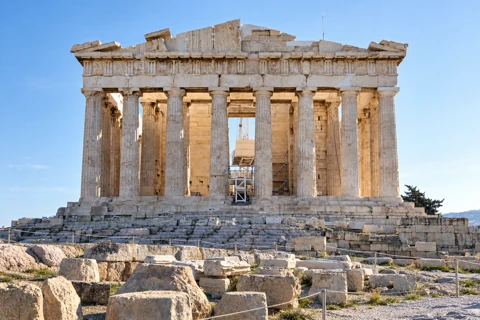
The metro and crowded sites. These are the spots where pickpocketing and bag snatching are most common. The Acropolis is among the busiest. The ticket is €30 from April 1, 2025, valid all year, according to Greek reporting on the Ministry of Culture announcement. Combined tickets for multiple sites were abolished. Carry only what you need into the queue.
Thessaloniki’s Aristotle Square and university area. Both are listed by the US and UK as demonstration gathering points, so treat them as Athens’ protest squares are treated.
Border areas. These are militarily sensitive, and photography restrictions apply. If your route runs near a border or a military site, keep your camera down.
Rural and forested areas. Wildfire risk is higher in summer, and medical response is slower. Share your route with someone, and check the fire map.
Sea and pools. Drowning is the FCDO’s most direct safety warning for tourists. Swim at beaches with lifeguards or flag systems where possible.
Quad bikes and mopeds. The US advisory warns of a significant risk of serious injury or death on quad bikes. Rental companies typically provide only third-party insurance, and many personal policies exclude quad biking, which leaves riders paying their own medical costs. Helmets are required for drivers and passengers on mopeds and quads, and police can fine riders and confiscate licenses for violations. Rent only if your travel insurance covers it.
Emergency Numbers
The single number to remember is 112. The FCDO’s getting help page and the Civil Protection Ministry both list it as the European emergency number, covering police, fire and ambulance. The Ministry adds that 112 is free, can trace the caller’s location, and works from any phone. The US advisory also says to dial 112 to report a crime to local police.

| Service | Number | Notes |
|---|---|---|
| All emergencies (police, fire, ambulance, coastguard) | 112 | Free from any phone |
| Police | 100 | Listed in Hellenic Police guidance |
| Ambulance | 166 | Per Expat Focus |
| Fire | 199 | Per Expat Focus |
| Coastguard | 108 | Per Expat Focus |
| 24-hour SOS hotline for victims of violence | 197 | Most operators speak English, per the US advisory |
| US Embassy Athens | +30-210-721-2951 | Per US advisory |
| British Embassy Athens | See the FCDO getting help page |
For UK travelers, the FCDO says that dialing 999 from a UK mobile phone in Greece connects automatically to Greek emergency services. The FCDO London line, 020 7008 5000, handles calls from relatives of British nationals in trouble abroad and does not take Greek emergencies.
Save 112 and your embassy’s number in your phone before you land. If you lose a passport, report the theft to local police first, and your embassy can then issue an emergency travel document. A photocopy of the passport photo page speeds up that process.
Key Takeaways
- Expect normal precautions. The US rates all of Greece Level 1 in its October 23, 2025 advisory, and neither the US nor the UK sets regional restrictions.
- Guard your belongings on the metro and at crowded sites. Stay away from train and bus doors and split valuables across pockets and bags. Keep a copy of your passport photo page apart from the passport.
- Build slack around strikes and protests. Check news before walking through Syntagma, Omonia or Exarchia. Confirm flights and ferries the day before travel.
- Respect water, heat and fire. Drownings occur every year, and summer temperatures regularly exceed 40°C. Wildfire risk centers on rural and forested areas, so swim near lifeguards and check the daily fire map.
- Buy insurance that covers medical evacuation and quad biking if you plan to ride. See a clinician four to six weeks ahead, and carry an EHIC or GHIC if you hold one.
- Save 112 in your phone. The call is free, reaches police, fire and ambulance, and can trace your location.