Iceland Travel Costs: Daily Budgets for Backpackers, Mid-Range Travelers, and Luxury Trips
Iceland is among the more expensive countries in Europe to visit, and five things drive the bill for a first trip: where you sleep, how often you eat in restaurants, whether you rent a car, how many paid attractions you add, and what month you travel. Prices in Icelandic króna (ISK) include 24% value-added tax (VAT, the sales tax built into shelf prices), so the number on a menu or ticket is what you pay.
A realistic average runs about 100 to 200 USD per person per day, according to Guide to Iceland’s cost page, updated 26 October 2026. Longer trips cost less per day because flights and car rental are spread over more days. The three budget levels below use Hertz Iceland’s February 2026 estimates, which exclude flights, then add current prices for fuel, parking, lagoons, and tours. Prices change by season and operator, so confirm any cost above your budget before you book.
Daily budgets at three comfort levels
Hertz Iceland’s 2026 budget breakdown (dated 2 February 2026) gives per-person daily ranges for lodging, food, and a rental car with fuel. The ranges exclude flights.
| Category | Shoestring (backpacker or camper) | Mid-range (couples, families) | Luxury (premium hotels and tours) |
|---|---|---|---|
| Accommodation | 7,000 to 15,000 ISK | 22,000 to 45,000 ISK | Premium rates |
| Food | 3,000 to 5,000 ISK (groceries) | 7,000 to 12,000 ISK (one restaurant meal a day) | 25,000+ ISK (fine dining) |
| Car and fuel | 9,000 to 14,000 ISK (small 2WD) | 16,000 to 28,000 ISK (medium SUV) | Added on top |
| Daily subtotal | Sum of the rows above | About 45,000 to 85,000 ISK | Sum of the rows above, before transport |
The subtotals are the sums of each column. A "2WD" is a two-wheel-drive car, the cheapest rental category. The mid-range column assumes a medium SUV, which is the car class Hertz pairs with that budget.
Hertz also gives trip totals without flights: about 300,000 to 550,000 ISK per person for seven days (self-driving, mid-range lodging, mixed dining, and a few paid activities) and about 160,000 to 300,000 ISK per person for four days.
Adding sights to each level
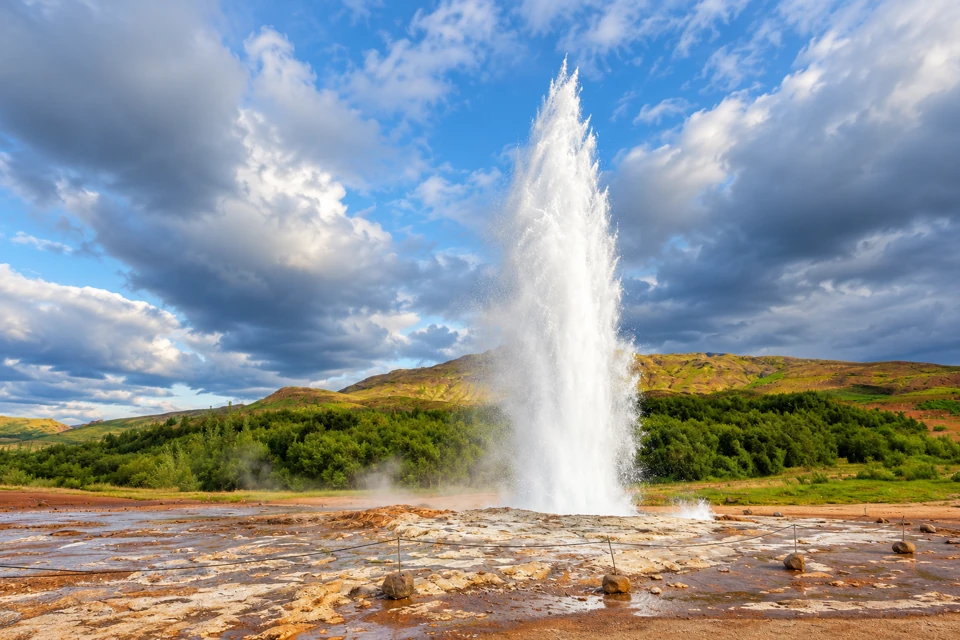
Sights cost very different amounts on top of these daily figures. A shoestring traveler can drive the Golden Circle, the popular loop of Þingvellir National Park, the Geysir geothermal area, and Gullfoss waterfall. Entry to all three is free, and parking for the three stops totals about 2,000 ISK. That adds little to a shoestring day beyond the daily budget.

A mid-range traveler who adds a Blue Lagoon Comfort ticket, from 11,990 ISK, adds that cost on top of the mid-range daily budget. A luxury traveler who books a guided Golden Circle tour at 10,000 to 15,000 ISK per person pays that on top of the daily budget, and the tour replaces the car for that day. Those figures come from separate operators and will shift with your dates and package choices.
Lodging and food
Where the nightly rate goes
Hertz puts shoestring lodging at 7,000 to 15,000 ISK per person per night, mid-range at 22,000 to 45,000 ISK, and premium hotels at higher rates. Its seasonal ranges per person are 7,000 to 18,000 ISK in summer and 5,000 to 12,000 ISK in winter. Summer demand raises the price in every tier, so a trip in a cheaper month lowers the largest cost in the budget.
Accommodation carries a government tax on top of the room’s base price. Iceland’s tax authority, Skatturinn, lists the accommodation tax as 800 kr per taxable unit for hotels, guesthouses, and other licensed lodging in classes II to IV, and 400 kr per unit for campsite and motorhome pitches. Operators collect it. A hotel room counts as one unit, a guesthouse room counts as a unit, and each bed in a dormitory-style letting can count as a unit. Campsites count each tent pitch. The page lists the amounts as current without stating an effective year, so check the final price when you book. For a shared dorm, the tax adds up per bed per night. For a couple in one hotel room, it adds 800 kr per night in total.
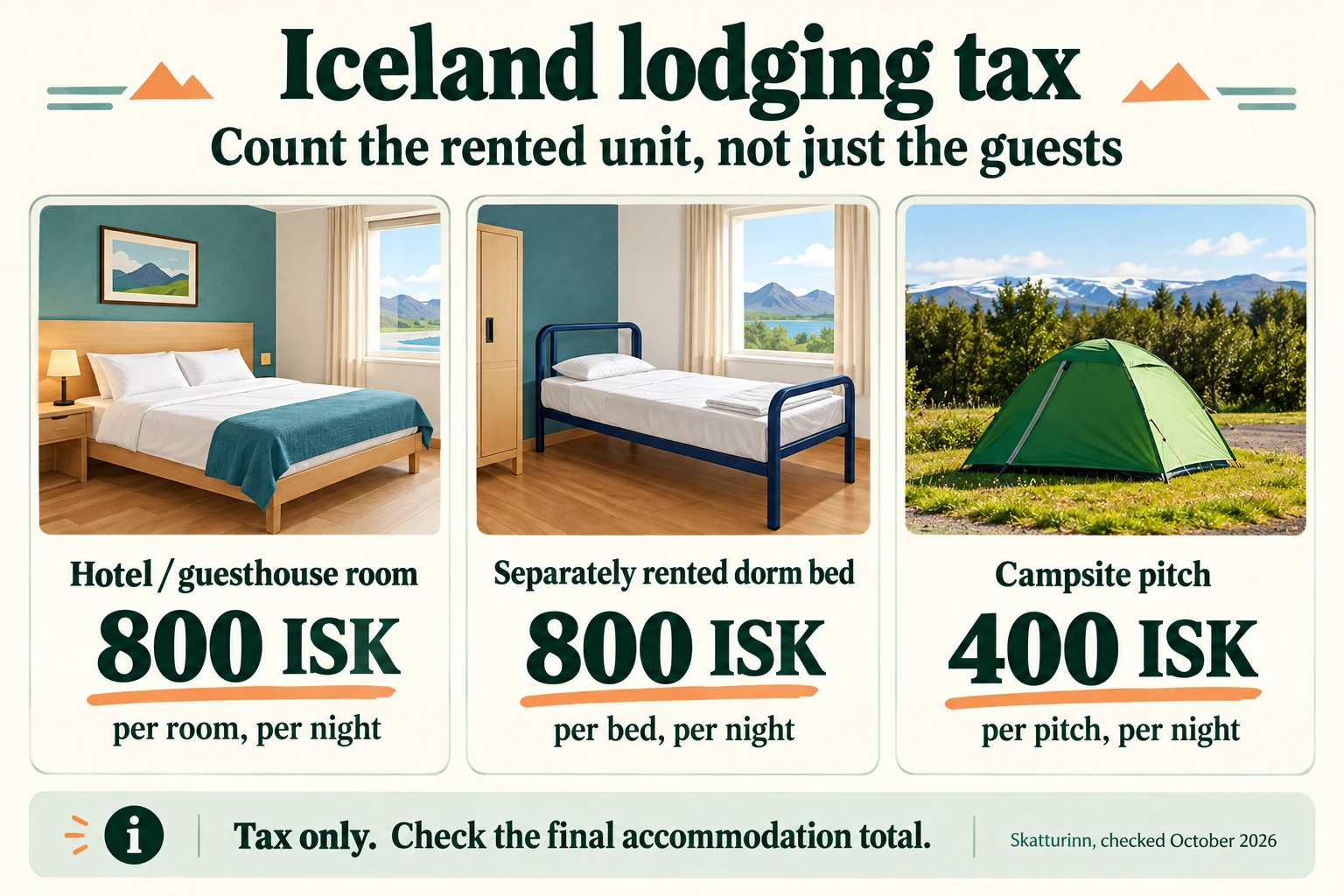
Campers and motorhome travelers pay the lower 400 kr rate per pitch. That is one reason the shoestring tier is built around campsites and small cars.
Groceries versus restaurants
Iceland’s food costs are high even by European standards. Guide to Iceland’s live study of groceries, restaurants, and bakeries puts food prices 56% above the EU average. Restaurant prices follow that pattern, and Hertz’s per-meal figures show it:
- A casual meal costs about 5,000 to 8,000 ISK.
- A sit-down restaurant meal costs 7,000 to 12,000 ISK.
- Fine dining costs 15,000 to 20,000+ ISK per meal.
- An Icelandic hot dog, the cheapest hot food at many gas stations and stands, costs about 800 to 1,200 ISK.
Cooking your own meals brings the daily food cost down to 3,000 to 5,000 ISK, according to Hertz. Eating one restaurant meal a day roughly doubles to triples that figure, and the shoestring budget is built on groceries for that reason. For a couple, the gap between self-catering and one restaurant dinner each adds up quickly over a trip.
A middle path works well for most first-time visitors: buy breakfast and picnic lunch supplies at a grocery store, then eat one restaurant dinner or hot dog stop each day. Mid-range travelers in the Hertz table are already assumed to eat out once a day.

Car rental, fuel, and tolls
Car rental and fuel
Transport is the largest cost after lodging for anyone who drives. Hertz estimates 9,000 to 14,000 ISK per person per day for a small 2WD and fuel, and 16,000 to 28,000 ISK for a medium SUV. Those are per-person shares, so two people splitting a car pay each half of the vehicle cost. Solo travelers pay the whole bill, so self-driving costs couples and groups much less per person than it costs singles.
Fuel prices move daily. On 29 October 2026, the national average for 95-octane petrol was 280.8 ISK per liter, with a range of 243.2 to 289.4 ISK per liter across brands. The cheapest diesel on that date was 299.9 ISK per liter at Costco in Kauptún, which requires a membership. Brand averages from the same index, in ISK per liter for petrol and diesel:
| Brand | Petrol | Diesel | Stations |
|---|---|---|---|
| Costco | 243.2 | 299.9 | 1 (membership required) |
| Atlantsolía | 271.2 | 325.9 | 24 |
| ÓB | 278.1 | 332.5 | 47 |
| Orkan | 278.7 | 331.7 | 73 |
| Olís | 285.9 | 338.9 | 19 |
| N1 | 286.5 | 337.9 | 81 |
The index lists the automated Atlantsolía, ÓB, and Orkan pumps as the cheap option for most visitors, because Costco has only one station, near Reykjavík. N1 has the most stations, which matters in remote areas where the network is thin.
Fuel prices were lower earlier in 2026. Iceland cut VAT on fuel from 24% to 11% from 1 May to 31 August 2026, and the standard rate returned on 1 September 2026. Any price you see quoted from the summer reflects the temporary cut. For a full Golden Circle loop, expect about 6,000 to 8,000 ISK in fuel.
Paying at the pump
Self-service pumps generally need a chip-and-PIN card. Debit cards usually work, but US chip-and-signature credit cards are often declined, according to the same Wayfarer page. If your card fails, buy a prepaid fuel card at a staffed till, for example an N1 tourist card. Check with your card issuer before departure that your card has a PIN, and carry a backup. Loyalty apps and keys typically take about 10 to 12 ISK per liter off the posted price, which helps if you drive long distances, though signing up is an extra step.
The Vaðlaheiði tunnel toll
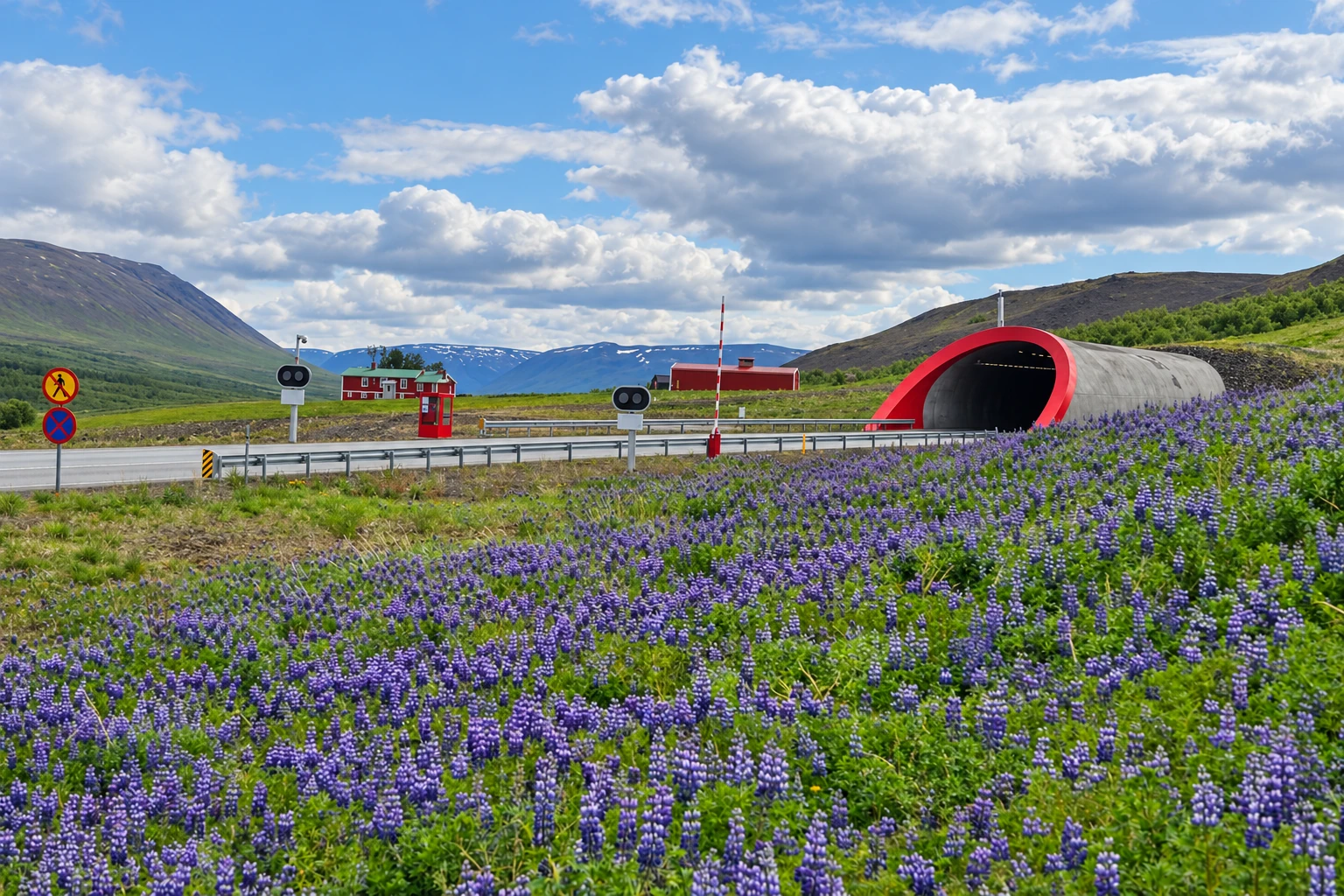
The Vaðlaheiði tunnel has no staffed booths. Tolling is fully automatic: you pay at veggjald.is or through its app, and customer service is by email only (veggjald@veggjald.is). A late-payment fee of 1,490 ISK applies if you have not paid within 24 hours of passing through. The 2025 tariff rose 6% across payment categories, and a new tariff took effect on 2 March 2026, according to the operator’s news page. Check the current amount at veggjald.is. The operator was renamed Göng og brú ohf on 1 July 2026, so a search for the old name may bring up outdated pages. Pay on the day you drive through so the late fee never applies.
Sights, parking, lagoons, and tours
Free entry, paid parking
Most of Iceland’s best-known natural sights charge no entry fee. Entry to Þingvellir, Geysir, and Gullfoss is free (page modified 2 September 2026). Geysir and Þingvellir are open 24 hours, and Gullfoss’s waterfall and paths are open 24 hours all year. Only the Gullfoss visitor center keeps fixed hours, roughly 9:30 to 18:30 in summer, according to the Golden Circle parking guide. Goðafoss, Dettifoss, Reynisfjara, Diamond Beach, national park areas, and the viewing at Seljalandsfoss are free as well.
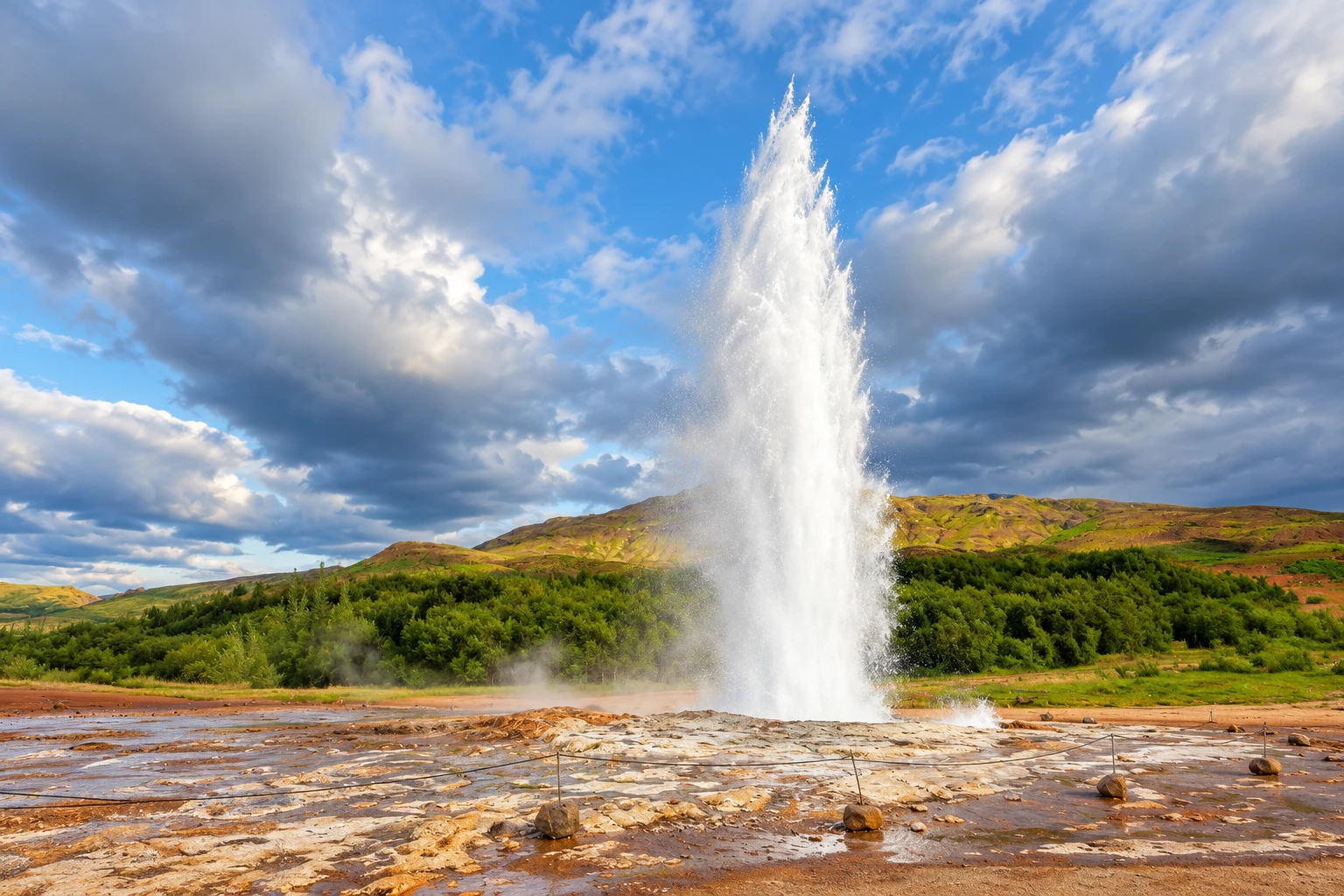
Parking is where the costs appear:
- Þingvellir: 1,000 ISK per car (up to five seats), valid for all Þingvellir lots for the day. Pay with the CheckIt app or at a machine that accepts cards.
- Geysir: 1,000 ISK per vehicle via the Parka app or a machine, with a maximum stay of 8 hours.
- Gullfoss: no entry fee and no parking fee.
- Seljalandsfoss: 800 ISK per car.
- Faxi and Brúarfoss: about 750 ISK each through the Parka app.
- Jökulsárlón glacier lagoon: a flat 1,000 ISK (around 12 September 2026).
- Kerið Crater: an entry fee on privately owned land, about 600 to 700 ISK per adult in recent years.
Parking apps such as Parka and EasyPark are the standard way to pay. Some sites use QR codes or kiosks, and fees vary by vehicle type (car, campervan, bus), as noted in this Rexby parking guide. Install an app before you leave Reykjavík. Mobile coverage and parking machines are less reliable at remote stops. The three classic Golden Circle stops come to about 2,000 ISK (around USD 14) for parking. Adding Faxi, Brúarfoss, and Kerið brings the total to roughly 4,200 ISK. At Friðheimar and the Secret Lagoon, parking is free, and you pay only for the meal or pool. The indoor exhibition at the Þingvellir Hakið visitor center has a small admission fee.
Lagoons and spas
Geothermal pools are the main paid attraction for many first-time visitors, and prices vary widely:
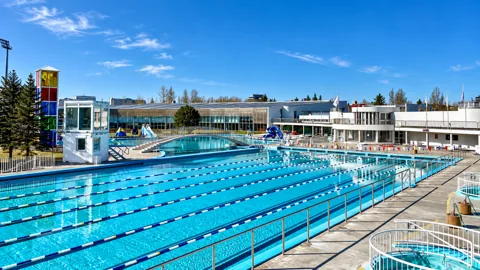
- The Blue Lagoon, on the Reykjanes Peninsula about 45 minutes from Reykjavík and near Keflavík airport, sells Comfort from 11,990 ISK, Premium from 14,990 ISK, and Signature from 18,490 ISK. Prices vary by date and package.
- The Secret Lagoon charges 4,500 ISK for adult entry.
- Sky Lagoon’s Saman package costs 9,990 ISK (around June 2026).
The Secret Lagoon costs well under half the Blue Lagoon’s cheapest ticket and sits on the Golden Circle, so it fits a self-drive day without a detour.

Tours and activities
A guided Golden Circle day tour runs roughly 80 to 150 USD per person, depending on group size and inclusions. In ISK, the cost guide lists 10,000 to 15,000 ISK for a guided Golden Circle tour against about 3,000 to 5,000 ISK for driving the three stops yourself. Tour operators handle parking fees, so those do not appear on your bill. The same cost guide notes that self-driving is cheaper than a tour when the car is split between two or more people.
Other tour prices from Iceland Spirit’s 2026 breakdown (around July 2026):
- South Coast day trip from Reykjavík: 12,000 to 18,000 ISK per person
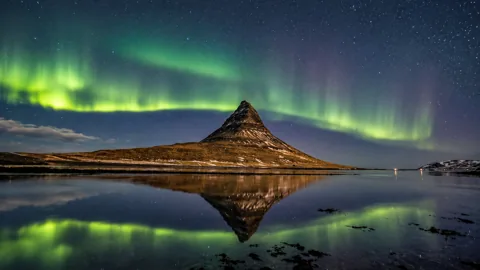
- Northern Lights bus tour: 6,000 to 12,000 ISK
- Glacier hike at Sólheimajökull: 10,000 to 15,000 ISK
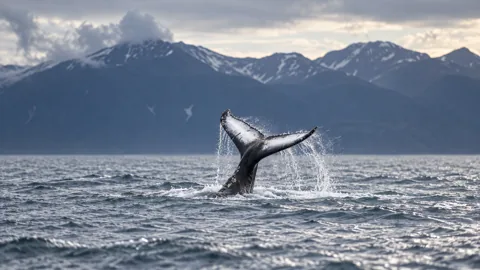
- Whale watching from Reykjavík: 12,000 to 16,000 ISK
A first trip of five days with one lagoon, one glacier hike, and one whale-watching tour adds the combined cost of those three activities to the basic budget at these prices, depending on which lagoon you pick. A tour can be the cheaper choice for a solo traveler who would otherwise pay the full cost of a car alone.
Ways to save
Choose the month carefully
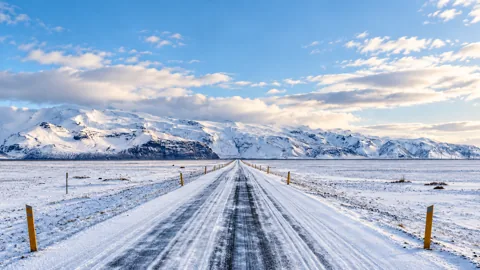
Season affects the total more than almost any choice you make on the ground. According to Guide to Iceland, April is the cheapest month, followed by January and November. December is the most expensive because of Christmas and New Year. The shoulder seasons of May to June and September to October are better priced than peak summer. Hertz’s lodging ranges show the same pattern: winter per-person nightly rates of 5,000 to 12,000 ISK against 7,000 to 18,000 ISK in summer. Winter has shorter days and harder driving conditions, which limit what you can do in a day. Weigh the savings against your itinerary.
Spread fixed costs over more days
Flights and car rental are fixed costs, so a longer trip lowers the daily average. A seven-day trip at Hertz’s mid-range total of 300,000 to 550,000 ISK and a four-day trip at 160,000 to 300,000 ISK come out at similar daily averages in Hertz’s estimates, because those totals already include activities. The effect of a longer trip shows up mostly in the flights, which the Hertz totals leave out.
Cut the three biggest lines
Groceries instead of restaurant meals save the most. Hertz puts groceries at 3,000 to 5,000 ISK a day against 7,000 to 12,000 ISK for one restaurant meal a day. Camping or dorm beds save the next most, with campsites charging a 400 kr accommodation tax per pitch versus 800 kr for hotel rooms. Fuel is third. Filling up at automated Atlantsolía, ÓB, or Orkan pumps costs less per liter than N1 or Olís, with petrol averages of 271.2, 278.1, and 278.7 ISK against 286.5 ISK at N1 on 29 October 2026. Over one tank, the gap between the cheapest automated brand and N1 adds up.
Plan stops around fees
Gullfoss costs nothing to enter or park, and Friðheimar and the Secret Lagoon waive parking if you buy a meal or pool ticket. Tours that bundle transport and entry fees can be cost-effective when you would otherwise pay for several separate fees and a rental car, a point Guide to Iceland makes in its cost page.
Claim the VAT refund on goods
Because prices include 24% VAT, visitors who live abroad can get a refund on some shopping. Skatturinn says tourists living abroad can get part of the VAT refunded on goods, with a minimum purchase of 12,000 kr including VAT. Several items can count together on one receipt. Skatturinn does not administer the refund itself and links to Isavia’s Keflavík airport page. The refund covers physical goods taken out of the country, roughly 90 USD at the 12,000 ISK threshold. It does not cover services such as tours or lodging, so it matters for wool sweaters and similar souvenirs, not for the largest items in your budget. Keep the receipts and the goods in your carry-on or checked bag for the refund process at the airport.

Key Takeaways
- Budget about 45,000 to 85,000 ISK per person per day as a mid-range traveler, less as a shoestring traveler, and more for luxury, before sights. These Hertz estimates from February 2026 exclude flights, and Guide to Iceland’s overall average is 100 to 200 USD per person per day.
- Cook your own meals. Groceries cost 3,000 to 5,000 ISK a day, while one restaurant meal a day costs 7,000 to 12,000 ISK.
- Plan the Golden Circle as a free-entry day with about 2,000 ISK in parking. Þingvellir and Geysir charge 1,000 ISK per car each, Gullfoss charges nothing, and a guided version costs 10,000 to 15,000 ISK per person.
- Travel in April, January, or November, and avoid December. The shoulder seasons of May to June and September to October are better priced than summer.
- Bring a chip-and-PIN card, pay the Vaðlaheiði toll within 24 hours, and keep receipts of 12,000 ISK or more for goods. Petrol was about 281 ISK per liter on 29 October 2026. The late toll fee is 1,490 ISK.