Getting Around Norway
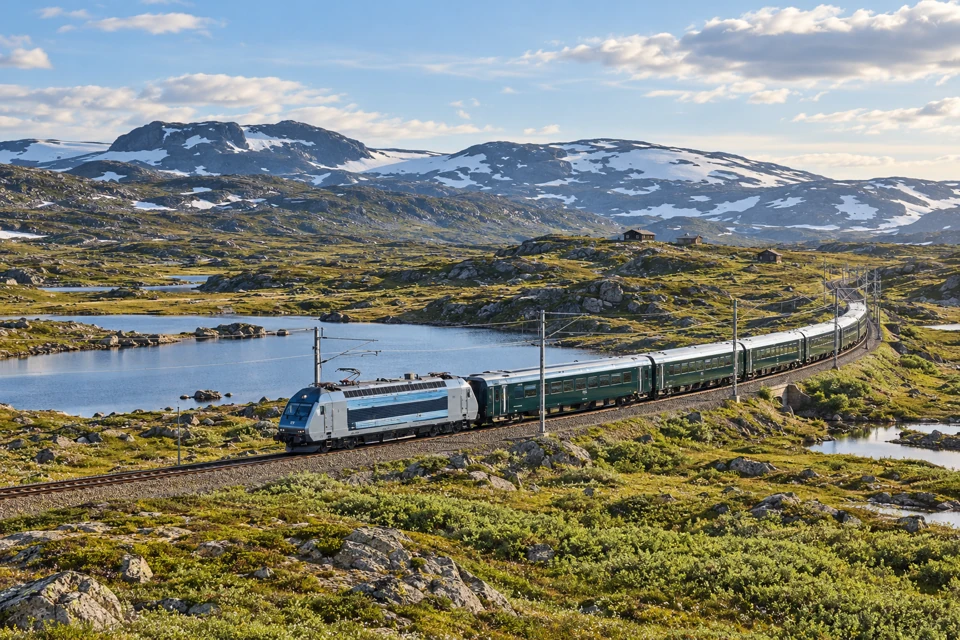
Norway has no single transport pass that covers everything. Travelers combine trains, buses, domestic flights, car ferries, and fjord boats, and they rent a car where the roads serve the route better. For most long trips, the choice comes down to rail or air. In fjord country, where roads cross water by ferry, a car or a mix of train and boat usually works best.
Each section below matches a mode of transport to the trips it suits, with fares and journey times, and explains how to book it. Operators publish current fares and timetables, so each section links to the operator that holds them.
Which mode fits which trip
Rail suits the Oslo to Bergen run if the scenery matters more than the clock, and air suits it if time matters more. Boats and ferries link the western fjords, and Lofoten requires a flight, ferry or express boat for the last leg. The table summarizes typical figures.
| Trip | Best fit | Typical time | Typical cost |
|---|---|---|---|
| Oslo Airport to Oslo city | Flytoget (fastest) or Vy regional train (cheaper) | About 19 min by Flytoget; about 23 min by Vy | Flytoget NOK 276; Vy NOK 124 (2026) |
| Oslo to Bergen | Train for scenery, flight for speed | Train about 6.5 hours; flight about 55 minutes | Train from NOK 199 booked well ahead; flight NOK 410 to 1,600 |
| Bergen to Flåm | Express boat, or train | Boat 5.5 hours; train 2 h 50 min | Boat from NOK 1,295 (April to October); train about USD 90 |
| Sandvika to Bergen | Train (faster) or bus | Train 6 h 21 min; bus 9 h 18 min | Train NOK 800 to 1,200; bus NOK 750 to 1,200 |
| Mainland to Lofoten | Fly to Bodø, then Widerøe, ferry or express boat | Network crossings run 15 to 90 min | Car and driver on Bodø–Moskenes about NOK 834 (2026) |
| E39 fjord road by car | Rental car plus car ferries | Short crossings 15 to 25 min | Car on a short crossing NOK 60 to 90 |
Airport to Oslo city
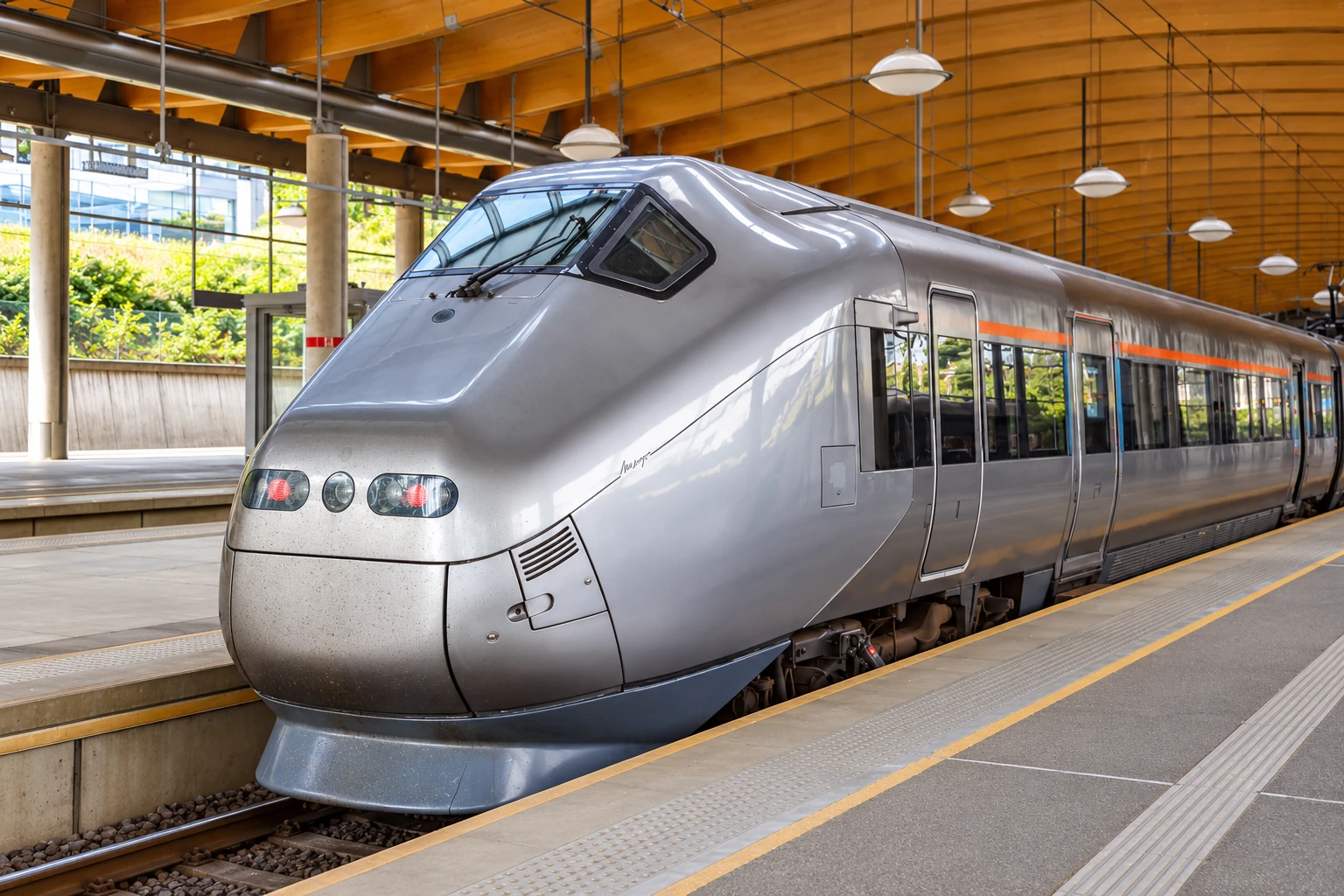
Oslo Airport sits outside the city, and two trains cover the trip. Flytoget takes about 19 minutes to Oslo S, the central station. A 2026 airport guide lists the single adult standard fare at NOK 276, with departures about every 10 minutes through the day, roughly 05:30 to 00:30. Seats are reserved, and each seat has free Wi-Fi and power. You need no advance booking; buy at the terminal machines, at the Flytoget desk or in the app. Children under 16 travel free with an adult, and youth aged 16 to 20, students and over-67s pay half price, which an airport transfer guide lists as NOK 134.
The Vy regional train (line L12) takes about 23 minutes to Oslo S and runs every 10 to 20 minutes depending on the hour. A 2026 comparison puts the single fare at NOK 124, and seating is open rather than reserved. Buy in the Vy app, on the website or at machines. The app is slightly cheaper than the machine. Vy accepts Ruter passes when you add a zone 4V purchase.
That zone detail matters if you already hold a city ticket. The airport lies in zone 4V, outside the standard zones of Ruter, Oslo’s local transit authority, so a regular Ruter city ticket does not cover the airport leg. For a solo traveler the fare gap between the two trains buys only about four minutes. Flytoget’s reserved seats and frequent departures justify the premium mainly for travelers with heavy luggage or a tight connection.
Long-distance trains
Vy, the Norwegian State Railways (formerly NSB), runs the main routes, including Oslo to Bergen, Trondheim and Oslo to Gothenburg. The Bergen Line from Oslo to Bergen takes about 6.5 to 7.5 hours, depending on the day or night train, and covers 471.25 km, according to Vy. The timetable runs from a first departure at 08:25 to a last at 15:43, so a late start leaves no same-day option.
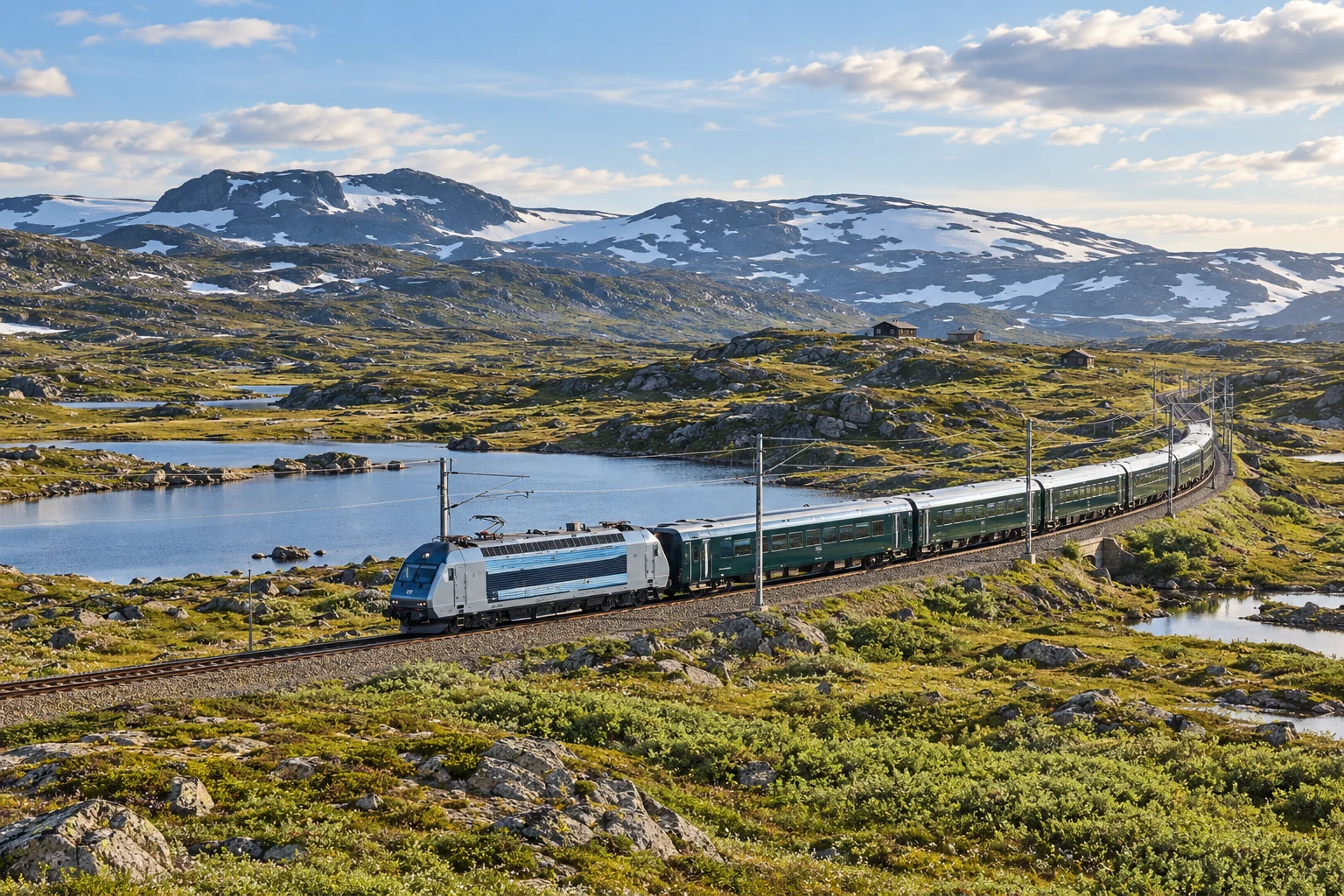
Fares depend on class and how early you buy. A rail reseller quotes NOK 199 when booked well in advance, and the same reseller lists one-way fares from around USD 110. Weekends and public holidays cost more. Tickets go on sale 90 days before departure, and the reseller recommends booking at least 30 days ahead, especially in summer, because the cheapest fares go first. You can buy through the Vy website and app, at machines, or in person at the Oslo S and Bergen stations.
Several shorter rail legs serve the fjord region, with fares listed by one rail listing in USD:
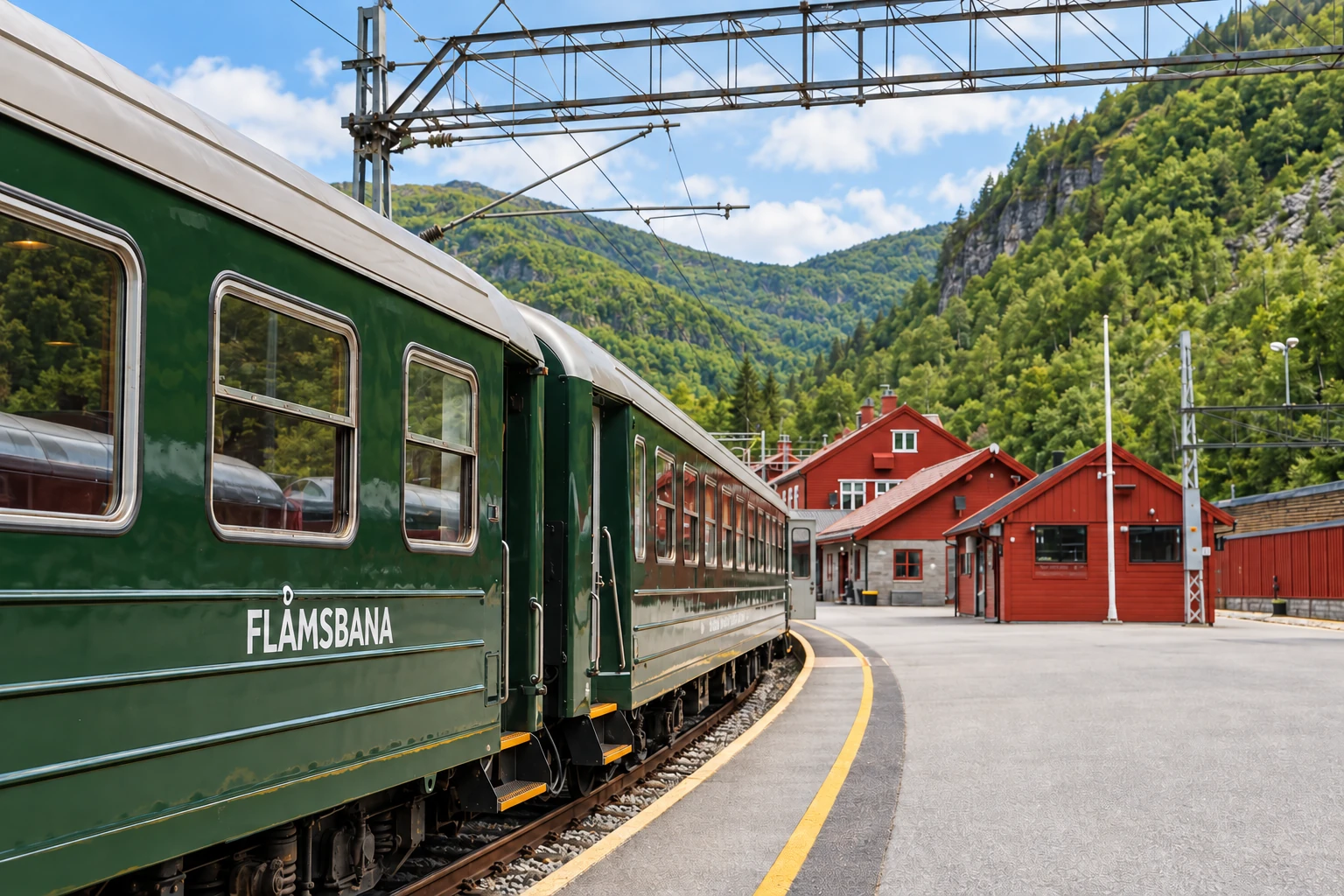
- Oslo to Flåm covers 226 km in 5 h 48 min for about USD 100.
- Bergen to Flåm covers 122 km in 2 h 50 min for about USD 90.
- Myrdal to Flåm, the steep branch line, covers 13 km in 41 minutes for about USD 65.
Norway in a Nutshell strings these pieces together. It is a self-guided tour that combines the Bergen Line, the Flåm Railway, a fjord cruise and a bus, and it can start in Oslo or Bergen. Travelers book the segments separately or as a package through tour operators or a rail reseller. Tickets to Gothenburg, Åre and Östersund are sold by Vy, per Entur’s FAQ.
Buses and local tickets
Intercity buses cost about the same as the train and take much longer. On Sandvika to Bergen, a route estimate lists a Vy Buss service once daily at NOK 750 to 1,200 and 9 hours 18 minutes. The train runs about every four hours at NOK 800 to 1,200 and takes 6 hours 21 minutes. Choose the bus only when its single departure fits your schedule or the train is sold out.

For local transport, Entur is the main ticket channel. Entur is a state-owned technology company that runs shared sales and ticketing for train operators and for bus, rail and boat operators in counties that want it, according to its company page. The Entur app and entur.no sell single tickets for bus, light rail, train and tram across Norway, with a growing number of commercial bus routes included, and Entur sells at no price markup. Period tickets are limited to certain counties, so a weekly pass in one region will not exist in another.
Regional operators confirm the pattern. In Agder, single tickets for all local bus departures have been sold in the app since 1 June 2023. In Vestfold, single and period tickets for local buses are in the app. The express bus network NOR-WAY Bussekspress and the bus and fast-boat operator Svipper also sell through Entur. Svipper purchases made on entur.no arrive as a PDF by email.
Domestic flights
Flying wins on long distances and on reaching the north and the west coast, where road and rail routes are slow. Oslo Gardermoen to Bergen takes about 55 minutes in the air, and a route estimate puts fares at NOK 410 to 1,600.
Widerøe is a regional airline based in Bergen, Bodø, Oslo, Sandefjord and Tromsø, and its fleet is mostly Dash 8 turboprops. It connects much of western and northern Norway through short-runway airports. SAS is strongest on busy city pairs, according to a domestic flights overview. Competition between Norwegian and SAS on the busy trunk routes keeps fares in check, while thinner routes served only by Widerøe usually cost more, as an expat guide explains.
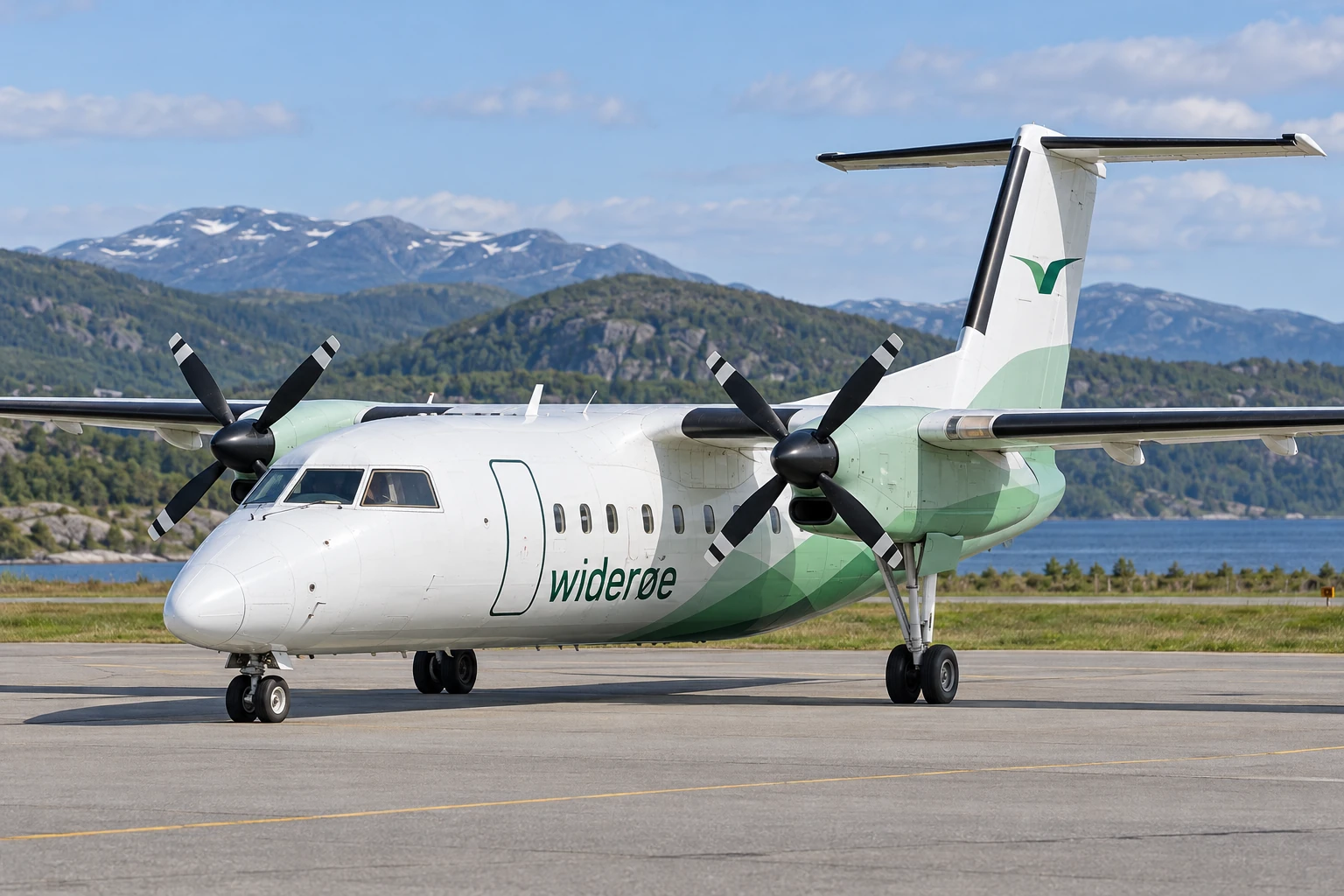
A typical route to Lofoten is a flight on SAS or Norwegian to Bodø or Tromsø. Bodø is reachable from Oslo or Trondheim. From Bodø you continue to Lofoten by Widerøe, ferry or express boat. Some through-ticketed passengers can transfer at Oslo Airport, mainly with SAS and Norwegian, and eligibility depends on the bag tags and the ticket.
Booking and baggage on combined tickets
Trips combining Norwegian and Widerøe can be booked in a single booking on norwegian.com or wideroe.no. Widerøe also lists combinations with some SAS and Loganair routes. Other combinations have to go through the partner or a travel agent.
Baggage follows the airline that starts the journey. A trip that starts with Norwegian follows Norwegian’s rules, and a trip that starts elsewhere follows that airline’s rules, with the allowances shown on the booking confirmation. Check in the same way: directly with Norwegian for Norwegian-first trips, with Widerøe for Widerøe-first trips, and by the partner’s deadlines otherwise.
Norwegian’s cheapest fare, LowFare+, includes one checked bag of 23 kg, and Flex includes two bags of 23 kg each. Widerøe’s equivalent cheaper fare, Smart Tickets, carries the same 1 × 23 kg allowance. Hand baggage on LowFare+ and Flex is one underseat bag (40 × 30 × 15 cm) and one overhead cabin bag (55 × 40 × 20 cm). Infants get 5 kg checked, plus a stroller and a car seat, on all ticket types. On a Widerøe-first Flex trip, Norwegian’s page says to expect one checked bag on most flights and to check the ticket, while Widerøe’s page gives 2 × 23 kg only for bookings made on wideroe.no in the combinations it lists.
Most extras on combined tickets, such as added baggage, cannot be bought online. They must be bought at the airport from the first operating carrier. Pets are not allowed on connecting flights with partners. If a delay or cancellation is the airline’s responsibility, the airline must arrange rebooking and a hotel if the wait is overnight or longer. It must also pay reasonable meal and drink costs if none are provided on site.
Car ferries on Norwegian roads
On many routes the road network includes car ferries, and the ferry is legally part of the road. According to a Norway sailing guide, most crossings take no reservation. You queue at the quay in arrival order. There is no ticket office, because a camera reads the vehicle at the ramp and the charge arrives afterward by length through AutoPASS, the national toll system.
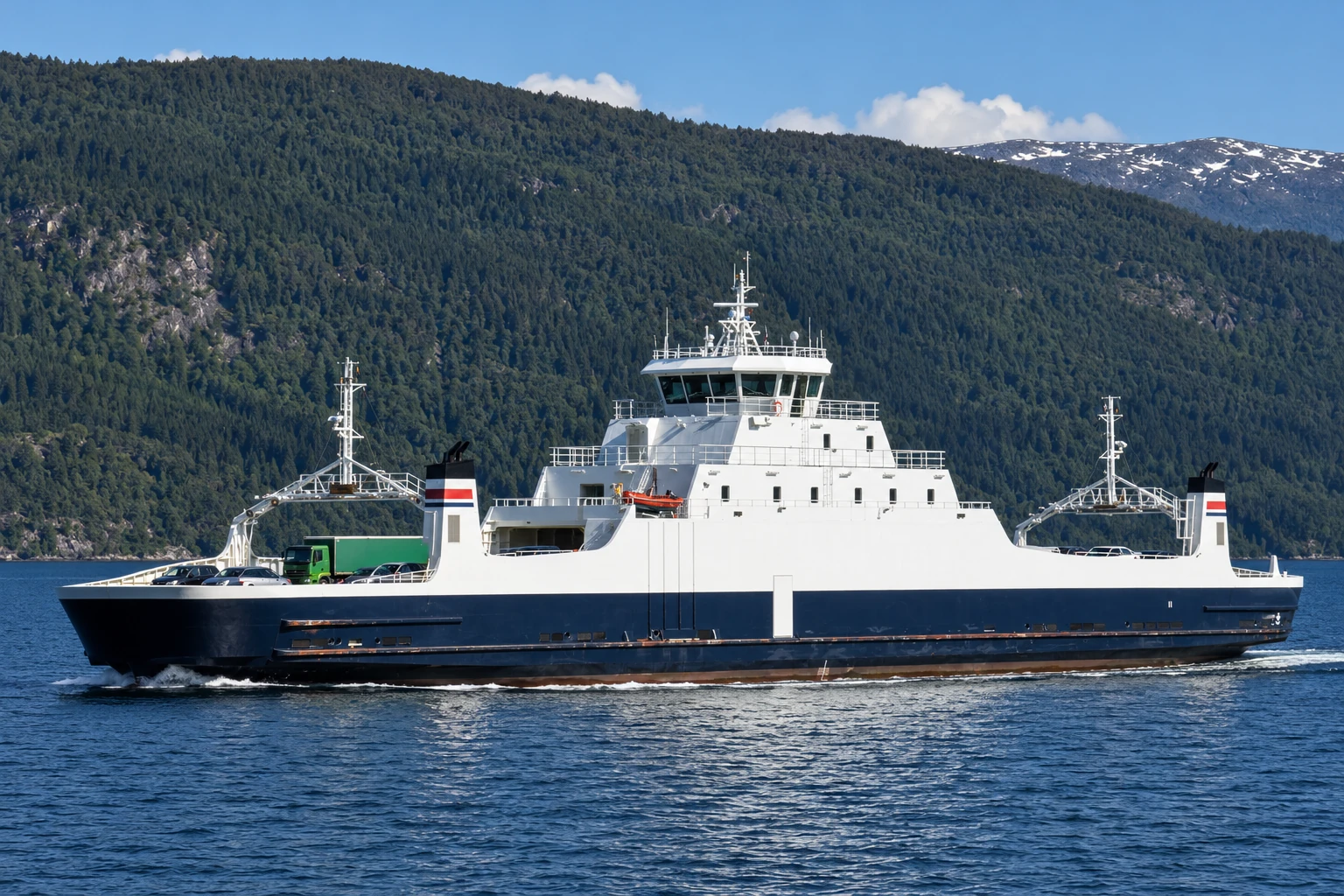
Visit Norway’s 2026 transport guide gives crossing times from 15 to 90 minutes. AutoPASS gives 40 to 50% off each crossing if you hold a tag. Without a tag the camera reads the plate and bills full price plus a small fee. Rental cars are billed through the rental company.
What a crossing costs
Ferries are priced by vehicle length, not weight. With AutoPASS or easygo, the vehicle fare includes the driver and passengers, while some routes charge passengers separately otherwise. A 2026 price guide lists these bands:
- Car, 0 to 6 m: NOK 60 to 90 on a short crossing, NOK 100 to 176 on a medium one, NOK 200 to 350 on a long one.
- Van or SUV, 6 to 8 m: NOK 120 to 180 short, NOK 200 to 350 medium, NOK 400 to 650 long.
- Campervan, 8 to 10 m: NOK 180 to 270 short, NOK 300 to 520 medium, NOK 600 to 950 long.
- Motorcycle: NOK 40 to 65 short, NOK 70 to 120 medium, NOK 140 to 230 long.
The same guide gives example routes on the main roads:
- Halhjem to Sandvikvåg (E39) takes 25 minutes and costs NOK 176 with Fjord1.
- Stavanger to Tau (E39) takes 40 minutes and costs NOK 100 to 140 with Norled.
- Molde to Vestnes (Rv64) takes 35 minutes and costs NOK 145 with Fjord1.
- Bognes to Skarberget (E6) takes 25 minutes and costs NOK 145 with Torghatten.
- Festøya to Solavågen (E39) takes 25 minutes and costs NOK 100 to 140 with Fjord1.
A travel guide to Norwegian ferries reports about NOK 81 for a car under 6 m on the short Lavik to Oppedal crossing, passengers included, and about NOK 57 for electric cars and NOK 33 for motorbikes. The same guide says motorhomes cost roughly double a car at 6 to 8 m. Trailers pay the car fare × 2 up to 10 m and × 3 above 10 m.
Foot passengers travel free on most crossings, with Gryllefjord to Andenes an exception at NOK 100. Sightseeing routes such as Geiranger to Hellesylt charge foot passengers NOK 130 to 170, per Visit Norway.
When to reserve
Most public car ferries on the E39 and county roads need no advance booking. The exception is Bodø to Moskenes, the crossing to Lofoten, which requires advance booking from June to August. A car and driver cost about NOK 834 with the reservation in 2026. A few other long northern crossings also benefit from booking in peak season. Fjord1’s booking site opens 90 days ahead.
Payment varies by operator. On Fjord1 lines in the fjord region, you can pay by card at a kiosk or with the crew. On Geiranger to Hellesylt and Kaupanger to Gudvangen, you can pay at the quay or on the website by card.
Fjord boats and sightseeing cruises
Express boats are passenger boats, separate from car ferries, and they are the main way to see Sognefjord without a car. Norled says it is one of the country’s largest ferry and express boat companies, with 80 vessels, from Oslofjorden to Troms. Online booking at booking.norled.no covers three express routes: Bergen to Sogn to Flåm and back, Bergen to Selje and back, and Hardangerfjorden (summer only).
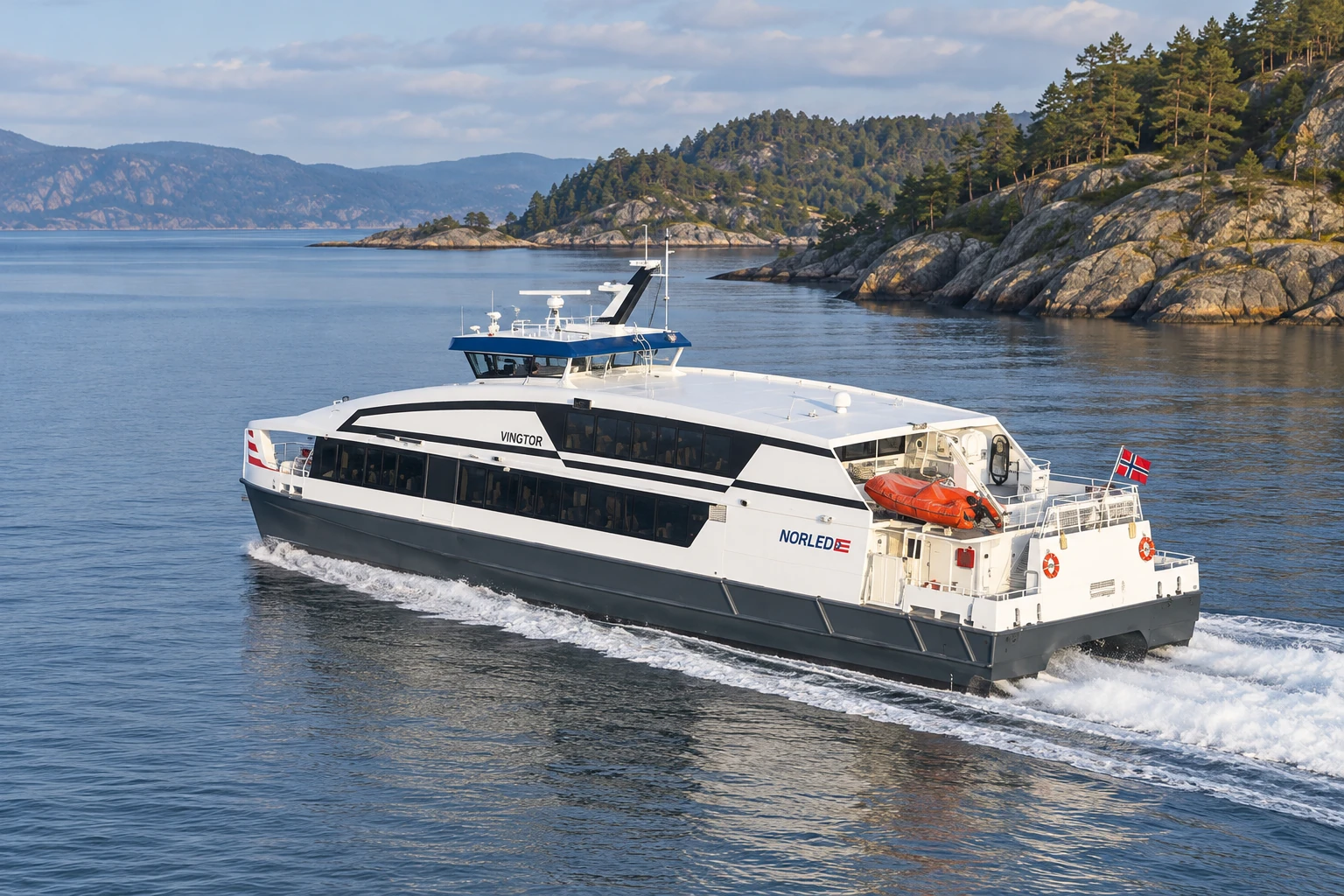
The Sognefjord express from Bergen to Flåm takes 5.5 hours one way, runs April to October and costs from NOK 1,295. The Bergen to Nordeide Sognefjord cruise takes about 6.5 hours, runs April to October and starts at NOK 990. Rail covers Bergen to Flåm in 2 h 50 min, so the boat is a choice for the trip itself rather than for saving time.
For shorter outings, Visit Norway’s fjord cruise guide says a working car ferry used as a sightseeing trip takes 20 minutes to 3.5 hours and costs NOK 80 to 630. A purpose-built day boat takes 1 to 5 hours and costs NOK 400 to 1,400. Examples include the Rosendal express on Hardangerfjord at NOK 838 return, the Geiranger silent cruise from NOK 610, and Flåm to Gudvangen at NOK 520 to 665 one way. Operator-adjacent pages quote the Geiranger ferry from NOK 415 per person plus NOK 565 per car. Most fjord sightseeing runs April to October.
Renting a car
A car pays off along the E39 fjord road and in regions where trains and buses are sparse, because ferries and tolls are billed automatically. The cost is mostly in the age rules and in ferry fares added to the rental price.
Age, license and documents
The common minimum age is 19, varying by vehicle type, per a 2026 driving guide and a rental guide. Many companies set 21 or 23, and a rental age guide says premium or larger vehicles often require 25. Most firms ask for a license held at least one year, and some cite two. A Norwegian rental company lists the documents as a valid license, ID and a valid credit or debit card. An international driving permit is not mandatory for EU/EEA or Latin-alphabet licenses, according to an expat guide, but is strongly advised for non-Latin scripts. Rental cars may face restrictions on luxury categories and on travel to certain countries because of insurance rules.
Surcharges, tolls and road rules
Drivers under 25 pay a surcharge of about NOK 195 per day at Avis and Budget, as of 2025. One company, Oslo Bilutleie, accepts 18-year-olds for NOK 100 per day, capped at NOK 1,500, and that is its own policy.
Tolls are collected automatically through AutoPASS number-plate recognition and billed through the rental company. RAC says drivers also pay a charge to drive in the main cities, including Oslo, Bergen and Stavanger. A rental guide says the same system bills ferry charges. Children under 135 cm must use approved child seats. Winter tires are legally required from November to around Easter, and rental companies fit them automatically. The blood-alcohol limit is 0.02% as of 2025. A rental guide lists a national speed limit of 80 km/h, so follow the posted signs on each road.
Ride hailing and taxis
Ride hailing in Norway runs through the taxi licensing system. Uber’s driver requirements for Norway show that drivers need a passenger-carrying license (kjøreseddel), which requires being aged 20 to 74, holding a valid license for two consecutive years, a police background check and a doctor’s certificate no more than three months old. The vehicle needs a taxi operating license (drosjeløyve), commercial taxi insurance, a taximeter, the license number marked on both sides and a yearly EU inspection. The national road authority, Statens vegvesen, handles the taxi driver side of the licensing.
For a visitor, that means a ride-hailing car is a licensed taxi with a meter, and the fare is displayed by the app. The in-app price before you confirm is the figure to rely on, because rates differ by city and time of day. Within Oslo, ride hailing and taxis make sense for late-night trips and for destinations the Ruter network does not reach quickly, while the app-based Entur tickets cover everyday city trips.
Booking and payment
Most of Norway’s transport can be booked on a phone. Entur sales open at least 90 days before departure, and station machines sell tickets 30 days ahead, per Entur’s FAQ. Entur accepts Vipps, Visa, Mastercard, Amex, reisekort and verdikort, needs no account, and recommends one for frequent travelers. Reisekort is a stored-value travel card. If a ticket is not yet active, you can refund it in the app within 4 hours of purchase under Billetter, then Avbestill billett. Refund rules vary by operator. Entur customer service is at 61 27 90 88, with staffed service at Bergen, Stavanger, Trondheim, Oslo S and Gardermoen stations.
Interrail passes are not sold in the Entur app. Seat reservations for Interrail travelers are made by phone, at a staffed station or online, with a booking fee of NOK 195 per Interrail ticket bought in Norway.
The other modes book directly with the operator: Flytoget at machines, the desk or the app; Vy in its app, website or machines; flights on norwegian.com or wideroe.no; express boats at booking.norled.no; and rental cars with the rental company. Car ferries on most routes need only a spot in the queue.
Trip-by-trip summary
- Match the mode to the corridor: Take the train for Oslo to Bergen scenery at about 6.5 hours, fly for the 55-minute alternative, and use boats and ferries for the fjords.
- Book the fixed-capacity pieces early: Bergen Line tickets open 90 days ahead and the cheapest fares, from NOK 199, go first. Bodø to Moskenes needs a reservation from June to August.
- Pick the airport train by luggage and time: Flytoget costs NOK 276 for about 19 minutes with reserved seats, and Vy costs NOK 124 for about 23 minutes. A Ruter city ticket does not cover zone 4V.
- Check the first airline’s baggage rules: On combined Norwegian and Widerøe tickets, the airline that starts the trip sets the allowance, and most extras must be bought at the airport.
- Budget for age rules and ferry fares when driving: Under-25 drivers pay about NOK 195 per day at Avis and Budget. A car on a short ferry crossing costs NOK 60 to 90, and tolls are billed through the rental company.