Is Tap Water Safe to Drink in Spain
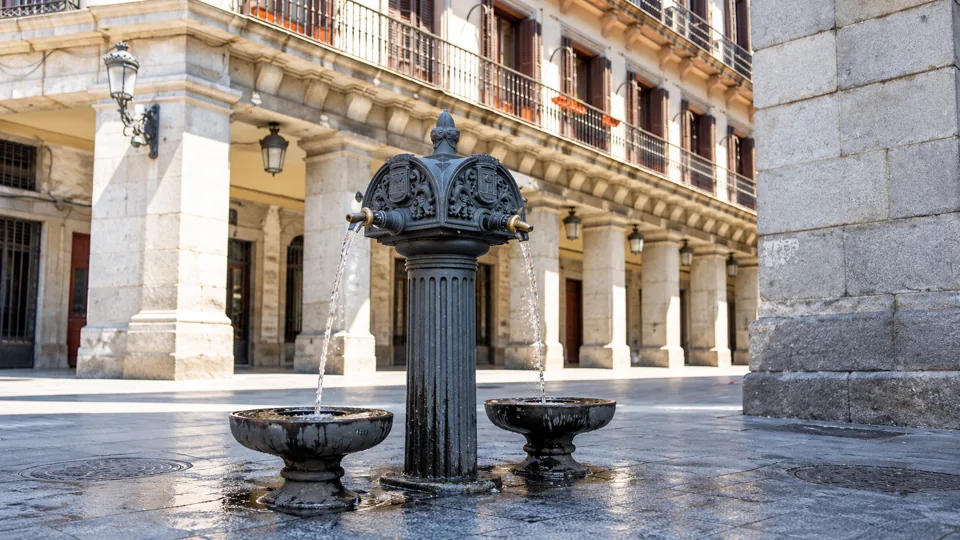
For most travelers, tap water in Spain is safe to drink. Municipal supplies must meet national quality limits set by decree, and the regional data that exists shows most samples meet them. Three caveats apply. Published data has gaps, several islands have a strong chlorine or mineral taste, and small private supplies fall outside national monitoring.
Spain calls water that meets the legal criteria "apta para el consumo," meaning fit for human consumption. Taste is a separate matter: water can meet the legal standard and still taste of chlorine or minerals, the difference travelers notice first.
How Spain regulates tap water
The main rule is Real Decreto 3/2023, which sets the technical and health criteria for drinking water quality, testing, and supply. A royal decree is a national regulation in Spain, and this one applies across the country. It defines water as safe when it has no microorganisms, parasites, or substances at levels that could harm health, and when it meets the limits for each measured parameter. The decree also sets which tests operators run and how often they report results. The consolidated text on the BOE site shows the current wording of the decree, including later amendments.
The standard applies at the point where the water reaches the user, which is the tap. The decree notes that the building’s own pipes and storage tanks can strongly affect the quality of water at the tap. Old plumbing can change the water after it leaves the municipal network. Water that sits for a long time in a rooftop tank can change it too, as can mixed plumbing materials. When a limit is breached, operators must investigate. Where a supply poses a health danger, the operator must stop it or restrict its use. In hospitals, care homes, nurseries, and schools, the building owner must act to reduce the risk of a breach.
One coverage gap affects rural travelers. The national reporting excludes systems that supply fewer than 10 cubic meters per day, so small private supplies in villages or remote rentals fall outside the national framework. Ask the host where the water comes from and whether it is tested. If the answer is a private well or a small local spring, treat it as unmonitored unless the host can show recent results.
What the national data shows
The Ministry of Health publishes annual reports on drinking water through the Ministry’s FAQ on drinking water, which also explains how residents can look up their own supply. The most recent national report is for 2024. Its supply-zone and sampling tables show where testing happens most, with Castilla y León, Cataluña, the Comunidad Valenciana, and Andalucía accounting for the largest shares of supply zones. The report also records 81,349 determinations as unfit for consumption, and it lists several parameters that caused unfit water at some point. Check the Ministry report for the national compliance rate before quoting a national percentage.
The Madrid city service publishes its own results. The Comunidad de Madrid’s 2024 report, published in June 2025, shows 95.66% of bulletins fit for consumption, 0.32% unfit, and 4.02% unrated. The highest share of unfit water in that report appeared in distribution networks, at 0.12%. Use the 2024 figure. The Madrid 2023 report states 98.05% fit for consumption, while another section puts about 3.93% of bulletins at one or more non-compliances, so do not quote its headline figure.
Outside Madrid, the picture is thin. Castilla y León publishes a regional report, but its years and scope are unclear, so do not quote its figures as the current regional rate. Aragón publishes an annual drinking-water report covering 2023 and 2024 on the regional government’s drinking-water page, so check that page for the figures. Andalucía, Cataluña, the Comunidad Valenciana, and the Balearic and Canary Islands have no comparable regional compliance series. Travelers should read the national and regional totals as a general indication, not a verdict on a specific town.
Tap water in the Canary Islands
The Canary Islands rely on desalinated seawater to a degree that shapes the taste of tap water. Lanzarote and Fuerteventura have very little natural freshwater, so public supply depends heavily on desalination plants. Desalinated water is remineralized after treatment, which restores minerals that the process removes, and that mineral balance is part of its distinct taste. Chlorine is the other main factor. Water on these islands is chlorinated, and many visitors notice a pool-like flavor.
A dietitian’s commentary in Atlántico Hoy says public network water in the archipelago meets state and European rules, though it is an opinion piece rather than the regulation itself. The same commentary notes that older networks and private storage tanks can cause taste problems or excess chlorine in some municipalities, though it does not name the towns. A news report on desalination describes the monitoring system and the desalination role, but it puts staffing above 200 people across 140 control stations. The figures carry no date, so check current numbers with the regional health authority.
On Fuerteventura, the water is described as safe but high in chlorine, which the page calls "a large amount." The page gives no measurement, and a commercial water-filter guide for the Canaries says all tap water on the islands is drinkable except where local authorities advise otherwise, though it cites no study.
Hardness is less clear. A cleaning-products blog says Canary water is often hard or very hard, especially where desalination or groundwater supplies the network. It gives no measurements. An aggregator page for Santa Cruz de Tenerife gives hardness and free chlorine readings, but it does not name the laboratory or the sampling dates. Use that page as a rough guide to Santa Cruz only. Visitors who stay in a rental with a kettle that scales quickly should expect hard water, and they can confirm the local supply with the municipal utility.
Balearic Islands data gaps
Mallorca, Menorca, Ibiza, and Formentera have no published island-level drinking-water data. There is no island-level compliance rate, no taste or hardness data, and no record of whether each island relies on desalination or groundwater. A traveler can assume the water meets the national decree, because the decree applies everywhere in Spain. The taste and local conditions remain unknown, so ask the host or the municipal utility on the island where you stay. Island holiday rentals with their own wells or storage tanks deserve the same questions as rural properties.
Mainland taste and hardness
On the mainland, the regional data does not show taste or hardness by region in any usable form. Taste comes from the local water chemistry and from treatment, so two towns with the same legal compliance can taste different. Water that is hard, high in minerals, or heavily chlorinated will taste different even when it is legally fit. For a traveler who dislikes the taste, the practical response is the same across the country: check the taste at the first tap, compare it with the water at the next place, and use a filter or bottled water if the taste bothers you.
Some measures work regardless of the region. Letting tap water stand in an open jug for a while reduces the chlorine taste, according to a news explainer. That tip is informal, and no test measures how well it works. Jug, tap-mounted, and countertop filters remove chlorine and sediment, though their effect on other substances varies by model.
When bottled water makes sense
Bottled water is a choice for taste, convenience, and specific health needs, and it is not safer by default. The Inesalud health news service notes that bottled water does not necessarily carry a lower contaminant risk than tap water. Spain’s rules recognize several bottled categories: natural mineral water, spring water, prepared water, and bottled public-supply water. Natural mineral and spring waters fall under Real Decreto 1798/2010, and prepared waters fall under Real Decreto 1799/2010. Natural mineral water must be microbiologically sound, and an operator found with contaminated water must stop activity until the cause is removed.
Cost is the main reason to limit bottled water to specific cases. The consumer organization OCU reports an average of €0.21/L for bottled mineral water, citing the Ministry of Agriculture, but the date of that figure is not shown. The same consumer group gives an average of €1.64/m³ for tap water, and the year is not stated. The two figures come from different dates and methods, so they show the scale of the difference rather than an exact comparison. The OCU tap-water report is the place to check current figures.
Taste is the first case where bottled water makes sense. If tap water tastes poor at the rental or the restaurant, a bottle or a filter solves the problem for the length of the trip. The second case covers specific health situations. Inesalud says highly mineralized water can contain high sodium, which matters for people managing hypertension, and it advises checking the label.
Natural mineral waters with fluoride above 1.5 mg/L must carry a warning that they are not suitable for regular consumption by infants and young children, according to the wording OCU quotes from the label. Parents should ask a pediatrician before using tap water to prepare infant formula in Spain. The same advice applies to people with weakened immune systems.
Boil-water notices and confirmed local contamination are the hardest cases. During a notice, follow the instructions from the town hall or the utility, and buy bottled water from a shop until the notice is lifted.
Complaints and billing disputes
If the water looks cloudy, smells strange, or the host reports a problem, the national FAQ gives a clear order of contact. Start by calling the company that manages the supply. Its number is on the water bill. The town hall (Ayuntamiento) is the next point of contact, and the regional or provincial health authority handles health advice. For the water quality in a specific town, the SINAC citizen portal at sinac.sanidad.gob.es lets anyone select the community, province, municipality, and supply zone without registering. Some towns have several supply zones, so check the zone that serves the building.
Madrid’s city service says that when water is rated "no apta para el consumo," residents must not drink it or use it for cooking, and interior-installation owners should check their plumbing. Lab testing is available through public and private labs. The Ministry keeps a census of control labs, and laboratories must have their methods accredited under UNE-EN ISO/IEC 17025. Where no accredited method exists, the method must be validated and documented. Ask the lab for its price before the sample is taken.
Billing disputes follow a separate path. OCU says the first step is to contact the Ayuntamiento or the company that holds the concession, and the Servicio de Aguas of the Ayuntamiento is the body to escalate to. Zaragoza’s billing procedure for atypical consumption caps refunds at the year before the billing in which the claim is filed, and that rule applies only in Zaragoza. Visitors who receive an unexpected water bill for a rental should raise it with the host first, since many holiday rentals pass the bill through to the guest.
What to do by situation
- Drink tap water on the mainland and most islands: Spain’s national decree sets the standard, and the data for Madrid shows 95.66% of 2024 bulletins fit for consumption.
- Ask the host about the supply before drinking water from a small rural or private system: Systems supplying fewer than 10 cubic meters per day sit outside the national monitoring.
- Expect chlorine and mineral taste in the Canary Islands: Desalinated water is chlorinated and remineralized, and hardness varies by town.
- Check the Balearic Islands water supply with the host or the municipal utility: No island-level compliance or taste data is available for Mallorca, Menorca, Ibiza, or Formentera.
- Buy bottled water for taste, sodium concerns, or infant formula questions, and check with a doctor: Bottled water costs far more per liter, and the infant warning appears on labels for fluoride above 1.5 mg/L.