Mexico Entry Requirements for US Travelers

US citizens with a valid US passport need no visa for tourist or business trips to Mexico of up to 180 days, as long as the trip does not include paid work. Most trips also require a tourist permit called the FMM (Forma Migratoria Múltiple), which the National Institute of Migration (INM), Mexico’s immigration agency, issues. The FMM is free for some land entries and is usually included in airfare for air arrivals. US citizens do not apply for an electronic travel authorization, so they pay no online pre-approval fee.
Fees and rules change, so check each figure on the official page linked in the text before you pay or travel. The sections below cover passport rules, the length of a visa-free stay, the FMM and its fees, what border officers may ask, customs limits, and how the rules differ for other nationalities.
Passport rules before you book
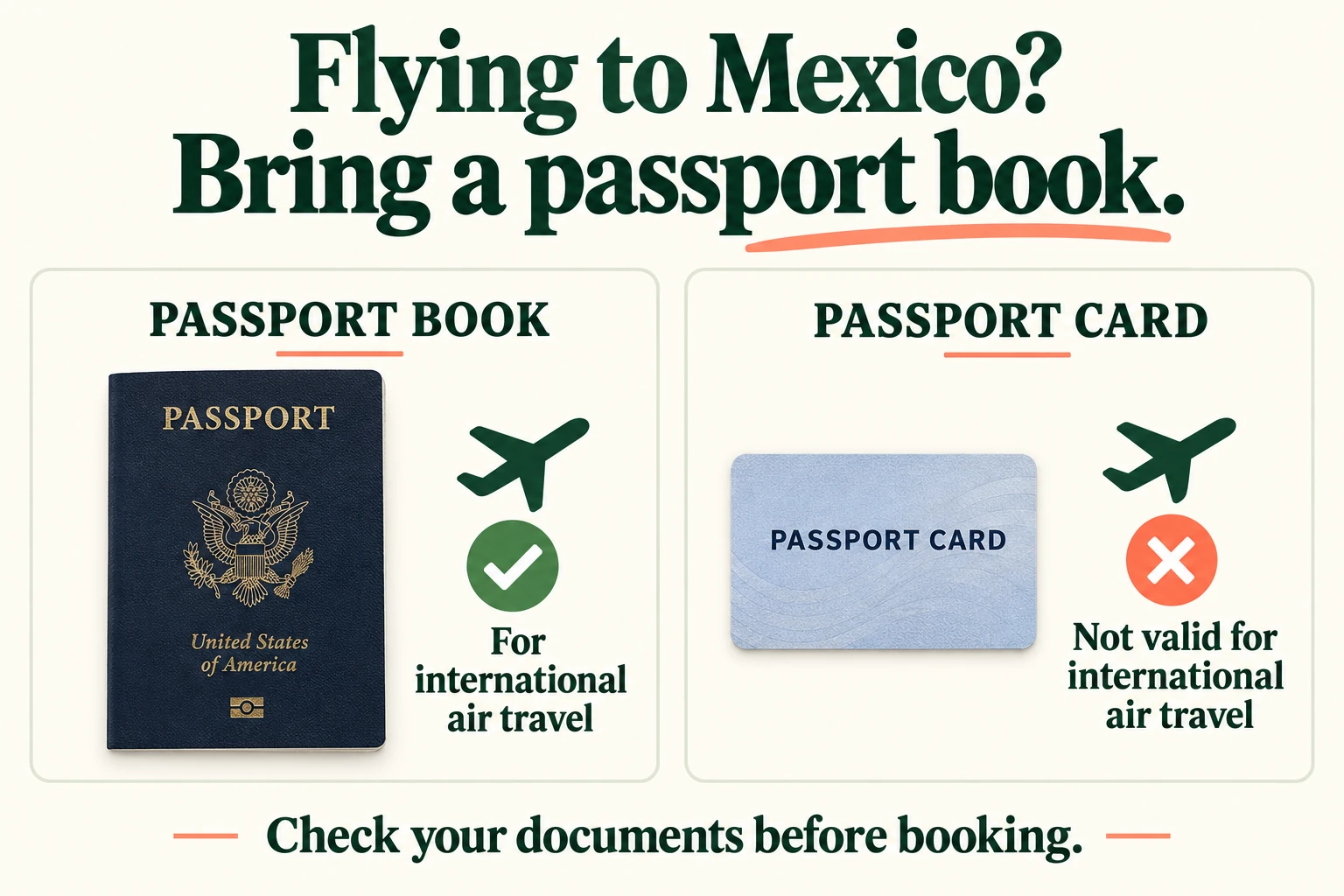
Mexico requires a valid passport for entry by air, land, or sea. The Embassy of Mexico in the United States says US citizens must show a valid passport by any means of transport, and minors need their own passport as well. The Embassy of Mexico’s entry guide sets the formal standard. Mexico officially requires that the passport remain valid for the length of the stay. The Travels-Mexico practical guide strongly recommends six months of remaining validity.
Most travel planners treat six months as the practical minimum. Two guides, Touristcardmx and Battleface, advise that the passport not expire until at least six months after arrival. Airlines may apply stricter rules at check-in, so a passport that expires within six months of departure can stop a trip before it starts.
Carry a passport with at least one blank page. Immigration officers stamp the passport on entry, and the guides cited above flag the blank page as a practical requirement.
The passport card is a separate document that works only for land and sea travel. Flying into Mexico requires the passport book.
Visa-free stays of up to 180 days
The Mexican consulate’s guide to visa-exempt nationalities, which the consulate in Oklahoma publishes as a PDF, lists the United States among the countries whose citizens need no visa. The exemption covers stays of up to 180 days. It covers tourism and business activity, and a secondary guide, Viveusa, describes it as covering other unpaid activity as well.
The exemption does not cover paid work. A traveler who plans to earn money in Mexico needs a work visa from a Mexican consulate before departure. The Embassy’s guide also says that trips longer than 180 days, or trips for purposes the exemption does not list, require the appropriate visa from the nearest Mexican consulate.
A visa-exempt traveler still faces a check at the border. The immigration officer at the port of entry verifies the exemption and makes the final decision on entry. A passport holder with a clean record and an ordinary trip rarely meets a problem, but the officer’s decision controls the outcome.

Electronic travel authorization and visa fees
Mexico does not require an electronic travel authorization (ETA) from US citizens, so there is no ETA fee for them. The US State Department’s Mexico country page does not describe any pre-registration step for US citizens.
Mexico does run an electronic visa for other nationalities. Its general visa guidelines were published in the Official Journal on July 25, 2025, and took effect on August 9, 2025. The law-firm alert from Vialto Partners describes it as an electronic visa for air arrivals in visitor status without work authorization, valid for 180 days for a single entry. Brazilian nationals received the electronic visa again on February 5, 2026, for stays of up to 180 days per entry, according to Fragomen. Brazilians entering by land or sea still need a consular visa.
Travelers who do need a consular visa pay a visa application fee. The Mexican consulate in Kansas City lists a fee of US$56 under the 2026 Ley Federal de Derechos, the federal fee law. Paying the fee does not guarantee approval.
The FMM tourist permit
The FMM is a tourist card that records your entry and length of stay. Most US travelers need one for either of two reasons: they travel beyond the border zone, or they arrive by air. The Embassy’s guide states that stays of under 72 hours within the border area do not require an FMM.
The FMM covers a single entry for up to 180 days from the date of entry and does not authorize paid work. Air travelers usually receive the FMM from the airline or pick one up at the Mexican airport of entry. Newer 2026 guides, such as this noticias guide to the electronic FMM, describe completing the form online before the flight so that the airport step moves faster. To apply online, start at the official INM portal for the FMM.
The fee is a Derecho de No Residente, a non-resident fee set in the Ley Federal de Derechos. The figure most often repeated for 2026 is about 717 MXN for land entries of seven days or more, according to Tramitandia and the noticias guide. Other guides quote amounts from 575 MXN to 983 MXN, so check the current figure on the INM portal before you pay.
The fee depends on how you enter the country. Air travelers generally pay nothing extra because the fee is included in the airfare, according to a 2026 guide from Viajes por Mexico. A fee guide from GP Expat Services states that land entries for stays under seven days are free. A land trip of six days costs nothing at the border, while a trip of seven days or more adds the fee. For a land entry of seven days or more, you pay by card online or at a bank or Banjercito near the border.
Children under two pay no FMM fee but still need their own passport. Mexpro’s explanation of the FMM covers the details.
Fake or unofficial FMM sites are a real risk. Third-party portals sometimes add charges the government does not authorize, and Mexico’s consumer protection agency PROFECO and tourism ministry SECTUR have both warned travelers about the practice. Submit the form only through the official INM site and pay only the fee that the official portal displays.
What border officers may ask
Immigration officers may ask for a return or onward ticket that shows you plan to leave Mexico within your permitted stay. They may also ask for proof of accommodation, such as a hotel booking, and proof of funds. The entry guide for US passport holders at EntryBrief describes the accommodation and funds documents as recommended rather than mandatory. Keep them on your phone or on paper so you can show them if asked.

The officer makes the final decision on entry. Answer questions about the trip plainly and consistently with your forms and bookings. If the officer questions your visa-exempt status, the Mexican consulate’s visa-exemption guide describes the officer’s authority to verify it at the port of entry.
Customs allowances and limits
Passengers arriving from abroad may bring in duty-free merchandise up to US$500 by air, sea or land, according to the Mexican customs agency’s passenger guide. Anything above that allowance is taxed. The excess is taxed at a flat 16% of its value, and the Federal Ley Aduanera sets that rate for passenger baggage. You pay the tax through the excess-duty form at an authorized bank or customs module, in cash or by card.
Adults who are 18 or older may bring alcohol and tobacco within set limits. The official customs guide from the Ministry of Finance lists up to 20 packs of cigarettes, 25 cigars, or 200 grams of tobacco, and up to 3 liters of spirits or 6 liters of wine. Most personal electronics pass in normal quantities. The official list covers two cameras or video cameras, three portable phones, one GPS, one electronic organizer, one portable laptop, one portable printer or copier, and one portable projector, plus related accessories. Five toys, one video game console, and five video games are also covered, along with books, magazines, and printed documents.
Some goods are banned outright. The same customs guide prohibits narcotics, live fish, and predators of any size. It also bans images that depict children in a demeaning way or incite violence. Used clothing is banned when it is not part of personal baggage.
Drivers entering by land choose between two lanes. The "Autodeclaración" lane is for travelers carrying extra merchandise or goods above the allowance. The "Nada que declarar" lane is for travelers whose baggage stays within the allowance.
Passports from other countries
Entry rules depend on nationality. The table below shows how common passports compare for a stay of up to 180 days, based on the Mexican consulate and immigration materials cited in the text above.
| Passport | Visa status for stays up to 180 days | Notes |
|---|---|---|
| United States | No visa for tourism or business without paid work | FMM rules apply, as described above |
| United Kingdom, Canada, Japan, Schengen area | No visa | Named as visa-exempt in the Oklahoma consulate’s guide |
| Germany, Spain, France, Italy, Ireland, Argentina, Chile, Colombia, Panama | No visa | Listed as visa-exempt in the Viveusa list |
| Brazil | Visa required by the general list | Electronic visa for air arrivals reinstated February 5, 2026; land and sea arrivals need a consular visa |
| Russia | Visa required | Listed in the May 2026 Infobae list |
| China, Cuba, India, Venezuela | Visa required | Listed in the Oklahoma consulate’s guide |
| Honduras, El Salvador, Guatemala, Haiti, Nicaragua, Dominican Republic, Serbia, South Africa | Visa required, with no fee for stays under 180 days without paid work | Listed in the Kansas City consulate’s visa guide |
Travelers from other countries should check the INM list of countries that require a visa before booking. The lists change, so confirm the status of your passport on that page.
Quick rules to check before you travel
- Carry a passport valid for the whole stay: Plan on at least six months of remaining validity past your departure date, and carry a passport with at least one blank page.
- Stay within 180 days and avoid paid work: US citizens need no visa for tourism or business within that limit, and any paid work or longer stay requires a consular visa.
- Get the FMM through the official INM portal: Most travelers beyond the border zone or arriving by air need the FMM, and third-party sites can add unauthorized charges.
- Plan a land trip under seven days to avoid the FMM fee: Land entries of under seven days are free, while seven days or more adds a fee of about 717 MXN in 2026 according to secondary guides, so confirm the amount on the INM portal.
- Declare goods above US$500 by air, sea or land: Excess merchandise is taxed at a flat 16%, paid through the excess-duty form at authorized banks or customs modules.