Getting Around Australia

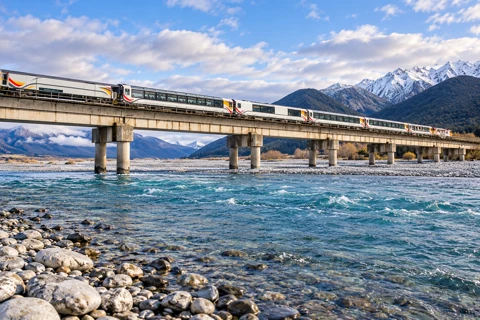
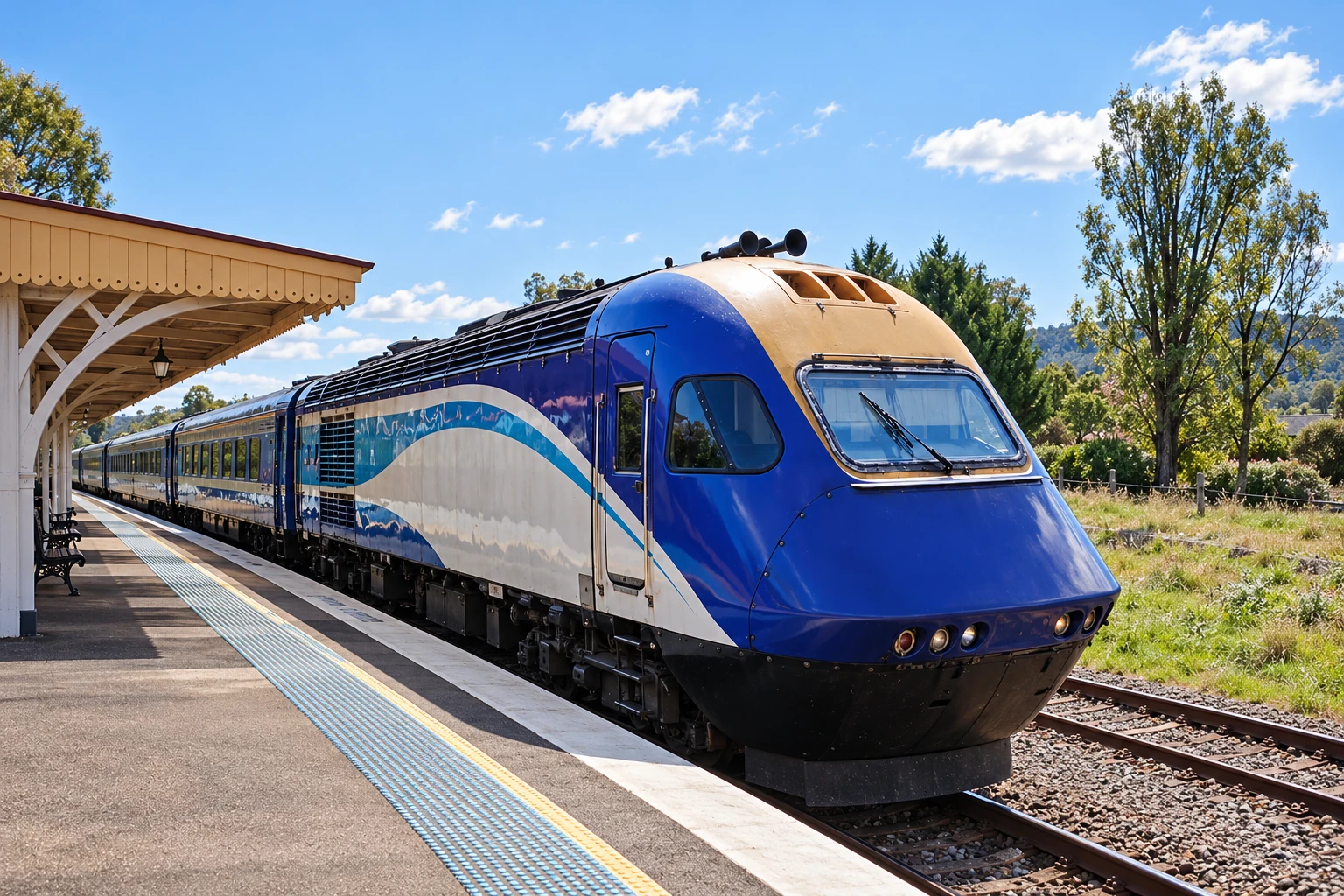
Australia’s cities are far apart, so your choice of transport for each leg determines how much of the trip is spent traveling. Long-distance trains such as The Ghan and the Indian Pacific take three to four days and are part of the holiday itself. Coaches are the cheapest way to travel along the East Coast, and domestic airlines cover the long gaps. In Sydney, ferries are a practical commuter service, and rental cars reach regions where public transport runs infrequently.
A train cabin can cost thousands of Australian dollars (AUD), while a Sydney ferry crossing costs AUD 9.20. A cheap flight fare may exclude a checked bag. Rental car terms depend on your licence, your age and the state where you drive. Fares and booking steps for each mode follow.
Which Mode Suits Which Trip
For the long corridors between capital cities, the choice is between speed and the journey itself. Trains suit travelers who treat the rail trip as the attraction, such as the multi-day crossings between Adelaide and Darwin or Sydney and Perth. Coaches suit travelers moving along the East Coast on a tight budget, particularly between Sydney, Brisbane and Cairns. Flights make sense when you want to skip the distance and keep your days for the destination.
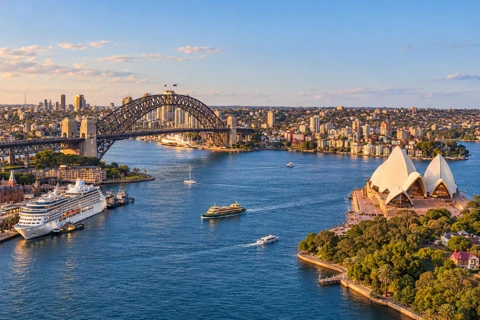
Within a city or region, other modes take over. Sydney’s ferries link the harbor, and the Manly route doubles as a short sightseeing trip. Car hire fits itineraries where a train or coach schedule does not reach, though Hertz’s driving guide warns that distances are vast, especially in the Northern Territory (NT) and Western Australia (WA). Build your itinerary around the leg you cannot do cheaply or quickly, then fill in the rest.
Long-Distance Trains
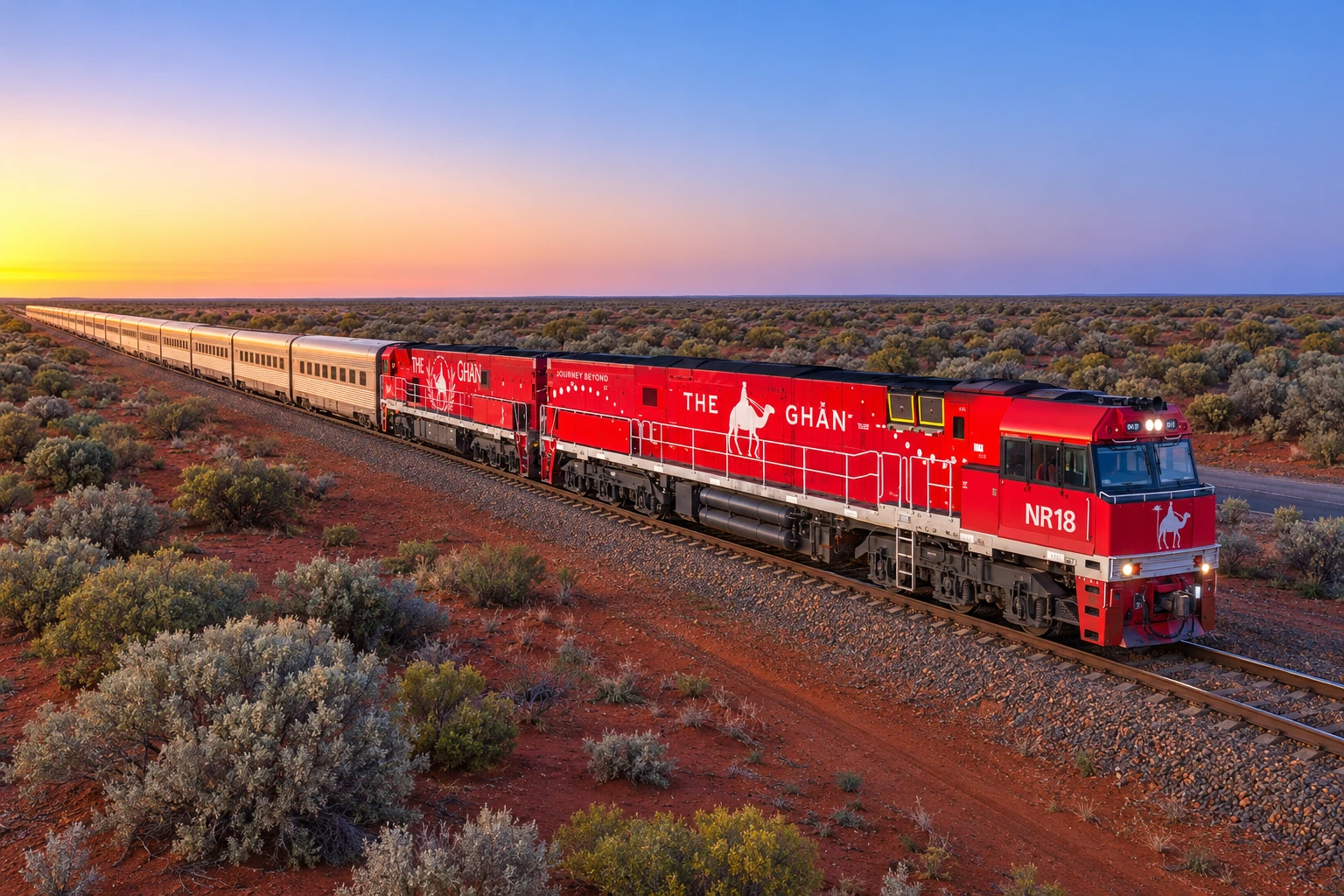
Journey Beyond operates the long-distance routes: The Ghan, the Indian Pacific, the Great Southern and The Overland. The fares below come from the operator’s 2024 fares brochure, valid 1 January to 31 December 2024. Treat them as a guide to how fares are structured and how seasons shift the price, and confirm current prices on the booking site, since the brochure states that prices are subject to change.
Fares by route and season
All figures are one-way, in AUD per person, twin share, Gold Service cabin unless noted.
| Route | Fare type | 2024 fare |
|---|---|---|
| The Ghan, Adelaide to Darwin | Gold Twin Everyday | $3,230 (Mar to Apr, Sep to Nov); $3,490 (May to Aug) |
| The Ghan, Adelaide to Darwin | Gold Twin Advance Purchase | $2,925 / $3,175 |
| The Ghan, Adelaide to Darwin | Platinum Everyday | $5,025 / $5,245 |
| The Ghan, Adelaide to Alice Springs | Gold Twin Everyday | $2,070 (Mar to Apr, Sep to Nov); $2,245 (May to Aug) |
| The Ghan, Adelaide to Alice Springs | Gold Twin Advance Purchase | $1,895 / $2,065 |
| Indian Pacific, Sydney to Adelaide | Gold Twin Everyday | $1,230 (Jun to Jul); $1,395 (Jan to May, Aug, Dec); $1,595 (Sep to Nov) |
| Indian Pacific, Sydney to Adelaide | Gold Twin Advance Purchase | $1,105 / $1,255 / $1,445 |
| Indian Pacific, Perth to Sydney | Gold Twin Everyday | $2,895 (Jun to Jul); $3,290 (Jan to May, Aug, Dec); $3,805 (Sep to Nov) |
| Great Southern, Adelaide to Brisbane | Gold Twin Everyday | $2,725 (Jan, Feb, Dec) |
| Great Southern, Adelaide to Brisbane | Gold Twin Advance Purchase | $2,455 |
| The Overland, Adelaide to Melbourne | Standard Red, Everyday | $185 |
| The Overland, Adelaide to Melbourne | Standard Red, Ready Rail (subject to availability) | $135 |
| The Overland, Adelaide to Melbourne | Standard Red Pension Saver | $105 |
Cabin class changes the price more than anything else. Platinum Everyday on the Adelaide to Darwin Ghan route costs $5,025 or $5,245, against $3,230 or $3,490 for Gold Twin Everyday. The Ghan Expedition from Darwin to Adelaide is $4,695 in Gold Twin Everyday for April, September and October, and $5,020 for May to August. The Indian Pacific has its lowest band in June and July and its highest in September to November. The Overland is the exception to the high price points, as a day train between Adelaide and Melbourne where the Standard Red seat is the budget choice.
Journey times and operating months
The same brochure lists these timetables for 2024:
- The Ghan, Adelaide to Alice Springs to Darwin: three days, operating March to November.
- The Ghan Expedition, Darwin to Adelaide: four days, operating April to October.
- Indian Pacific, Sydney to Adelaide to Perth: four days, operating all year.
- Great Southern: Adelaide to Brisbane takes three days and Brisbane to Adelaide takes four. It runs only in January, February and December.
- The Overland, Adelaide to Melbourne: a day journey. The Sunday service leaves Adelaide at 07:45 and reaches Melbourne at 18:50.
The operator notes that final arrival and departure times may vary, and that off-train experiences depend on weather and season. Because the Great Southern and The Ghan run only in set months, check that your travel dates fall in the operating window before building the rest of the trip around them.
How to book trains
Advance Purchase fares on The Ghan, Indian Pacific and Great Southern depend on availability and must be booked at least six months before travel. Children aged 4 to 15 receive 20% off the accompanying Gold Service adult fare, but the discount does not apply to Platinum. Book through the Journey Beyond Rail booking site, which is linked from the operator’s Ghan page. You can also call 1800 703 357 within Australia or +61 8 8213 4401 from overseas, or go through a local travel agent.
Other rail services are booked with their own operators. Great Southern Rail trains are booked directly with the operator. XPT tickets (NSW’s regional trains toward Melbourne, Brisbane and Canberra) go through NSW TrainLink. Popular cabins sell out months ahead, so book early. For NSW services, use the Transport for NSW regional page to find the regional operator sites.
Intercity Coaches
Coaches are the low-cost way to cover the East Coast, and the main operators are Greyhound, Firefly and Premier. Greyhound and Firefly both run Cairns to Brisbane to Sydney to Canberra to Melbourne (see the coach travel overview). Firefly also runs Sydney to Melbourne without stopping in Canberra, and Melbourne to Adelaide, mostly overnight. Greyhound runs Adelaide to Alice Springs to Darwin, among other routes. Premier’s homepage says it runs daily coach services on Eden to Sydney, Sydney to Brisbane and Brisbane to Cairns, "and everything in between," with more than 500 buses across its network.

Fares and passes
Premier sells hop-on hop-off passes that are valid for a set period. Prices are one-way:
- Sydney to Brisbane: $127.00 for 3 months
- Sydney to Cairns: $255.00 for 1 month; $365.00 for 3 months
- Brisbane to Cairns: $314.00 for 6 months
- Sydney to Eden: $111.00 for 6 months
- Byron Bay to Cairns: $297.00 for 3 months
- Unlimited Sydney to Cairns: $439.00 for 1 month
For single trips, these indicative one-way lead-in fares for September 2026 show how differently the two operators price:
| Route | Premier | Greyhound |
|---|---|---|
| Sydney to Brisbane | ~$133 | ~$94 |
| Sydney to Byron Bay | ~$125 | ~$85 |
| Airlie Beach to Cairns | ~$141 | ~$127 |
| Brisbane to Cairns | ~$307 | ~$555 |
Premier charges flat published fares, while Greyhound prices by demand. A Greyhound ticket therefore moves with how full the coach is and how far ahead you buy. The Brisbane to Cairns gap shows how wide that can get: Greyhound’s lead-in fare of about $555 is well above Premier’s roughly $307. On shorter hops Greyhound is cheaper. Firefly advertises fares from $60 between Melbourne, Adelaide and Sydney, with 45kg of luggage and free WiFi and USB charging.
Premier also sells a $2.50 Regional Excursion Daily (RED) ticket between Nowra and Eden, and between Lismore and Tweed Heads. It is for holders of a government-issued pensioner or senior concession card from NSW, the ACT or Victoria, and it is sold only by phone on 13 34 10. Conditions apply.
Departure times and booking
Premier runs one departure per direction per day on the East Coast, so plan each leg around that single departure. Firefly’s Sydney to Melbourne and Melbourne to Adelaide services run mostly overnight, so the coach can replace a night’s accommodation.
To book Premier, use its website, which has online booking, a Manage Booking login and a Coach Tracker, or phone 13 34 10. For Greyhound and Firefly, booking directly with the operator is the most straightforward route. If you want to compare operators in one place, Omio lists Greyhound Australia, Firefly Express, FlixBus Australia and Premier.
Domestic Flights
Domestic flights cover the longest gaps, and the main cost decision is baggage. Fares on the budget carriers can exclude a checked bag, so headline prices are not always comparable between airlines. Check your fare’s allowance before you book.
Qantas allowances
Qantas lists its allowances on the checked baggage page (last modified 13 October 2026). On Australian domestic flights, they are:
- Economy: one piece of up to 23kg.
- Premium Economy: two pieces of up to 23kg each.
- Business: two pieces of up to 32kg each.
Dash 8 services, Lord Howe Island, Christmas Island and the Cocos (Keeling) Islands are exceptions to these allowances. A piece’s combined width, height and depth may not exceed 140cm, and no single piece may exceed 32kg. Where a ticket carries a weight allowance rather than a piece count, the number of pieces is unrestricted within that weight. Your allowance appears in Manage booking once you have a booking. Power banks go in carry-on, not checked bags.

Jetstar and Virgin Australia
Jetstar’s checked baggage rules vary by fare code, according to Qantas’s Jetstar baggage section. QF-numbered domestic economy fares include one piece up to 23kg. JQ-numbered Starter, Max and Classic Flight Rewards fares include 23kg total with no piece limit. The maximum single piece is 32kg, and carry-on is 7kg when the flight is booked through Qantas directly. A Jetstar baggage explainer says Starter fares include no checked bag, and that bags cost least when added at the original booking rather than later or at the airport. Items over 1m in any direction attract an oversize handling fee.
On Virgin Australia, the Lite fare has no checked bag and no status baggage allowance, while Choice and Flex fares include one piece up to 23kg. Business includes two pieces up to 32kg each. Domestic bags between 23kg and 32kg carry an overweight fee of A$65 per piece, and no bag may exceed 32kg.
The general pattern is that budget carriers like Jetstar sell base fares without checked baggage, while full-service carriers include it. If you pack a full suitcase, compare fares after adding the bag, not before. For flight bookings, use the airline’s own site so your allowance shows in the fare details and in Manage booking.
Sydney Ferries
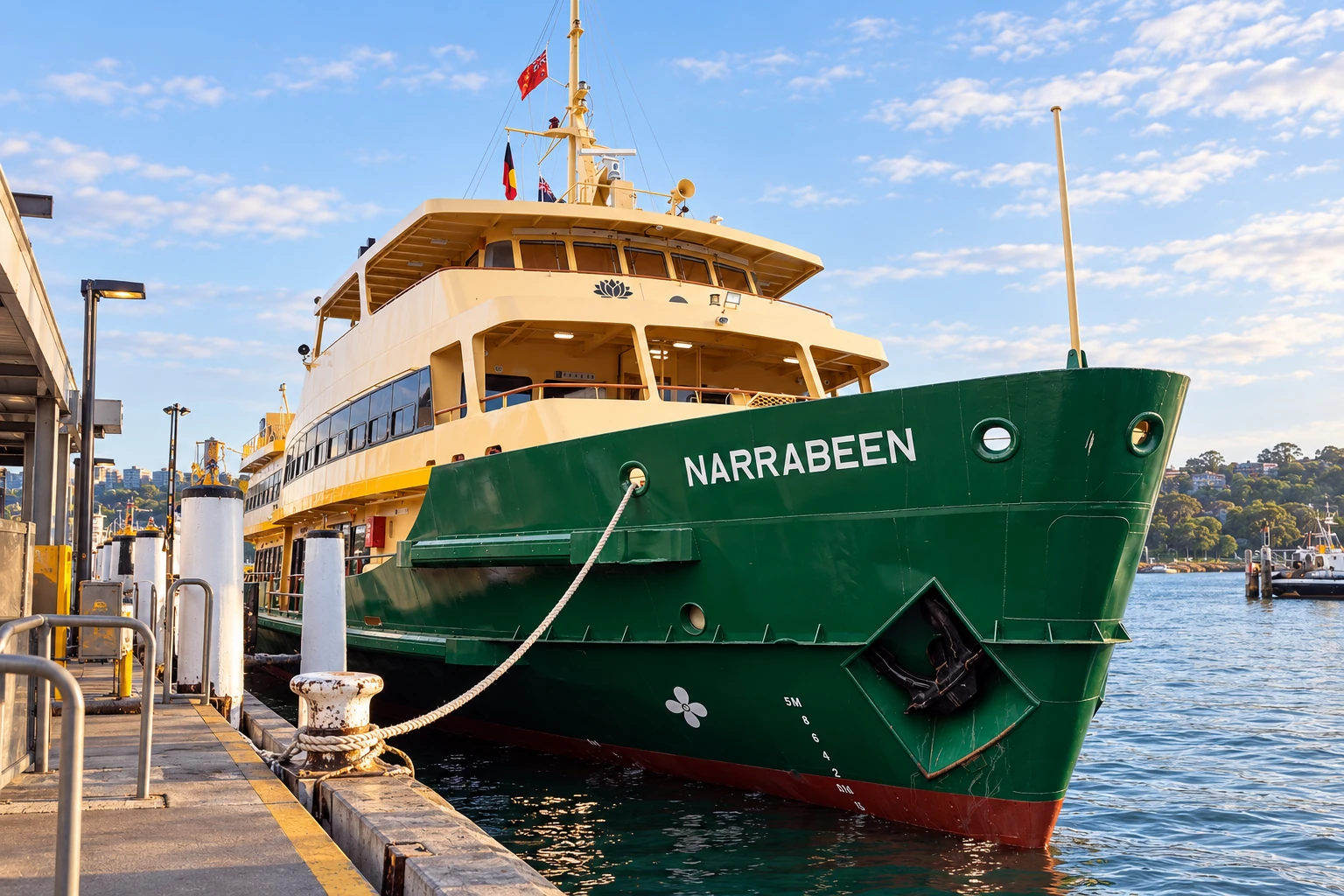
Sydney’s ferries are public transport that doubles as a harbor tour. The best-known route runs from Circular Quay to Manly, and the Visit Manly ferry page (times checked 4 October 2026) describes two services.
The F1, run by Transport for NSW, leaves Circular Quay Wharf 3 for Manly Wharf and takes about 30 minutes (crossings range from 22 to 30 minutes). The Manly Fast Ferry, operated by NRMA, leaves Circular Quay Wharf 2 for Manly Wharf 2 and takes about 20 minutes.
F1 and Fast Ferry timetables
On the F1, Monday to Friday the first boat leaves at 5:30am and runs every 20 minutes until 9:30am, then four an hour until 7:30pm, then every 30 minutes. On Saturday the first boat leaves at 6:10am, and on Sunday and public holidays at 6:40am. The last F1 from Circular Quay is 11:50pm Sunday to Thursday and on public holidays, and 12:20am on Friday and Saturday. The Transport for NSW F1 timetable has the full schedule.
The Fast Ferry runs Monday to Friday from 6:00am to 8:20pm, every 10 to 20 minutes at peak and every 20 minutes by day. On Saturday, Sunday and public holidays it runs from 9:00am to 8:20pm every 20 minutes. Strong southerly winds or big swell can suspend the Fast Ferry, whereas the Freshwater-class F1 runs in almost any weather. Check the Fast Ferry timetable on the day you travel.
Fares and paying with Opal
Opal is Sydney’s tap-on, tap-off transit card system, and it is the only way to pay on the F1. The adult Opal fare is AUD 9.20 single on both the F1 and the Fast Ferry. It is the same price all day because ferries have no off-peak discount, and Opal’s daily and weekly caps apply. Cash is not accepted. Tap on at the wharf and tap off when you land. The Fast Ferry takes cards only on board and has a licensed bar.
A Sydney ferry guide gives the same AU$9.20 fare. It and another Sydney guide put the daily cap at AU$19.30 Monday to Thursday and AU$9.65 on Fridays, weekends and public holidays. A weekly cap of AUD 50.00 applies, and the daily cap accumulates across trains, buses and ferries on the same day. Forgetting to tap off charges the maximum fare for the route, so tap off at the destination wharf gate before boarding a return service. The F8 Watsons Bay ferry costs approximately AUD 7.14 and runs less often than the Manly services. Transport for NSW ferry routes run from F1 to F10, and several private operators also run services.
Car Hire
Car hire suits regions where public transport is thin, and the planning starts with whether your license qualifies.
License requirements
All drivers need a current, full, unrestricted license held for at least 12 months and presented in person at pickup. No supplier accepts learner (L-plate) licenses. Redspot is the only supplier that accepts provisional (P-plate) licenses; the others require a full unrestricted license. If your license is in English (as in the UK, USA, Canada and New Zealand), you can drive without an International Driving Permit (IDP), though carrying one is still recommended. For a license not in English, carry an IDP or a certified English translation alongside the original. An IDP does not replace the license. It is valid for 12 months from issue, and you must obtain it in your home country before you travel, usually from your national motoring association. Hertz accepts a Chinese Notarial Certificate in place of an IDP, while other suppliers require a standard IDP.
Hertz’s 2018 driving guide asks for a valid full license from your country of residence that you have held for at least one year, or three years in Tasmania. If your license is a two-part paper and photocard license, show both.
How long visitors can drive by state
The time a visitor on a foreign license may drive varies by state or territory:
| State or territory | Limit for visitors | Non-English license |
|---|---|---|
| ACT | Indefinitely while visiting | IDP or NAATI translation |
| NSW | Up to 6 months of continuous residence | IDP or English translation |
| NT | 3 months maximum | Official English translation |
| QLD | Indefinitely while the license is current | IDP or NAATI translation |
| SA | Indefinitely while visiting | IDP or English translation |
| TAS | Indefinitely while visiting | IDP or official translation |
| VIC | Up to 6 months | IDP or English translation |
| WA | Indefinitely while visiting | Translation certified by a consulate or diplomatic office |
The NT is the most restrictive, at three months, so a long stay that includes the Top End needs attention to this rule. NAATI is Australia’s national translator accreditation body.
Digital licenses and pickup documents
Carry the physical license. Redspot advises that a digital license may not be accepted. Each supplier sets its own rules for digital licenses. Avis and Budget conditionally accept a digital license verified live in the state app (NSW, QLD, SA, VIC), but not screenshots. Europcar accepts digital licenses at all locations. SIXT conditionally accepts state government apps and still recommends the physical card. Enterprise, Hertz and Thrifty require the physical license. A photocopy, photo or screenshot of a license is never accepted at pickup.
At the Hertz counter, bring a booking confirmation, a valid license, a valid credit card and a passport. If your license is not in English, you need an IDP as well as the license. Each additional driver must be present at collection with their own valid license and sign the agreement. Only drivers named on the agreement are covered.
Minimum age and young-driver fees
Minimum ages vary by supplier. Hertz’s 2018 guide sets 21 for most car groups and 25 for Prestige, Adrenaline and Dream collections and for 4WDs, with a Young Driver fee for ages 21 to 24. Redspot says most companies set a minimum age of 25, with some renting from 21, and that Redspot itself sets 21. Drivers under 25 pay a daily surcharge shown on the invoice. A license requirements page adds that vans generally require age 25 or over. A 2026 car hire guide puts daily surcharges for drivers aged 21 to 25 at $15 to $30 and notes that most major suppliers do not rent to drivers under 21 and may restrict vehicle categories. Check the specific supplier’s minimum and surcharge before you pay. Campervan rental is a separate market, and one operator, Travellers Autobarn, requires drivers aged 18 to 80.
Insurance and excess
Compulsory third-party injury cover is included by law, and additional cover and excess reduction are recommended for travelers. The excess is the amount you pay toward damage before the insurance applies, and reducing it is the biggest cost decision in a rental. Hertz’s 2018 standard rates include damage cover subject to an excess. Its Accident Excess Reduction (AER), Maximum cover (MAX) and SuperCover options reduce liability further. MAX reduces the damage excess to $0. Most general travel insurance policies include options that reduce the excess on car rentals, and this does not have to be arranged in advance.
Additional driver and extra fees
Additional driver fees vary by supplier:
| Supplier | Fee | Cap |
|---|---|---|
| Alamo | $10.00 per day | None listed |
| Avis and Budget | $7.50 per day | $37.50 |
| Dollar and Thrifty | $5.50 per day | $27.50 |
| Europcar and Keddy by Europcar | $5.75 per day | $28.75 |
| Hertz | $5.50 per day | $27.50 |
| East Coast | $12.10 per rental | None listed |
| Enterprise and Firefly | Included | Not applicable |
Hertz’s 2018 rates include unlimited kilometers and damage cover subject to excess. They also cover registration and admin fees, GST, and a location fee where applicable. Each rental also includes 24-hour breakdown assistance. Basic roadside assistance does not cover incidents caused by the renter, such as running out of fuel or locking keys in the car, and Premium Roadside Assistance Cover handles those. Every rental requires a bond deposit to cover fuel and optional extras. Hertz accepts major credit cards and VISA debit cards. If you prepay a tank under the Fuel Purchase Option there is no refund for unused fuel, and if you decline it and return the car below full, a refuelling service charge applies. For tolls, a prepaid flat daily Toll Day Pass covers unlimited tolls, and the pay-later option bills actual toll amounts plus a per-rental processing fee. Child seats are mandatory for infants and children. You can pre-book them from Hertz for an extra charge, up to a maximum of two per vehicle.
One-way rentals and airports add cost. One-way fees may apply on certain routes, and a 2026 guide says they can double or triple the total and that airport surcharges are not always included in comparison-site quotes. Look at the full price, including drop-off location, before booking.
Booking and pickup
Choose airport or city pickup based on your flight arrival time, itinerary and group size. For airport pickup, give your flight details at booking so the car is not released if the flight is delayed. Hertz’s 2018 fleet guide lists all vehicles as automatic. Some models can be reserved only by car category, while the Prestige, Adrenaline and Dream collections can be reserved by make and model. Hertz had more than 200 locations in 2018, including major airports and cities.
Driving distances and hazards
When calculating travel time, allow an average speed of 80 km/h on bitumen. In remote areas petrol stations can be several hundred kilometers apart and fuel costs more. Road trains, which are very long trucks, can be up to 50 metres long and weigh over 50 tonnes. Most major roads are sealed. Some unsealed routes allow only 4WD, and Hertz advises a 4WD or AWD for driving off the beaten track. Wet-season flooding can make roads impassable. Wandering livestock and wildlife are a risk in the NT and WA. Speed limits vary from state to state, and Hertz recommends a break every two hours.

Key Takeaways
- Book trains by purpose and by season: The Ghan, Indian Pacific and Great Southern take three to four days and are priced in seasonal bands, with Platinum far above Gold. Advance Purchase fares must be booked at least six months ahead.
- Compare coach operators on your specific route: Premier charges flat fares and Greyhound prices by demand. In September 2026 lead-in fares, Greyhound was cheaper on Sydney to Brisbane (about $94 against about $133) but much dearer on Brisbane to Cairns (about $555 against about $307).
- Check the baggage allowance on your fare before you book a flight: Qantas economy includes one piece up to 23kg, while Jetstar Starter and Virgin Australia Lite fares include no checked bag.
- Tap on and off with Opal on Sydney ferries: The Manly crossing is AUD 9.20 for an adult in about 20 to 30 minutes, cash is not accepted, and forgetting to tap off charges the maximum fare.
- Confirm your license, age and state rules before reserving a car: Bring a physical license plus an IDP if it is not in English, expect an under-25 surcharge, and note the NT’s three-month limit for visitors. Check excess reduction, additional drivers, tolls and one-way fees in the total.