Getting Around New Zealand
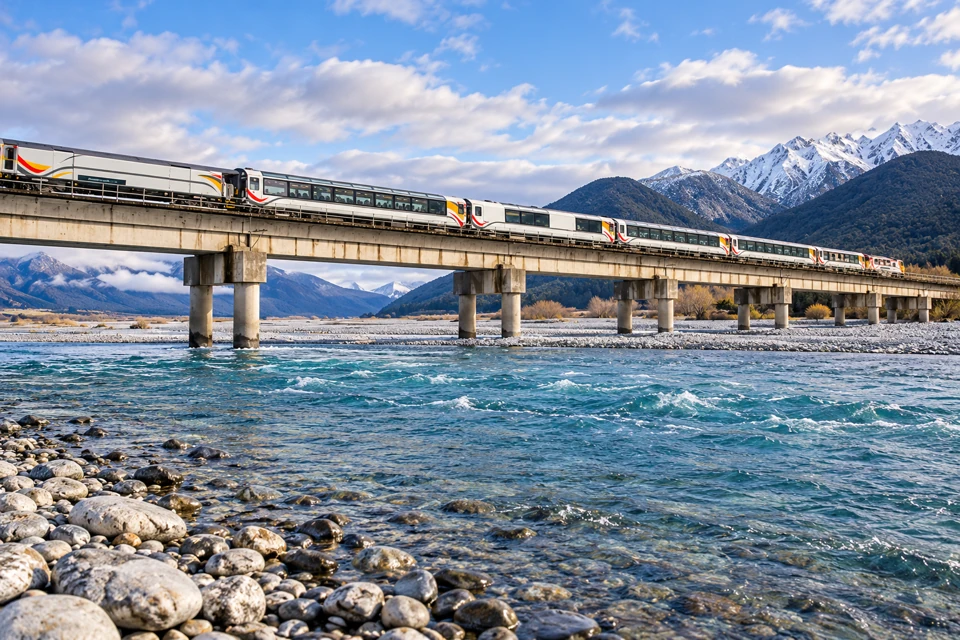
New Zealand’s two main islands are long and thinly connected, so transport choice shapes an itinerary more than it does in most countries. Travelers can take scenic trains, intercity buses, domestic flights, or the Cook Strait ferry between the North and South Islands. They can also rent a car or campervan, or order a ride through an app for short city trips. Trains and buses follow fixed routes, flights save the most time on long legs, and a rental car lets you stop wherever you like.
Fares and timetables change often, so check each operator’s website for current prices and schedules.
Which mode suits which trip
| Trip type | Best fit | Why |
|---|---|---|
| Scenic day or half-day journey | Great Journeys NZ train | Built for the view, fixed timetable, seating only |
| Budget travel between towns | InterCity bus or bus pass | Lowest fares on main routes, passes for several legs |
| Long leg where time matters | Domestic flight | Faster than road or rail on long routes |
| Crossing between the islands | Cook Strait ferry | Only vehicle link, also carries foot passengers |
| Self-guided route with many stops | Rental car or campervan | Flexibility, reaches rural areas |
| Short urban trips | Ride-hailing | Door-to-door rides within a city |
Scenic trains
Most passenger trains in New Zealand are tourist services. Great Journeys New Zealand is the tourism division of KiwiRail, and its timetable page lists three scenic routes: the Northern Explorer, the Coastal Pacific and the TranzAlpine. Plan each as a half-day or full-day outing built around the view.
The Northern Explorer links Auckland and Wellington. Trains leave Auckland for Wellington on Monday, Thursday and Saturday, and Wellington to Auckland departures run on Wednesday, Friday and Sunday. A published schedule shows a 7:45am Auckland departure and a 6:25pm Wellington arrival, so the trip takes the full day.
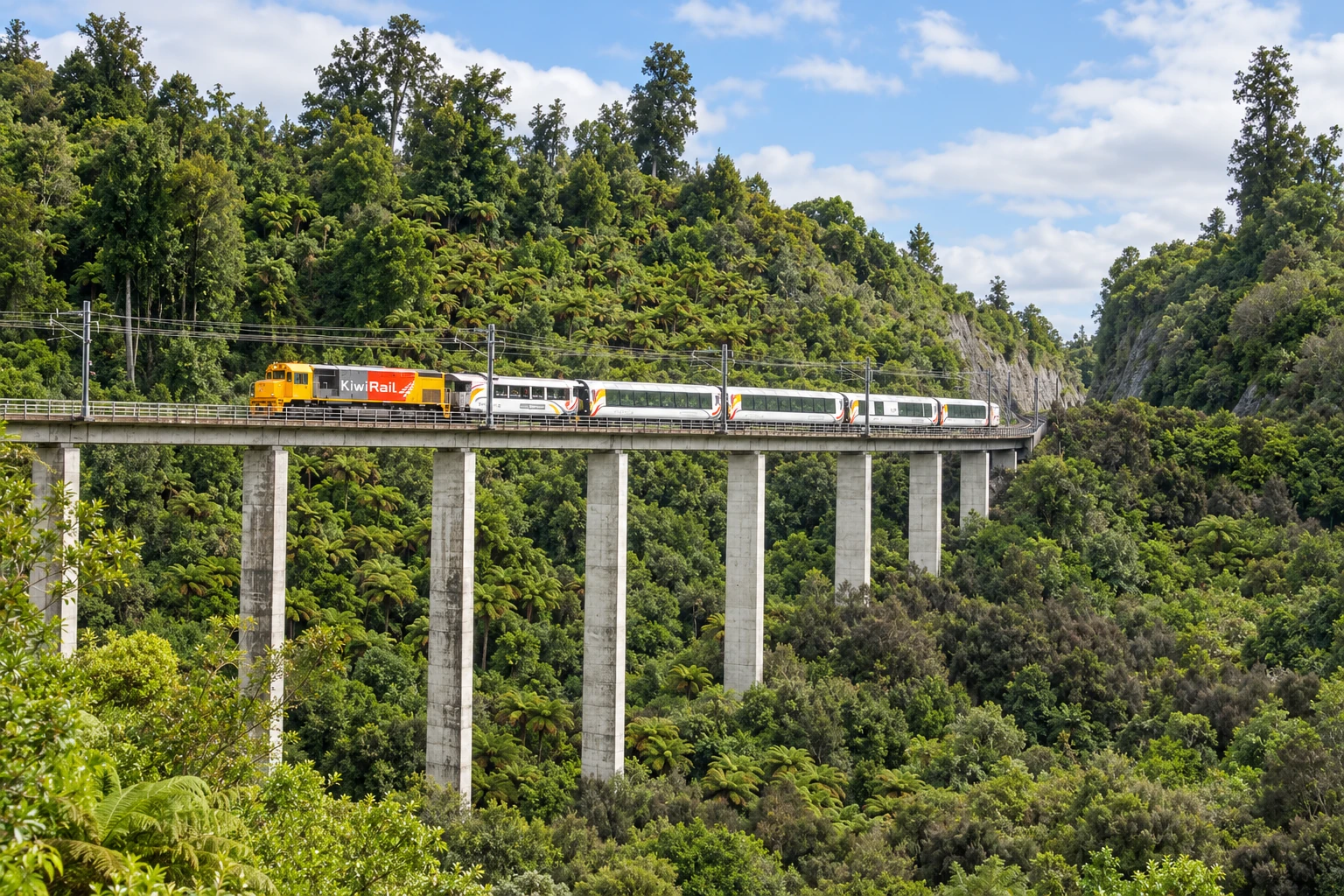
The Coastal Pacific runs between Christchurch and Picton, the South Island ferry terminal. It operates daily from 1 September to 30 April. The same schedule shows a 7:00am departure from Christchurch and a 12:40pm arrival in Picton. Coastal Pacific averages about 5 hours over about 348 km. The timing makes it a natural link to a ferry sailing, though the schedule should be checked before building that plan.

The TranzAlpine crosses the Southern Alps from Christchurch to Greymouth. It departs Christchurch at 8:15am and reaches Greymouth at 1:05pm, about 4 hours 50 minutes. The Christchurch tourism listing describes year-round operation, but check the operating days on the official timetable before booking.

For fares, adult "from" prices run about NZ$195 for the TranzAlpine, NZ$212 for the Coastal Pacific and NZ$229 for the Northern Explorer, with child fares of NZ$138, NZ$149 and NZ$163 respectively. The tourism listing shows the TranzAlpine at NZ$199 to NZ$249 for adults and NZ$139 to NZ$174 for children. The two fare classes are Scenic and Scenic Plus, and the official site shows what each currently includes.
Book through the official timetable page, which links to the booking search. Reserve in advance, since these are seating-only services and walk-on passengers cannot board once a train is full. Booking help is on the operator’s site, and travel agents also sell tickets. By phone, call 0800 TRAINS from within New Zealand or +64 4 495 0775 from abroad.
InterCity buses
InterCity is New Zealand’s largest national bus network and the usual choice for budget point-to-point travel. Naked Bus and ManaBus.com stopped operating on 15 July 2018, so neither is available now.
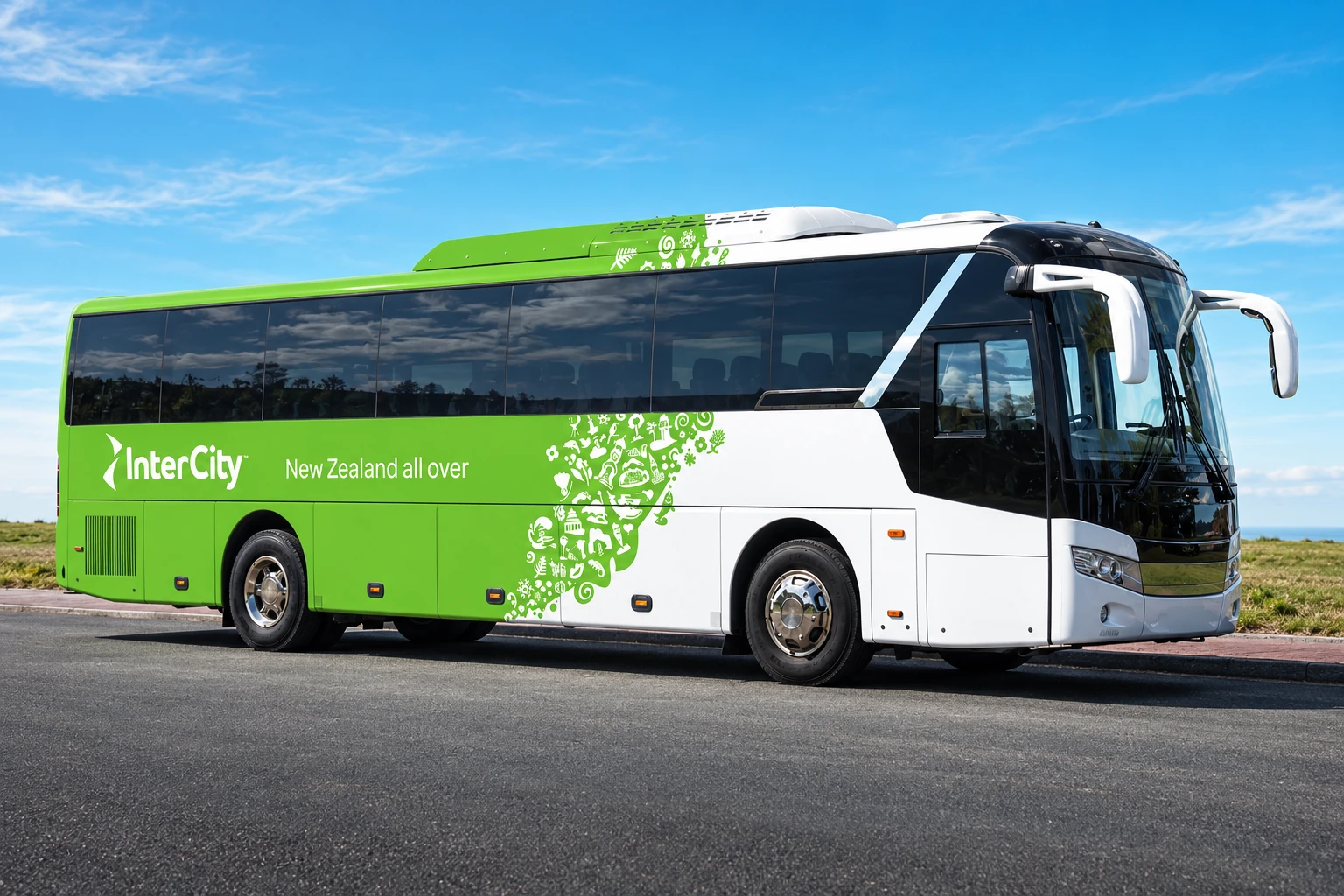
Journeys are long: Auckland to Wellington takes about 11 hours, and the fastest bus takes 11 hours 15 minutes. On shorter routes, InterCity’s pass hours are about 4 hours for Auckland to Rotorua and about 6 hours for Christchurch to Queenstown.
InterCity uses yield management, so fares depend on how far ahead you book and how many seats remain. Typical one-way adult fares are:
- Auckland to Wellington: about NZ$55 to NZ$90.
- Auckland to Rotorua: NZ$25 to NZ$45.
- Christchurch to Dunedin: NZ$40 to NZ$70.
- Christchurch to Queenstown: NZ$55 to NZ$90.
Fares are generally cheapest when booked 2 to 4 weeks ahead. The wider range listed for Christchurch departures is NZ$18 to NZ$360 for adults and NZ$19 to NZ$163 for children, plus a booking fee. That gap shows how much the price depends on timing and seat availability.
Travelers making several legs should compare a pass with individual tickets. The official homepage lists the FlexiPass at NZ$199 for 15 hours, NZ$280 for 30 hours and NZ$518 for 60 hours. A TravelPass North Island Explorer costs NZ$159, and backpacker bus passes start at NZ$132. A FlexiPass counts hours of travel, so the pass hours above show how quickly a route uses it up. Fifteen hours covers roughly Auckland to Rotorua and Christchurch to Queenstown with time to spare.
InterCity tickets can be booked online without a credit card, and a list of booking agents is on the same site. Fare categories are Adult, Child (3 to 12), and Senior (65 and over, New Zealand only). Student and Backpacker (with valid ID) fares are also available, and Infants (0 to 2) travel with no seat. InterCity also sells day tours, including a Milford Sound tour from Queenstown or Te Anau at NZ$195 and a Hobbiton tour from Auckland or Rotorua at NZ$255.
Domestic flights and baggage
Flying makes sense when a leg is long and time is limited. Auckland to Wellington by bus takes about 11 hours and by Northern Explorer most of a day, and flying is faster on routes of that length. The main cost variable is baggage, because the two main airlines handle it very differently. Compare the total cost with bags included.
On Air New Zealand, economy carry-on is one bag up to 7 kg plus a small personal item that fits under the seat. The carry-on size limit is 55 × 40 × 23 cm, with total dimensions up to 118 cm. Seat-only fares include carry-on only. A seat+bag fare includes one checked bag, and flexichange and flexirefund fares include two. Each checked bag is limited to 23 kg, with total dimensions up to 158 cm. Bags from 23 kg up to a 32 kg maximum incur excess fees. Extra bags can be added in Manage booking, and prepaid extra bags are sold only when the whole journey is ticketed and operated by Air New Zealand.
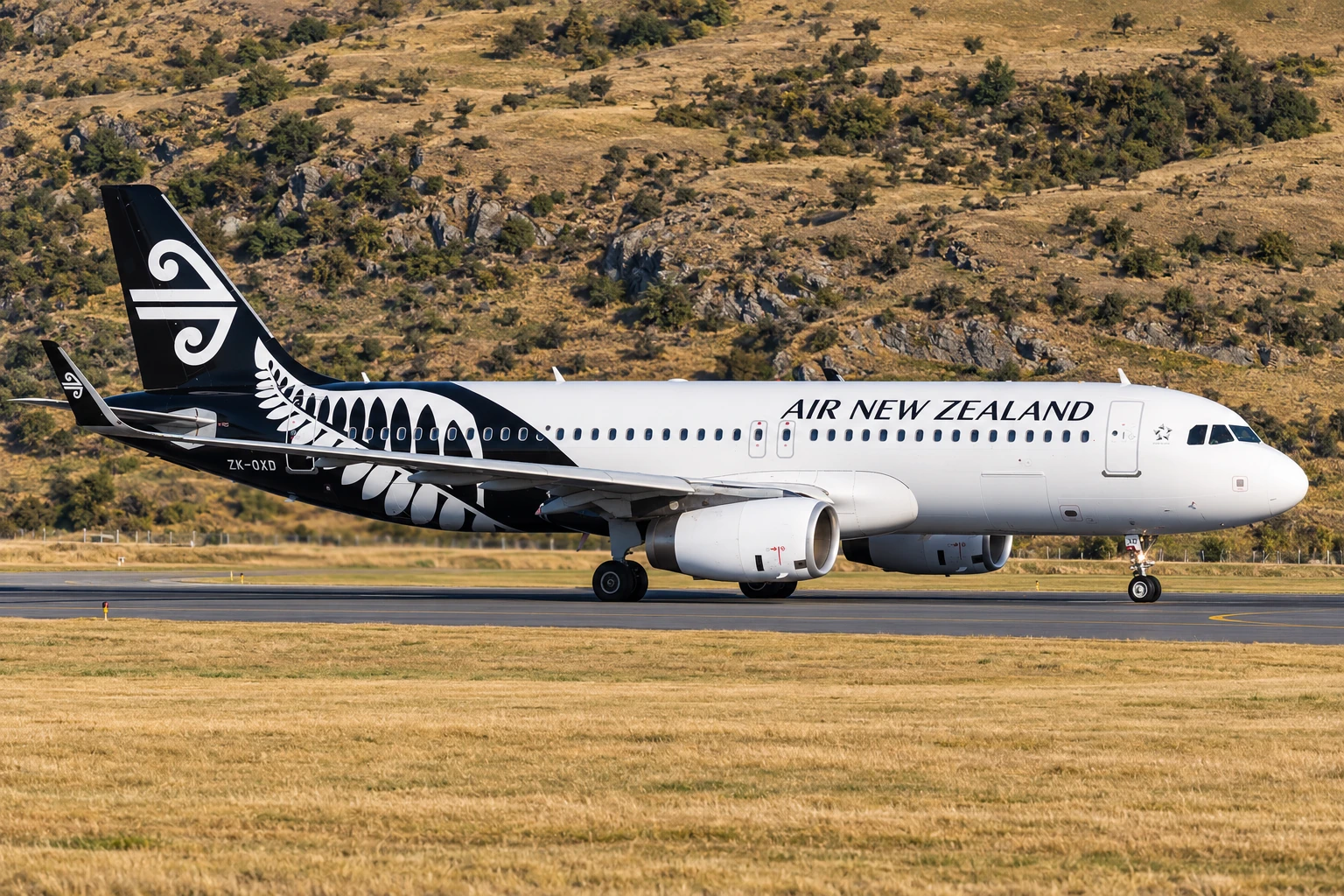
Jetstar includes carry-on with all bookings, but checked bags can be bought, up to 40 kg per passenger with no single item over 32 kg, and some bundles include checked baggage, so checked bags are not always paid extras. Items longer than one meter in any direction count as oversized and attract a handling fee. Prices vary by route. Bags can be added at booking, in Manage booking, or at the airport, and adding them online beforehand is recommended.
A traveler with a single backpack under the carry-on limit can take a seat-only fare on either airline. Anyone checking a bag should add its cost to the Jetstar fare, or pick an Air New Zealand fare that already includes one.
Cook Strait ferries
Wellington to Picton is the only vehicle link between the North and South Islands. Both operators, Interislander and Bluebridge, run day crossings only. Driving a rental car across means taking it on the ferry, so drivers hopping between islands should settle this before booking a car. (Rental terms are covered in the next section.)
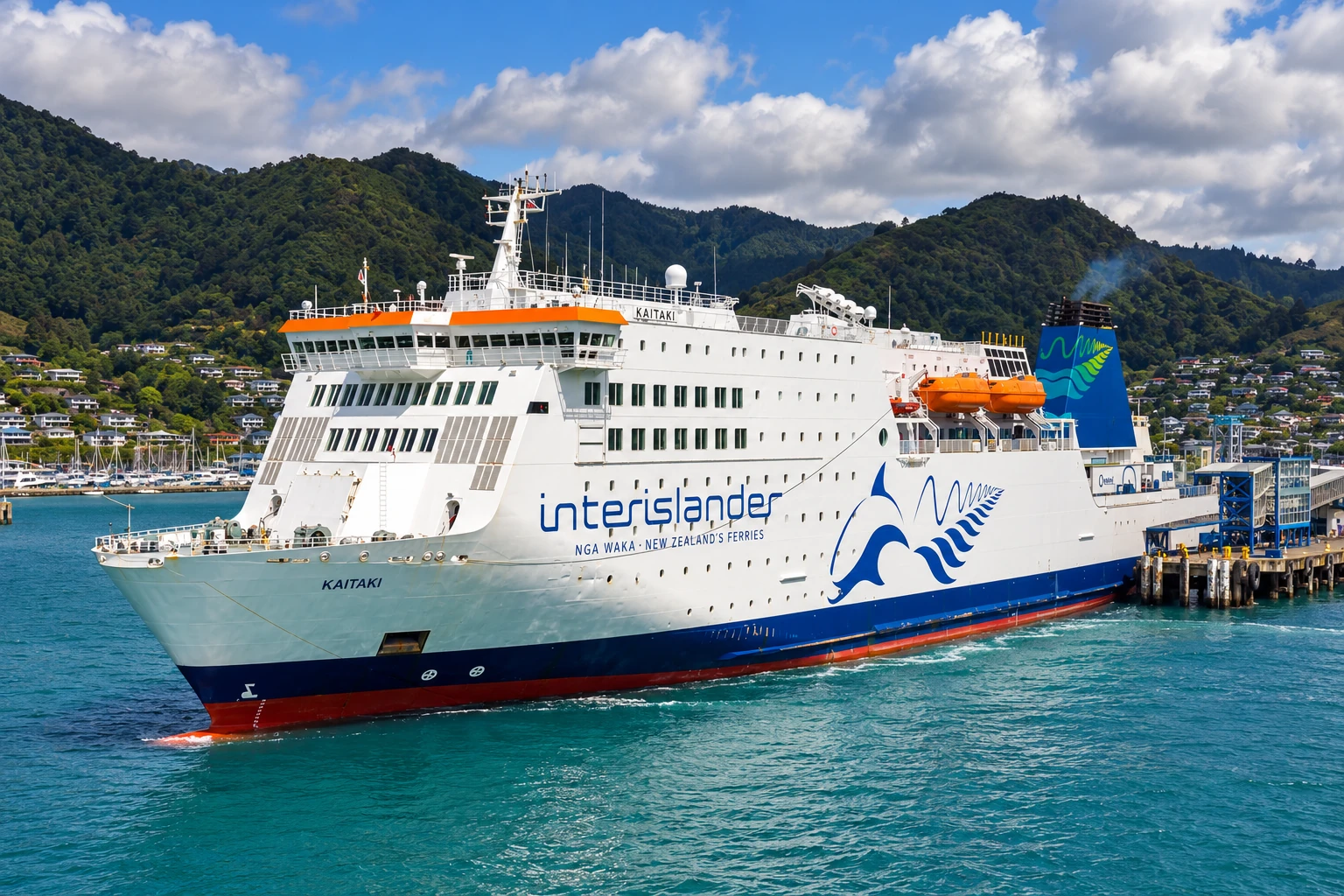
The crossing takes about 3 hours 20 minutes to 3 hours 30 minutes, with Interislander typically at the shorter end. Allow 45 to 60 minutes of check-in on top of the 3 hours 20 minutes to 3 hours 50 minutes crossing. About 45 minutes of the trip is open sea, before the ship enters the Tory Channel and the Marlborough Sounds. Each operator runs between 2 and 5 sailings per direction daily, depending on operator and season.
Indicative fares in NZ dollars:
- Foot passenger: about NZ$55; other listings range from NZ$50 to NZ$105.
- Standard car with driver: from about NZ$120 on Bluebridge and NZ$135 on Interislander, up to NZ$200 to NZ$300 on other fare listings.
- Campervan: from NZ$195 (Bluebridge) and NZ$220 (Interislander), or NZ$270 to NZ$400 depending on the van’s length.
- Campervan up to 6 m with two adults, one way: about NZ$415 to NZ$560 on a flexible fare.
- Extra adult on a van booking: about NZ$80 to NZ$100.
- Bicycle: about NZ$20 to NZ$30.
Bluebridge is usually NZ$10 to NZ$30 cheaper than Interislander on equivalent crossings. Confirm current fares and sailing times at the operators’ own sites, interislander.co.nz and bluebridge.co.nz.
To book, choose the vehicle type online and enter the vehicle’s length, height and width. Declare the correct van length and height, since Interislander can charge extra if the van is longer than booked. Campervans from any rental company can travel on Interislander, subject to the hire terms. Summer crossings can sell out weeks in advance, so in peak season book vehicles 4 to 6 weeks ahead. Check-in closes 30 minutes before sailing, so aim to arrive 45 to 60 minutes before departure.

Renting a car or campervan
A rental car or campervan suits independent itineraries with many stops and rural destinations that buses and trains skip. Visitors can hire a vehicle with a current, valid driver licence. A licence that was not issued in New Zealand and is not in English needs an accurate translation. Licences in non-Roman scripts, such as Japanese, Korean, Chinese and Thai, call for an International Driving Permit. Acceptable translators are an NZTA-authorized translation service, a diplomatic representative, or the authority that issued the licence. Carry the original licence, because digital copies are not accepted. Overseas licences can be used for up to 18 months from arrival. Confirm the current limit on the NZTA page.
Rental companies add their own conditions:
- Age: the minimum is typically 21 and the maximum 80, though some firms accept drivers from 18 with restrictions. Most companies charge a young-driver fee to drivers under 25. A senior fee may apply from age 65.
- Licence history: a full licence held for at least 12 months. Learner and provisional licences are not accepted.
- Payment: a physical credit or debit card in the driver’s name.
- Insurance: the standard excess (the amount you pay toward any damage) is typically NZ$4,000 to NZ$5,000. A daily top-up of about NZ$25 to NZ$40 lowers the excess.
- Additional drivers: every driver must be named on the agreement to be covered.
The North Island has three toll roads, all paid online at tollroad.govt.nz.
The main cost trade-off is the ferry. A car or campervan crossing Cook Strait pays vehicle fares on top of the rental, while a foot passenger pays much less. Some travelers hire one vehicle per island to avoid the vehicle fare. Whether a rental on each island works out depends on the rental company’s terms and one-way fees.
Ride-hailing in cities
Ride-hailing fits short urban trips, such as an airport transfer or an evening out, where a bus timetable does not help. You order rides through an app such as Uber. Drivers must meet licensing rules designed to protect passengers. They need a passenger endorsement, which requires a medical check and a New Zealand Police check. They must also hold a Small Passenger Service Licence or drive under someone else’s licence, and the vehicle needs a Certificate of Fitness. Fares depend on the app and the trip, so check the price shown in the app before confirming a ride.
Choosing a mode for common routes
For a North Island route from Auckland to Wellington, the bus is cheapest at about NZ$55 to NZ$90. The Northern Explorer costs from about NZ$229 and runs three days a week in each direction. Flying saves the most time. For the South Island, the TranzAlpine and Coastal Pacific work as day trips from Christchurch. The bus covers Christchurch to Queenstown in about 6 pass hours. Between the islands, foot passengers can take either ferry and then continue by rail or bus from Picton. Travelers who want to stop in small towns or reach trailheads will find a rental car the most flexible choice on both islands.
Key takeaways
- Book trains and peak ferries early: Great Journeys NZ trains are seating only and sell out, and vehicle ferry bookings should go in 4 to 6 weeks ahead in peak season.
- Book InterCity buses 2 to 4 weeks ahead: Fares move with demand, and a pass such as the FlexiPass (NZ$199 for 15 hours) pays off only when you plan several legs.
- Price bags before choosing a flight: Jetstar charges for checked bags, while Air New Zealand includes one on seat+bag fares and above.
- Check licence and insurance terms before renting: A non-English licence needs a translation or an International Driving Permit, and the standard excess is typically NZ$4,000 to NZ$5,000.
- Plan the island crossing first: the Wellington to Picton crossing takes about 3 hours 20 minutes to 3 hours 50 minutes, and Bluebridge is usually NZ$10 to NZ$30 cheaper than Interislander.