Denmark Entry Requirements for US Travelers

US citizens visiting Denmark for tourism or business need a valid US passport but no visa for stays of up to 90 days in any rolling 180-day period, under Schengen rules. Denmark belongs to the Schengen Area, a group of European countries that works as one travel zone, so days spent in any Schengen country count toward the same 90-day limit. Two newer systems affect arrivals now. The Entry/Exit System (EES) records fingerprints and a facial photo at the border. The European Travel Information and Authorisation System (ETIAS) will require an online pre-travel authorization, but it has not launched yet.
Fees and rules change, so every figure here comes with its date and a link to the official source. The sections below explain what to carry, how long you can stay, what border officers ask, and which goods you can bring in duty-free.
Passport Rules and Blank Pages
The US Department of State’s Denmark country page sets the entry requirement at a passport valid for 90 days beyond your intended departure date from the Schengen Area.
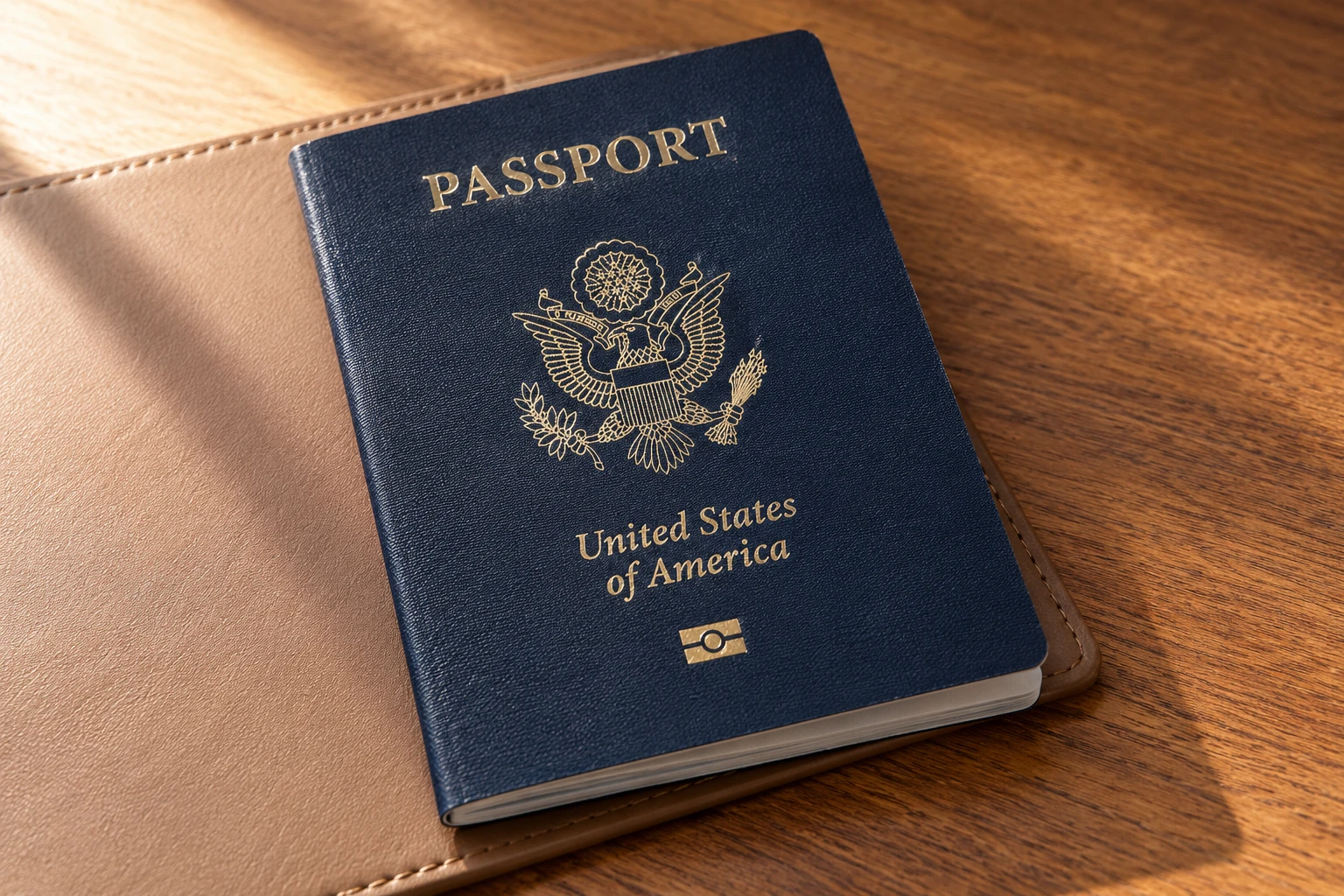
Plan for more than the minimum. Airlines may still require six months of validity even though the border rule is shorter. A passport that expires within six months of your trip can lead to a denied boarding pass, which is a cost you can avoid by renewing early. Ask your airline about its rule when you book.
Carry a passport with at least one blank page for entry and exit stamps. Stamps are now less common at Denmark’s borders because of EES, but a blank page is still a safe precaution for any Schengen trip.
How Long You Can Stay Without a Visa
The visa-free allowance comes from Annex II of Regulation (EU) 2018/1806, which the Official Journal of the European Union published on 28 November 2018. The regulation exempts nationals of listed countries from the visa requirement for stays of "no more than 90 days in any rolling period." The latest consolidated version of the regulation is dated 30 December 2025.
The count uses a rolling window, not a calendar year. Each day you spend in the Schengen Area counts toward the 90 days, and you look back over the preceding rolling period from any given date to add up your days. A traveler who spends much of the allowance in one part of the Schengen Area and then continues elsewhere in it has used up the 90 days and must wait until enough earlier days fall outside the rolling window before returning for a new stay. The same counting method applies to US visitors.
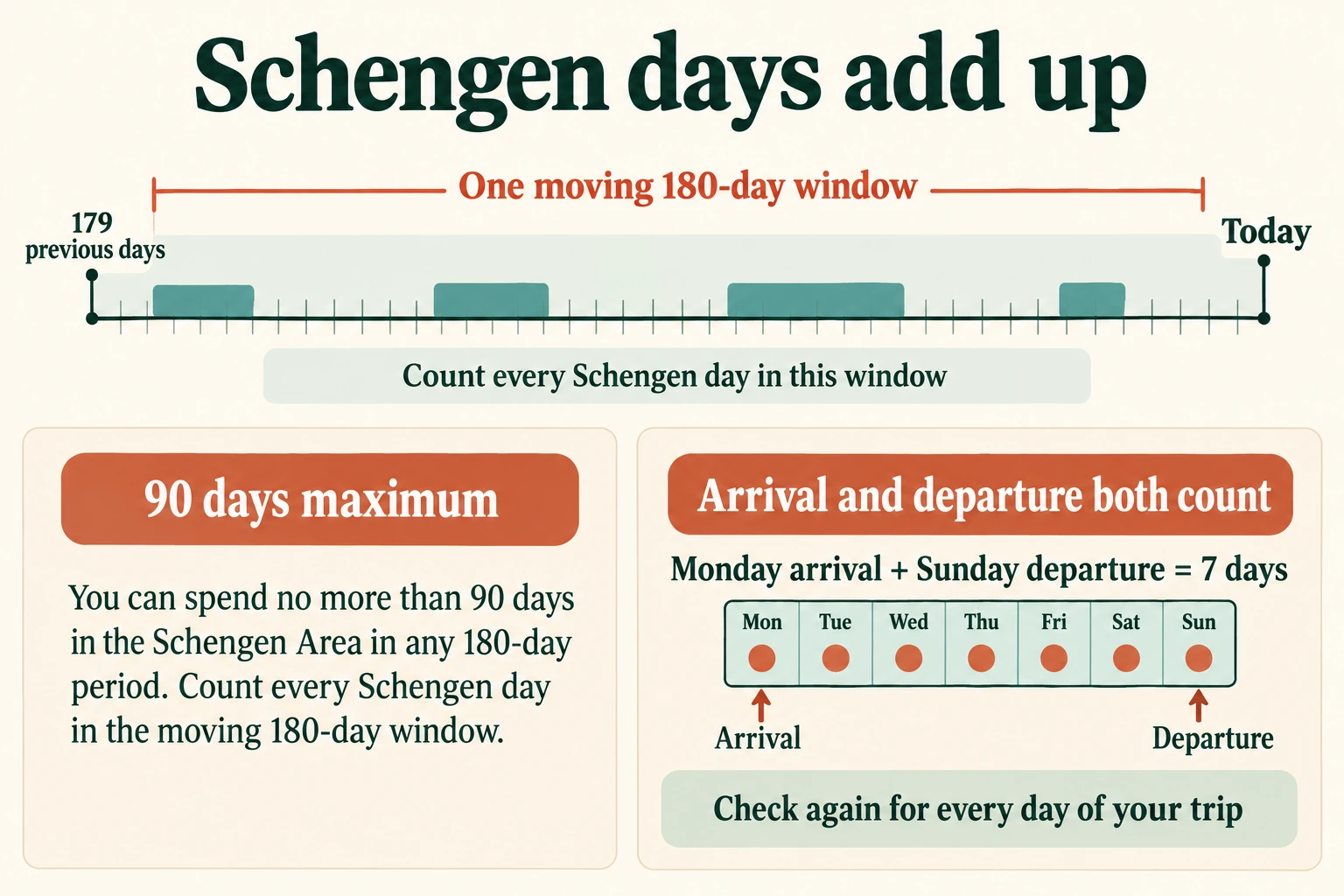
The allowance covers tourism, business and family visits. Work, study, and stays beyond 90 days need a visa or residence permit before you travel. Staying too long can bring fines, deportation and an entry ban. Keep a running tally of your days if you travel around Europe, because the border officer will ask how long you have been in the Schengen Area.
EES Now, ETIAS Later
The European Union began phasing in the EES on 12 October 2025, and it covers visa-exempt travelers such as US citizens (KPMG Denmark). The system reached full operation at external border crossings on 10 April 2026, across 29 participating countries. Denmark started at Copenhagen Airport, and officers were advised to expect slower processing during the transition.
At your first crossing, a border officer or self-service kiosk takes your fingerprints and a facial photo. The system collects four fingerprints, a facial image and your passport data. Stamps no longer record your entries and exits. The EES keeps electronic records of entries, exits and refusals. You do not register in advance. Registration takes place at the border desk on arrival, so allow extra time in the passport queue on your first arrival. EU citizens, their family members and holders of Schengen residence permits are generally exempt from EES registration.
The EES keeps an individual file for three years and one day from the last exit, along with individual entry and exit records for three years.
ETIAS works differently. You apply for it online before you travel, and it is a free-standing authorization that does not replace a visa. It will apply to nationals of 59 visa-exempt countries, including the United States, once it launches. The official ETIAS portal is the only place to apply. The application fee is €20 per person. Travelers under 18 or over 70 pay no fee but still need an authorization. An approved authorization is valid for up to three years or until your passport expires, whichever comes first.
Earlier plans called for a late-2026 start, but the launch date has moved. The fourth-quarter 2026 target was removed from the official website in mid-July 2026, and no new date had been announced as of 19 October 2026. No applications are being accepted at this time. Sites that charge more than €20 for ETIAS are not the official service. Check the official portal before you book, and plan for an extra online step once ETIAS starts.
Questions Border Officers May Ask
Border officers at Copenhagen and other Schengen entry points may ask why you are visiting, how long you plan to stay, and how you will leave. Officers routinely ask for a return or onward ticket that shows departure within 90 days. A one-way ticket with no onward plan invites more questions, so book your exit flight or a train or ferry connection to another country before you arrive.

You will likely need to name a place where you will stay. Carry proof of accommodation, such as a hotel confirmation or a host’s address. Officers rarely ask to see it. A written itinerary with the dates and addresses of your stays answers these questions in one document.
Schengen rules remove routine passport checks between member countries, but checks can still occur. Keep your passport accessible on trains and ferries that cross into Denmark from Germany or Sweden.
Customs Limits for Goods From Outside the EU
Denmark’s customs limits apply to goods you bring from outside the EU for personal use. The Danish tax authority sets these figures on tax.dk. The allowance covers occasional imports only, so you cannot use it again within 24 hours. The Danish tax authority’s legal guidance gives the detailed rules.
| Category | Allowance |
|---|---|
| Tobacco (one option only) | 200 cigarettes, or 100 cigarillos, or 50 cigars, or 250 g of loose tobacco |
| Spirits over 22% ABV | 1 liter |
| Fortified or sparkling wine up to 22% ABV | 2 liters |
| Table wine | 4 liters |
| Beer | 16 liters |
| Motor fuel in a spare can | 10 liters, in addition to the vehicle’s normal tank |
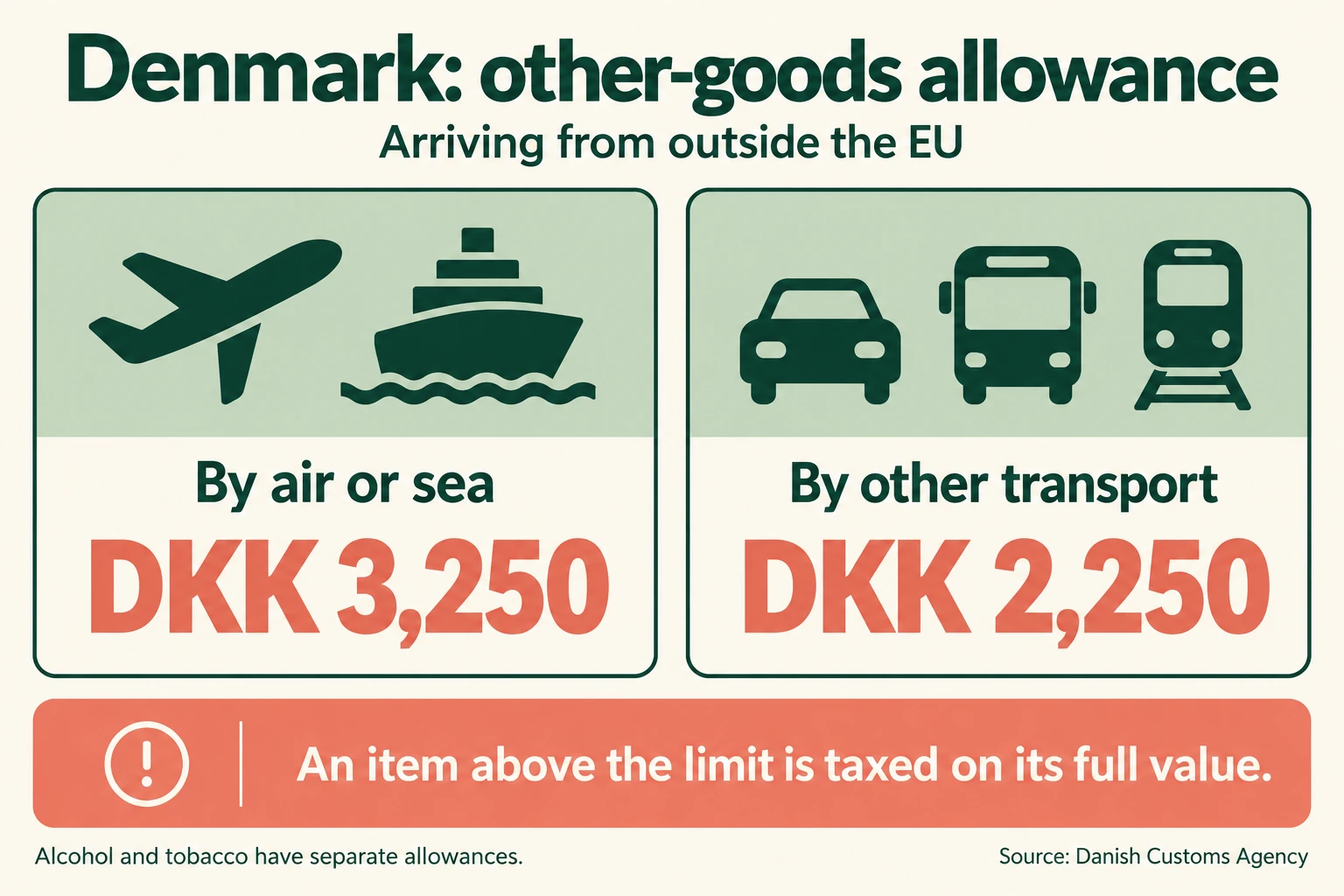
| Other goods, arriving by air or sea | 3,250 kr. (about €430) |
| Other goods, arriving by car, bus or train | 2,250 kr. (about €300) |
The minimum age for buying and carrying tobacco and spirits is 17. You choose one tobacco option, not a combination of them.
The goods limit works per item. If a single item exceeds the limit, duty and tax apply to the full value of that item, not just the amount over the limit. You cannot pool your allowance with another traveler’s. Value is the retail price you paid at purchase, including taxes.
Cash has a separate rule. Carrying €10,000 or more in cash or equivalent instruments requires a declaration at the customs desk on entry or exit. An undeclared amount above €10,000 can bring a fine of 25% of the excess.

At the airport, goods above the allowance go through the red channel, where you declare them. The green channel means you declare nothing. Undeclared goods found after you use the green channel can bring duty, taxes and a fine equal to the duty and VAT owed on the excess. Travel gear you took out of Denmark can come back duty-free, and residents can re-import their own travel equipment.
Other Passports Compared
Travelers from the United Kingdom, Canada, Australia, New Zealand, Japan, South Korea, Singapore, Brazil, Argentina, Mexico and Chile are also on the Annex II visa-exempt list. Their stay limit is the same 90 days in any rolling period. Check the current Annex II text on EUR-Lex before you travel, because the list can change.
Visa-exempt travelers of all these nationalities will face the same EES fingerprinting and the same future ETIAS requirement. Visa-exempt status applies to some passports only when they are biometric, so check that your passport carries the biometric chip if your country issues that document.
Travelers from countries that need a Schengen visa must apply before they travel. A typical Schengen visa fee is about €80 for adults. Those travelers also cannot use ETIAS, because ETIAS applies only to visa-exempt nationals. A visa is also required for any stay beyond 90 days, no matter your nationality. Processing times vary by embassy.
Five Rules to Remember
- Renew early: Carry a passport valid for six months past your departure, and check your airline’s rule because some carriers apply it.
- Track your days: Count every day you spend in the Schengen Area in any rolling window, because 90 days is the maximum stay before you need a visa.
- Plan for EES fingerprints: Allow extra time at your first border crossing, since the system takes fingerprints and a photo on arrival and has no pre-registration.
- Watch for ETIAS: Apply only through the official portal, which charges €20. Check the official site for the launch date before you book.
- Declare cash at €10,000: Declare any amount of €10,000 or more at customs, and remember that goods limits apply to each item.