Belgium
Getting Around Belgium
Belgium is small and densely connected, so most visitors travel between cities by train, use local buses, trams, and the Brussels metro for short trips, and rent a car only for rural areas. The national railway operator, SNCB/NMBS, runs the intercity network, and its French and Dutch abbreviations appear side by side on signs and tickets. Regional bus companies cover the rest: De Lijn in Flanders, TEC in Wallonia, and STIB/MIVB in Brussels. There are no domestic flights between Belgian cities, and no ferry runs directly from the UK.
Fares, journey details, and booking steps follow for each mode, and a table at the end matches common trips to the best option. Fares changed in early 2026, and the Brussels Low Emission Zone tightened on 1 January 2026, so the figures reflect late 2026.
Trains Between Belgian Cities
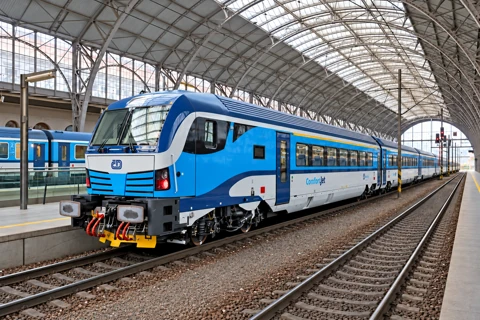
Trains are the best choice for Brussels, Antwerp, Ghent, Bruges, Liège and the coast. SNCB sells single tickets only, so there is no compulsory return. Adults aged 26 to 64 pay the Standard fare, which applies anywhere in Belgium at any time. The minimum second-class single is €2.60. Saturdays, Sundays and public holidays carry a 30% discount, and up to four children under 12 travel free with an adult. Children under 4 travel free without a ticket if they don’t need a reserved seat.
Typical fares and journey times
One-way second-class fares run about €10.50 from Brussels to Antwerp, about €12.00 to Ghent and about €18.50 to Bruges. Most of these routes run on frequent intercity services. The list of Belgian railway services shows the Amsterdam–Brussels IC 35 running hourly via Brussels Airport-Zaventem, Antwerpen-Centraal and Rotterdam. The Liège–Luxembourg IC 33 runs hourly on weekdays and every two hours on weekends, and serves Liège-Guillemins. Intercity IC 23 runs from the airport station to Oostende and IC 23A to Brugge, according to the airport station page.
For exact durations on a given day, use the real-time timetable in the SNCB app. SNCB also publishes its trip-planning data, which includes estimated travel times by day type and time band.
Peak and off-peak hours
On weekdays, off-peak boarding runs from midnight to 6 a.m., 9 a.m. to 4 p.m., and 6 p.m. to midnight. Peak hours are 6:01 to 8:59 a.m. and 4:01 to 5:59 p.m. Weekends and public holidays are off-peak all day. On a journey with connections, the first leg sets which fare applies. This matters only if you hold a discount card, because the Standard fare is the same at any hour apart from the weekend discount.
The Train+ card
Train+ costs €6 per month or €48 per year for adults aged 26 to 64. It takes 40% off off-peak travel. On Saturdays, Sundays and public holidays the discount is a further 40%. The card also caps any second-class journey at €14 regardless of time or distance. The adult fare page notes that benefits can change during the card’s validity and that the conditions in force on the travel date apply. Since the cap sits well above the fares listed for Brussels to Antwerp or Ghent, the card pays off on several off-peak trips in a month or on long journeys, and the monthly option suits a stay of a few weeks.
Season tickets for longer stays
A longer stay with repeated trips on one route is cheaper on a season ticket. The Standard Season Ticket gives unlimited round trips on a fixed route for 1, 3 or 12 months. The annual version is priced for 10 months of travel and covers 12. It can be combined with TEC, STIB or De Lijn on the same route. Shorter products include the Flex Season Ticket (6 or 10 days of travel on one route within a month) and the Half-Time Season Ticket (10 trips on a fixed route within 15 days). The Unlimited Season Ticket covers the whole network.
How to book trains
Buy on the SNCB website or in the SNCB app. Online purchases require a My SNCB-NMBS account, with or without Train+. A Train+ bought online is linked to your account and applied automatically, according to the website purchase FAQ. At ticket machines and counters, show your Train+ QR code or number, or a MoBIB card, to get the reduced fare. The SNCB app offers tickets, De Lijn tickets, parking tickets, saved payment methods, real-time timetables and predicted occupancy. SNCB has announced that on-board ticket sales end on 1 July 2026, so buy before you board.
Trips to and from Brussels Airport-Zaventem station carry an extra charge. International journeys are sold through SNCB-NMBS International. Tickets to international stations can’t be bought on sncb.be, except at the border stations of Maastricht, Aachen, Roosendaal, Lille, Maubeuge, Aulnoye-Aymeries and Luxembourg.
Local Buses, Trams and Metro
Regional buses serve villages and areas the rail network doesn’t reach, and cities add trams and a metro. Each region has its own operator and fare structure, but one rechargeable smart card, MoBIB, introduced in 2018, works on SNCB, STIB-MIVB, De Lijn and TEC. It can be topped up at machines, ticket offices, operator e-shops and apps. The Floya app plans, books and pays for trips across STIB/MIVB, De Lijn, TEC and SNCB/NMBS in Brussels, including shared bikes, scooters and car services.
De Lijn in Flanders
De Lijn fares rose by an average of 4.2% on 1 February 2026, and the current prices are:
- Single ticket by app or contactless: €3
- Day pass: €7.50
- 10-journey Lijnkaart: €22.00 (up €1)
- Annual season ticket: €499
A single ticket is valid for 60 minutes from first validation, with unlimited line changes. Children under 5 travel free. Buying from the driver costs more than buying in advance, so use the De Lijn app, which also shows real-time departures, or tap a contactless bank card on the white validator when boarding. You can also text "DL" to 4884, and your mobile provider may add a small fee. Sales points are listed on the De Lijn store locator.
TEC in Wallonia
A TEC Classic single ticket for the whole network costs €2.80 and is valid for 90 minutes. An Express Line single costs €5.50. The annual season ticket is €420 for the Classic network and €710 for Express, and the annual pass for ages 18 to 24 and 65+ is €12. These are February 2026 figures from the public transport guide. TEC uses zones, and its "Next" single ticket covers up to two zones.
STIB in Brussels
In Brussels, a single journey bought by app or digital ticket costs €2.70. Per 2025 figures, contactless pay-as-you-go costs €2.40 per journey, capped at €8.50 per day. You can buy Brupass and Brupass XL digital tickets in the STIB app, and the QR code is valid on STIB, SNCB, TEC and De Lijn. The app also sells a 10-ride ticket at a reduced fare. A visitor who arrives by train and stays within the city can ride on a day cap or a Brupass.
Long-Distance Coaches
Inside Belgium, trains are the more prominent option, and coaches focus on cross-border trips. FlixBus lists direct routes from Brussels to 194 cities and from Liège to 69 cities, with destinations such as Paris, Amsterdam and Cologne described in a Belgium transport overview. FlixBus has listed starting fares of €3.98 for Brussels departures, though the price depends on departure point, date and how far ahead you book. The company says tickets are often cheapest a few weeks before travel and that early-morning and midweek departures can cost less.
You can book online or in the FlixBus app, or pay in cash on board or at a sales point. Payment options include credit card, PayPal, Google Pay and Apple Pay. The booking produces a PDF with a QR code, or the ticket is stored in the app, and you show the QR code to the driver without printing it. The Liège stop is at Rue du Plan Incliné 145, 4000 Liège, near Liège-Guillemins station. A coach suits a budget-first traveler heading to Paris, Amsterdam or Cologne who can accept a fixed departure time. Within Belgium, a train fare of €10.50 to €18.50 to the main cities leaves little reason to choose a coach.
Domestic Flights and Airports
There are no domestic flights in Belgium. Flight data shows five airports, each with international routes only. Regional airports such as Liège, Ostend-Bruges and Antwerp mainly offer seasonal holiday routes, for example Liège–Palma, Ostend–Nice and Antwerp–Toulon or Ibiza. For any pair of Belgian cities, take the train.
Airports matter as arrival points, so how you get from each into the country is worth knowing:
- Brussels Airport (BRU), Zaventem: It has its own rail station with regular links to central Brussels and other major cities. The airport station carries the extra charge noted above.
- Brussels South Charleroi Airport (CRL): Low-cost carriers dominate, and the airport handled 8,271,138 passengers in 2022. TEC bus line A1 runs from Charleroi-Central station in about 20 minutes. An older TEC page lists a bus every 15 minutes, daily from 4:30 to 23:30, at €6 per trip, with transfers to regular lines allowed within 90 minutes. Confirm current times and the price with TEC.
- Liège Airport (LGG), Bierset: It sits about 13 km from Liège and about one hour by car from Brussels. In June 2024, Charleroi airport announced a direct shuttle from the Liège stop next to Liège-Guillemins to Charleroi airport, with fares from €14.99. Confirm the current schedule with the airport before you plan around it.
- Ostend-Bruges (OST): Bus line 6 links Ostend station to the airport. The airport mainly handles air cargo, plus charter flights in summer.
Ferries From the UK
No direct passenger or car ferry connects the UK and Belgium. The old Zeebrugge and Ostend routes no longer operate, and P&O withdrew the Hull–Zeebrugge route in 2021. Travelers cross to France or the Netherlands and continue by road or rail. The right crossing depends on where in Belgium you are heading and whether you travel with a vehicle.
| Route | Operators | Crossing time | From (approx.) | Notes |
|---|---|---|---|---|
| Dover–Dunkirk | DFDS | About 2 hours | £35 | Vehicle required; foot passengers not carried. Best for Bruges, Ghent and West Flanders. |
| Dover–Calais | P&O, DFDS, Irish Ferries | About 90–100 minutes | £80 | Up to 11 sailings a day and the most choice of operators. Calais is slightly farther from Belgium than Dunkirk. |
| Hull–Rotterdam | P&O | 11 hours, overnight | £89 | Foot passengers allowed. From Rotterdam Europoort, Belgium is about 1 hour by car. |
| Harwich–Hook of Holland | Stena Line | 8 hours, overnight | £89 | Foot passengers allowed. Good for Antwerp, with Dutch rail connections. |
The Dover–Dunkirk fare comes from DFDS, the Dover–Calais figure is a June 2026 price, and the overnight routes are P&O’s Hull–Rotterdam and Stena Line’s Harwich–Hook of Holland. Drivers heading to Bruges, Ghent or the west choose Dunkirk or Calais. Foot passengers choose Hull or Harwich, which fit a night on board, then take a Dutch train to Antwerp or Brussels. P&O runs shuttle buses from Rotterdam to Rotterdam and Amsterdam.
Drivers coming through the Netherlands should note that the Kiltunnel near Dordrecht is tolled, with online-only payment after the journey. Unpaid tolls attract additional charges and fines. Prices change by date, so check live fares on the operator’s site before booking.
Renting a Car
A car makes sense in rural Wallonia and on wider road trips, but driving in the city itself is not advised. Rental desks are at Brussels Airport, Brussels-Midi and Brussels-Centrale, and the advice is to collect the car on leaving Brussels rather than park in the center. Economy cars run €28 to €60 a day when booked in advance, with an airport surcharge of 10 to 15% and fuel at €1.70 to €1.90 per litre.
Belgian motorways are toll-free for passenger cars. The Liefkenshoek tunnel near Antwerp costs €6. Most city roads have a 30 km/h limit, and parking zones are color-coded. A US driving license is generally accepted, but some rental companies ask for an International Driving Permit, so ask when you book.
The Brussels Low Emission Zone
The Low Emission Zone (LEZ) restricts older, more polluting vehicles. The official LEZ site states that it covers the whole Brussels-Capital Region of 19 municipalities, applies 24 hours a day, seven days a week, and includes cars, vans and minibuses registered in Belgium or abroad, so foreign rental cars are covered. The Ring and some roads giving access to certain transit car parks are outside the zone.
Diesel vehicles need at least Euro 6 and petrol, CNG and LPG vehicles at least Euro 3. Since 1 January 2026, Euro 5 diesel and Euro 2 petrol vehicles no longer meet the criteria. A first offense brings a warning letter, and a €350 fine can follow three months later if the vehicle still doesn’t comply. From 1 July 2026, a fine may cover a 12-month period. A day pass is available for vehicles that don’t comply. Most modern rental cars comply, but ask the rental company for the emissions class before you enter the city. The official page also lists alternatives such as transit car parks, public transport, car sharing, bicycles and taxis.
Taxis and Ride-Hailing
Taxis and ride-hailing suit airport transfers, late arrivals and short trips the metro doesn’t cover. Brussels taxi fares start at €2.60 plus €2.30 per kilometer, with higher rates outside the 19 communes of Brussels and about €50 for the airport-to-center trip. From the airport, a metered taxi costs €45 to €55 and Uber or Bolt cost €25 to €40, with both taking 25 to 35 minutes. Ride-hailing is the cheaper option on those figures, and the app shows a price estimate before you book, so check it on the day. The train from the airport station costs less than either but carries the airport surcharge, and it suits travelers without heavy luggage.
Best Option for Each Trip
| Trip | Best option | Typical cost | Booking |
|---|---|---|---|
| Brussels to Antwerp, Ghent, Bruges | Train | About €10.50 to €18.50 one way, second class | SNCB app or website |
| Brussels to Liège, Luxembourg or Ostend | Train (IC 33, IC 23) | Price shown in the SNCB app | SNCB app or website |
| Village or rural area in Flanders | De Lijn bus | €2.50 single | De Lijn app or contactless |
| Village or rural area in Wallonia | TEC bus | €2.80 single, Classic network | TEC channels; MoBIB card |
| Brussels city trips | STIB metro, tram or bus | €2.70 single; €8.50 daily cap | STIB app; Brupass; contactless |
| Paris, Amsterdam, Cologne | FlixBus or rail | Varies by date | FlixBus app or site; b-europe.com |
| UK to Belgium | Ferry to France or the Netherlands, then rail or road | £35 (Dover–Dunkirk) to £89 (Hull–Rotterdam, Harwich–Hook of Holland) | Operator site |
| Brussels airport transfer | Train, taxi or ride-hailing | Taxi €45 to €55; Uber or Bolt €25 to €40 | SNCB; app |
| Rural Belgium by road | Rental car | €28 to €60 a day, booked in advance | Rental company; check LEZ rules for Brussels |
Key Takeaways
- Plan around the train. SNCB covers most city pairs at a Standard fare valid anywhere in Belgium, with a 30% weekend discount, and Train+ (€6 a month or €48 a year) caps any second-class journey at €14.
- Buy tickets before boarding. Use the SNCB app, a De Lijn app or contactless card, or the STIB app, since on-board SNCB sales end on 1 July 2026 and De Lijn tickets cost more from the driver.
- Check the emissions class before driving into Brussels. The LEZ covers foreign rental cars and requires Euro 6 diesel or Euro 3 petrol. The fine is €350, and a day pass is the fallback.
- Cross to France or the Netherlands from the UK. Dover–Dunkirk (from £35, vehicle required) suits the Flemish west, and Hull–Rotterdam or Harwich–Hook of Holland (from £89) suit foot passengers.
- Skip flights between Belgian cities. None exist, so treat airports only as arrival points and continue by train, bus or taxi.