Getting Around Morocco
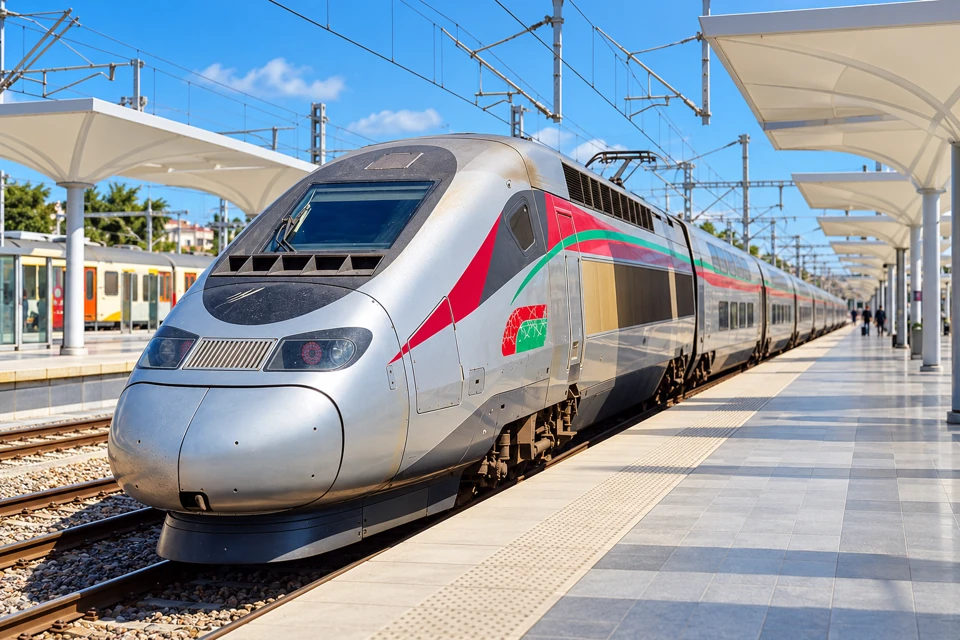
Morocco’s main cities run along a north-south corridor, so the best way to travel depends on your destination. Trains from the national rail operator ONCF are fastest between Tangier, Rabat, Casablanca, Marrakech and Fes. Where there are no trains, buses from CTM and Supratours serve the south and east, including Agadir, Essaouira, Ouarzazate and Merzouga. Royal Air Maroc flies the very long distances to the Atlantic Sahara. Ferries connect Tangier Med to Spain. A rental car reaches the Atlas Mountains, the desert and small towns with little public transport.
Prices below are in Moroccan dirhams (MAD) unless another currency is shown. Fares change with the date and demand, so use them to compare modes, then confirm with the operator before you book.
Which mode fits which trip
| Trip | Best fit | Reason |
|---|---|---|
| Tangier to Rabat, Casablanca or Kenitra | Al Boraq high-speed train | Fastest option, with reserved seats |
| Casablanca to Marrakech or Fes | Conventional train or bus | The train is faster, and the bus is cheaper |
| Marrakech to Agadir, Essaouira or Ouarzazate | Bus | No train service on these routes |
| Marrakech to Merzouga (Erg Chebbi) | Bus or driving | No train, and the trip is about 470 km |
| Oujda or Casablanca to Dakhla or Laâyoune | Domestic flight | Overland distances are very long |
| Tangier to Algeciras or Tarifa, Spain | Ferry | About 1h30 on Baleària, and cars can come aboard |
| Atlas villages, desert tracks, small towns | Rental car | Flexibility where buses are infrequent |
Train routes and fares
Al Boraq, which opened in November 2018 as Africa’s first high-speed line, reaches a top speed of 320 km/h. The trip takes about 2h10 from Tangier to Casablanca and about 1h20 from Tangier to Rabat. Trains run roughly every hour, with 12 or more departures a day. Every seat is reserved and sold in advance. If you are traveling between Rabat and Tangier on Al Boraq, use the Rabat Agdal station rather than Rabat Ville.
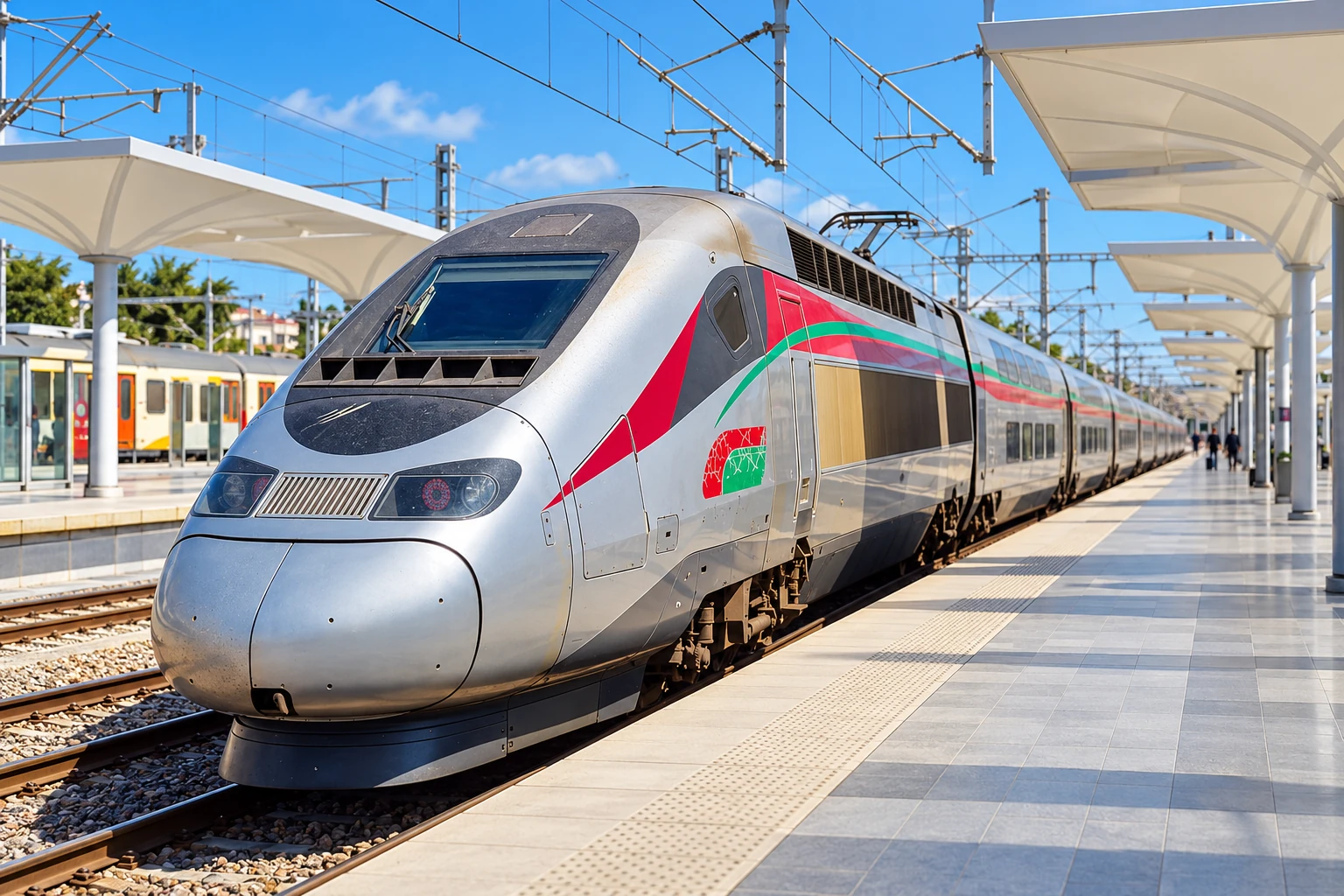
South of Casablanca, conventional Al Atlas trains run every one to two hours to Marrakech and Fes. Casablanca to Marrakech takes about 2h40 to 3h. Casablanca to Fes takes about 3h20 to 4h, and Rabat to Fes about 2h45. The Casablanca to Rabat shuttle leaves every 30 minutes, with 30 or more departures a day. Most lines run from about 6:00 to 22:00.

Two routes need planning. No direct train links Fes and Marrakech. The trip takes roughly 6h30 to 7h with a change at Casa Voyageurs, and a bus on the same corridor is also a long ride. For Tangier to Marrakech you can take an overnight train that leaves Tangier at 23:45 and arrives around 9:00. For the far east, the Casablanca to Oujda train is a very long ride, with two trains a day.
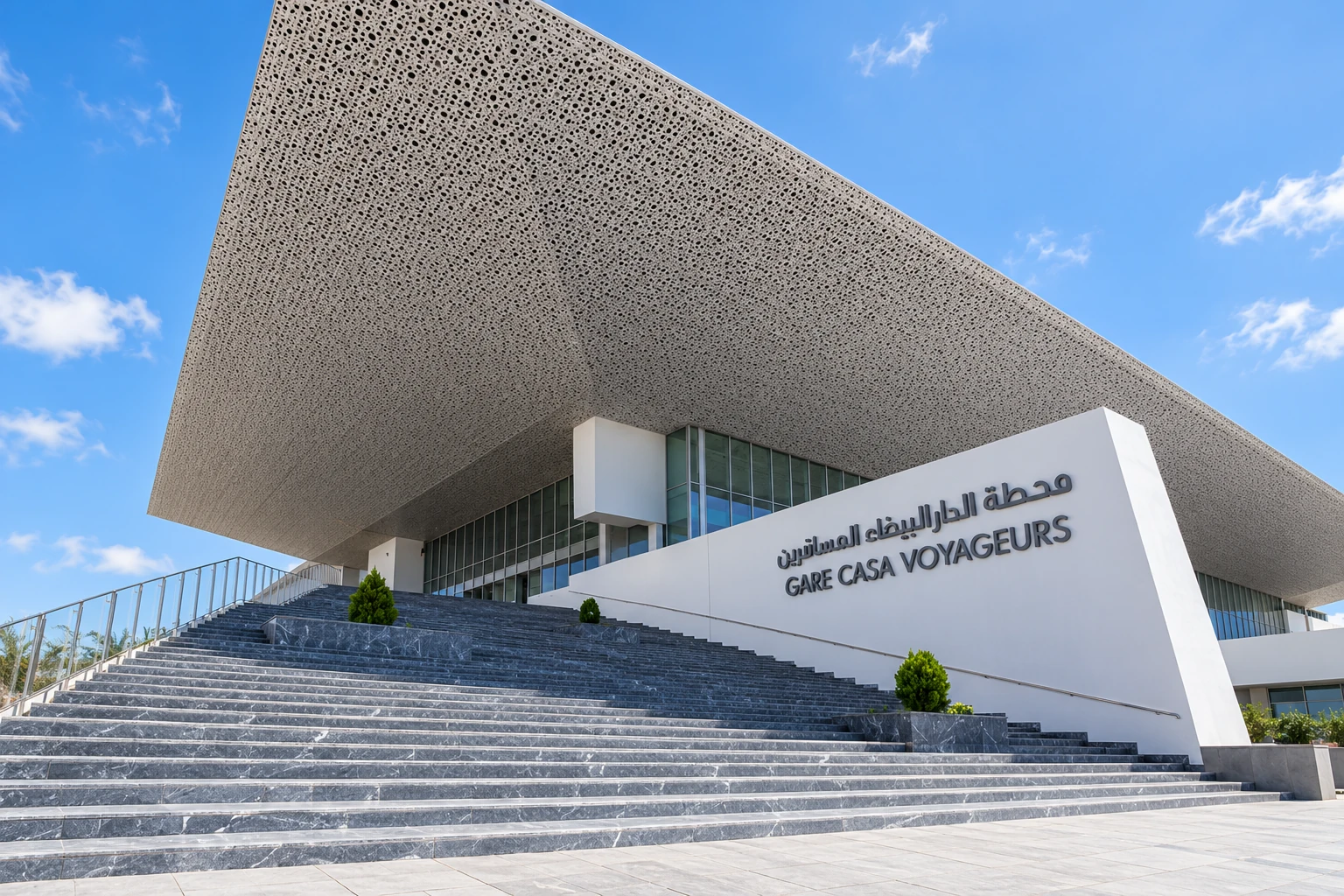
Typical second-class fares in 2026:
- Casablanca to Rabat: from 50 MAD
- Kenitra to Casablanca on Al Boraq: from 79 MAD economy and from 129 MAD first class
- Tangier to Rabat on Al Boraq: from 119 MAD economy and from 189 MAD first class
- Tangier to Casablanca on Al Boraq: from 149 MAD economy and from 229 MAD first class
- Casablanca to Marrakech: about 98 MAD at the low end, with ranges of 110 to 140 MAD second class and 180 to 230 MAD first class
- Rabat to Fes: 95 to 125 MAD second class and 145 to 190 MAD first class
- Casablanca to Fes: 130 to 260 MAD
- Fes to Marrakech with a change: about 204 MAD second class and 340 MAD first class
Children aged 0 to 3 ride free. Al Boraq uses date-based pricing similar to the French TGV, so fares rise as seats sell and the lowest price goes to those who buy early. ONCF plans to extend high-speed rail toward Marrakech and Fes, which would bring Casablanca to Marrakech under 90 minutes.
Booking: Buy tickets on the official ONCF booking site, oncf-voyages.ma, which is linked from oncf.ma. Advance booking opens up to six months ahead, and other resellers also sell ONCF tickets. Stations sell tickets on the day, but trains can sell out and booking ahead is cheaper.
Intercity buses
CTM, short for Compagnie de Transports au Maroc, has run since 1919 and operates the widest network in the country. Supratours is owned by ONCF and connects with rail stations, which makes it a convenient onward leg from a train. Both run air-conditioned coaches with reclining seats, and CTM is known for punctuality. Buses are the cheapest option on most routes and the only public option to Agadir, Essaouira, Ouarzazate and Merzouga.

| Route | Journey time | Fare (MAD) |
|---|---|---|
| Marrakech to Essaouira | 2h30 to 3h, 8+ daily | 80 to 110 |
| Marrakech to Agadir | About 3h to 3h30 | 90 to 150 |
| Marrakech to Ouarzazate | 4 to 5h via Tizi n’Tichka, 4 to 6 daily | 100 to 120 |
| Marrakech to Fes | Long journey | 120 to 250 |
| Casablanca to Marrakech | About 3h30, about 14 daily | About 100 |
| Casablanca to Agadir | 6h30 to 8h | 220 to 280 |
| Tangier to Marrakech | Long journey, overnight available | 250 to 320 |
| Tangier to Chefchaouen | 2h15 to 2h40 | 55 to 85 |
| Fes to Chefchaouen | 4 to 5h | 75 to 200 |
| Marrakech to Merzouga | Long overnight option, about 470 km | CTM about 140, Supratours about 200 |
Prices and times for the same route differ from one listing to the next, so read these as ranges. Recent fare listings from November 2025 put Marrakech to Agadir at about 120 to 150 MAD.
For a trip from Marrakech into the south, the bus decision depends on how much time you have. Essaouira and Agadir each take a morning or an afternoon. Ouarzazate takes a half day through the Tizi n’Tichka pass. Merzouga is an overnight journey, which saves a hotel night but costs sleep. CTM and Supratours also run overnight services on long routes such as Marrakech to Tangier.
Booking: CTM sells e-tickets online and shows seat availability in real time. Supratours tickets are sold through supratours.ma or partner travel agencies. On short, frequent routes such as Marrakech to Essaouira, you have a better chance of getting a seat at the station than on a once-nightly desert run, where booking ahead is wiser.
Domestic flights
Royal Air Maroc runs its domestic network through Casablanca’s Mohammed V International Airport, with destinations including Agadir, Dakhla, Errachidia, Fes, Laâyoune, Marrakesh, Nador, Ouarzazate, Oujda, Rabat, Tangier and Tétouan. Flights are worth the money when the alternative is a day or more on the road.
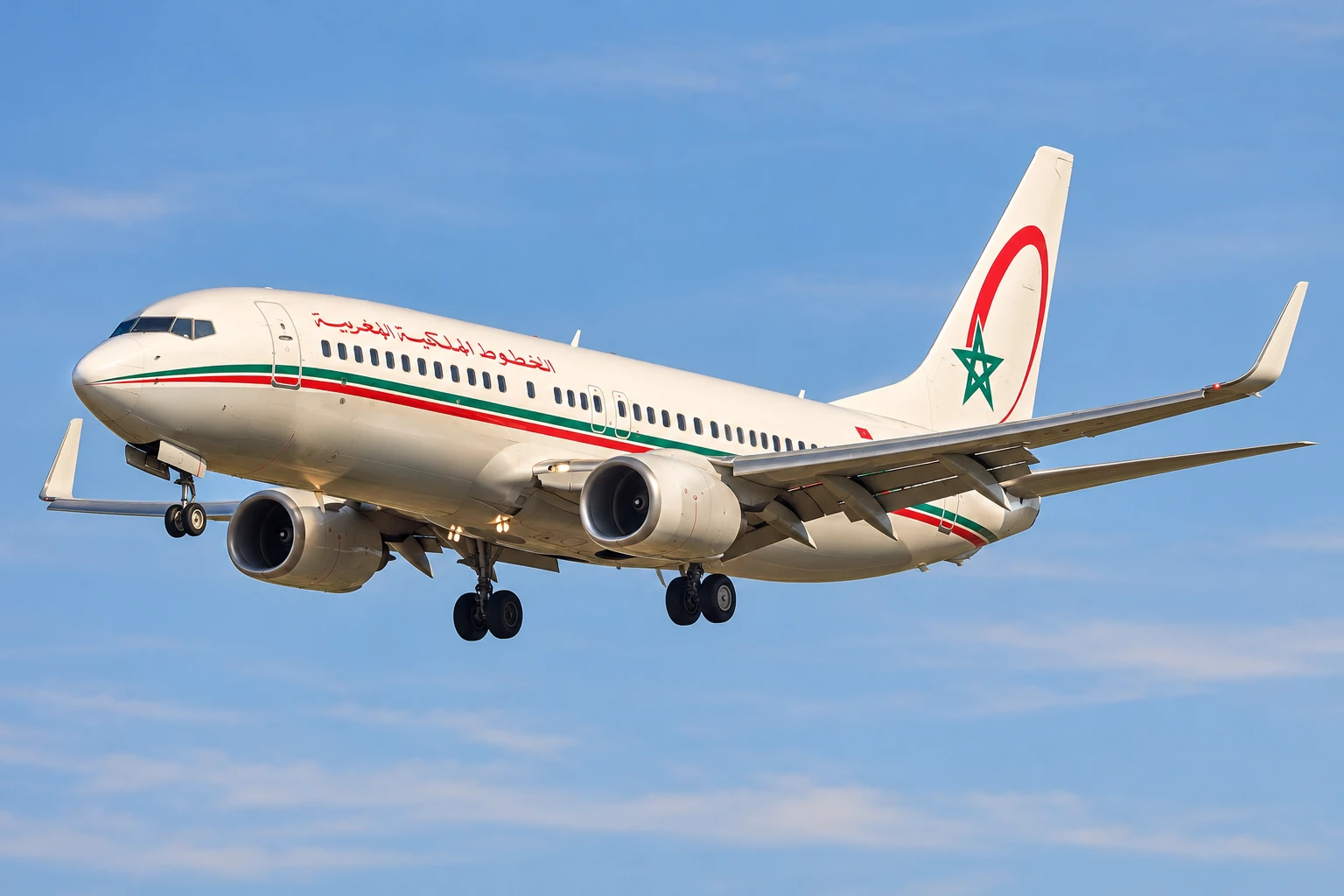
For November 2026 departures, the airline’s domestic page lists these one-way economy "from" prices:
- Oujda to Casablanca (5 November): from 523 MAD
- Casablanca to Oujda (15 November): from 526 MAD
- Casablanca to Agadir (17 November): from 772 MAD
- Agadir to Casablanca (24 November): from 754 MAD
- Casablanca to Laâyoune (17 November): from 981 MAD
- Casablanca to Dakhla (15 November): from 1,056 MAD
For Casablanca to Marrakech, the airline shows a round-trip economy fare from €183.04 for October and November 2026. The train on that corridor takes 2h40 to 3h and costs a fraction of the flight, so flying rarely makes sense there.
Flights are the practical choice in the Atlantic Sahara, where Casablanca to Dakhla or Laâyoune takes about 2 hours or more by air. Marrakech to Dakhla has a direct flight of about 2h10 at around €93 to €101 one way on sample dates, while one-stop itineraries on the Dakhla to Marrakech run take 5 to 6.5 hours. Agadir to Tangier is a direct flight of about 1h30, which replaces a very long drive or a bus ride that needs a connection. Oujda in the northeast is the other case: the train from Casablanca is a very long ride, while the flight starts from 523 MAD.
Booking: Buy on royalairmaroc.com, which offers one-way and return search, "Manage my booking," and add-ons for hold baggage and car rental. The fares shown are "from" prices that change daily and are not guaranteed. The airline says they come from searches in the last 48 hours.
Ferries to Spain
The main crossing is Tangier Med to Algeciras. Tangier Med is a port in the Ksar El Majaz Free Zone, outside Tangier city, so allow time to get there. Baleària runs the route on the Nápoles, about 1h30 over about 37 km, with four daily departures that vary by season. Baleària also lists a Tanger Ville to Tarifa route, and aFerry shows six crossings a day of about two hours on it. Across all operators on the Andalusia to Tangier corridor, Ferryhopper counts about 40 daily crossings in summer and 20 to 30 the rest of the year, with crossing times from 1 to 2h30.
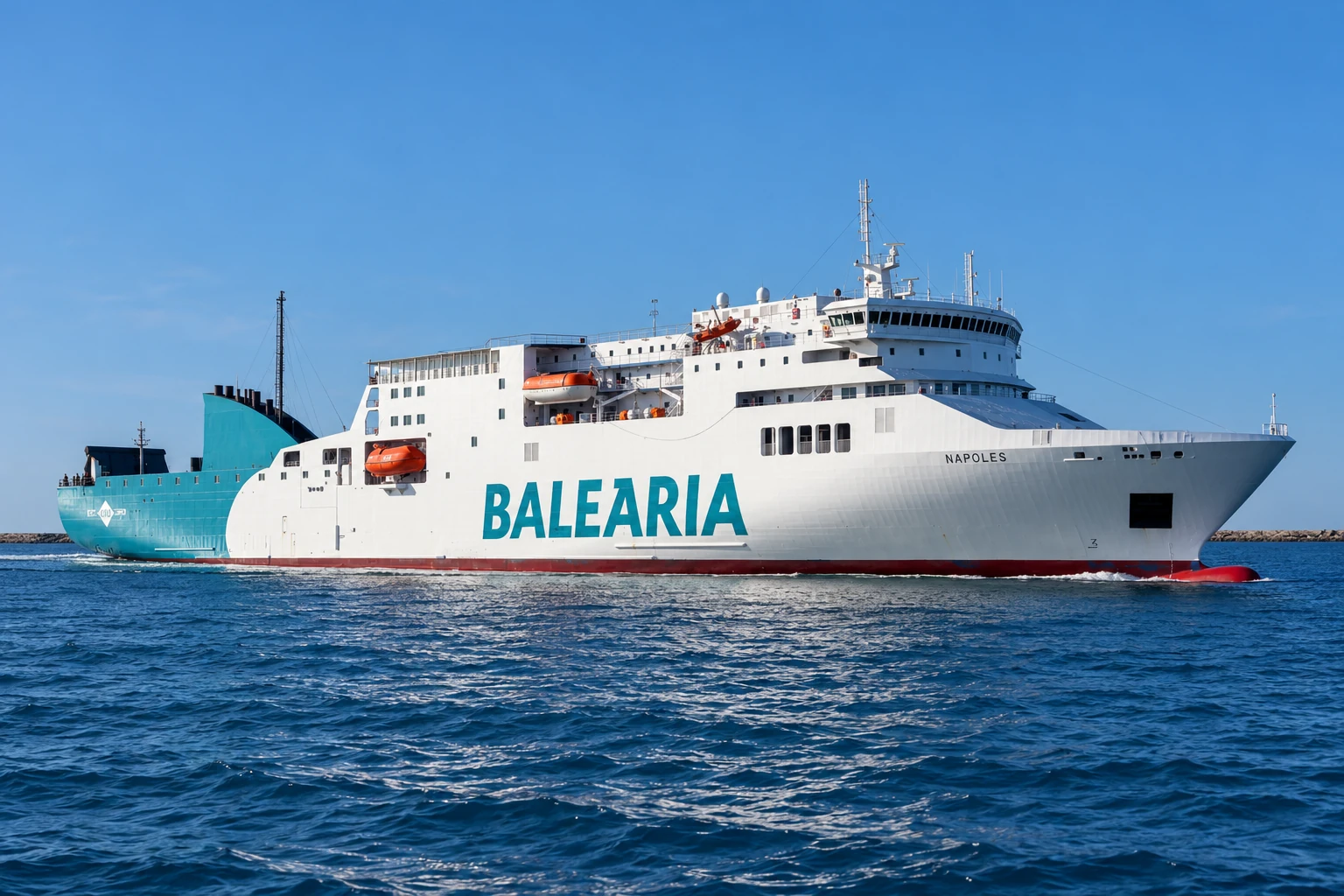
Fares depend on operator, date and whether you bring a car. Baleària lists an adult foot passenger from 66 €, and an average round trip with a car at about 218 €. On this route listing, lower foot-passenger fares on Tanger Med to Algeciras run about 23 to 41 €. A car costs about 111 €. In the other direction, Algeciras to Tanger Med runs 28 to 44.50 € for foot passengers and from about 129 € for vehicles. Ferryhopper lists cars from 191 € on Tanger Med to Algeciras. aFerry’s 2026 estimates in pounds start at 31 GBP for foot passengers. A car with driver runs 164 to 178 GBP, and a motorbike 67 to 71 GBP.
A ferry makes the most sense for travelers driving their own or a rental car between Spain and Morocco, or for a foot passenger heading to Andalusia from Tangier. Book online ahead, especially in high season and for return tickets. Baleària also sells at more than 20 sales points for road travelers.

Renting a car in Morocco
A car suits the Atlas, the desert edge and villages that buses reach rarely or not at all. The legal driving age is 18, but most agencies require drivers to be 21 with at least one year of license. Some agencies require two years. Carsalis, an Agadir operator, asks for both 21 and two years. Some companies add a daily surcharge for drivers under 25, which an IDP guide puts at roughly 80 to 120 DH a day. Premium cars and 4x4s may require drivers to be 25 or 30.
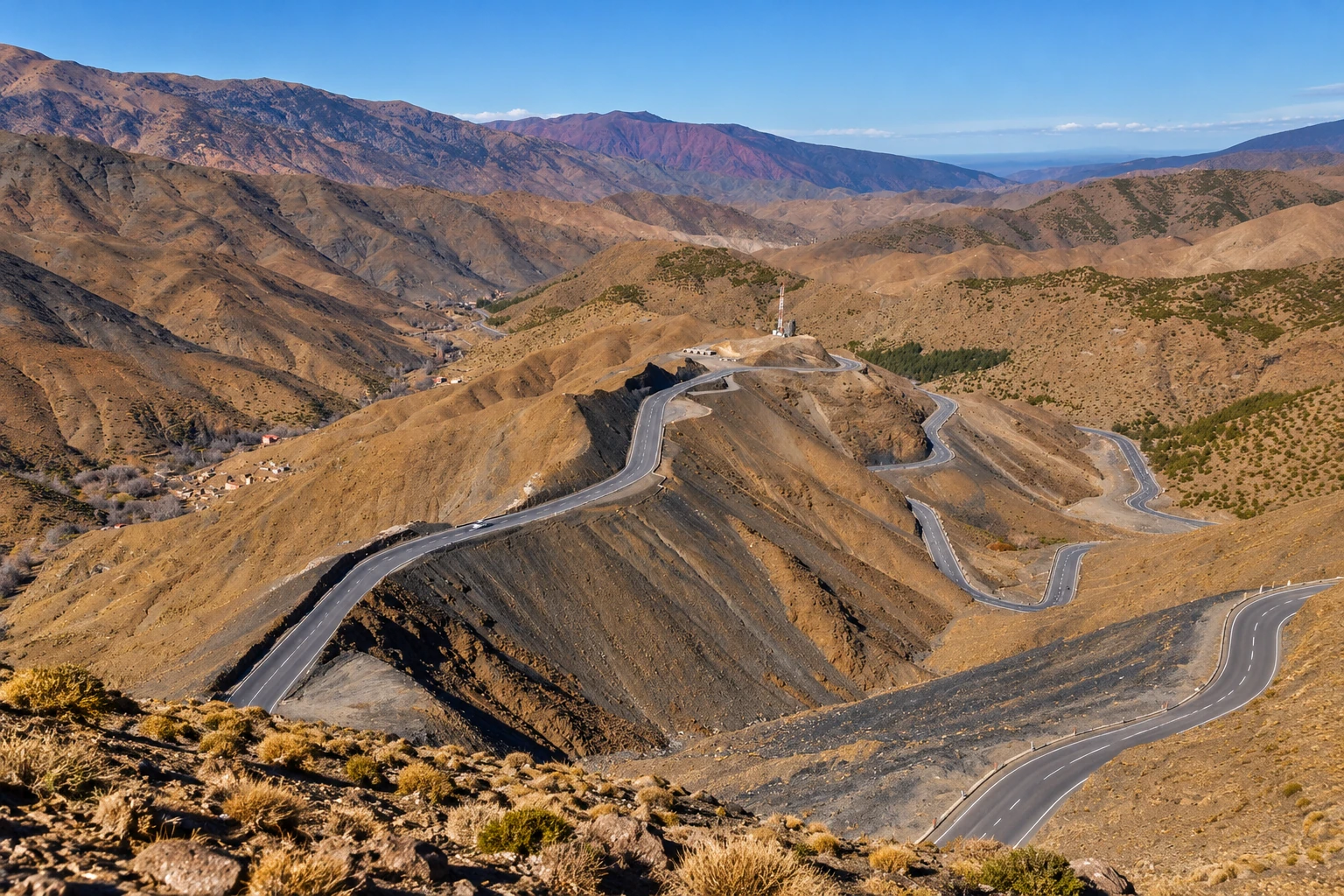
Licenses and the IDP. An international driving permit (IDP) translates your national license and does not replace it. It must be issued in your country of residence, and it cannot be obtained in Morocco. Rental4car advises carrying one if your license is not in English or French, and says tourists can usually drive on a foreign license for up to 90 days. A 2026 driving guide says to carry an IDP if your license is not in French, English or Arabic, and that most rental companies ask for one at pickup. French license holders are generally accepted without one, though some agencies may still ask.
Insurance. Third-party liability is mandatory and included in rental rates by default, but rates do not cover damage to the rental car. Collision damage waiver (CDW) and theft protection are optional, and recommended. Standard CDW excesses (the amount you pay toward damage) run 5,000 to 15,000 DH, and the guide suggests super CDW or zero-excess cover. It also says most US credit-card primary CDW policies exclude Morocco, so check your card agreement before relying on its coverage.
Deposits and payment. The standard way to secure a car is a credit card in the driver’s name, with a hold of about 10,000 MAD. The IDP guide gives a range of 5,000 to 15,000 DH and says debit cards are usually refused. Carsalis is an exception: it takes no deposit or card hold, accepts bank transfer or payment on arrival, and adds 5% to card payments. Do not hand over your passport as a deposit, as a 2024 guide advises.
Prices. Carsalis lists, for July 2026 in Agadir, a Dacia Sandero from 20 € a day and a Dacia Logan from 28 € a day. Family vehicles start from 40 € a day on request, and a Dacia Duster 4×4 from 55 € a day on request. Delivery is free within Agadir. Delivery to Marrakech, Essaouira or Taroudant costs 60 € per journey. Its rates include unlimited mileage and third-party liability, plus 24/7 assistance. Fuel is the renter’s cost, and the car must be returned at the same fuel level.
At pickup. Bring your license, passport or national ID, a credit card and your booking confirmation. Photograph any existing damage and note it on the rental report. Declare any second driver before you leave, since they must meet the same age and license rules.
On the road. Traffic drives on the right. The speed limit is 60 km/h in urban areas and 100 km/h on highways.
Conclusion
For most first trips, the efficient plan is Al Boraq and Al Atlas trains for the northern cities, buses for Essaouira, Agadir, Ouarzazate and the Sahara gateway of Merzouga, and a rental car only for the stretches where timetables run out. Flights cover Dakhla, Laâyoune and Oujda, and the ferry connects the route to Andalusia.
Key Takeaways
- Match mode to corridor: Use trains between Tangier, Rabat, Casablanca, Marrakech and Fes, and buses for Agadir, Essaouira, Ouarzazate and Merzouga, where no trains run.
- Book trains early: Al Boraq seats are reserved, prices are date-based, and tickets can be bought up to six months ahead on oncf-voyages.ma.
- Fly for distance: Casablanca to Dakhla starts from 1,056 MAD and Casablanca to Laâyoune from 981 MAD, which beats a day or more overland.
- Plan the ferry by port: Baleària’s Tangier Med to Algeciras crossing takes about 1h30, with a foot-passenger fare from 66 € and cheaper quotes on comparison sites.
- Check rental terms before paying: Expect a minimum age of 21, a credit card hold of about 10,000 MAD, and CDW excesses of 5,000 to 15,000 DH, and bring an IDP if your license is not in French, English or Arabic.