Best Time to Visit Singapore
Singapore is hot and humid every month of the year and has no true dry season. The best time to visit depends on rainfall, haze, crowds, and the festivals you want to see. Haze is smoke from forest and peat fires in neighboring countries that drifts over the island. It is the one seasonal risk that changes a trip, and it is concentrated from about June to October. Rain is heaviest from November to January.
For most travelers, February through April is the strongest window. Haze risk is lowest, Lunar New Year and Hari Raya fall in this period, and February is the driest month. Late May to June suits travelers who want warm weather and are willing to check air quality. November has the fewest arrivals in the official monthly series but is among the wettest months.
Weather Across the Year
Two monsoons and two transition periods shape the year. The Northeast Monsoon runs from December to early March, with northerly to northeasterly winds, and monsoon surges bring heavy, sustained rain. The inter-monsoon periods, roughly March to May and October to November, bring hot afternoons and warm nights. In October and November, afternoon and evening thunderstorms form from surface heating and sea breezes. The Southwest Monsoon runs from June to September and is the period when haze from regional fires is most likely to reach Singapore. Sumatra squalls, which are lines of thunderstorms moving east from Sumatra or the Straits of Malacca, can bring heavy rain in any season.
Temperature barely moves. At the Changi climate station, monthly mean temperatures run from 26.8°C in December and January to 28.6°C in May. The table shows the 1991 to 2020 normals from Meteorological Service Singapore (MSS). Islandwide figures average 32 stations and are wetter than Changi in most months. December is the exception, when Changi is the wetter of the two.
| Month | Mean temp (°C) | Daily max / min (°C) | Rain at Changi (mm) | Rain islandwide (mm) |
|---|---|---|---|---|
| Jan | 26.8 | 30.6 / 24.3 | 221.6 | 222.4 |
| Feb | 27.3 | 31.5 / 24.6 | 105.0 | 132.1 |
| Mar | 27.8 | 32.2 / 24.9 | 151.1 | 209.7 |
| Apr | 28.2 | 32.4 / 25.3 | 163.8 | 244.1 |
| May | 28.6 | 32.3 / 25.7 | 163.8 | 206.8 |
| Jun | 28.5 | 31.9 / 25.7 | 137.1 | 175.5 |
| Jul | 28.2 | 31.4 / 25.4 | 144.8 | 178.8 |
| Aug | 28.1 | 31.4 / 25.3 | 148.9 | 182.4 |
| Sep | 28.0 | 31.6 / 25.2 | 124.6 | 175.4 |
| Oct | 27.9 | 31.8 / 25.0 | 166.4 | 206.4 |
| Nov | 27.2 | 31.2 / 24.6 | 254.1 | 284.3 |
| Dec | 26.8 | 30.5 / 24.3 | 332.1 | 316.3 |

Averages hide variation from year to year. Recent months have swung well beyond the normals, as the monthly entries below show.
What to Expect Each Month
January
January is the wet, festive start of the year. Changi averages 221.6 mm of rain, and a Northeast Monsoon surge on 10 to 13 January 2025 pushed islandwide rainfall that month to 430.0 mm, nearly double the long-term average. Haze risk is low. January 2025 was the busiest month in the official arrivals series, with 1,633,471 visitors.
The events calendar fills with indoor-friendly programming: the Light to Night Festival (9 to 31 January 2026), Singapore Art Week (22 to 31 January), and a Pongal Open House at the Indian Heritage Centre (11 to 18 January). Spring Blossoms starts on 16 January and runs to 1 March. New Year’s Day 2026 fell on a Thursday. January suits museum, gallery, and arts itineraries, with spare plans for the rainy days.
February
February is the driest month at Changi, averaging 105.0 mm, and Changi recorded 73.8 mm in February 2025, its driest month of that year. Haze risk is low, and the air is among the clearest of the year. February 2025 drew about 1.38 million arrivals, driven largely by Lunar New Year.
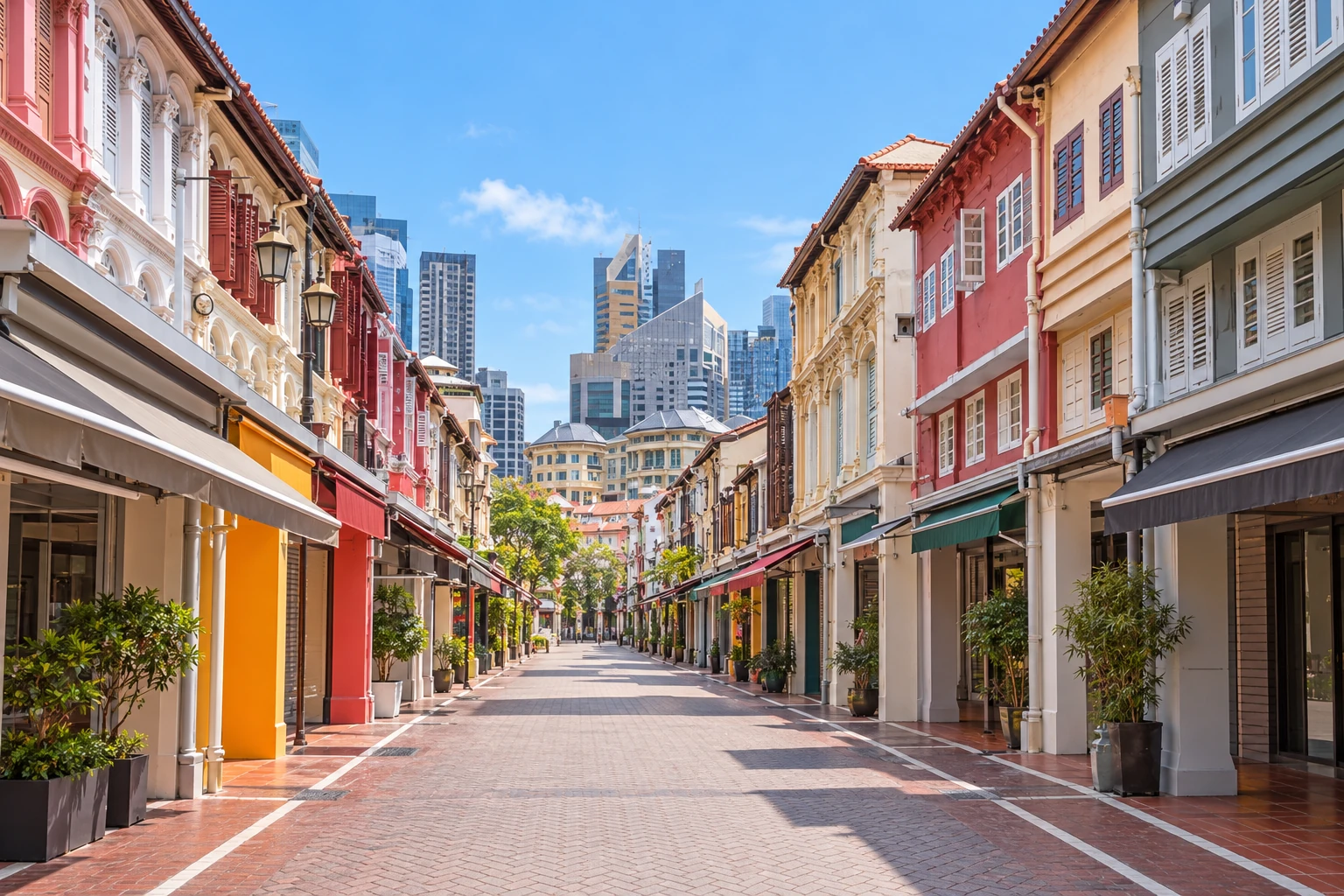
The public holidays for Lunar New Year in 2026 are Tuesday 17 and Wednesday 18 February. Chinatown’s celebrations run from 30 January to 18 March, River Hongbao at Marina Bay runs 15 to 24 February, and Hari Raya Light Up in Geylang Serai starts on 14 February and runs to 21 March. The biennial Singapore Airshow runs 3 to 8 February, and Chingay, a large street parade, is on 27 and 28 February. February combines the lowest rainfall with the densest festival calendar, so book hotels early.
March
March warms to a mean of 27.8°C, and Changi averages 151.1 mm of rain. Averages understate the risk: March 2025 was the wettest March on record, with 482.9 mm islandwide (130% above average) and 550.1 mm at Changi, helped by a monsoon surge on 19 and 20 March. Arrivals were mid-range, at about 1.30 million in March 2025.
March also carries a small haze risk when northeasterly winds blow smoke toward Singapore. On 26 March 2025, 9am readings of the Pollutant Standards Index (PSI, the official air-quality score) ranged from 61 to 75, with the highest readings in the central region. Hari Raya Puasa, the end of Ramadan, falls on Saturday 21 March 2026. The Sakura Flora Display opens 13 March and runs to 15 April. Pack a rain jacket and keep plans flexible.
April
April is warmer, with a mean of 28.2°C. Changi averages 163.8 mm and the islandwide average is 244.1 mm. April 2025 brought 364.9 mm islandwide, the second-wettest April since 1980, so showers are frequent even in a month with low haze risk. Arrivals were mid-range at about 1.40 million in April 2025.
Good Friday is on 3 April 2026, creating a long weekend from 3 to 5 April. The Sakura Flora Display continues to 15 April. April works well for city sightseeing in the cooler hours and indoor breaks in the afternoon.
May
May is the hottest month on the Changi normals, with a mean of 28.6°C and a daily maximum of 32.3°C, and Changi averages 163.8 mm of rain. Expect heat and humidity throughout. Haze risk is low to moderate.
The month has three public holidays in 2026: Labour Day on Friday 1 May, Hari Raya Haji on Wednesday 27 May, and Vesak Day on Sunday 31 May, with Monday 1 June as the holiday if the rest day falls on 31 May. The Singapore International Festival of Arts runs 15 to 30 May. School holidays begin on 30 May, so the last weekend of the month is the start of a busier period.
June
June’s mean is 28.5°C, with 137.1 mm of rain at Changi and 175.5 mm islandwide. June 2025 was the warmest June on record at 29.3°C, tied with 1997, and islandwide rainfall was 126.4 mm, 28% below average. Haze risk begins to rise as the Southwest Monsoon sets in.
June 2024 was one of the quietest months in the official series at 1,250,293 arrivals, even though local school holidays run from 30 May to 28 June in 2026. The Dragon Boat Festival falls on 19 June 2026, and the Great Singapore Sale runs from June into July. June suits shoppers and travelers who prefer lighter crowds and will check air quality each morning.
July
July is slightly cooler than June at a mean of 28.2°C, with 144.8 mm of rain at Changi and 178.8 mm islandwide. July 2025 averaged 29.1°C, the second-warmest July on record. July 2024 was the busiest month of that year in the official series, with 1,602,596 arrivals, so demand is high even though haze risk sits within the main window.
The Great Singapore Sale continues. Book flights and rooms ahead, and carry a plan for indoor days if the air quality turns unhealthy.
August
August averages 28.1°C, with 148.9 mm at Changi and 182.4 mm islandwide. August 2024 was the second-busiest month of that year, at 1,539,828 arrivals, and arrivals from Europe peaked in the month. Haze risk is within the main window and rises in drier years.
National Day is on Sunday 9 August 2026, with Monday 10 August as the holiday for employees whose rest day falls on the 9th. The National Day Parade is held at Marina Bay. August suits travelers who want the patriotic celebrations and accept the heat and the haze possibility.
September
September averages 28.0°C, with 124.6 mm at Changi and 175.4 mm islandwide, though September 2025 delivered 249.3 mm islandwide, 42% above average. September 2024 arrivals were 1,270,675.
This is one of the highest-risk months for haze. In mid-September 2019 the 24-hour PSI reached about 164, and schools cut back outdoor activities. In 2026, the Central Region reached the Unhealthy range with a reading of 101 at 7am on 4 September. Ghost Month ends on 10 September 2026, and Mid-Autumn Festival falls on Friday 25 September 2026, the peak weekend for lantern displays. A September trip works only if your dates can move with the air quality.
October
October averages 27.9°C, with 166.4 mm at Changi and 206.4 mm islandwide. The heat is intense: on 28 October 2025, Changi hit 35.9°C, the highest October reading on record, and on 31 October 2025 the highest 15-minute Wet-Bulb Globe Temperature (WBGT, a heat-stress measure that combines temperature, humidity, and sun) was 35.0°C at Sentosa Palawan Green. October 2024 arrivals were 1,314,486.
Haze risk remains elevated, and haze was visible over Tanjong Rhu on 16 October 2026. The Singapore Grand Prix weekend is 9 to 11 October 2026. Little India begins its Deepavali light-up, which runs for about six weeks. Motorsport fans will come in October, and others should expect heat, rain, and some air-quality risk.
November
November’s mean is 27.2°C, but it is the second-wettest month on the Changi normals at 254.1 mm, with 284.3 mm islandwide. November 2025 set records for monthly mean temperature (28.2°C) and mean daily maximum (32.8°C), so the month is both hot and wet. It was also the quietest month in the official arrivals series, at 1,234,696. Haze risk is lower than in September and October but not zero.
Deepavali is on Sunday 8 November 2026, with Monday 9 November as the holiday for employees whose rest day falls on the 8th. The Singapore FinTech Festival takes place this month, and Orchard Road’s Christmas light-up begins in mid-November. School holidays begin on 21 November 2026. November suits travelers who put low arrival volumes ahead of dry weather.
December
December is the wettest month on the Changi normals at 332.1 mm, with a mean of 26.8°C, and islandwide rainfall averages 316.3 mm. Haze risk is low. December 2024 arrivals were 1,390,631, and school holidays run to 31 December.
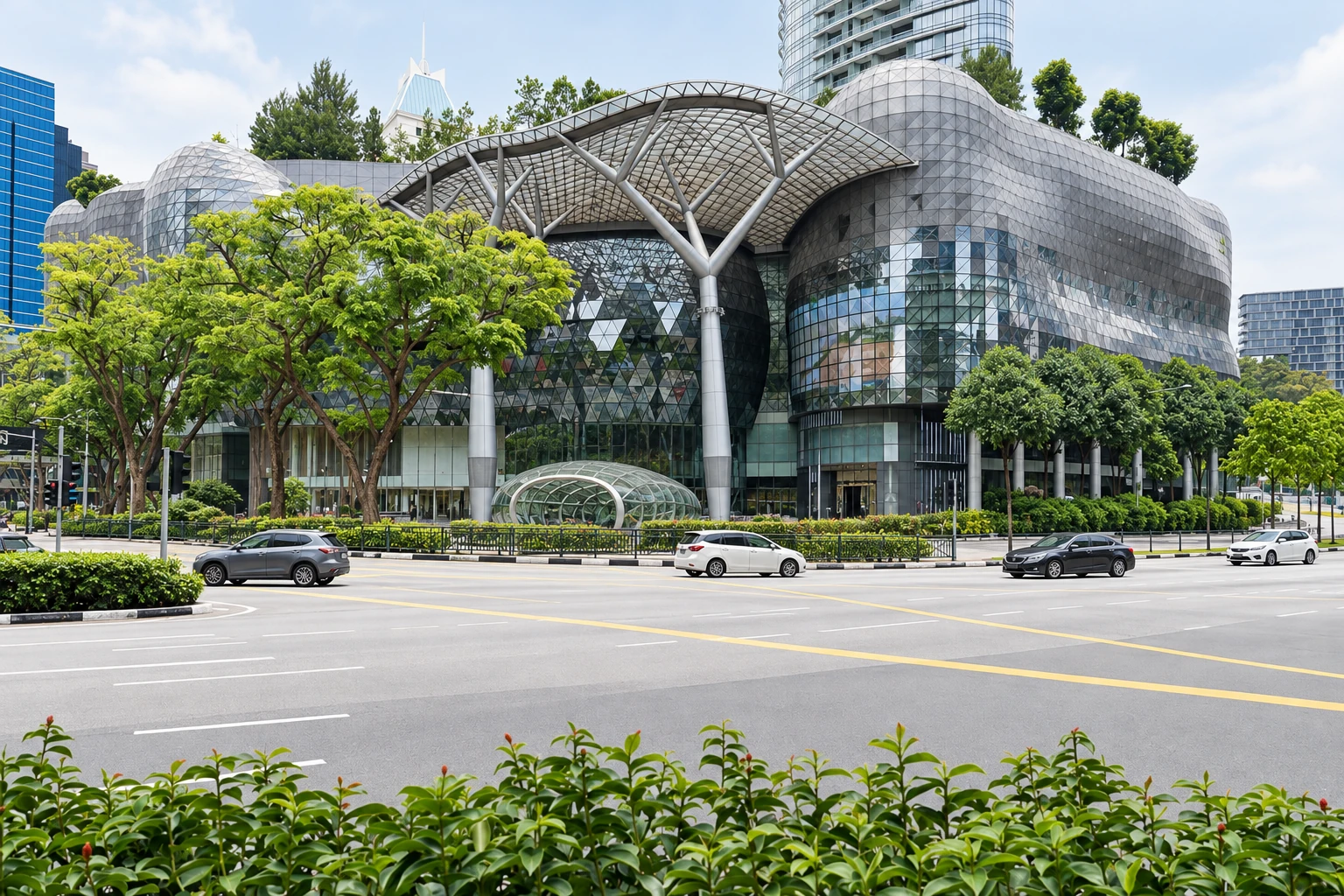
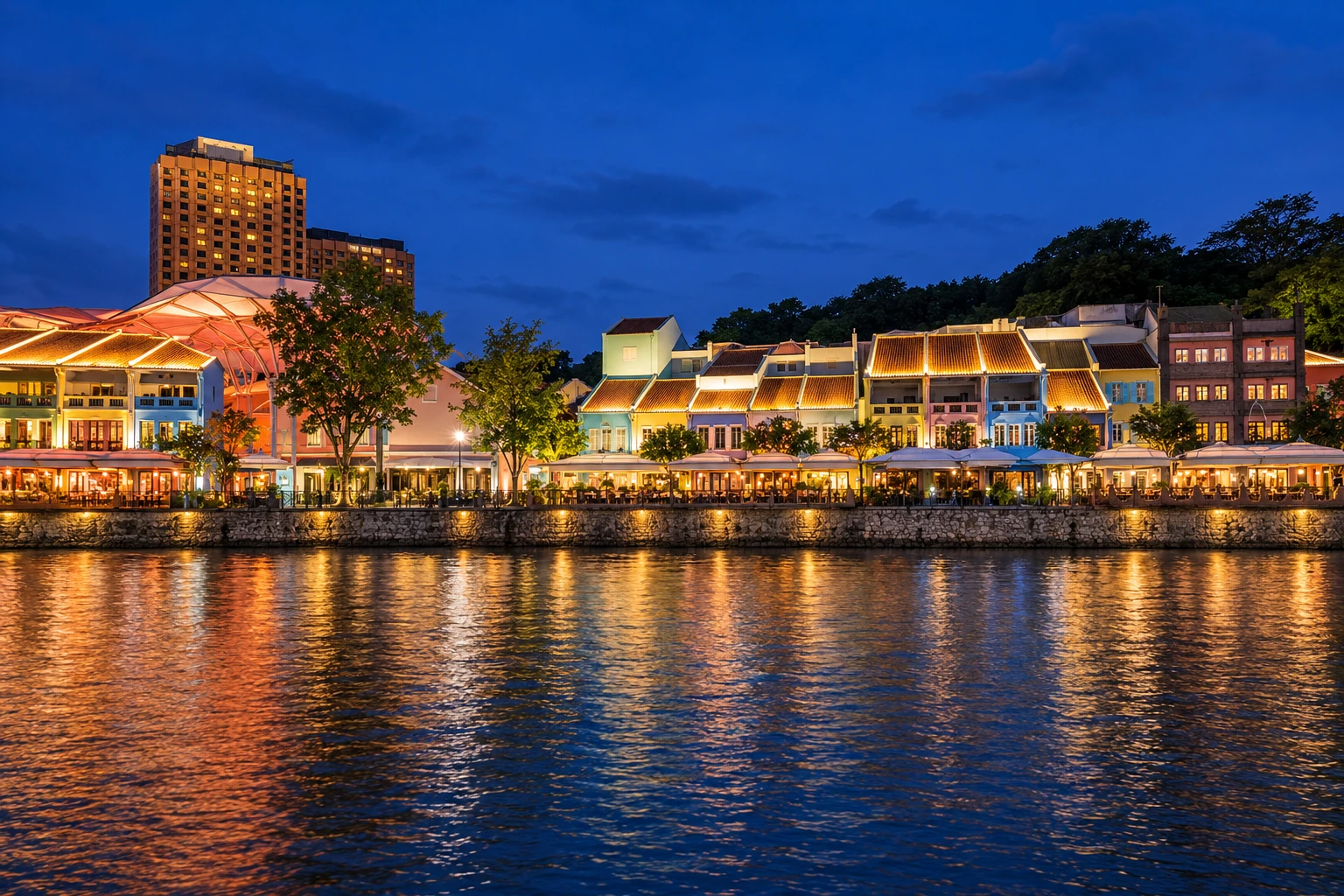
Orchard Road’s light-up is in full swing, and the New Year’s Eve countdown draws crowds around Marina Bay and Clarke Quay. Christmas Day 2026 is a Friday. December suits festive shopping and holiday events if you can put up with frequent heavy rain.
Crowds and School Holidays
SingStat’s monthly arrivals series from June 2024 through January 2025 shows the shape of demand. January 2025 (1,633,471) and July 2024 (1,602,596) were the busiest, followed by August 2024 (1,539,828) and December 2024 (1,390,631). October 2024 (1,314,486), September 2024 (1,270,675), June 2024 (1,250,293), and November 2024 (1,234,696) were the quietest. The SingStat tourism tables hold the full series.
Singapore received 16.9 million international visitors in 2025, up 2.3% on 2024, according to the Singapore Tourism Board (STB). The top markets were Mainland China (3.1 million), Indonesia (2.4 million), Malaysia (1.3 million), Australia (1.3 million), and India (1.2 million). Large events add their own spikes: the Singapore Grand Prix drew 300,641 people over three days in 2025, and Singapore Art Week drew more than 41,000 visitors across 105 galleries.
The 2026 school holidays run from 30 May to 28 June and from 21 November to 31 December. Public holidays from the Ministry of Manpower create six long weekends in 2026: 3 to 5 April, 1 to 3 May, 30 May to 1 June, 8 to 10 August, 7 to 9 November, and 25 to 27 December. Lunar New Year (17 and 18 February) and Hari Raya Puasa (Saturday 21 March) fall on their own. Attractions and restaurants get busier on those weekends, so reserve ahead.
Hotel Rates and Occupancy
Singapore hotels charge a high rate all year. The 2025 average room rate was S$273.5, down 1%, and average occupancy was 81.9%, up from 81.4% in 2024, according to STB’s 3 February 2026 release. Revenue per available room was S$224.04, down 0.4%. The city added 644 hotel keys (individual rooms) in 2025. In the first quarter of 2026, average occupancy rose to 83.09% from 80.54% a year earlier.
Occupancy that high means no month is empty. Pressure is greatest around January, the July and August peak, and the December holidays, matching the arrival figures. The quietest months, June and November, are the likeliest times to find softer rates. For shopping, the Great Singapore Sale runs from June to July.
Haze Risk and Air Quality
The National Environment Agency (NEA) says transboundary haze affecting Singapore comes mainly from forest and peat fires in the region. The risk is concentrated in the Southwest Monsoon, roughly June to October, and is highest in August to October, according to a seasonal guide. The March 2025 episode shows haze can arrive outside that window when winds and dry weather line up.
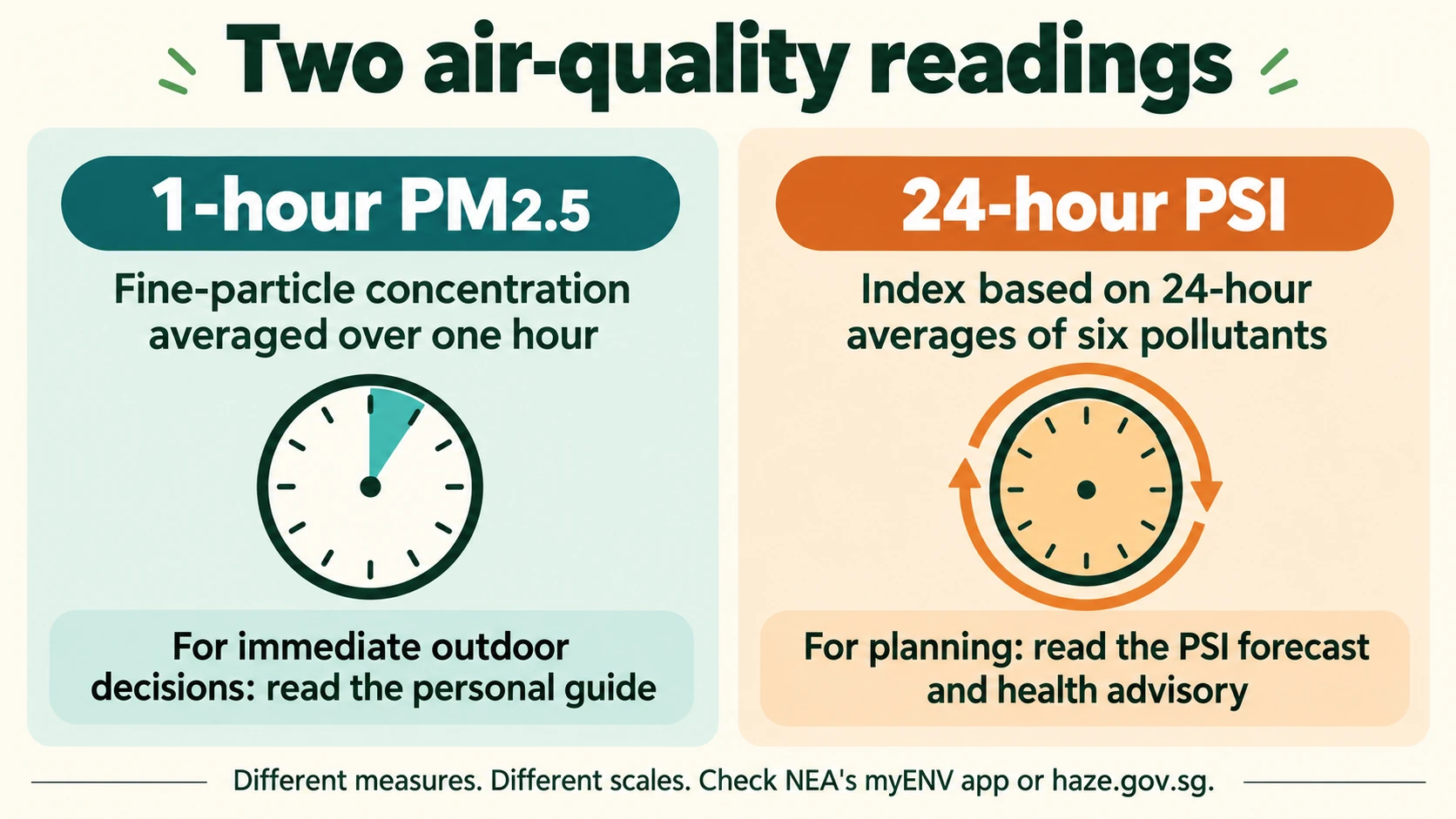
NEA reports the 24-hour PSI for five regions (North, South, East, West, and Central), based on town centers. PSI 51 to 100 is Moderate and above 100 is Unhealthy. In the 101 to 200 range, authorities advise reducing prolonged outdoor activity, especially for the elderly, pregnant women, and children. NEA also publishes 1-hour PM2.5 readings, the fine particles that dominate transboundary haze. The 24-hour PSI can lag a fast-moving plume and still read Moderate while the air already smells of smoke. Use the 1-hour PM2.5 for the current picture and the 24-hour PSI for health advice. The official channels are NEA’s myENV app and haze.gov.sg, and a practical guide recommends moving strenuous outdoor activity indoors when PSI reaches Unhealthy.
History explains why travelers watch the El Niño forecast. Severe haze (PSI 150 and above) is concentrated in El Niño years. The record 24-hour PSI was 401 in 2013, the first reading above 400, which led to the Transboundary Haze Pollution Act. Earlier peaks were 226 in 1997 and 341 in 2015, when studies estimated economic losses of S$1.8 billion. The 2019 episode peaked near 164 in mid-September. The May 2026 outlook from NEA and MSS points to an increased likelihood of haze from June to October.
For a trip booked in the haze window, choose flexible hotel and tour terms, keep a list of indoor options such as museums, malls, and galleries, and check the readings each morning.
Heat and Humidity
Heat does not vary much by season, but it has been climbing. MSS counts a day as high heat stress when any hourly average WBGT at a station reaches 33°C. Singapore logged 29 high-heat-stress days in 2025, up from 21 in 2024, though part of the rise reflects more WBGT stations, especially in the second half of 2025. The record-heat months in 2025 were June, July, October, and November.
The inter-monsoon months of October and November have the hottest afternoons and warmest nights, and May has the highest mean temperature. Plan outdoor sightseeing for the morning or evening, drink water often, and use air-conditioned malls, trains, and museums for the midday break. December and January are the coolest months by mean temperature, at 26.8°C, which is a small relief.
Festivals by Neighborhood
Singapore’s festivals each have a home neighborhood, and the official weather figures cover the whole island, so location matters mainly for events and air-quality reporting.
- Chinatown: Chinese New Year celebrations run from 30 January to 18 March in 2026.
- Marina Bay: River Hongbao in February and the National Day Parade with fireworks in August. New Year’s Eve countdown events follow in December.
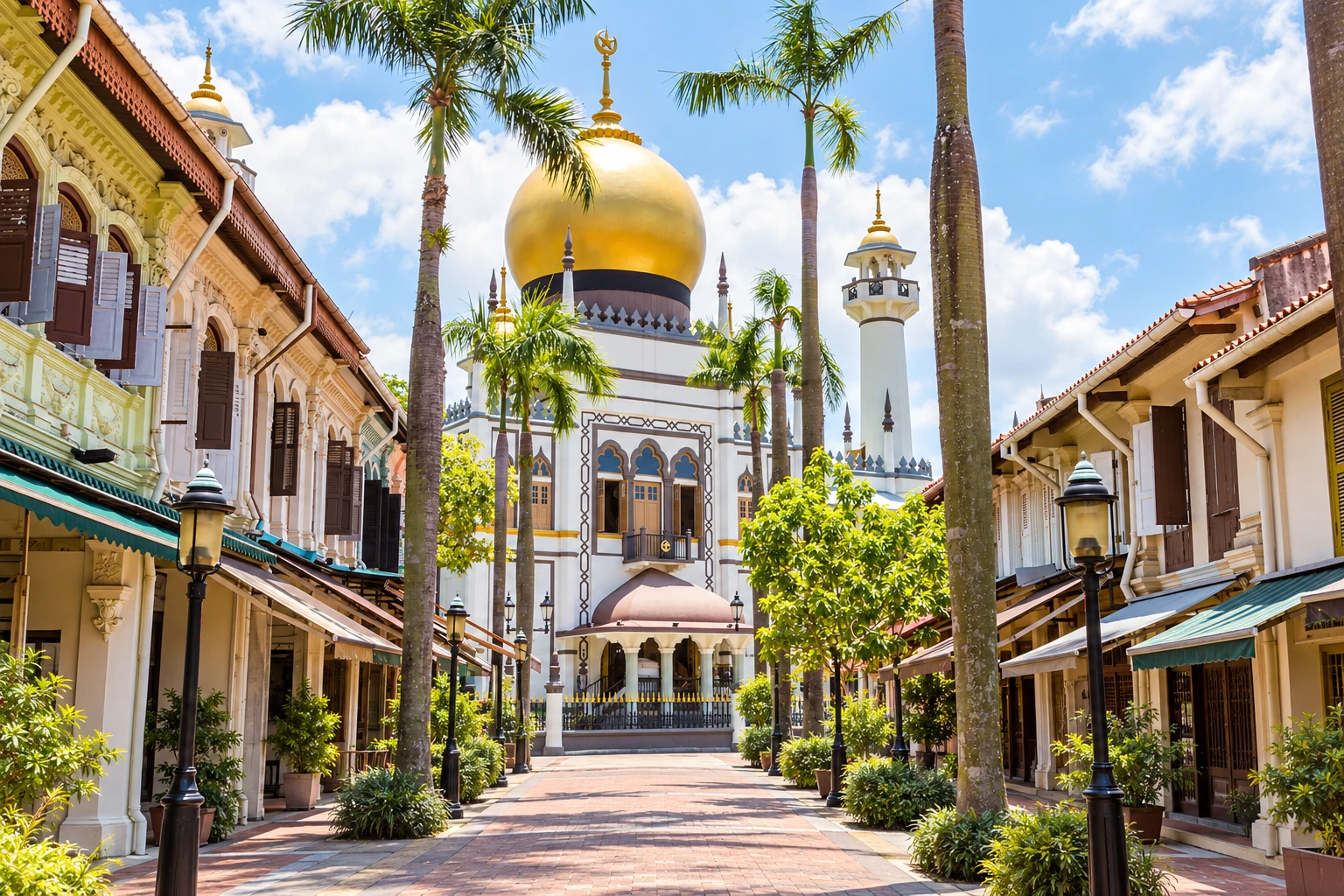
- Kampong Glam and Geylang Serai: Hari Raya, with Geylang Serai’s light-up running 14 February to 21 March in 2026 and Kampong Glam the traditional gathering place.
- Little India: Deepavali, with the light-up on Race Course Road running from October into November.
- Orchard Road: Christmas lights from mid-November through December.
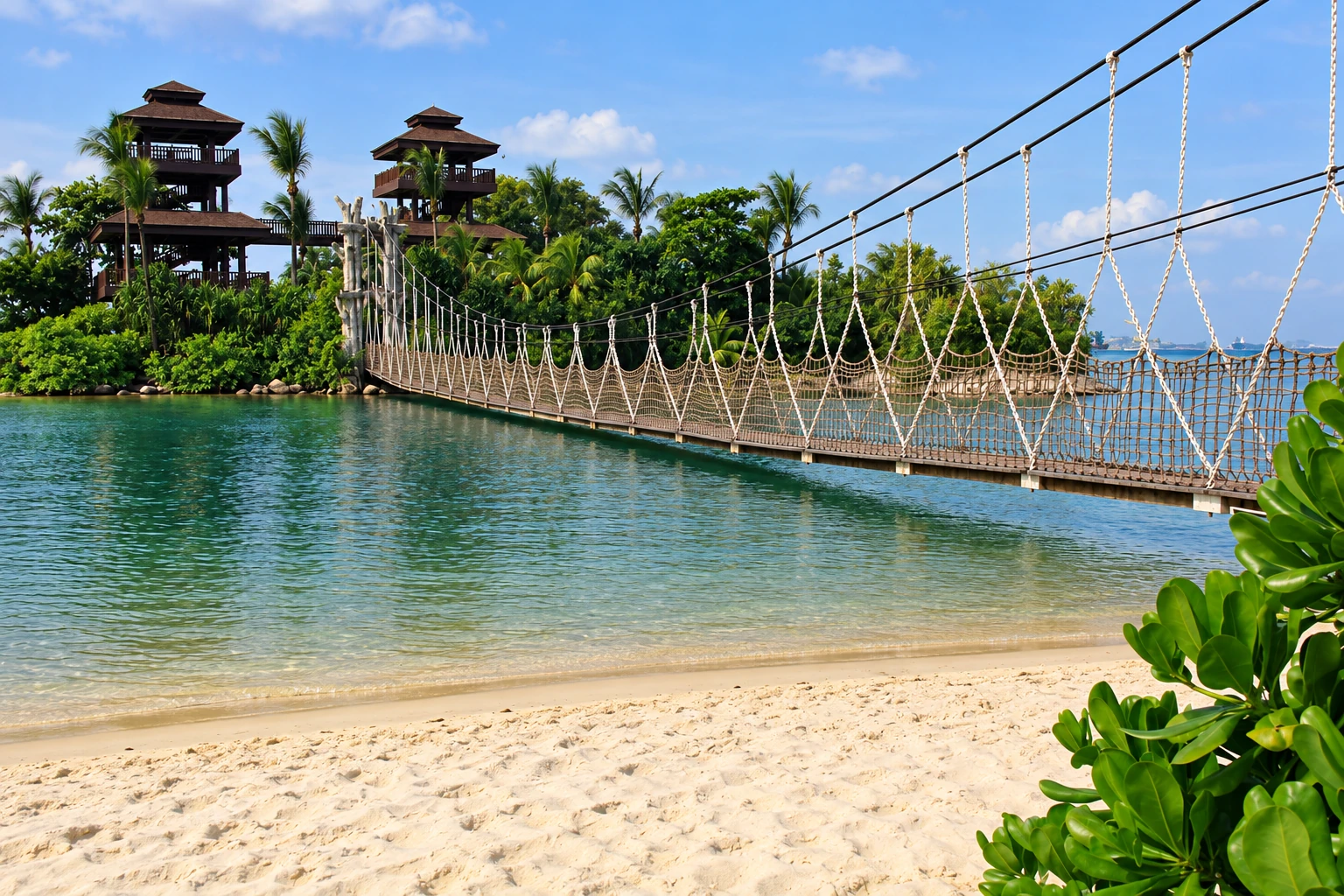
- Sentosa: This resort island recorded the highest WBGT reading of 2025 (35.0°C), so plan beach and outdoor time for early or late in the day.
Lunar-calendar festivals move each year, so check the Singapore Tourism Board events calendar before booking.
Choosing Your Dates
First-time visitors who want clear air and strong festivals should go in February or early March. Lunar New Year brings Chinatown and Marina Bay to life, rainfall is lowest, and haze risk is low. Book hotels well ahead and accept that prices will be firm.
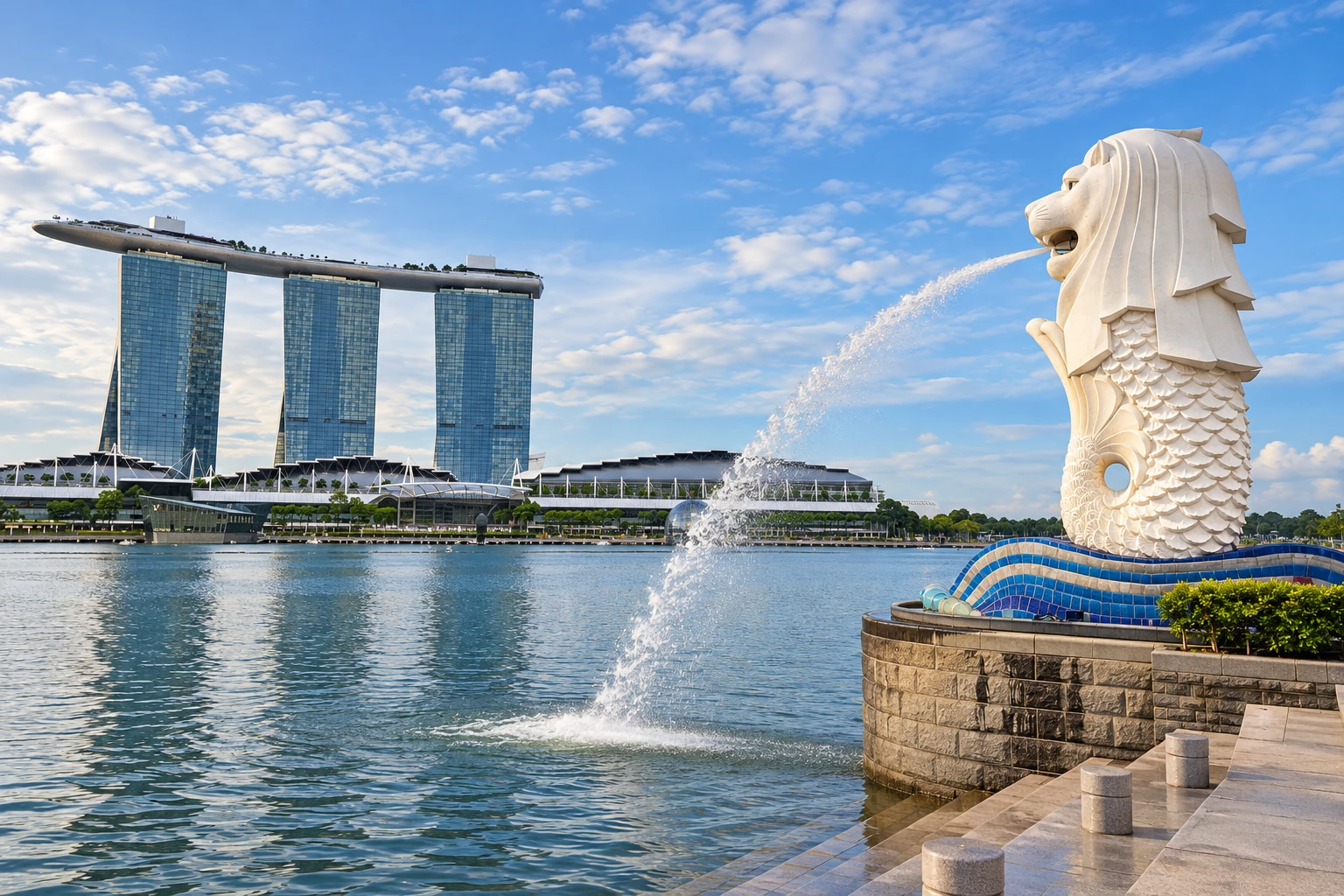
Travelers who want the Hari Raya light-ups and the Sakura display, with fewer crowds than Lunar New Year, can aim for mid-March to mid-April. Pack for rain: March and April both had well-above-average rainfall in 2025.
Families tied to school calendars will travel from 30 May to 28 June or from 21 November to 31 December. The first falls in the early haze window, and the second falls in the wet season, so both reward flexible plans.
Budget travelers and shoppers can look at June, when arrivals were low and the Great Singapore Sale begins, or November, the quietest month in the arrivals series. The cost is haze monitoring in June and heavy rain in November.
Motorsport fans should plan for the Grand Prix weekend on 9 to 11 October 2026 and book early, given the 300,641 attendance in 2025. Arts travelers have January (Light to Night and Singapore Art Week) and May (Singapore International Festival of Arts). Anyone sensitive to smoke or traveling with infants or older adults should avoid August through October.
Key Takeaways
- Choose February to April for the safest trip. Air quality is clearest and February is the driest month. Lunar New Year, Hari Raya, and the Sakura display also fall in this window.
- Treat June to October as haze season. The highest risk is in August to October, so check 1-hour PM2.5 each morning and keep flexible bookings and indoor backups.
- Expect rain in November to January. December is the wettest month at 332.1 mm at Changi. November is the quietest month in the arrivals series.
- Book early for the busy months. January, July, and August drew the most arrivals, and the school holidays (30 May to 28 June, 21 November to 31 December) add family travel.
- Plan around the heat. Mean temperatures vary by under 2°C across the year, so schedule outdoor sightseeing for the morning or evening in every month.