Best Time to Visit Indonesia
Indonesia’s dry season varies by region. BMKG, the national meteorology agency, publishes seasonal forecasts that show when each region’s dry season begins. Its 2025 outlook puts the nationwide peak in June, July, and August, with the season starting earlier in Nusa Tenggara, the island chain east of Bali, and in parts of East Java. Weather is only one factor in timing. Indonesian public holidays cause the sharpest domestic travel peaks, and Bali’s festival calendar is the densest in the country.
Below, you’ll find the dry season by region, the holiday periods that fill flights, trains, and hotels, a month-by-month breakdown, and the two entry costs that apply to every trip: the visa fee and Bali’s tourist levy. Festival and holiday dates reflect the year that official calendars specify, so confirm the current year’s decree before you book.
When the Dry Season Arrives
BMKG divides Indonesia into seasonal zones called ZOM (Zona Musim). Its May 2025 revision forecast 403 zones, or 57.7% of Indonesia’s zones, to enter the dry season between April and June. Nusa Tenggara was forecast to start earliest of all regions. Another 409 zones (59%) were forecast to start the same as or later than normal, and rainfall during the dry season was forecast to be normal in most zones. Zone counts measure forecast areas, not land area, so read them as a sign of how widespread the pattern is.
The peak is where the driest weather concentrates. In March 2025 BMKG forecast the national peak for June, July and August. The May revision kept the peak broadly in July and August, with an earlier peak than before in Java and Papua and a later one in Sulawesi and Sumatra. BMKG’s head said in 2025 that Central and East Java, Kalimantan, Sulawesi, Bali, Nusa Tenggara and Maluku would peak in August.
Local BMKG offices add detail. The Juanda office in East Java forecast some areas to begin the dry season in late March 2025, with a peak in late July to early August. Other East Java areas were forecast to peak in late August to early September. In North Sulawesi, the BMKG office forecast an August 2025 peak around Bolaang Mongondow, Minahasa and Manado, followed by a second peak in October. Sumatra’s onset was forecast to match normal timing.
The practical reading is that June to August is the safest window for dry weather across most of the country. Late March through June works for the regions that start early, and September and October still hold dry conditions in places such as East Java and North Sulawesi. BMKG issues a new seasonal forecast each year, so check its seasonal prediction pages for the year you travel.
Holidays That Fill Transport and Hotels
Indonesia sets its national holidays and "collective leave" days (extra days off that employers give around holidays) in an annual joint ministerial decree. The 2025 decree was signed on 14 October 2024 and was amended on 7 August 2025 to add a collective leave day on 18 August 2025, bringing the total to 28 days off: 17 national holidays and 11 collective leave days. Residents use these blocks to travel domestically, and the same dates affect flights, ferries, roads and hotels in the places visitors go.
The largest block in 2025 ran from 28 March to 7 April. It combined Nyepi leave, the Nyepi holiday, a weekend, the Idul Fitri holidays, extra leave days and a second weekend, for 11 days in a row. Idul Fitri is the end-of-Ramadan holiday, and the homeward domestic migration called mudik peaks in this window. Shorter blocks in 2025 are listed below.
| Block | 2025 dates |
|---|---|
| Chinese New Year | 28–29 Jan |
| Easter | 18–20 Apr (Good Friday to Easter Sunday, no leave days) |
| Waisak | 12–13 May |
| Ascension | 29–30 May |
| Idul Adha | 6 and 9 Jun, with the weekend between |
| Christmas | 25–26 Dec, with the weekend |
The most concentrated periods are late March to early April, late May to early June, and late December. Other national holidays fall on single days: New Year (1 Jan), Isra Mi’raj (27 Jan), Labour Day (1 May), Pancasila Day (1 Jun), Islamic New Year (27 Jun), Independence Day (17 Aug) and Maulid Nabi (5 Sep).
Holiday dates move from year to year. A 2026 calendar notice citing a decree dated 19 September 2025 lists Nyepi on Thursday 19 March 2026, Idul Fitri on 21–22 March 2026 (a Saturday and Sunday) and Good Friday on 3 April 2026. With Idul Fitri on a weekend, the 2026 leave pattern differs from the 2025 eleven-day stretch. Confirm the exact days in the official decree for your travel year.
Month by Month
January and February
January sits in the wet season in most regions, so it suits holiday-driven travel more than weather-driven travel. New Year falls on 1 January and, in 2025, Chinese New Year on 29 January with leave on 28 January produced a three-day block, with Isra Mi’raj on 27 January just before it. Chinese New Year 2026 falls on 17 February, so early-year holiday travel can run into February. February lies ahead of the April to June window in which BMKG forecast most zones to enter the dry season.
March
March is a high-friction month for scheduling. BMKG forecast some East Java areas to begin their dry season in late March 2025, but the holiday crush arrives at the same time. In 2025, Nyepi on 29 March and Idul Fitri on 31 March and 1 April formed the 11-day domestic break.
Nyepi is the Balinese Hindu Day of Silence, and on Bali it closes the island to traffic, lights and outdoor activity for a full day. The evening before, Ogoh-Ogoh parades (processions of large monster effigies) took place on 28 March 2025. Visitors who want to see the parades can do so the evening before, but they should be settled at their accommodation before silence begins. In 2026 Nyepi is on 19 March.
April
April has the Bali festival cycle of Galungan and Kuningan, which ran from 23 April to 3 May in 2025. The Mekotek ritual in Badung took place on 26 April 2025. National holidays include Good Friday on 18 April and Easter on 20 April in 2025. BMKG’s forecast dry-season start for most of the country falls in the April to June window, so April offers a mix of cultural events and drying conditions, with an Easter block to avoid if you dislike crowded transport.
May
May combines early dry-season conditions with several festivals and three holiday blocks. In 2025, Waisak (the Buddhist holiday) fell on 12 May with leave on 13 May, and Ascension on 29 May with leave on 30 May. The Bali Spirit Festival in Ubud ran 7–11 May, the Ngerebong ritual took place on 11 May, and Ubud Open Studios ran 22–25 May. The Ubud Food Festival opened on 30 May and carried into June.
June
June is the first month of BMKG’s forecast national peak. In 2025, Pancasila Day fell on 1 June and Idul Adha on 6 June with leave on 9 June, followed by the Islamic New Year on 27 June. Balinale, the Bali International Film Festival, ran 1–7 June, and the Ubud Food Festival ran 30 May to 1 June. The Tenganan Pegringsingan Culture Festival in Karangasem took place 21–23 June, and the Bali Arts Festival (Pesta Kesenian Bali) in Denpasar runs from about mid-June to mid-July. The Bali and Beyond Travel Fair on 11–13 June is an industry trade event, so it matters to visitors only if they work in travel.
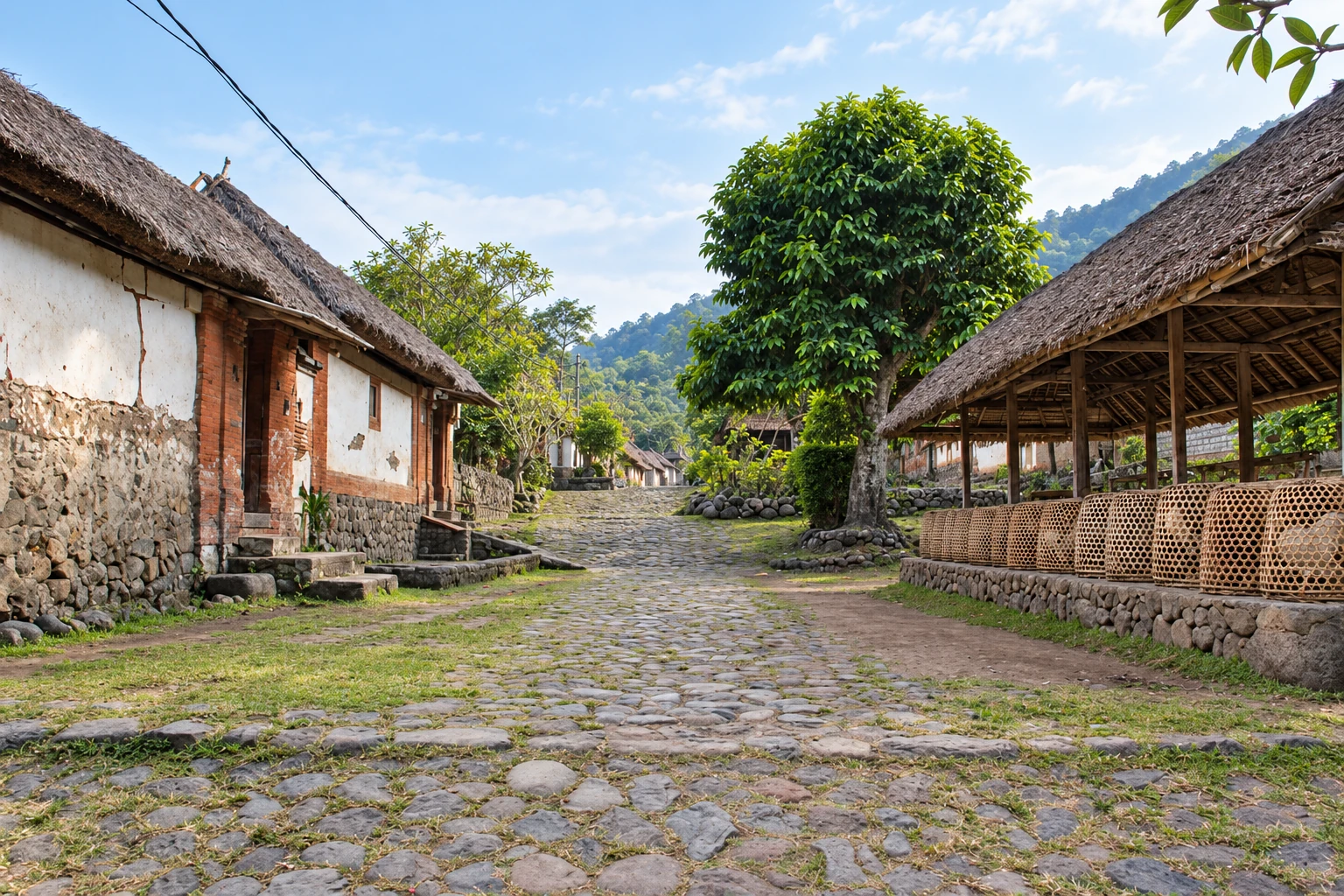
July
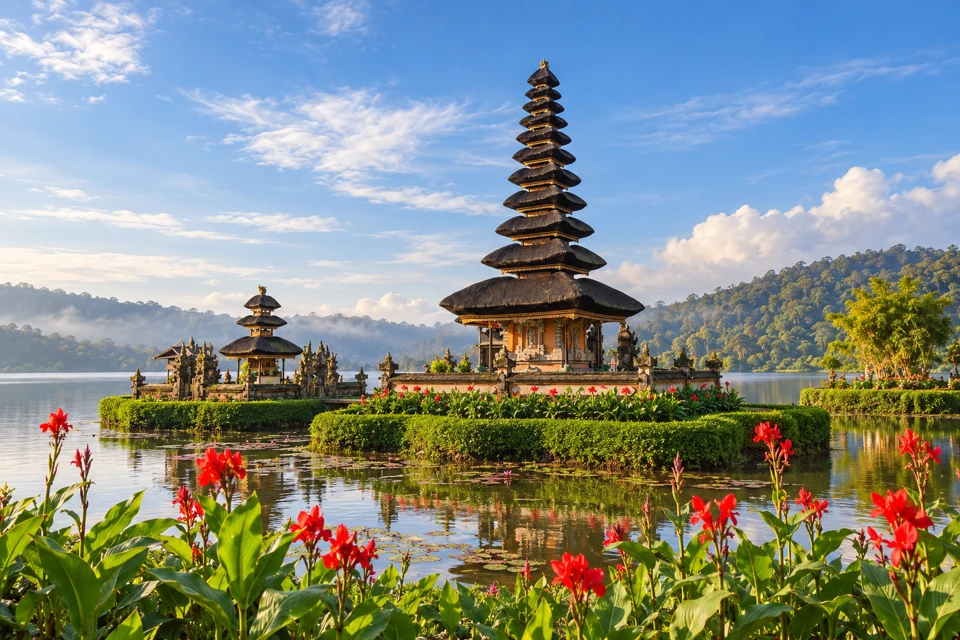
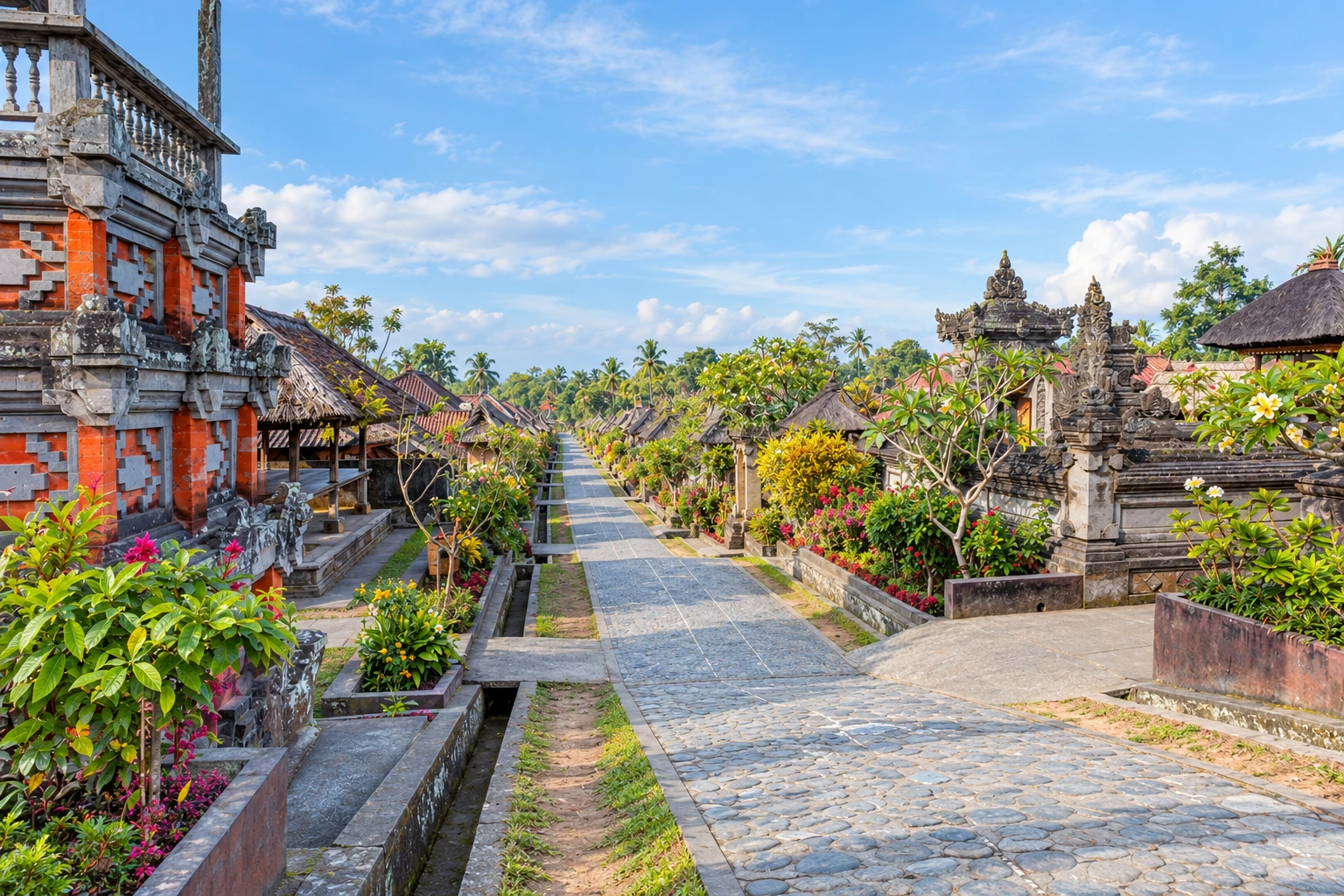
July falls within the broad July to August peak of BMKG’s May 2025 revision. Bali’s festivals include the Penglipuran Village Festival on 7–9 July 2025 and the Bali Kite Festival in Sanur on 20–21 July. The Ulun Danu Beratan Festival also takes place in July. Significant queues at levy counters are reported in July, so paying the levy online before arrival is the sensible choice. East Java’s forecast peak began in late July.
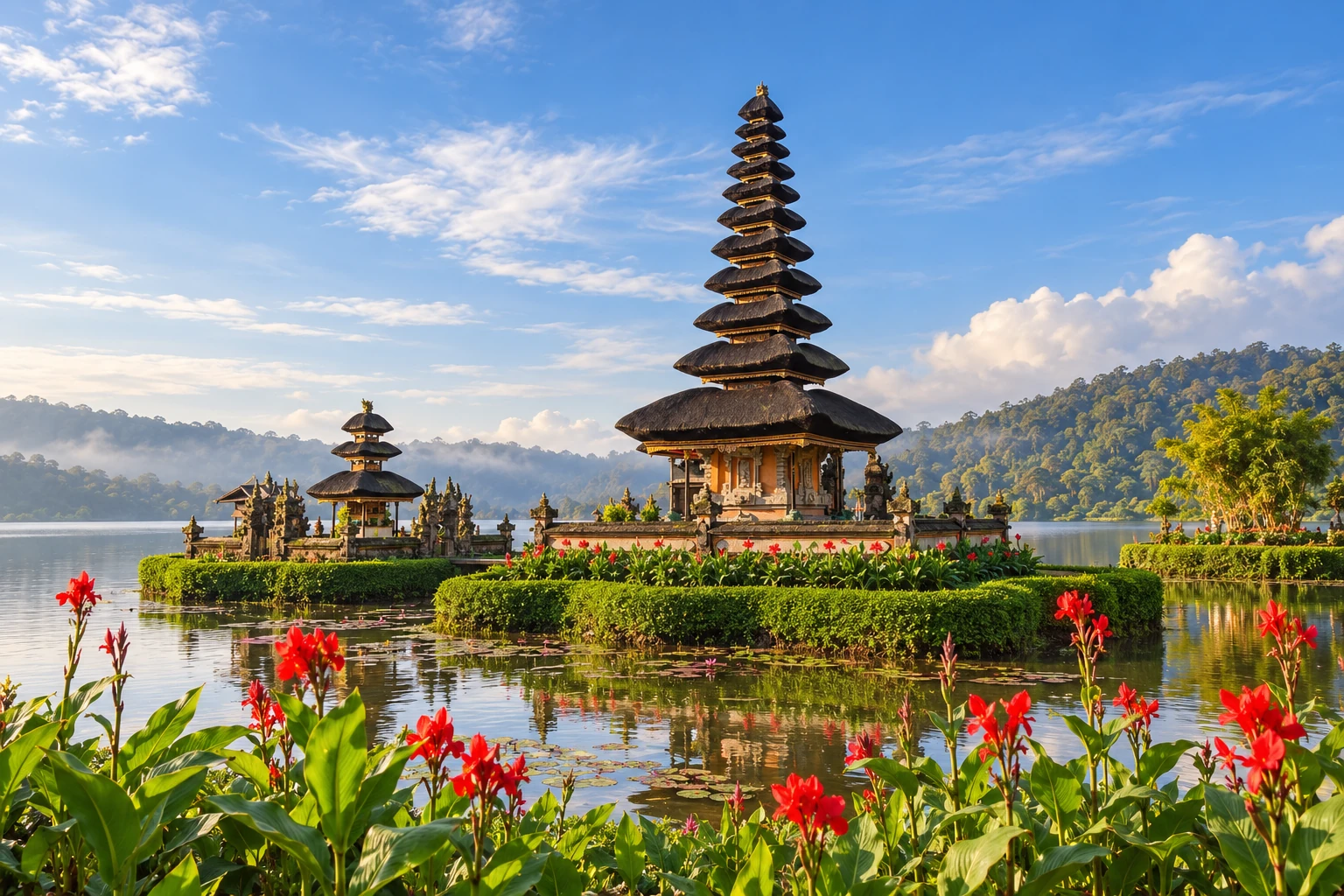
August
August is the peak month for much of the country. BMKG’s head expected Central and East Java, Kalimantan, Sulawesi, Bali, Nusa Tenggara and Maluku to peak in August, and the North Sulawesi office forecast an August peak around Manado. Independence Day on 17 August is a national holiday. In Bali, the Ubud Village Jazz Festival ran 2–3 August 2025 and the Lovina Festival in North Bali ran 23–25 August. In East Java, the Jember Fashion Carnival is usually held in August, and the 2025 edition ran 8–10 August. Levy-counter queues are again reported in August.
September
September keeps dry conditions in some regions, with some East Java areas forecast to peak from late August into early September. The only national holiday is Maulid Nabi on 5 September in 2025. Bali’s event calendar picks up again with the Waterbom Weekender on 21–22 September and the Bali Carnival from 26 September to 2 October 2025. With few holidays and no reported levy queues, September is a good candidate for travelers who want dry weather without the July and August crowds. This is a judgment drawn from the calendar.
October
October’s main event is the Ubud Writers & Readers Festival, an annual four-day literary event. The 2025 edition ran 29 October to 2 November, and the 2026 edition is set for 21–25 October. The Sanur Village Festival ran 16–20 October 2025. Omed-Omedan in Denpasar, Nyepi Laut and the Pemuteran Bay Festival also take place in October. North Sulawesi’s second forecast dry-season peak falls in October 2025.
November
November has no national holiday in the 2025 calendar and no entry in the Bali festival calendars for the year. That makes it a quiet month for holiday crowds. The Ubud Writers & Readers Festival may spill into the first days of the month, as it did in 2025.
December
December is dominated by Christmas on 25 December, with leave on 26 December and a weekend, and the holiday stacking continues through late December. Levy-counter queues are reported over the Christmas to New Year period. Book transport and accommodation early for this block and pay the levy online ahead of arrival.
Bali and Nusa Tenggara
Nusa Tenggara was forecast to start its 2025 dry season earliest of all regions. An earlier BMKG release had forecast a later start for Bali, West Nusa Tenggara and East Nusa Tenggara, and the May revision is the more recent update. August was the forecast peak for Bali and Nusa Tenggara.
Bali’s calendar is built around Galungan and Kuningan in April and May, Ubud events in May and June, Penglipuran and the Bali Kite Festival in July, Lovina in August, the Bali Carnival across September and October, and Sanur Village in October. A trip timed to a ceremony needs flexible planning, because Nyepi and the Galungan cycle follow Balinese calendars that shift by date each year. Nyepi closes the island for one full day, which affects arrival and departure plans. Budget for the foreign-tourist levy described below.
East Java and Central Java
East Java has some of the earliest local dry-season starts in BMKG’s forecasts, with a late March 2025 onset in some areas and a peak in late July to early August. Other East Java areas peak from late August to early September, so the dry season stays reliable into the first days of September. The Jember Fashion Carnival is the region’s notable festival, and August is its usual month.
Central Java was also expected to peak in August. The Jateng Derby horse race at Tegalwaton Racecourse in Semarang Regency opened the 2025 racing season, but it is a sporting event and not a tourist festival.
Sulawesi, Kalimantan, Maluku, Papua and Sumatra
North Sulawesi has a two-peak pattern: the Manado area was forecast to peak in August 2025 and again in October. The wider Sulawesi peak was forecast to arrive later than before in the May revision, while Kalimantan and Maluku were expected to peak in August. Papua was forecast to peak earlier than before. Sumatra’s dry season was forecast to begin at the normal time, with a later peak. These forecasts come from BMKG’s national and local offices and apply to the 2025 season, so check the current year’s outlook.
Visa and Bali Levy Costs
The visa on arrival (VOA, bought at the airport or port) and the e-VOA (bought online before travel) both cost IDR 500,000 for an initial 30-day stay, as displayed on the official Immigration portal on 12 August 2026. The VOA can be extended once, for a total stay of up to 60 days. On the same date, Director General of Immigration Hendarsam Marantoko presented a proposal to raise the fees to IDR 750,000 for the e-VOA and IDR 1,000,000 for the VOA. Officials cited a financial reason and a goal of encouraging applications before departure. The increase is a proposal and is not in force, so check the Immigration portal before you buy.
Bali charges foreign tourists a levy of Rp 150,000 per person, paid once during the trip and before leaving Indonesian territory, according to the official Love Bali FAQ. Payment is cashless only. Travelers can pay through the Love Bali system before arrival, at counters at Bali airports and ports, or at registered endpoints such as hotels, travel agents and attractions during the trip. Online payment before departure is strongly encouraged. Proof is a levy voucher with a QR code, sent by email.
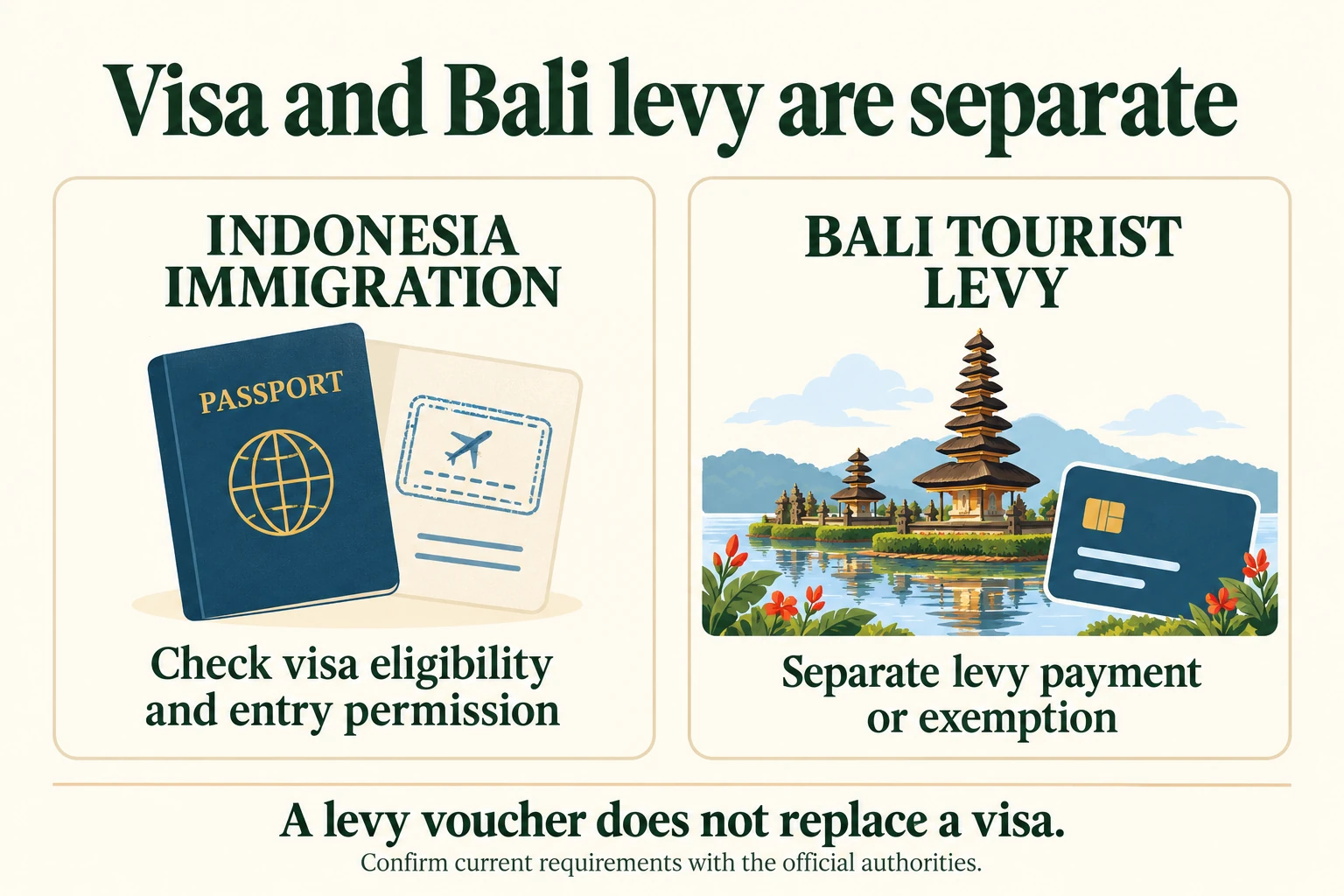
Exemptions apply to diplomatic and official visa holders, transport crew, KITAS and KITAP holders (long-stay permit holders), family-unification visa holders, student visa holders, golden visa holders and holders of certain other visas. The levy rests on Law No. 15 of 2023 on Bali Province, Bali Provincial Regulation No. 2 of 2025, Bali Governor Regulation No. 25 of 2025 and Bali Governor Decree No. 699/03-L/HK/2025. In peak months, counter queues make online payment worthwhile.
Choosing Your Dates
For the most reliable dry weather, aim for June to August, and expect the busiest Bali counters in July and August. Travelers who accept some rain risk can target the edges of the dry season: late April to June for regions that start early, or September and early October when East Java and North Sulawesi still hold dry conditions. September combines a single national holiday with the start of the Bali Carnival.
For culture, match dates to the event. Galungan and Kuningan suit late April and early May, Ubud’s food and film festivals suit late May and early June, and the Ubud Writers & Readers Festival suits October. Avoid the Nyepi and Idul Fitri stretch if you want easy domestic transport, unless Nyepi itself is the reason you are going. In 2026 that means 19 March for Nyepi and 21–22 March for Idul Fitri. Late December and the June Idul Adha block are the other times to book ahead.
Key Takeaways
- Plan around June to August for dry weather. BMKG’s 2025 forecasts put the national peak dry season in these months, with Nusa Tenggara starting earliest and East Java starting in late March in some areas.
- Avoid or book early around holiday blocks. The 2025 Nyepi and Idul Fitri break ran 28 March to 7 April, and late May to early June and late December are the other concentrated periods.
- Match Bali dates to its festival calendar. Galungan and Kuningan, the Ubud events, the Bali Carnival and the Ubud Writers & Readers Festival (21–25 October in 2026) are the main draws.
- Treat Nyepi as a full island closure. Bali stops traffic, lights and outdoor activity for a day, so be settled at your accommodation the day before.
- Budget for entry costs and pay online. The VOA and e-VOA cost IDR 500,000 for 30 days as of 12 August 2026, a higher fee has been proposed but is not in force, and Bali’s Rp 150,000 levy is cashless, with queues reported in July, August and the Christmas to New Year period.