Best Time to Visit Vietnam
Vietnam stretches about 1,650 km from north to south, and its weather follows three patterns. The north has four seasons, the central coast has a tropical monsoon climate, and the south has a dry season and a wet season. A monthly climate guide shows the gap: Sapa can sit near freezing on the same day Ho Chi Minh City reaches 35°C. The best month depends on which regions you visit.
For a trip covering Hanoi, the central coast and Ho Chi Minh City, plan for March to May. For the north alone, choose March to April or October to November. For beaches and the Mekong Delta, December to April works best. Tet, 30 April to 3 May, and National Day push prices up and fill transport, so book dates around them early.
How the Regions Differ
Elevation adds to the regional split. The country runs from sea level to 3,143 m at Mount Fansipan, so a highland town and a coastal city in the same region can feel like different places. The temperature ranges in this guide are planning bands, not forecasts for a specific city or altitude.
The North (Hanoi, Ha Long Bay, Sapa, Ninh Binh) is best in March to April and October to November. Hanoi and Ha Long Bay have the clearest windows in April to June and September to November. June to August brings heat, humidity and rain. Winter, from late December into March, is cool and misty. June weather in Ha Long Bay brings rough seas, and cruises may be canceled. July is the wettest month in the north, and mud makes some Sapa trekking routes hazardous. Sapa itself is best in late April and in September and October, and its January nights can drop below 5°C.
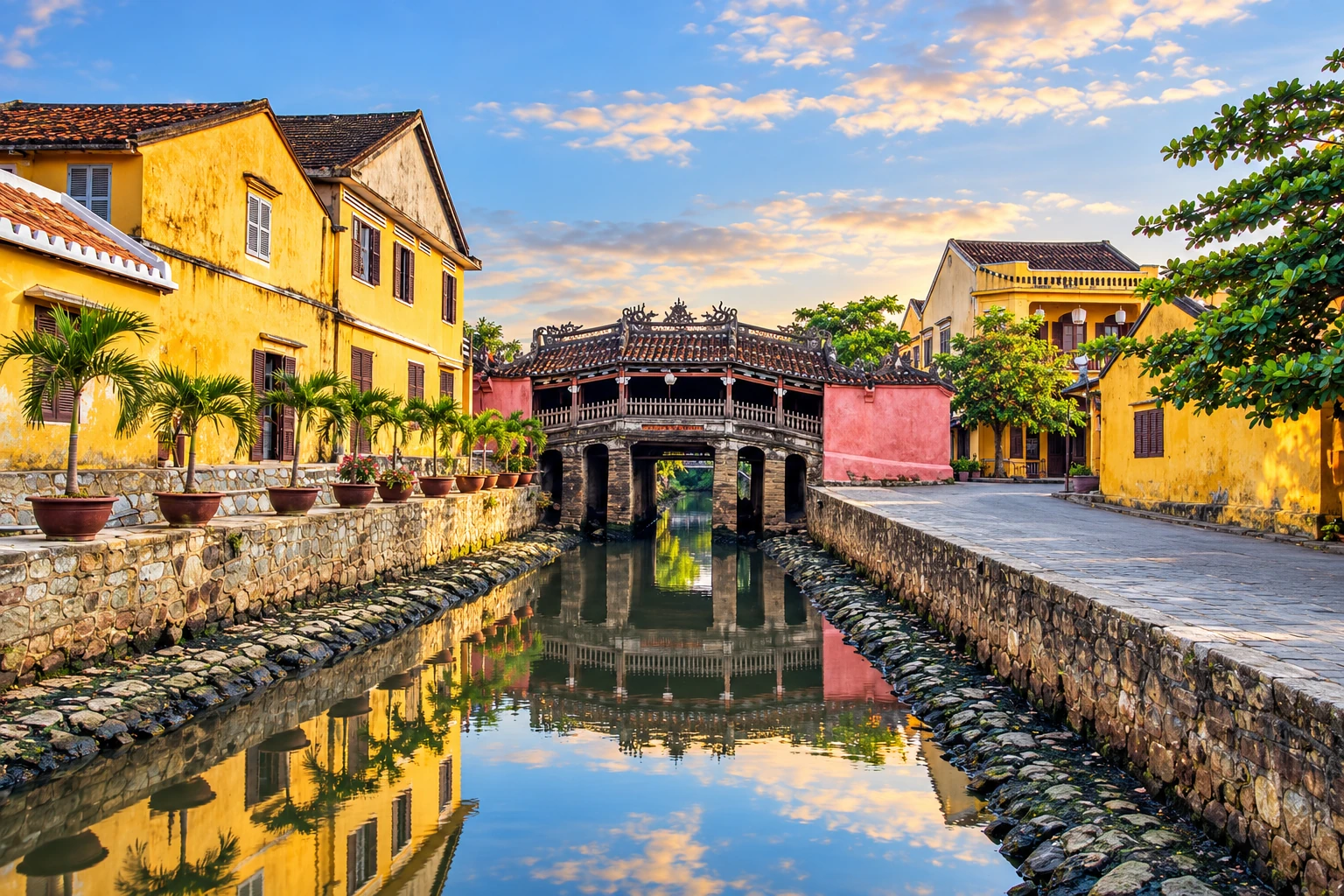
The Central region (Da Nang, Hoi An, Hue, Nha Trang, Quy Nhon, Da Lat) is favorable from February to May. A monthly guide puts Hoi An’s good stretch at February to August, with March especially strong, and Hue’s at March to August. September to November is typhoon and flood season. Typhoons and severe flooding can hit the coast between Da Nang and Hue, bringing flight cancellations and damaged roads and utilities. It advises checking advisories from the Vietnam Meteorological and Hydrological Administration before and during a trip. Nha Trang has a shorter rainy season than Hue and Hoi An, and Da Lat follows a cooler highland pattern.
The South (Ho Chi Minh City, Mekong Delta, Phu Quoc) is best from December to April, with rain returning in May and lasting through November. Phu Quoc has its own rhythm: the island is clearer from October to June and stormier from July to September. Typhoon risk in the south is lower, and during the central region’s peak typhoon months the south typically stays dry.
Temperatures by Month and Region
The table shows the planning ranges by region.
| Month | North | Central | South |
|---|---|---|---|
| Jan | 13–20°C, cool and misty | 18–24°C, cooler; Hue can stay wet | 22–32°C, dry and warm |
| Feb | 14–22°C, cool to mild | 19–26°C, improving | 23–33°C, dry and hot |
| Mar | 17–24°C, mild | 21–28°C, warm and drier | 24–34°C, hot and dry |
| Apr | 21–29°C, warm | 23–31°C, hot and sunny | 26–35°C, very hot |
| May | 24–32°C, storms increase | 25–33°C, hot and mostly sunny | 25–34°C, rain begins |
| Jun | 26–33°C, hot and rainy | 26–34°C, hot; favorable on the coast | 24–32°C, wet and humid |
| Jul | 26–33°C, peak summer rain | 27–34°C, hot | 24–32°C, wet |
| Aug | 25–32°C, hot and rainy | Hot; storm risk rises late in the month | 24–32°C, wet and humid |
| Sep | 23–31°C, improving | 24–30°C, storm risk rises | 24–32°C, wet |
| Oct | 20–28°C, cooler and clearer | High rain and flood risk in parts | 23–31°C, rain easing |
| Nov | 17–25°C, cool and clear | 20–27°C; Hue and Hoi An can stay wet | 22–31°C, drier |
| Dec | 14–21°C, cool to cold | Cool and wet in parts | 22–31°C, dry and warm |
What to Expect Each Month
January
Hanoi and Ha Long Bay are cool and misty, with drizzle and daytime highs around 20°C at most. The central coast is at the end of its rainy season, and Hue can stay wet. The south is dry and warm, so this is a good month for Ho Chi Minh City, the Mekong Delta and Phu Quoc. The Christmas and New Year rush runs from December 20 to January 5 in Hoi An, Phu Quoc and Sapa, and late January in 2027 leads into Tet, with the Kitchen God ritual falling on 30 January 2027.
February
Tet falls on 6 February 2027, which makes early February the most disrupted and expensive stretch of the year for domestic travel (see the Tet section below). Once the holiday ends, weather is good in the south, where February is peak dry season at 23–33°C. The central coast begins its dry season, and Hoi An enters its favorable period. The Lim Festival near Hanoi runs 17–18 February 2027, with quan ho folk singing performed from dragon boats about an hour from the capital. Pilgrims also visit the Perfume Pagoda from February through April. The north is still cool at 14–22°C.
March
March is the most consistently recommended month for a trip across all three regions. It is "highly recommended for cross-country travel." The north is mild at 17–24°C, the central coast is warm and drier at 21–28°C, and the south is hot and dry at 24–34°C. Hoi An is especially strong this month, and Hue’s best stretch begins. The first full moon of the lunar year brings the biggest lantern night in Hoi An after Mid-Autumn. In 2027 that night falls in February, shortly after Tet, because it follows the lunar calendar.
April
April suits the north and the central coast. Temperatures reach 21–29°C in the north and 23–31°C in the central region, while the south turns very hot at 26–35°C and rain starts to build late in the month. Late April is also the best time for Sapa. Several holidays cluster here: Khmer New Year on 14–16 April in Soc Trang and Tra Vinh, the Hung Kings Commemoration on 15 April 2027, and then the 30 April to 3 May block. The Hung Kings holiday is a public holiday with a substitute day when it falls on a weekend.
May
Storms start to increase in the north, where temperatures run 24–32°C. The central coast is hot and mostly sunny at 25–33°C, and the south’s wet season begins. Vesak, the Buddha’s birthday, falls on 13 May and 20 May in 2027 and is not a public holiday. The 30 April to 3 May block affects the first days of the month, and hotel prices ease afterward. The official best-months guide lists a four-star hotel in Hoi An at 1,800,000 VND (about $70) in May.
June
The north is hot and rainy at 26–33°C, with temperatures that frequently reach 35°C, and Ha Long Bay cruises may be canceled because of rough seas. Central beaches are favorable, with 26–34°C and little rain, and the central region is at its hottest in June. In the south, daily afternoon rain is the pattern. Tet Doan Ngo, a minor holiday, falls on 8 June 2027, and it draws low crowds.
July
July is the wettest month in the north, with a flood risk and muddy trekking routes around Sapa. The central coast stays hot at 27–34°C with scattered storms. The south has a steady wet season at 24–32°C, and Phu Quoc is in its stormier period, which runs from July through September. Hue still sits inside its March to August window, making July a workable month for the central coast if you accept the heat.
August
August is statistically less favorable for extensive travel across several regions. The north is hot and rainy, the south is wet and humid, and storm risk rises late in the month on the central coast, including Hue. Vu Lan, a Buddhist festival, falls on 16 August 2027 with moderate crowds. Domestic prices begin to climb at the end of the month as the National Day block approaches.
September
September is the turning point for the north. The monthly guide labels it the best month for northern Vietnam, with temperatures of 23–31°C and improving conditions, so trekking and city travel strengthen. The central coast moves into typhoon season, and September is the peak typhoon season for that region. The south stays wet. National Day falls on 2 September and is rated "Extreme" for crowds in the official festival calendar. Mid-Autumn follows on 15 September 2027, rated "High," with the best atmosphere in Hoi An, Hang Ma Street in Hanoi and Nguyen Hue in Ho Chi Minh City.
October
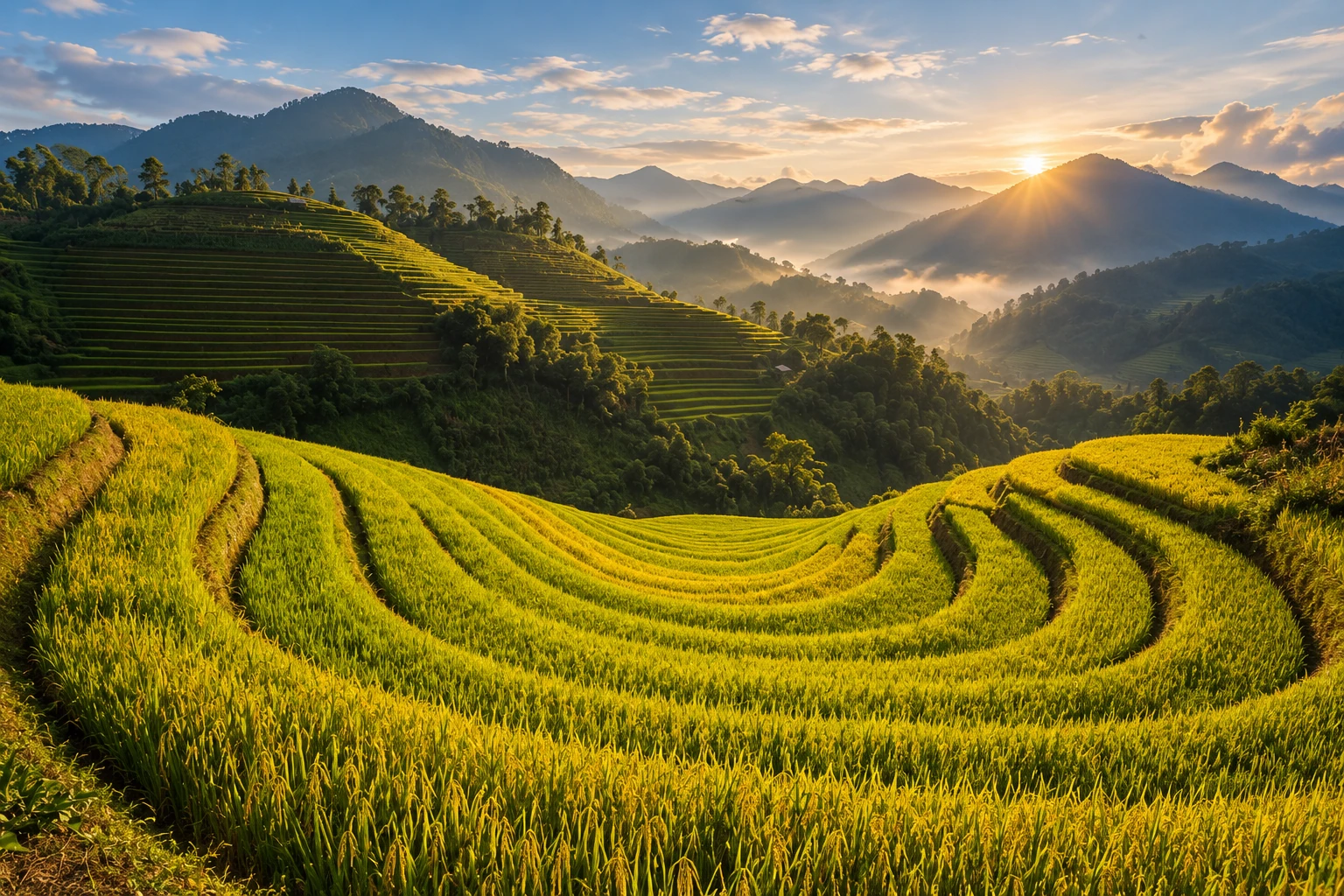
The north is at its best, cooler and clearer at 20–28°C, and Mu Cang Chai’s rice terraces are favored for rural tourism in autumn. Sapa’s good window continues through October. The central coast has the highest rain and flood risk of the year in parts. In the south rain eases, and Phu Quoc becomes clearer. Cham Kate, a Cham festival, falls in October and draws low crowds.
November
The north is cool and clear at 17–25°C, and November is good for the north and south together. The south is drier at 22–31°C. Hue and Hoi An can stay wet, and the typhoon and flood season continues in the central region. Ooc Om Boc, a Khmer festival in the Mekong Delta, falls on 12–13 November 2027 with low crowds. Vietnam Culture Day, on 24 November, is among the fixed public holidays.
December
The north turns cool to cold at 14–21°C. The south is dry and warm at 22–31°C, and December is the best month in the monthly guide for the south and Phu Quoc. The central coast stays cool and wet in parts. The December 20 to January 5 high season applies in Hoi An, Phu Quoc and Sapa. The Da Lat Flower Festival is scheduled for 1 December 2026, its 11th edition.
Festivals and Public Holidays
Most festival dates follow the lunar calendar and move each year. The fixed Gregorian public holidays are 1 January, 30 April, 1 May, 2 September and 24 November. The table uses the official festival calendar from the Vietnam National Administration of Tourism and gives its crowd ratings.
| Event | 2027 date | Crowd level | Notes |
|---|---|---|---|
| Kitchen God departure | 30 Jan | Moderate | Not a public holiday |
| Tet Nguyen Dan (Lunar New Year) | 6 Feb | Extreme | Public holiday |
| Lim Festival, Bac Ninh | 17–18 Feb | Moderate | Quan ho singing from dragon boats |
| Perfume Pagoda pilgrimage | Feb to Apr | High | Working pilgrimage site with dress and behavior expectations |
| Khmer New Year | 14–16 Apr | Moderate | Soc Trang and Tra Vinh |
| Hung Kings Commemoration | 15 Apr | High | Public holiday |
| Reunification and Labour holidays | 30 Apr–3 May | Price peak | Fixed dates |
| Vesak | 13 and 20 May | Moderate | Not a public holiday |
| Tet Doan Ngo | 8 Jun | Low | Not a public holiday |
| Vu Lan | 16 Aug | Moderate | Not a public holiday |
| National Day | 2 Sep | Extreme | Official price peak |
| Mid-Autumn Festival | 15 Sep | High | Children’s festival |
| Ooc Om Boc | 12–13 Nov | Low | Khmer festival, Mekong Delta |
Planning around Tet
The official guide advises arriving the week before Tet for the flower markets and calligraphy stalls, staying through the first day or two, and avoiding intercity travel on the first day of the lunar year. Cities empty while villages fill. On the last day of the old year and the first day of the new one, hotels, hospitals and convenience stores stay open, while banks, embassies and most restaurants close. On lunar days 2 to 4, chain restaurants and major paid attractions open, but visa offices, museums and markets stay closed. From lunar day 5 most services resume, although some independent shops remain shut longer. The guide adds that extending a visa during the core Tet days is effectively impossible.
Family businesses close earlier and reopen later than any official block, so a restaurant or guesthouse you want may be shut for longer than the holiday itself.
Hoi An lantern nights
Hoi An’s monthly lantern nights fall on the eve of the full moon, and the biggest lantern night of the year is the first full moon, on lunar 15/1. Check a lunar calendar for the specific evening before you book, because the date shifts every year. For Hue and Hoi An in autumn, typhoon and flood risk from September to November also applies to festival trips.
Visitor Numbers by Month
Official arrival counts show how busy the country is. Vietnam received nearly 21.2 million international visitors in 2025, according to the official release, up more than 20.4% on 2024. Air carried 84.3% of arrivals, and Asia supplied 78.6%, with Europe at 13.1% and the Americas at 5.2%.
October 2025 brought about 1.73 million arrivals, 13.8% above September and 22.1% above October 2024, and October is high season. September 2025 was nearly 1.52 million. January 2025 saw nearly 2.1 million arrivals, up 36.9%, in a month when Tet ran from 25 January to 2 February.
A tour operator calls November through March the peak season in the south and central regions, and treats Tet as its own event. The official festival calendar rates Tet and National Day as "Extreme" for crowds, and Hung Kings and Mid-Autumn as "High." Outside those dates, the quietest conditions come in the wet months for each region: June to August in the north, May to November in the south, and September to November on the central coast, where storms are the trade-off for fewer visitors.
How Holidays Change Prices
The official guidance on prices is specific about holidays. The Vietnam National Administration of Tourism’s festival calendar says domestic flights, trains and resorts cost 1.5 to 3 times normal during Tet, 30 April to 3 May and National Day. Its best-and-worst-months guide, updated 11 October 2026, names three price spikes: Tet, 30 April to 3 May, and Christmas to New Year. It also says coastal hotels in Da Nang and Nha Trang raise rates 30–50% around 30 April and 1 May, and that domestic flights double at Tet. The guide’s own estimate is that booking Vietnam Airlines or Vietjet flights at least eight weeks ahead for Tet and the 30 April weekend often saves 40–60%.
The same guide gives sample rates for 2026, with dollar conversions as published:
- Four-star hotel in Hoi An: 1,800,000 VND (about $70) in May, rising to 3,500,000 VND (about $140) in late December.
- Ha Long Bay overnight cruise: 3,200,000 VND (about $125) per person in shoulder season, against 5,500,000 VND (about $215) at peak.
- Domestic flight between Hanoi, Da Nang or Ho Chi Minh City: one-way fares start at about 1,200,000 VND (about $47) in shoulder season.
Operator estimates are more modest for the general run of holidays. A budget guide puts the rise in accommodation and tours at 15–30% around Tet, 30 April and December. A hotel price guide says rates can double in beach resorts and Da Lat during Tet week.
Travelers booking private, high-end trips see their own numbers. A tour operator puts a 14-day private, custom, land-only trip at about $5,000 to $16,000 per person, with most travelers spending $7,000 to $11,000. A two-day, one-night Ha Long Bay cruise runs about $145–$250 per person at mid-range, $250–$450 at luxury and $450–$980 at ultra-luxury, and a three-day, two-night version roughly doubles that.
Visa Rules and Trip Dates
Visa rules change, so confirm the current requirements with Vietnam’s immigration authority before booking. Two recent government measures matter for trip planning. Resolution No. 229/NQ-CP, issued 8 August 2025, exempts citizens of 12 countries from visas: Belgium, Bulgaria, Croatia, the Czech Republic, Hungary, Luxembourg, the Netherlands, Poland, Romania, Slovakia, Slovenia and Switzerland. The policy runs from 15 August 2025 to 14 August 2028. Separately, Resolution No. 389/NQ-CP of 2 December 2025 added international border gates where foreigners may enter and leave on an e-visa, and an embassy post dated 14 May 2026 says 41 gates were added. Since visa extensions are effectively impossible in the core Tet days, a trip that spans the holiday should have its visa dates settled beforehand.
Choosing Dates by Trip Type
For a trip across North, Central and South, March to May is the most workable window, and March is the single best month. August is the weakest choice for covering all three regions.
For northern scenery and trekking, aim for September to November, with Mu Cang Chai’s terraces in autumn and Sapa in September and October. A Hanoi and Ha Long Bay trip works from April to June or September to November, though June brings the risk of rough seas and canceled cruises.
For the central coast and Hoi An, plan February to May and aim for March. Hue is workable from March to August. Avoid September to November on the central coast because of typhoons and flooding.
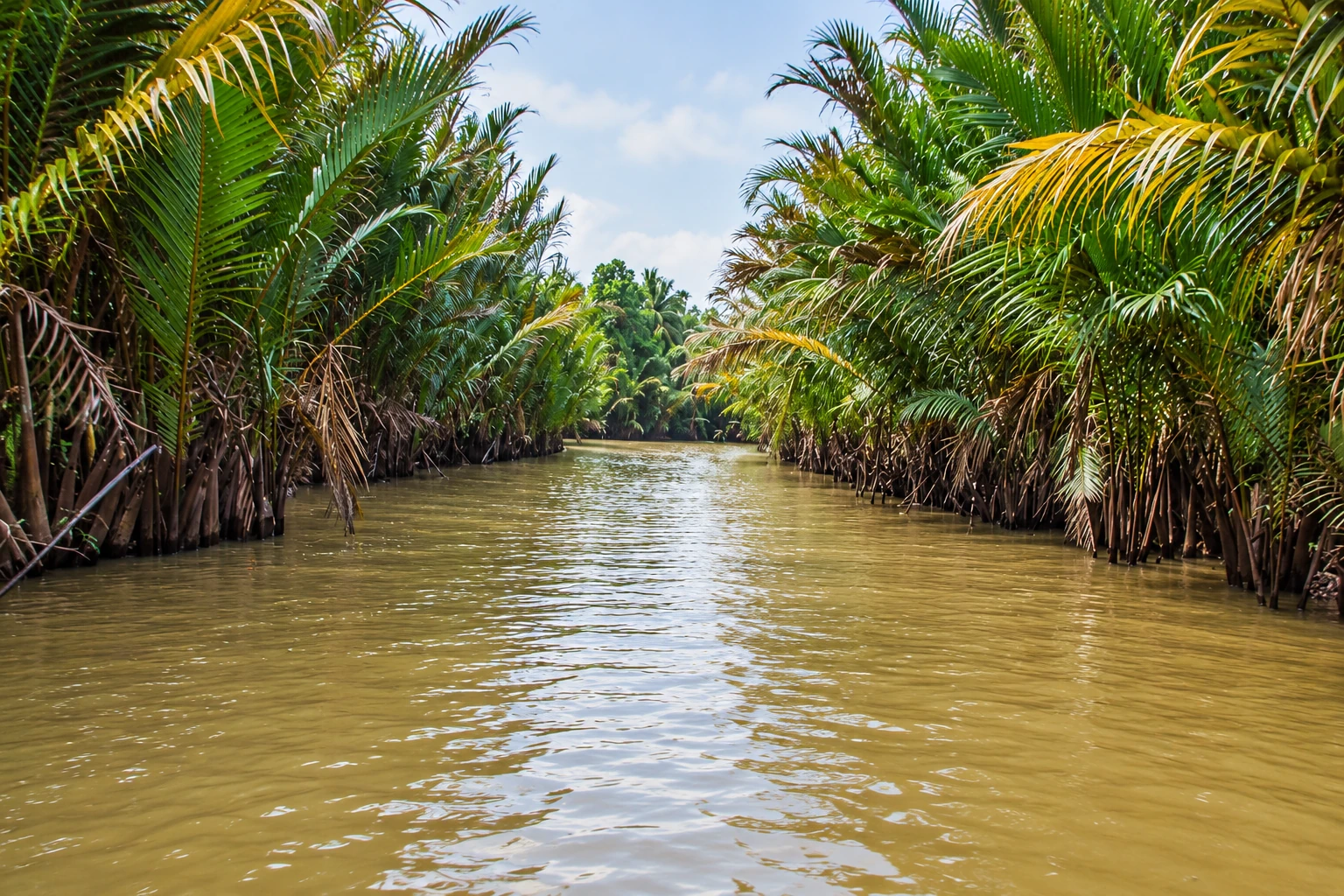
For the Mekong Delta and Ho Chi Minh City, December to April is the best stretch. Phu Quoc is clearer from October to June, and December is its best month.
For festival-focused travel in 2027, Tet is on 6 February, Hung Kings on 15 April and Mid-Autumn on 15 September. Book flights and rooms early for all three, and expect the Tet period to reduce what is open.
For lower prices, travel in shoulder season and avoid Tet, 30 April to 3 May and National Day. The official guide’s Ha Long cruise and domestic flight examples show the gap between shoulder and peak rates.
Key Takeaways
- Pick the region first: Vietnam’s north, central coast and south have different wet and dry seasons, so one national "best month" does not exist.
- Use March to May for multi-region trips: March is the single most recommended month for covering North, Central and South together, and August is the weakest.
- Match the season to the place: the north peaks in March to April and October to November, the central coast in February to May, and the south in December to April.
- Avoid the central coast from September to November: typhoons and flooding can cancel flights and disrupt Hoi An, Hue and Da Nang.
- Book early around three price spikes: Tet (6 February 2027), 30 April to 3 May and National Day push domestic flights, trains and resorts to 1.5 to 3 times normal.
- Plan Tet logistics before arriving: banks, embassies and most restaurants close, family businesses shut longer than the official block, and visa extensions are effectively impossible during core Tet days.