Germany Travel Costs

Independent travelers in Germany usually budget per person per day. A February 2026 cost breakdown in US dollars puts a budget day at about $85, a mid-range day at about $210, and a luxury day at $400 or more. These figures cover lodging, transport, activities, and meals for one person on a travel day. Lodging accounts for most of the difference between tiers, so the choice of bed matters more than any other single decision.
Germany also has fixed costs that work differently from prices elsewhere. Regional trains and buses run on a monthly pass called the Deutschlandticket. Long-distance trains sell discounted advance fares. Several cities add a tax to each hotel bill. Each cost comes with its current figure and date, plus ways to cut spending.
Daily budgets by comfort level
The February 2026 cost breakdown gives the clearest tier-by-tier figures in US dollars. The budget tier assumes simple 2-star hotels or well-rated hostels, public transport, and street food. The mid-range tier assumes 4-star hotels, traditional gasthaus meals (regional restaurants serving local dishes), and either rail or a rental car. The luxury tier assumes 5-star hotels or alpine resorts with private transfers.
| Cost item (per person, per travel day, USD) | Budget | Mid-range | Luxury |
|---|---|---|---|
| Daily total | about $85 | about $210 | at least $400 |
| Lodging (starting price) | $50 | $160 | $350 |
| Transport (starting price) | $5 | $20 | $60 |
| Activities | free or low-cost | from $25 | from $100 |
| Each meal | $15–25 | $30–55 | $70–130 |
The same breakdown notes that per-person totals fall as more travelers share costs, which matters for couples and families who share rooms and cars.
Euro-based guides give similar ranges. A 2026 Germany cost guide puts budget days at €64–100 and its average day at about $209 (€177). A traveler-spending aggregator reports an average of about $203 a day, or about $1,419 for a week per person. A budget guide for Germany estimates an average daily cost of €70–150. The USD tiers are the primary reference, and these euro figures serve as a cross-check. Hotel and restaurant prices are market rates rather than official tariffs, so the lodging and food figures below are ranges.
To estimate a trip, multiply the daily figure for your tier by the number of days, then adjust for the items you plan to buy in advance. A week at the mid-range tier, for example, starts from about $210 a day for each traveler before any splurges.
Lodging costs and what moves them
Lodging prices vary more than any other cost, so the bed choice sets the budget. In the 2026 guide, a hostel dorm bed costs €20–30 a night, and a private room in a small-town budget hotel or bed and breakfast costs €50–75. A mid-range hotel costs €90–150 a night. In Berlin, dorm beds run higher, at €25–40 a night according to a Germany budget guide.
The February 2026 breakdown lists 2–3-star hotels at about $50 to $110 a night and 4-star hotels at $160 to $220 a night. A budget guide lists basic hotel rooms for two at €70–120.
Season and dates change the price more than the city does. The February 2026 breakdown says stays in January and February can run 20–30% cheaper than the rest of the year. Trade fairs push prices up. A budget guide for Germany says Hannover Messe, Frankfurter Buchmesse, the IAA auto show and the Bau construction fair can double or triple accommodation prices in their host cities. Check the dates of those events before you fix your travel dates. Berlin shows the range clearly: a traveler-spending guide gives Berlin hotel prices from $77 a night in low season to $466 at peak.
Overnight taxes in German cities
Several German cities add an overnight tax to the room bill. The tax is separate from the price you see when booking, so add it to the lodging line of your budget. Berlin, Hamburg and Cologne charge it, and Munich does not charge one at present, according to a 2026 guide to city tourist taxes.
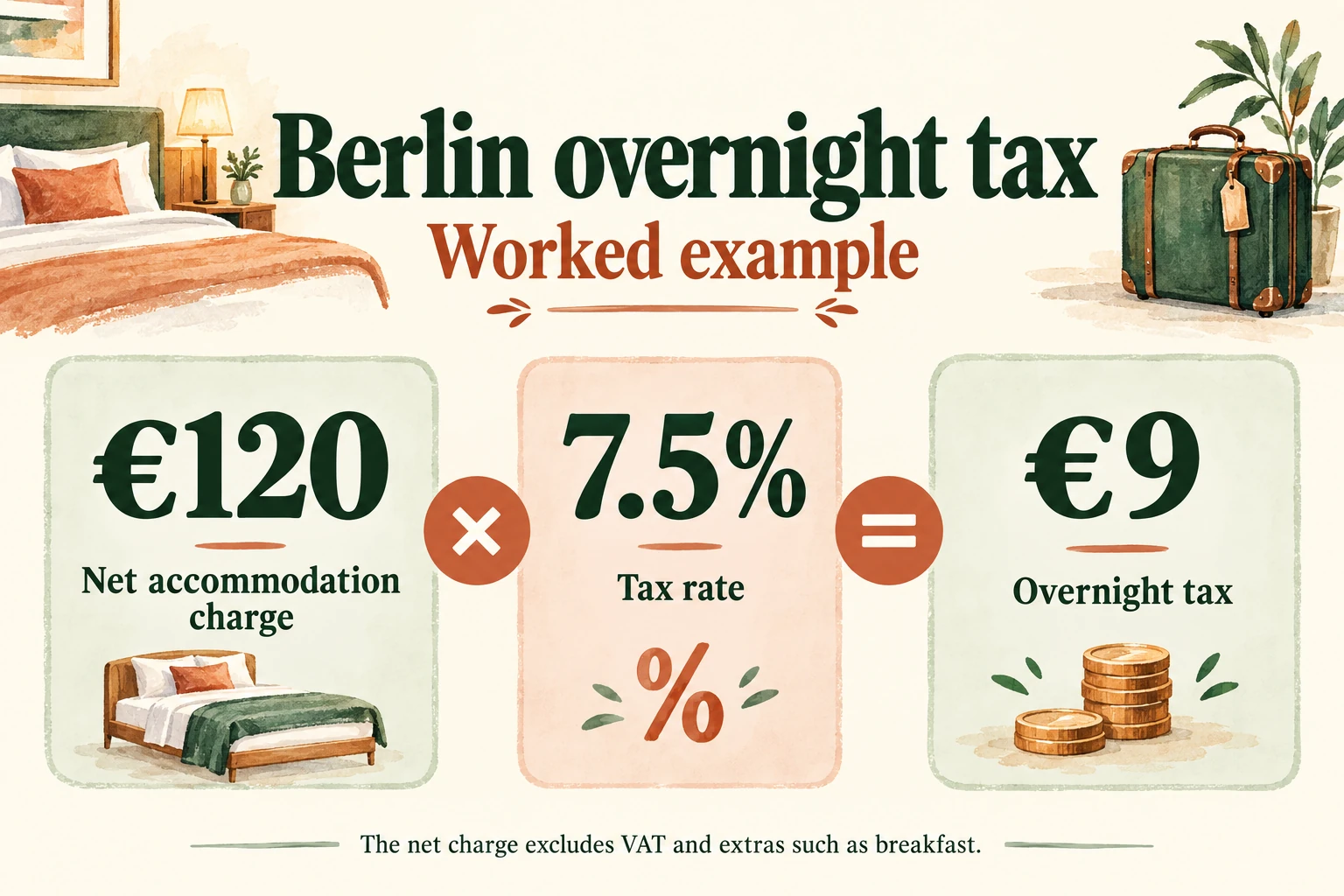
Berlin charges 7.5% of the net room price, which excludes VAT and extras such as minibar or spa charges. A room with a €120 net price therefore carries a €9 tax. Business stays are taxable in Berlin since 1 April 2024. Minors and stays for medical treatment are exempt.
Hamburg charges a flat amount per person per night, set by the net price per night. The rates below apply to bookings from 1 January 2025 and stayed the same for 2026.
| Net price per night | Tax per person per night |
|---|---|
| Up to €10 | €0 |
| Up to €25 | €0.60 |
| Up to €50 | €1.20 |
| Up to €100 | €2.40 |
| Up to €150 | €3.60 |
| Up to €200 | €4.80 |
| Above €200 | €1.20 more for each started €50, no cap |
The Hamburg Senate approved an increase of about one quarter from 1 January 2027. The increase varies by price tier. Travelers booking stays into 2027 should check the rate that applies on their check-in date.
Cologne charges a 5% culture tax, called the Kulturförderabgabe, on the amount the guest pays for accommodation. Business stays there are taxable since 1 July 2024.
Food costs and where to save
Food costs depend on where you eat. Street food, which includes a döner kebab or a bratwurst, costs €4.50–8.00 according to the 2026 guide. A sit-down restaurant meal costs €20–40 in the same source, and a mid-price restaurant dinner costs €15–30 per person in the budget guide. A supermarket breakfast or lunch costs under €4.

Drinks add up quickly in restaurants. A one-liter beer costs €10–12 and a half-liter beer €3–5, according to the same guides. A glass of wine costs €4–7, and a bottle of water in a restaurant costs about €3–4. Ordering tap water where it is offered and buying beer at a grocery store both cut that line of the budget.
Restaurant main courses run $15–35 (€14–32) in the February 2026 breakdown. Meals by tier run $15–25 each at the budget level, $30–55 at mid-range and $70–130 at luxury.
Regional transport and the Deutschlandticket
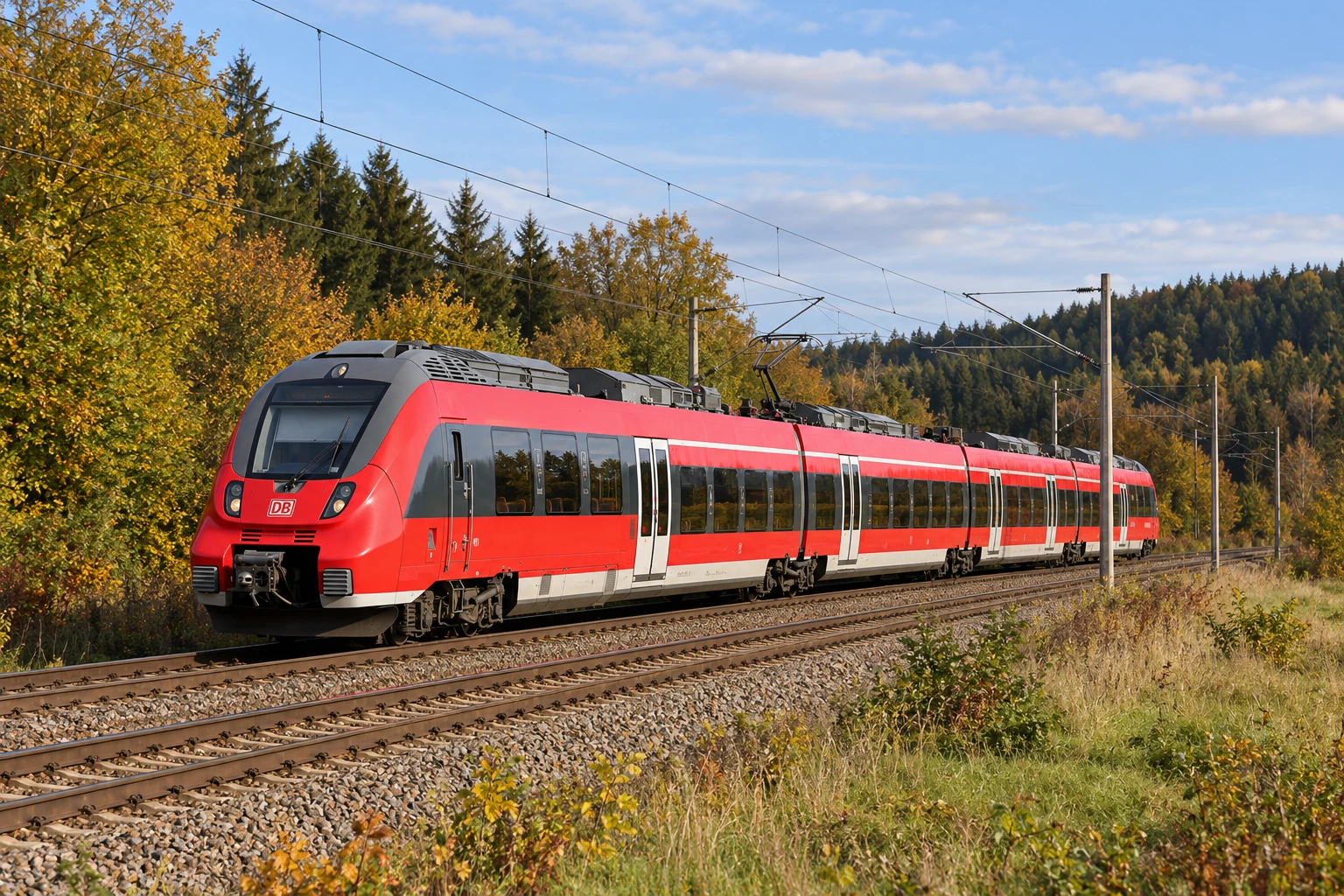
The Deutschlandticket is a monthly subscription for local and regional public transport across Germany. It costs €63 a month from 1 January 2026, according to the Deutsche Bahn FAQ on the 2026 adjustment. The ticket covers buses, trams, U-Bahn and S-Bahn city rail, and regional trains. It excludes IC, EC and ICE long-distance trains, as well as first class. The DB Regio Bus Bayern page lists the same exclusions.
The price has risen each year. It was €49 a month from 1 May 2023 and €58 for 2025, according to mobil.nrw. The MVG page for Munich lists €66.80 a month from 1 January 2027.
The ticket is personal and cannot be transferred. It renews each month until you cancel it, and you can cancel monthly with no minimum term. If you want a ticket for a single calendar month, you must order it and cancel it before the 10th of that month, according to the Verbraucherzentrale consumer guide. Many regions sell it as a mobile ticket in an app, and some sell it as a chip card.
Discounts depend on your situation and region. An employer job ticket can reduce the price by up to 30%, according to Sparkasse. If your employer pays at least 25% of the cost, you receive a further 5% off, which brings the price to a maximum of €40.60, according to VGN as of January 2025. Recipients of Bürgergeld, social assistance or Wohngeld can buy a social ticket for €29–39 a month, depending on the region, as described by the Verbraucherzentrale Finanzen guide. In Munich, students pay a reduced fare of €46.80 a month from 1 January 2027, according to MVG.
Because the Deutschlandticket is a monthly pass, it suits travelers who spend several days in one region and use local buses and trains each day. A short city trip with one long-distance train ride and a few tram rides usually costs less without the pass. Calculate the pass price against the single-trip fares you expect to pay.
Intercity rail fares and how to buy them
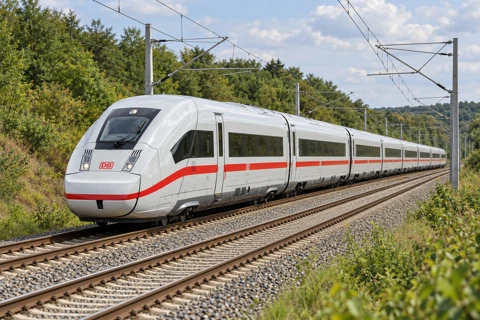
Long-distance travel on Deutsche Bahn runs on several fare types. The Sparpreis and Super Sparpreis are advance fares tied to one specific train. According to BahnPedia’s 2026 guide, a Sparpreis starts from €21.99 and a Super Sparpreis from €6.99. The number of these seats is limited, and the price rises as the train fills. You can book up to six months ahead. The Rail Europe help page describes a booking window that closes one day before travel.
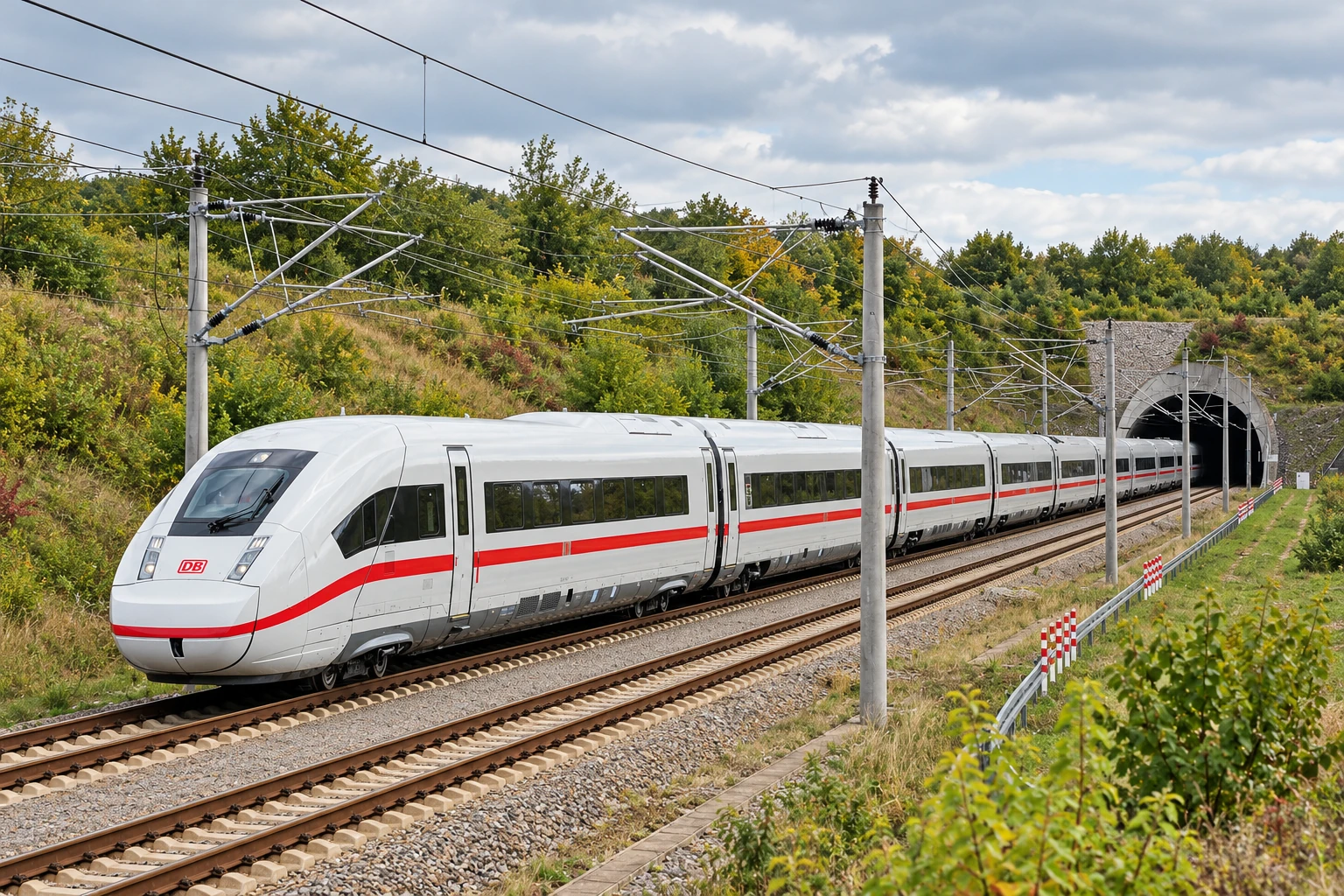
The Flexpreis costs more but works on any train that day. It carries a full refund at any time, according to BahnPedia. Super Sparpreis tickets are valid only for the booked connection, without exchange or cancellation, but can be cancelled free of charge within 3 hours after booking. A standard Sparpreis refund comes as a Deutsche Bahn voucher rather than cash, and BahnPedia lists a €10 cancellation fee. Rail Europe says the voucher is valid for three years.
Seat reservations cost €3–5 each on ICE trains, according to BahnPedia, and the GermanyCompass guide recommends reserving seats on Friday, Sunday and holiday ICE trains. BahnPedia names Tuesday and Wednesday as the cheapest travel days. Monday mornings and Friday afternoons carry the heaviest commuter traffic. Check the price calendar on bahn.de before you book, because fares change with demand.
A BahnCard is a discount card for frequent train travelers. The BahnCard 25 costs €62.90 a year in second class, or €19.90 for a three-month trial, according to Eurail’s rail guide. It takes 25% off Flexpreis, Sparpreis and Super Sparpreis fares. The BahnCard 50 costs €244 a year and gives 50% off Flexpreis and 25% off the advance fares. Its three-month trial costs €76.90, according to Smartliving’s guide to train savings. Trial cards convert into full-year cards unless you cancel at least four weeks before the trial ends. A qualifying long-distance ticket with a BahnCard also includes free local transport at the destination, which GermanyCompass calls the City-Ticket.
Children and groups have their own rules. Children up to 14 years travel free in many cases with an accompanying person aged 15 or older, and there is no special free rule for children under 5. Children aged 6–14 travel free with an adult aged 15 or older, and up to four children can travel on one ticket if you specify them at booking, according to a rail ticket guide. The same guide gives Super Sparpreis Young fares for travelers under 27 and Senior fares for travelers over 65 on certain routes. On Berlin to Munich, its example fares are €39.99 for Young and €55.99 for Senior, compared with €69.99 for an adult Super Sparpreis.
Groups of 6 to 99 people can book a Gruppenreise-Sparpreis. BahnPedia says these fares are often 30–70% cheaper than individual tickets, with no changes or refunds. Its Berlin to Munich example runs about €19–22 per person, compared with about €29 for an individual ticket, in its group travel guide.
Museums and free sights
Museum Island in Berlin is a major paid sight, and its prices change each year. As of April 2026, a day ticket valid across the Museum Island houses costs €24, and the reduced rate is €12, according to a 2026 price table for Museum Island. Reduced entry covers students, trainees and people with a severe disability, and the Visit Berlin page for the day ticket lists pupils, apprentices, volunteers and unemployed people receiving ALG I as eligible as well. Show proof of eligibility at the ticket desk. Children and young people under 18 enter free, according to Visit Berlin.
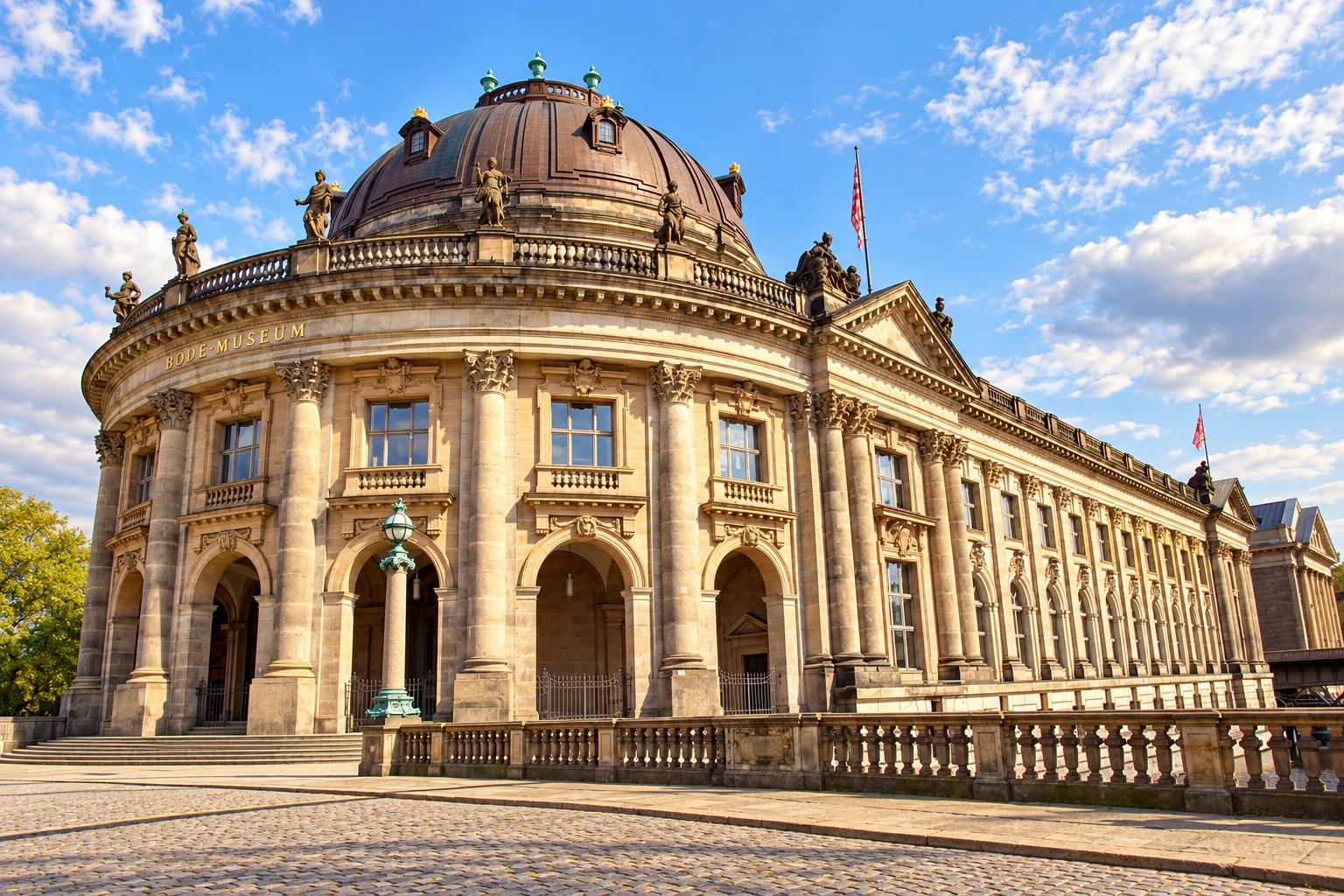
Most museums are closed on Mondays and some are also closed on Tuesdays, and opening hours vary by museum: the Altes Museum is open Tuesday to Friday from 10:00 to 17:00, the Bode-Museum is open on Thursdays until 20:00, and the Pergamonmuseum is closed for renovation until spring 2027. The price table lists the same Museum Island admission rules. The Staatliche Museen zu Berlin ticket page publishes the official prices and lists any changes. If you plan to visit several museums in Berlin, the Museumspass Berlin costs €29 for three days and covers more than 30 museums.
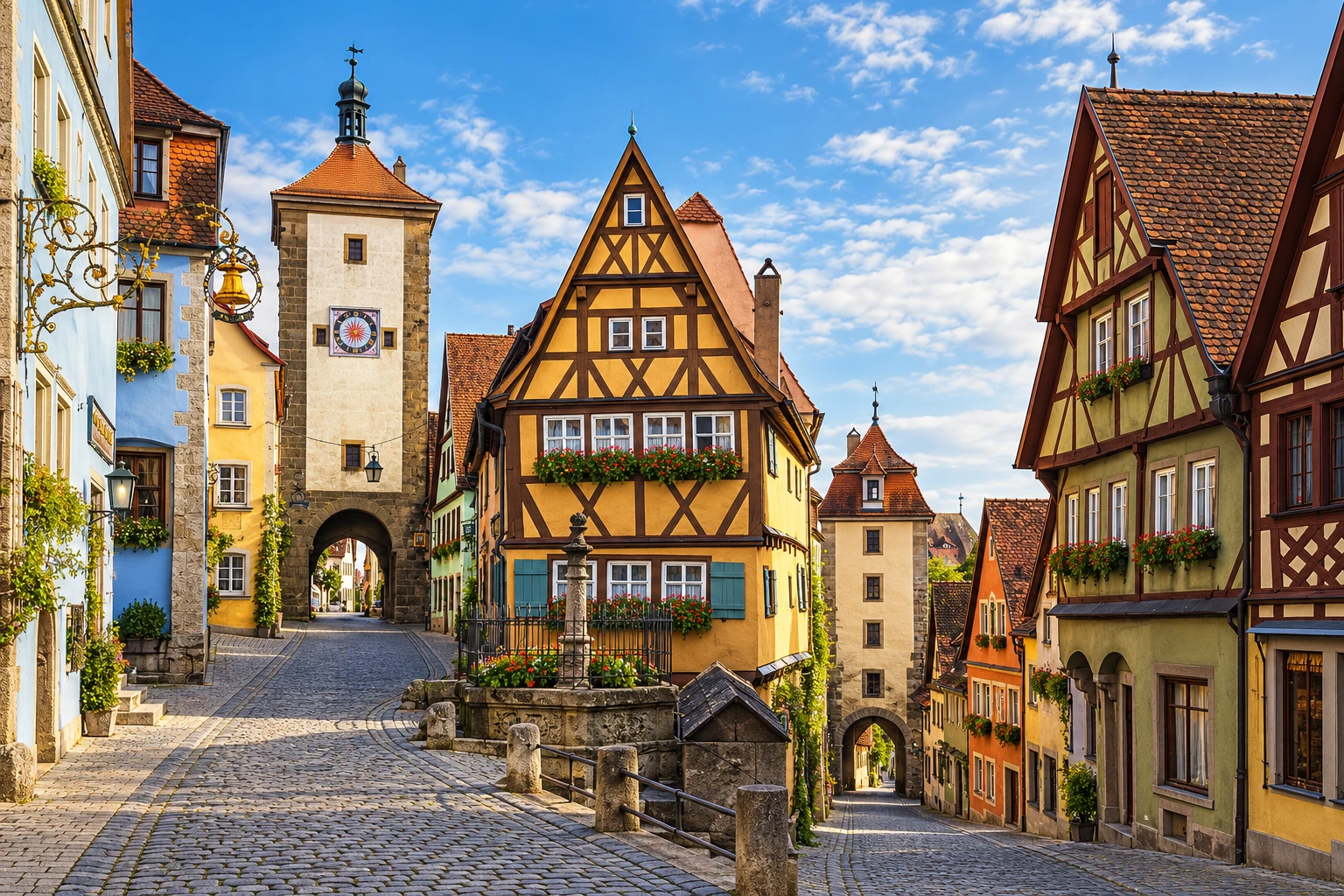
Several sights in Germany are free. The Tiergarten, Berlin’s large central park, is free to enter. The medieval streets of Rothenburg ob der Tauber in Bavaria have no entry fee, so a walk through the old town adds nothing to the budget.
How to cut costs in Germany
The largest savings come from the lodging line. Choosing a hostel dorm instead of a mid-range hotel changes a night’s cost from about €90–150 to about €20–30 for a single bed, so a dorm for part of the trip makes a visible difference. Traveling in January or February and avoiding trade-fair weeks in the host city cut the room rate further.
Eating like local residents also cuts costs. Street food, supermarket breakfasts and lunches, and tap water keep the daily food line close to the budget tier. Save restaurant dinners for the meals you most want.
For transport, the Deutschlandticket pays off when you spend several days in one region and use local transport each day. Check the employer and student discounts before you buy at full price. On long-distance routes, book Sparpreis fares early and choose a Tuesday or Wednesday departure when your schedule allows. Keep in mind that Super Sparpreis tickets cannot be changed. If your plans might shift, buy a Flexpreis or pay the higher price for flexibility. A BahnCard helps only if your long-distance fares add up to more than the card costs.
Museum visits and sightseeing have fewer fixed costs. Children and young people under 18 enter Museum Island free, and reduced rates apply to students and other eligible visitors with ID. The Tiergarten and Rothenburg’s old town cost nothing.
Finally, plan for the overnight tax in Berlin, Hamburg and Cologne. Munich charges none at present, and Hamburg charges nothing for net room prices up to €10 per person per night. Add the local rate to each hotel line before you compare prices.
Key Takeaways
- Budget per person per day: Plan for about $85 at the budget level, about $210 at mid-range and at least $400 at luxury, with lodging accounting for most of the difference.
- Travel in January or February: The February 2026 breakdown puts stays in those months 20–30% cheaper, and trade-fair weeks can double or triple hotel prices.
- Buy the Deutschlandticket for regional travel: At €63 a month from 1 January 2026, it covers local and regional transport but not IC, EC or ICE trains.
- Book rail fares early and mid-week: Sparpreis fares start from €21.90 and Super Sparpreis from €17.90, but Super Sparpreis tickets cannot be changed or refunded.
- Add city taxes to every hotel bill: Berlin charges 7.5% of the net room price and Cologne charges 5%. Hamburg charges a per-person amount set by price tier. Munich charges none at present.