Best Time to Visit Germany
For most travelers planning a sightseeing trip to Germany, May and June and September into early October are the best windows. Days are long or mild, major cities and castle towns are comfortable to walk, and crowds are smaller than in July and August. June and September are the best months for weather, and spring and autumn are the best periods for sightseeing, with good weather and manageable crowds.
The right month depends on what the trip is for. December suits Christmas markets, the Bavarian south is the better choice for snow, and Munich in late September is a different trip from Munich in any other week because of Oktoberfest. Public holidays and school vacations also shift prices and crowds in specific states, so check your dates against the holiday calendar below.
Which Season Fits Which Trip
Spring (April to May) and autumn (September to October) are the shoulder seasons, the periods between the summer peak and winter. Spring and autumn are mild, with fewer crowds than summer. Both suit city walking, castle visits and trips to wine villages.
Summer suits travelers who want long days, beaches on the Baltic coast, river cruises or hiking. It also brings the highest prices and the heaviest crowds. Winter fits Christmas markets, museums and, in the south, skiing and snow hiking. February and March are the quietest and cheapest stretch for travelers who accept cold weather.
Winter: December Through February
December
Christmas markets run through December and define the month for most visitors. Mid-December to New Year is peak season, with very high crowds and the highest prices. Book lodging early if the trip falls in that window. In 2026, Christmas Day falls on Friday, 25 December, and the second Christmas day on Saturday, 26 December. Both are nationwide holidays.
Snow is more likely in the south than elsewhere. A December trip that pairs Munich or another Bavarian city with Alpine scenery gives you the best odds of a snowy backdrop.
January
January is cold, and it is low season after the New Year period ends. DWD, the German weather service, reported an area-mean temperature of ?0.8 °C for January 2026, 1.7 K colder than the 1991–2020 mean. That month had 44.8 mm of precipitation, 31% below the mean, and 64.5 hours of sunshine, 24.4% above it. One cold, dry January does not set the pattern for every year, but it shows the range a traveler can face.
Heilige Drei Könige (Epiphany, 6 January) is a public holiday in Baden-Württemberg, Bayern and Sachsen-Anhalt. In 2026 it falls on a Tuesday. Southern regions such as Bavaria suit hiking and skiing in fall and winter.
February
February is among the quietest months. Destatis, the federal statistics office, reported February 2025 at 26.9 million overnight stays, and February 2026 at 27.7 million, up 3.3%. Both are low months for overnight stays.
February is also Carnival season. The Cologne Carnival culminates in the Rose Monday parade on Shrove Monday. Shrove Monday moves each year, so confirm the date before booking. Expect costumed crowds in Cologne, and hotels that fill up earlier than the month’s low-season reputation suggests.
Spring: March Through May
March
March is still cold, and real spring starts in April. March has the best budget prices and low crowds. Destatis reported that March 2025 overnight stays fell 8.1% year on year, partly because Easter holidays fell in April that year rather than March. Easter timing moves demand between March and April, so check where Easter lands before choosing either month.
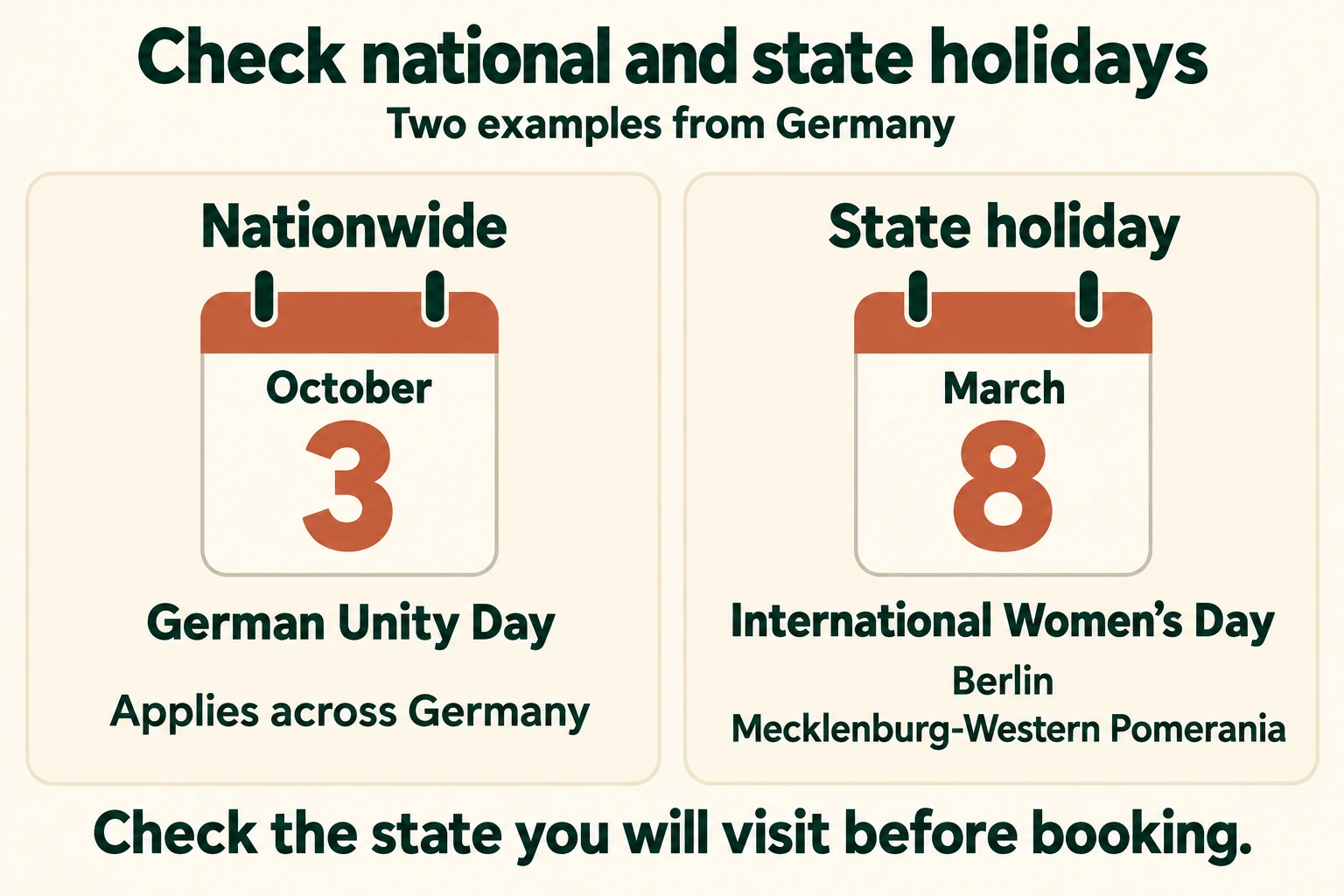
Internationaler Frauentag (8 March) is a holiday in Berlin and Mecklenburg-Vorpommern, so shops and some attractions there may keep holiday hours.
April
April temperatures range from 7 to 15 °C. April and May bring thinner crowds and lower prices than peak season. April and May are ideal shoulder months, with mild weather and fewer crowds than summer.
Easter changes the picture. April 2025 recorded 41.0 million overnight stays, up 11.0%, and Destatis attributed the rise partly to late Easter holidays. In 2026, Karfreitag (Good Friday) is 3 April and Ostermontag (Easter Monday) is 6 April. Ostersonntag (5 April) is a public holiday in Brandenburg only. Spring festivals start in April and May, and Walpurgis Night bonfires light up in late April or May, with the liveliest celebrations in Heidelberg.
May
May brings warm days, slightly cool nights and cherry blossoms, and the festival scene in Berlin starts up. Sunset comes around 9 PM, so evenings are long enough for walking. May 2026 recorded 49.2 million overnight stays, up 3.8% year on year, so May is already busy. It often feels like peak season, and May to September brings high crowds and high hotel prices.
The holiday calendar is crowded. In 2026, Tag der Arbeit (Labor Day) is Friday, 1 May, Christi Himmelfahrt (Ascension) is Thursday, 14 May, and Pfingstmontag (Whit Monday) is 25 May, all nationwide. Pfingstsonntag (24 May) is a holiday in Brandenburg only. Long weekends push German travelers to the roads and rails, so book trains and rooms early around those dates.
May brings maypole and dance festivals, the Stuttgart Frühlingsfest, an asparagus festival in Beelitz and spring festivals in Munich and Stuttgart. Berlin’s Carnival of Cultures runs from May into June.
Summer: June Through August
June
June temperatures run 18 to 24 °C, and June is among the best months for weather. June 2026 recorded 48.9 million overnight stays, 2.9% below June 2025. Domestic guests fell 3.6% while foreign guests rose 1.6%. June is busy, though less so than the August peak. It also has the longest days of the year.
Fronleichnam (Corpus Christi) falls on Thursday, 4 June in 2026. It is a full public holiday in Baden-Württemberg, Bayern, Hessen, Nordrhein-Westfalen, Rheinland-Pfalz and Saarland, and a partial holiday in parts of Saxony and Thüringen, as listed in the holiday calendar. Hamburg’s Hafengeburtstag, a weekend harbor festival dating back more than 350 years, takes place in early June. June also offers the Bach Festival, Rügen beaches and Düsseldorf culture events.
July
July is warm: The rest of Germany averages about 23 °C while the north averages highs near 20 °C, and temperatures can reach 30 °C. July and August have the highest crowds. Schools are on holiday, and river cruise ships make Rhine and Danube ports very busy. May to August is peak season with the highest prices.
July suits hiking and other outdoor activity, since July and August are warm and sunny, with occasional rain. Festivals include Schützenfest Hannover, the Berlin Culture Festival, Rock am Ring and Berlin Pride.
August
August is the busiest month of the year. August 2025 recorded 59.4 million overnight stays, up 0.7%. Of these, 49.7 million were domestic and 9.8 million came from abroad. Domestic travelers make up most of these stays, so school vacation timing across the German states drives much of the crowding.
Two local holidays fall in August 2026. The Augsburger Friedensfest (Saturday, 8 August) is a public holiday in Augsburg only. Mariä Himmelfahrt (Saturday, 15 August) is a full holiday in Saarland and a partial holiday in predominantly Catholic communities in Bayern. August events include Rhine cruises, the Romantic Road, Frankfurt’s Apple Wine Festival and the Rheingau wine festival.
Autumn: September Through November
September
September is one of the best months for weather, and September and October bring thinner crowds and lower prices than peak season. Temperatures run 5 to 16 °C from September through November overall. September 2025 recorded 48.6 million overnight stays, up 1.0%, so the month is still busy, particularly in Munich.
Oktoberfest begins in the second half of the month. The grape harvest brings wine festivals to the wine regions. Weltkindertag (20 September, a Sunday in 2026) is a holiday in Thüringen only. See the Oktoberfest section below for dates and costs.
October
October is the best month for autumn foliage. Peak foliage falls in October, with daytime temperatures around 17 to 18 °C and nights around 10 °C. October 2025 recorded 45.9 million overnight stays, up 1.2%. Autumn is usually the best time to explore Munich, Berlin and Hamburg on foot.
In 2026, Tag der Deutschen Einheit (German Unity Day) falls on Saturday, 3 October, nationwide, and Reformationstag (Saturday, 31 October) is a holiday in nine states, including Brandenburg, Bremen, Hamburg, Niedersachsen and Sachsen. Berlin’s Festival of Lights takes place in October, and the Black Forest is a hiking destination in the same month.
November
November is quieter. It recorded 32.2 million overnight stays in 2025, up 0.2%, the lowest of any late-year month. The weather cools, so museums, city breaks and cultural travel suit the month well. Strausswirtschaften and Besenwirtschaften, seasonal wine taverns, open in wine regions.
Allerheiligen (All Saints’ Day, Sunday, 1 November in 2026) is a holiday in Baden-Württemberg, Bayern, Nordrhein-Westfalen, Rheinland-Pfalz and Saarland. Buß- und Bettag (Wednesday, 18 November) is a holiday in Sachsen only.
How Crowds Compare by Month
Overnight stays are a measure of lodging demand, not a head count of visitors, but they show the seasonal shape clearly. The table uses Destatis preliminary figures, and the months come from different years, so compare the pattern rather than exact differences.
| Month | Overnight stays | Year-on-year change |
|---|---|---|
| February 2026 | 27.7 million | +3.3% |
| April 2025 | 41.0 million | +11.0% |
| May 2026 | 49.2 million | +3.8% |
| June 2026 | 48.9 million | ?2.9% |
| August 2025 | 59.4 million | +0.7% |
| September 2025 | 48.6 million | +1.0% |
| October 2025 | 45.9 million | +1.2% |
| November 2025 | 32.2 million | +0.2% |
August sits far above every other month. May, June and September are close to one another, which makes September a good choice for travelers who want summer-like demand levels without August pressure, and November and February the best bets for low volumes.
Regional Differences
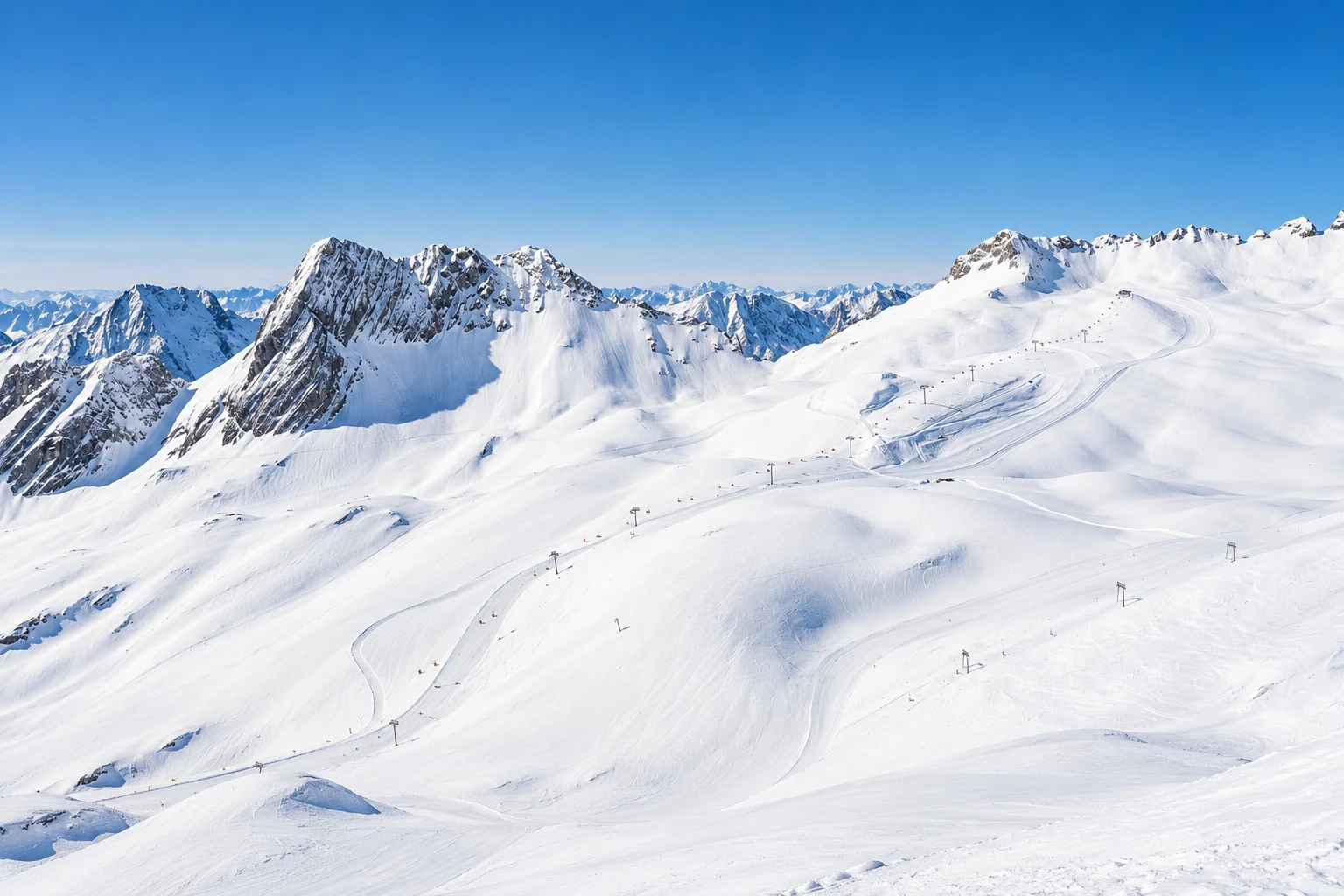
Bavaria and the Alps
Bavaria has the widest seasonal swing. Snow is more likely in the south, and hiking and skiing there suit fall and winter. Oktoberfest makes the state particularly crowded while it runs, and Avoid the region then unless you are going to the festival. In August, Mariä Himmelfahrt is a partial holiday in predominantly Catholic Bavarian communities, and Fronleichnam and Allerheiligen are full holidays across the state.
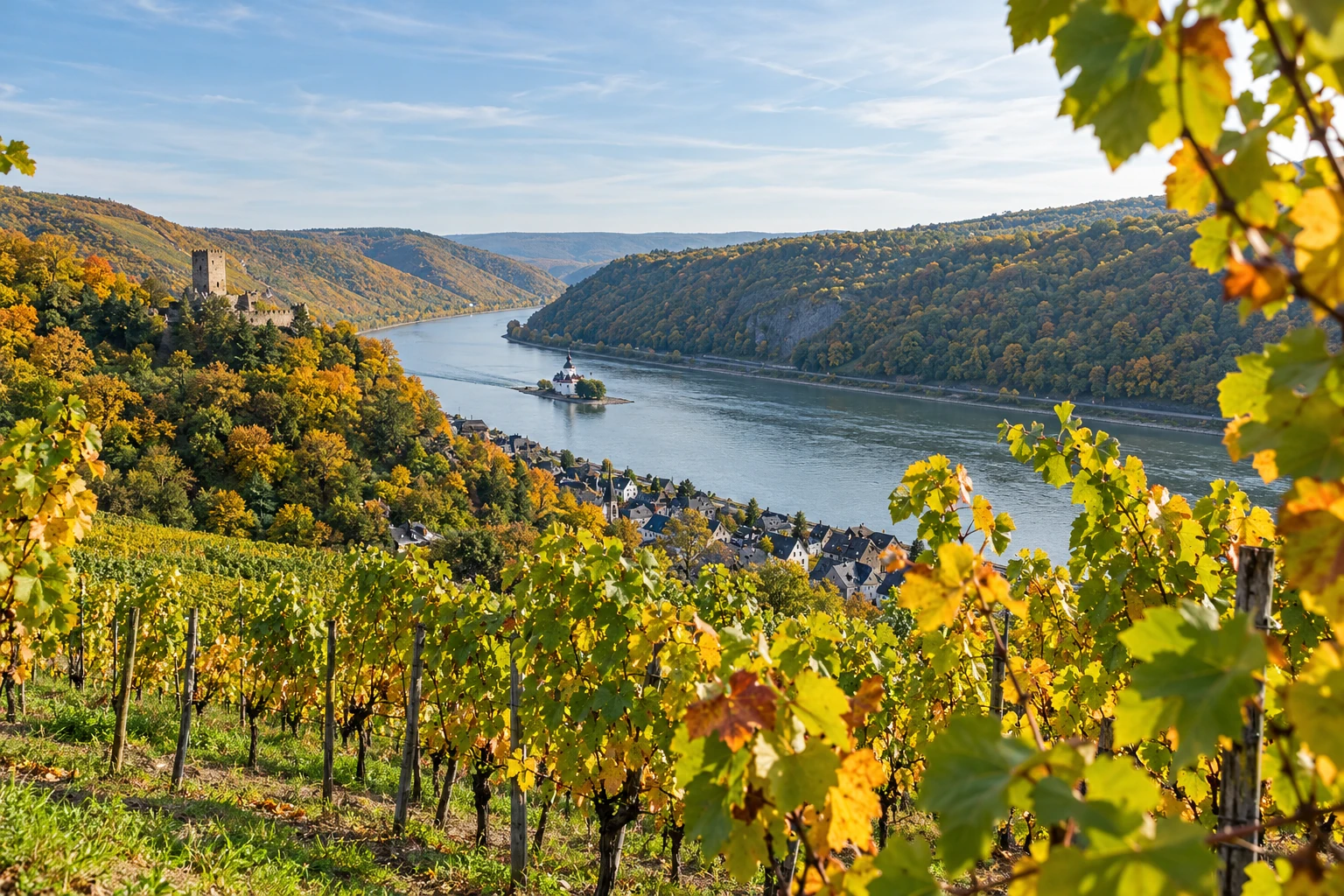
Rhine and Danube
Rhine and Danube ports are very busy in July and August because of river cruise ships. Rhine cruises, the Romantic Road and the Rheingau wine festival all belong to summer. Travelers who want the same valleys with less crowding should look to May, June or September. The grape harvest in September adds wine festivals.
Berlin
Berlin’s calendar is built around events. The Carnival of Cultures runs from May into June. The Berlin Culture Festival and Berlin Pride fall in summer, and the Festival of Lights comes in October. Berlin is also a city to explore on foot in autumn. May brings the long evenings, with sunset around 9 PM.

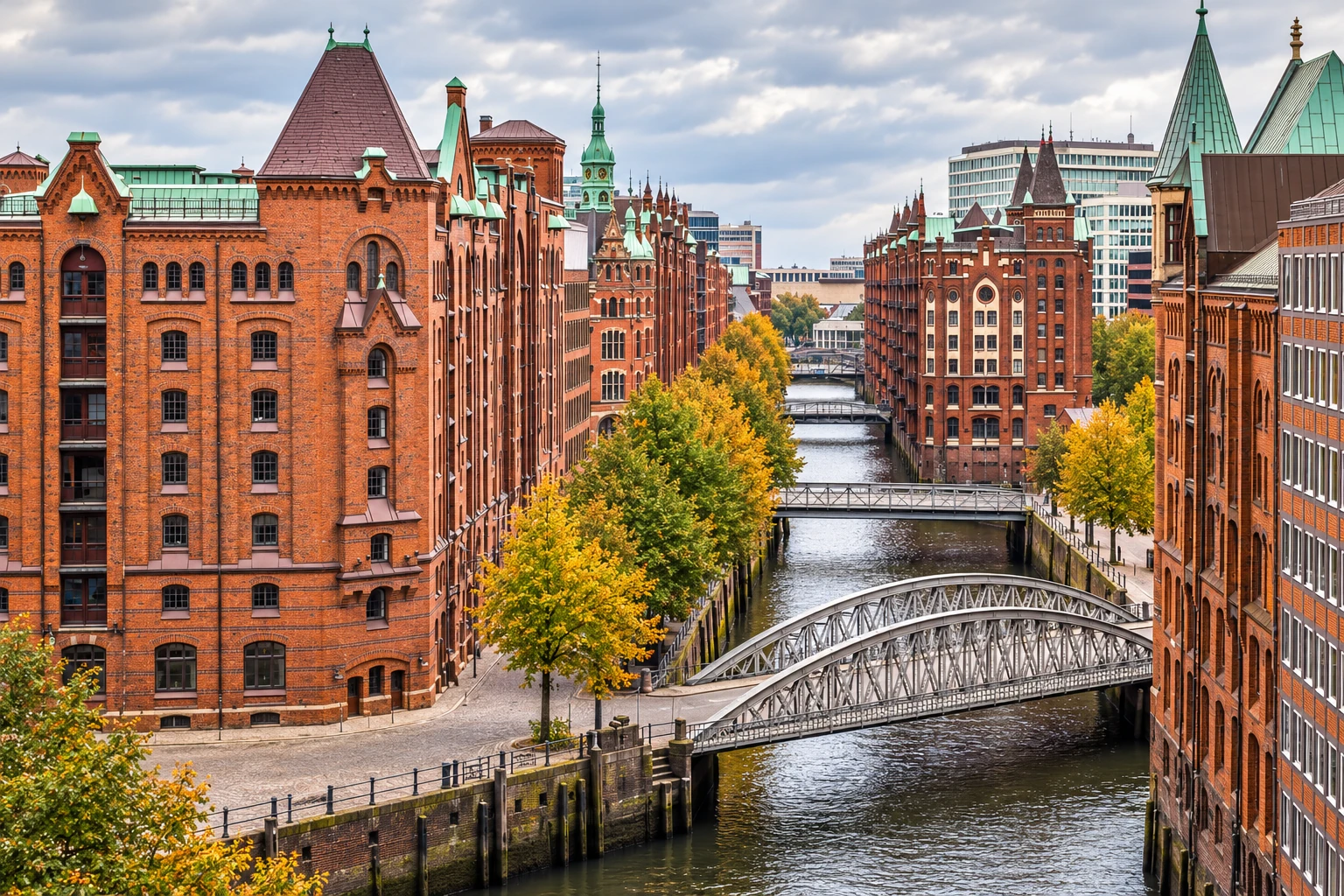
Hamburg and the North
The north is cooler in summer: Tripcrafters gives July highs near 20 °C there, against about 23 °C for the rest of Germany. Hamburg’s Hafengeburtstag harbor festival takes place in early June, and Hamburg suits autumn walking. Reformationstag (31 October) is a holiday in Hamburg and several other northern states.
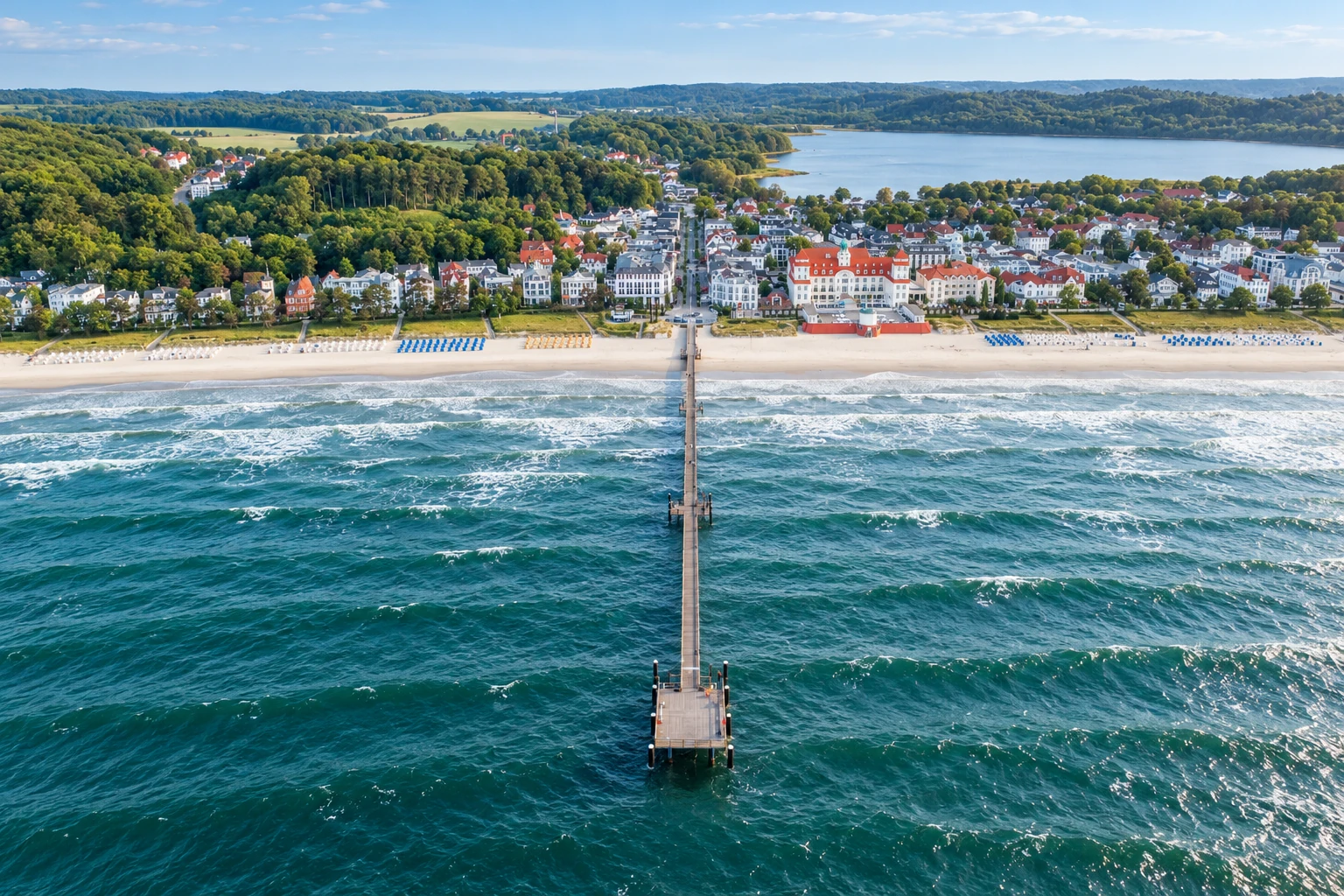
Baltic Coast and Rügen
Rügen’s beaches are a June option. Given the north’s cooler July highs, beach travel here is a summer activity measured in mild rather than hot temperatures.
Heidelberg, Cologne and the Rhineland
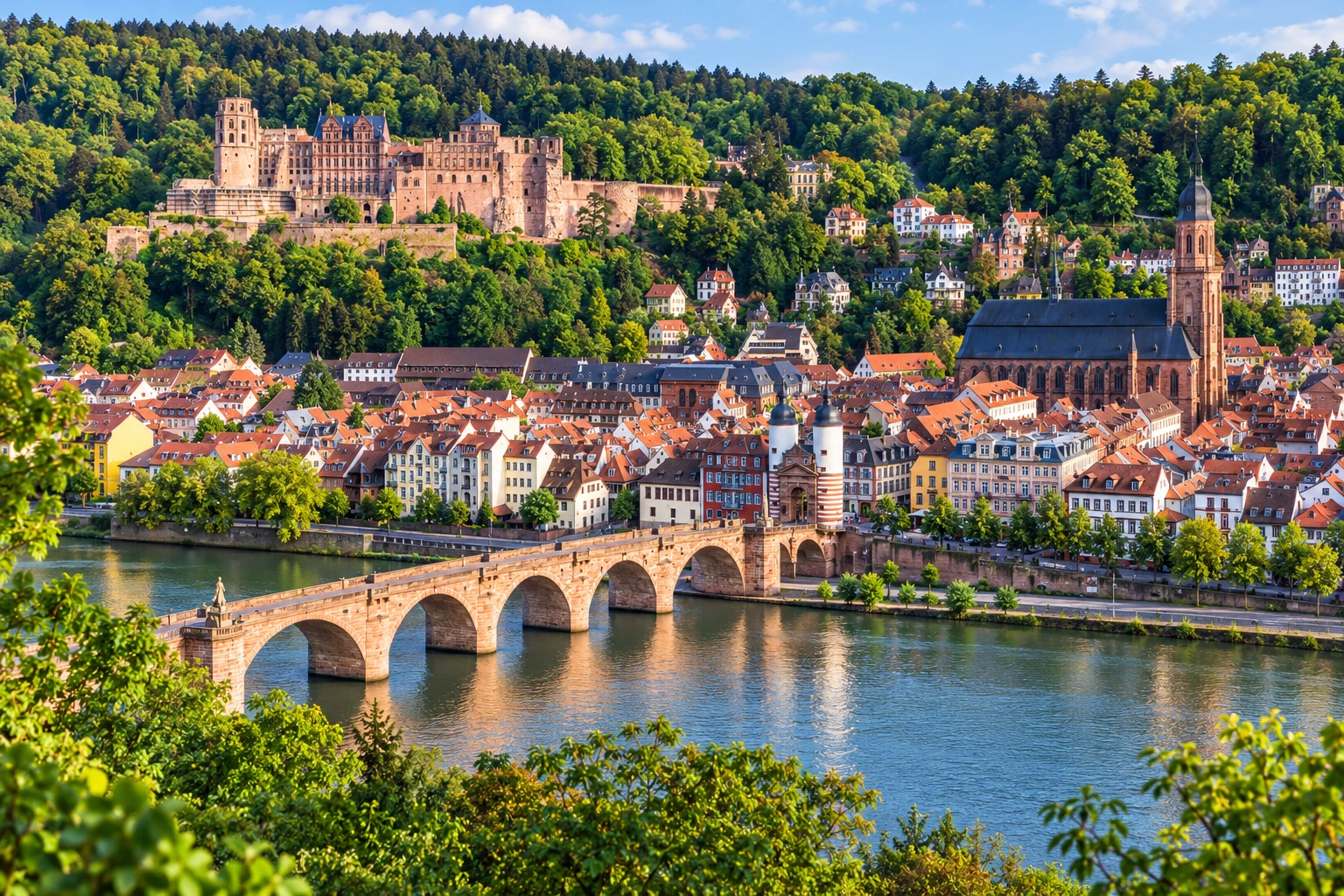
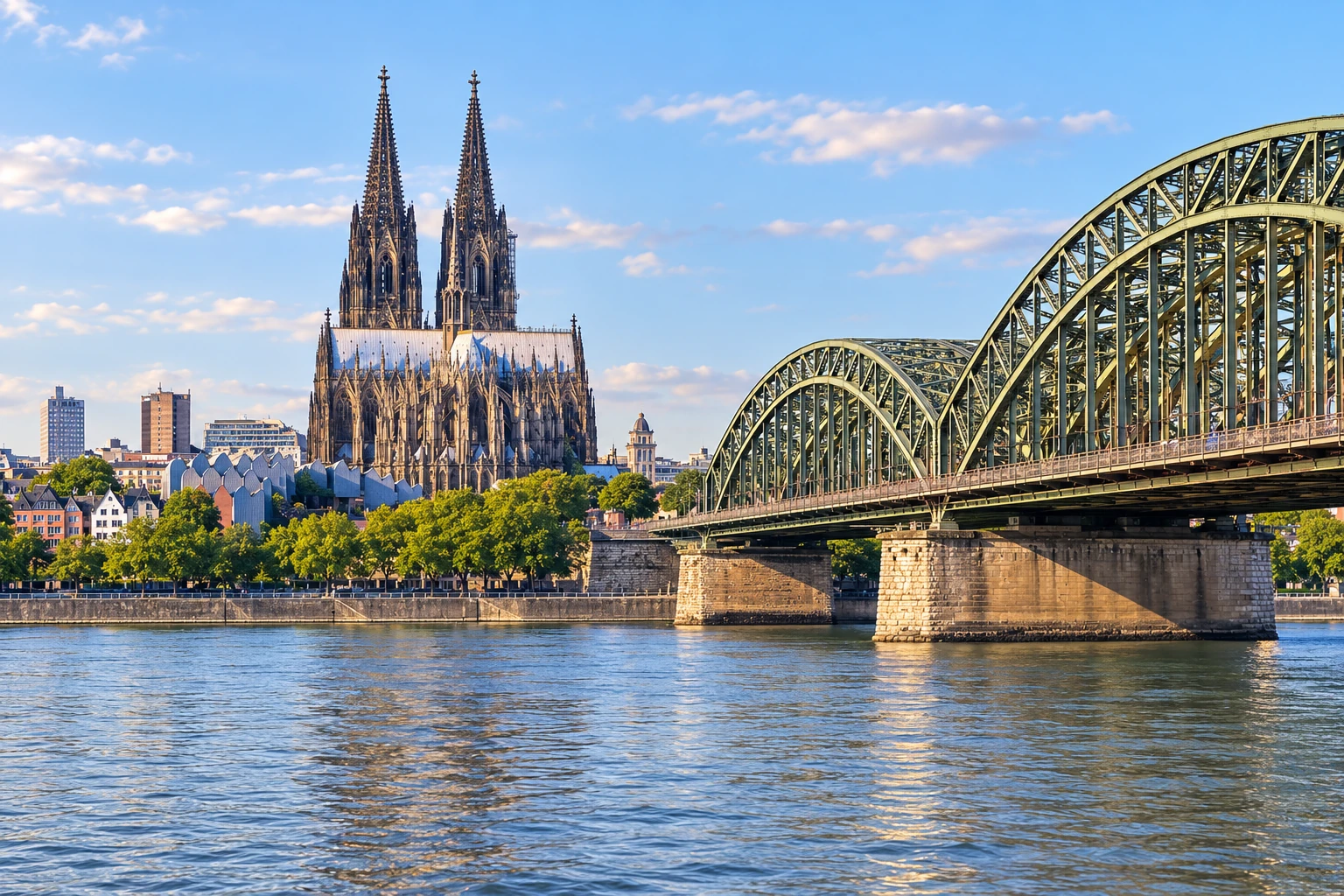
Heidelberg is the place for Walpurgis Night bonfires in late April or May. Cologne hosts Carnival in February or March, ending with the Rose Monday parade. Nordrhein-Westfalen and Rheinland-Pfalz both observe Fronleichnam and Allerheiligen, so those days affect Rhineland trips.
Black Forest
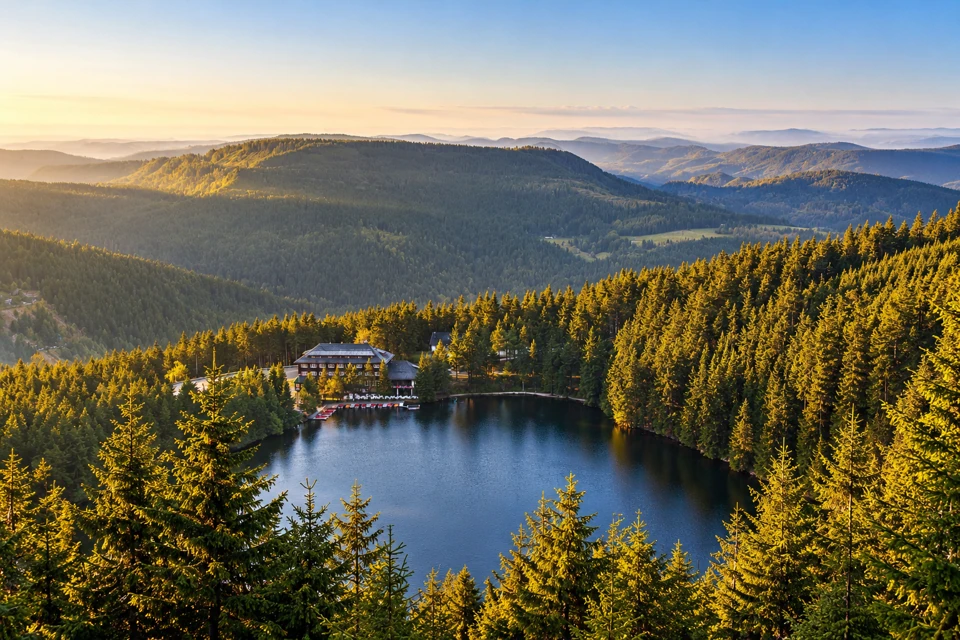
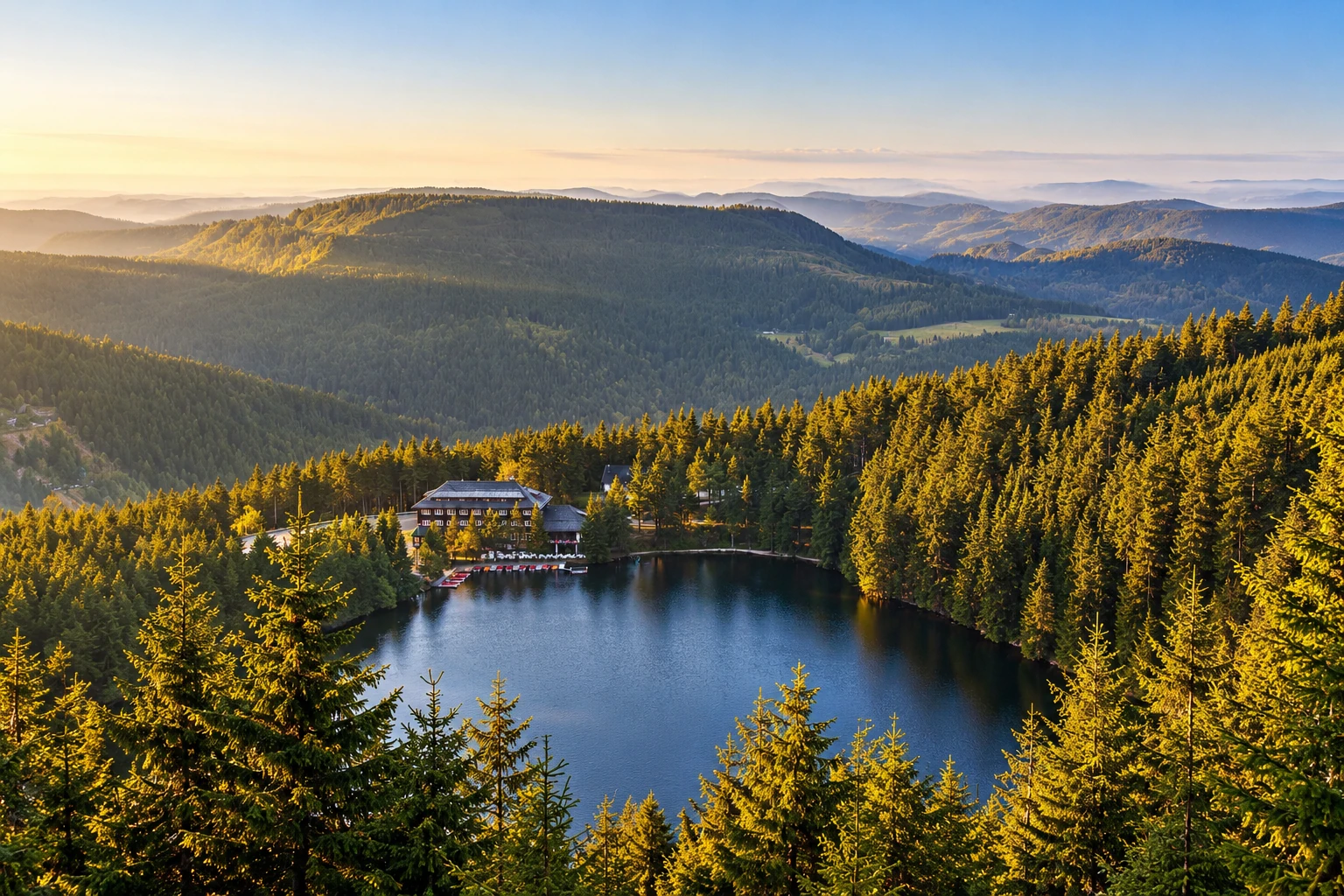
The Black Forest is an autumn hiking destination. October’s foliage and cooler daytime temperatures of 17 to 18 °C suit long walks.
Oktoberfest Dates and Costs
The 191st Wiesn ran from 19 September to 4 October 2026, with the opening tapping at noon on 19 September. The 2025 festival ran 20 September to 5 October. Oktoberfest starts in the second half of September, and the next edition starts 18 September 2027.
The official 2026 beer price ran from €14.80 to €15.90 per liter, an average of 2.38% above 2025, when the range was €14.50 to €15.80. Tent proprietors set the prices. The cheapest large tent was Augustiner-Festhalle at €14.90 (2025: €14.50). The highest price was at Kufflers Weinzelt, which sells only wheat beer, at €18.40 (2025: €17.80).
Entry to the grounds, including the tents, is free. The historical Oide Wiesn section costs four euros. As a general rule, one-quarter of tent seats cannot be reserved. On weekends and holidays, half of all seats are not reservable until 3:00 p.m., and after that 25% remain unavailable. Reservations are possible only inside tents. The official Oktoberfest barometer shows expected daily busyness, and tents generally fill faster in bad weather. Weekday visits and early arrivals reduce the wait for a seat.
Public Holidays That Affect Timing
Holiday dates shift by weekday each year, and the 2026 dates below show the pattern. The nationwide holidays are Neujahr (Thursday, 1 January), Karfreitag (3 April), Ostermontag (6 April), Tag der Arbeit (1 May), Christi Himmelfahrt (14 May), Pfingstmontag (25 May), Tag der Deutschen Einheit (Saturday, 3 October), Weihnachten (25 December) and the second Christmas day (26 December). The same dates are listed in the 2026 holiday calendars and a second 2026 calendar.
Regional holidays matter for any trip built around a particular state. Heilige Drei Könige on 6 January, Fronleichnam on 4 June and Allerheiligen on 1 November cluster in the Catholic south and west. Buß- und Bettag on 18 November applies only in Sachsen, Weltkindertag on 20 September only in Thüringen, and Internationaler Frauentag on 8 March in Berlin and Mecklenburg-Vorpommern. On state holidays, shops close and local travelers fill trains and hotels, so plan a trip around them only if the festival is why you are going.
Climate Baseline
DWD’s current normal period is 1991–2020, and Germany’s area-mean annual temperature over that period is 9.3 °C, according to a KIT report. DWD publishes the 1991–2020 normals for temperature, precipitation and sunshine duration by station, plus counts of summer days, frost days, ice days and hot days. Travelers who want data for a specific town can look up its nearest station there. The KIT report also notes that warming from 1961–1990 to 1991–2020 appeared in all federal states to a similar degree, so recent summers are warmer than older guidebook figures suggest.
Which Month and Region to Pick
- Choose May, June or September for the best balance: Mild to warm weather comes with crowds below the August peak, which reached 59.4 million overnight stays in 2025.
- Avoid Munich in late September unless Oktoberfest is the goal: The 2026 festival ran 19 September to 4 October, with beer at €14.80 to €15.90 per liter, and Bavaria is especially crowded while it runs.
- Book December and May holiday weekends early: Prices are highest from mid-December to New Year, which is peak season. In May 2026, German travelers hit the road for the holidays on 1 May, 14 May and 25 May.
- Pick February, March or November for low prices and quiet streets: Overnight-stay volumes are lowest in these months, and March has the best budget prices.
- Match region to season: Go south for snow and skiing in winter. Visit the Rhine and Danube outside July and August, head north for cooler summers, and choose the Black Forest or Berlin’s Festival of Lights in October.