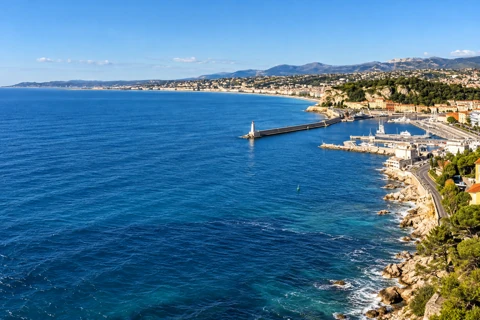
Best Time to Visit Greece
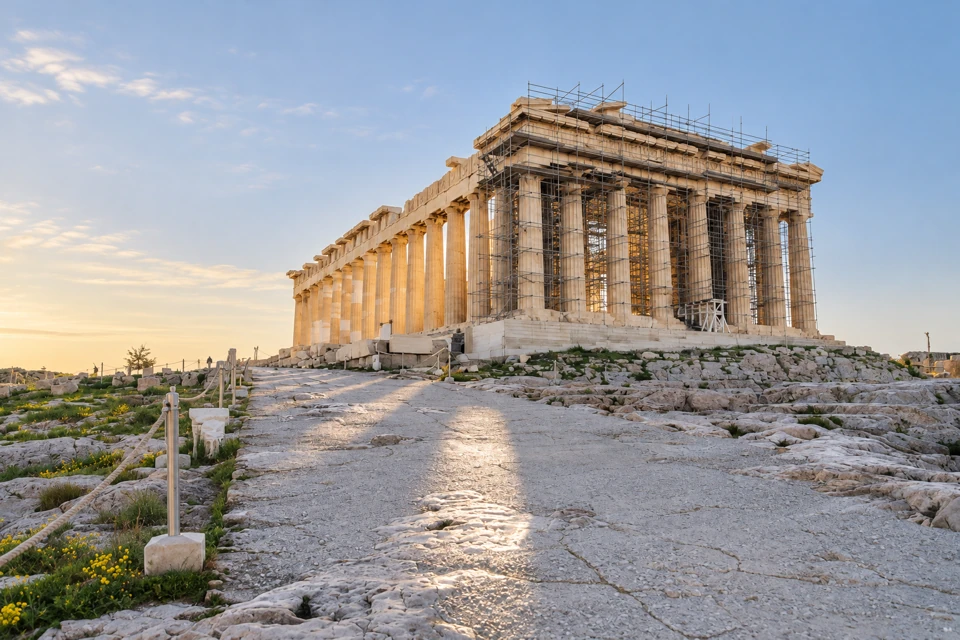
May to early June and late September to October are the best months for most travelers to visit Greece. The Aegean islands are open and the days are warm. Crowds are smaller than in midsummer, and prices are lower than in the July and August peak. The right month still depends on your plans. A beach week in the Cyclades, the island group that includes Santorini and Mykonos, works best in June or September, while museum trips to Athens and Thessaloniki work in any month, including winter.
Greece has two travel seasons. From about April or May to October, the islands, ferries, beach clubs and seasonal hotels run at full capacity. From November to March, many small islands wind down, and travel centers on Athens, Thessaloniki and the mainland. Prices, festivals and closures also affect which dates to choose.
Climate Numbers for Athens and Thessaloniki
Mean temperatures give a quick sense of the seasons. The Athens figures come from the National Observatory series. The Thessaloniki figures come from the Hellenic National Meteorological Service (EMY) station at Mikra.
| Month | Athens mean °C | Athens rain (mm) | Thessaloniki mean °C |
|---|---|---|---|
| January | 9.3 | 44.6 | 5.4 |
| February | 9.8 | 48.3 | 6.8 |
| March | 11.7 | 42.6 | 9.8 |
| April | 15.5 | 28.2 | 14.3 |
| May | 20.2 | 17.2 | 19.9 |
| June | 24.6 | 9.7 | 24.7 |
| July | 27.0 | 4.2 | 26.9 |
| August | 26.6 | 4.6 | 26.4 |
| September | 23.3 | 11.9 | 21.9 |
| October | 18.3 | 47.7 | 16.5 |
| November | 14.4 | 50.6 | 11.3 |
| December | 11.1 | 66.6 | 7.0 |
Athens rainfall drops below 20 mm in May and stays under 12 mm until September, then jumps to about 48 mm in October. December is the wettest month in the Athens series. Thessaloniki runs noticeably cooler than Athens in winter and almost matches it in summer.
Month by Month
January
January is the coldest and wettest month. Athens averages about 9°C, and Thessaloniki about 5°C, with 37.7 mm of rain over 11.5 days. Crete is milder at around 12°C but wetter, with about 91 mm of rain on 16 days in Heraklion. Crowds are low, and prices are among the lowest of the year.
This month suits museum visits in Athens and Thessaloniki, city breaks and budget travel. It does not suit beaches or island hopping. Carnival season opens in mid-January, and 1 January and 6 January (Epiphany) are closure days.
February
February stays cold and wet, with Athens at about 10°C and about 48 mm of rain. The reason to come is Carnival. Patras, on the Peloponnese coast, hosts the best-known celebrations, and Carnival season runs from mid-January into March. Crowds are low, so this is a month for cultural trips built around a city and a festival.
March
March brings milder days with showers and wildflowers. Athens averages about 12°C and Thessaloniki about 10°C, and the sea is still cold. Crowds are low and island services are limited, so keep to Athens and the mainland. Prices stay low, and March, April and November are good months for car rental value.
Three dates matter. On 6 March, state archaeological sites and museums offer free entry in memory of Melina Mercouri. Independence Day on 25 March closes many sights. In 2027, Clean Monday, the first day of Orthodox Lent, falls on 15 March and also brings closures, and the Carnival peak is 14 March. March through May is a strong window for hiking.
April
Athens averages about 15.5°C in April and rainfall falls to about 28 mm. Thessaloniki averages about 14°C. Crowds are rising but still moderate, which makes April a good month for sightseeing in Athens, the Peloponnese and the mainland.
Orthodox Easter is the main draw and the main planning constraint. In 2027, Good Friday through Easter Monday runs from 30 April to 3 May, and sights and banks close. Easter is a good time to see Greek traditions in action, but book transport and rooms early and expect shortened opening hours.
May
May is one of the two best months for a first trip. Athens averages about 20°C with about 17 mm of rain, Thessaloniki about 20°C, and the hills are green with wildflowers. Crowds are moderate, and prices run below peak summer.
This is the month for hiking, sightseeing and the first island beach days, especially on Crete and Rhodes. It is also a good month for Santorini. Sea water is still cool for long swims. Labour Day on 1 May closes many sites. The Athens & Epidaurus Festival opens in late May; its 2025 season began on 27 May.
June
June is hot and mostly dry. Athens averages about 25°C with about 10 mm of rain, and Thessaloniki about 25°C with mean maximums near 29°C. Crowds are moderate and build toward July. July and August prices run roughly 30% above June.
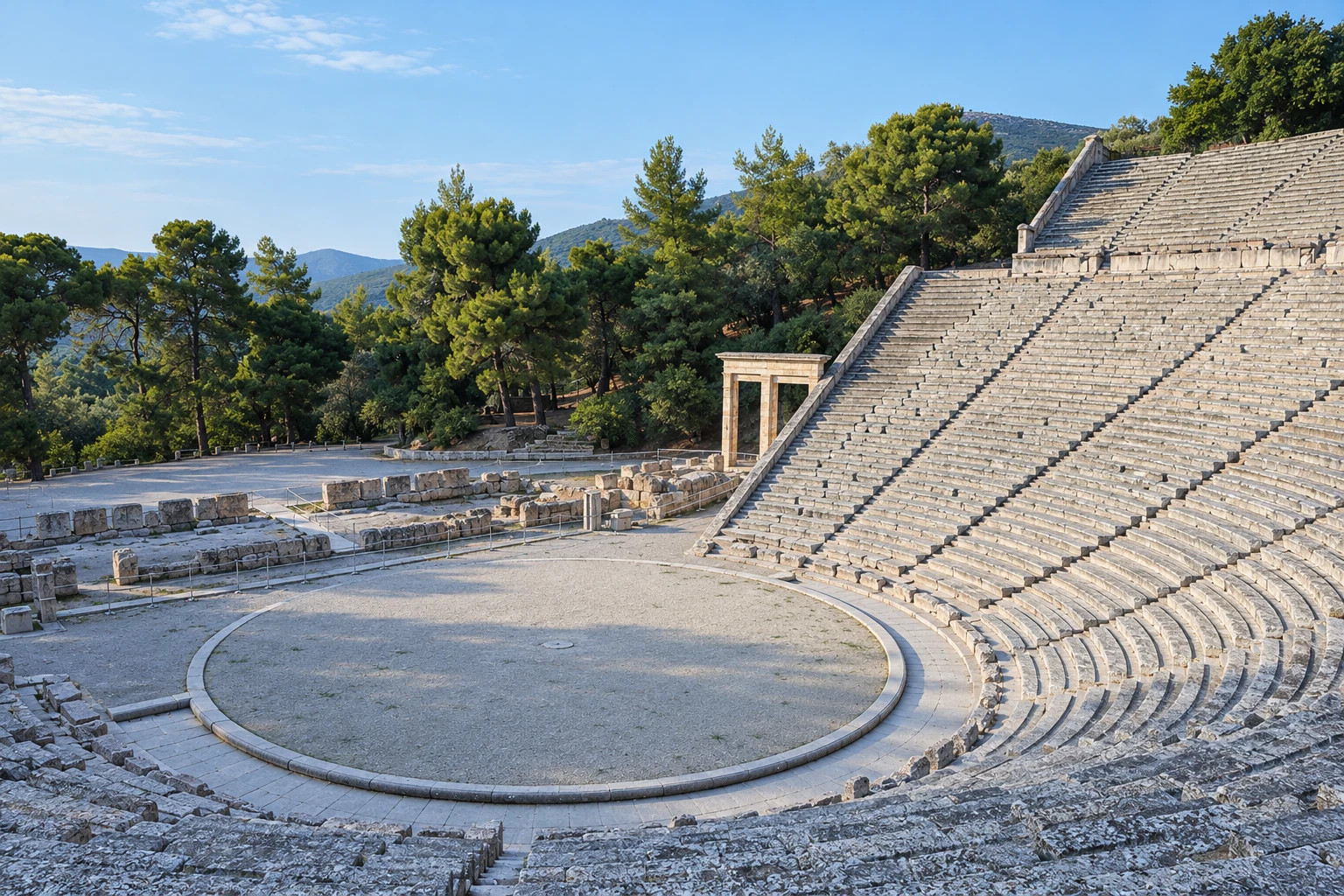
That makes June the best month for beaches with fewer people, and it overlaps with the festival season. The Athens & Epidaurus Festival runs through summer, with performances at the Odeon of Herodes Atticus beneath the Acropolis. In 2025, the ancient theatre of Epidaurus hosted performances from 27 June to 23 August. Check aefestival.gr for the current program.
July
July is the hottest month, along with August. Athens averages about 27°C with about 4 mm of rain, and highs of 35°C or more are common. Thessaloniki averages about 27°C with mean maximums near 32°C. Heraklion averages about 26°C and receives less than 1 mm of rain. The sea reaches about 24–25°C, and the meltemi, a strong summer wind across the Aegean, is typical.
Crowds and prices peak, and ferries are at their busiest. This month suits beach travelers who tolerate heat and crowds, provided they book ferries and rooms well ahead. Plan sightseeing in Athens for early morning or evening.
August
August matches July for heat, with Athens at about 27°C, Thessaloniki about 26°C and Heraklion about 26°C, and with almost no rain. Heraklion records 0.9 mm of rain and 0.5 rain days. It is also the most crowded and most expensive month. Ferry reliability drops in July and August, so build slack into any itinerary that depends on a tight connection.
The reward is festival energy. The 15 August holiday brings island festivals across the country. Chania Rock Festival on Crete and the International Music Festival of Aegina are also held in August, and the Athens & Epidaurus Festival continues to late August. August is poor for budget or quiet travel.
September
September is widely regarded as the best all-round month. Athens averages about 23°C with about 12 mm of rain, Thessaloniki about 22°C, and the sea stays near its warmest at about 24–25°C. Crowds fall from August levels and prices drop below July and August.
It is the best month for sea swimming and island visits, and one of the two strongest windows for the Cyclades. Hiking is recommended from September through November.
October
October is cooler at night and still pleasant by day. Athens averages about 18°C, Thessaloniki about 16.5°C, and Athens rainfall rises sharply to about 48 mm. Crowds are moderate and declining. October and May offer the best balance of weather, availability and value on Santorini.
Olive harvest and wine festivals run through October and November, so this is a good month for wine regions, hiking and city visits. Pack a rain layer. Ohi Day on 28 October is a national holiday with closures.
November
November is low season. Athens averages about 14°C with about 51 mm of rain, and Thessaloniki about 11°C. Islands wind down, and some hotels and ferries pause for winter. Prices are among the lowest of the year.
The month suits budget travel, city breaks in Athens and Thessaloniki, and hiking on the mainland. The Athens Marathon is on 8 November 2026, so expect busier hotels and street closures in the city that weekend.
December
December is cold and wet. Athens averages about 11°C with about 67 mm of rain, and Thessaloniki about 7°C. Crowds are low. Christmas markets open in cities, the ski season begins in the mountains, and island travel is limited. Christmas Day and the day after (25–26 December) are closure days.
Region by Region
Athens and Attica
Athens stays open all year, so it works in any month, and spring and autumn are best for walking the ancient sites. In July and August, the city is hot enough that visits to the Acropolis need early starts. EMY’s Attica station values for July show means of 27.0–28.9°C, with maximums up to 33.8°C at Nea Filadelfeia.
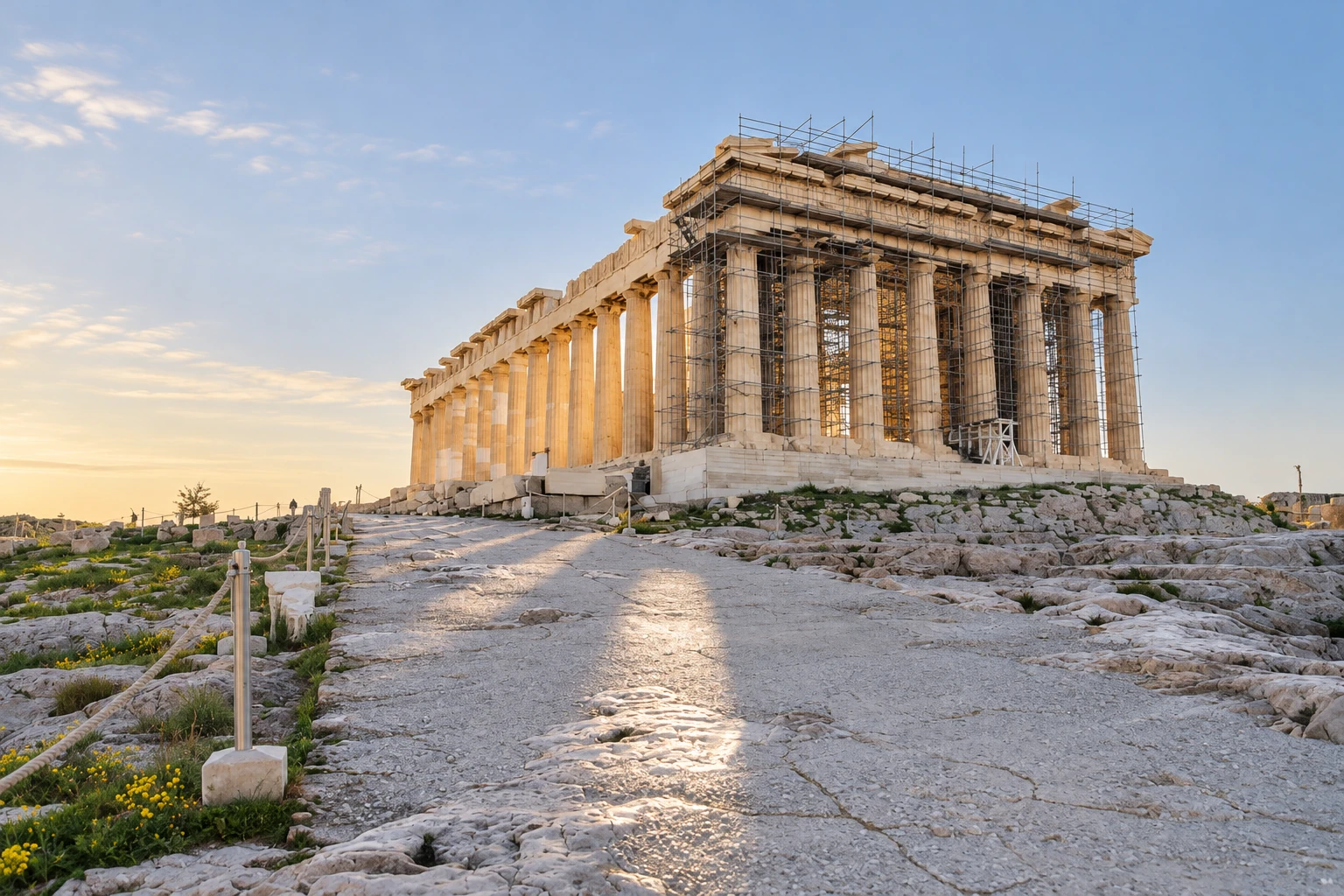
Crowd management has tightened. A daily visitor cap of 20,000 at the Acropolis, reduced from more than 23,000, comes with staggered entry, and timed-entry tickets are in use, so book a slot in peak months. Winter adds extra Athens & Epidaurus Festival events beyond the summer season.
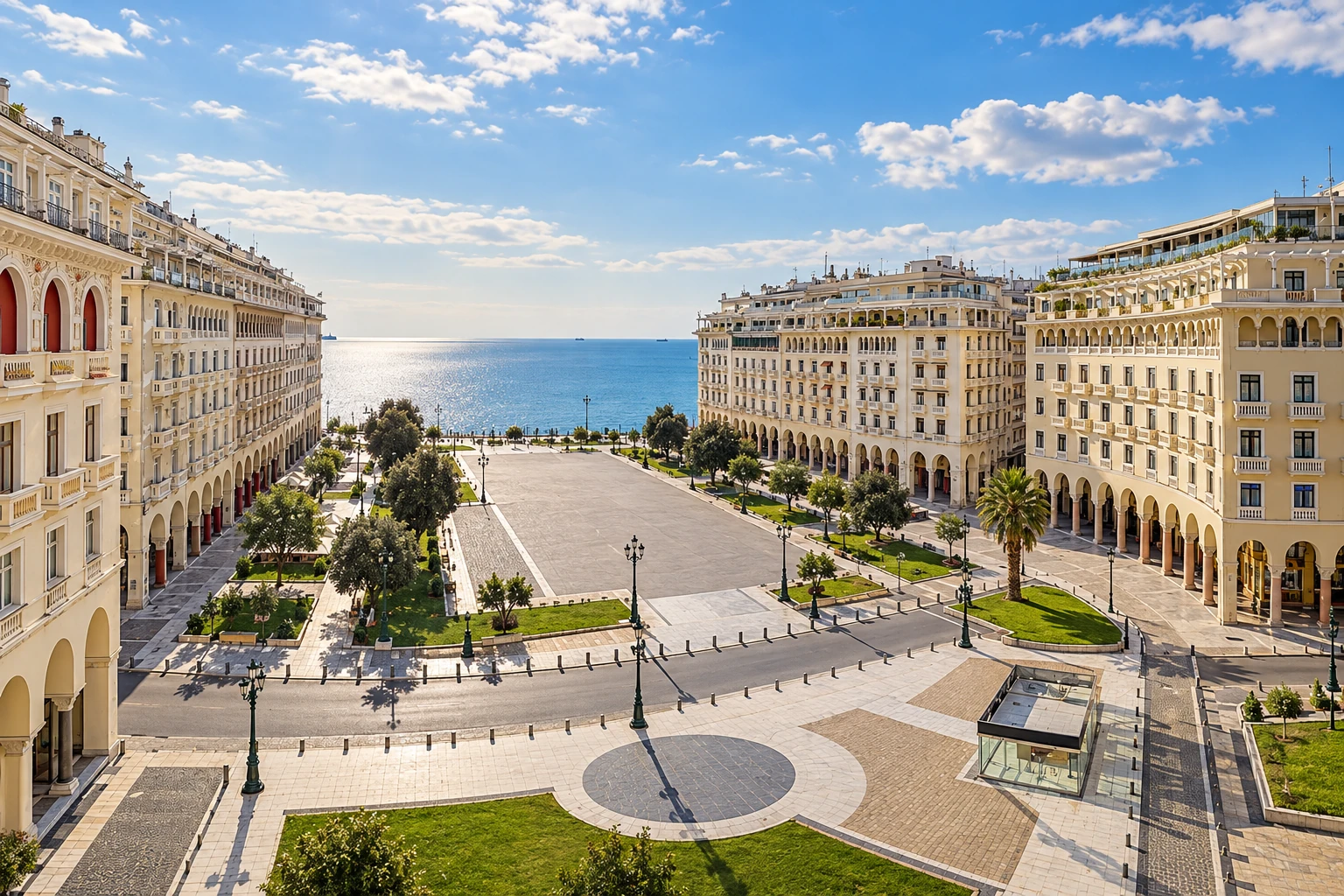
Thessaloniki and Northern Greece
Thessaloniki has colder winters than Athens, with a January mean of about 5°C and 11.5 rain days. Rain is heavier in winter in northern and mountainous areas. Summers are hot, with July averaging about 27°C. Late spring and early autumn are the comfortable windows for city walking and day trips. Winter suits museum-based trips for travelers who accept grey, damp weather.
Crete
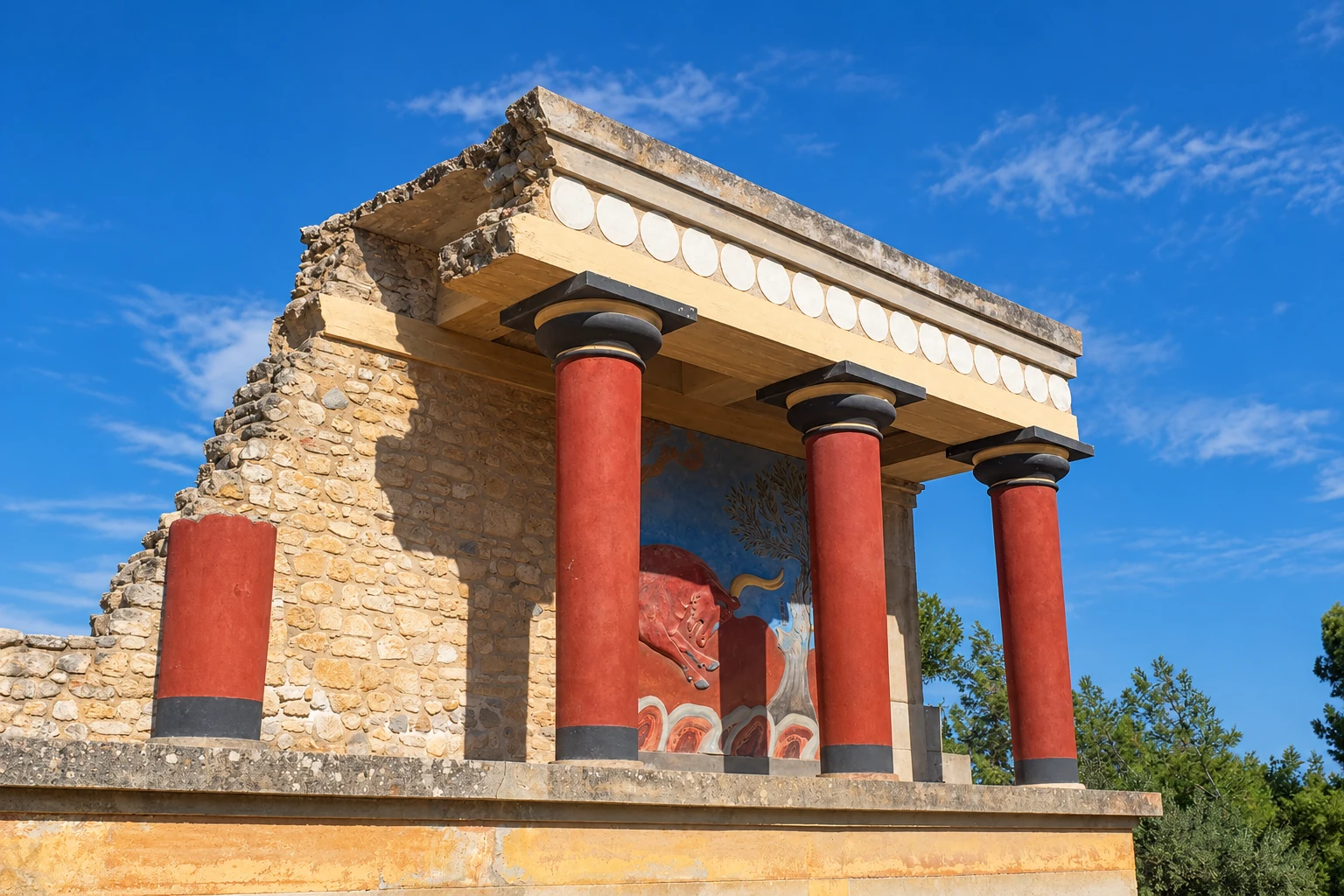
Crete’s climate favors both shoulder seasons. Heraklion is milder than Athens in January, at about 12°C, but it receives about 91 mm of rain, so winter is not beach weather. In July and August it is dry and less humid than the mainland, with under 1 mm of rain a month. May to June and September to October are the recommended beach windows.
Traffic is heavy. Heraklion Airport passed 10 million passengers, and Souda Bay cruise passengers rose 43% to 400,047, a record. For Knossos, go early in the day outside the shoulder seasons.
Cyclades: Santorini and Mykonos
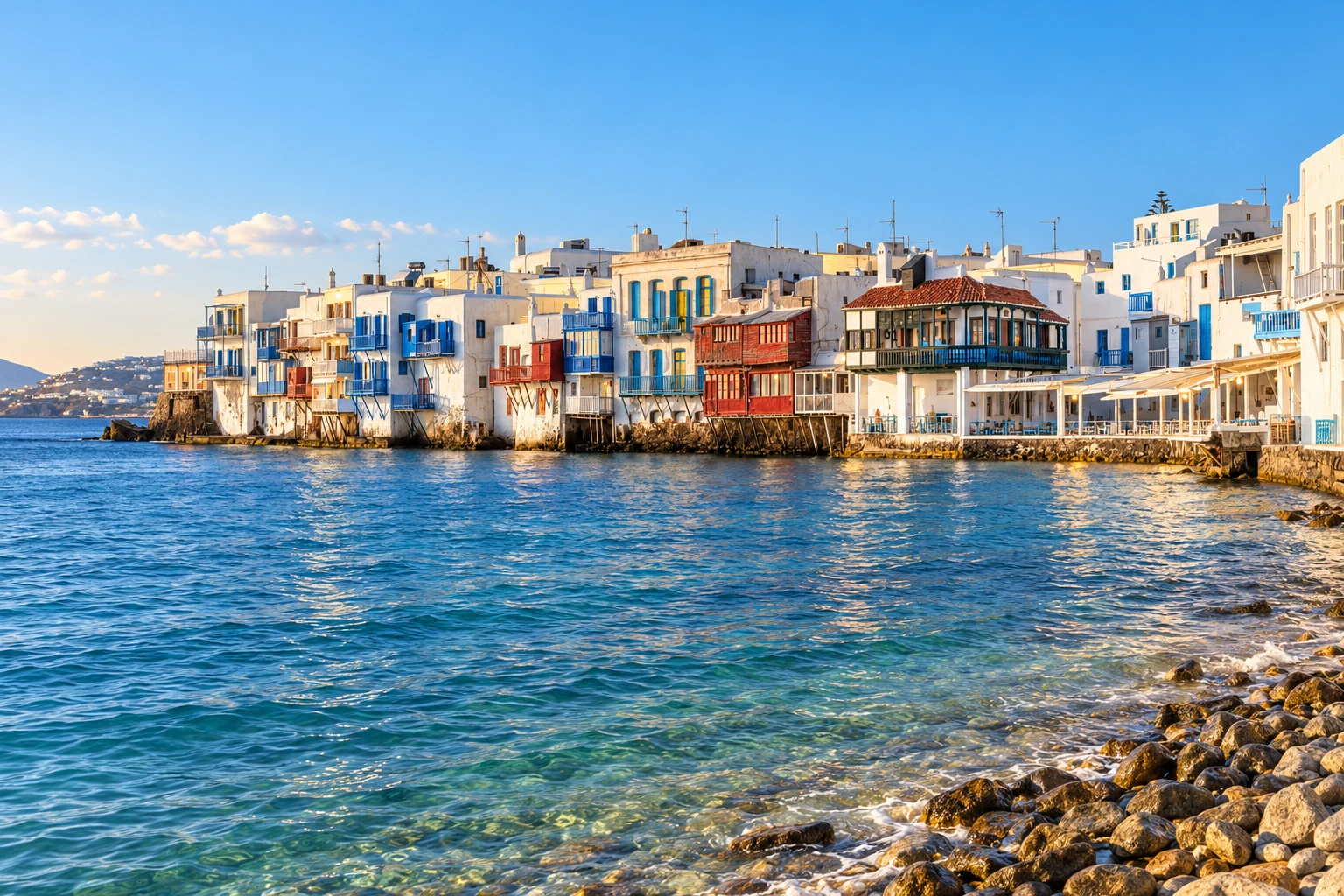
Most small-island businesses close in winter and ferries cut services, so the Cyclades are a May to October destination. The best weeks are May to early June and mid-September to October, when sea and air are warm and ferries run on fuller timetables without peak-month strain.
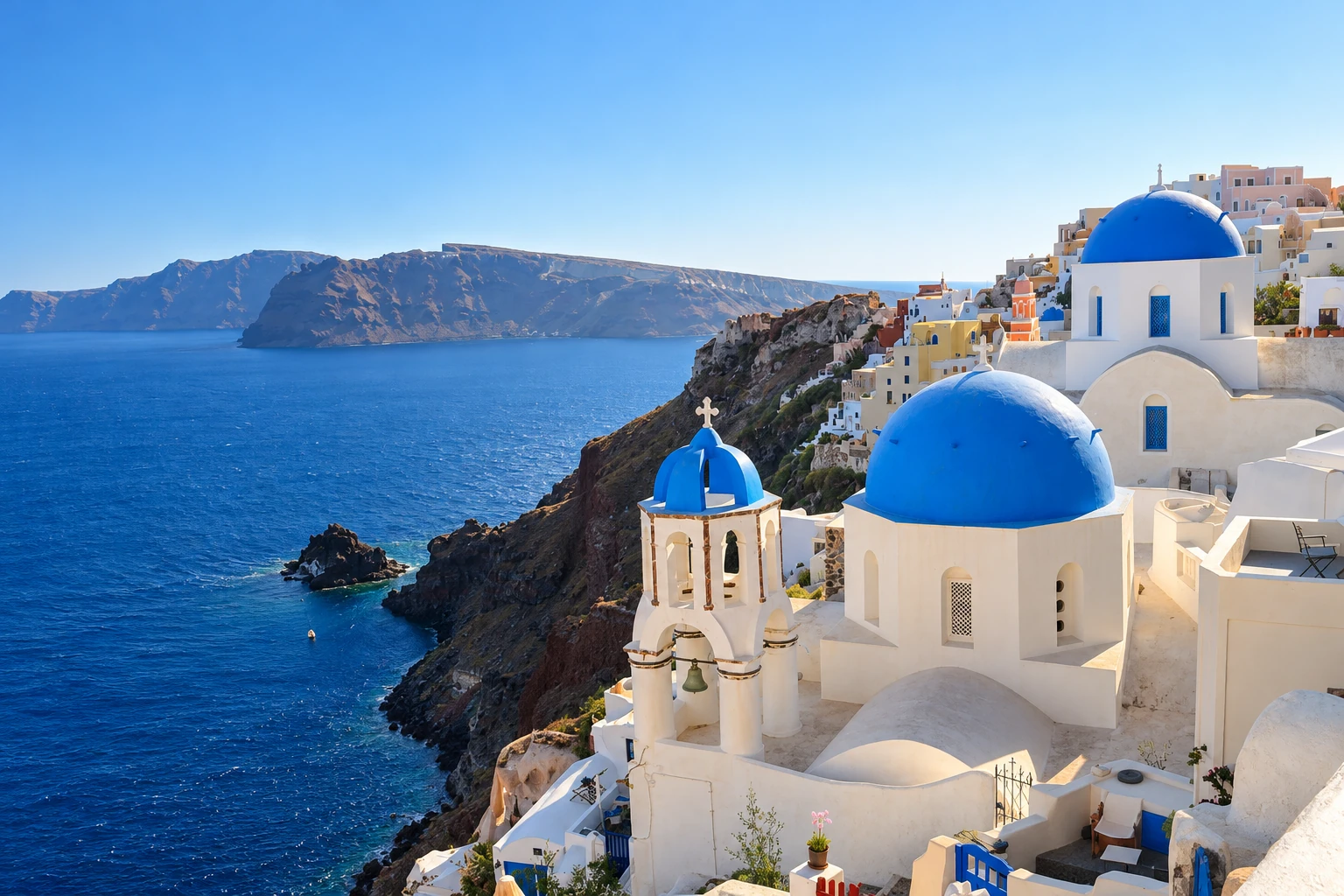
Santorini has the most active rules. The next section covers the cruise cap. Air and ferry arrivals are not capped, so Oia and Fira still fill at midday, but congestion is lower than before the cruise cap. July and August accommodation is more competitive for travelers than before, and caldera hotels have availability. Santorini occupancy reached 80–90% in July and August 2025. Santorini Airport handled 2,418,219 passengers in 2025, down 16% from 2,877,122 in 2024. Mykonos traffic moved the other way, with volume up 16–17% despite its cruise levy.
Rhodes
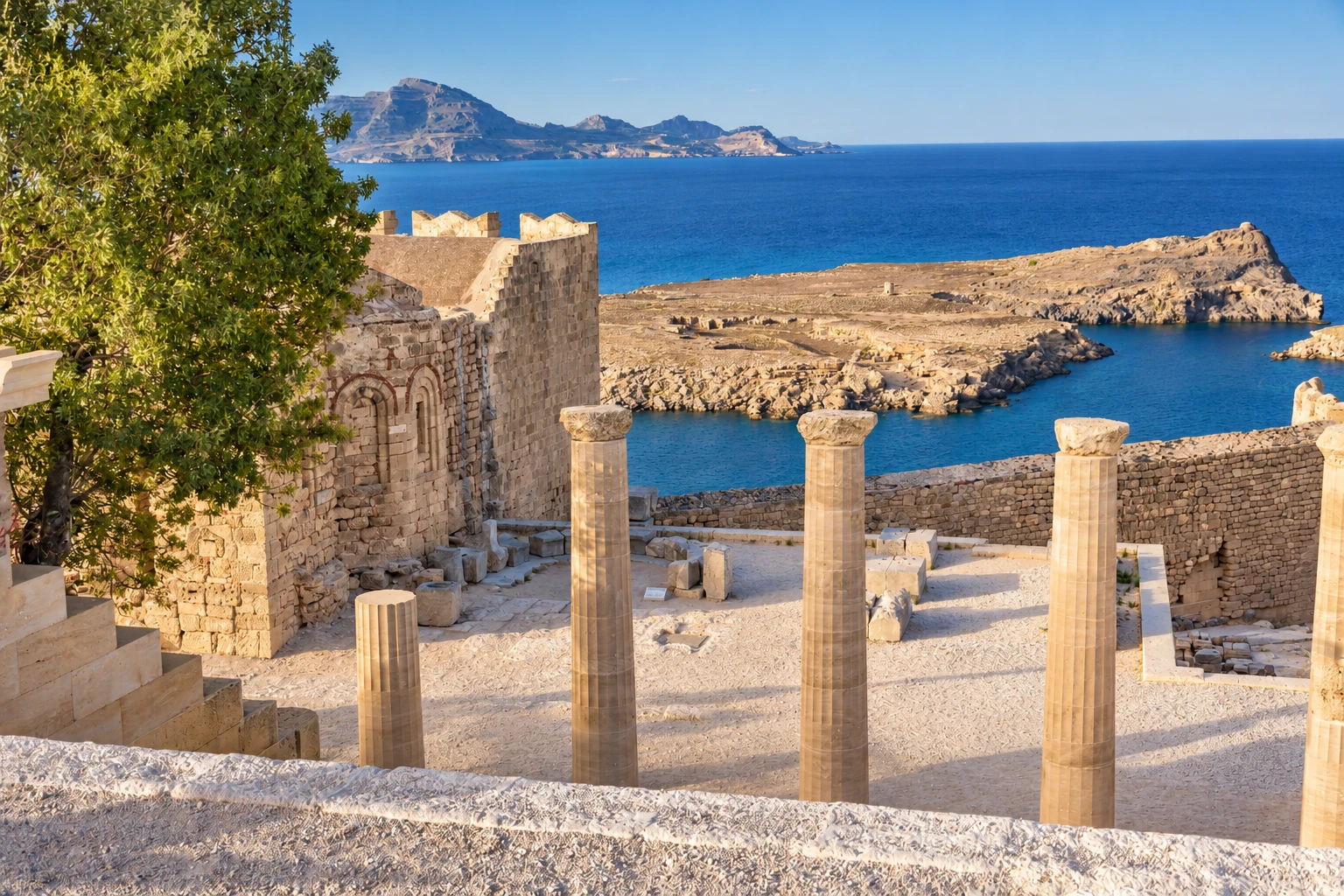
Rhodes has no hard daily cruise cap, though port authorities are watching Santorini and Mykonos. Its beach season runs May to June and September to October. Admission to the Lindos Acropolis is €20.
Ionian Islands and Mainland Coast
The mainland is best from May to October, and shoulder months let it thin out. Late May, June and September give warm sea and open services without the August crush.
Santorini Cruise Cap and Levies
Greece caps cruise arrivals on Santorini at 8,000 passengers per day in both 2025 and 2026. The 2025 system assumed 80% occupancy per ship, and the 2026 assumption is 100%, so the cap restricts arrivals more tightly. In 2026, 595 ship calls are scheduled, down 18.27% from 728 in 2025. Hotel rates fell 40–50% in the post-cap period, so off-peak Santorini costs less.
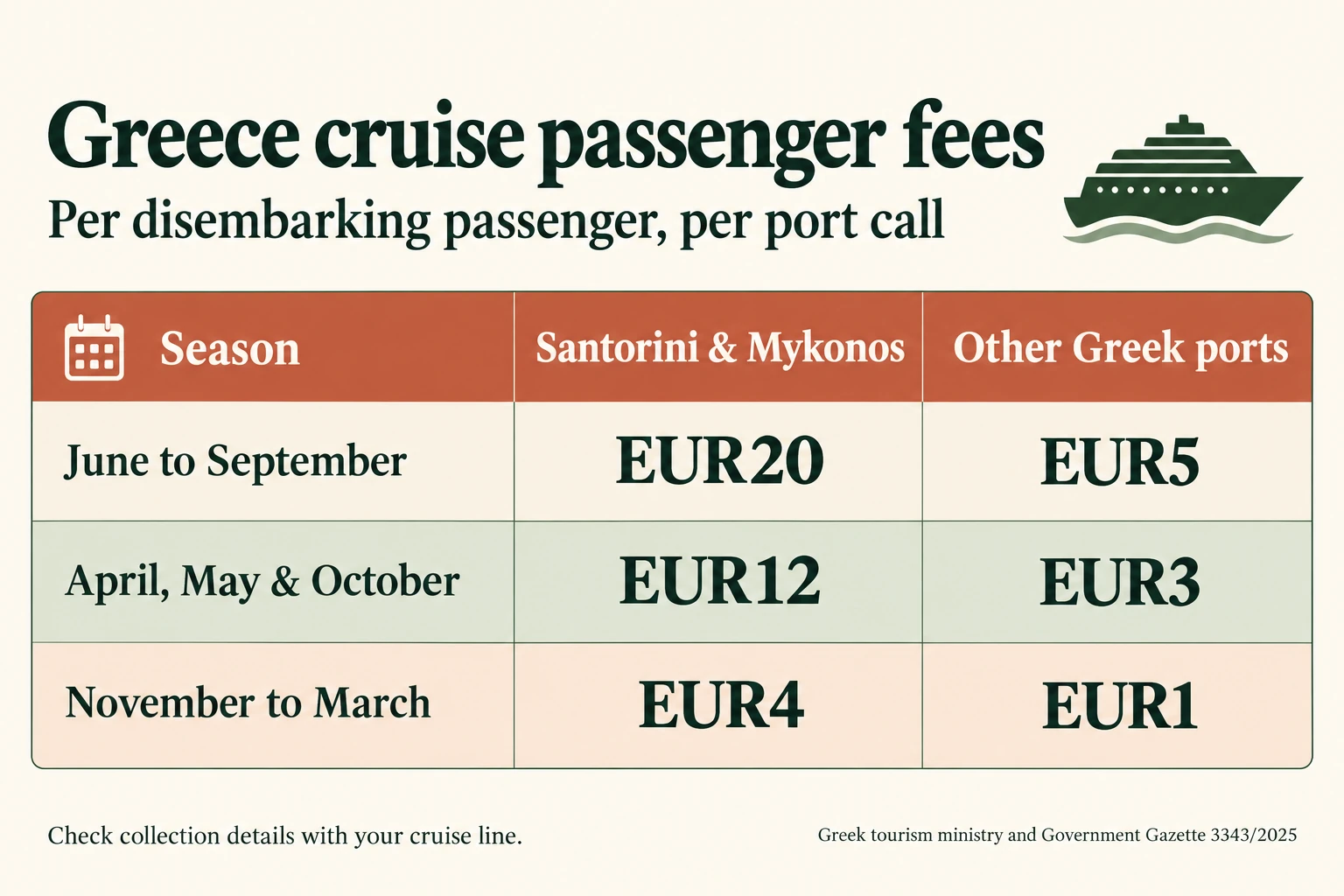
The cruise levy also follows the calendar. From 1 June to 30 September it is €20 per person at Mykonos and Santorini and €5 at other Greek cruise ports. In April, May and October it is €12 at Santorini and Mykonos and €3 elsewhere. From November to March it falls to €4 and €1. Cruise travelers save the most by sailing in the shoulder months, and independent travelers see the same calendar reflected in lighter port crowds.
Festivals and Holiday Closures
Carnival runs from mid-January to March, with Patras as the center and a peak on 14 March in 2027. The Athens & Epidaurus Festival fills late May to late August, with Odeon of Herodes Atticus events in Athens and Epidaurus performances in the Peloponnese. The 15 August holiday brings island festivals. Olive harvest and wine festivals fill October and November, and Christmas markets open in December.
National holidays close many sights and banks, and holiday dates can be announced at short notice. For 2026 and 2027 the dates to plan around are:
- 28 October 2026: Ohi Day
- 25–26 December 2026: Christmas
- 1 January 2027: New Year’s Day
- 6 January 2027: Epiphany
- 15 March 2027: Clean Monday
- 25 March 2027: Independence Day
- 30 April to 3 May 2027: Easter
- 1 May 2027: Labour Day
Confirm opening hours for a specific site before building a day around it.
Prices and Admission Fees
Peak-season costs show up in lodging, flights and ferries. July and August run roughly 30% above June, and off-season prices run 30–50% lower. November to March is the cheapest stretch, though many islands are closed.
Site admission rose from April 2025. The Acropolis ticket costs €30 year-round, up from €20. The Ancient Agora and Stoa of Attalos, Olympieion, Sounion, Mycenae, Lindos, Olympia, Knossos, Delos and Mystras are €20 each. The Roman Agora with Hadrian’s Library and the Kerameikos are €10, and Dodona and Ancient Corinth are €15. The National Archaeological Museum is €20, up from €12, and combined tickets covering several sites have been abolished. The overall increase falls between 33% and 150%. A multi-site trip costs more than it did before 2025, so the 6 March free-entry day is useful for travelers in Athens that week. The Ministry of Culture page lists free-entry days and is the place to check current fees.
Picking Your Dates
For the best balance of weather, crowds and cost, choose late May to early June or late September to October. For beaches and islands, choose June or September and avoid the days around 15 August. For Santorini, choose May or October, when cruise levies are at the €12 shoulder rate. For Athens culture, choose spring or autumn and avoid the July and August heat. For budget travel, choose November to March and stay in cities. For hiking, aim for March to May or September to November. For Easter, book early and expect closures from Good Friday to Easter Monday.
Key Takeaways
- Choose late May to early June or late September to October. Both windows have warm weather and open islands, with moderate crowds and prices below the peak.
- Avoid July and August unless you want festivals. Those months bring heat, peak prices and weaker ferry reliability. August is the most crowded month, and the 15 August holiday is the main reason to come.
- Match the month to the region. Athens and Thessaloniki suit any month, but most small Aegean islands wind down from roughly November to March.
- Time Santorini for May or October. The 8,000-per-day cruise cap and the shoulder levy of €12 (versus €20 in summer) make those months calmer and cheaper.
- Check closures and fees before booking sites. The Acropolis costs €30, and many sights close on 25 March, Easter, 1 May, 28 October and 25–26 December.