Iceland
Practical guides to Iceland: when to go, how to get around, entry rules, costs and what to see.
About Iceland
Iceland is an island country in the North Atlantic. It belongs to the Schengen Area, the group of European countries with open borders and a shared short-stay entry rule, but it is not a member of the European Union. Most first-time visitors base themselves in Reykjavík, the capital, and add a road trip: the South Coast for a short stay, or the Ring Road, the highway that circles the island, for a longer one.
The season shapes most other choices. Summer brings nearly round-the-clock daylight and open mountain roads, but also the highest prices. Winter brings northern lights, ice caves, short days, and the hardest driving of the year. Drivers without winter experience have a safer option in guided tours. Regions, seasons, vehicles, tolls, costs, safety, and entry rules follow in that order.
Regions and what each offers
Reykjavík and the airport
Reykjavík is the usual starting point, and Keflavík International Airport is the main arrival hub. Most visitors collect a rental car or join tours here, then spend the rest of the trip on the roads that radiate from the capital. The Hvalfjörður Tunnel near Reykjavík has been toll-free since September 2018.
The South Coast
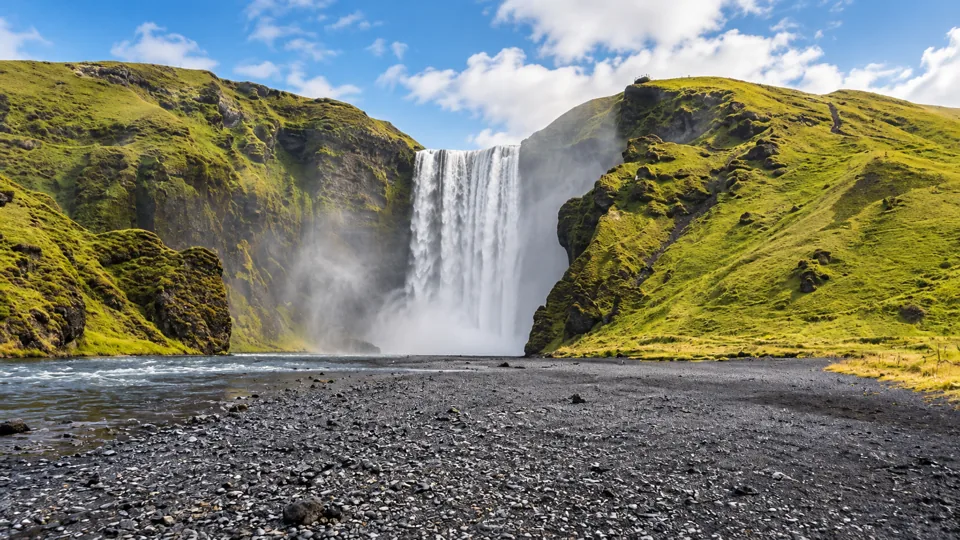
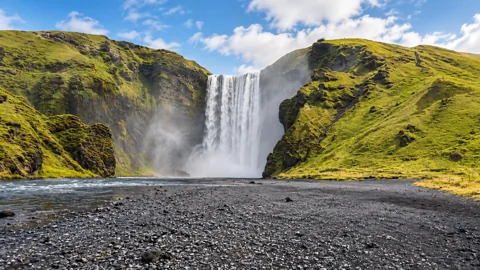
The South Coast is the usual recommendation for first-timers with limited time. It has black-sand beaches and glacier lagoons, and the best-known stops are the waterfalls Seljalandsfoss and Skógafoss, the beach at Reynisfjara, and the glacier lagoon Jökulsárlón. The attractions are close together and easy to reach, which keeps driving days short.
Farther east along the Ring Road, the town of Höfn sits near the Hornafjörður crossing, where a toll started on 1 September 2026. Vatnajökull, the glacier region, is the main area for crystal and blue ice caves in winter.
The North
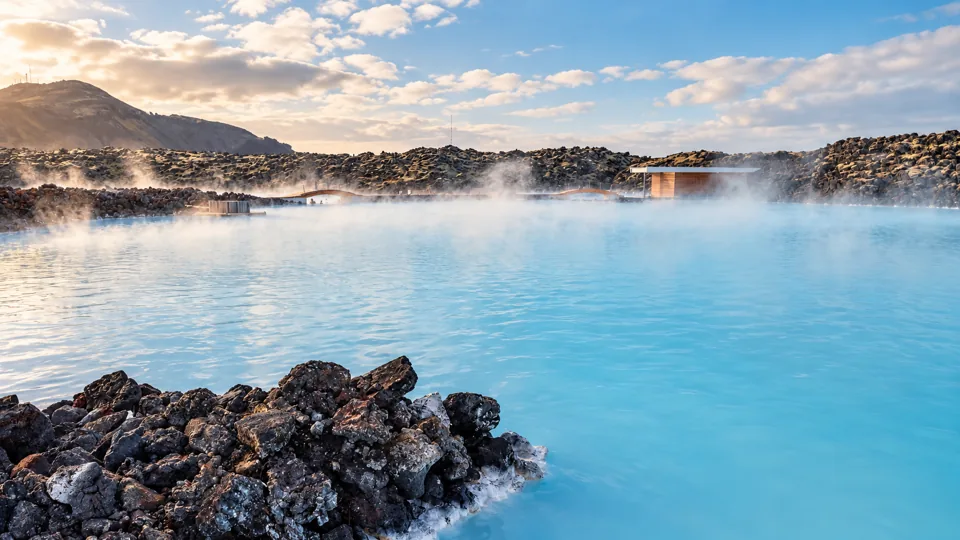
The north offers geothermal baths, volcanic craters, and fewer crowds than the south. Akureyri is the region’s hub, and the Vaðlaheiðargöng tunnel nearby is one of the few toll roads on the Ring Road. Mývatn is the exception to the quiet reputation, because it is among the places that get very busy in summer.
Snæfellsnes, Reykjanes, and the Westfjords
The Snæfellsnes peninsula and the Reykjanes peninsula are easier and safer to reach with a 4WD (four-wheel drive), and the same is true of the Westfjords. The Westfjords are remote and less visited because of longer travel times and road conditions. Tours to the Westfjords and the highlands also run a shorter season than tours elsewhere, so a Westfjords trip needs a summer or near-summer date.
The Highlands
The interior highlands are remote and reachable only by 4×4 in summer. The mountain roads there carry an "F" prefix on their numbers, such as F35 and F26. They are closed for much of the year, which makes the highlands a summer-only destination (see the driving sections below).
Summer in Iceland
Summer is the easiest season for driving. June through August brings 20 to 24 hours of daylight, the midnight sun, and temperatures of about 10 to 15°C (50 to 59°F). Highland F-roads are open, and standard roads are in their best condition. Self-drive tours are possible from April to October, with a shorter window for remote regions.
The tradeoff is cost and crowds. Summer is the busiest and most expensive window, with higher accommodation prices and more visitors at popular sites. Book rental cars several months ahead, because prices rise and availability falls as the date approaches.
Winter in Iceland
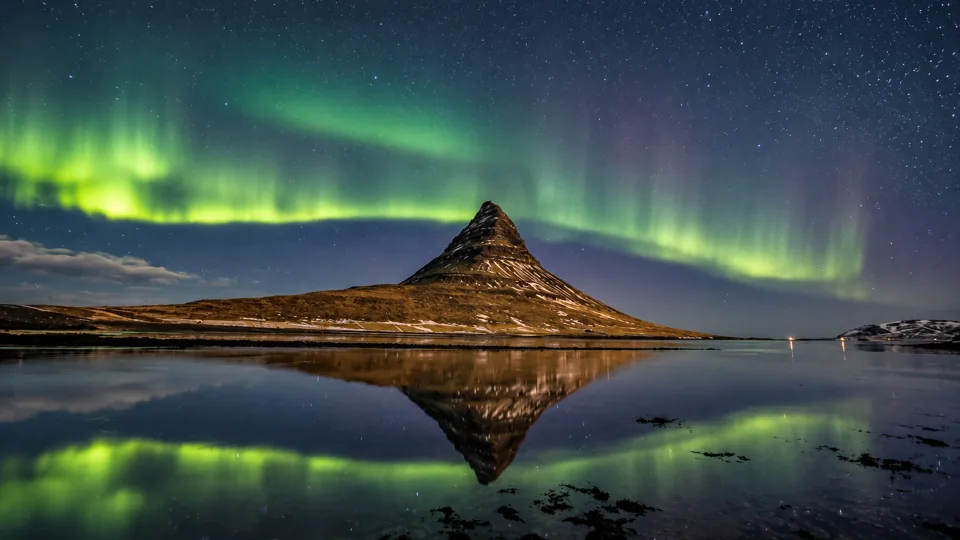
Winter is the season for northern lights, snow-covered scenery, and ice caves. The lights need darkness, so the viewing season runs roughly from September to April. Natural ice caves are open from October to April, and Vatnajökull has the widest choice of guided tours.
Winter is also the hardest season to drive in. Snow, ice, strong winds, and sudden closures define it, and the highlands close entirely. Highland road closures usually begin in September or early October and last until late May or June, depending on the winter and road maintenance. Operators draw the boundaries of winter differently, from November through March to October through April or May.
Daylight shrinks sharply. In December, Reykjavík gets just over four hours of direct sunshine, while another guide puts usable light on winter days at four to six hours. Plan driving legs for the middle of the day.
Shoulder seasons
May and September balance access and crowds. Prices and crowds also fall in April, October, and February. The tradeoff is that highland roads are closed or only starting to open, and weather is less predictable. May and September suit travelers who want the South Coast and Reykjavík without peak-season prices, and who do not need F-roads.
Planning by trip length
A long weekend or a short trip of two to four days fits Reykjavík plus day tours. Tours suit short trips of 2 to 4 days, especially for first-time visitors, because operators handle the logistics.
About a week fits Reykjavík and the South Coast with time for the waterfalls, Reynisfjara, and Jökulsárlón. In winter, the same week adds ice caves around Vatnajökull.
The full Ring Road takes longer. Allow 7 to 10 days to experience it comfortably, and a full self-drive loop needs summer dates, experienced winter drivers if it falls in winter, and at least two weeks to leave room for weather. Ten days is a workable summer pace, and two weeks is the safer plan for any trip outside summer. The Westfjords and highlands need extra days beyond the loop.
Self-drive or guided tours
Self-driving gives privacy and flexibility. Tours handle logistics and share costs, and they are the safer choice for first-time visitors on short trips.
In winter, operators agree on the basic point. Without winter driving experience, stick to organized tours. A confident winter driver can manage a southern road trip. Winter self-drive suits only experienced drivers on longer trips, and insurance excess and add-on protections can push a winter rental above the price of a guided package for most couples and solo travelers. Price a package and a rental side by side before deciding. Winter self-drive packages and vacation packages offer a lower-stress option.
Choosing a vehicle
In summer, a small car handles Reykjavík and the Ring Road, and a regular 2WD works fine for summer Ring Road trips. A 4×4 is recommended in winter and required on highland F-roads. A 4WD is also advised for off-the-main-road summer driving.
Winter rental cars typically come with winter tires, and many have studs. Studded tires are permitted from 1 November until mid-April, and after that only when snow or ice makes them necessary. Confirm the exact end date on road.is, the Icelandic Road Administration’s site.
Most fuel pumps are self-service and need a card with a PIN, contactless payment, or a prepaid fuel card. Carry a card with a PIN, because unattended pumps in remote areas will not take a card without one.
F-roads and off-road rules
F-roads are the numbered highland tracks with an "F" prefix, and they are off-limits to 2WD vehicles. Check the rental contract before taking any F-road, because insurance terms may exclude damage. Road.is announces highland openings, which come from late May to late June depending on weather.
Stay on established roads and tracks everywhere. Off-road driving damages fragile terrain and carries penalties. Icelandic Regulation No. 1240 of 18 December 2019 lists a fine of 20,000 ISK for driving or parking in areas not intended for vehicle traffic. Rental cars add their own exclusions on top of that.
Tolls and the road charge
Iceland has no road vignettes or transponders. Roads are funded through government revenue and vehicle taxes, and the exceptions are a few specific tunnels and bridges.
| Location | Charge | Payment notes |
|---|---|---|
| Vaðlaheiðargöng (near Akureyri) | 2,216 ISK per trip for a car under 3.5 tonnes | Applies to all vehicle types except motorcycles. Pay within 24 hours before or after the crossing. |
| Hornafjörður (Ring Road, near Höfn) | 1,500 ISK per crossing from 1 September 2026, for cars and standard rental vehicles under 3.5 tonnes | Vehicles can take up to 12 hours to appear in the payment system. |
| Hvalfjörður Tunnel (near Reykjavík) | Free | Toll-free since September 2018. |
Separately, since 1 January 2026 a charge of 6.95 ISK per kilometer replaces fuel taxes for vehicles. Rental cars settle it at online check-in or pick-up. Hertz adds a service fee of 1.40 ISK per kilometer plus VAT on top of the government rate, and other companies set their own fees.
Rental companies handle tolls differently. Some bill the driver automatically, and others do not, so ask before pickup. Where the company pays on your behalf it adds an administration fee, which one guide puts at 3,000 to 5,000 ISK. Höldur’s pay-on-your-behalf option for Hornafjörður totals 2,600 ISK. Rental insurance usually excludes tolls. Confirm current rates on veggjald.is.
What a trip costs
Iceland’s published road costs are the toll and road-charge figures above, and everything else depends on the season. Summer is the most expensive time for lodging and rentals. Shoulder months lower both. Winter rentals carry insurance excess and add-ons that can raise the true price, and rental prices rise as travel dates approach, so reserve early.
Prices are quoted in Icelandic króna (ISK), and exchange rates change, so recalculate any ISK figure on the day you budget. For a first budget, add three things beyond flights: a rental car with insurance, the per-kilometer road charge on the distance you plan to drive, and any tunnel tolls on your route. Compare a guided package against that total for any winter trip.
Safety, weather, and emergencies
The national emergency number is 112, for police, ambulance, and rescue. Install the 112 Iceland app before you travel, because it shares your GPS location with emergency services. If you are stranded, call 112.
SafeTravel (safetravel.is) is run by ICE-SAR, the Icelandic search-and-rescue body. It offers alerts, a free app, and a travel-plan registration that lets rescuers locate you in an emergency. Registration is optional but strongly recommended. SafeTravel also covers hazards that road maps omit, including rockfall, avalanche risk, closed trails, and volcanic activity.
A simple daily routine covers most risks. Check safetravel.is for alerts, vedur.is (the Icelandic Met Office) for weather, and road.is for road conditions, and check road conditions the same morning you drive. The Met Office issues yellow, orange, and red warnings. Yellow means take care, orange means change plans, and red means stay put. Road.is marks closed roads in red and open roads with difficult conditions in yellow.
Wind matters more than temperature for driving decisions. Rain at 1°C falling on a road at -1°C can produce black ice, so assume ice whenever roads look wet near freezing. Within minutes, sunshine can become a torrential downpour, strong wind, or thick mist. Major roads, especially in the south, are plowed regularly, but mountain passes and gravel roads can close. The Ring Road is open year-round, apart from brief closures during storms.
On the road, speed limits are lower than many visitors expect, and single-lane bridges are common. Pull fully into a marked lay-by to stop. In snow, keep a generous following distance. If you get stuck, stay in the vehicle to conserve warmth, and keep a charged phone in the car.
Earthquakes, volcanic eruptions, glacial flood outbursts, storms, and avalanches occur in Iceland, and the Department of Civil Protection and Emergency Management informs the public. For clothing, pack layers, waterproof outerwear, and sturdy footwear in every season.
Entry requirements
Entry follows Schengen rules, and what you need depends on nationality. Visa-exempt visitors may stay up to 90 days in any 180-day period, counted across all Schengen countries combined, Iceland included. According to the U.S. State Department, American citizens may enter without a visa for up to 90 days for tourism or business, and longer stays need a residence permit applied for before arrival. The Schengen Area has 29 countries, including Bulgaria and Romania, which became full members on 1 January 2025.
Passport validity should run at least three months beyond your planned departure date. The State Department also recommends six months of validity and requires two blank pages. Also check the issue date, because some requirements limit how old a passport can be. EU and EEA citizens can normally travel with a valid passport or national identity card.
Border officers may ask for proof of accommodation, onward or return travel, and sufficient funds. Keep a booking confirmation and a return ticket accessible on your phone or on paper.
Nationals who need a Schengen visa typically submit a completed form, photos, a valid passport, travel insurance, proof of accommodation, an itinerary, proof of funds, and proof of employment or study.
Two border systems affect the process. The Entry/Exit System (EES) is operating in Iceland, with a phased start that began on 12 October 2025. It registers non-EU visitors with facial images and fingerprints, and a first entry can take longer. ETIAS is a separate online travel authorization for visa-exempt visitors, and it is not a visa. It is not yet required, and the expected start is the last quarter of 2026. Apply only through the official channel when it opens, and avoid unofficial application sites.
Key takeaways
- Choose the season first: Summer gives the widest road access and the highest prices, while winter adds northern lights and ice caves but is the hardest season to drive in. The highlands stay closed from about September or early October until late May or June.
- Match the route to your time: A long weekend suits Reykjavík and day tours, about a week suits the South Coast, and the Ring Road needs 7 to 10 days in summer and at least two weeks outside it.
- Use tours if you lack winter driving experience: Operators agree that winter self-drive suits experienced drivers, and a guided package may cost less once rental insurance is included.
- Budget for road charges: Rentals pay 6.95 ISK per kilometer since 1 January 2026, plus tolls such as 2,216 ISK at Vaðlaheiðargöng and 1,500 ISK per crossing at Hornafjörður. Ask your rental company how it bills them.
- Check official sites daily: Use road.is, vedur.is, and safetravel.is each morning, and call 112 in an emergency.
- Verify entry documents early: Visa-exempt travelers get 90 days in any 180-day Schengen period and need a passport valid three months past departure. Confirm ETIAS timing before you book.
Travel guides
Iceland by topic
All guides
Guides to Iceland
 Iceland · Getting around
Driving Iceland’s Ring Road
Iceland's Ring Road is Route 1, a paved highway that circles the island and passes most of its towns, waterfalls, glaciers, and fjords.
Read guide
Iceland · When to go
Best Time to Visit Iceland
Reykjavík gets 4 to 5 hours of daylight in December and 20 to 21 hours in June, so the season you choose determines what you can do.
Read guide
Iceland · Getting around
Driving Iceland’s Ring Road
Iceland's Ring Road is Route 1, a paved highway that circles the island and passes most of its towns, waterfalls, glaciers, and fjords.
Read guide
Iceland · When to go
Best Time to Visit Iceland
Reykjavík gets 4 to 5 hours of daylight in December and 20 to 21 hours in June, so the season you choose determines what you can do.
Read guide