Getting Around France
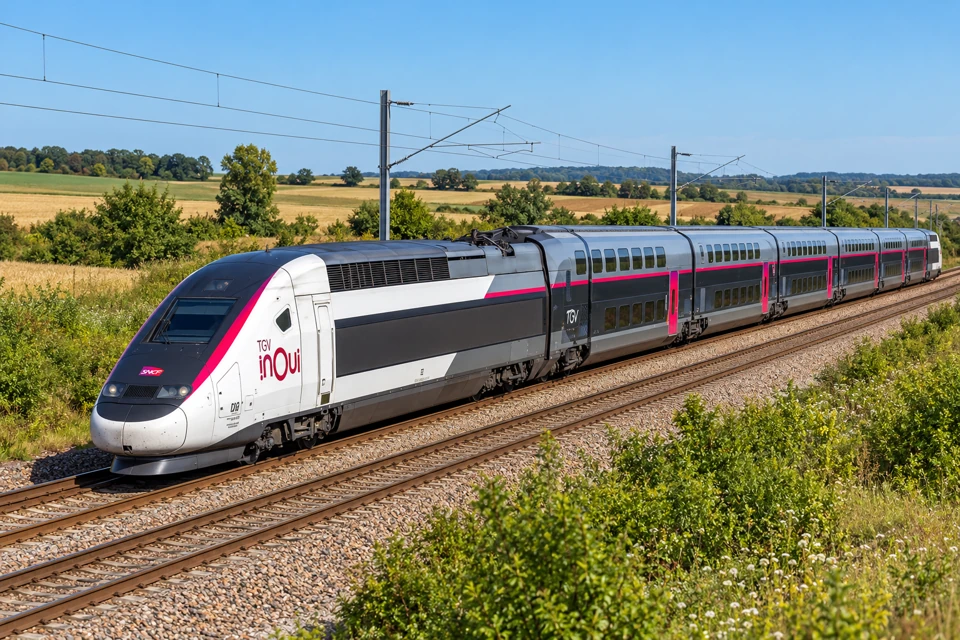
Travelers in France can take high-speed trains, long-distance coaches, domestic flights, rental cars, or taxis and app-based rides. The best choice depends on the route. Trains run city center to city center between major cities and usually give the best balance of time and price. Coaches are the cheapest option on long routes if you can accept slower trips. Flights save hours on the longest runs, such as Paris to Nice. Rent a car where rail and coach links are sparse. Use a taxi or a pre-booked ride, called a VTC in France (voiture de transport avec chauffeur), for airport transfers and short city trips.
Each section below covers typical fares, journey times, and booking rules for its mode, and points out costly traps such as non-refundable tickets and baggage fees.
Which Mode Suits Which Trip
| Trip type | Best fit | Why |
|---|---|---|
| Paris to Lyon, Nantes, Bordeaux, Nice, Marseille | High-speed train | City center to city center, no airport transfer, fastest rail times on the main lines |
| Budget trip on a long route with flexible timing | Coach (FlixBus, BlaBlaCar Bus) | Lowest headline fares and several departures a day |
| Paris to Nice, Marseille, Toulouse or farther | Domestic flight | About 1 hour 15 minutes to 1 hour 30 minutes in the air |
| Regional trips, rural areas, heavy luggage | Car rental | Reaches places without convenient rail or coach links |
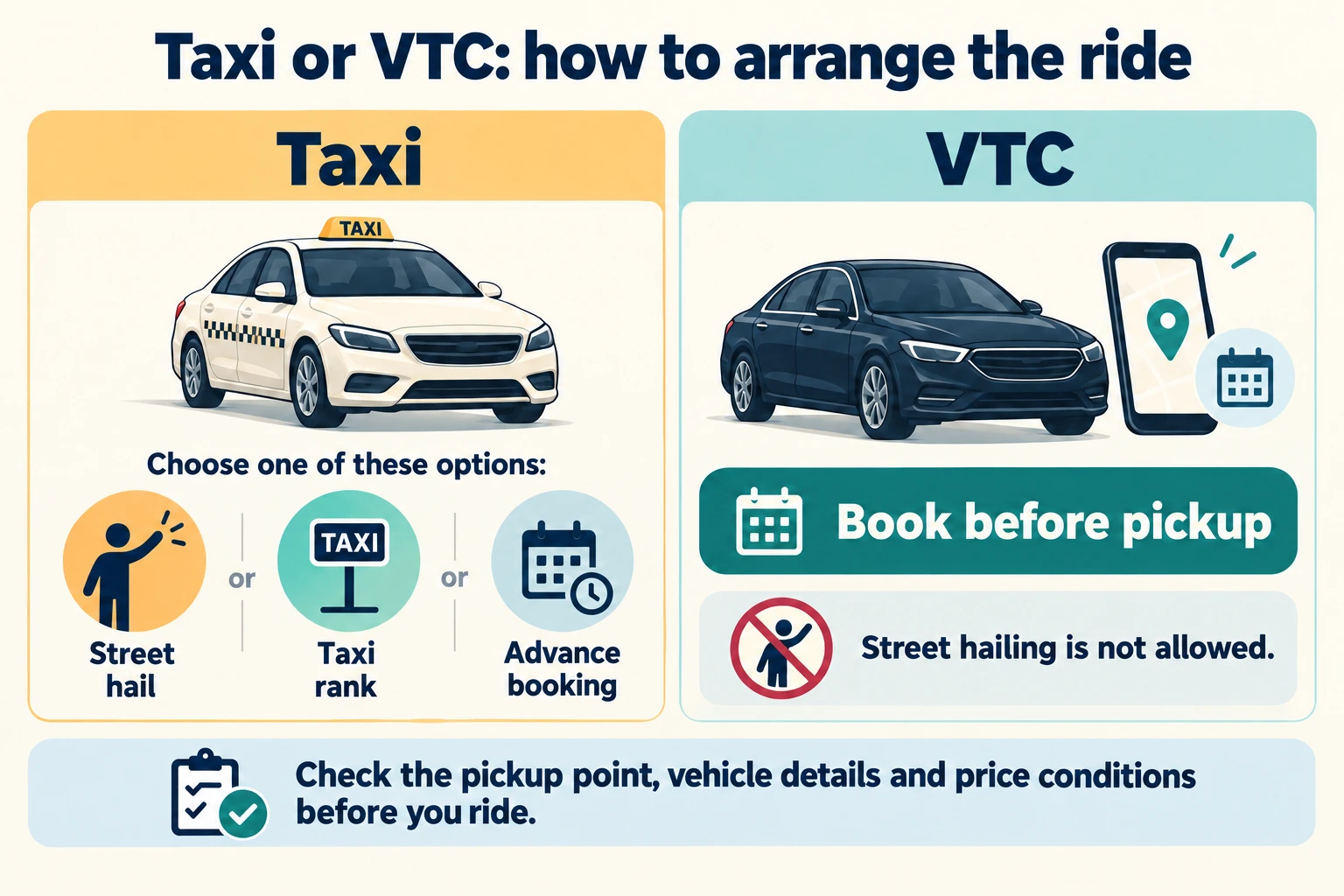
| Airport transfers and short urban trips | Taxi or VTC | Door to door; VTC must be pre-booked, taxis can be hailed or taken from ranks |
High-Speed Trains
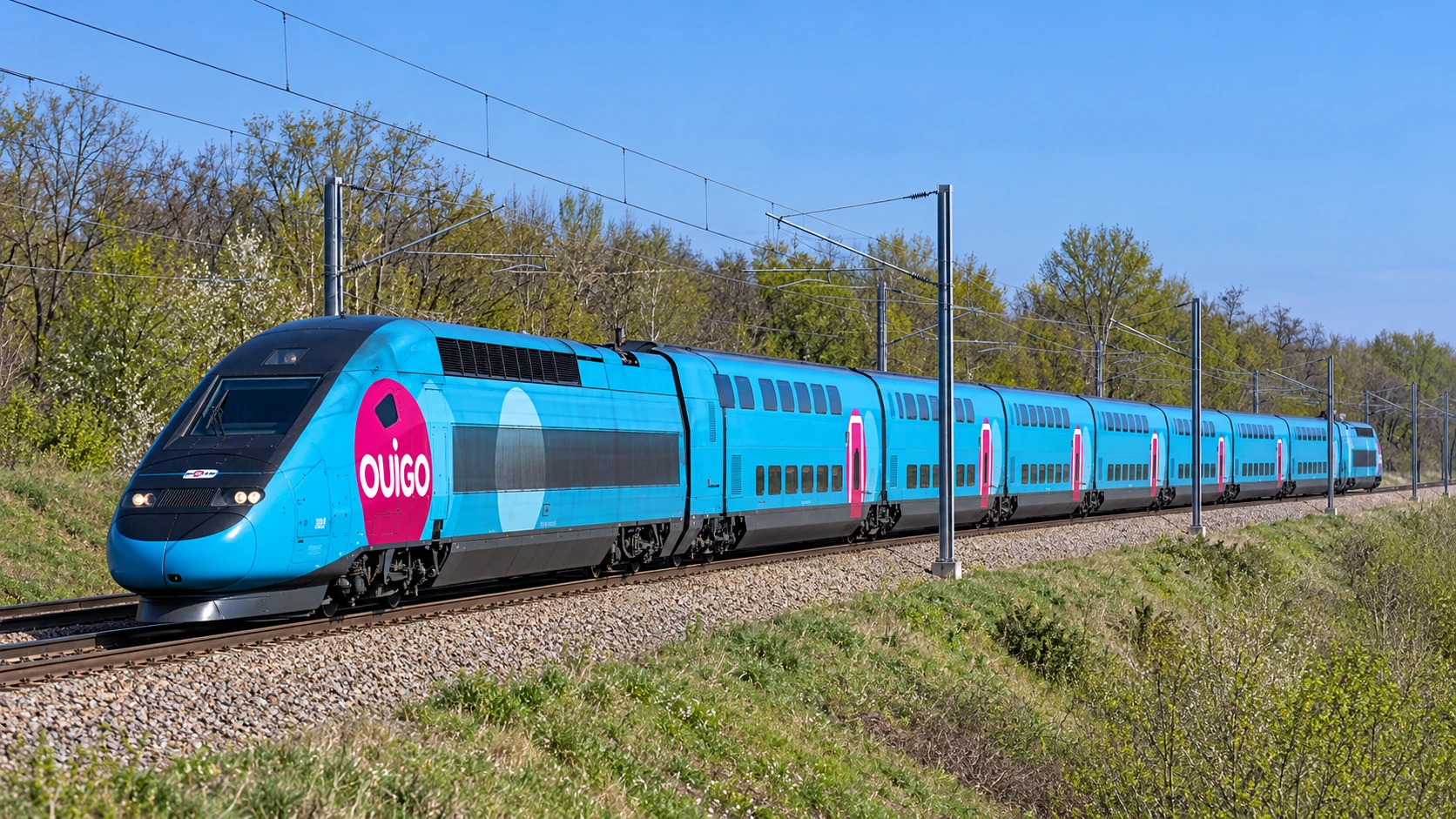
France’s national railway, SNCF, sells two high-speed brands through its booking site, SNCF Connect. TGV INOUI is the premium service. Every train has power outlets and free Wi-Fi, seats recline, there is a restaurant car, and first class is more spacious. It serves 200 destinations in France. OUIGO is the low-cost version, with double-decker trains running at 300 km/h, a single class equivalent to second class, and tickets sold only online. It serves more than 50 destinations. The TGV itself reaches 320 km/h on French high-speed lines.
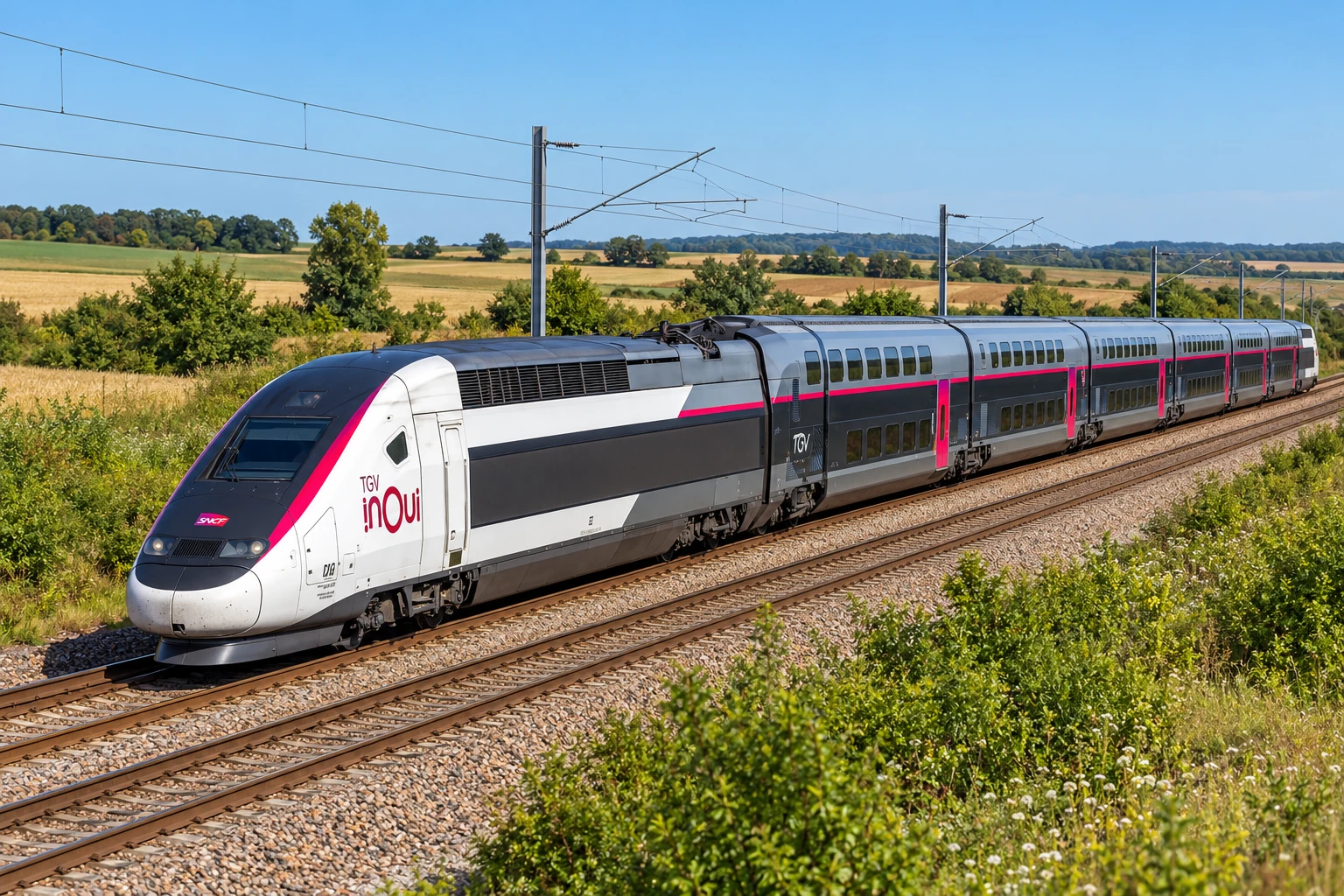
TGV INOUI also runs to Spain, Italy, Brussels, Freiburg, Luxembourg and Germany (with DB). Eurostar and Thalys serve London, Belgium, the Netherlands, Germany and the South of France, and TGV Lyria connects Paris or Dijon with Switzerland.
Train fares
OUIGO adult fares start at €10. The basic OUIGO ESSENTIEL fare charges extra for seat selection and extra luggage, while OUIGO PLUS includes extra bags, seat selection, Wi-Fi and skip-the-queue for €9 more. Children pay a flat €8 on Grande Vitesse (the high-speed service), and children under 12 travel free with OUIGO PLUS on Grande Vitesse.
OUIGO also runs a conventional-speed service called Train Classique, where fares range from €10 to a maximum of €59. A luggage option costs €5 when added at purchase, and children pay a flat €5.

Promotional fares are separate from the €10 base fare. For the Christmas 2026 window, OUIGO is advertising fares from €19 one-way to more than 70 destinations on selected days and trains, subject to availability. Tickets went on sale on 30 September 2026 for travel from 13 December 2026 to 2 July 2027. Sample OUIGO fares include Paris to Nice from €19 and Paris to Bordeaux from €16. Those are the cheapest dates, so expect more on busy days.
Train journey times
Paris to Bordeaux is the strongest rail route, with fast direct trains. Paris to Nice by direct train takes much longer than the flight, with two OUIGO trains a day. Check SNCF’s timetable for the date you plan to travel.
OUIGO’s Train Classique runs slower. Paris to Lyon has two daily return trips from Paris Bercy and Île-de-France stations, taking 4 hours 45 minutes to 5 hours 15 minutes, with new stops that include Dijon, Chalon-sur-Saône and Mâcon. Paris to Nantes has three daily return trips taking 3 hours 30 minutes to 4 hours 15 minutes. Treat these as budget options with longer times, and compare them against the high-speed trains on the same corridors.
Booking and changing train tickets
SNCF Connect handles both TGV INOUI and OUIGO. SNCF recommends paying online to skip station queues. TGV INOUI can be booked online for journeys more than 48 hours ahead on exchangeable and refundable fares (classic Second and First, and OPTIMUM). The site also lets you place an option on a chosen train, which holds the displayed price for a set period before you pay. OUIGO Train Classique sales open 60 days before departure, so book as soon as your dates are firm.
For TGV INOUI, tickets can be exchanged or cancelled free of charge up to 7 days before departure. From 6 days before departure, a €19 fee applies. Changes are made in the SNCF Connect client area with the reference number and passenger name. Weekly and monthly fares exist on some routes or nationwide. Carte Avantage and Carte Liberté railcards suit occasional travelers, while Max Actif passes are for French residents only.
OUIGO standard tickets cannot be cancelled or refunded. Changes cost €19 per passenger per journey, and you pay any fare increase, with no refund if the new ticket is cheaper. The OUIGO FLEX add-on allows free exchanges, as many times as you like, up to 30 minutes before departure, and you pay only the fare difference. If your plans may shift, FLEX or a TGV INOUI exchangeable fare removes the risk that comes with a €10 ticket.
Delays and boarding
TGV INOUI pays compensation for late arrivals, according to the delay rules: 25% of the fare for a delay of 30 minutes to 2 hours, 50% for 2 to 3 hours, and 75% for more than 3 hours. For OUIGO, arrive at the station 30 minutes before departure, because SNCF cannot guarantee boarding within 5 minutes of departure.
Coaches for Long, Cheap Routes
Coaches suit travelers who value price over speed. FlixBus says it covers more than 8,000 destinations, with free Wi-Fi, power outlets, luggage storage and toilets on board, subject to availability. Its Paris to Tours page shows fares from €12.98, a minimum journey time of 2 hours 50 minutes, a minimum distance of 230 km, and at least seven trips a day. BlaBlaCar Bus, built into the BlaBlaCar app, is another leading French operator.
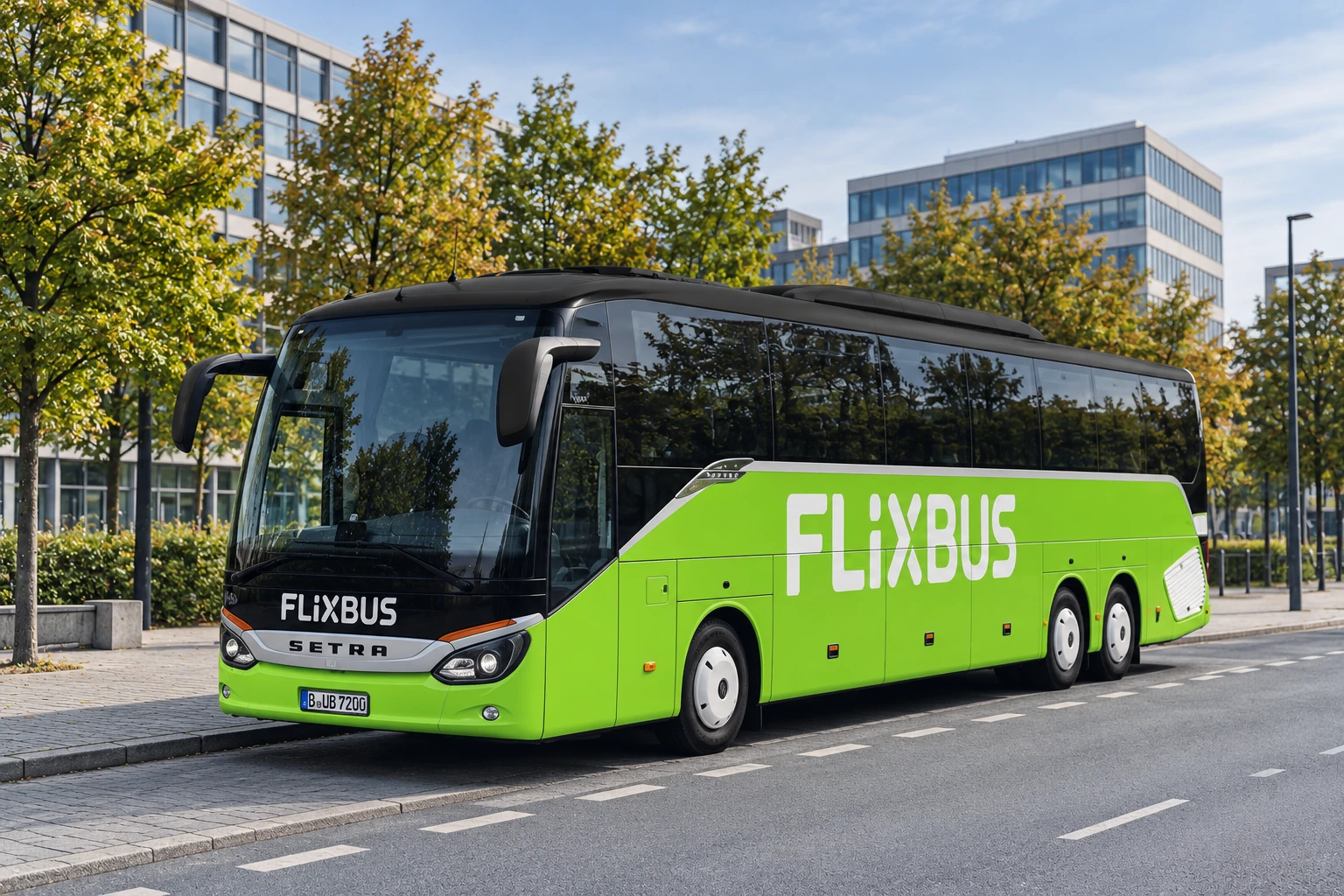
Typical 2026 estimates: Paris to Lyon runs €12 to €29 and about 6 hours 30 minutes, Paris to Brussels €9 to €25 and 4 hours 15 minutes, Paris to Amsterdam €25 to €50 and 8 hours, and Paris to Berlin €45 to €79 and 15 to 17 hours overnight. Coaches are generally cheaper and slower than trains, and beyond about 8 hours the price gap narrows sharply against a train booked three months ahead. On Paris to Brussels, FlixBus runs 30 to 32 buses a day with trips averaging about 3 hours 30 minutes and fares from $10.
You can book on the website, in the FlixBus app, or at a Flixshop. Payment options include PayPal, Google Pay, Visa or international cards. SNCF Connect also sells FlixBus tickets. Paris departure points vary, and some run from the Pershing bus station at Porte Maillot (since December 2025). In Tours, the stop moved on 16 December 2025 to Vaucanson, next to the last tram stop. Your ticket shows the current address, so read it before heading out. Arrive at least 30 minutes before departure with your ticket and, if required, ID. Pets are not allowed, except guide and assistance dogs.
Coach tickets are cancellable up to 15 minutes before departure, with refunds that shrink as the date nears. You get a full refund if you cancel more than 30 days out, 75% between 29 and 7 days, 50% between 6 and 1 day, and 25% in the final day. Optional extras are non-refundable. Name and contact changes are free. Changing the trip itself means cancelling and rebooking. Refunds arrive as a credit note usable on the Flixbus.fr site.
If a FlixBus is delayed more than 120 minutes, or cancelled, through the operator’s fault, the operator must offer a free seat on another bus or refund the ticket, including the return leg, within 14 days. If no refund comes, you can claim 50% of the ticket price plus a refund. Delay texts refer to departure time, not arrival time.
Domestic Flights Between Regions
Flying pays off on the longest routes. Paris to Nice takes about 1 hour 15 minutes on Air France direct, about 1 hour 30 minutes in the other direction, and 1 hour 25 minutes on Transavia from Orly. Paris to Toulouse takes about 1 hour 15 minutes and Paris to Marseille about 1 hour 20 minutes. The flight to Nice wins on time against the train, but to Bordeaux it rarely does once you add airport transfers and security.
Flights also connect regions without passing through Paris. Transavia flies Marseille to Biarritz nonstop in about 1 hour 20 minutes, a trip that would take far longer by rail or road.
Airlines and airports
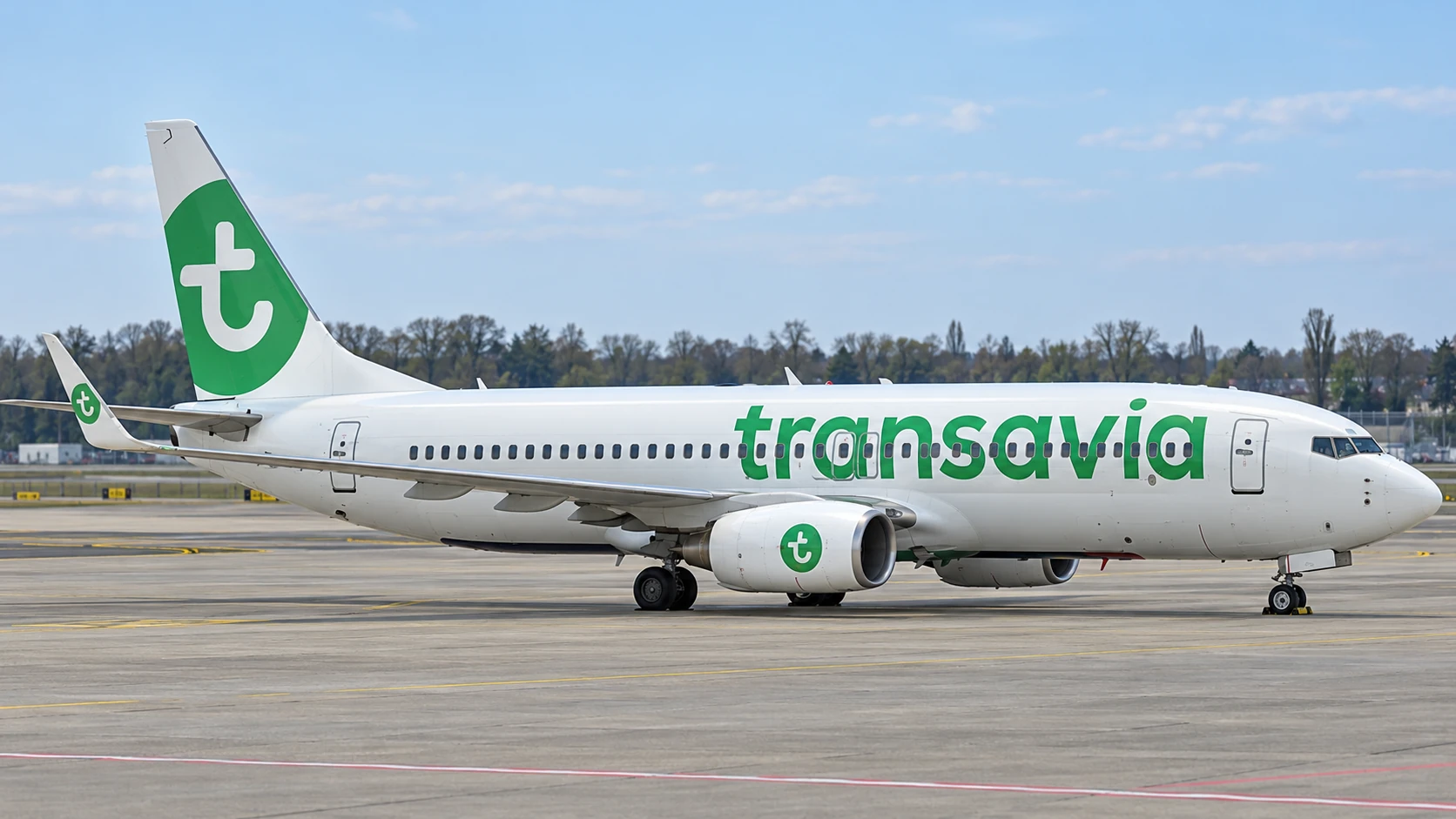
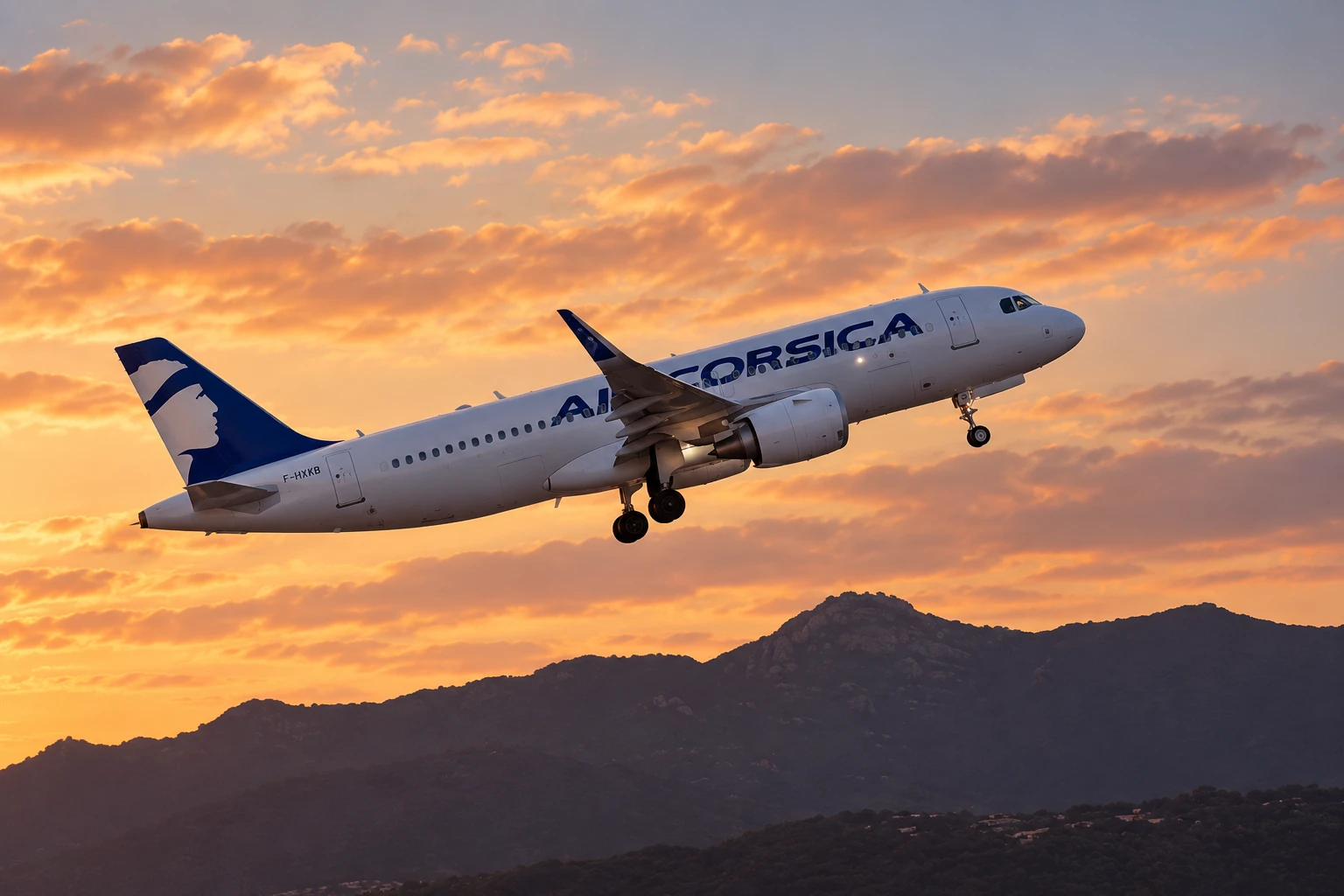
Transavia France is a low-cost carrier in the Air France-KLM group, based at Paris-Orly with bases in Marseille, Lyon, Nantes, Montpellier and Bordeaux, flying Boeing 737s. Its French network also includes Nice, Toulouse, Biarritz, Lille, Caen, Brest, Rennes, Strasbourg, Toulon-Hyères and several Corsican airports. Its Paris service is at Orly only. Air France flies from Orly and Charles de Gaulle, and easyJet, Ryanair, Volotea and Air Corsica also fly French domestic routes.
Fares and bag fees
Google Flights lists cheapest round-trip fares to Paris from €79 from Nice and Toulouse on easyJet, €111 from Marseille, €121 from Bordeaux, €141 from Nantes and €142 from Lyon, all on Air France. These include taxes and fees for one adult in economy, and they move with the date, so use them for orientation only.
Baggage rules change the real price. Base fares generally include only a small personal item, and cabin bags and checked luggage are paid extras. Adding bags at booking is almost always cheaper than at the airport. Transavia’s published allowance (dated April 2024) gave one free hand-luggage item up to 40 x 30 x 20 cm, a fee for a larger cabin bag up to 55 x 35 x 25 cm, and optional hold luggage up to 70 x 60 x 30 cm. Check the airline’s current allowance before buying. Online check-in closes about 1 to 2 hours before departure.
Book through airline sites or a flight search site. Domestic flights are typically booked a few weeks ahead, a shorter window than international budget flights need.
Renting a Car in France
A rental car works best for rural regions, small villages and trips with heavy luggage. Each agency sets its own rules, which tend to be stricter than the law.
The legal minimum age is 18, and young-driver insurance is mandatory under 25. In practice, many companies require 21 for a basic model, while some agencies rent to drivers from 18 with at least one year of licence history. Licence seniority also depends on the car: one year for a city car, about three years for a wagon, and five for a sedan. Most agencies ask for three years, and some up to five. A probationary licence can be accepted when the agency and rental contract allow it, typically with one to two years of seniority.
Young drivers pay a daily surcharge. Examples for 2026 are €25 a day at UCAR and €30 at Rent A Car.
Bring a valid licence, ID and a credit card in the main driver’s name. Non-European drivers also need a passport. Non-EU drivers may need an international driving permit, so ask the agency before you travel. A deposit is always required, often between €300 and €2,000, held against damage, accidents and late returns. The amount varies by vehicle category and agency, and the hold reduces the credit limit on your card for the trip.
Every driver must carry at least third-party liability cover, and most agencies include it in the contract. Rental firms must clearly disclose guarantee terms, excess (franchise) amounts and scope, and the price and conditions of optional cover, so compare those figures between agencies before booking. Reserve on the agency’s own website and read the age and licence conditions before paying.
Taxis and VTC in France
Taxis and VTC cover airport transfers and short city trips. The two differ in how you get them. A taxi can be hailed in the street, booked by phone or taken from a rank. VTC works only by reservation, with no street pickup, and gives a fixed price before the ride, usually through an app such as Uber, Bolt or Heetch.
Taxi fares are state-regulated. From 1 February 2025 the tariff was a €4.48 pick-up charge, €1.29 per kilometer, €41.76 per hour for waiting or dense traffic, and an €8 minimum fare. Tariffs are revised each year from 1 February, so check the current figures. VTC passenger prices are set by each platform. A rule published in the Journal officiel on 26 March 2024 set a minimum of €9 per ride for drivers, replacing €7.65, along with €30 per hour of activity and €1 per kilometer. That figure is a driver earnings floor, not a fare floor for passengers.
Typical 2025 estimates for a 10 km urban trip are €15 to €20 by taxi and €15 to €35 by VTC, while a 100 km trip runs €150 to €180 by taxi (negotiable) against €120 to €160 by VTC. Average city fares were about €15 on Heetch, €18.90 on Bolt and €22.10 on Uber. From central Paris, expect €50 to €70 to Charles de Gaulle, €35 to €55 to Orly and €60 to €80 to Disneyland. A VTC from Paris to Charles de Gaulle runs about €36 to €75, depending on time and demand.
Booking Rules at a Glance
| Mode | Where to book | Lead time and key rule |
|---|---|---|
| OUIGO | SNCF Connect (online only) | Classique sales open 60 days ahead; standard tickets non-refundable; changes €19 |
| TGV INOUI | SNCF Connect | Online more than 48 hours ahead; free changes up to 7 days before departure |
| FlixBus | FlixBus app, website, Flixshop; SNCF Connect | Cancel up to 15 minutes before departure; refund tiers by days before travel |
| Budget flights | Airline sites or a flight search site | Book a few weeks ahead for domestic routes; check bag fees before paying |
| Car rental | Agency website | Check age and licence-seniority rules; budget for the deposit |
| VTC | Ride-hailing app | Pre-booked only; fixed price quoted in advance |
| Taxi | Phone, rank or street hail | Regulated fares; check current-year tariffs |
Key Takeaways
- Match the mode to the corridor: Take the train for Paris to Bordeaux, Lyon or Nantes, and consider flying for Paris to Nice, where the train takes much longer than the roughly 1 hour 15 minutes to 1 hour 30 minutes in the air.
- Read the fare rules before buying a cheap train ticket: OUIGO standard tickets cannot be refunded and changes cost €19 per passenger per journey, while TGV INOUI exchangeable fares are free to change up to 7 days before departure.
- Add bags before you reach the airport: Budget airlines charge for cabin and hold bags, and booking them online is almost always cheaper than paying at the airport.
- Choose coaches for price on long routes: Fares such as €12.98 from Paris to Tours are low, but the gap with a train narrows beyond about 8 hours, and refunds shrink as departure nears.
- Check age, licence and deposit rules before reserving a car: Many agencies want drivers to be 21, expect three years of licence history, and hold a deposit often between €300 and €2,000.
- Pre-book VTC and know the taxi tariff: VTC works only by reservation with a fixed price, while taxis follow a regulated tariff revised each 1 February.