Getting Around Turkey

Turkey is large, so the best way to travel between cities depends on distance. Intercity buses reach almost every town and are the default for trips of a few hours. Domestic flights make sense when the alternative is a very long bus ride. Ferries are faster than the road on some routes around Istanbul and the Sea of Marmara, trains run the Ankara–Istanbul corridor, and a rental car works best for touring the regions where timetables are sparse.
Fares are quoted in Turkish lira, which has been rising in price, so each fare below is dated. Check the operator’s website before you buy.
Which Mode Fits Which Trip
| Trip | Best fit | Typical time or cost |
|---|---|---|
| Istanbul to Bursa | Fast ferry | About 1 hour 40 minutes, against roughly 3 hours by bus |
| Istanbul to Ankara | Bus or high-speed train | Bus fares and times vary by operator and date |
| Ankara to Konya | Bus or train | Bus about 3 hours |
| Istanbul to Trabzon, Ankara to Antalya | Domestic flight | Flights of 1 to 1.5 hours between major cities; buses take far longer on these routes |
| Aegean, Mediterranean or Anatolian touring | Rental car | Flexible stops; some pairs, such as Antalya to Gaziantep, are long by bus |
| Istanbul city crossings | City ferry with an ?stanbulkart | 46.20 TL full electronic fare on city transit (2026) |
| Airport to city center | Shuttle bus or taxi | Shuttles about $3; taxis about $7 to $15 |
The sections below explain each option and the tradeoffs.
Trains Between Ankara and Istanbul
Rail is strongest on the corridor linking Ankara, Eski?ehir and Istanbul. High-speed trains (YHT) run at up to 250 km/h and use Ankara station as their main hub. YHT service began on 13 March 2009 between Ankara and Eski?ehir. Istanbul to Ankara high-speed trains replaced the older Capital Express after track work finished in 2014. Extensions to Bursa and ?zmir are forecast for 2027.
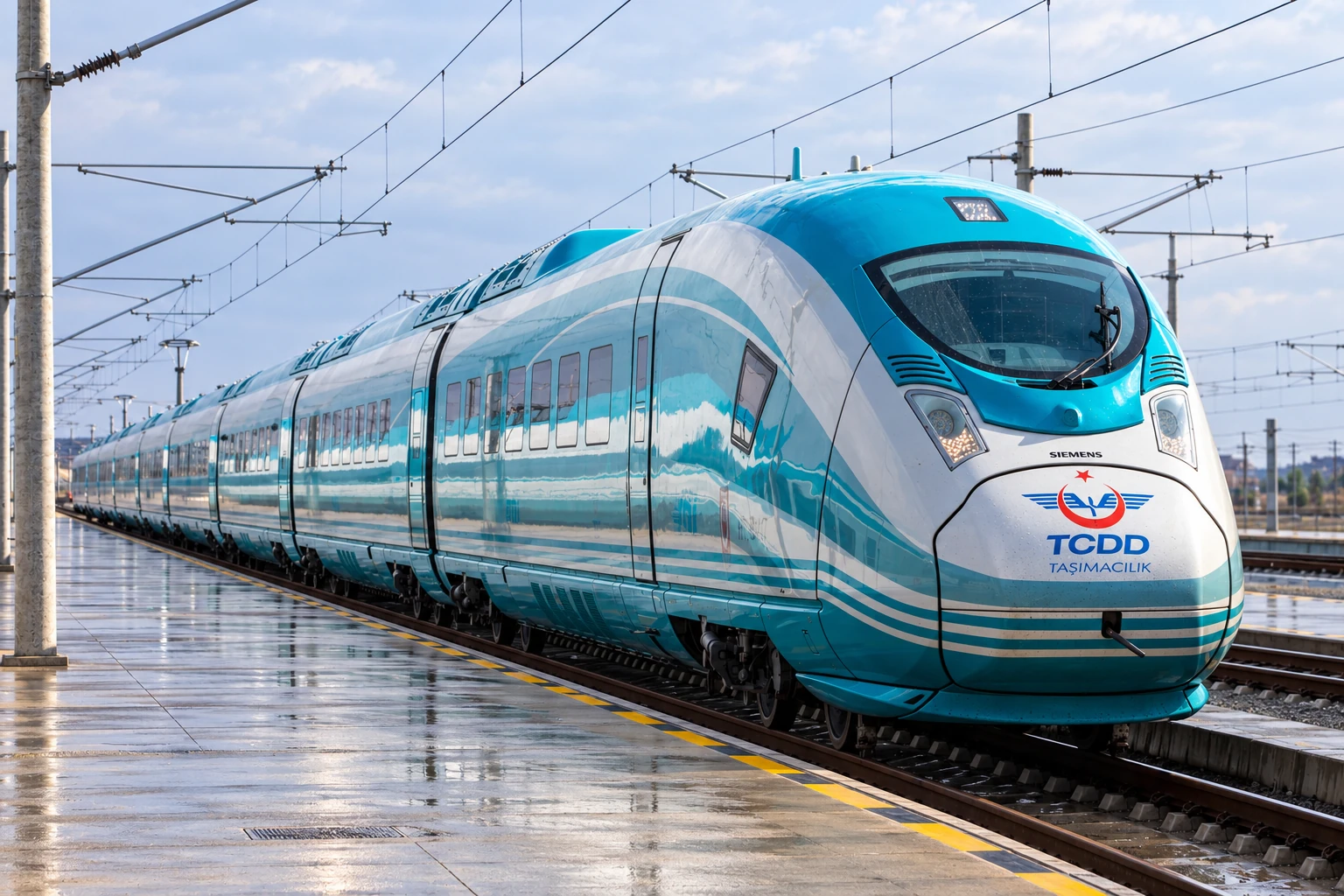
Tickets are sold on the TCDD e-ticket website and in TCDD’s own app. TCDD offers discounts on round-trip tickets and age-based discounts. Frequent riders can use TrenKart passes. The Abonman pass covers daily travel between two stations. The Binis package is meant for travelers who ride high-speed trains at least five times in two months. An authorized agent also sells e-tickets for high-speed and sleeper trains, and its fare list from about 2019 gives a sense of price levels. Current prices are on the TCDD portal. On the agent’s list, Istanbul to Ankara cost €25.50 in Standard and €38 in Business. A single sleeper was €75, and a bed in a two-person shared sleeper was €54.50 per person. Ankara to Eski?ehir cost €13.50 in Standard, and Ankara to Konya cost €12 in Standard. Eski?ehir to Istanbul was €16.50.
The agent’s timetable lists evening departures from Ankara at about 19:50, 21:13 and 23:58 on the Ankara, Eski?ehir and Istanbul route. Confirm departure times and the journey time for your date on the TCDD portal before planning around them.
Intercity Buses
Buses cover the widest network and the widest price range. Fares are set by the companies, so they vary by date, seat type and departure terminal, and weekends and holiday returns cost more. Booking early helps.
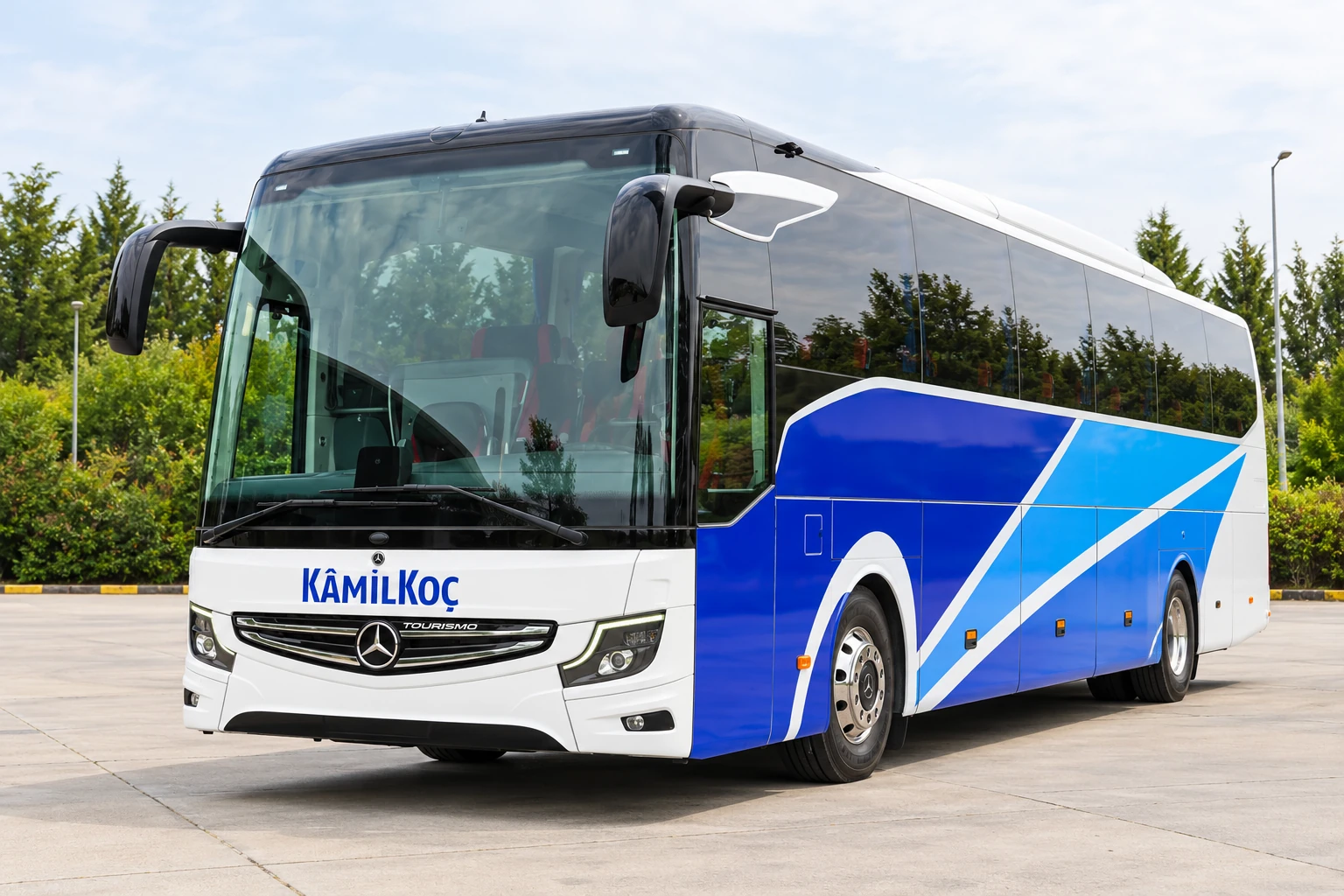
In September 2026, cheapest Istanbul to Ankara fares were well below the major operators, while Kamil Koç and Pamukkale fares reached 999 to 1,090 TL. The same report put Istanbul to ?zmir at 959 to 980 TL at the low end, rising to 1,400 to 1,500 TL for 2+1 seats and busy operators. Gebze to Antalya started at 1,190 to 1,200 TL, and Pamukkale or Kamil Koç ran about 1,410 to 1,475 TL. Fares on longer eastern routes are climbing quickly: on 9 August 2026, Antalya to Gaziantep fares had risen about 40% in one month, to around 1,900 TL.
Journey times by bus, as listed by an intercity ticket aggregator: Ankara to Konya about 3 hours, with Istanbul to Eski?ehir, Istanbul to Ankara, Ankara to Antalya and Istanbul to Trabzon taking progressively longer. A fare calculator estimates Istanbul to Bursa at about 3 hours, with Istanbul to ?zmir and Istanbul to Antalya taking much longer. Anything beyond Ankara or ?zmir from Istanbul is an overnight or near-overnight ride, which is where a flight starts to compete.
Carry an identity document. Operator Burula? says staff may ask for a valid ID to confirm that a ticket belongs to the boarding passenger, and anyone buying at a physical counter must show one. Passengers must keep the ticket during the journey and be on the departure platform 15 minutes before departure. A ticket is void if used on a different day or time from the one printed, and the buyer is responsible for entering the details correctly. Anyone who cannot show the document that supports a discounted fare pays the difference at the counter and receives a new ticket.
For booking, one multi-operator site sells tickets from several companies at the operator’s internet price and accepts virtual cards. Online tickets do not need to be printed, but a passenger who skips printing should still carry an ID card. That site asks for a Turkish citizen ID number when buying online, so a visitor without one will find it simpler to buy at an operator’s counter at the bus terminal. Istanbul’s main terminal, Istanbul Otogar, is an underground station on Metro lines M1A and M1B, with ?ETT city bus and minibus connections.
Domestic Flights
Four carriers fly domestic routes: Turkish Airlines, Pegasus, AJet and SunExpress. AJet, formerly AnadoluJet, is a Turkish Airlines subsidiary founded in 2008 that focuses on domestic routes. Pegasus operates as a low-cost airline based in Istanbul. In Istanbul, Pegasus and AJet use Sabiha Gökçen (SAW) on the Asian side, while Turkish Airlines operates mainly from Istanbul Airport (IST) on the European side. Choose the departure airport based on which side of the Bosphorus your hotel is on.
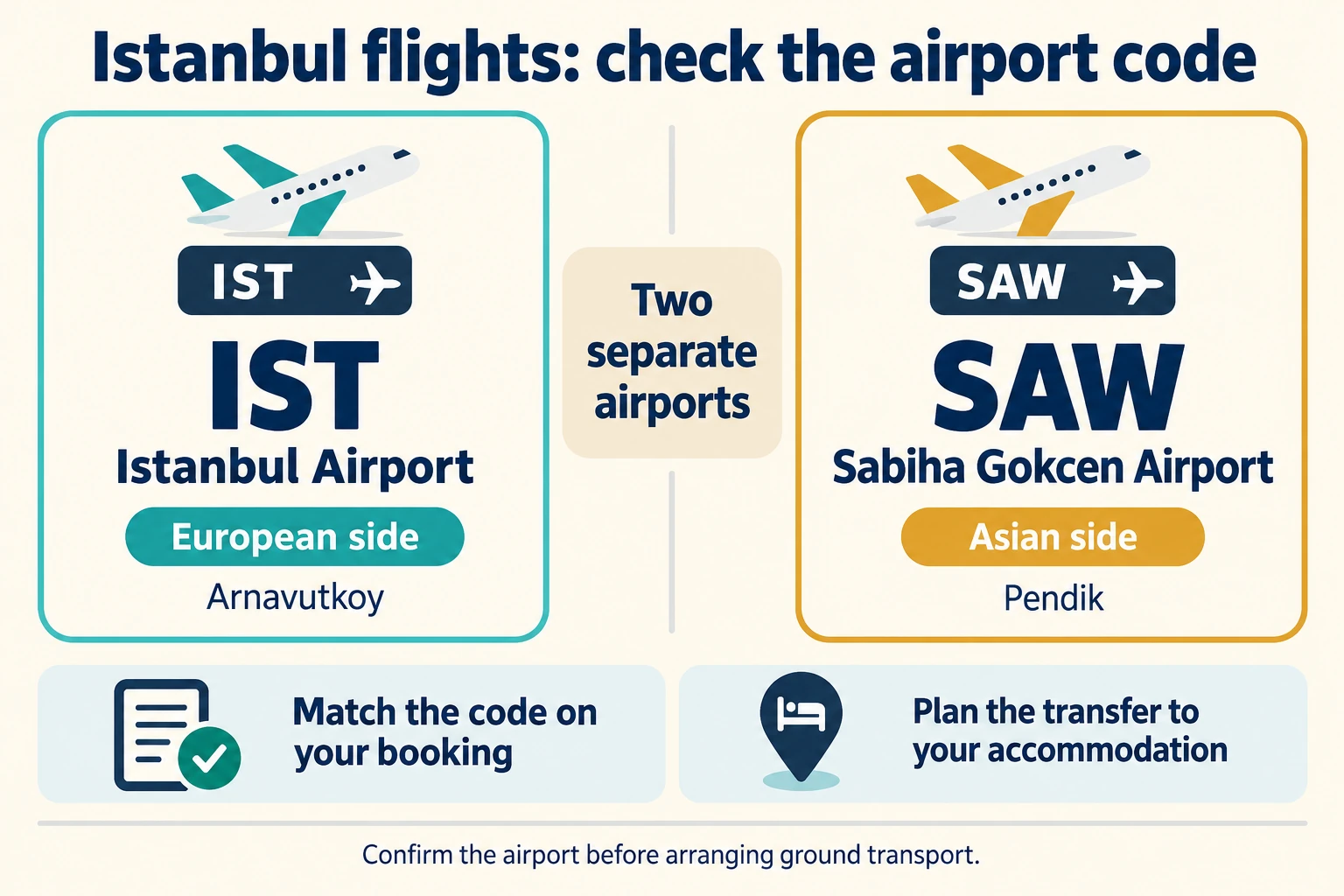
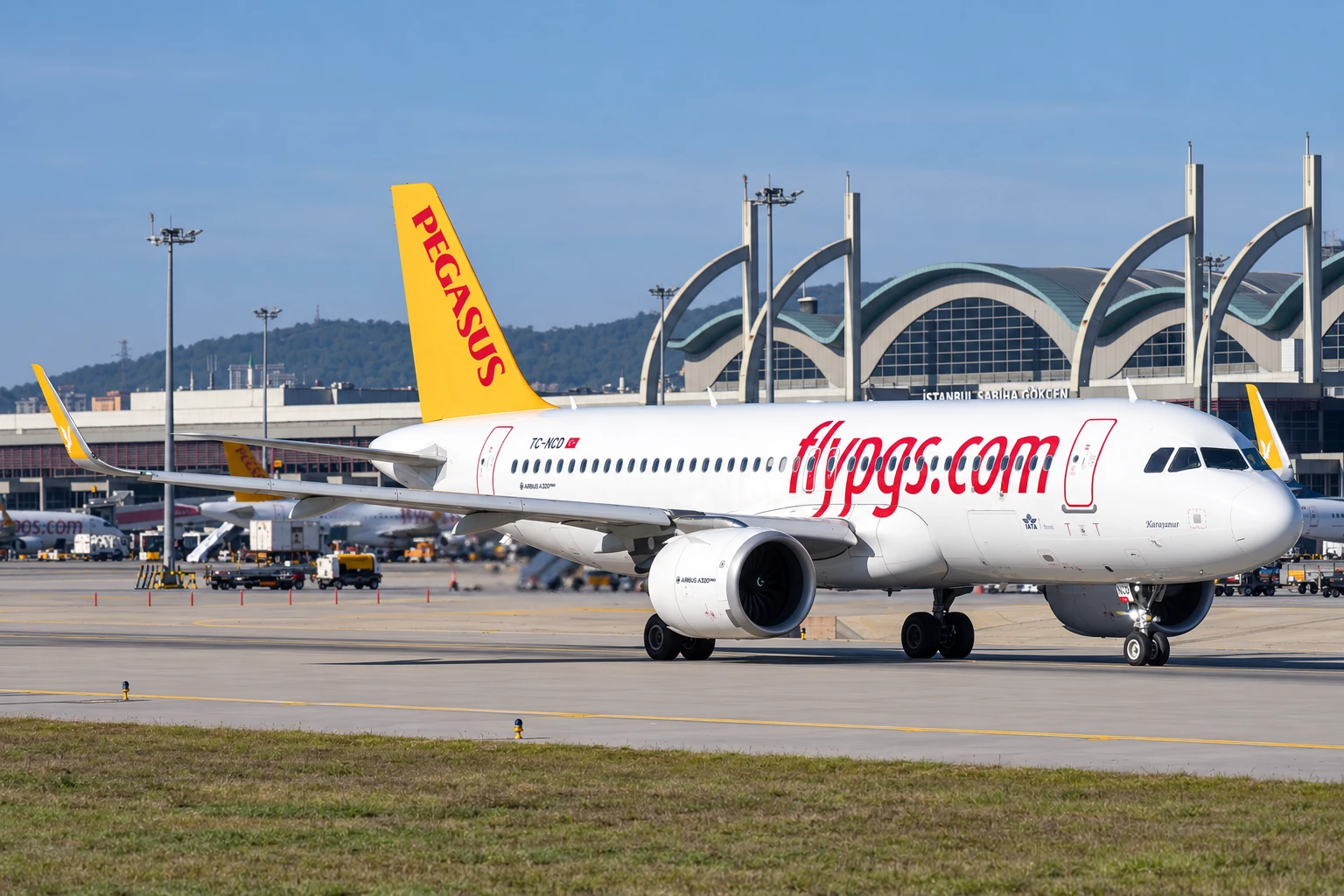
Fares between major cities run about $30 to $80 one way, for flights of 1 to 1.5 hours. Booking 2 to 4 weeks ahead is wise. Pegasus usually has the lowest base fare, while Turkish Airlines costs slightly more but includes a carry-on and a checked bag. A 2026 guide points to Tuesday to Thursday flights for the lowest base fares and to the shoulder seasons of September to November and March to May. The same guide advises comparing the total with bag and seat fees included, because a cheap base fare can end up above the full-service price.
Baggage rules decide that comparison:
- Pegasus. Domestic flights include one cabin bag up to 55 × 40 × 23 cm and 8 kg. No extra under-seat bag is allowed. Checked bags are 15 kg on Saver fares and 20 kg on Saver Plus and Comfort Flex. Extra baggage bought in advance on the website or app is cheaper than at the airport. A 2026 guide puts a 15 kg bag bought at booking at roughly 100 to 200 TL and seat selection at 30 to 80 TL. It also says carry-on size is checked at the gate.
- Turkish Airlines. Free domestic checked allowances are 30 kg in Business, 25 kg in Economy PrimeFly, 20 kg in ExtraFly and 15 kg in EcoFly. No single piece may exceed 32 kg. The domestic oversize fee is 1,000 TRY for bags measuring 158 to 292 cm in total (length plus width plus height). Extra-baggage fees can change up to eight hours before departure.
- AJet. Basic domestic fares include 15 kg checked and an 8 kg cabin bag plus one under-seat item up to 4 kg. Flex includes 20 kg checked. Excess baggage costs less per kg when bought on the AJet website, app or through an agency than at the airport or by call center. A non-compliant carry-on at the gate can draw a 50 EUR Inappropriate Cabin Baggage Fee.
Book on the airline’s own website or app, and buy any extra bags there too. A traveler with only a small carry-on can use Pegasus cheaply, whereas anyone carrying a full suitcase should price Turkish Airlines or AJet alongside it.
Airport Shuttles and Taxis
From Istanbul Airport, a Havaist shuttle costs about $3 and a taxi about $10 to $15. From Sabiha Gökçen, the Havabus shuttle is about $3 and a taxi about $7 to $10. Shuttles are the budget choice, and a taxi pays off for groups or late arrivals when the shuttle schedule does not fit.

Ferries in Istanbul and the Marmara Sea
Istanbul’s city ferries link the European and Asian shores and make a cheap, scenic alternative to the bridges. Full-fare electronic ?stanbulkart rates rose after a 10% increase approved by the ?BB Assembly in 2026, from 42 TL to 46.20 TL, and the student fare rose from 20.50 TL to 22.55 TL. Listed ferry fares on the same page are 58.52 TL for Üsküdar to Eminönü, 65.21 TL for Kad?köy to Eminönü and Kad?köy to Be?ikta?, and 171.89 TL for Bostanc? to Adalar (the Princes’ Islands). Buy and load an ?stanbulkart for city lines.
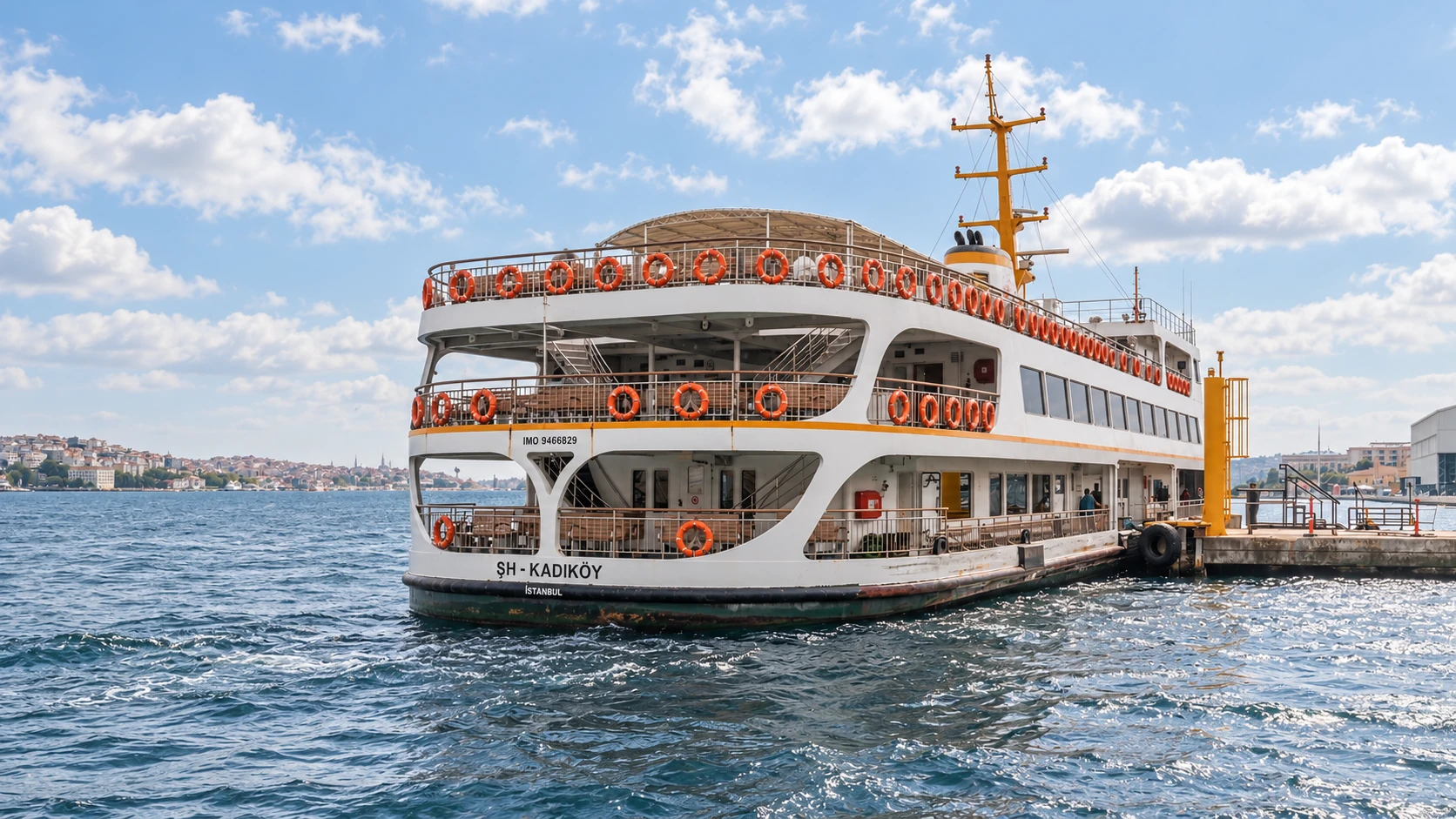
?DO runs the faster sea buses and fast ferries. A 2025 tariff lists Yenikap? to Adalar to Kad?köy at 206.20 TL full fare, with an Adakart fare of 158.69 TL, and Bostanc? to Kabata? (Be?ikta?) at 162.73 TL. On the interior lines in 2026, the Eskihisar to Topçular pedestrian fare is 85 TL per crossing, with a reduced ?stanbulkart fare of 55 TL and 100 TL by contactless credit card. Passengers in vehicles pay no separate fare. Bicycles travel free on fast-ferry lines, up to 10 per sailing, and up to 3 per sailing on outer routes.
For Istanbul to Bursa, the ?DO fast ferry takes about 1 hour 40 minutes with passenger fares of 201 to 210 TL (2026), against roughly 3 hours by bus. The same listing shows economy sea bus tickets at 480 TL. A Kad?köy, Yenikap? and Armutlu sea bus listing updated 1 June 2026 shows PROMO at 765 TL and ECO at 825 TL. Tickets are sold through ?DO and through online resellers on websites and apps.
Renting a Car
A rental car fits Aegean and Mediterranean coast routes and loops through Anatolia, where bus connections between smaller towns are slow. Foreign nationals may drive on a home-country licence for up to six months, and longer stays require a Turkish licence. Licences from the EU, USA, Canada and Gulf states are generally accepted for six months, provided the passport and entry stamp are documented.
An International Driving Permit (IDP) is a multilingual translation of an existing licence. It translates a licence and must be carried with the original. It is issued through the Türkiye Turing Otomobil Kurumu (TTOK). An IDP is valid in Turkey, and if your home licence is in English it is often enough on its own, though some firms still ask for one. If the licence is not in English, French, German or Latin script, firms may ask for a notarized Turkish translation or an IDP.
The common standard is age 21 or over with a class B licence held for at least one year. SUVs, luxury cars, seven-seaters and commercial vans may require age 25 and two to three years of licence history. Some firms accept younger or newer drivers for an extra insurance fee. At pickup, bring the passport with its entry stamp, the original licence and the IDP or translation where required. Ask for the contract in English. Visitors arriving by air can rent at airport desks once their passport has been stamped.
Pickup points include Istanbul Airport, Sabiha Gökçen, ?zmir Adnan Menderes, Antalya, Dalaman, Bodrum Milas, Ankara Esenbo?a, Ankara YHT station, Kayseri, Trabzon and Çukurova. Picking up at Ankara YHT station makes it easy to combine a high-speed train with a drive. Firms may require international insurance. Taking a rental car across a border may need special permission. A car brought into Turkey from abroad needs written permission from the rental company and a Turkish-valid Green Card (international motor insurance).
How to Book Each Mode
For trains, use the TCDD e-ticket site or app. For buses, use the operator’s counter or website, or a multi-operator site, and carry ID. Book flights on the airline’s own site or app, and add baggage at the same time. For ferries, load an ?stanbulkart for city lines and buy ?DO fast-ferry tickets from ?DO or a reseller. Rent cars directly from a rental firm, and bring your licence, passport and IDP or translation. Fares for all of these change often, so look up the current figure on the operator’s page on the day you book.
Key Takeaways
- Match the mode to the distance. Use buses for trips of a few hours, such as Ankara to Konya, and flights for routes like Istanbul to Trabzon, where the bus ride is very long.
- Price flights with bags included. Pegasus often has the lowest base fare, but AJet charges per kg for excess baggage, so add your luggage to each fare before comparing.
- Take the fast ferry to Bursa. It runs about 1 hour 40 minutes against roughly 3 hours by bus, with passenger fares of 201 to 210 TL in 2026.
- Carry ID for every bus trip. Operators check tickets against identity documents, and bus counters require one at purchase.
- Bring an IDP when renting. Visitors can drive on a home licence for up to six months, but firms may ask for an IDP or a translation, and age 21 with one year of licence is the common minimum.