Switzerland Travel Costs: Daily Budgets, Prices and Savings

Switzerland ranks among Europe’s most expensive destinations, and most of the cost comes from three places: a bed, restaurant meals, and mountain transport. A realistic daily budget per person runs about CHF 100–150 for a budget traveler, CHF 200–350 for a mid-range traveler, and considerably more for a comfortable trip, according to a 2026 Switzerland cost guide. CHF is the Swiss franc. The guide gives an exchange rate of roughly 1 CHF to 1.22 USD at the time of writing. Check the current rate before you convert your own numbers.
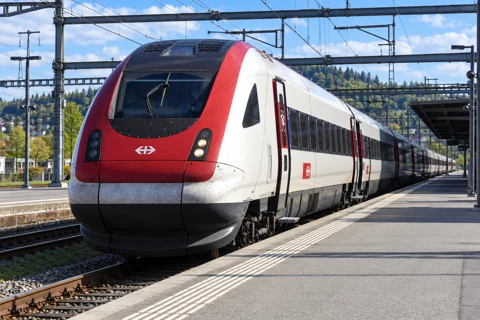
Two Swiss tickets affect transport costs. They come up often in this article. The Swiss Travel Pass is a prepaid ticket for unlimited trains, buses and boats on consecutive days. The Swiss Half Fare Card is a one-month card that cuts the price of individual tickets in half. Which one saves money depends on how many days you spend traveling between places.
Prices below are 2026 figures. Hotel rates, train passes and mountain tickets change often, so check the prices that matter most on the operator’s website before you book.
Daily budgets at three comfort levels
The table shows daily costs per person. Transport costs are spread across the days of a pass.
| Category | Budget | Mid-range | Comfort |
|---|---|---|---|
| Daily total | CHF 100–150 | CHF 200–350 | Higher |
| Lodging (per night) | Hostel dorm CHF 35–65; budget hotel double CHF 100–180 | 3-star hotel CHF 180–280 | 4-star CHF 280–450; 5-star prices are higher |
| Food | CHF 25–45 | CHF 60–100 | CHF 120–200 |
| Transport | CHF 15–25 (Half Fare Card) | Swiss Travel Pass | Higher (first class) |
Those figures come from the same daily budget breakdown. Sights are not in the daily totals because their prices vary so much. A free lakeside walk costs nothing, while a trip to the Jungfraujoch (a high-altitude railway destination in the Bernese Alps) costs more than a hostel bed for a week.
A second guide arrives at similar numbers: Switzerland Traveler puts a budget trip with a hostel and Half Fare day passes at roughly CHF 130–140 per day, and a mid-range couple in a 3-star hotel at CHF 220–320 per person per day.
How the three levels differ in practice
At the budget level, you sleep in a hostel dorm, buy lunch at a supermarket, eat one cheap hot meal, and ride trains at half price. Adding up the table’s lodging, food and transport ranges gives a subtotal before any sights, which is why the budget total of CHF 100–150 can leave room for one paid attraction or a few drinks.
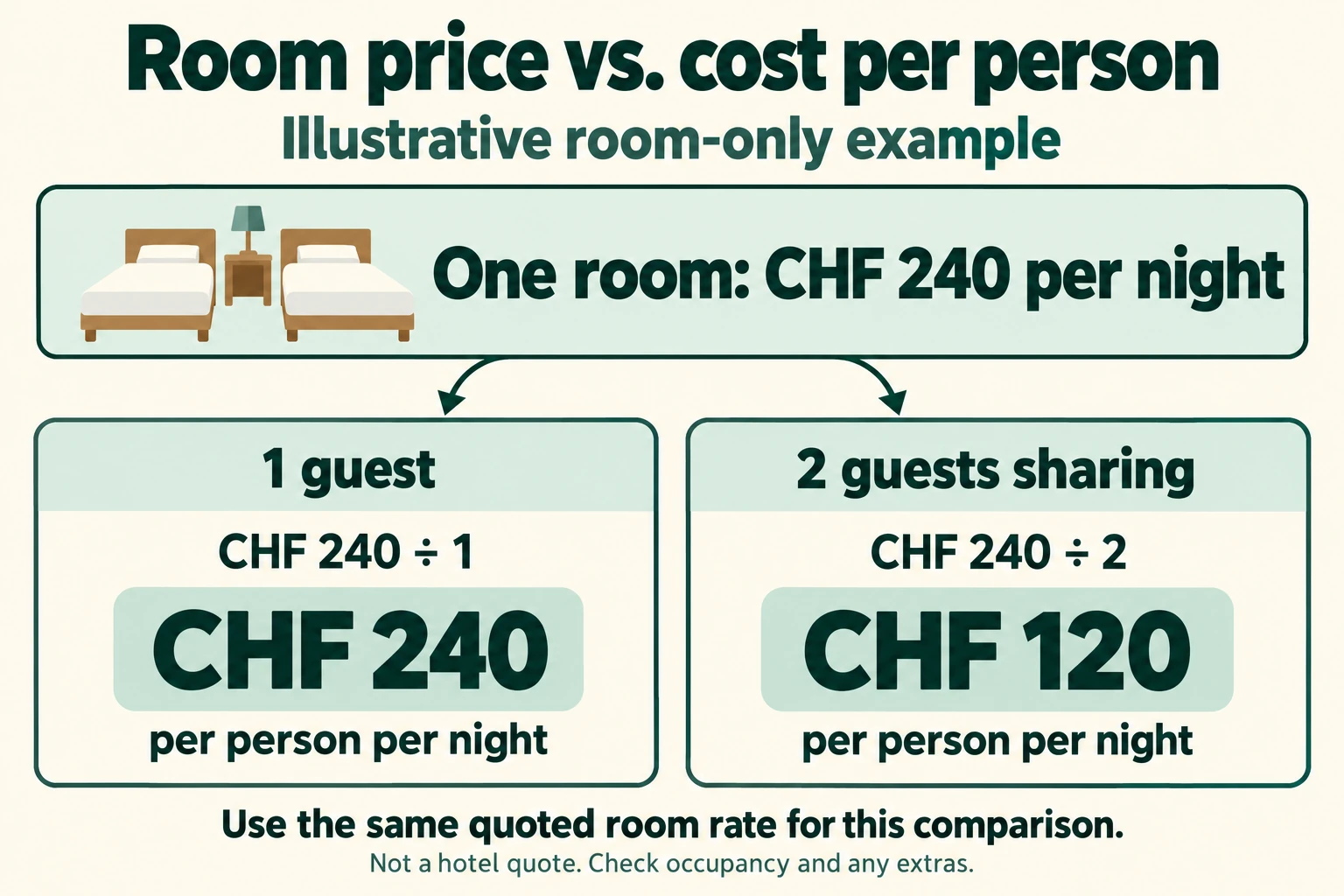
At the mid-range level, you stay in a 3-star hotel, eat one sit-down meal a day, and carry a Swiss Travel Pass. The hotel figures read as room rates, so a couple splitting a room pays roughly half each. A solo traveler pays the full room rate and will land at the top of the mid-range band or above it.
At the comfort level, you stay in a 4-star hotel, eat two restaurant meals a day, and ride first class. A single tasting-menu dinner at a top restaurant costs far more than a typical restaurant meal and can take up a large share of the daily total.
Where trips go over budget
Lodging decides which column fits you more than any other cost. After that, the number of days you travel between towns determines whether the transport figure holds. A trip that stays in one base, such as Lucerne or Interlaken, with a few day trips, costs far less in transport than a trip that changes hotels every second night. Work out your own number from each category rather than using one of the three columns as given.
Lodging prices from hostels to luxury hotels
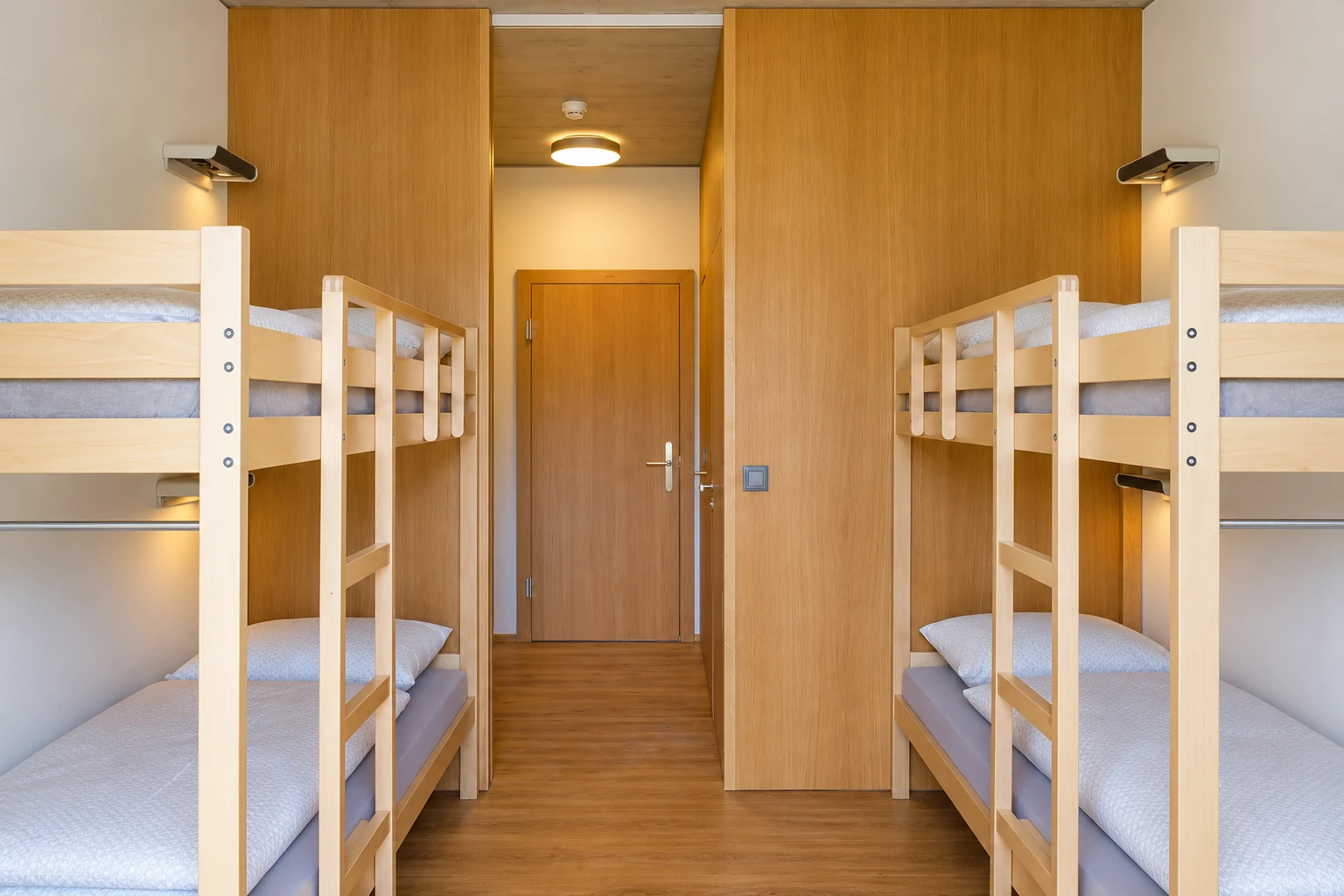
A hostel dorm bed costs CHF 35–65 per person, and a private hostel room costs CHF 90–150. Budget hotels and guesthouses charge CHF 100–180 for a double room. Those figures are in the 2026 budget breakdown and apply to the hostel-and-guesthouse tier. At the next tier, 3-star hotels and guesthouses run CHF 180–280, and breakfast is often included. Four-star hotels cost CHF 280–450 per night, and 5-star or luxury properties cost considerably more.
Apartments and Airbnb-style rentals cost CHF 80–200 per night, and a kitchen offsets some of that through cheaper meals. Campsites charge CHF 20–40 per person per night in summer. Camping makes the most sense for travelers who already own gear or are renting a car, since many sites sit outside town centers.
Seasons and booking dates
Book early for June to August and for January to March, the peak summer and ski periods. November and April are the cheapest months, although some mountain lifts, huts and hotels close or run limited schedules then. A first-time visitor who wants cable cars and open hiking trails will get more from the shoulder months of May, June or September than from the off-season closures, even if the room rate is a little higher.
Location changes the price
Where you sleep affects the rate as much as the star rating does. The same guide says a hotel 20 minutes by train from central Zurich can cost 40% less than a central one, and Switzerland Tourism also recommends staying outside the busiest spots. Swiss trains run frequently and on time, so a smaller town on the rail network works as a base for a big city, and it often has a guest card (described in the savings section) that the city center lacks.
Tourist tax
Many Swiss destinations add a local tax to each night’s stay. One estimate puts it at about CHF 2–3 per person per night and notes that it may not be included in the listed room price. MySwissAlps adds that the amount varies by town. On a seven-night trip, the tax adds up to a modest amount per person. It is small next to the room rate, but it can surprise someone who budgeted to the franc. Look for the line on the booking page that says whether the tax is included, and check it at checkout.
What food and drinks cost
Food is the category where a traveler has the most control. The gap between a supermarket sandwich at CHF 4–7 and a mid-range restaurant dinner at CHF 45–70 is large, and a trip that mixes both lands in the middle of the range.
Supermarkets and self-catering
Coop and Migros are the two main supermarket chains. According to the budget guide, sandwiches or wraps cost CHF 4–7, ready-made pasta or salad CHF 5–9, yogurt CHF 1–2, and bread CHF 2–4. A full day of supermarket shopping adds up to about CHF 20–35. Both chains also run restaurants, where hot meals cost CHF 12–18, and they are the cheapest places to sit down and eat a cooked meal.
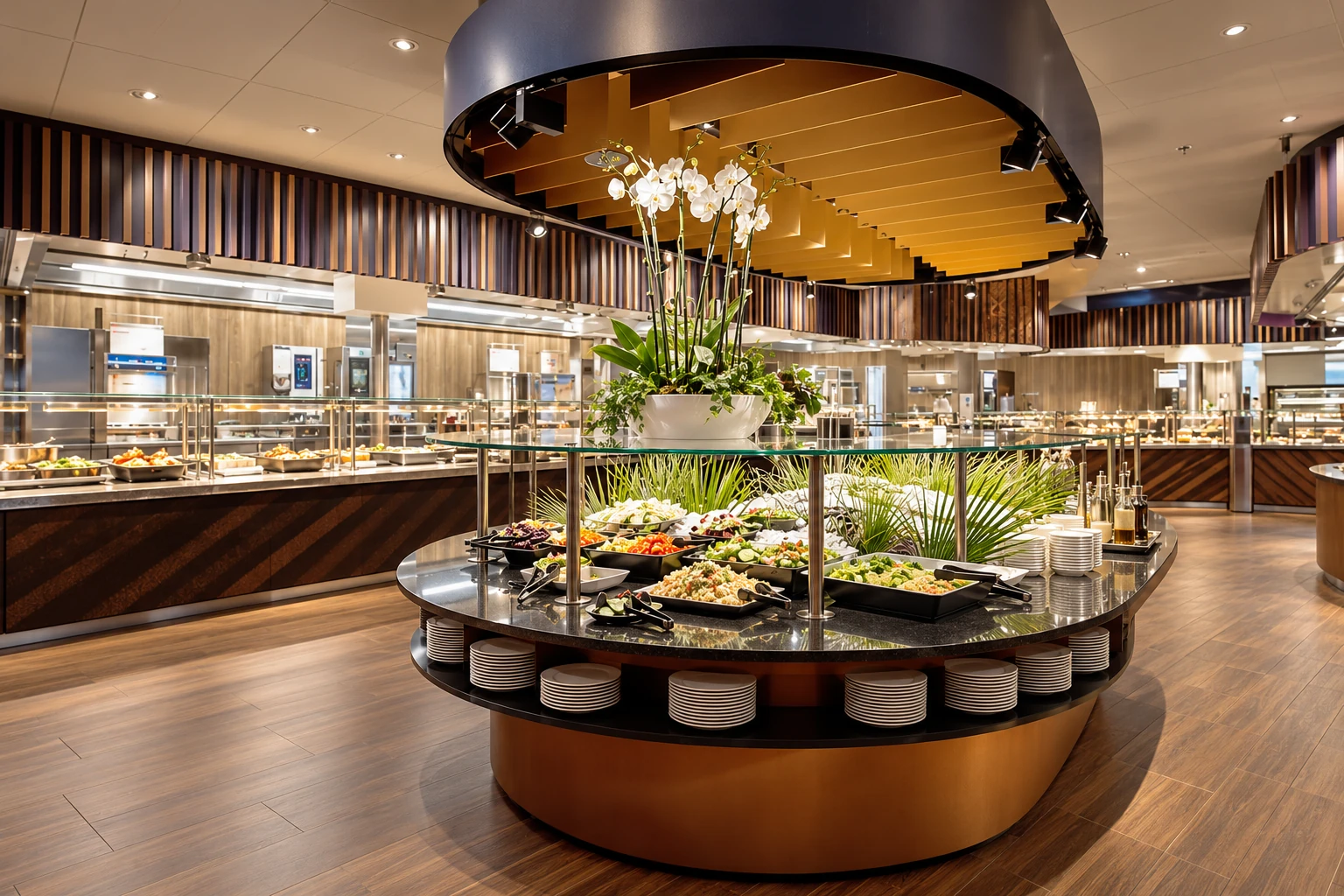
Bakery cafés fill in the middle. A lunch there costs CHF 10–18, and a pastry costs CHF 3–5. Many travelers settle into a pattern of bakery pastry and coffee for breakfast, a supermarket picnic for lunch while on a train or trail, and one restaurant meal in the evening.
Restaurants
Budget restaurants serving kebab, pizza, or Asian, Indian and Thai food charge CHF 15–25 for a main course. Mid-range restaurants charge CHF 25–45 per main, and two courses with a drink come to CHF 45–70 per person. Swiss specialities sit at the upper end of that range. Fondue costs CHF 25–35 per person, raclette is similar, and Zürcher Geschnetzeltes (sliced veal in cream sauce) costs around CHF 35–40. Tasting menus at top restaurants cost considerably more.
Fondue is usually ordered for at least two people. It is filling, so a sandwich lunch and a light breakfast keep the day’s food cost near the mid-range band. If you want to try the specialities once rather than daily, one fondue dinner fits inside a budget traveler’s week without breaking it.

Drinks and water
Beer costs CHF 6–9, a glass of wine CHF 7–12, and an espresso or café crème CHF 4–7. Drinks can add CHF 20 or more to a day’s total without you noticing. Bottled water from a supermarket costs CHF 0.50–1, and the guide describes tap water as safe to drink. Carry a refillable bottle and fill it at fountains and in your hotel room. Swiss villages have public drinking fountains, and using them removes a small daily expense entirely.
Trains, passes and local transport
Transport costs depend on how many days you spend moving. A 4-day trip with one long loop and a 10-day trip that stays in two regions need different tickets, so work out your travel days before you buy anything.
Swiss Travel Pass prices
The Swiss Travel Pass covers unlimited travel on trains, buses and boats, and gives free entry to museums and castles. Some cable cars and cogwheel trains are free with it, and many others are discounted, as MySwissAlps and a pass comparison guide describe. Second-class prices for 2026, listed in the Swiss Travel Pass FAQ, are:
- 3 days: CHF 254
- 4 days: CHF 309
- 6 days: CHF 399
- 8 days: CHF 439
- 15 days: CHF 499
First class costs CHF 405 for 3 days and CHF 787 for 15 days. The per-day cost falls sharply as the pass gets longer. Divide the prices above by the number of days, and the per-day cost drops steadily from the 3-day pass to the 15-day pass. That calculation is why the mid-range column shows a lower transport figure: it assumes a longer pass. A traveler who buys a 3-day pass and uses it on three days of long train rides is paying much more per day than the table suggests.
Swiss Half Fare Card
The SBB Half Fare Card costs CHF 150 and is valid for one month. SBB is the Swiss federal railway. The card halves ticket prices on trains, buses, boats, panorama trains, mountain railways and gondola lifts, in both first and second class. It also covers public transport in more than 90 Swiss towns and cities. Anyone whose permanent residence is outside Switzerland and Liechtenstein can buy it, either online or at a staffed point of sale, up to 11 months in advance. Children under 6 travel free, and with the Swiss Family Card, children over 6 and under 16 travel free when accompanied by a parent.
Do not confuse it with the Half Fare Travelcard, an annual resident product that costs CHF 190 for adults until 12 December 2026. Visitors buy the one-month Half Fare Card.
Choosing between the two
The Swiss Travel Pass generally suits four or more travel days, and the Half Fare Card suits fewer or more spread-out trips, according to the budget guide. A practical way to decide is to list the specific journeys you plan, look up the full fare for each on sbb.ch, and compare the total at half price plus CHF 150 against the pass price. If you are staying in one region and mostly hiking, the Half Fare Card often wins. If you are crossing the country on several long scenic rides and visiting museums, the pass often wins. Tour Switzerland estimates that this comparison on sbb.ch can save CHF 150–200.

Local transport and bikes
City buses and trams are covered by the Swiss Travel Pass and, at half price, by the Half Fare Card. For short hops, PubliBike bike share needs a free account and costs about CHF 3 for a 30-minute rental, according to the same guide.
Sights, excursions and free options
Mountain excursions are the largest single-day expense for most visitors. The choice of pass matters most here.
Jungfraujoch
The Jungfraujoch, nicknamed Top of Europe, is a railway station and visitor complex high in the Bernese Alps. A ticket starts from CHF 129.60 on the Jungfrau Railways price page, though that page does not show a validity period beside the base price, so confirm the fare for your travel date and starting point when you book. Seat reservations cost CHF 10 per person. The ticket includes admission to the Ice Palace and the Sphinx observation deck, according to the SBB-linked ticket page.

Three discounts matter here:
- Good Morning Ticket: a discount for one of the first two morning departures, valid 1 May to 31 October 2026.
- Jungfrau Travel Pass: from CHF 165 for 3 to 8 days of unlimited travel in the Jungfrau Region, including a special Jungfraujoch fare.
- Swiss Travel Pass: holders receive a discount on the Jungfraujoch ticket, and the amount depends on the departure point.
A traveler who visits the Jungfrau region for several days and does a lot of local riding may find the regional pass cheaper than paying separately. A traveler who only wants the single Jungfraujoch trip should compare the Good Morning Ticket against the Swiss Travel Pass discount.
Museums and city sights
The Swiss Travel Pass gives free entry to museums, so a pass holder who visits several in a day recovers some of the pass price. In Bern, museums are free on Saturdays every August, and the Parliament tour is free year-round according to the same Switzerland Tourism page. If you are not holding a pass, check each museum’s own price and any guest-card discount before you go.

Free activities
Hiking, lake swimming, old-town walks and many viewpoints cost nothing. For a first visit, a good rhythm is one paid mountain excursion per region and free walking days in between. A first trip built around a lake swim, a village walk and a free viewpoint costs very little, and spending a day on the trail often shows more of the country than a single expensive cable car ride.
Ways to save money
Most savings come from lodging and from matching the transport ticket to your route. The tips below start with the largest.
Use a guest card
Switzerland Tourism says that in various destinations guests receive a guest card free of charge when they book one night, or can buy one at a reduced price. Most cards allow free public transport and discounts on cable cars, boats and attractions. Eligibility varies by region: some require one night, others two, and some apply only to hotels, as the savings guide notes. Mountain resorts often issue a Gästekarte (the German word for guest card) with free or discounted valley transport, and savings can reach CHF 20–40 per day. Ask your host at booking time whether a card is included and what it covers.
Sleep outside the busiest towns
A hotel 20 minutes by train from central Zurich can cost 40% less. The same logic applies to Lucerne, Interlaken and other popular bases. Pick a smaller town with a train station and check whether it issues a guest card.
Travel in cheaper months
November and April are the cheapest, although fewer facilities are open. Late spring and early autumn fall between the peak and the off-season, with lower room rates than July and August.
Shop at Coop and Migros and refill water
Supermarket meals and restaurants cut the daily food cost by CHF 20–40 compared with sit-down meals three times a day. Thrillophilia also recommends refilling water rather than buying bottles. One restaurant meal a day, chosen for a specialty such as fondue or raclette, keeps the experience without the full cost.
Ride regional trains on scenic routes
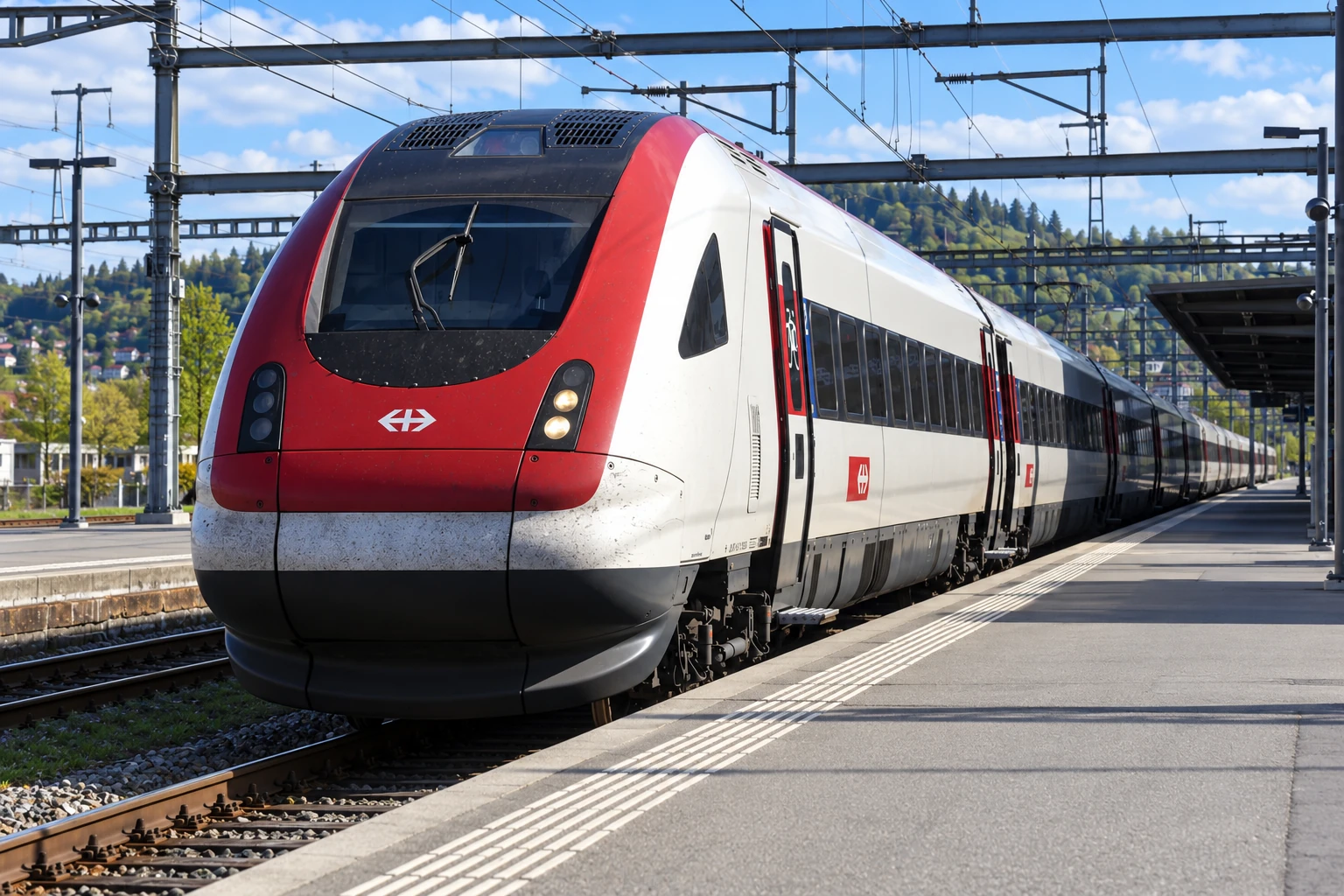
Regional and slower intercity trains often follow the same routes as famous tourist trains at a fraction of the price, according to the Tour Switzerland guide. You give up a panoramic window and a reserved seat and keep most of the view.
Start excursions from a point reachable by public transport
Lonely Planet notes that starting a hike or journey from a point reachable by public transport can be cheaper than paying for a cable car to get there.
Compare passes before buying
Compare the Swiss Travel Pass and the Half Fare Card using your actual route, as described in the transport section. This single step has the highest potential saving of any tip here, and it takes about fifteen minutes on sbb.ch.
Key Takeaways
- Plan for CHF 100–150 or CHF 200–350 per person per day, or more for comfort: These are the budget and mid-range ranges, with a higher range for comfort, and lodging decides which one fits your trip.
- Match the transport ticket to your travel days: A Swiss Travel Pass costs much less per day over 15 days than over 3 days, and the CHF 150 Half Fare Card suits fewer or spread-out trips.
- Budget separately for sights: The Jungfraujoch starts from CHF 129.60 plus a CHF 10 seat reservation, while hiking, lake swimming and old towns cost nothing.
- Ask about a guest card when you book: Many hotels and resorts include one, and the savings can reach CHF 20–40 per day in mountain resorts.
- Stay in a smaller town, eat at Coop or Migros, and refill your water bottle: A hotel 20 minutes from central Zurich can cost 40% less, and supermarket meals cost a fraction of restaurant prices.